Tirupati Integrated Bus Terminal


Project idea
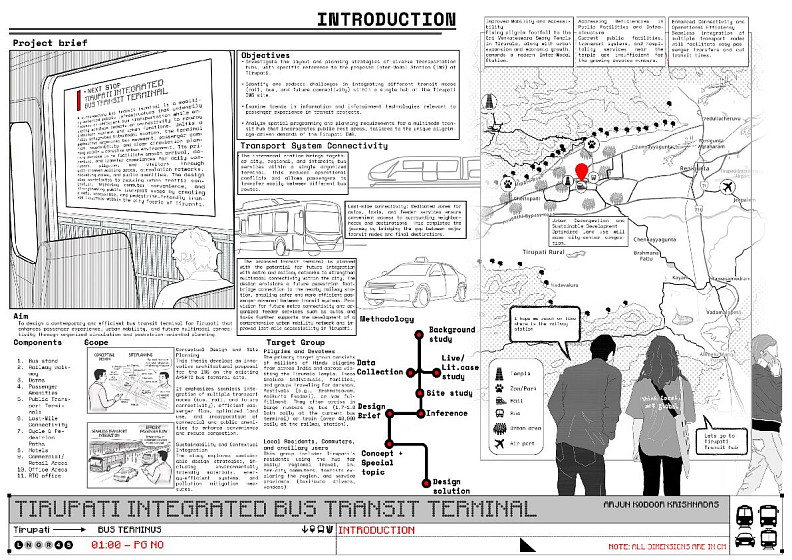
Transportation infrastructure plays a vital role in facilitating the movement of people and supporting urban development. In pilgrimage cities such as Tirupati, efficient transit systems become even more important due to the large influx of visitors arriving from different regions of the country throughout the year. The seamless movement of pilgrims from one transportation mode to another significantly influences their travel experience and the operational efficiency of the city. In this context, the integration of bus transportation, railway connectivity, pedestrian networks, and supporting mobility services is essential. By creating a unified transit environment, passengers can experience safe, comfortable, and efficient journeys while reducing congestion and improving accessibility.
Project description
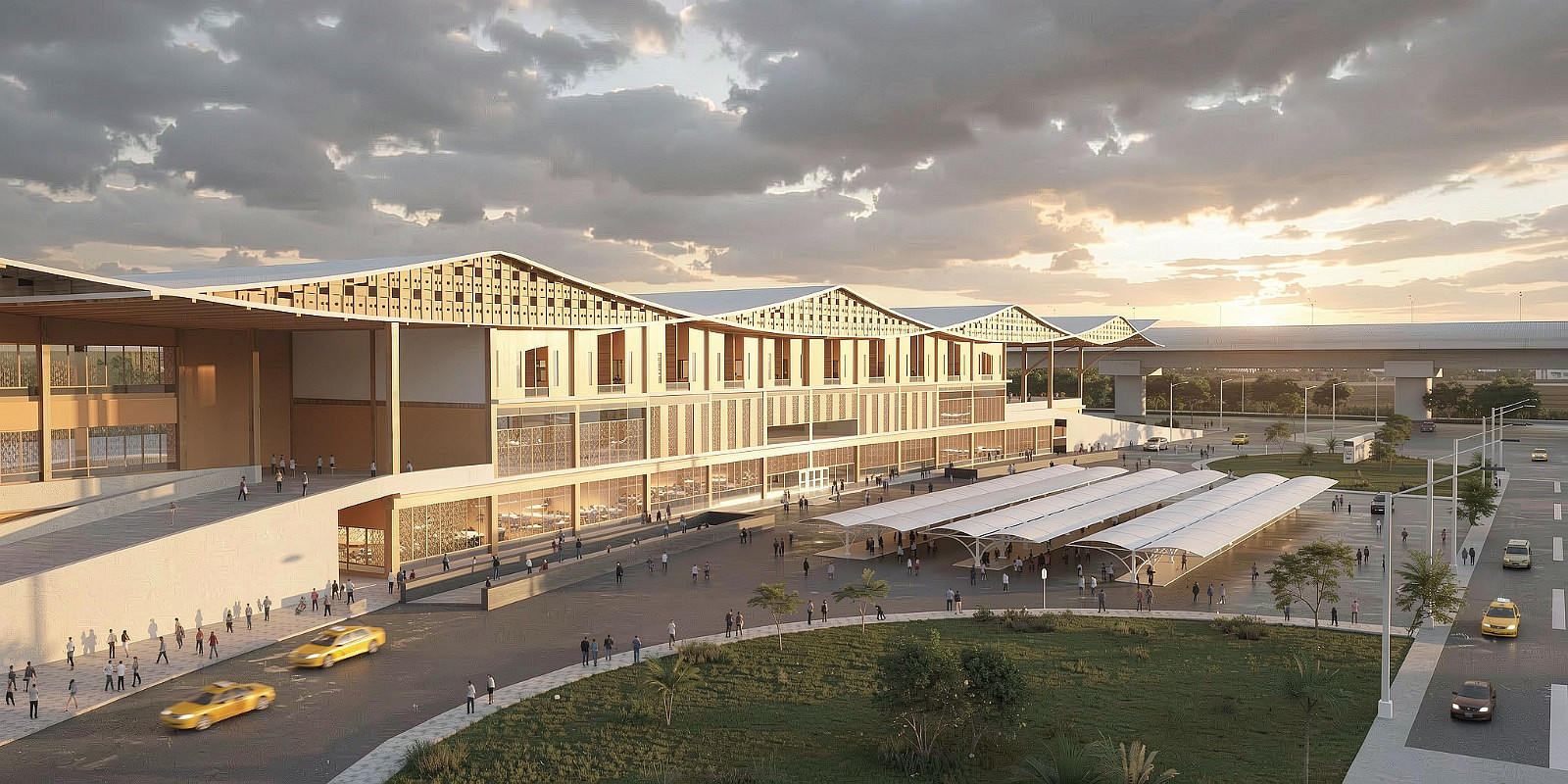
Located within the urban fabric of Tirupati, the project serves as a major transit gateway for millions of pilgrims and visitors traveling to the sacred Tirumala Hills. The terminal is envisioned as more than a transportation facility; it acts as an urban landmark that welcomes visitors and introduces them to the cultural character of the city. The architectural form draws inspiration from the surrounding sacred landscape, particularly the profile of the Tirumala hills, creating a strong visual identity while enhancing passenger experience. Through efficient planning and integrated circulation systems, the terminal accommodates diverse user groups and manages high passenger volumes with ease and clarity.
COMPONENTS
Interstate Bus Terminal
Intercity and Local Bus Services
Passenger Waiting Areas
Commercial and Retail Facilities
Administrative Offices
Parking Facilities
Pedestrian Plazas
Public Amenities and Support Services
Technical information
The planning and layout of the terminal were carefully developed based on passenger demand studies, existing transportation networks, site analysis, and pilgrimage movement patterns. Separate circulation systems were established for buses, pedestrians, private vehicles, and service traffic to ensure operational efficiency and safety. The architectural design incorporates climate-responsive strategies, natural ventilation, shaded waiting areas, and sustainable construction techniques. The roof form and spatial organization are inspired by the contours of the Tirumala landscape, creating a distinctive identity while responding to functional requirements. The project evolved through extensive research, case studies, site investigations, and consultations, resulting in a comprehensive transit facility designed to accommodate present needs and future growth.
Documentation

Copyright © 2026 INSPIRELI | All rights reserved. Use of this website signifies your agreement to the Terms of Use, Privacy Policy, and use of cookies.