Can and Can't Seen


Project idea
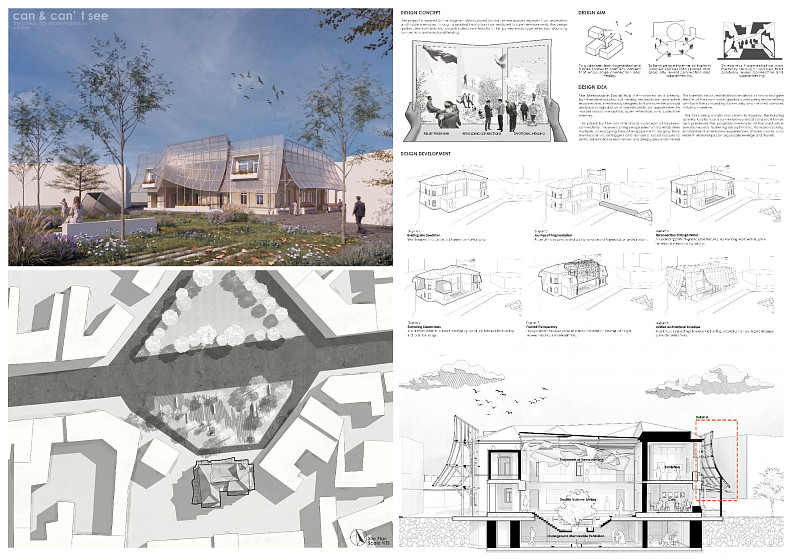
The memorable social hub is envisioned as a deeply transformative sanctuary of healing, reconciliation, and active reconnection, intentinally edsigned to transmute the physical and psychological scars of war into profound opportunities for vibrant social interaction, quiet reflection, and collective memory.
Project description
The spatial journey begins beneath the surface, where the basement houses a deeply moving Memorial Tunnel designed as a symbolic transition from the outer world into the structure. This subterranean passage serves as a seamless link, directly connecting the sunken outdoor gardens and landscaped commemorative grounds to the building's interior, vastly improving visitor accessibility.
On the ground floor, the centerpiece is a grand, double-volume atrium that creates a dramatic sense of opennes and vertical connectivity. Nestled within the soaring volume is a public amphitheatre with terraced seating, serving as an informal gathering space, lecture steps, or venue for community meetings. Flanking this active core is a lively dialogue cafe and an expansive, highly adaptable multipurpose area for public use, easily reconfigured to host local artisan markets, cultural exhibitions, and neighborhood forum.
The first floor transitions into a protected environment designed for emotional recovery and mutual support. This level is divided into three interconnected zones: a reflection area, a learning area, and a dedicated sharing area. the sharing area is designed as a safe, intimate sanctuary for individuals wishing to vocalize their trauma, share oral histories, or engage in collective coping mechanisms.
Technical information
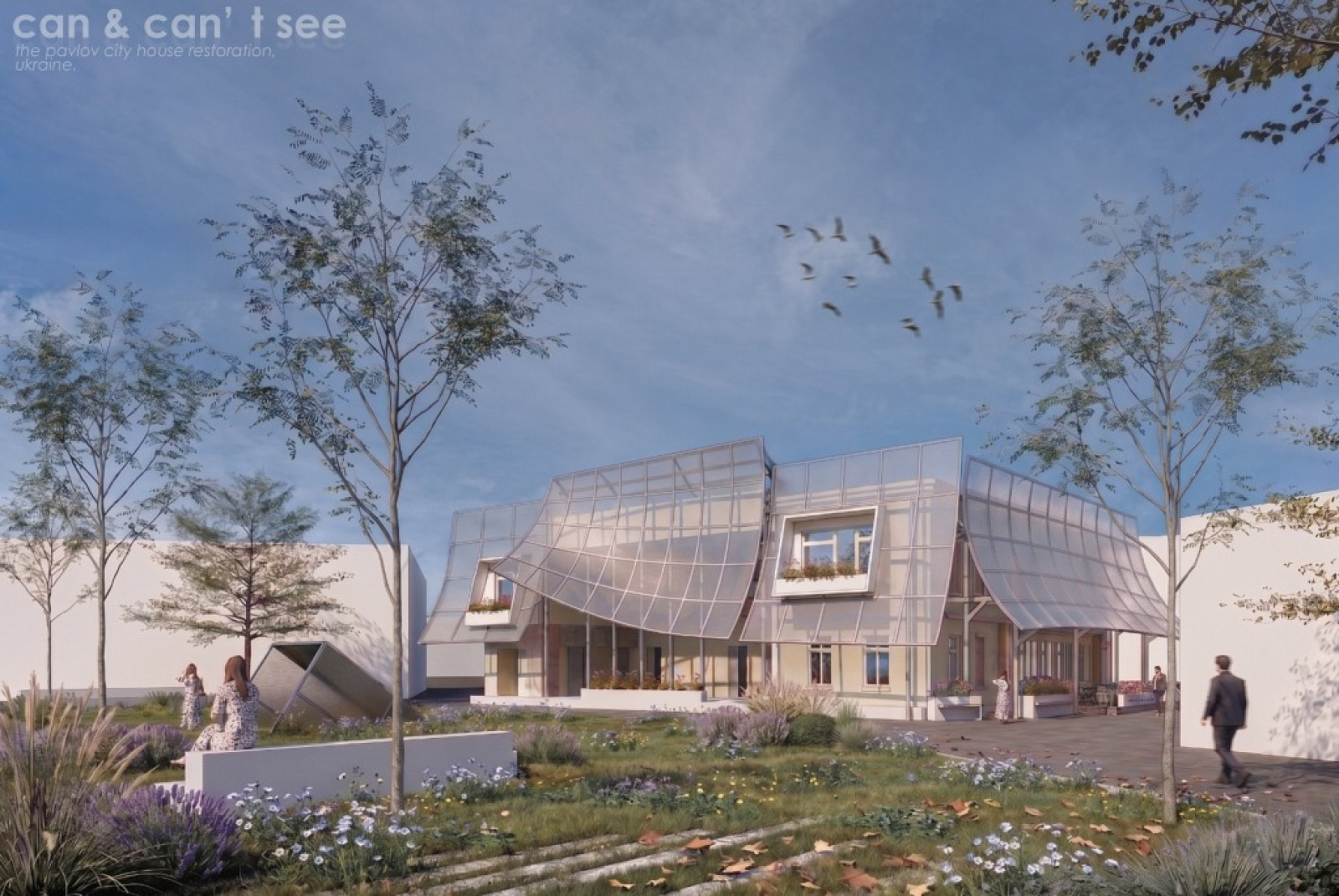
The project adopts a renovation and adaptive reuse strategy that clearly distinguises the contemporary intervention from the historical structure. Modern materials such as steel, glass and polycarbonate are selected for their durability, lightweight construction, and ability to create transparent and flexible spaces.
Steel framing enables efficient renovation with minimal impact on the existing building, while large glazed areas enhance visual connectivity and encourage social interaction. Polycarbonate cladding provides weather resistance, thermal performance, and diffused lighting effects while reinforcing the design concept of visiblity and mystery.
Documentation


Copyright © 2026 INSPIRELI | All rights reserved. Use of this website signifies your agreement to the Terms of Use, Privacy Policy, and use of cookies.
