Descent


Project idea
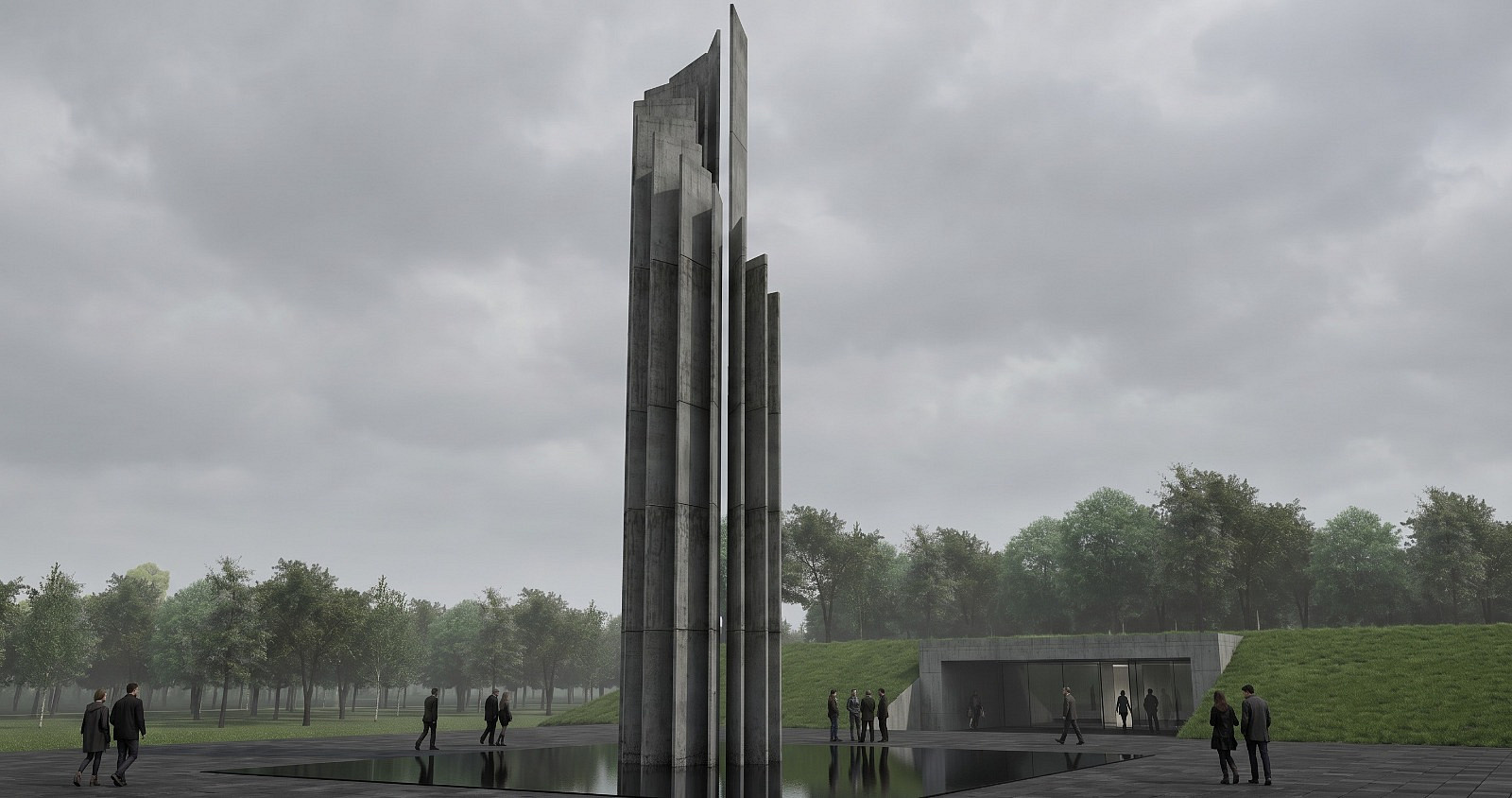
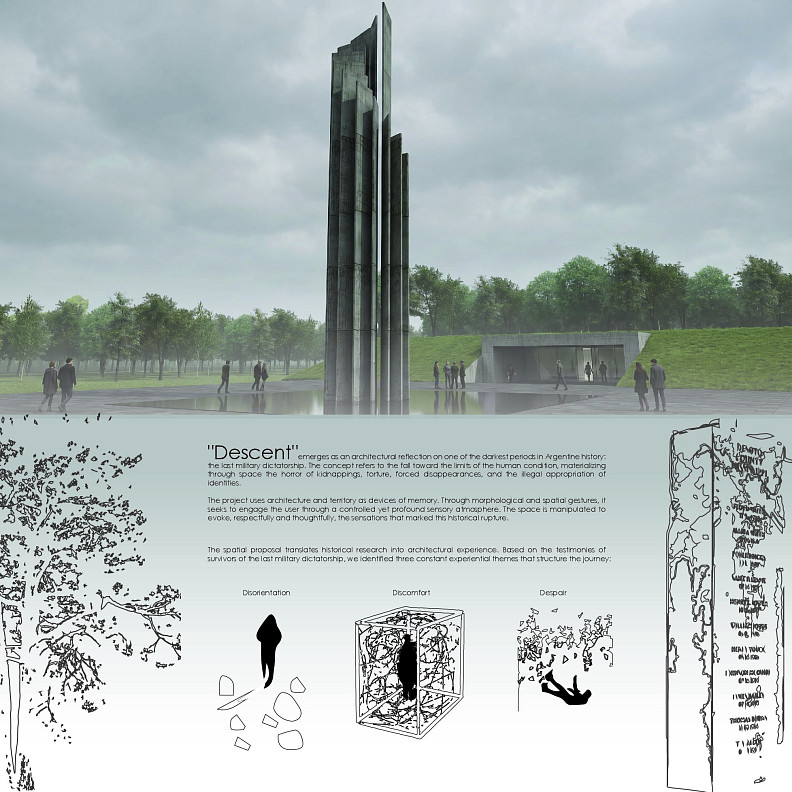
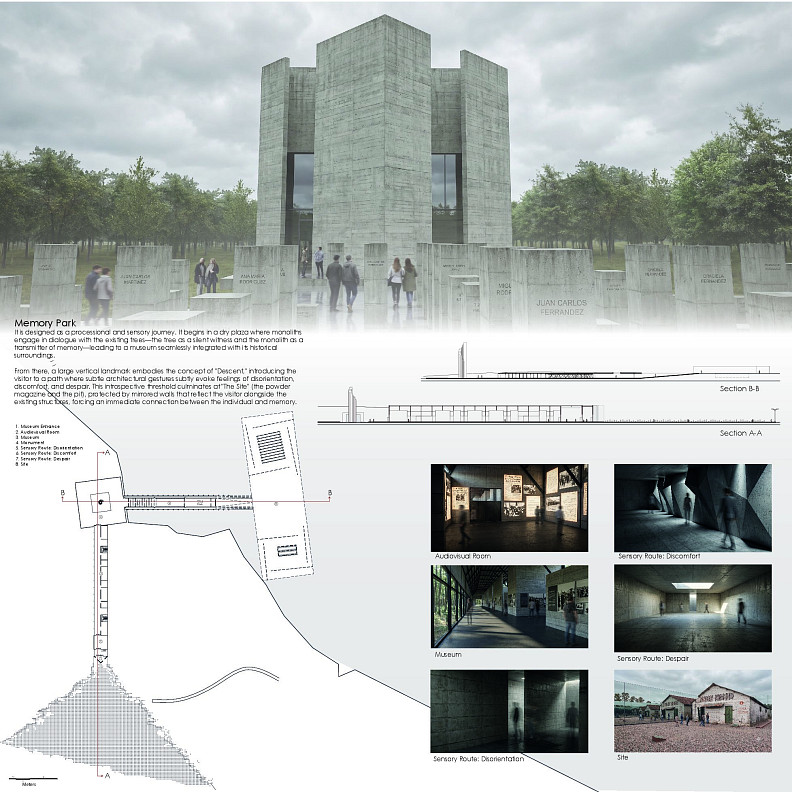
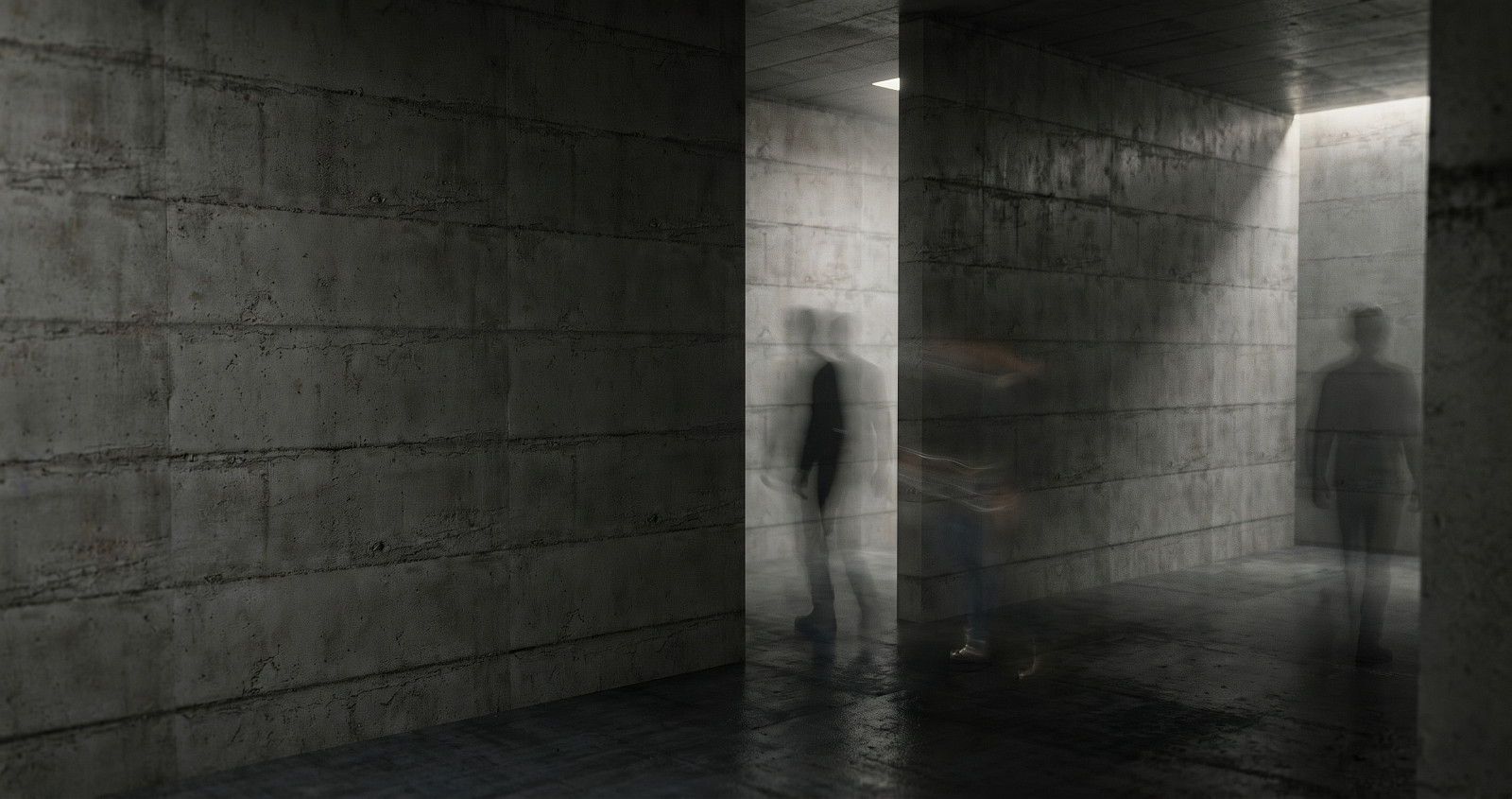
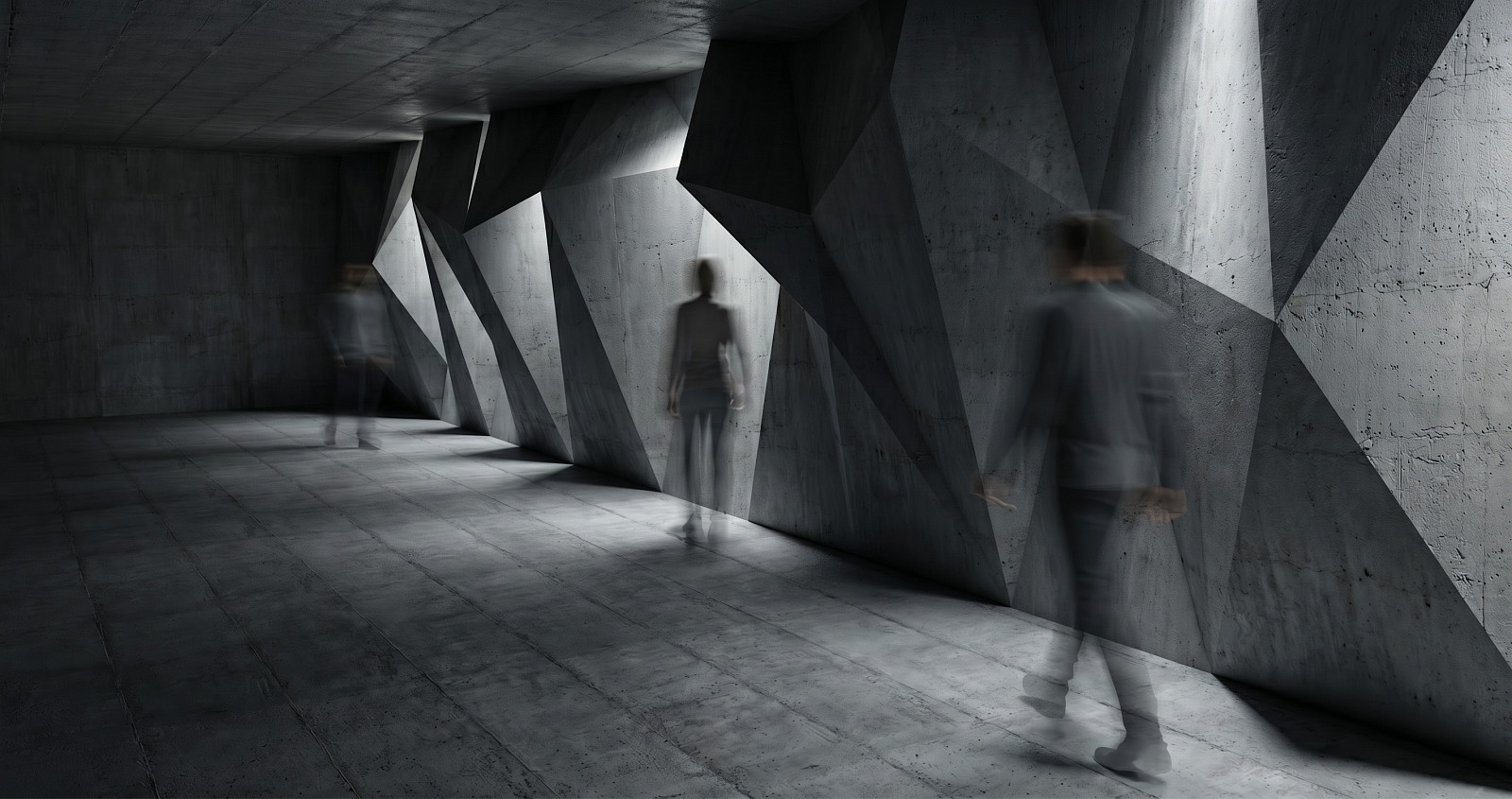
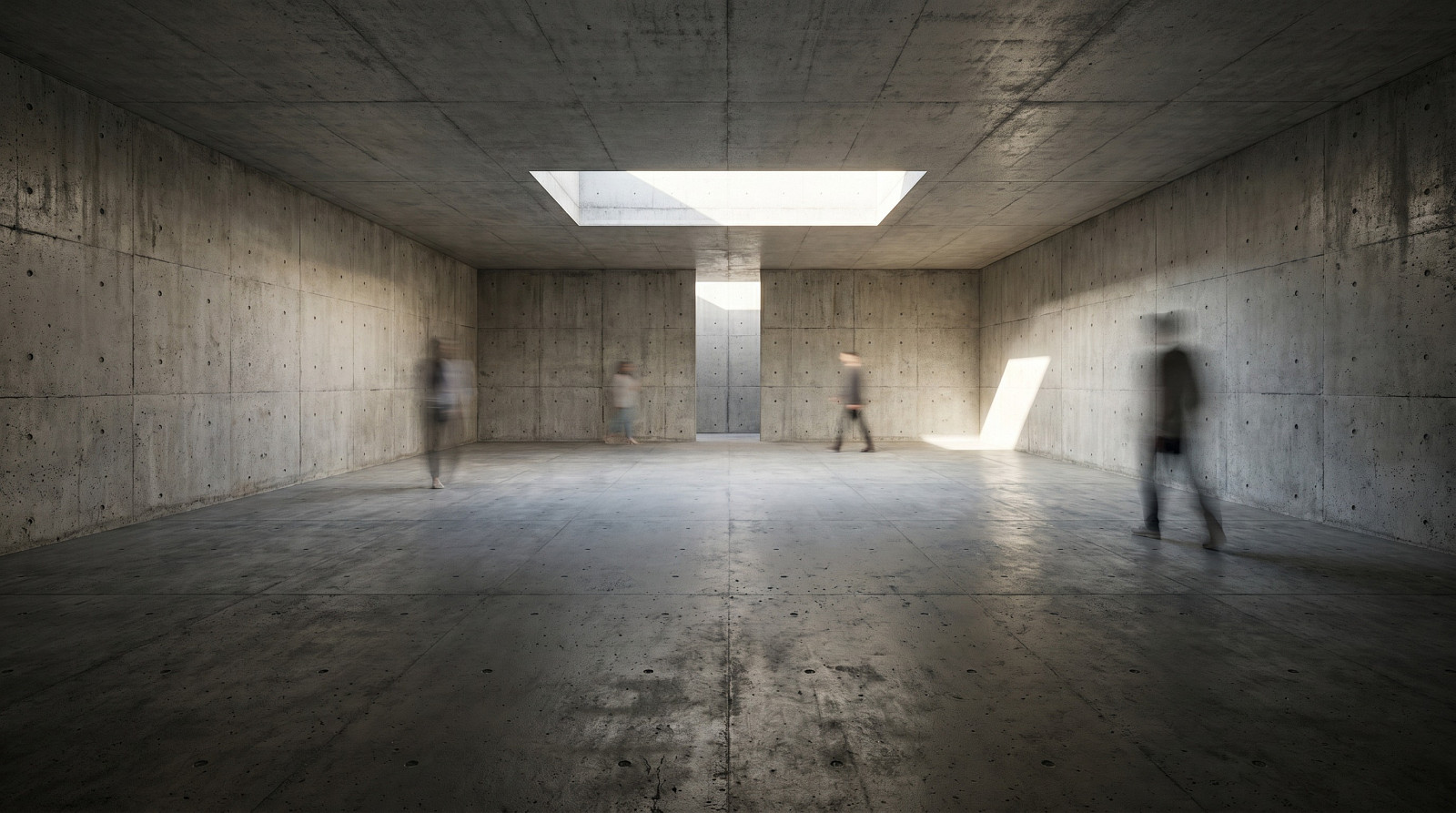
"Descent"emerges as an architectural reflection on one of the darkest periods in Argentine history: the last military dictatorship. The concept refers to the fall toward the limits of the human condition, materializing through space the horror of kidnappings, torture, forced disappearances, and the illegal appropriation of identities.
The project uses architecture and territory as devices of memory. Through morphological and spatial gestures, it seeks to engage the user through a controlled yet profound sensory atmosphere. The space is manipulated to evoke, respectfully and thoughtfully, the sensations that marked this historical rupture.
Project description
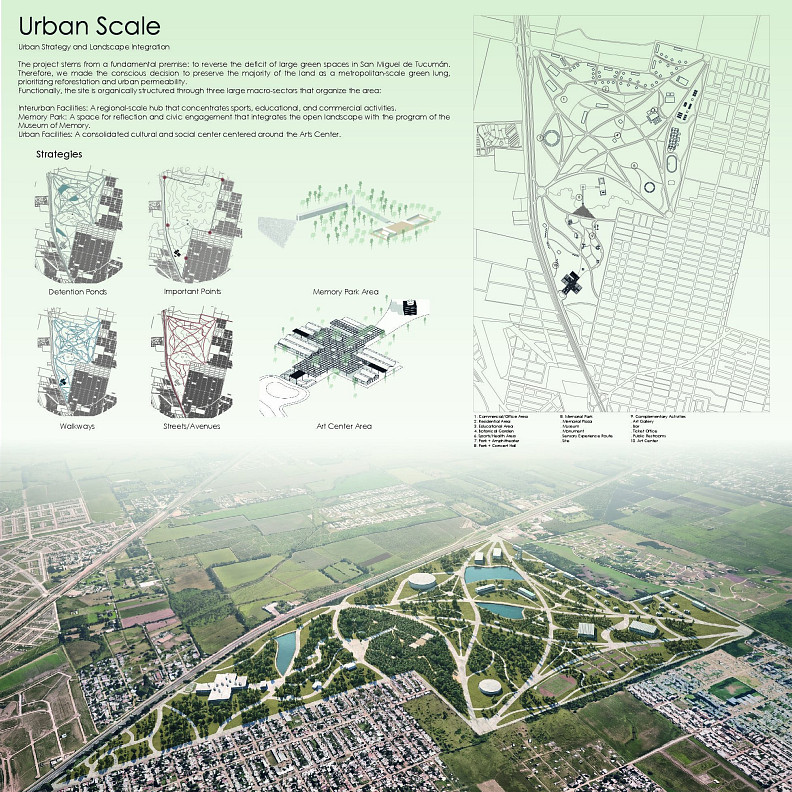
Urban Strategy and Landscape Integration
The project stems from a fundamental premise: to reverse the deficit of large green spaces in San Miguel de Tucumán. Therefore, we made the conscious decision to preserve the majority of the land as a metropolitan-scale green lung, prioritizing reforestation and urban permeability.
Functionally, the site is organically structured through three large macro-sectors that organize the area:
Interurban Facilities: A regional-scale hub that concentrates sports, educational, and commercial activities.
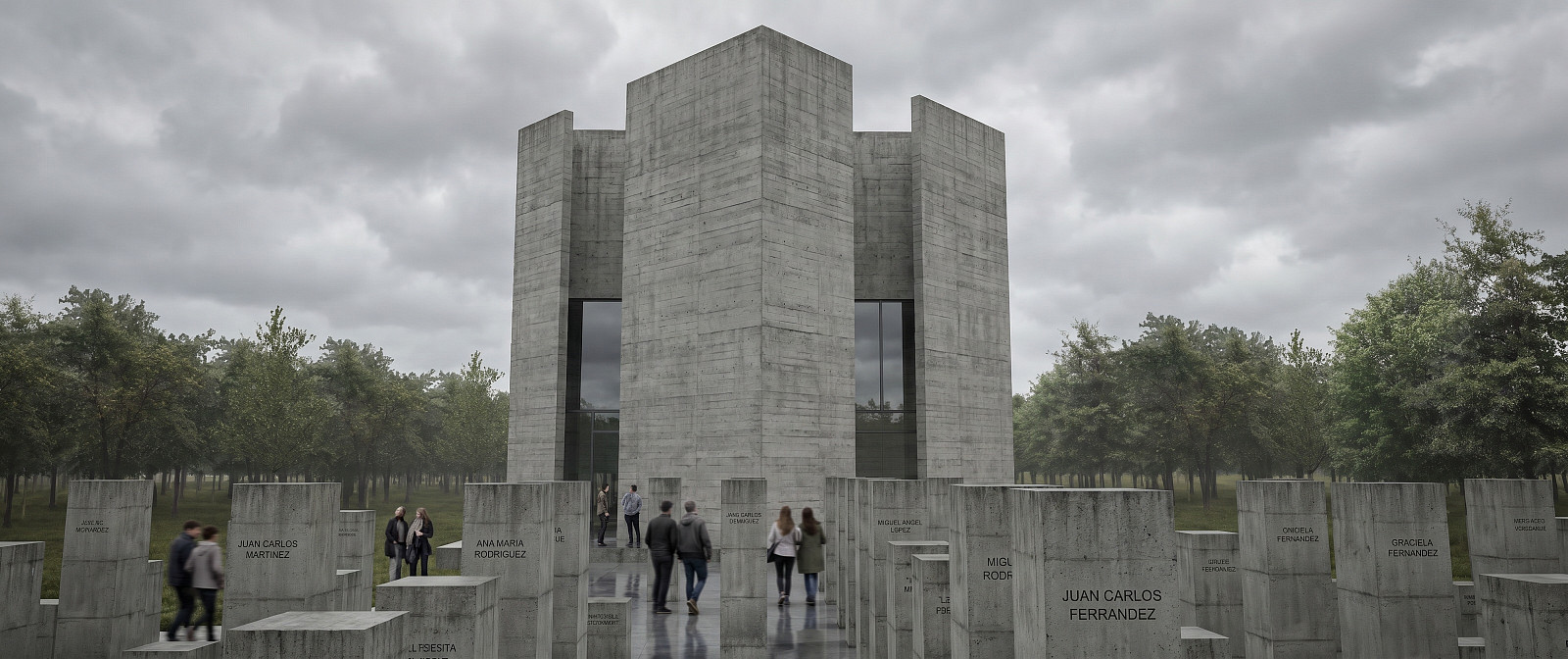
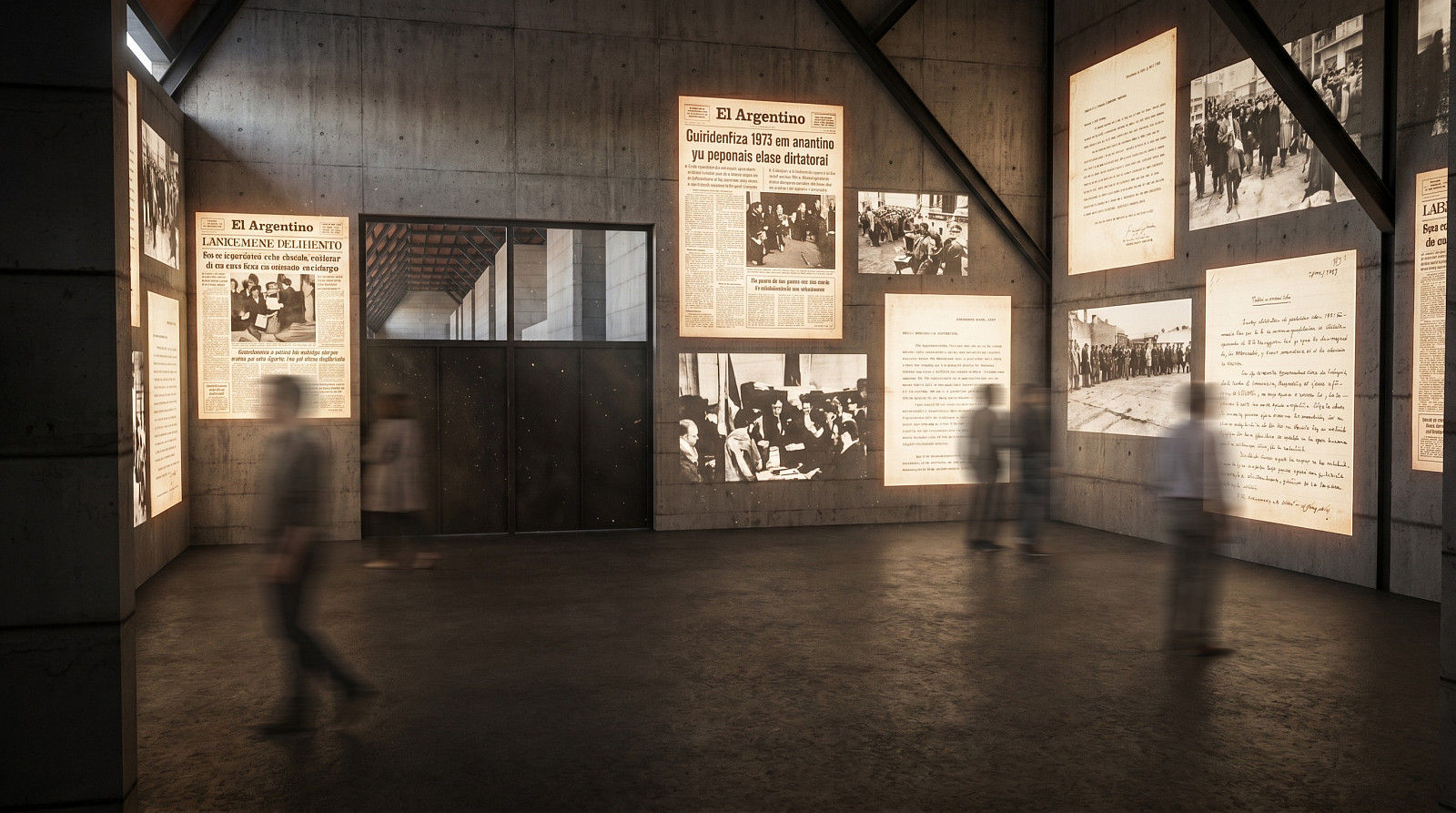
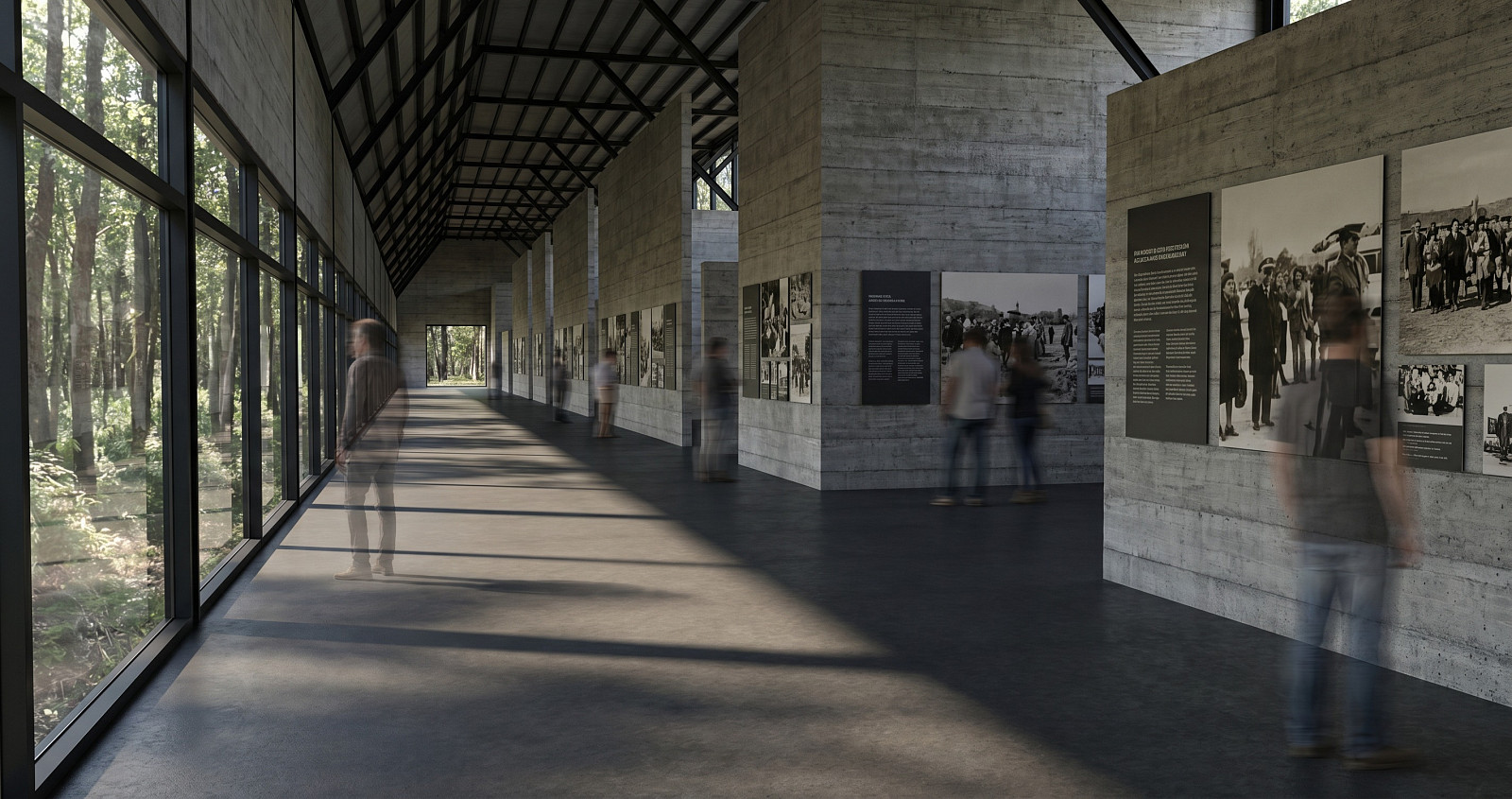
Memory Park: A space for reflection and civic engagement that integrates the open landscape with the program of the Museum of Memory.
Urban Facilities: A consolidated cultural and social center centered around the Arts Center.
Technical information
The project uses matter as an expressive tool to reinforce the intentions of the journey. The museum is consolidated through load-bearing exposed concrete walls that provide institutional solidity, crowned by a lightweight metallic roof and industrial openings that regulate natural light and the relationship with the surroundings. Conversely, the sensory journey radically changes its character upon becoming underground: it is executed purely and exclusively in reinforced concrete, a tectonic and dense material that, through its textures and shadows, enhances the sensations of oppression and introspection sought along the path
Documentation

Copyright © 2026 INSPIRELI | All rights reserved. Use of this website signifies your agreement to the Terms of Use, Privacy Policy, and use of cookies.