FROM MEMORY TO HOPE A Landscape of Remembrance and Transmission


Project idea
FROM MEMORY TO HOPE was born from a fundamental question: how can architecture respond to a place where people were denied identity, burial and remembrance?
Located on the former Golspie 9 mass graves site, the project does not seek to create a conventional memorial. Instead, it transforms the entire landscape into a spatial narrative that guides visitors through a process of reflection, remembrance and renewal.
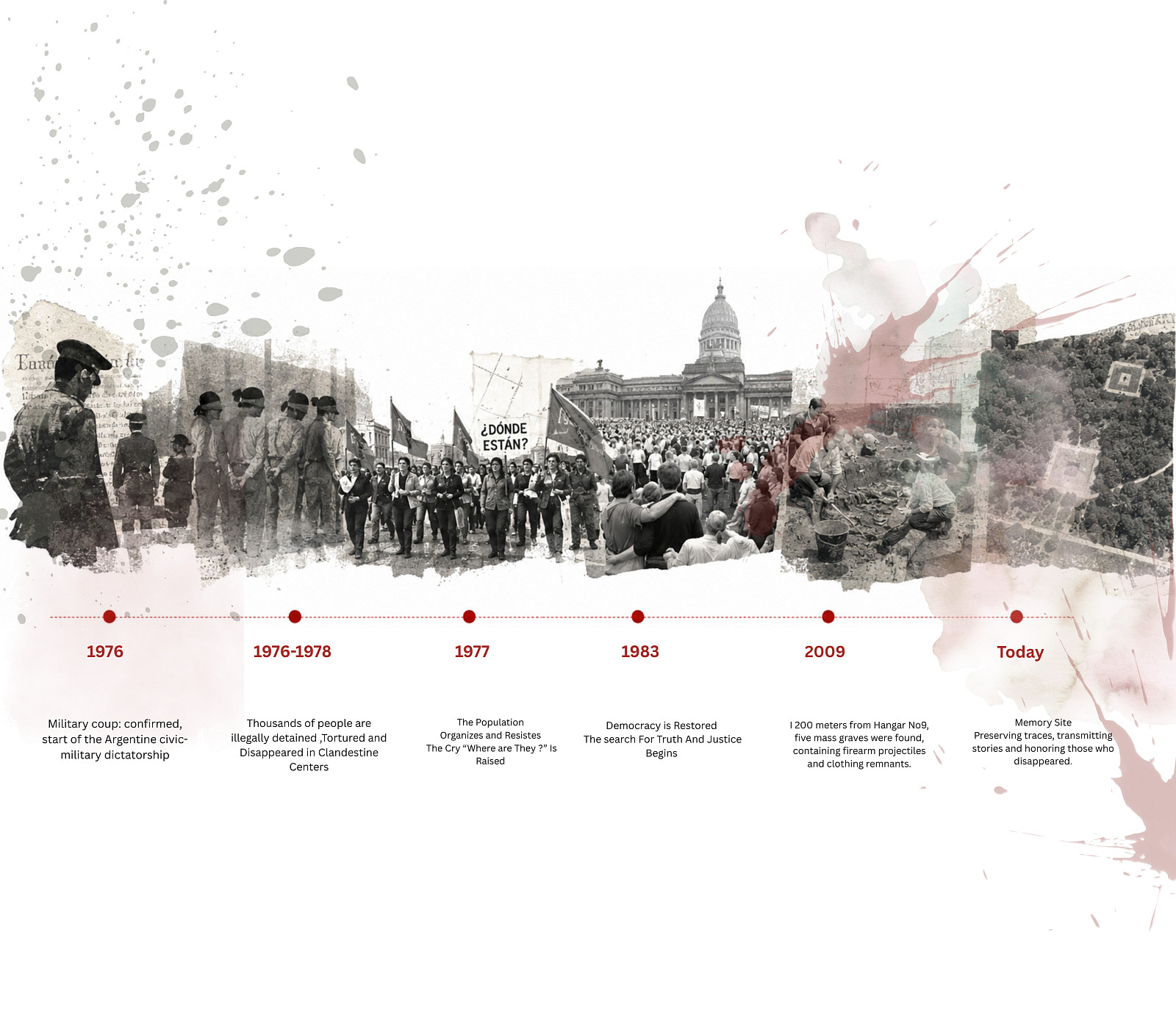
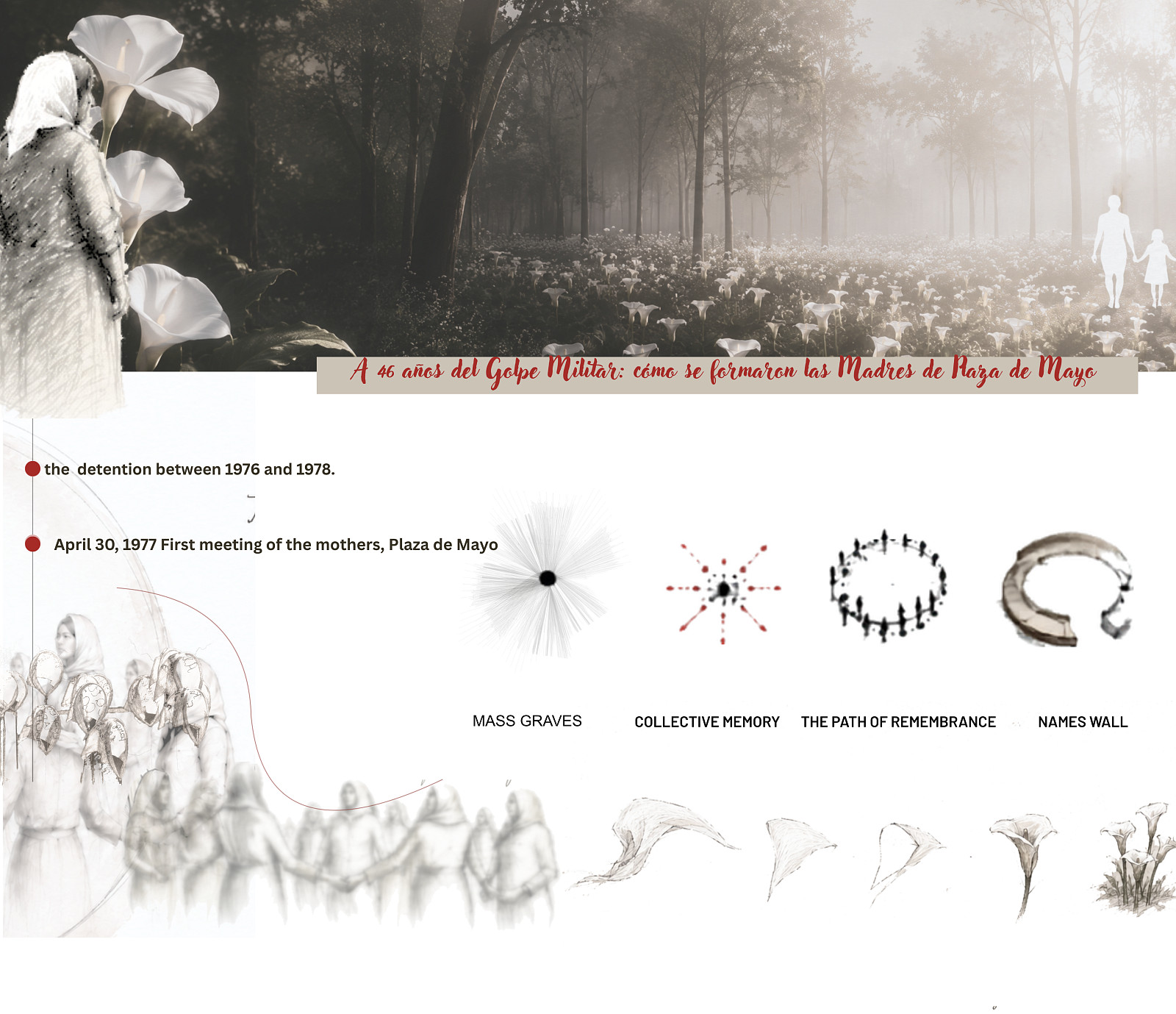
The proposal is inspired by the struggle of the Mothers of Plaza de Mayo, whose search for truth transformed personal grief into collective memory. Their legacy becomes the conceptual foundation of the project. Rather than representing absence through monumental forms, memory is embedded within the landscape itself.
The visitor experiences a gradual transition through three essential stages: Life, Memory and Hope.
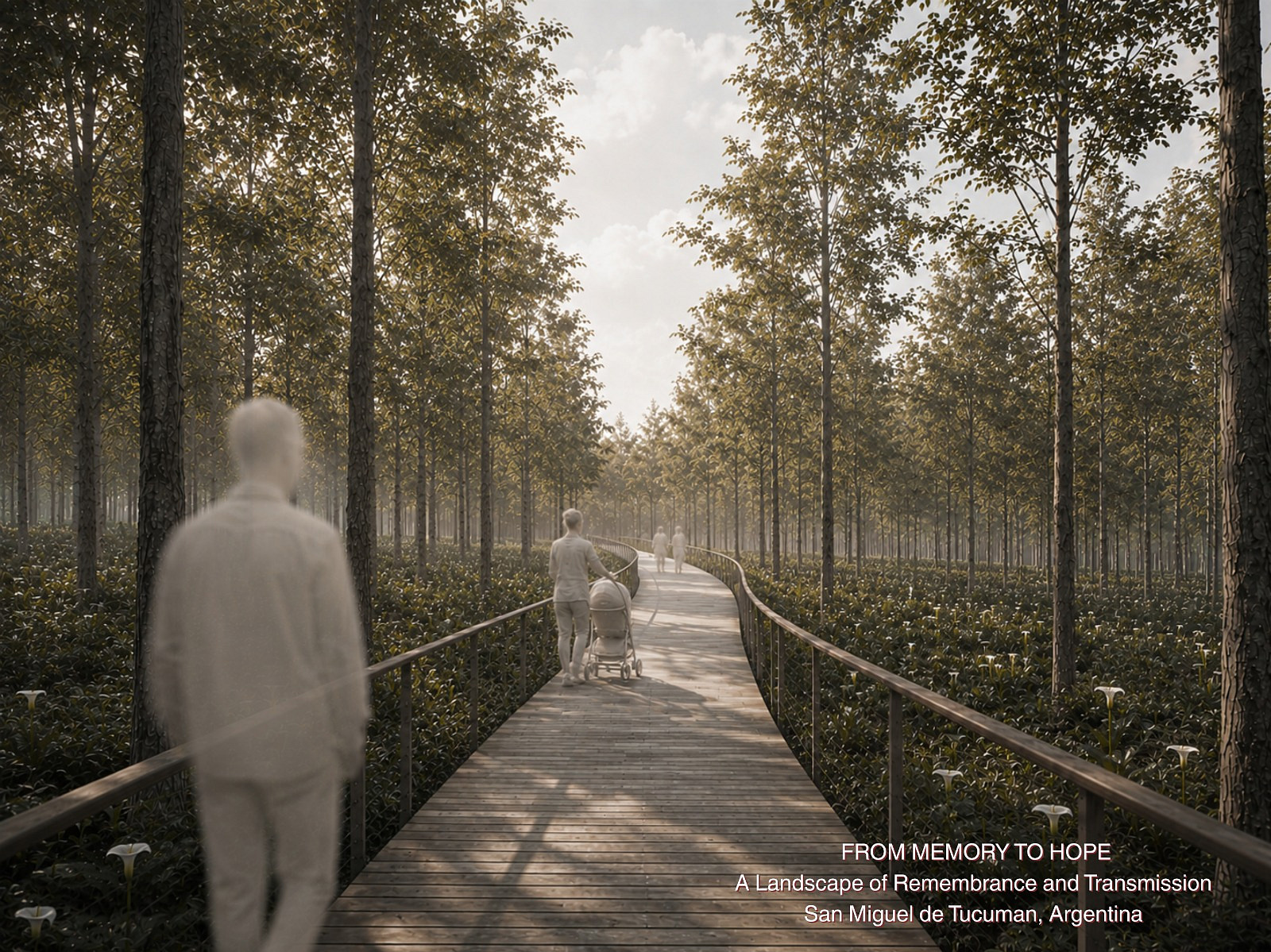
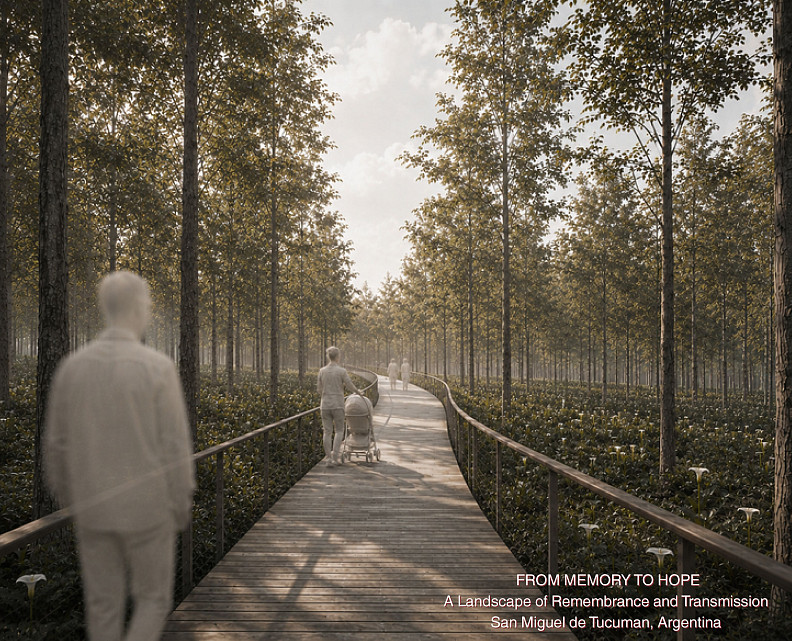
The journey begins within active public and cultural spaces that celebrate contemporary life and democratic freedom. As the path enters the forest, architecture progressively disappears and the landscape becomes the primary medium of experience. Silence, light, vegetation and time replace words and monuments.
At the heart of the site, the former mass graves are approached with dignity and restraint. White calla lilies emerge throughout the forest as living symbols inspired by the white scarves of the Mothers of Plaza de Mayo. Each flower represents a life interrupted, a name remembered and a refusal to forget.
Beyond remembrance, the project looks toward the future. Educational facilities, cultural spaces and community programs transform memory into knowledge and transmission. The project therefore proposes remembrance not as a destination, but as a responsibility carried forward by future generations.
FROM MEMORY TO HOPE transforms a landscape of absence into a landscape of learning, dialogue and collective resilience, where memory becomes an active force shaping the future.
Project description
FROM MEMORY TO HOPE transforms the former Golspie 9 mass graves site into a memorial landscape where remembrance, culture, ecology and education are woven into a continuous spatial journey. Rather than creating a static monument, the project proposes a spatial narrative that guides visitors through three interconnected sequences: Life, Memory and Hope.
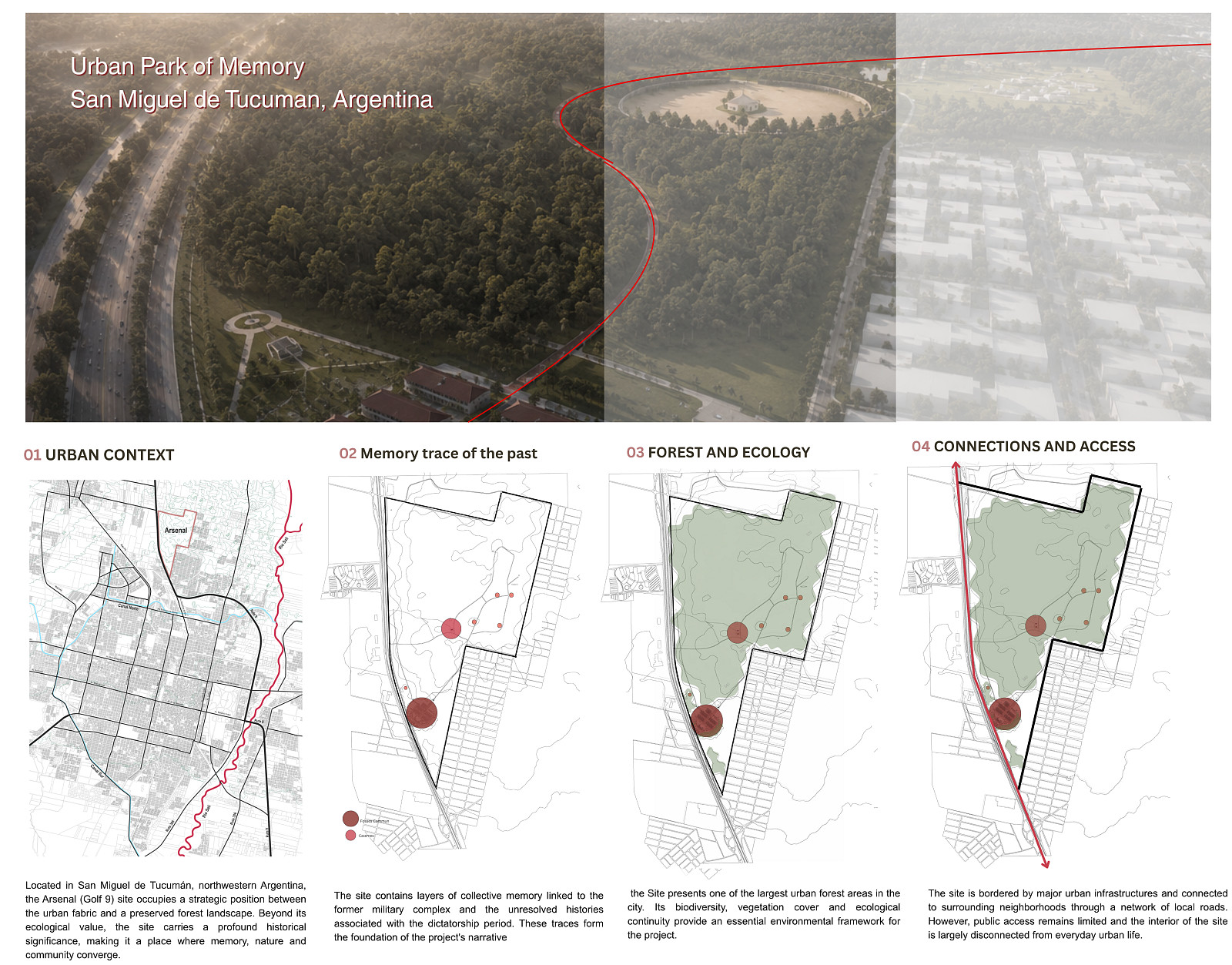
The journey begins within the Life Pole, located at the urban edge of the site. This active and open sequence accommodates cultural facilities, public gathering spaces, a concert hall, an amphitheater, a historical exhibition pavilion, an audiovisual hall and an interpretation center. Existing military barracks are carefully preserved and rehabilitated to host these new functions, transforming former spaces of control into places of culture, dialogue and collective expression. Acting as a gateway between the city and the memorial landscape, this pole celebrates contemporary life and the democratic freedoms regained after a period marked by violence and repression.
As visitors move away from the urban environment, the path gradually enters the forest. Architecture becomes more discreet, sounds diminish and the landscape takes over. This transition prepares visitors for an encounter with memory.
At the heart of the project lies the Memory Pole, organized around the former mass graves and the existing forest. Unlike the other sequences, architecture intentionally recedes here to allow the landscape itself to become the primary medium of remembrance. The memorial path crosses the forest and gradually leads visitors toward the Name Wall, conceived as the symbolic core of the project. Designed as an open circle, the wall represents interrupted lives, incomplete families and a history that remains unfinished. The engraved names and dates restore a presence to those who were erased from history.
This memorial sequence serves as a living tribute to both the victims and the Mothers of Plaza de Mayo. Many of the victims buried within the mass graves were denied identification, burial rituals and the possibility of a proper farewell. Rather than responding through a monumental gesture, the project embeds remembrance within the landscape itself. Following ecological research and considering the subtropical climate and fertile soils of Tucumán, white calla lilies were selected as a commemorative species capable of thriving on the site. Inspired by the iconic white scarves of the Mothers of Plaza de Mayo, these flowers gradually emerge throughout the forest and accompany visitors along the memorial journey. More than a symbolic element, they become a living ceremony for those who never received one. Each flower recalls an interrupted life, a forgotten name and a collective commitment against erasure.
Beyond the memorial core, the journey continues toward the Hope Pole, conceived as an educational hub dedicated to future generations. Flexible classrooms, outdoor learning environments, workshops and cultural facilities encourage dialogue, learning and transmission. Here, memory is transformed into knowledge, ensuring that the lessons of the past remain accessible and meaningful for the future.
The project is further supported by ecological restoration strategies that preserve the existing forest, enhance biodiversity and strengthen the relationship between landscape and memory. Through the integration of architecture, nature and education, the proposal transforms a place associated with disappearance into a landscape of knowledge, resilience and collective hope.
FROM MEMORY TO HOPE ultimately proposes that remembrance should not remain fixed in the past, but continue to live through culture, education and future generations.
Technical information
The project combines heritage rehabilitation, contemporary architecture and landscape design to transform the Golspie 9 mass graves site into a memorial, cultural and educational park.
The intervention is based on the preservation of former military barracks, which are adapted to accommodate an interpretation center, a historical exhibition pavilion, an audiovisual hall, cultural spaces and community facilities. New architectural interventions adopt a restrained and respectful language in order to preserve the historical identity of the site.
The design of the new facilities, particularly the concert hall and the educational hub, is inspired by the proportions, structural rhythm and roof typologies of the existing barracks. This contemporary reinterpretation establishes a strong architectural continuity between the site's heritage and the new interventions.
The project prioritizes the use of local and sustainable materials such as timber, brick and bio-based materials adapted to the regional context. The primary structures are conceived according to low-impact construction principles, promoting prefabrication, reduced carbon footprint and long-term energy performance.
The project is structured around a network of pedestrian pathways, boardwalks and public spaces connecting the three main sequences: Life, Memory and Hope. The memorial pole prioritizes a landscape-based approach in which the existing forest becomes the primary medium of remembrance through the Name Wall, contemplative pathways and commemorative Calla Lily plantations.
The environmental strategy focuses on preserving the existing vegetation cover, enhancing local biodiversity, using species adapted to Tucumán's subtropical climate and integrating passive design solutions that improve daylighting, natural ventilation and thermal comfort.
Documentation

Copyright © 2026 INSPIRELI | All rights reserved. Use of this website signifies your agreement to the Terms of Use, Privacy Policy, and use of cookies.