TERRACES LODGE: Re-Inhabiting the Next Generation of Rice Terraces Farmers Through Clustered Infill Infrastructure and Mountain


Project idea
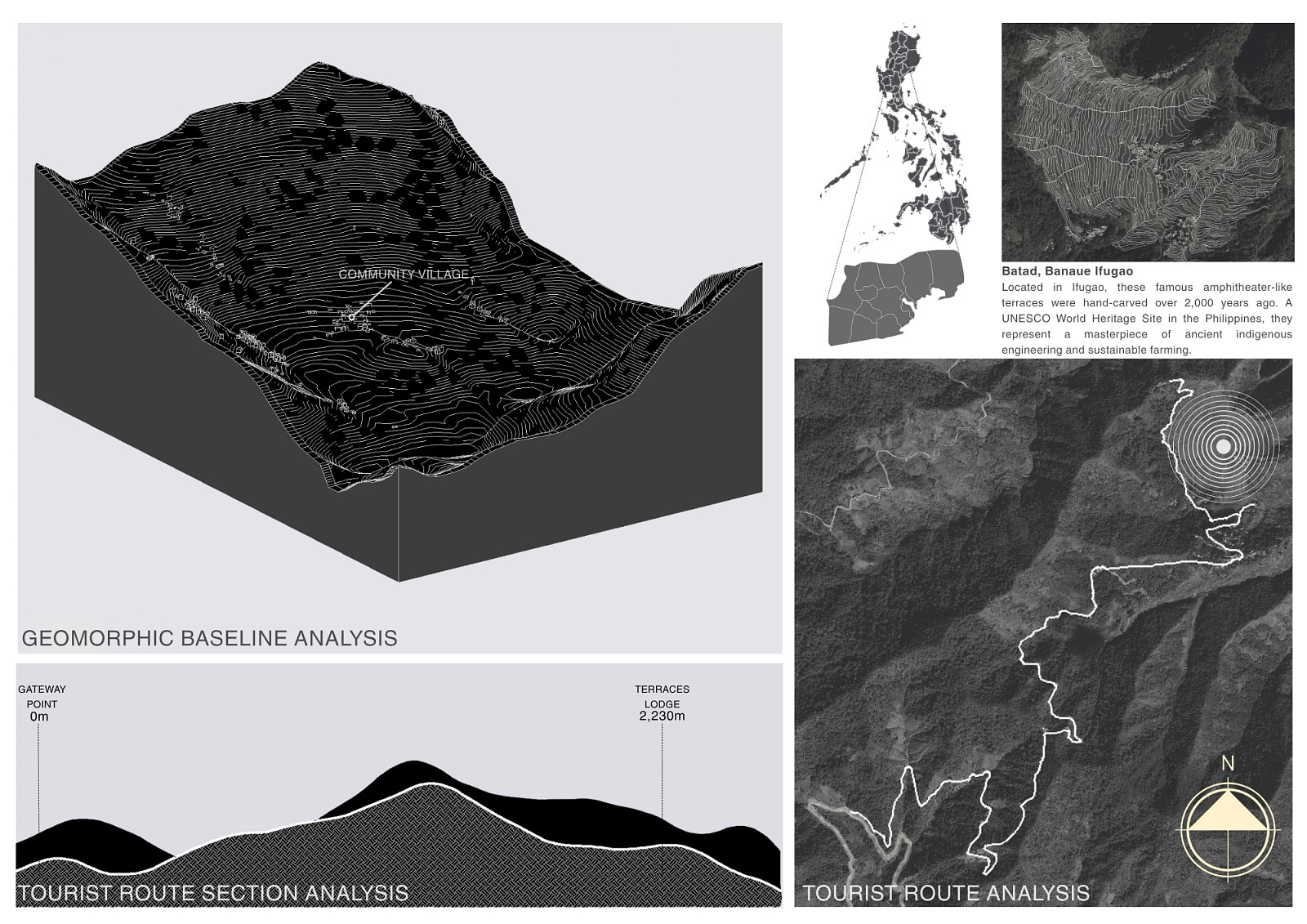
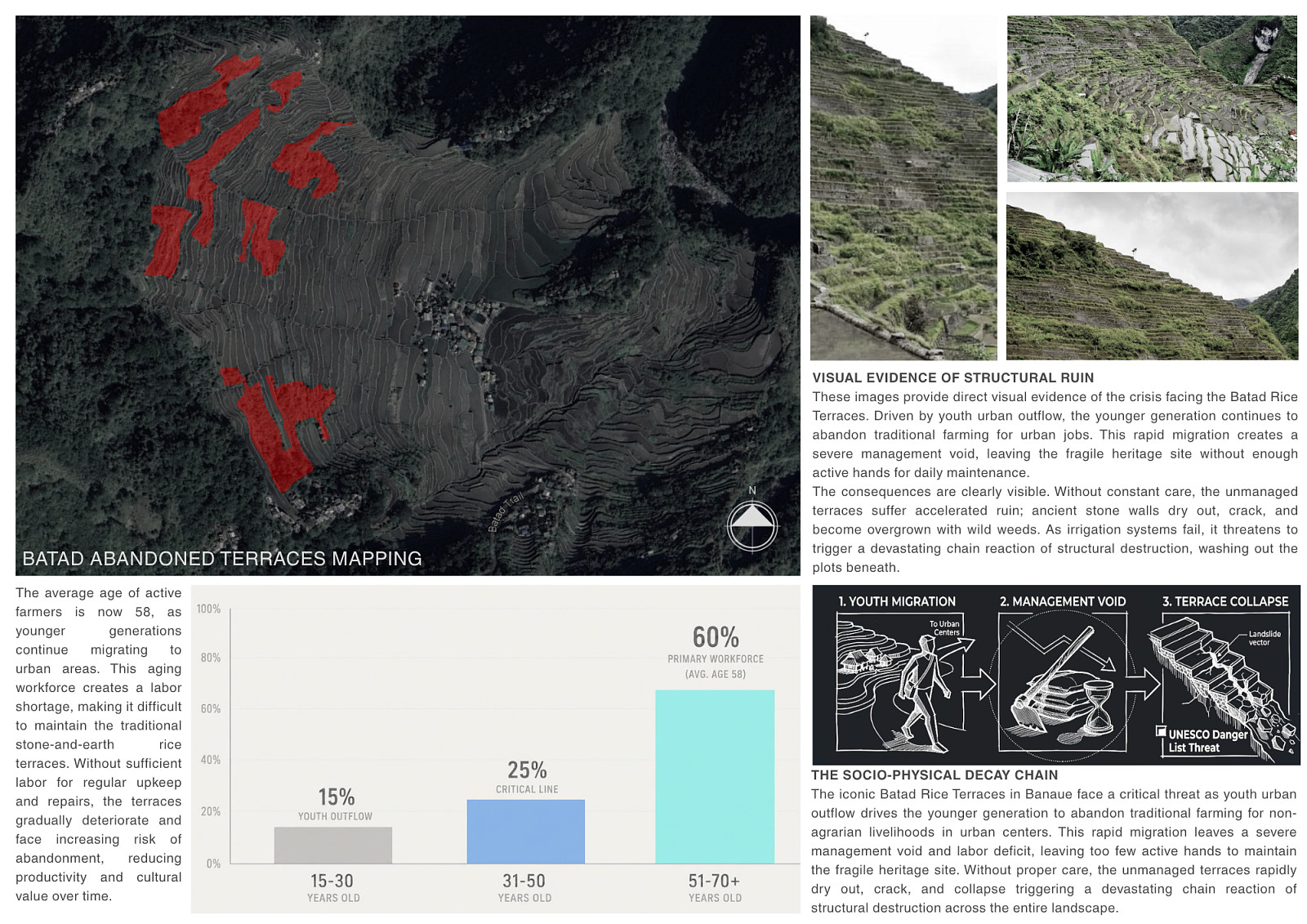
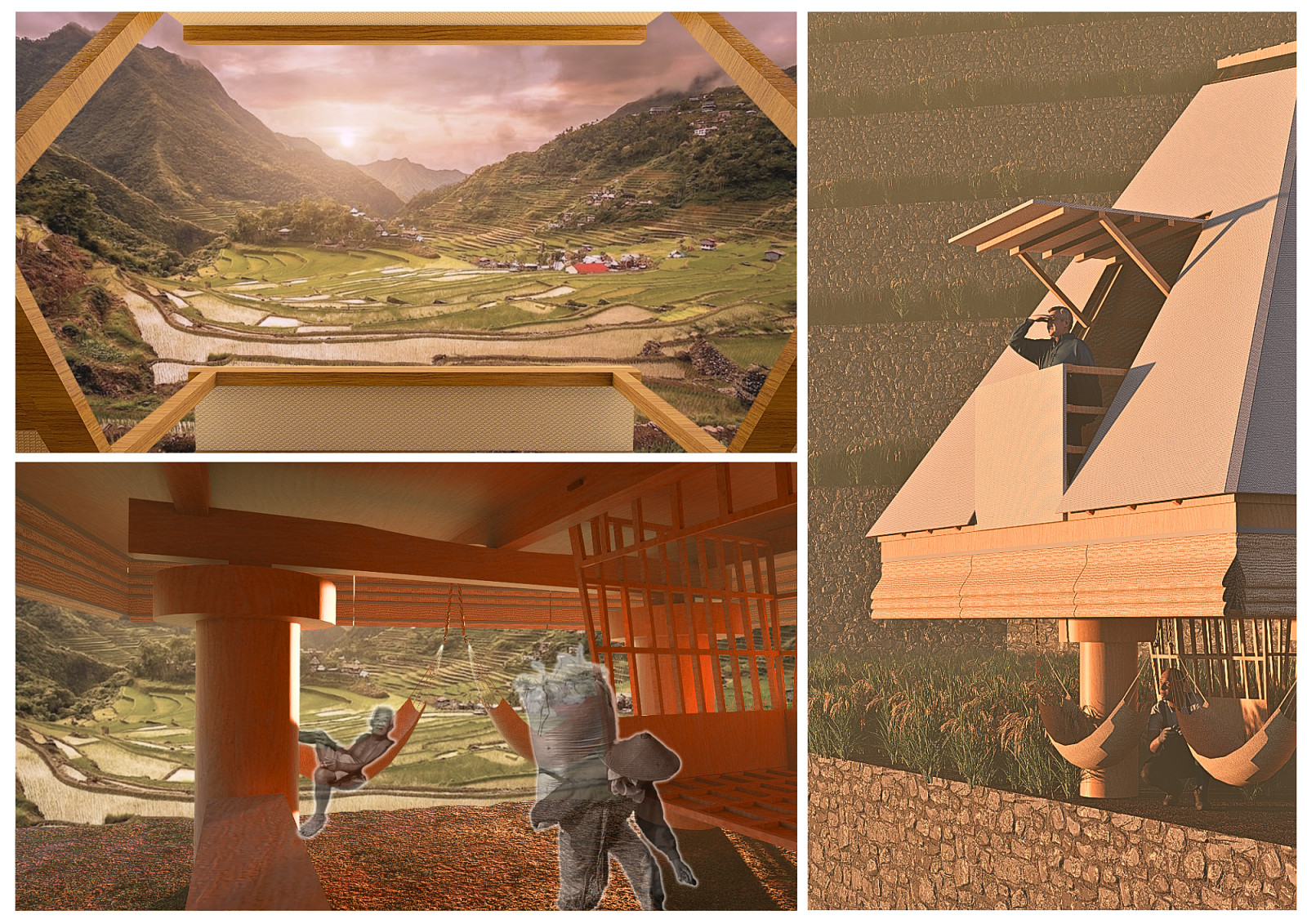
The core concept, "TERRACES LODGE: Re-Inhabiting the Next Generation of Rice Terraces Farmers," addresses the critical socioeconomic and environmental decline of the UNESCO World Heritage Rice Terraces in the Philippine Cordilleras. As the younger generation migrates to urban centers, ancestral farming knowledge is disappearing, leaving these hand-carved, gravity-irrigated ecosystems vulnerable to collapse. The project introduces a symbiotic architecture that serves a dual purpose: a decentralized ecotourism network and a vital agrarian infrastructure hub.
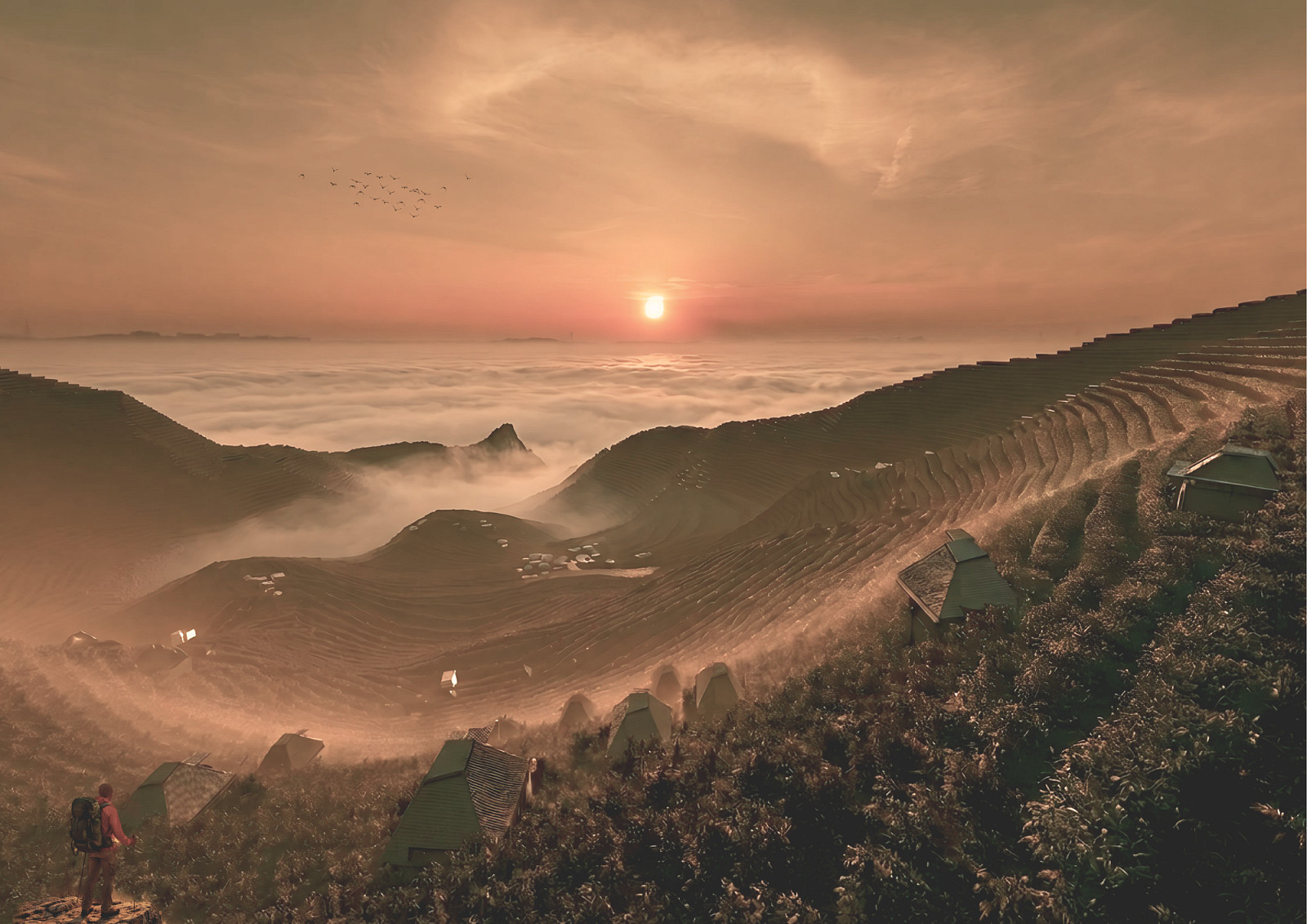
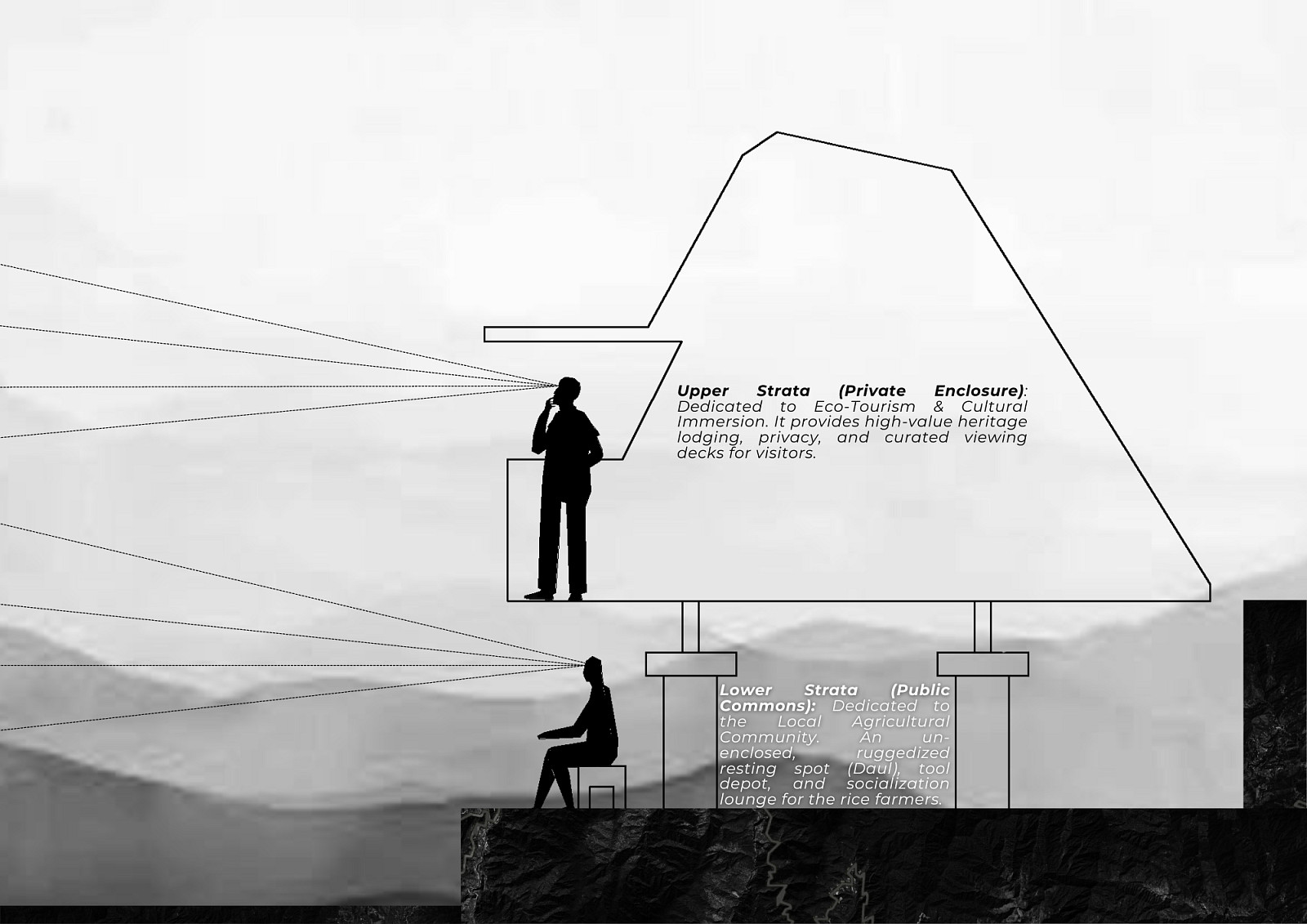
By inserting modular, unobtrusive "lodges" directly into the steep topography, the design creates a self-sustaining economic loop. The upper levels cater to tourists seeking an immersive, authentic homestay experience, with overnight revenues directly channeled into a community fund dedicated to repairing and maintaining the surrounding mud and stone retaining walls. Conversely, the lower levels are exclusively reserved for local farmers, transforming into rest spots, equipment storage, and processing nodes.
This project bridges the gap between historical heritage preservation and modern livelihoods. It reframes the rice terraces not merely as static monuments, but as living, evolving landscapes. By providing the youth with viable economic incentives and modern, digitized agricultural tools, the project ensures they have a compounding reason to remain, reclaim their heritage, and protect their ancestral lands from ecological decay.
Project description
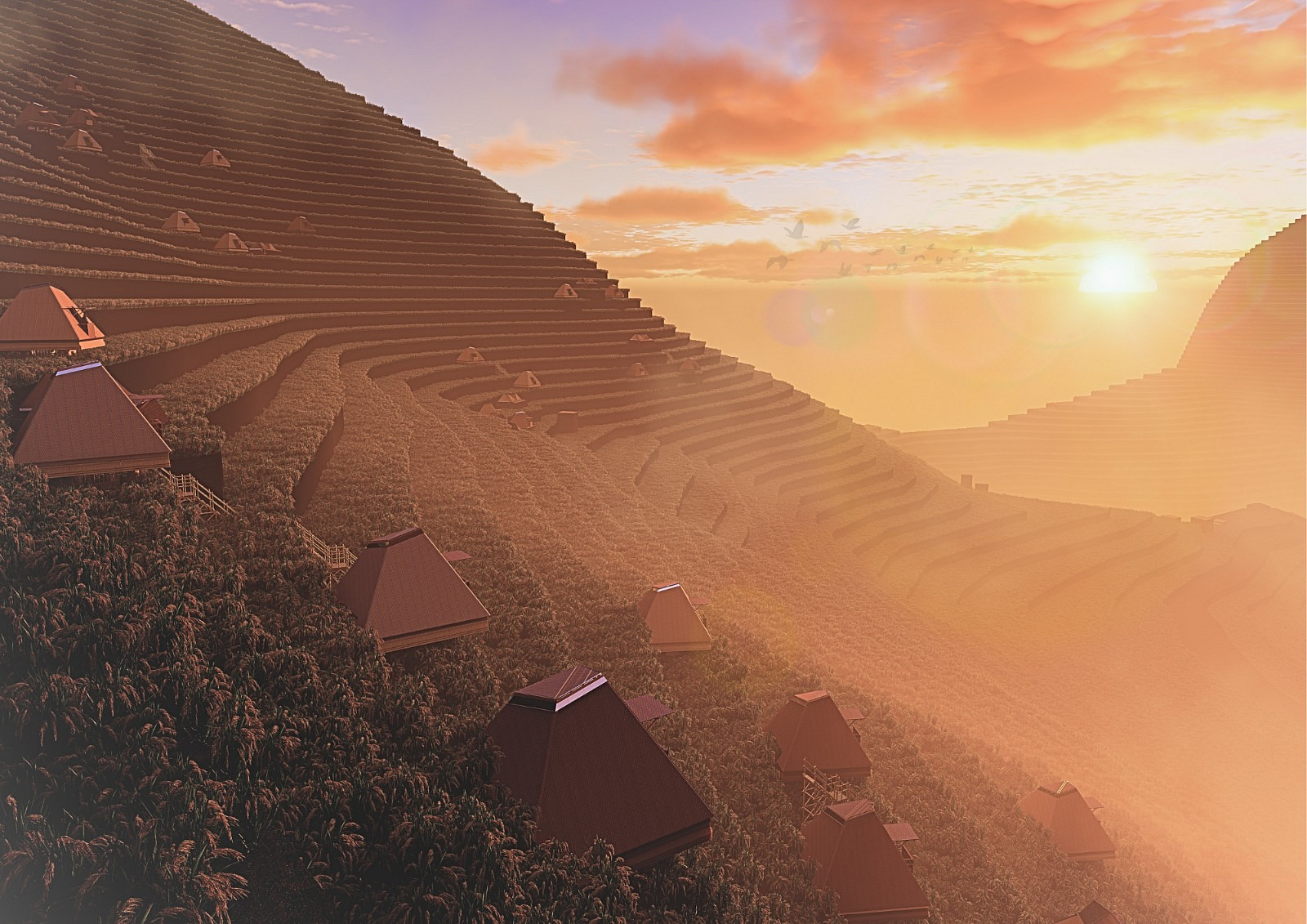
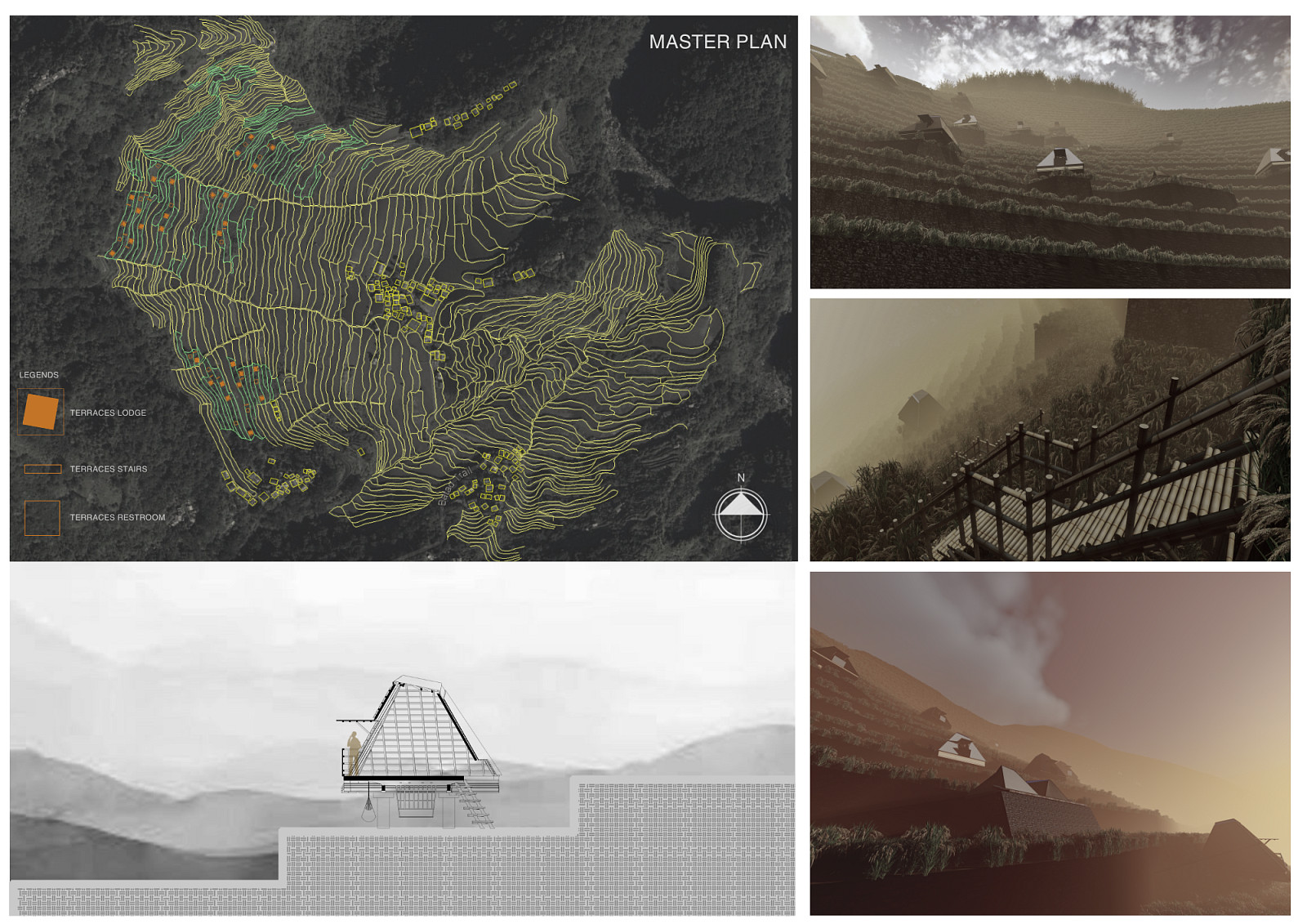
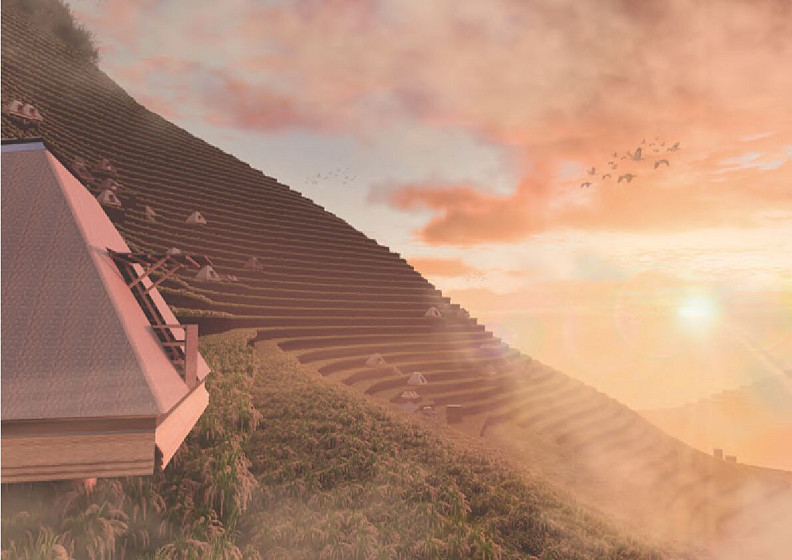
Set against the rugged, vertical landscape of the Philippine Cordilleras, this urban and rural design intervention employs Clustered Infill Infrastructure to minimize physical and visual disruption to the environment. The architectural language draws deep inspiration from indigenous building typologies, mimicking the stepped geometry of the giant mountain staircases. Rather than standard monolithic resorts that scar the hillsides, this project utilizes a scattered, micro-modular layout that mimics traditional cluster settlements.
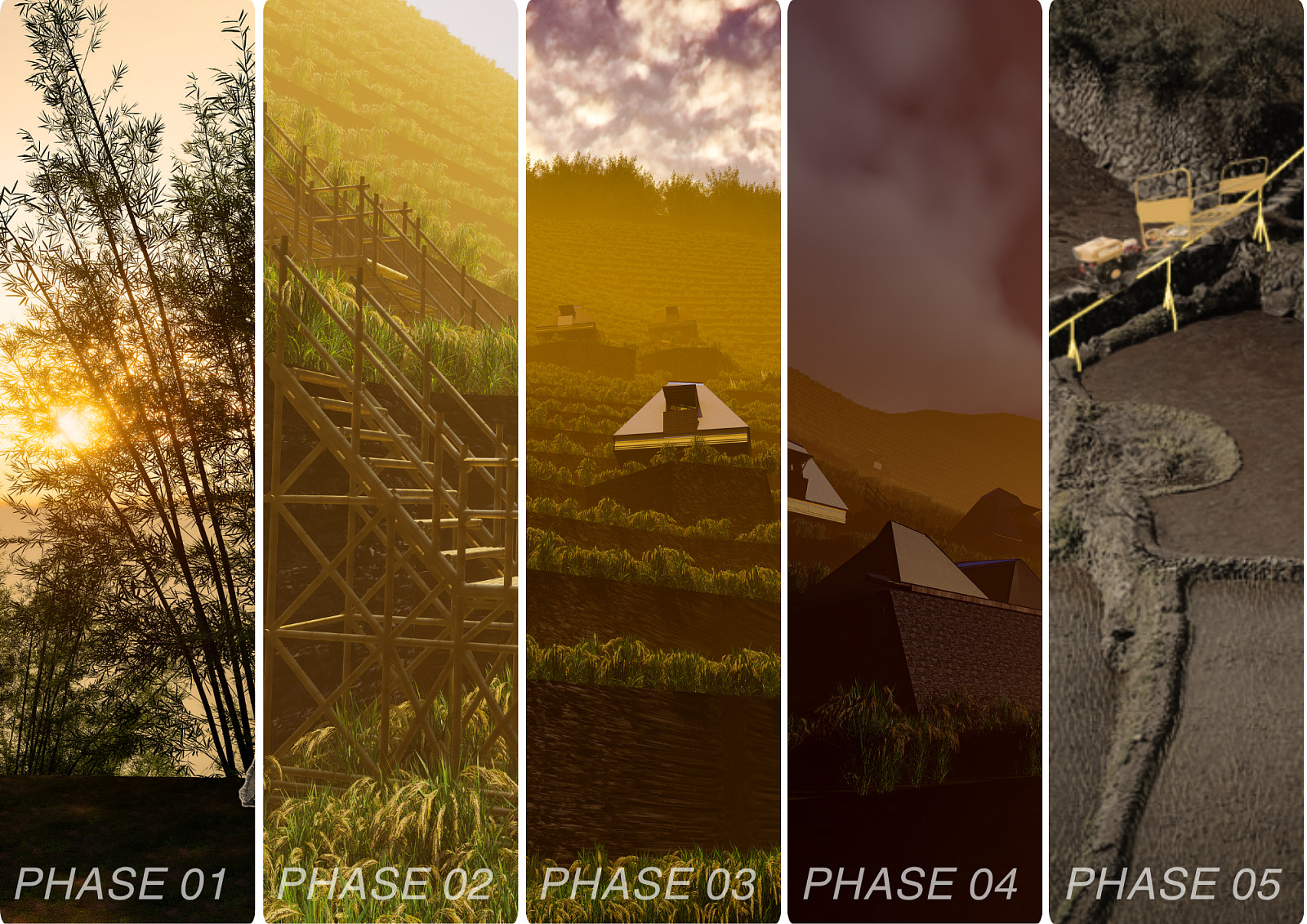
The master plan integrates an innovative Mountain Transit System designed to alleviate the brutal physical labor traditionally required to navigate the steep terrain. This network facilitates the efficient transport of harvested rice, heavy maintenance stones, and tourists from low-lying entry valleys to higher altitude clusters. The design creates clear, stratified zoning to protect indigenous privacy while encouraging cultural exchange.
Public community spaces are interwoven with tourist pathways, leading to localized workshop hubs where visitors can learn about ancient engineering, gravity-fed irrigation management, and organic farming directly from elders. Ultimately, the project functions as a decentralized living museum. It protects the visual integrity of the natural landscape while establishing an active, climate-resilient framework that empowers the community to withstand both modern economic pressures and the heavy rainfall that threatens soil erosion.
Technical information
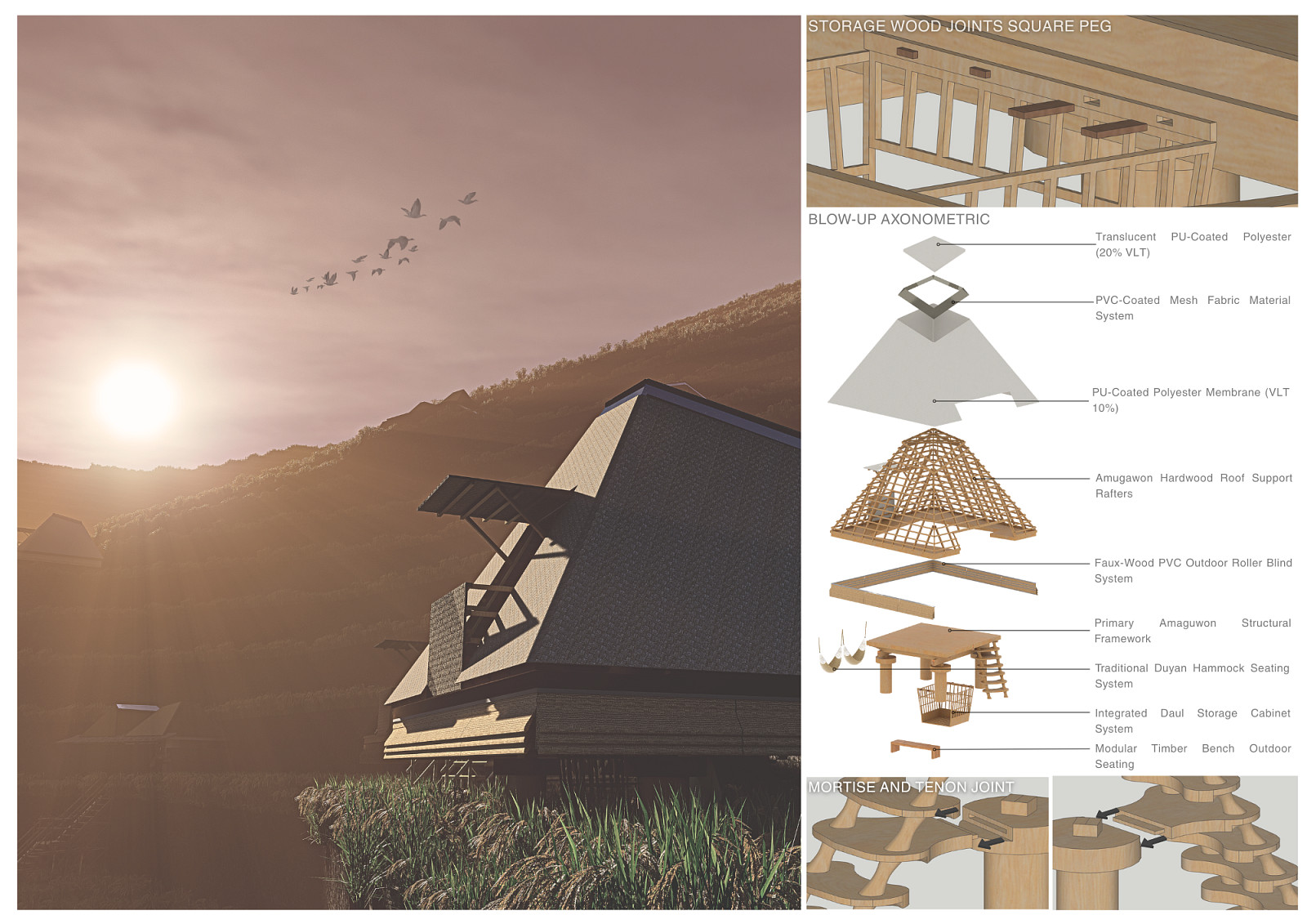
From a technical standpoint, the design responds directly to the complex geology, gravity-irrigation pathways, and structural mechanics of mountain terraces. Structurally, each lodge relies on an adaptable, lightweight pier foundation system driven into stable underlying rock strata, ensuring zero disruption to the delicate mud walls and water channels that prevent landslides. Materials are sourced using a hyper-local, circular approach: sustainable structural bamboo, engineered timber, and repurposed river stones are utilized to lower the embodied carbon footprint.
The buildings are engineered to optimize microclimatic conditions. The multi-tiered roofs are pitched steeply to manage heavy tropical downpours and redirect clean rainwater into secondary filtration tanks for domestic use, ensuring the primary agricultural mountain springs remain unpolluted. The split-level configuration features a porous, naturally ventilated upper volume for guest rooms, reducing cooling loads, and a thermally insulated lower concrete/stone mass for cool agricultural storage and farmer facilities.
The technical centerpiece is the integration of the Mountain Transit System—a low-impact monorail network that tracks along existing terrace boundaries. This system interfaces with localized graywater treatment setups, ensuring that any effluent from tourist activities is treated on-site via root-zone bioretention basins before discharging safely into the lower agricultural ecosystems, maintaining the strict water-balance cycle passed down through generations.
Documentation

Copyright © 2026 INSPIRELI | All rights reserved. Use of this website signifies your agreement to the Terms of Use, Privacy Policy, and use of cookies.