Athiru (Boundaries)


Project idea
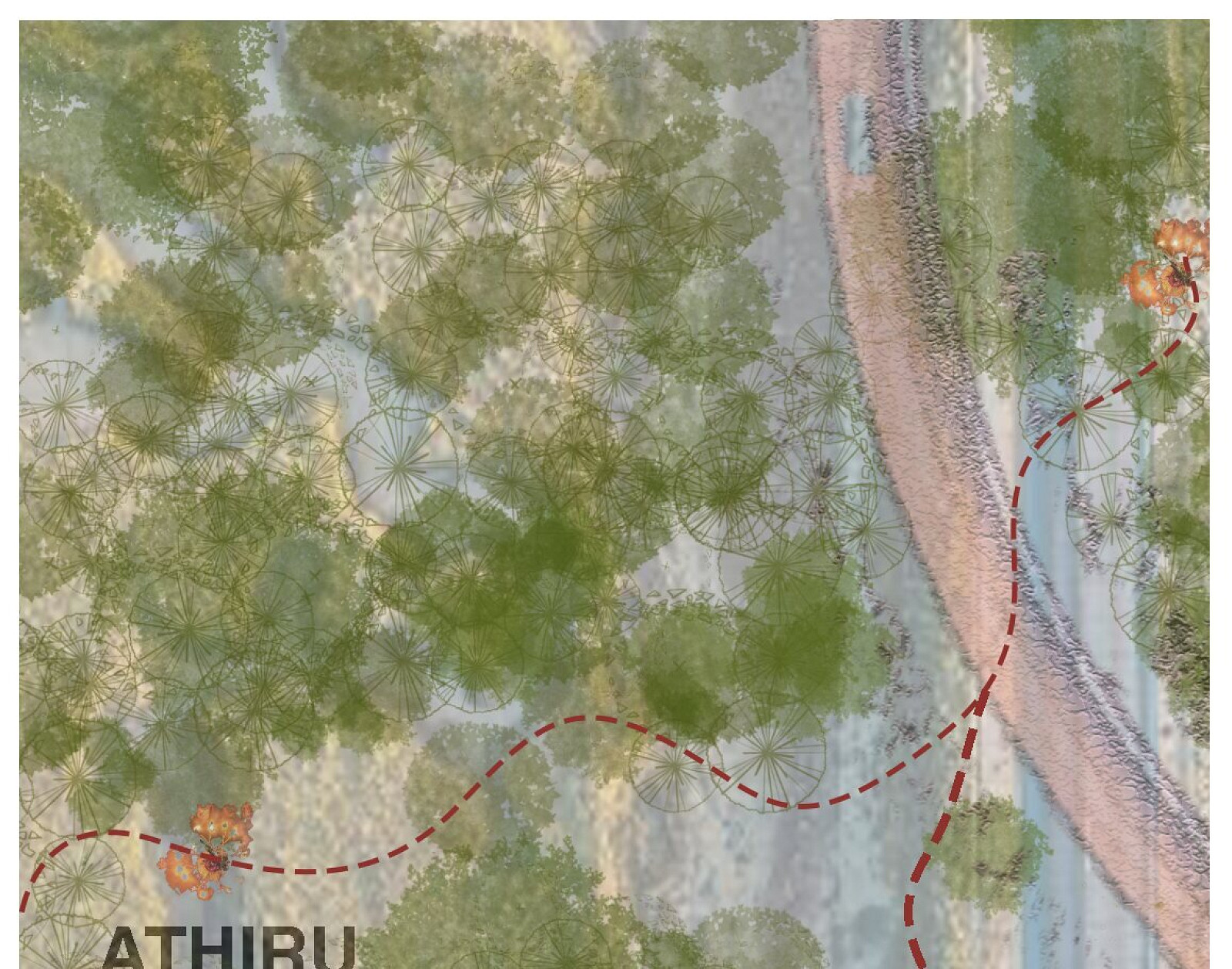
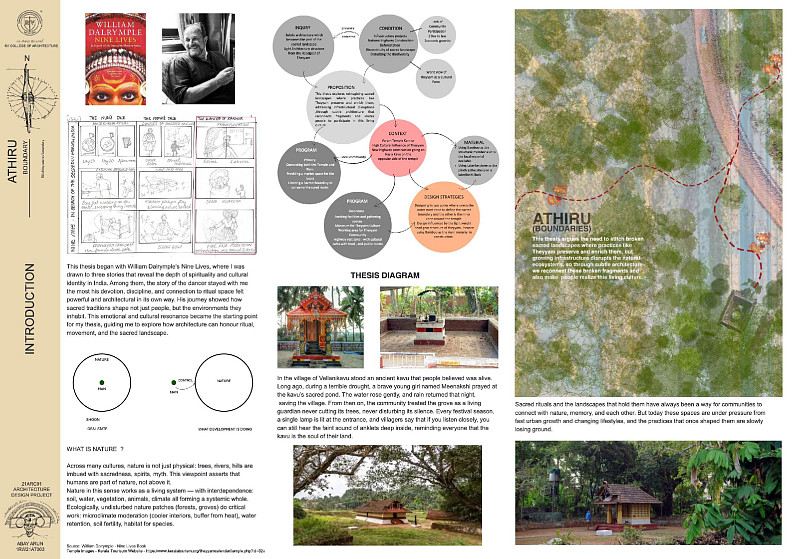
This thesis argues the need to stitch broken sacred landscapes where practices like Theyyam( A Cultural Practice in the state of Kerala India ) preserve and enrich them, but growing infrastructure disrupts to natural ecosystems, so through subtle architecture we reconnect these broken fragments and also make people realize this living culture.
Project description
This thesis looks at a larger agenda of Biodiversity in the present growing infrastructure and urban landscape and looks at how architecture can bring a balance into nature and design looks into improvising the practice of Theyyam as a Culture for the future Generations. It limits itself to the knowledge about what Theyyam is, form the community of the place where is research as been done and books. The design also doesn't look into a seasonal time of Theyyam at the place.
Technical information
PROJECT TYPE: Hybrid - Institutional (Theyyam Cultural Space for Tourist ) + Commercial ( Market Space for Locals ).
AREA: Overall Site Area- 31,330 sqm ( 7.742 acres), Built-6080 sqm; Open-23,932 sqm.
DESIGN APPROACH: 1.The design mainly focuses on both landscape and built strategies.
Landscape Strategy:
The idea is to create an edge condition around the sacred geography so that it clearly defines the boundary of the space. This helps show that the area is not meant for further exploration and creates a sense of enclosure to the forest
by joining the broken parts and recreating the forest.
Built Strategy:
The built form sits quietly within the sacred geography and does not disturb the natural surroundings. The design blends
with nature and respects the forest around it.
2.Material Choice:
The materials used are locally available, mainly bamboo and laterite stone, to keep construction simple, sustainable, and connected to the region.
3. Community Involvement:
The design gives work opportunities to local daily wage workers through the use of local building methods. It also provides spaces for Theyyam artists to stay, perform, and share their cultural knowledge.
4.The design respects nature and sees humans as a small part of the larger natural system. Rainwater harvesting and
natural water systems are included to make the design more sustainable and eco-friendly.
Documentation

Copyright © 2026 INSPIRELI | All rights reserved. Use of this website signifies your agreement to the Terms of Use, Privacy Policy, and use of cookies.