Patipolli: Weaving Resilience in the Patikar Community through Cultural Revitalization and Sustainable Tourism


Project idea
Can a piece of woven heritage survive when the very ground it grows on and the people who tend to them, begin to disappear?
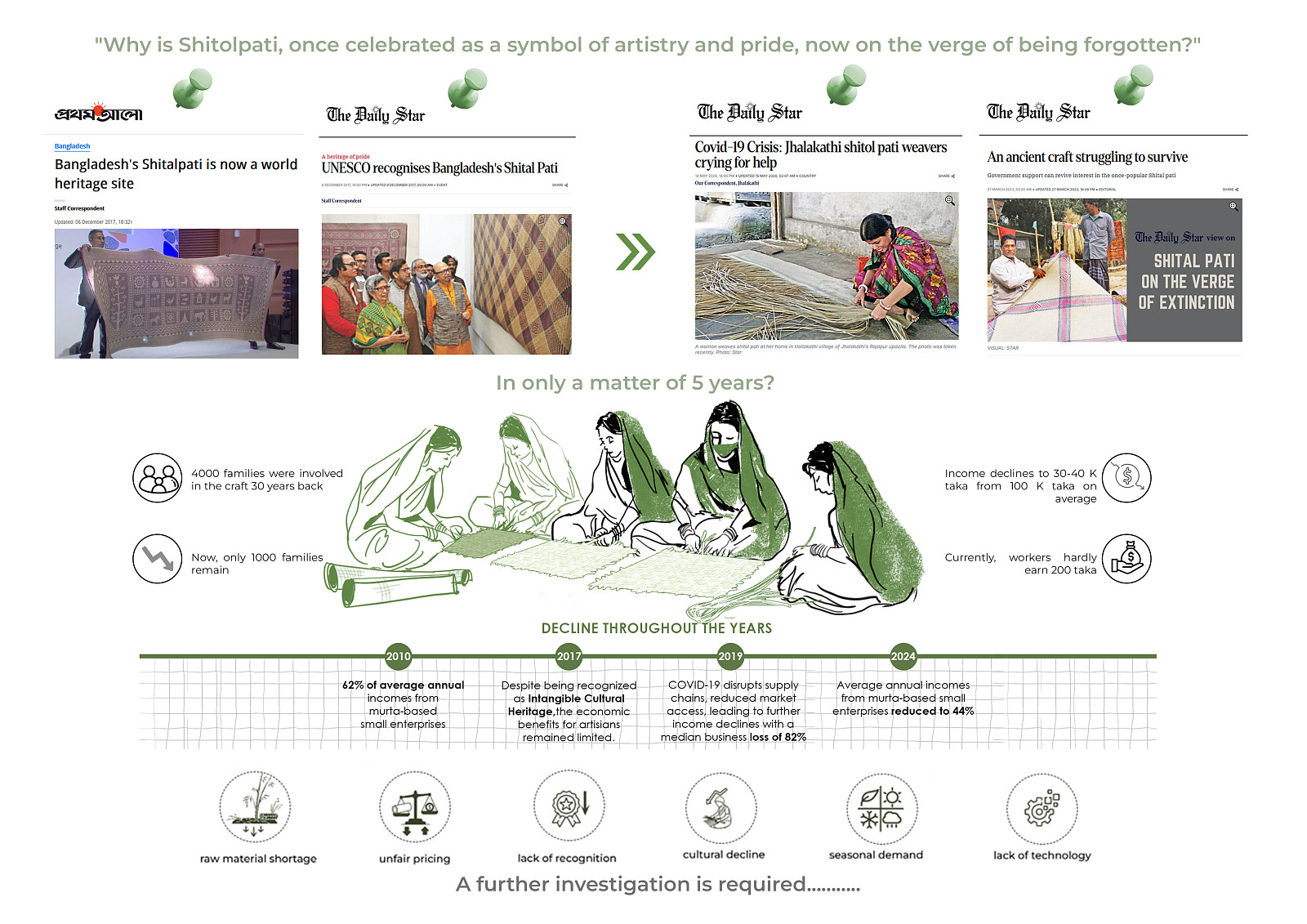
In 2017, Shitolpati, a traditional woven mat from Bangladesh, was recognized by UNESCO as an Intangible Cultural Heritage of Humanity. Exhibitions were organized, stories of master weavers were documented, and cultural events highlighted the significance of the craft. For a moment, it seemed that the future of the Patikar community, the artisans behind Shitolpati, was secure.
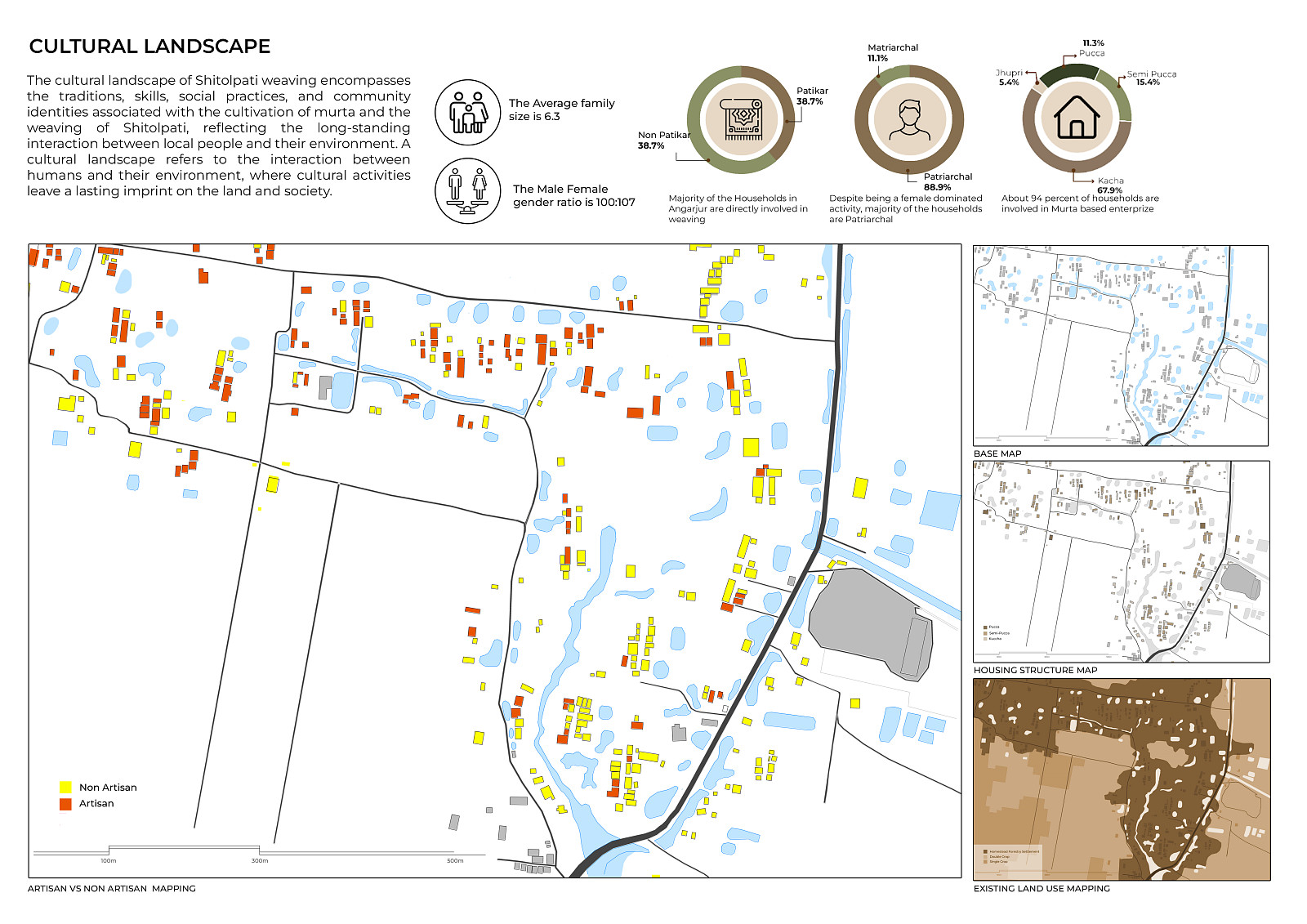
Yet, less than a decade later, the craft stands at a critical crossroad. The COVID-19 pandemic exposed the fragile realities behind international recognition. Between 2019–21, local supply chains collapsed, driving business losses up to 82% and reducing incomes from murta-based enterprises by 44%. Over the past 30 years, the number of artisan families has declined from around 4,000 to nearly 1,000, as poverty, environmental degradation, and limited opportunities persist.
Growing up in my village home, I experienced Shitolpati as part of everyday life; playing, sitting, and dining with my family on its woven surface. Its international recognition once filled me with pride, but learning about its decline concerned me. This pushed me to question, what are the driving forces behind this deterioration? Can architectural intervention help recalibrate the fragile balance between cultural heritage and ecological restoration to build resilience within the community? It also raised a deeper concern: can architectural intervention support the Patikars without disrupting their authentic cultural practices, and avoid the risk of turning a living craft into a museumized object?
Patipolli is an architectural and landscape-based intervention that addresses the intertwined decline of Bangladesh’s UNESCO-recognized Shitolpati craft and the ecological degradation of the Murta wetlands on which it depends. The project recognizes that the survival of intangible cultural heritage cannot be separated from the preservation of its environmental resources, local economies, and community structures. Rather than treating Shitolpati as an isolated cultural artifact, the proposal frames it as part of a living socio-ecological system requiring integrated restoration.
CONTEXT
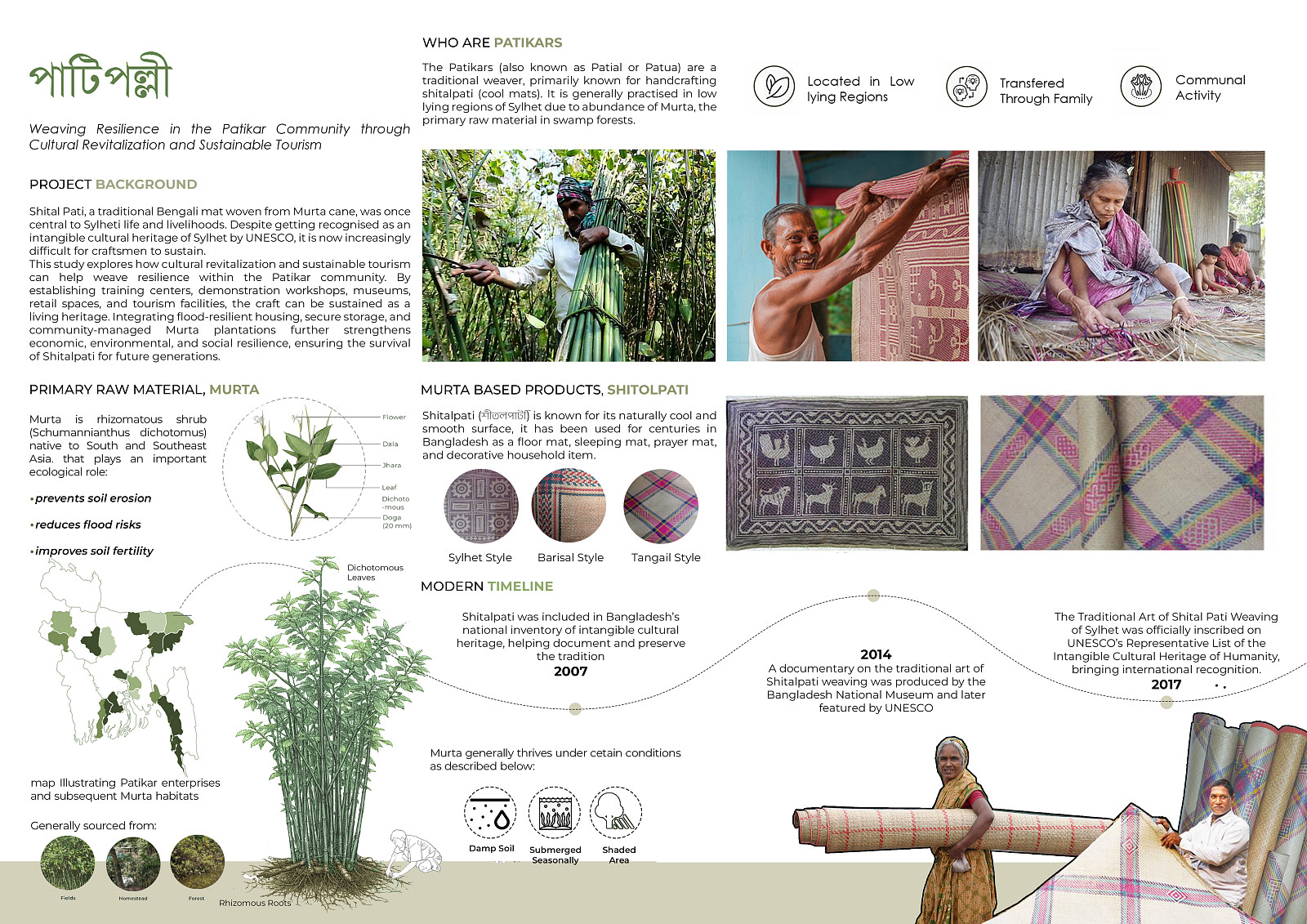
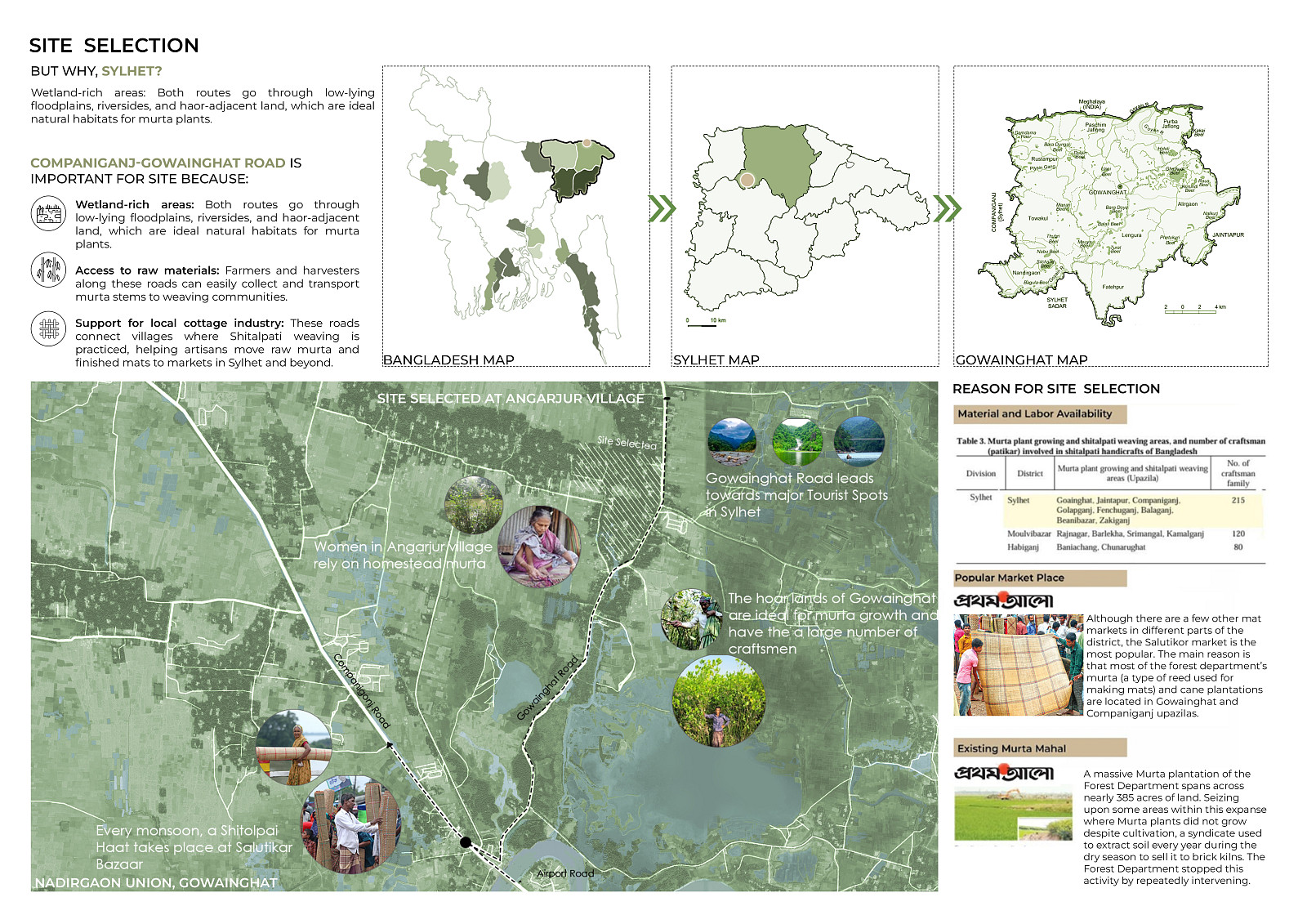
Shitolpati has been produced in Bangladesh for more than 350 years, particularly in the low-lying regions of Sylhet where Murta naturally grows in freshwater swamp forests. The term “Shitolpati” in Bengali literally means “cool mat.”. The mats are rectangular, typically ranging from 3 to 7 feet in length and 2.5 to 5 feet in width, with a glossy surface on one side and a rough texture on the other. Mats feature woven designs, including mythical stories, birds, flowers, vines, leaves through geometric patterns. It is generally practised in low lying regions of Sylhet due to abundance of Murta, the primary raw material in swamp forests. In addition to Sylhet, Shitalpati is also crafted in several villages within the Noakhali, Shirajganj, Pabna, and Chattogram districts.
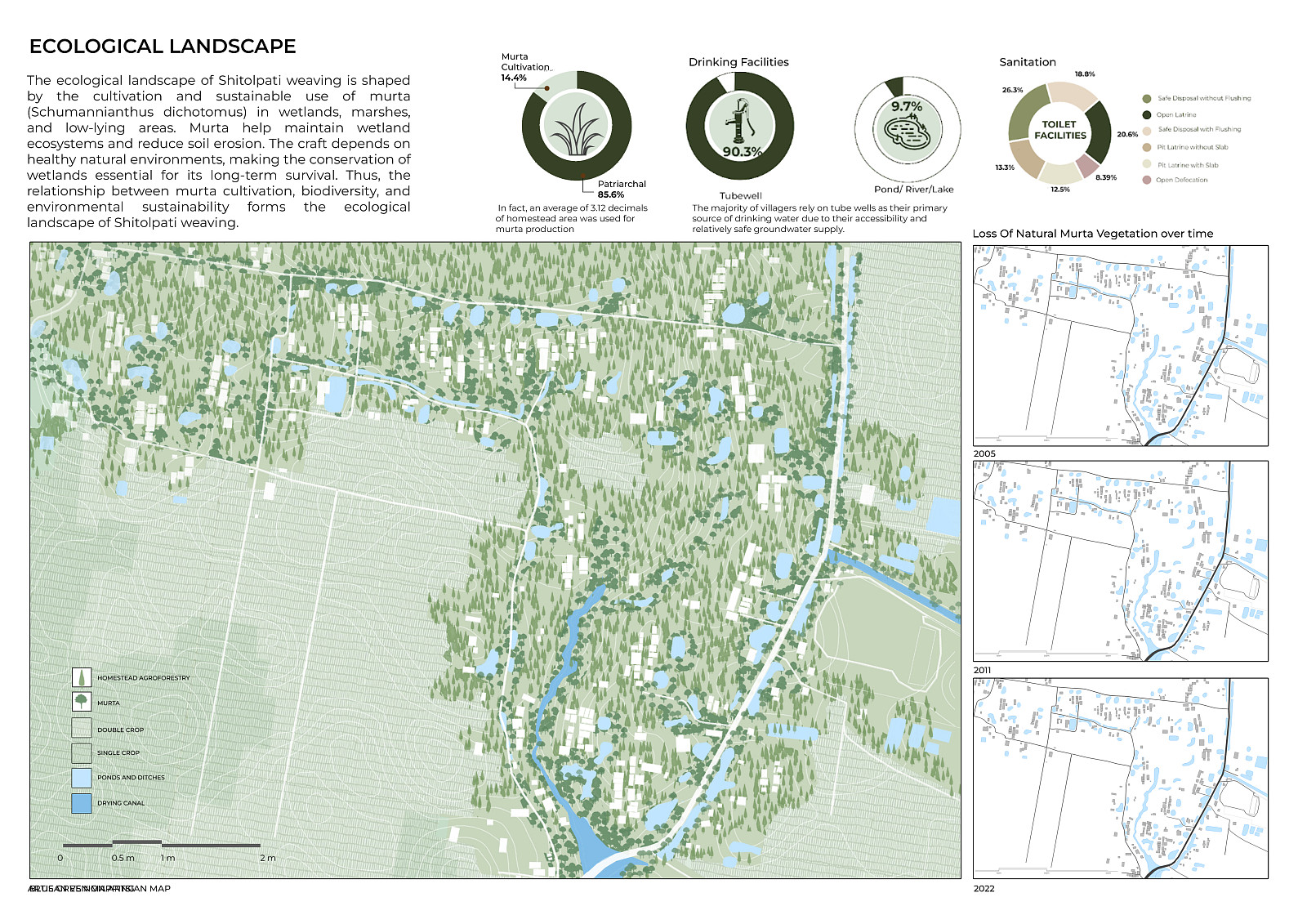
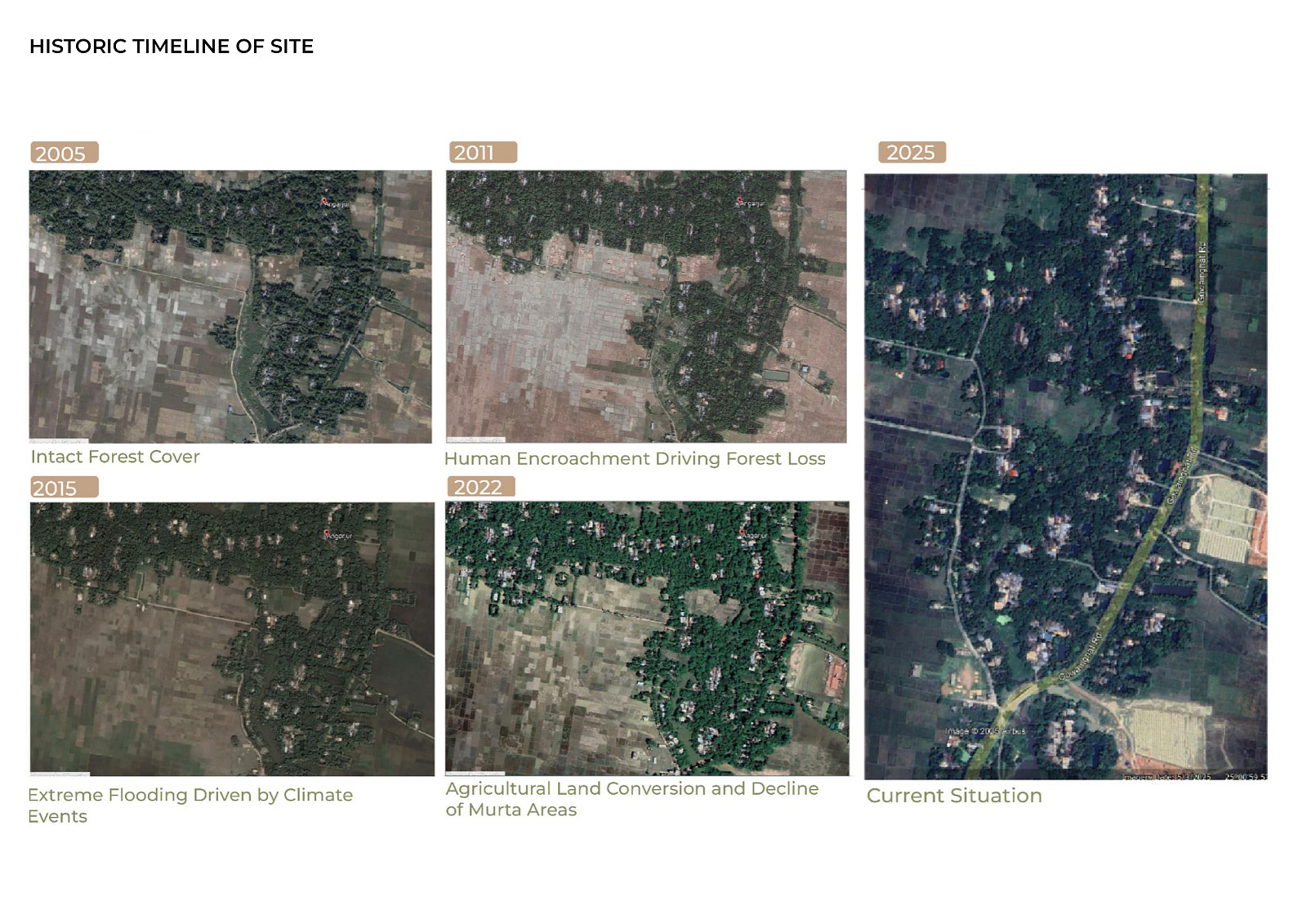
Beyond its use in weaving, Murta plays an important ecological role. It prevents soil erosion, reduces flood risks, improves soil fertility, and provides fuel and livestock fodder for local households. Despite its cultural and environmental significance, the Murta-based economy is under threat. Overharvesting, land conversion, wetland degradation, and population growth have significantly reduced Murta habitats. At the same time, artisans struggle with low profits, limited market access, rising production costs, and competition from cheap plastic alternatives. Despite government efforts to recognize Murta as a vital non-timber forest product and allocate 365 acres of land, high supply chain demands have driven patikars (artisans) into illegal and excessive harvesting.
SITE SELECTION
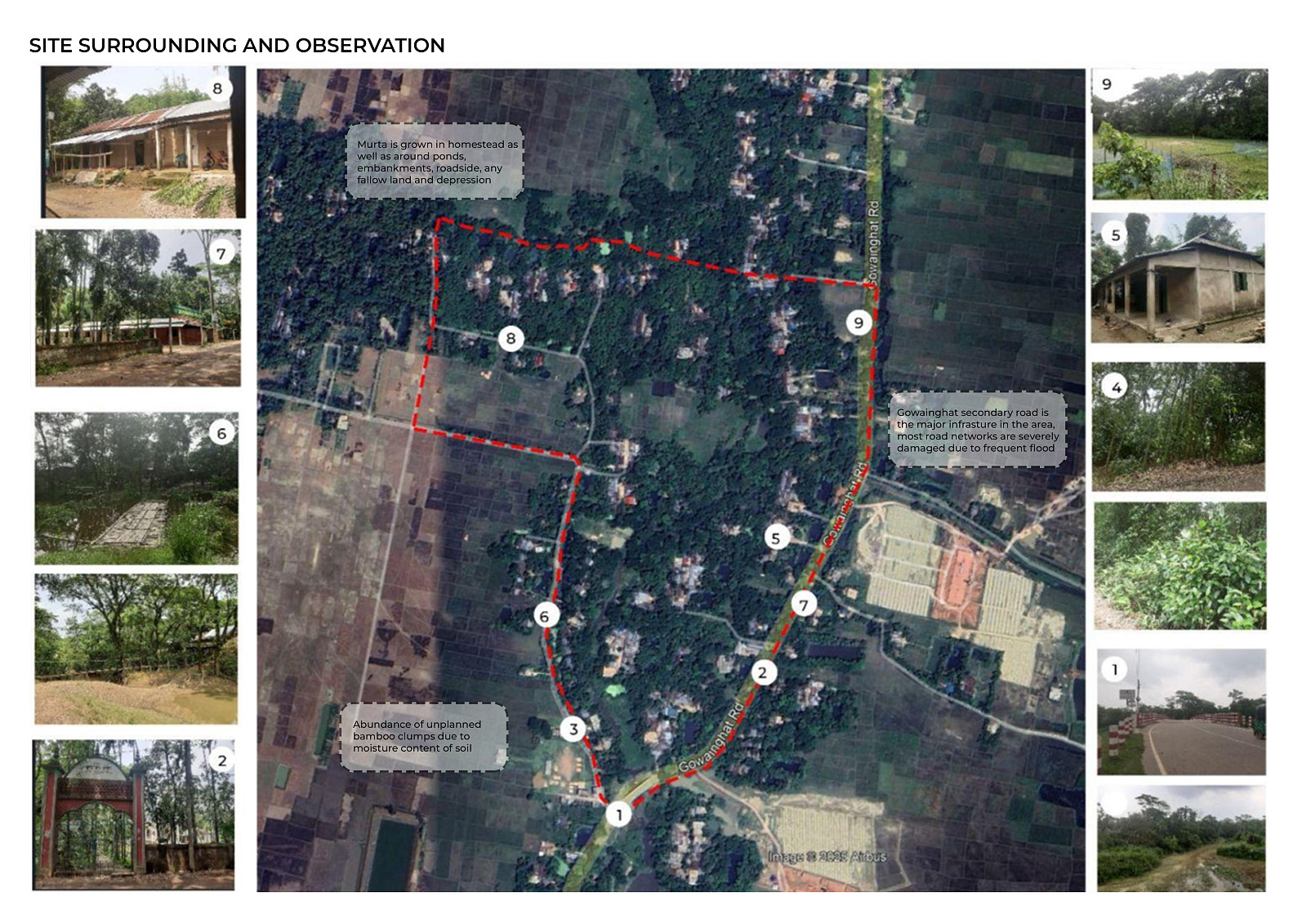
Located in Angarzur village of Gowainghat Upazila, Sylhet, the project responds to the diminishing Murta habitat, declining artisan population, gender inequalities within production, climate-induced vulnerabilities, and exploitative market structures that threaten the Patikar community. Through an eco-cultural tourism model, Patipolli seeks to restore ecological landscapes while strengthening cultural identity and economic resilience.
The primary goal of the project is to establish a self-sustaining architectural framework that simultaneously conserves Murta ecosystems, revitalizes Shitolpati production, empowers artisan communities, and promotes sustainable rural development. The intervention aims to create resilient infrastructure that supports both heritage preservation and environmental restoration without reducing the craft to a static museum object.
The objectives of the project are to:
○ Restore degraded Murta habitats through community-managed agroforestry and wetland rehabilitation.
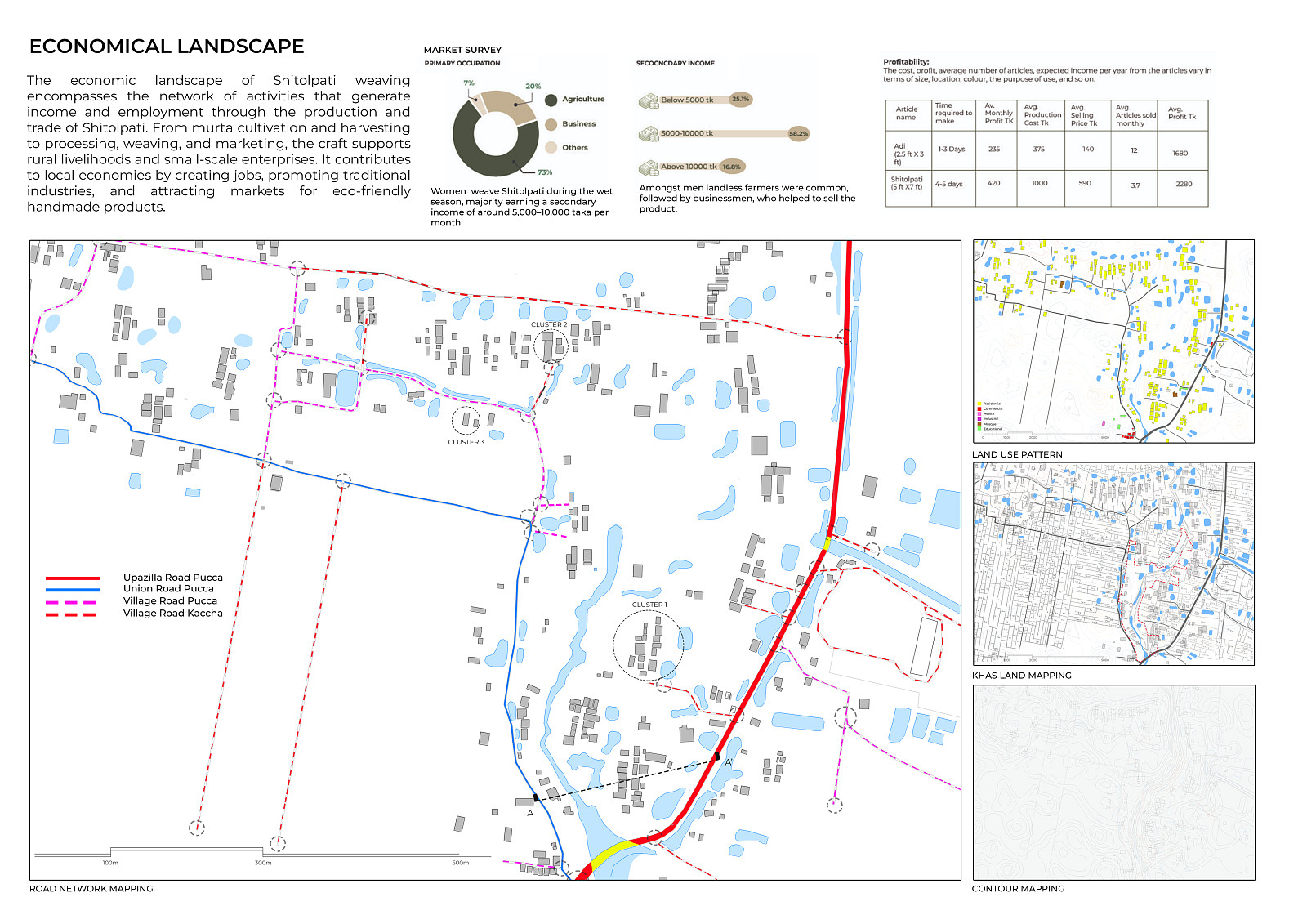
○ Strengthen the economic resilience of Patikar families by improving direct market access and reducing dependence on exploitative intermediaries.
○ Enhance women's participation and financial autonomy by integrating production, training, and marketing opportunities within the community.
○ Develop climate-resilient housing and production spaces capable of adapting to seasonal flooding and environmental change.
○ Promote eco-cultural tourism that generates alternative income while preserving the authenticity of local traditions.
○ Create educational and cultural facilities that document, transmit, and celebrate the knowledge associated with Shitolpati weaving.
○ Demonstrate a replicable architectural model that can inform policy makers, researchers, and development agencies addressing endangered craft traditions worldwide.
Ultimately, Patipolli proposes architecture as an active catalyst for ecological restoration, cultural continuity, and social equity, providing a scalable framework through which living heritage can survive and evolve alongside its landscape.
Project description
DESIGN PHILOSOPHY
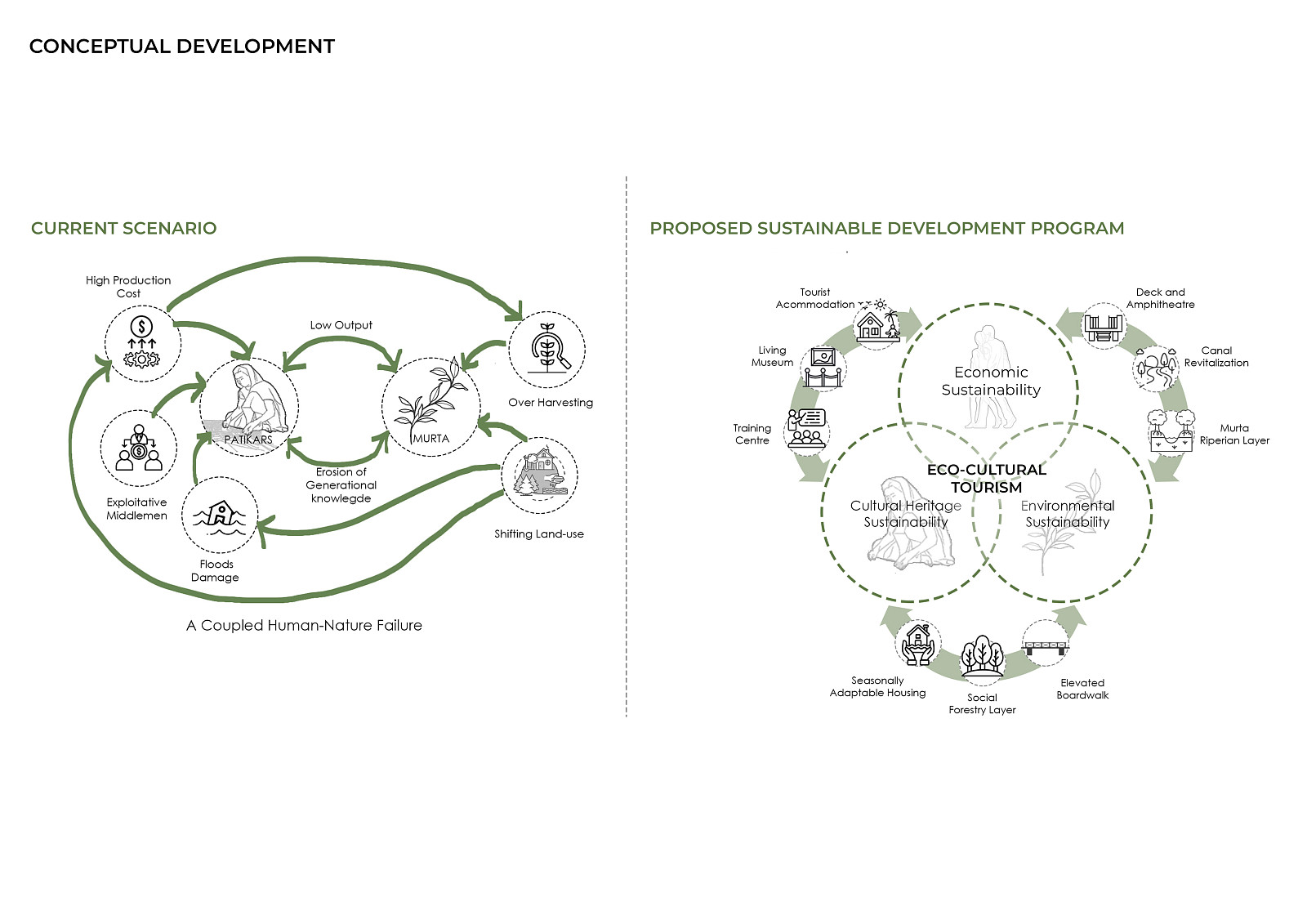
In other words, the production of Shitolpati exists within an interconnected cultural and ecological landscape, where each depends on the other. When environmental degradation or economic pressure weakens one part of this system, it destabilizes the entire chain, further reducing market access and shrinking the customer base, which in turn deepens the decline of the craft.
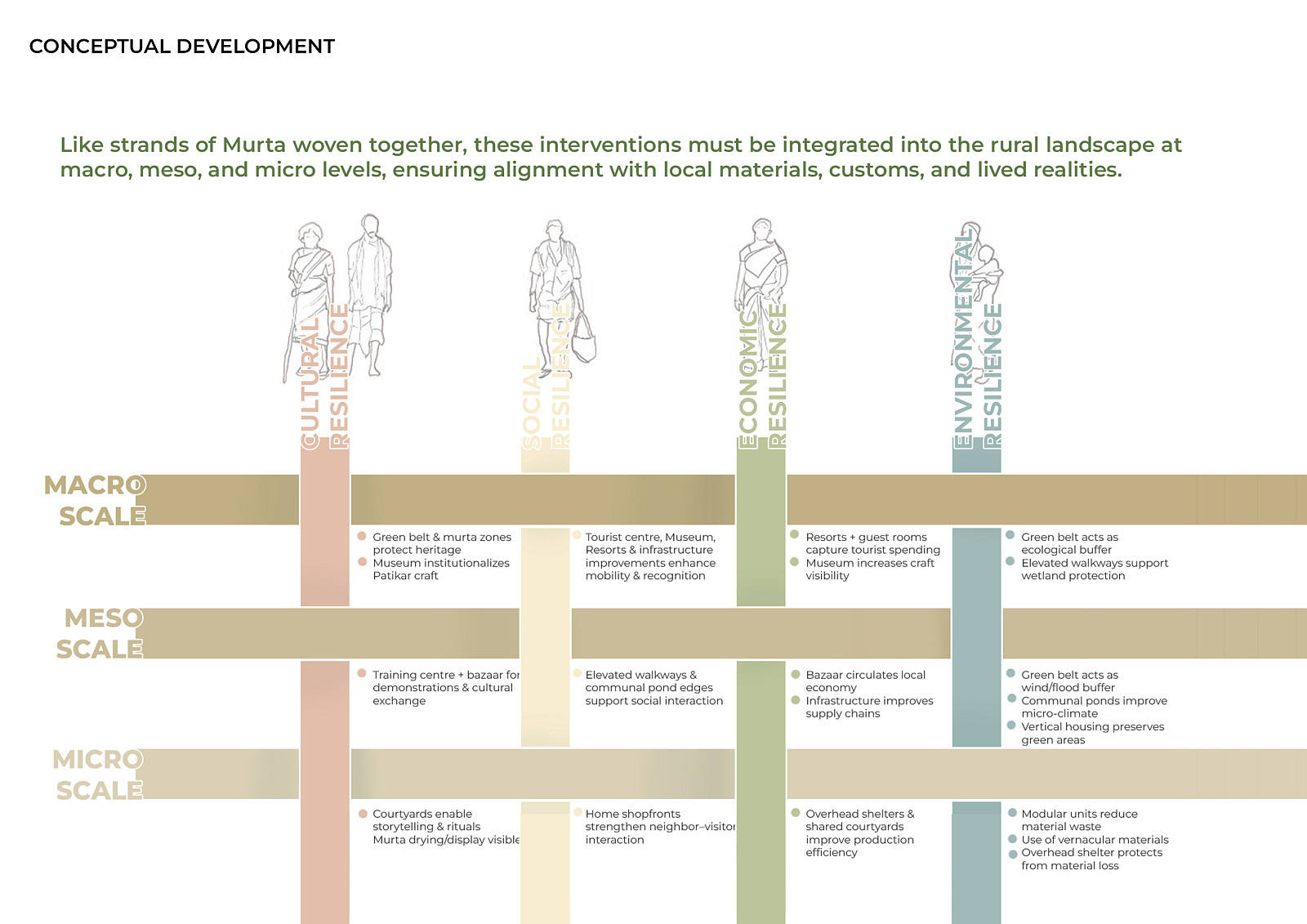
To address this, the study proposes an eco-cultural tourism-based approach that integrates community development, heritage preservation, and tourism infrastructure. This includes resilient housing, community agroforestry, training centres, museums, and tourism facilities aimed at sustaining both livelihoods and cultural heritage. Like strands of Murta woven together, these interventions must be integrated into the rural landscape at macro, meso, and micro levels, ensuring alignment with local materials, customs, and lived realities.
○ Macro Scale
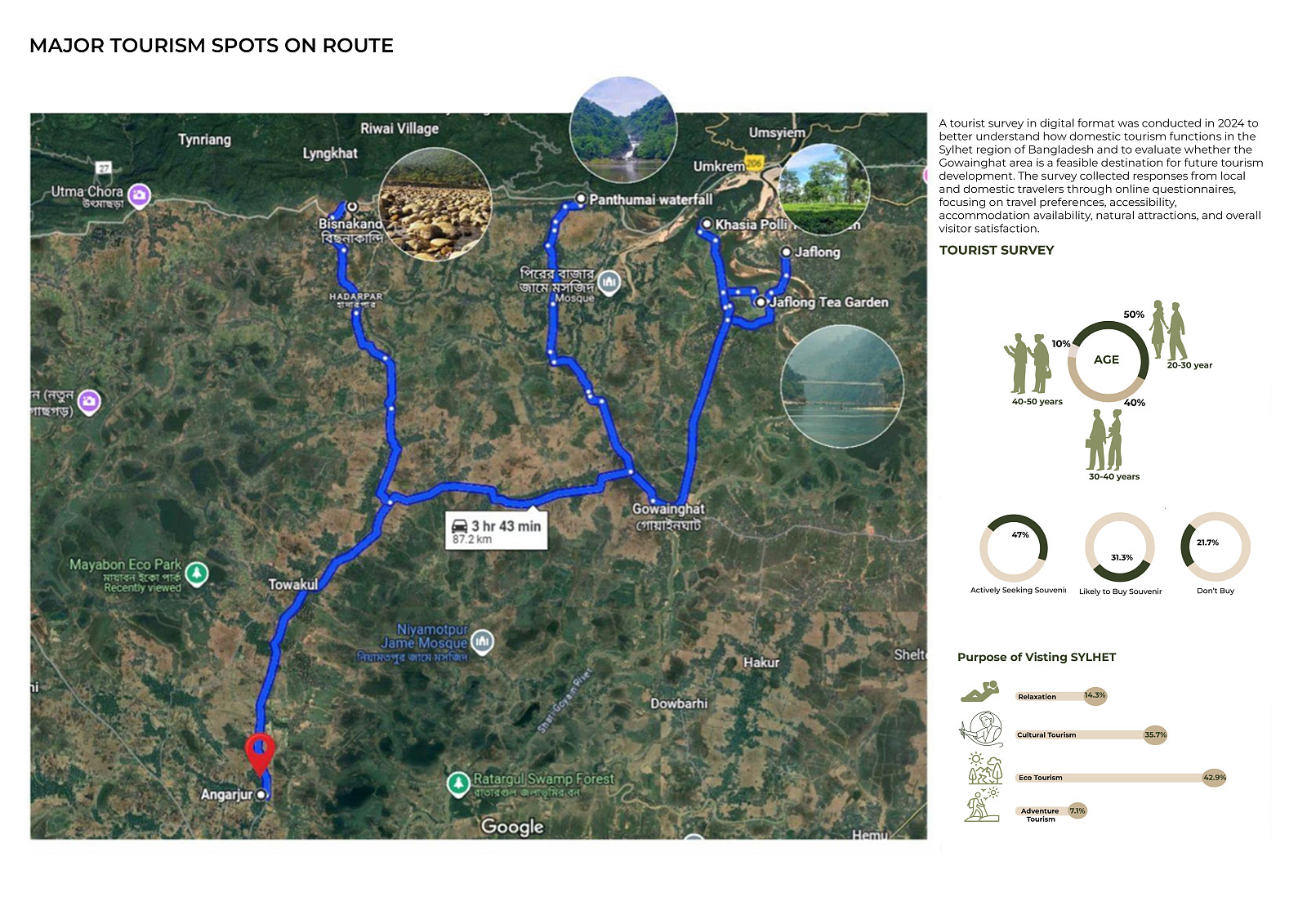
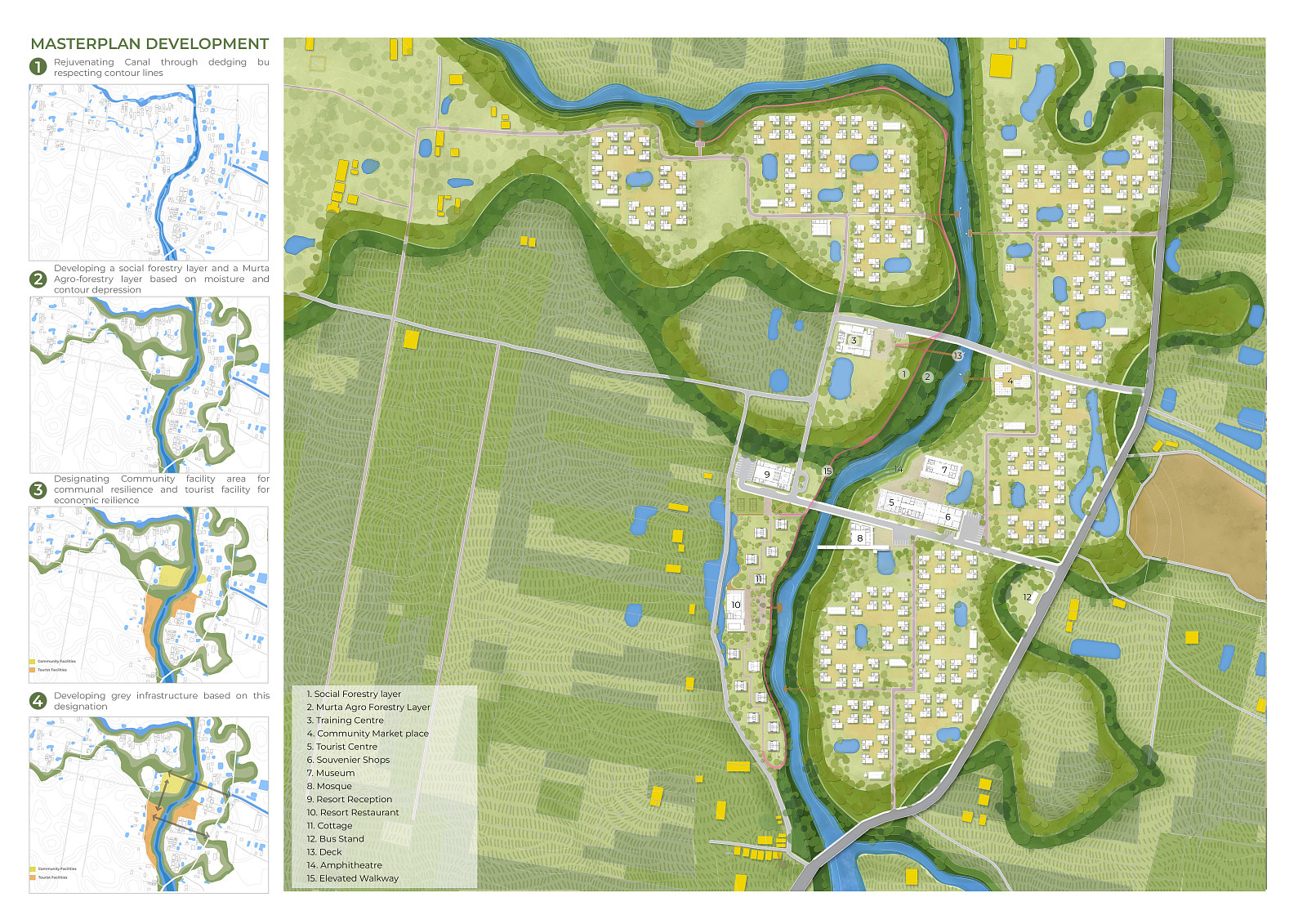
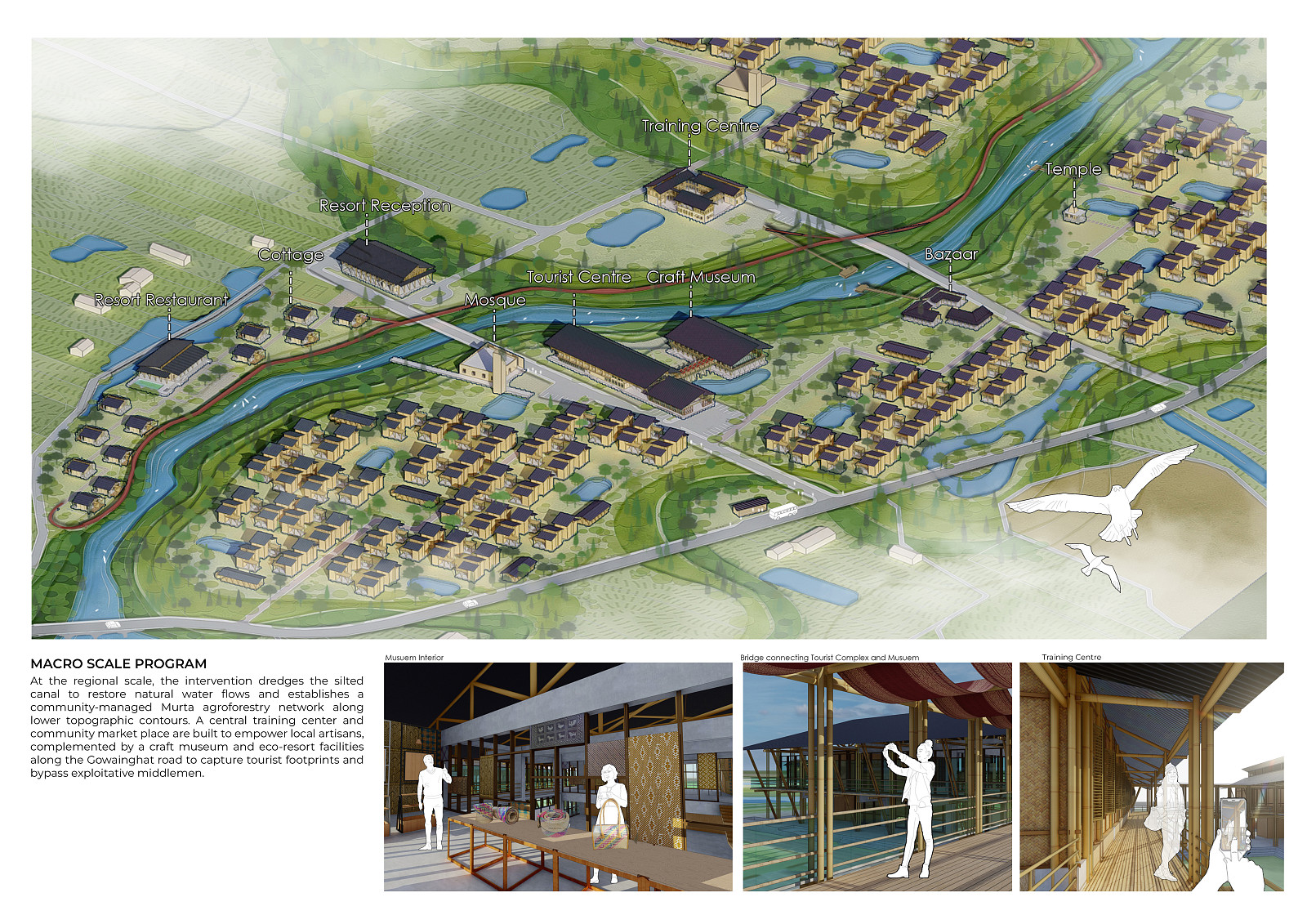
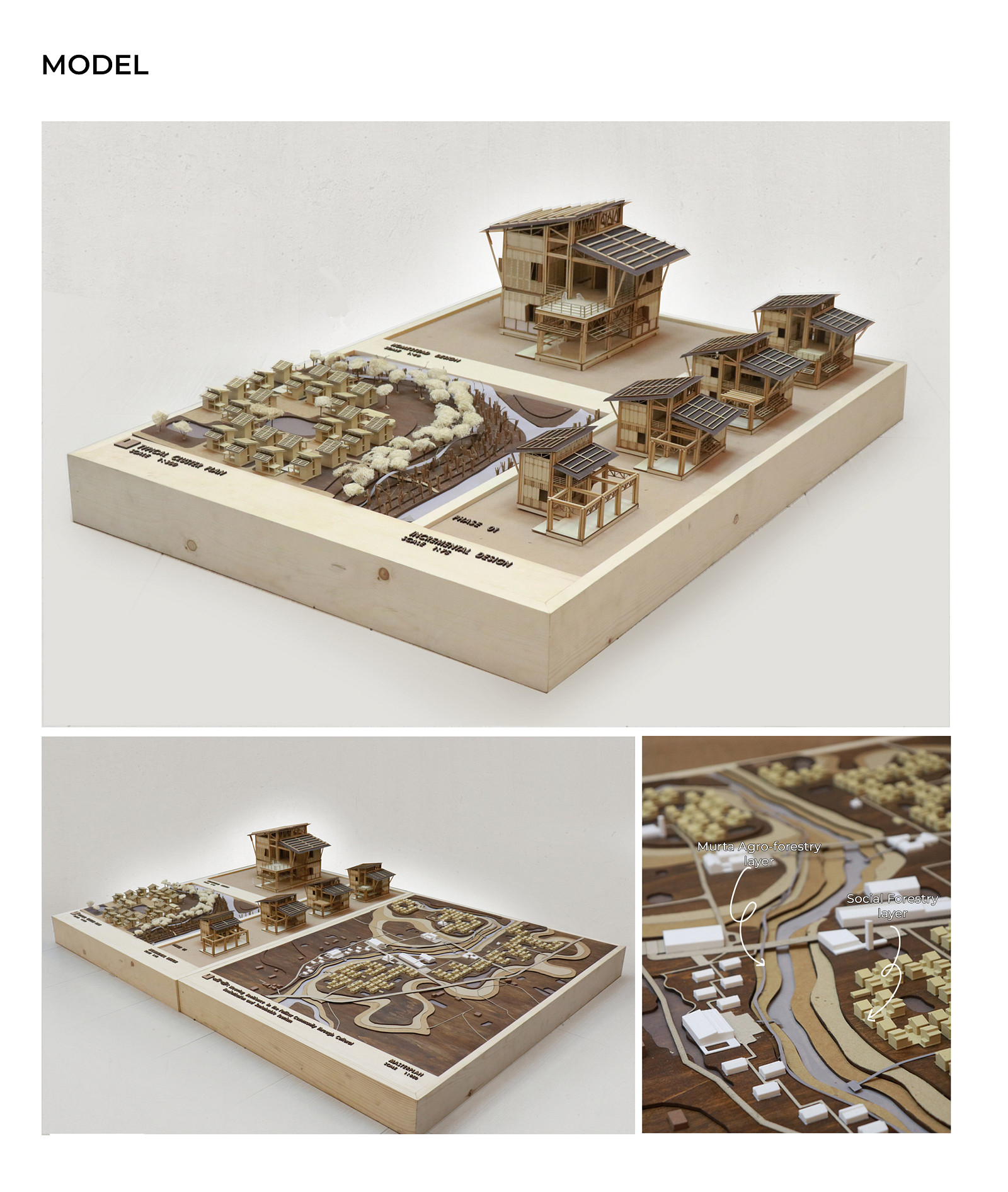
At the regional scale, the intervention dredges the silted canal to restore natural water flows and establishes a community-managed Murta agroforestry network along lower topographic contours. A central training center and community market place are built to empower local artisans, complemented by a craft museum and eco-resort facilities along the Gowainghat road to capture tourist footprints and bypass exploitative middlemen.
○ Meso Scale
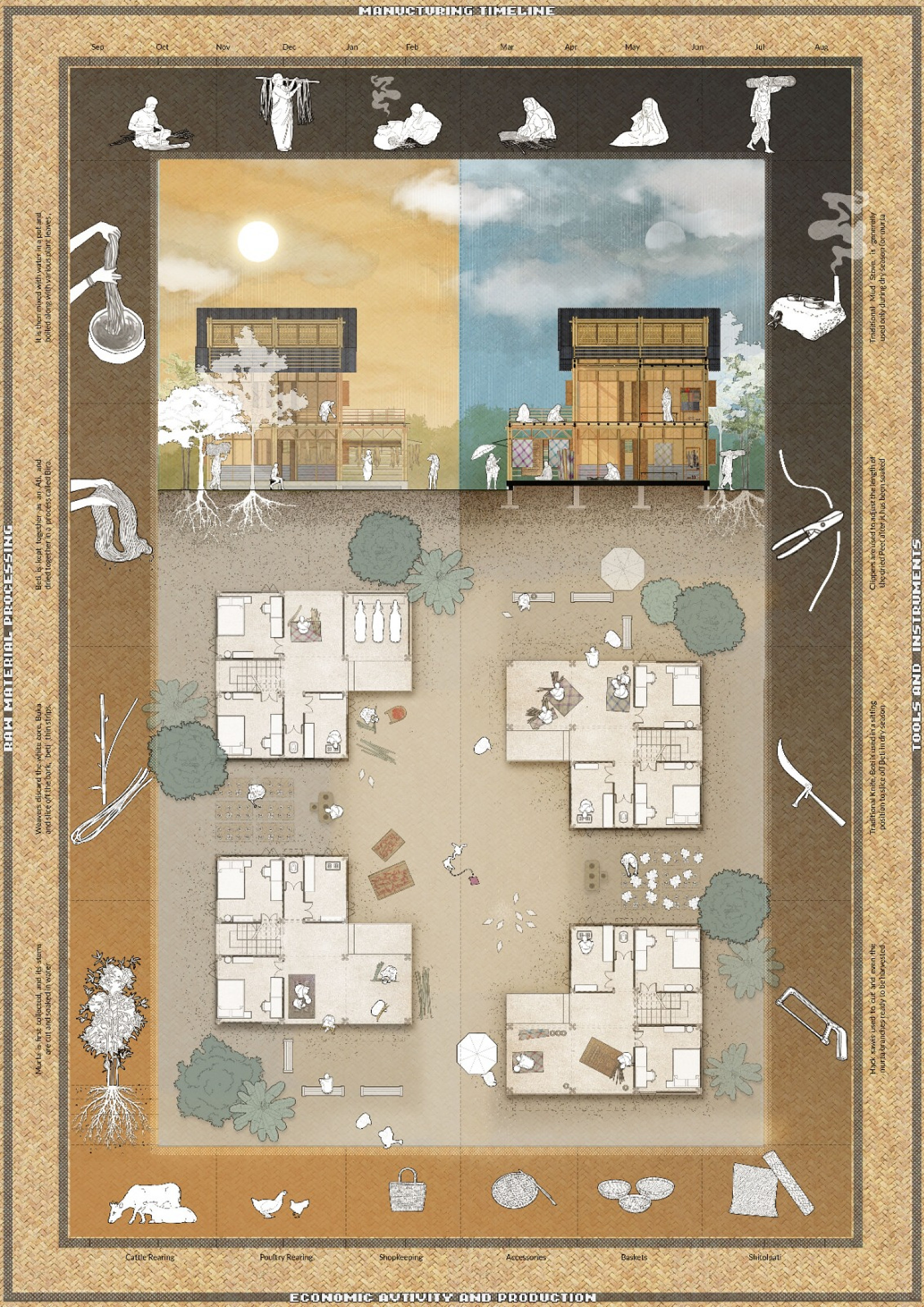
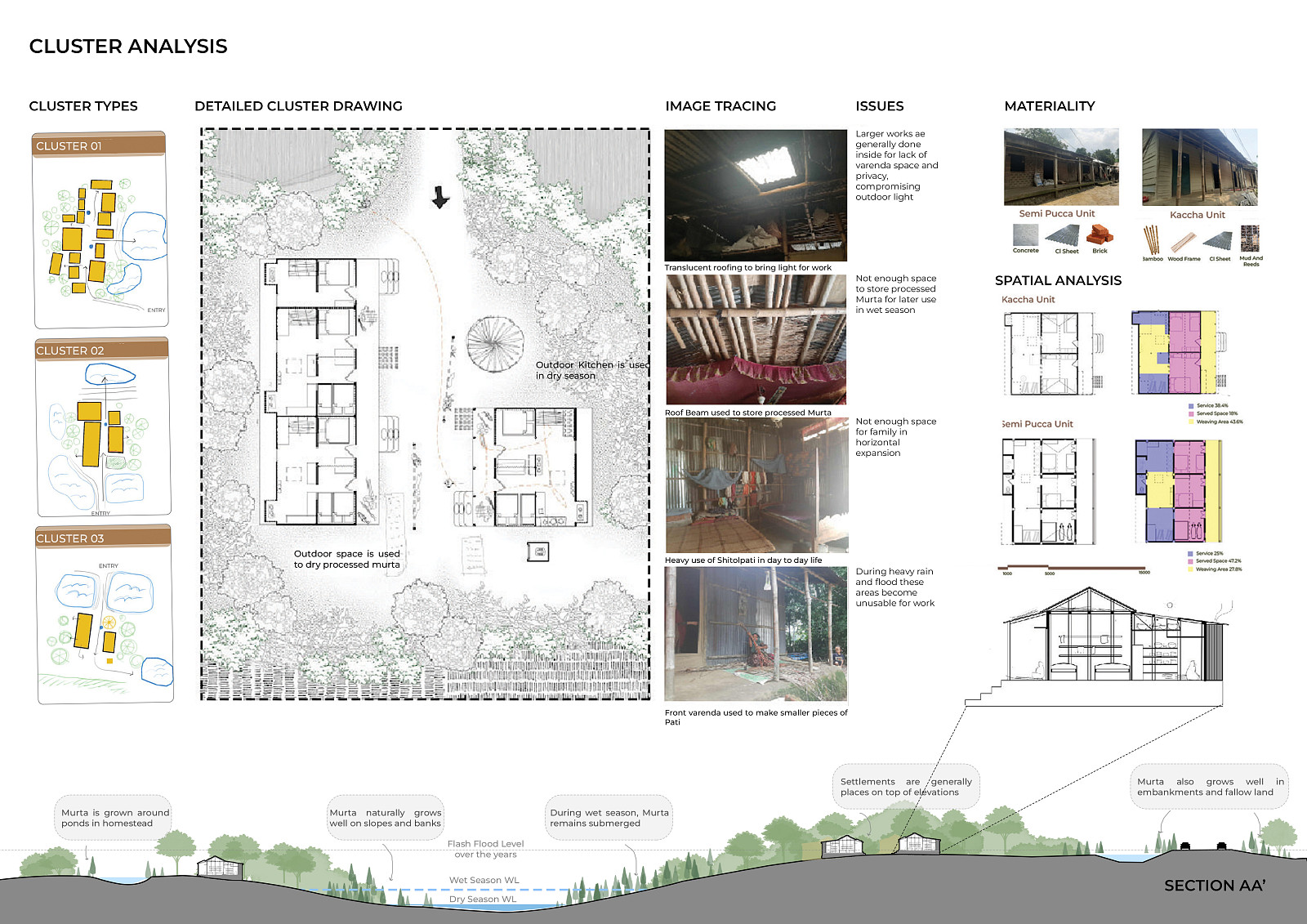
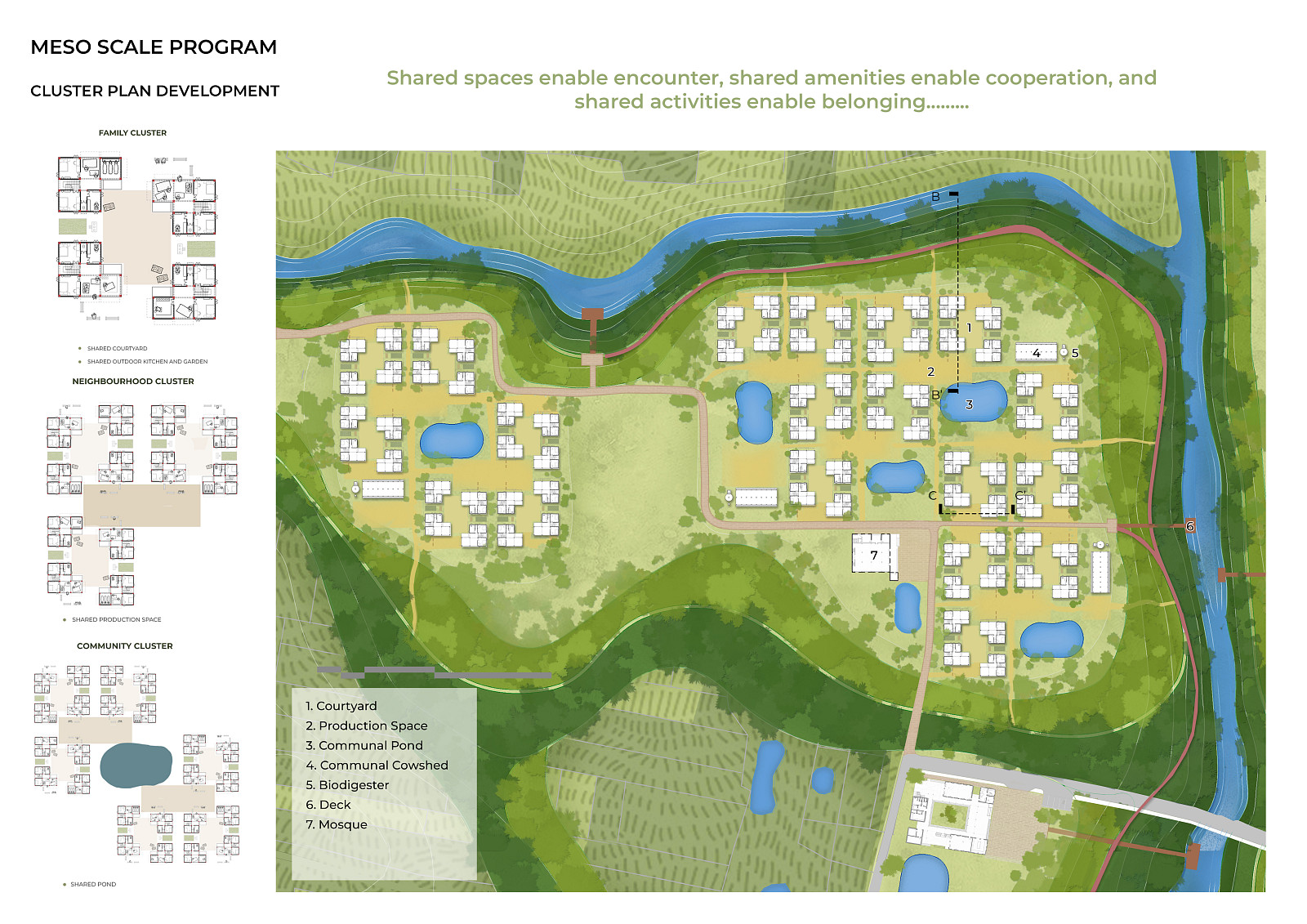
At the community scale, households are arranged in L-shaped configurations around staggered courtyards to balance private residential life with active public craft displays. The layout expands into three distinct social tiers:
Family Cluster: Four units share an outdoor kitchen and courtyard for daily collaboration.
Neighborhood Cluster: Linked clusters share production areas to encourage skill-sharing and bulk processing.
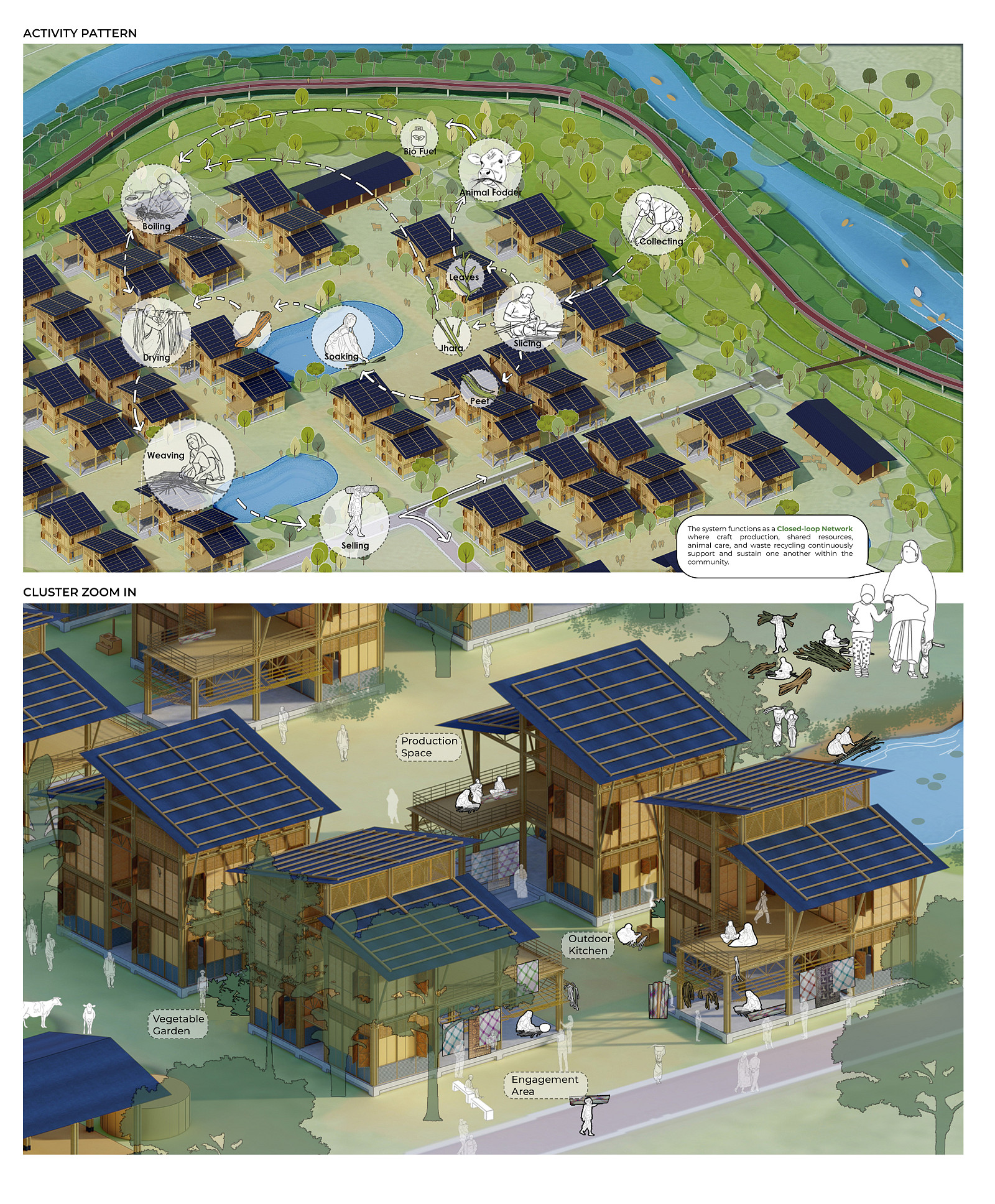
Community Cluster: The largest scale, organized around shared retention ponds and a communal cowshed equipped with a biodigester, converting organic waste into clean biogas.
○ Micro Scale
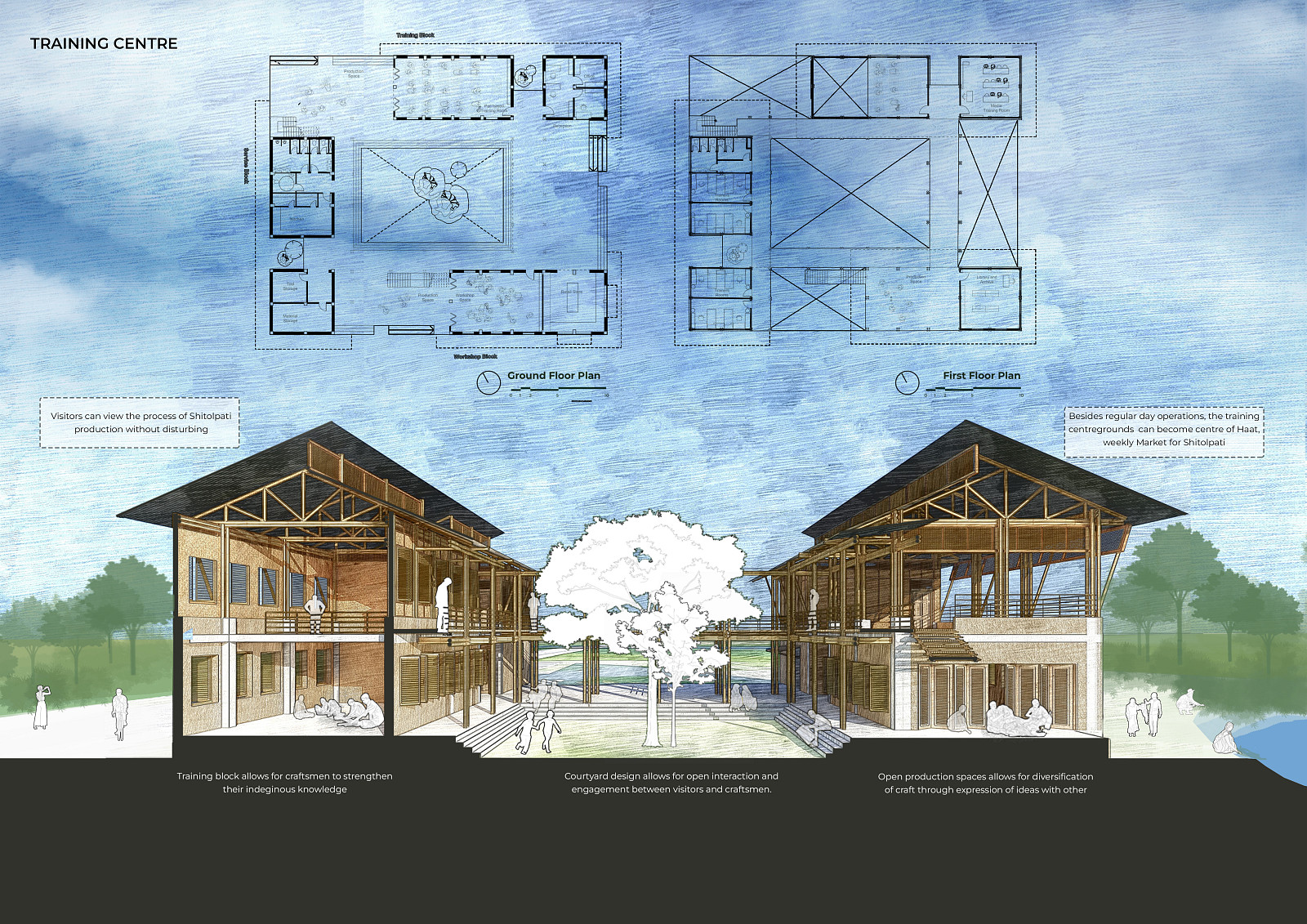
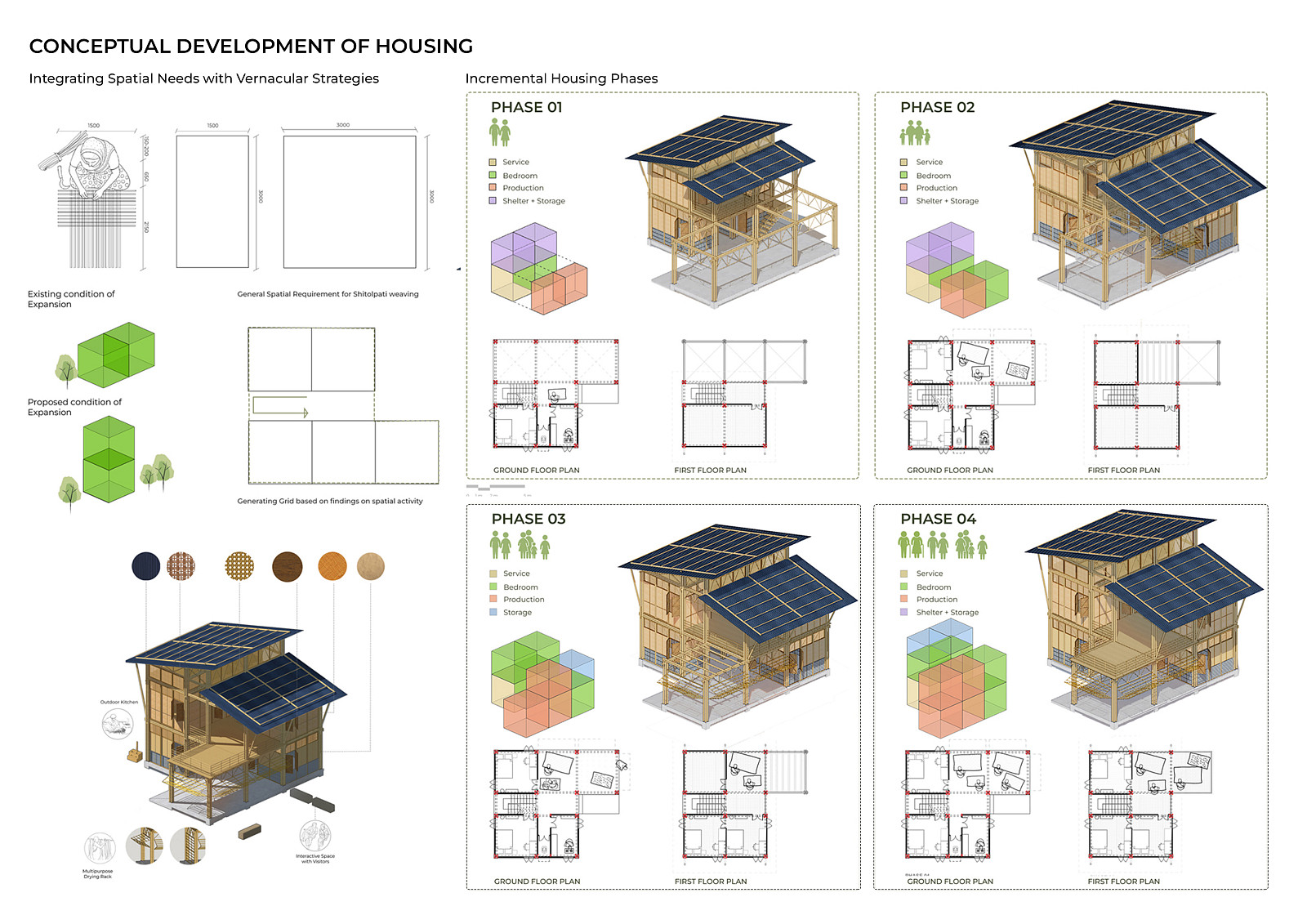
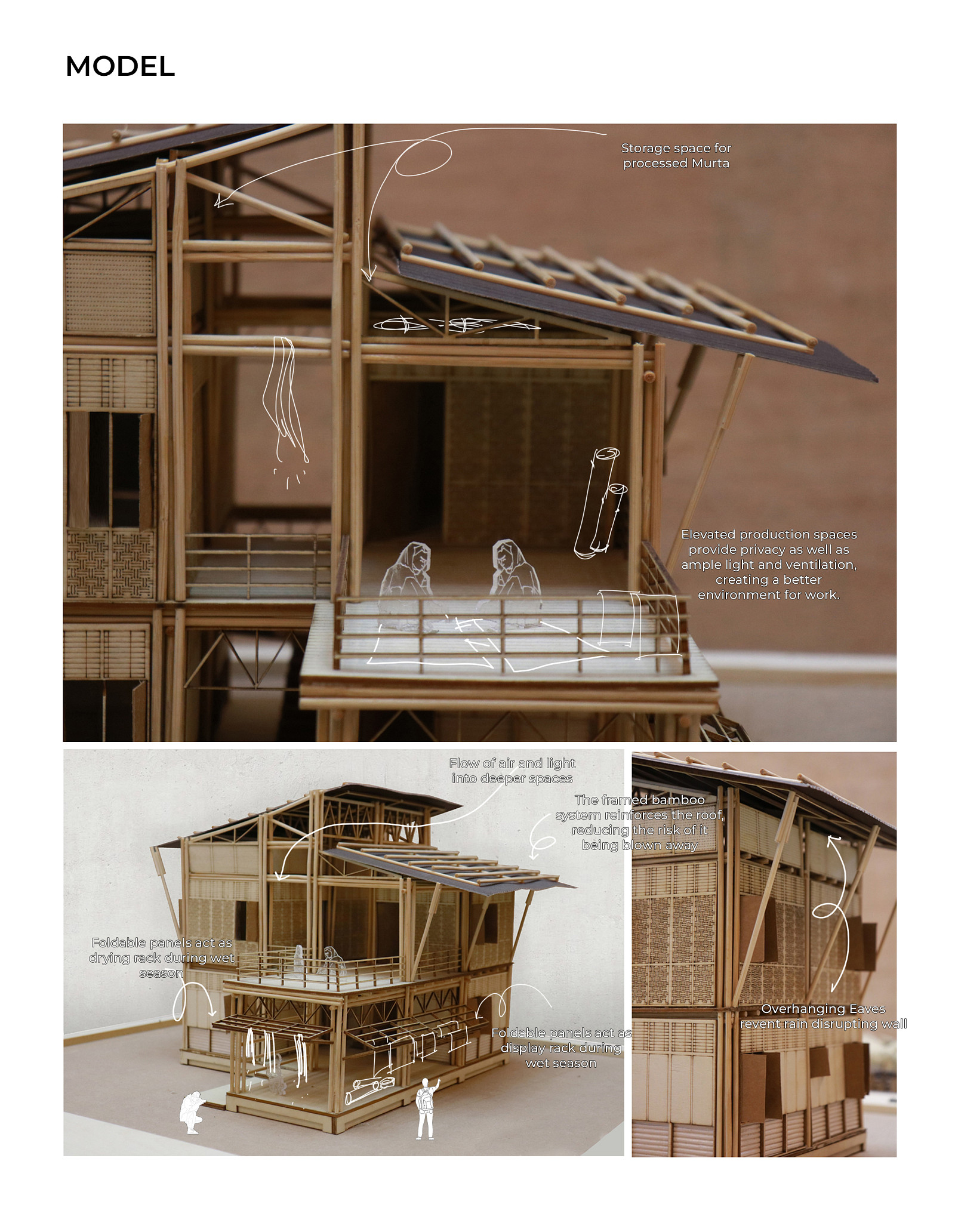
At the dwelling scale, a modular 3m times 3m structural grid utilizes bundled structural bamboo. The homes are designed as incremental, multi-tiered units: the ground floor functions as an adaptive, flood-resilient workshop and storefront featuring double-duty bifold doors for product displays, while the elevated upper floor serves as clean storage and a safe living space during natural disasters.
Socio-Economic Scope
The project seeks to improve the livelihoods and social resilience of the Patikar community by creating sustainable economic opportunities while preserving traditional craft practices. It establishes direct market access through community marketplaces and eco-cultural tourism, reducing dependence on exploitative middlemen and increasing the income potential of artisans. The proposal also strengthens women’s economic participation by integrating production, training, and marketing spaces within the community, enabling greater financial independence and decision-making. Through shared facilities, vocational training, and cooperative production networks, the project encourages skill development, knowledge transfer, and intergenerational continuity of Shitolpati weaving while fostering stronger community collaboration.
Environmental Scope
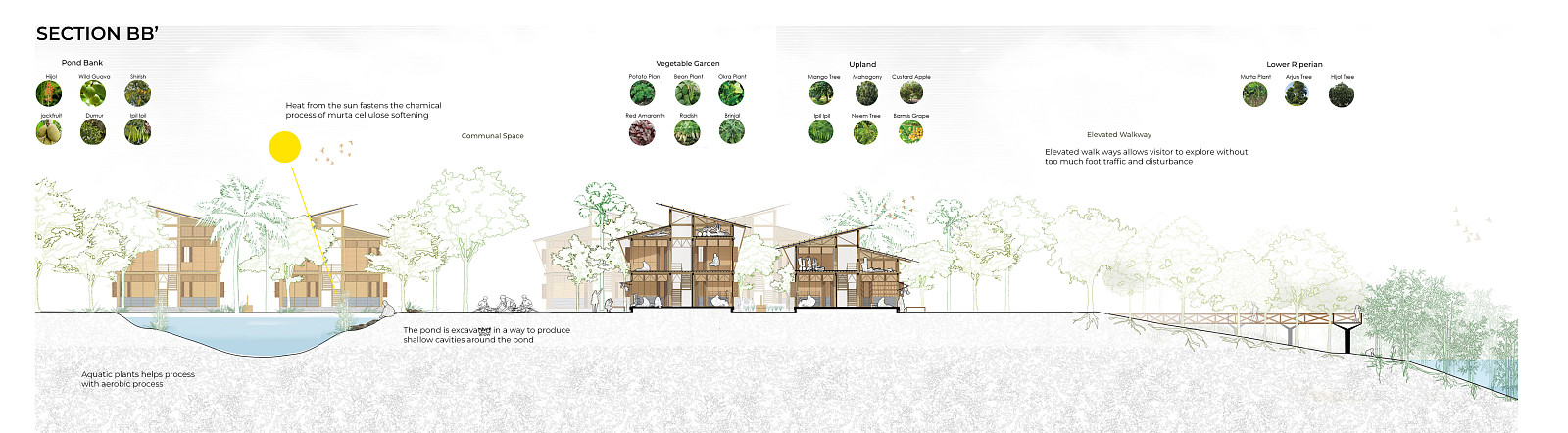
The environmental scope focuses on restoring and protecting the ecological systems that sustain Shitolpati production. By dredging silted canals and re-establishing natural water flows, the project aims to revive degraded wetland habitats essential for Murta cultivation. Community-managed Murta agroforestry and sustainable harvesting practices reduce pressure on natural forests and discourage illegal extraction while improving biodiversity and flood resilience. Additional measures, including retention ponds, landscape restoration, and biodigesters that convert organic waste into renewable biogas, promote resource efficiency and climate adaptation. Collectively, these interventions strengthen the relationship between ecological conservation and cultural heritage, ensuring that environmental restoration directly supports the long-term survival of the Patikar community and its traditional craft.
Technical information
MESO-MICRO SCALE CONSTRUCTION
Modular Bamboo Construction System for Flood-Resilience
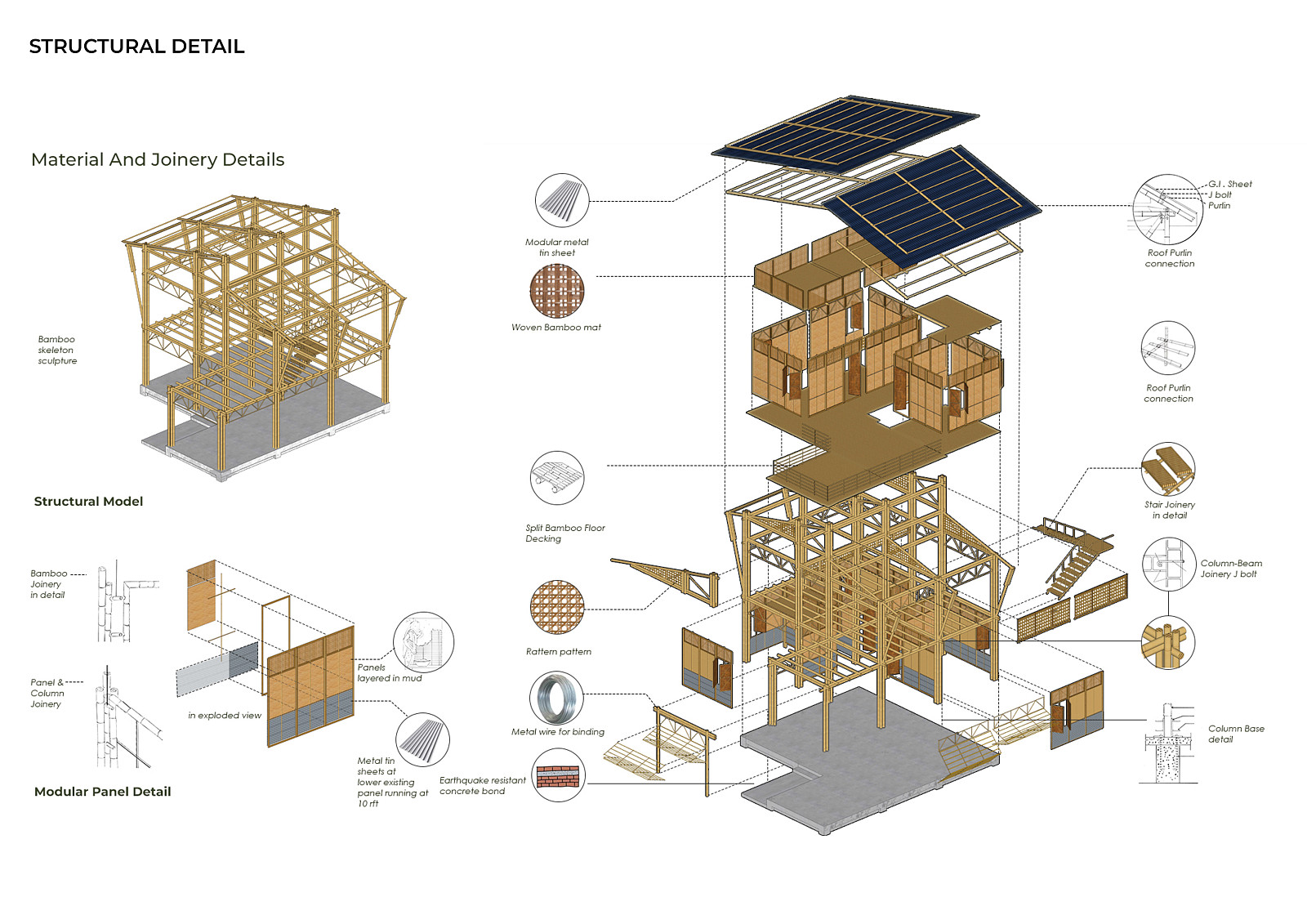
The housing system uses a modular 3 × 3 m grid designed for two people engaged in weaving and material processing, using bundled bamboo for structural support. It features five-culm bamboo columns, two-culm beams, and a reinforced concrete plinth with earthquake-resistant bands for stability. Prefabricated bamboo-framed wall panels with CI sheets create flexible wall, window, and door units, while the roof uses CI sheets on bamboo framing with added bracing for wind resistance. Lightweight bamboo reduces flood stress, and modular local-material panels allow easy replacement of damaged parts without rebuilding the whole house.
Seasonally Adaptive and Livelihood-Responsive Spatial Design
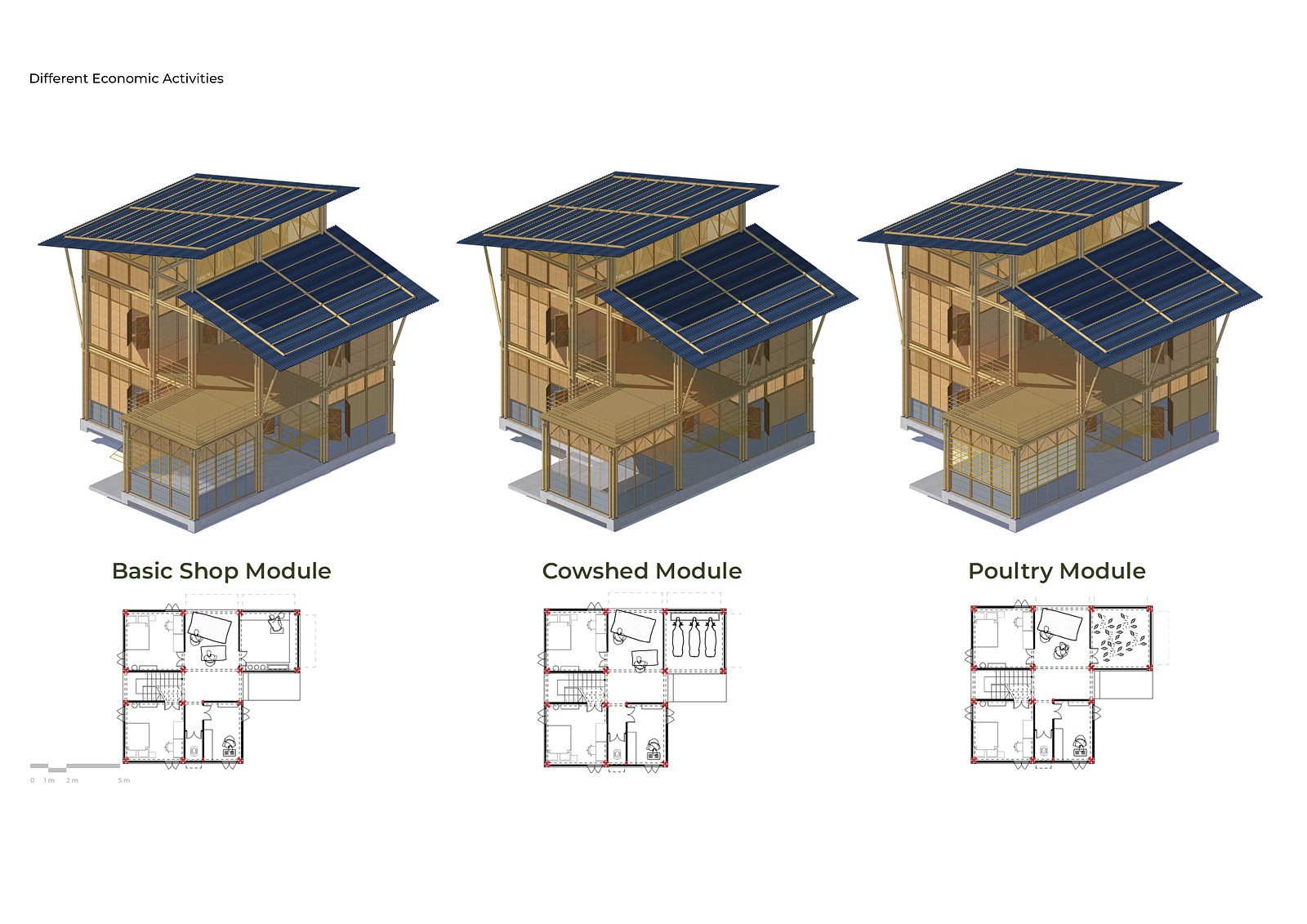
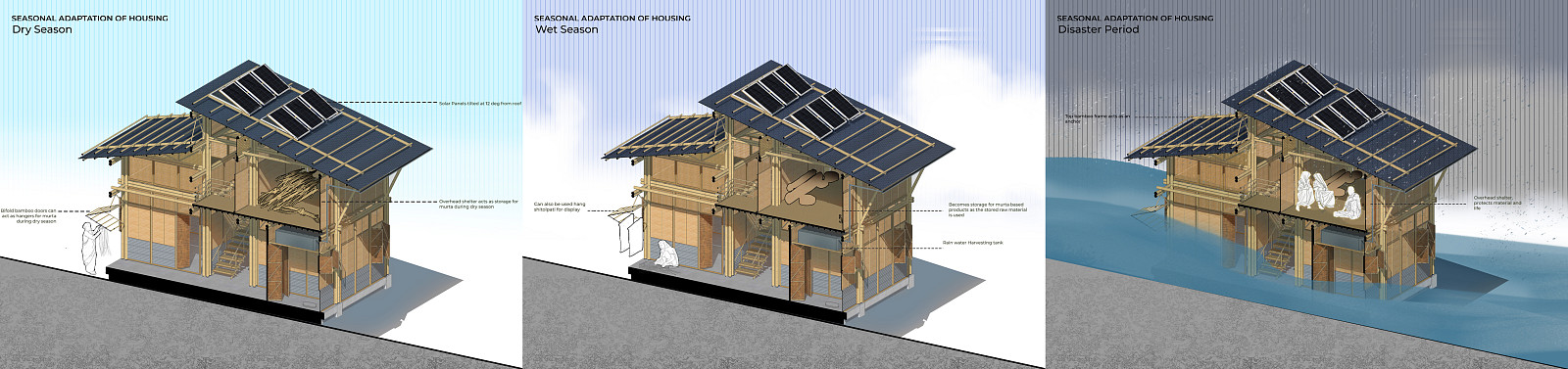
Dwellings are designed as incremental units, expandable with household size and economic capacity. Production and storage spaces grow accordingly.The ground floor supports services and production, while the upper floor serves as storage in the dry season and a safe shelter during disasters. Ground-floor spaces adapt seasonally for murta processing, small income activities, weaving, or in-house Shitolpati sales. Bifold doors also serve dual functions—as hanging stations in the dry season and product displays in the wet season.
Created in:


Copyright © 2026 INSPIRELI | All rights reserved. Use of this website signifies your agreement to the Terms of Use, Privacy Policy, and use of cookies.