Tainan Station Renovation | 台南火車站更新


Project idea
Following the railway undergrounding project, large tracts of land have emerged around the Tainan Station. The ensuing complex issues—such as heritage preservation, land development, traffic reorganization, and future development needs—have catalyzed the demand for the station's renewal. As a crucial transportation infrastructure, the Tainan Railway Station also stands as a historical monument witnessing 400 years of the city's development. The foundation of this project is built upon the rational and highly efficient planning of transportation infrastructure, while simultaneously fostering possibilities for multifaceted interactions between history and the future. Encompassing transportation, land, spatial design, materials, spatial experience, the built environment, and technology, the project employs meticulous spatial strategies to untangle these complex issues, seamlessly integrating the past and future of the station across all dimensions.
Project description
Heritage Preservation -
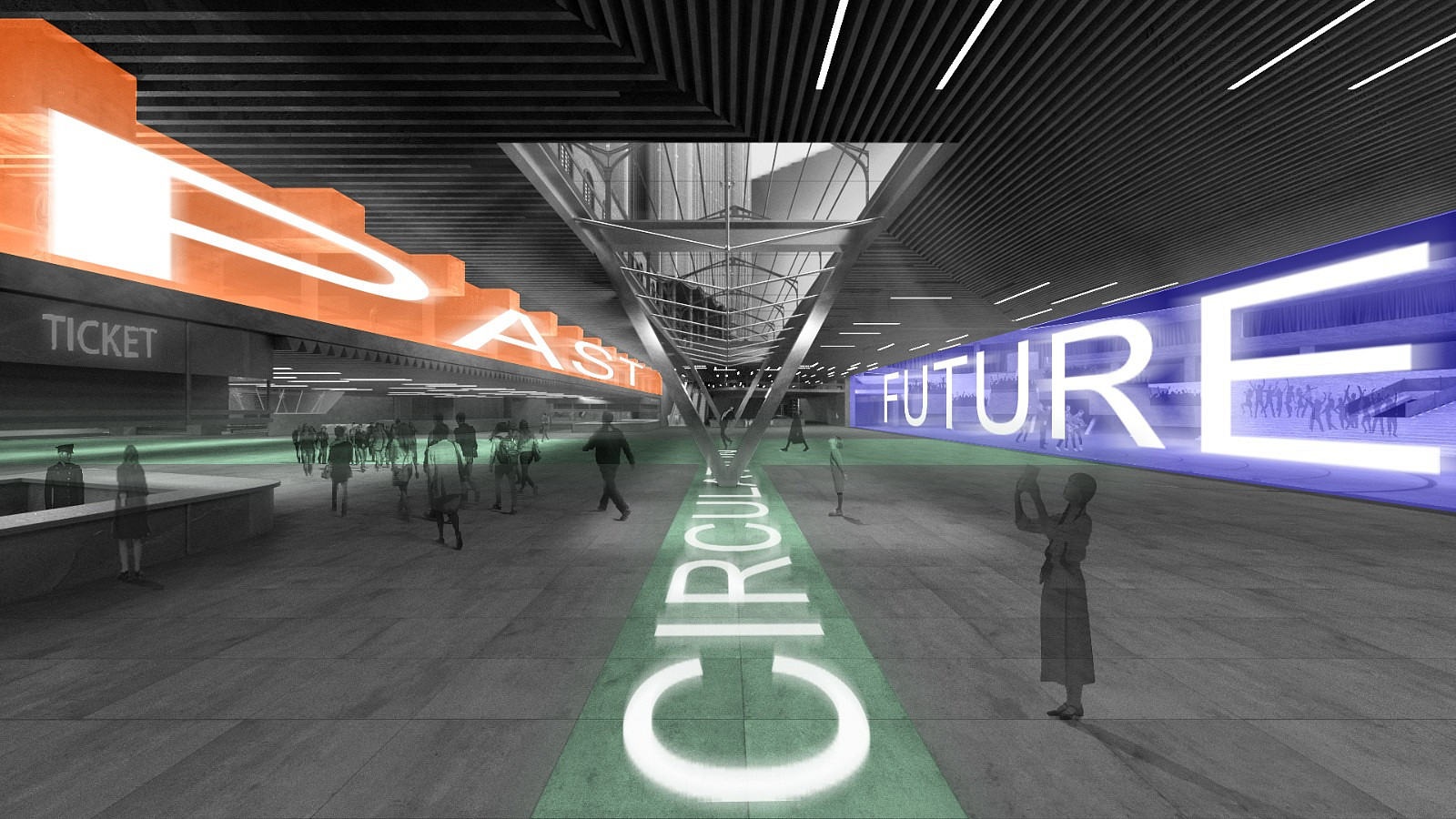
Beyond preserving the historic station building, the project reinterprets the spatial experience of the old station, creating a dialogue between past and present. Tainan Station serves as both urban infrastructure and a memory-rich landmark.
Transportation Connection -
The former surface railway split the city and lacked pedestrian-friendly planning. This project redesigns road networks and reconnects the station with surrounding transit systems, improving overall accessibility.
Land Development -
Railway undergrounding released valuable central land. To address development pressure, the design uses massing and façade optimization, along with outdoor comfort analysis, CFD simulation and building massing optimization, to reduce negative impacts on heritage and microclimate.
Future Growth -
Tainan's future development addresses both spatial and cultural dimensions. Spatially, the project creates expansive, high-quality underground areas to ensure long-term adaptability, alongside an "urban stage" designed to host the city's ongoing evolution. Culturally, it emphasizes honest commemoration of Tainan’s layered history, recognizing that only by sincerely engaging with the past can the new station guide the city toward a meaningful future.
Technical information
This one-year design and research project is informed by comprehensive studies covering the architectural character of Tainan's Japanese-era buildings, the structure of the historic station, the integration of old and new architecture, underground railway planning, high-rise development, outdoor comfort, CFD simulation, and building massing optimization. Together, these studies establish an integrated framework for addressing heritage preservation, building technology, and sustainability.
Documentation


Copyright © 2026 INSPIRELI | All rights reserved. Use of this website signifies your agreement to the Terms of Use, Privacy Policy, and use of cookies.