Hodi-Mandai Geram: A Culturally Sensitive Village for a Disappearing Ethnic Group


Project idea
What if architecture reveals itself as the only vessel of memory and culture for a disappearing community? Tangible heritage comes out of the intangible practices of rituals, memories, oral history, and continuity of knowledge between generations. Architecture and planning hence turn out not to be merely concerned with physical space but are mediums that allow cultural identity to pass through generations after generation. Cultures that thrive by practicing their own cultures feel a better sense of belonging, psychological satisfaction, and happiness than those devoid of culture.
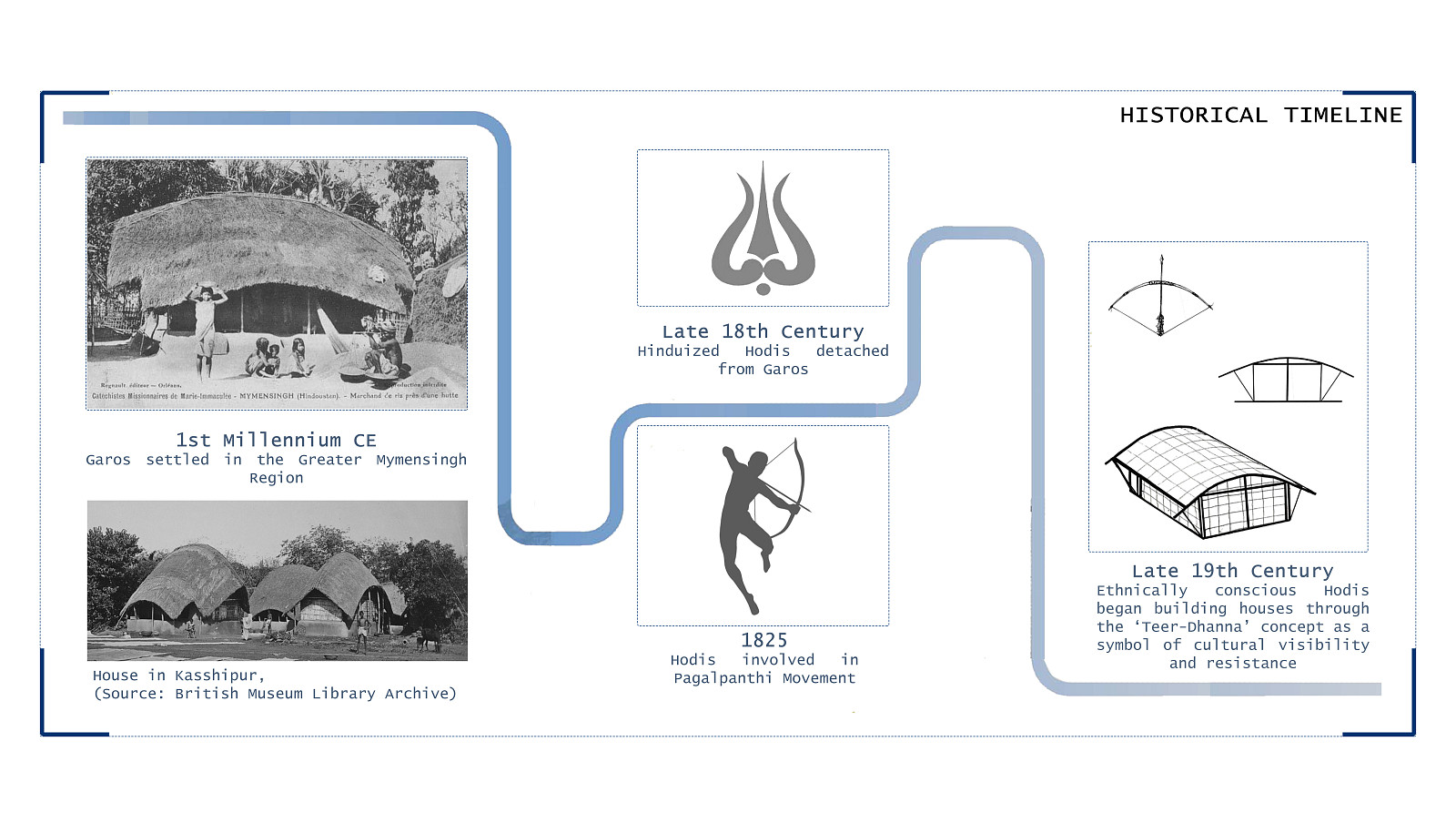
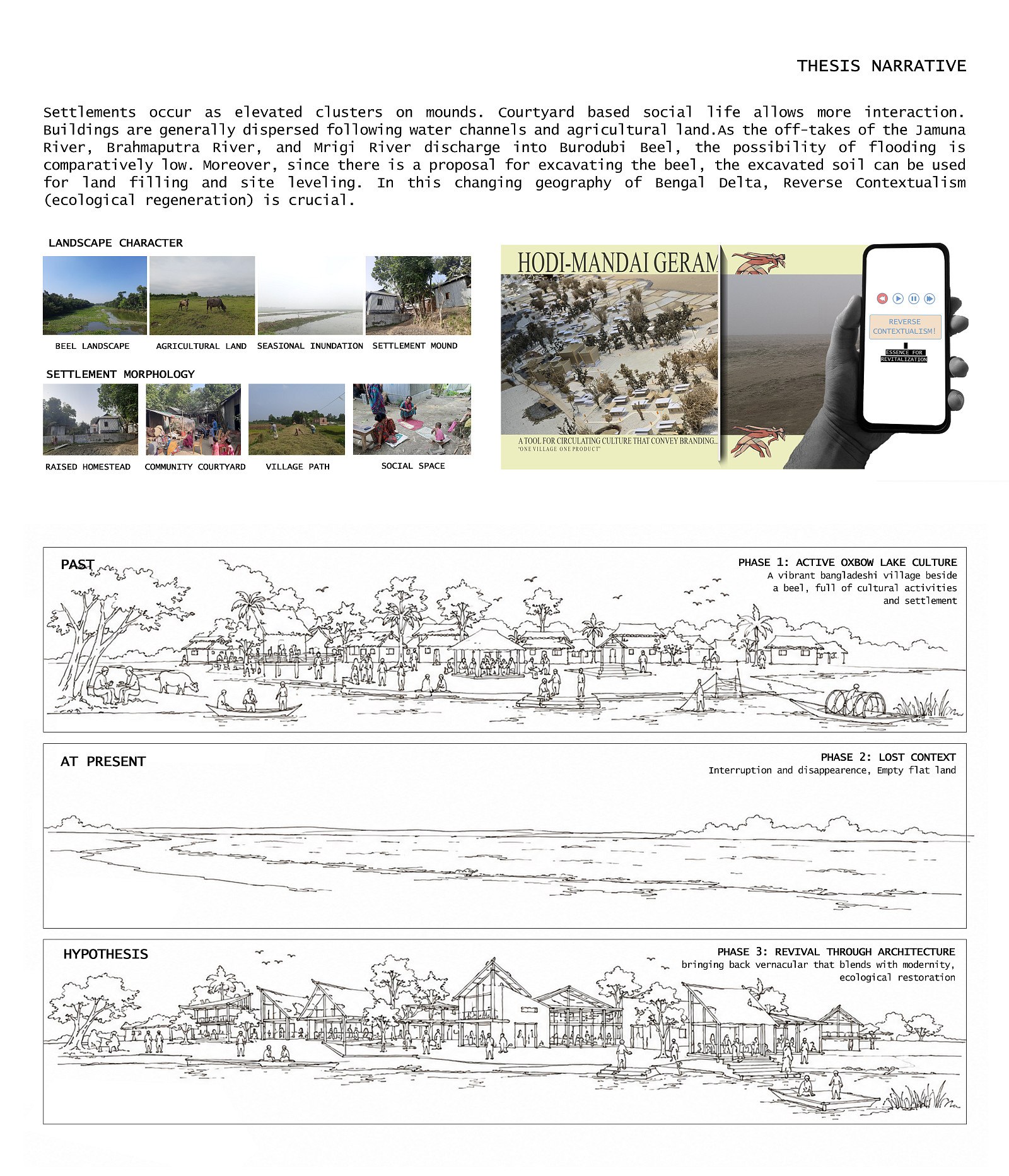
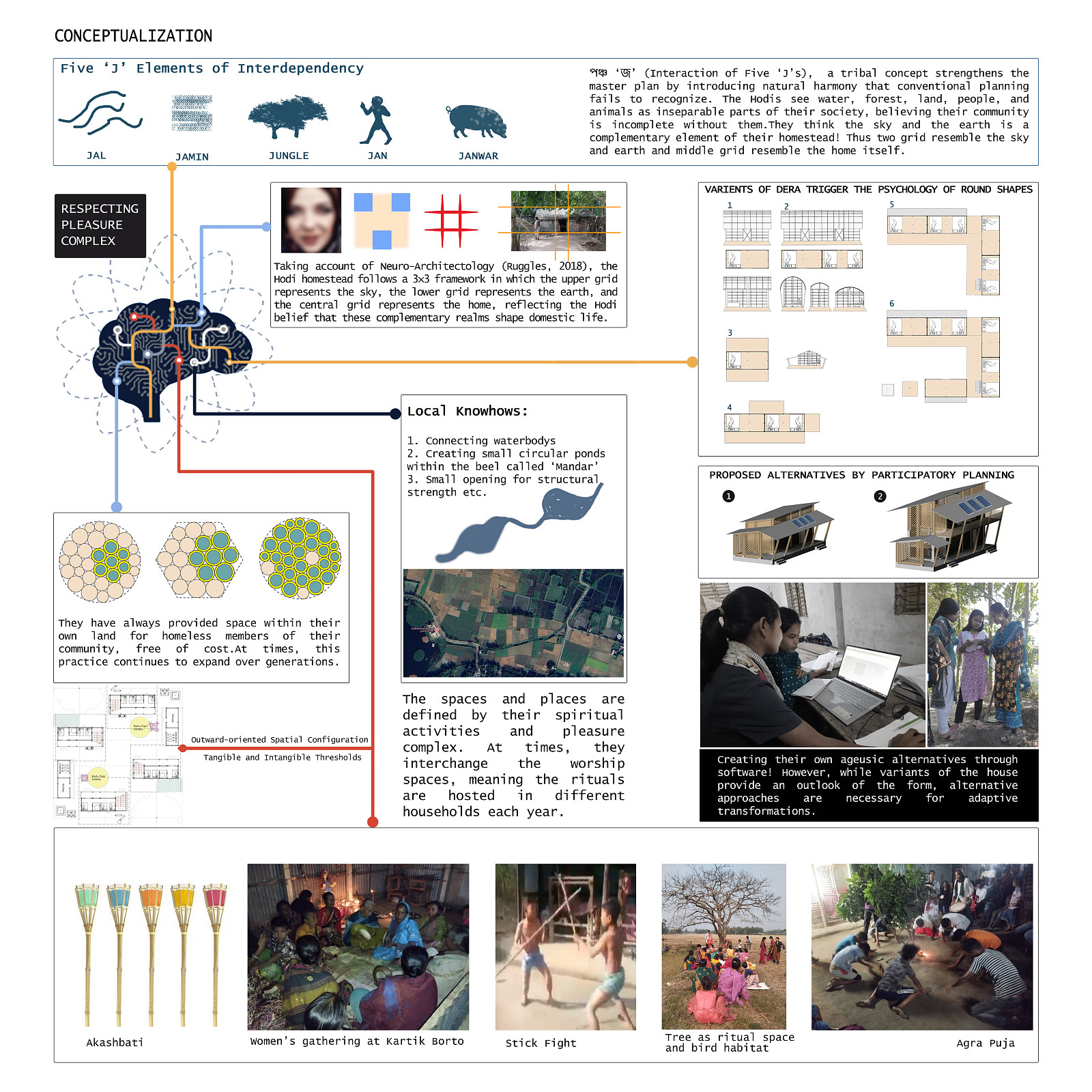
The Hodi-Mandai people are one of the numerous culturally distinct but marginalized ethnic groups of the Greater Mymensingh that have preserved their intangible heritage deeply influenced by the vibrant ecology of the Bengal Delta. However, despite a thousand-year-long tradition of existence, the culture of the Hodi–Mandai people has become increasingly vulnerable due to socio-economic marginalization, environmental changes, loss of territories, and homogenizing tendencies of modernity. Against this backdrop, this project attempts to bring out the characteristics of the intangible cultural heritage of the Hodi ethnic group by discussing collective memory, rituals, spatial practices, ecology-related traditions, kinship system, and dwelling culture based on architecture. Tracing their roots back to the Bodo Assamese ethnicity, Hodi identity formed in the course of integration into the Koch and Garo tribes through numerous intermarriages and co-existence in the shared territory. Considering the connection between the studied phenomenon and the idea of vanishing vernacular (loss of local cultures and knowledge under globalization and urbanization), the studies narrate the issue of the intangible cultural heritage of the Hodi people regarding its relation to spatial practice and vernacular architecture.
The proposed architectural approach seeks to address the loss of their traditional values, spiritual beliefs and cultural practices which are under threat due to the pressures of modernity and displacement. By combining Neuroscientific, Anthropological, Economic, and Psychological themes along with Participatory Community Design and Adaptive Architecture, the thesis imagines built environments that evolve with the needs of the community while considering their timeless cultural essence. The design also promotes intercultural communication with non-Hodi societies for social integration and shared understanding. The project seeks to sanctify the Hodi's cultural identity and create an interactive space that adapts without any cultural aggressions, placing architecture at the center of cultural continuity and social integration. It also acknowledges the ecological significance of Migratory Birds and the potential for Sensitive Waterfront Development which is a quiet but necessary requirement generated from the site's unique context.
Project description
Functional Programs-
Residential Cluster:
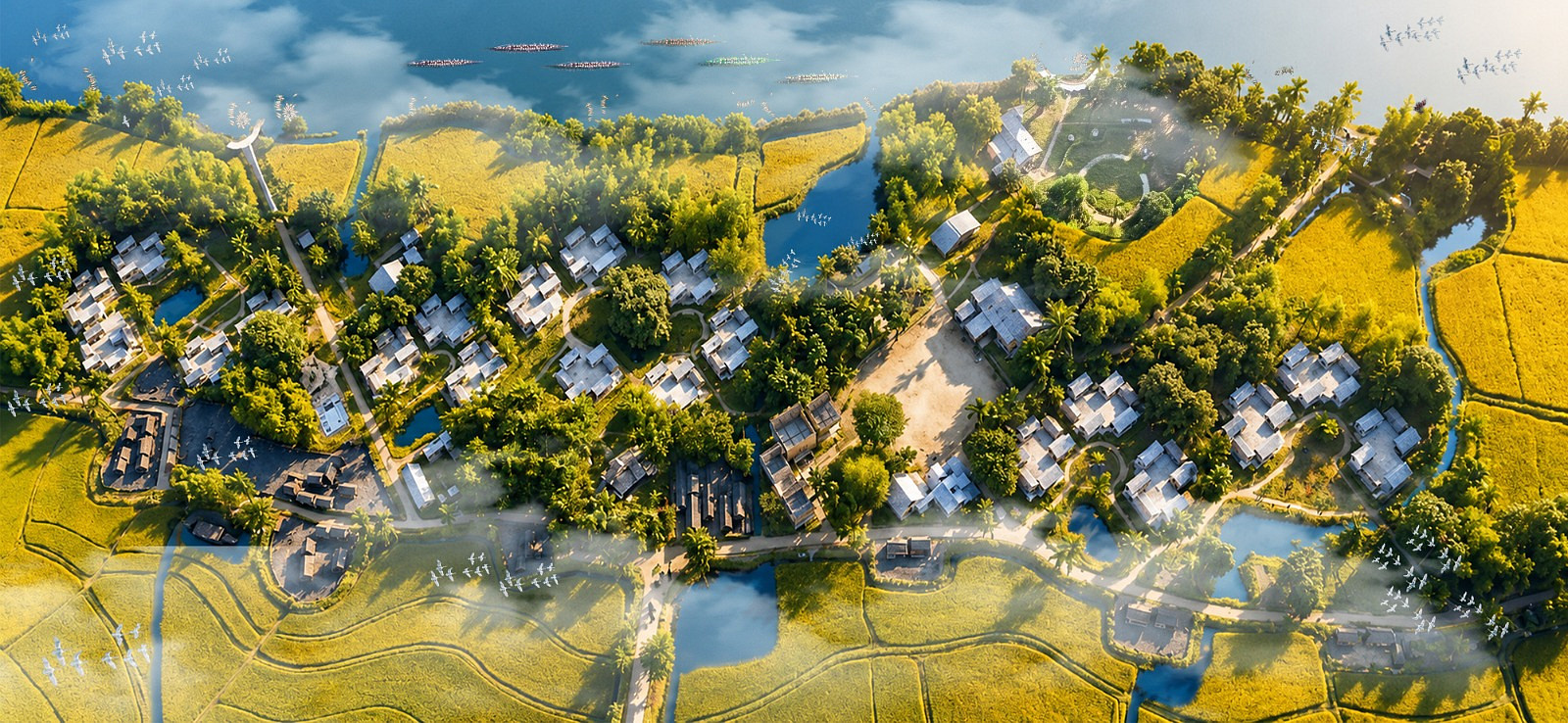
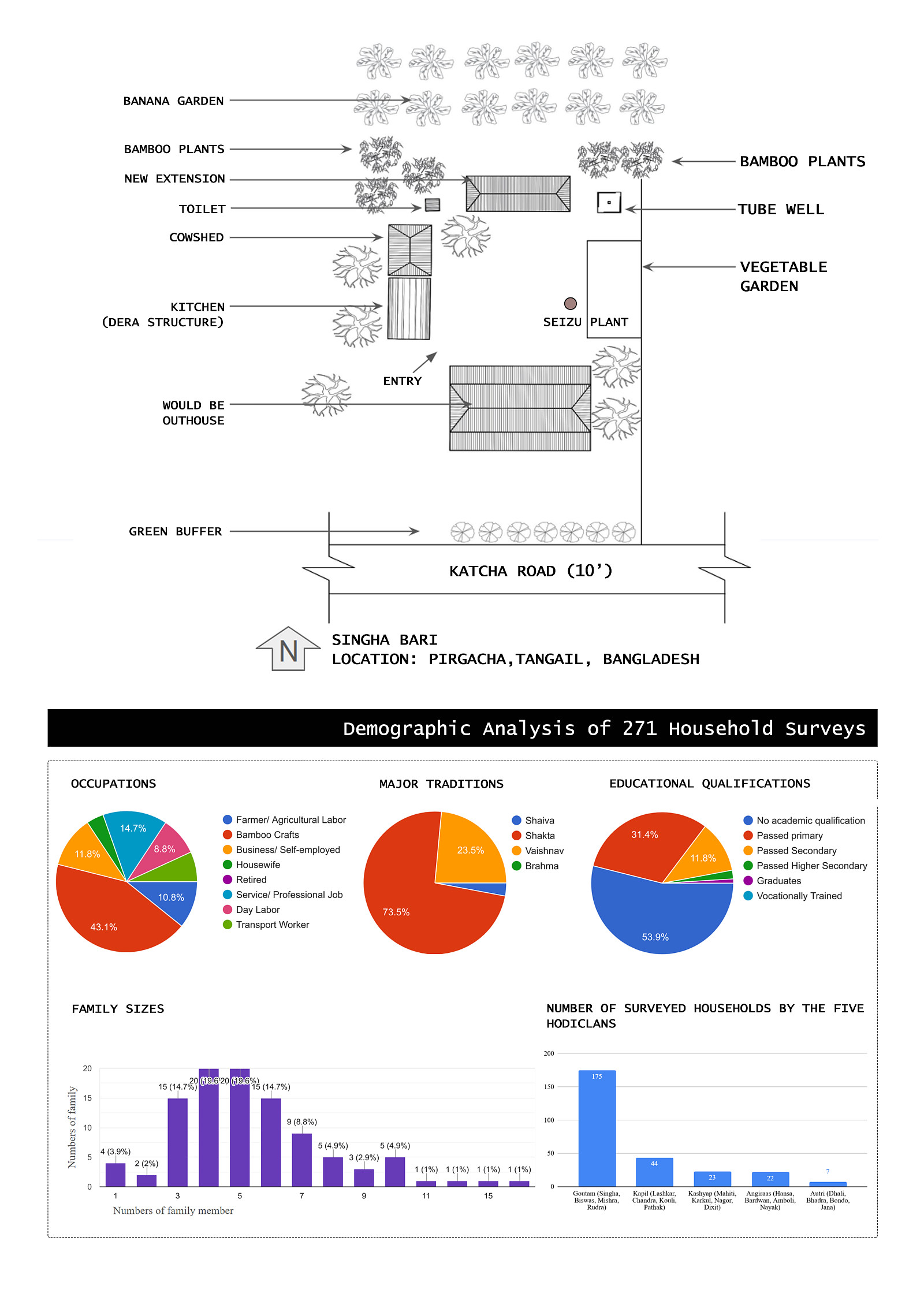
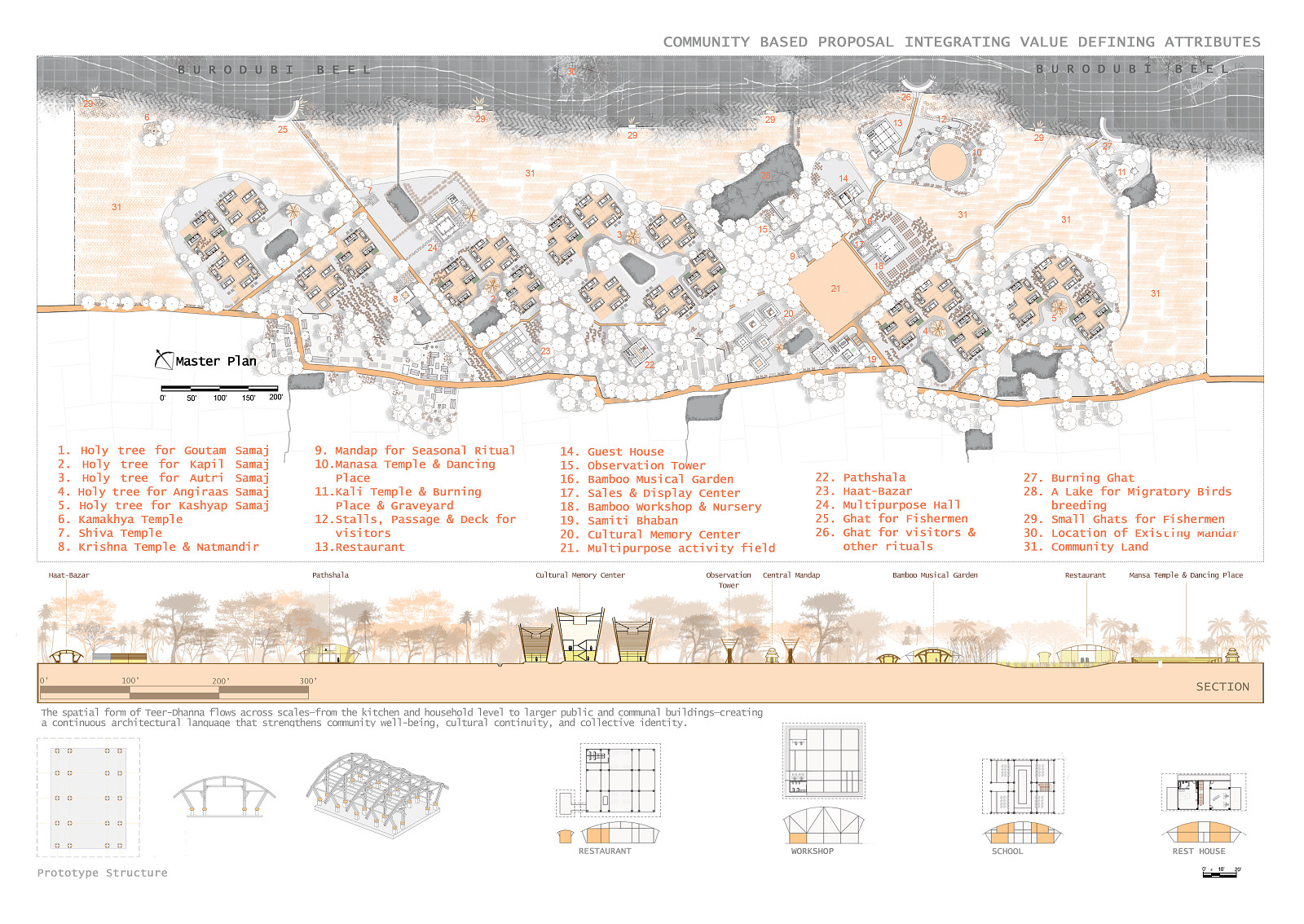
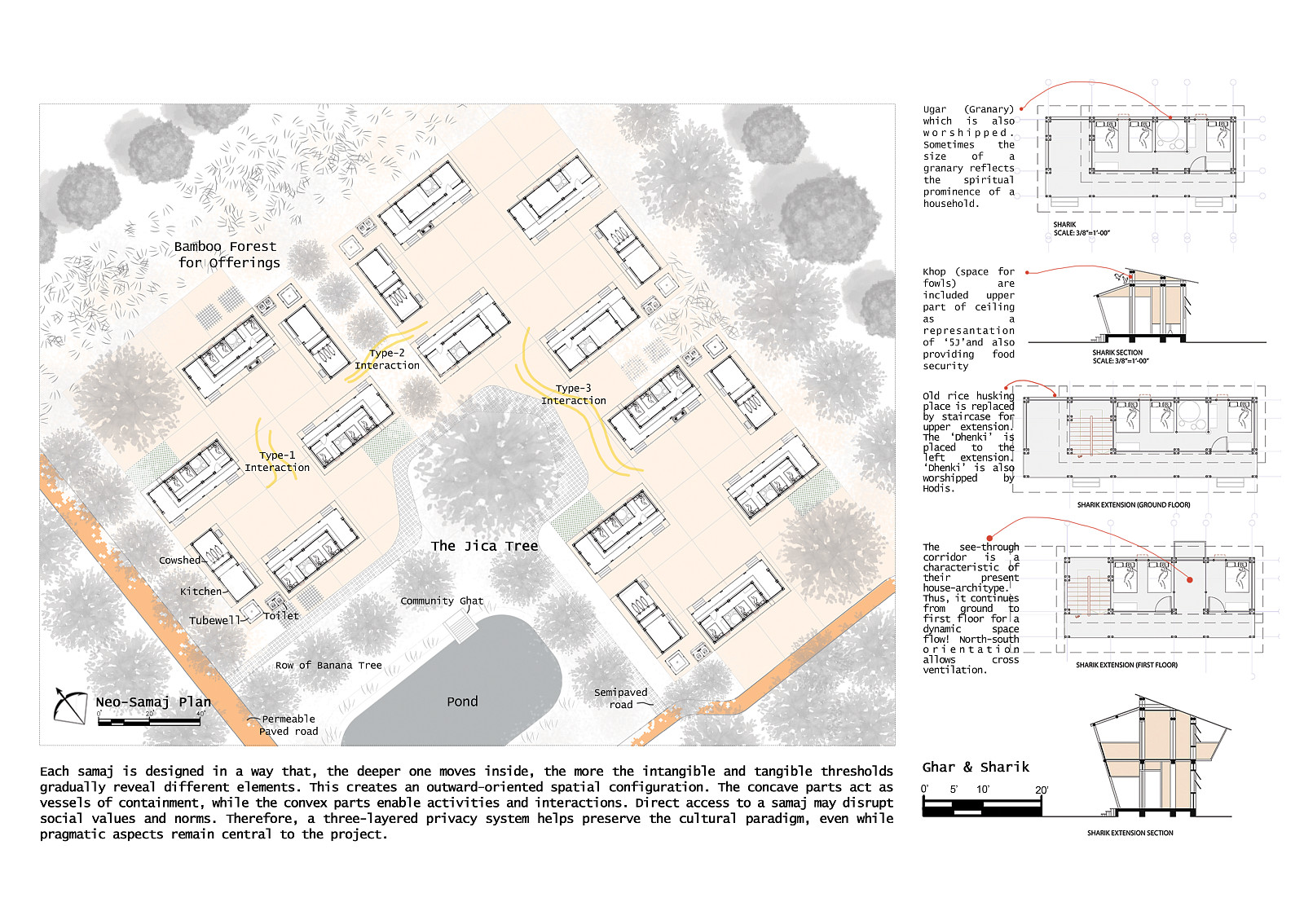
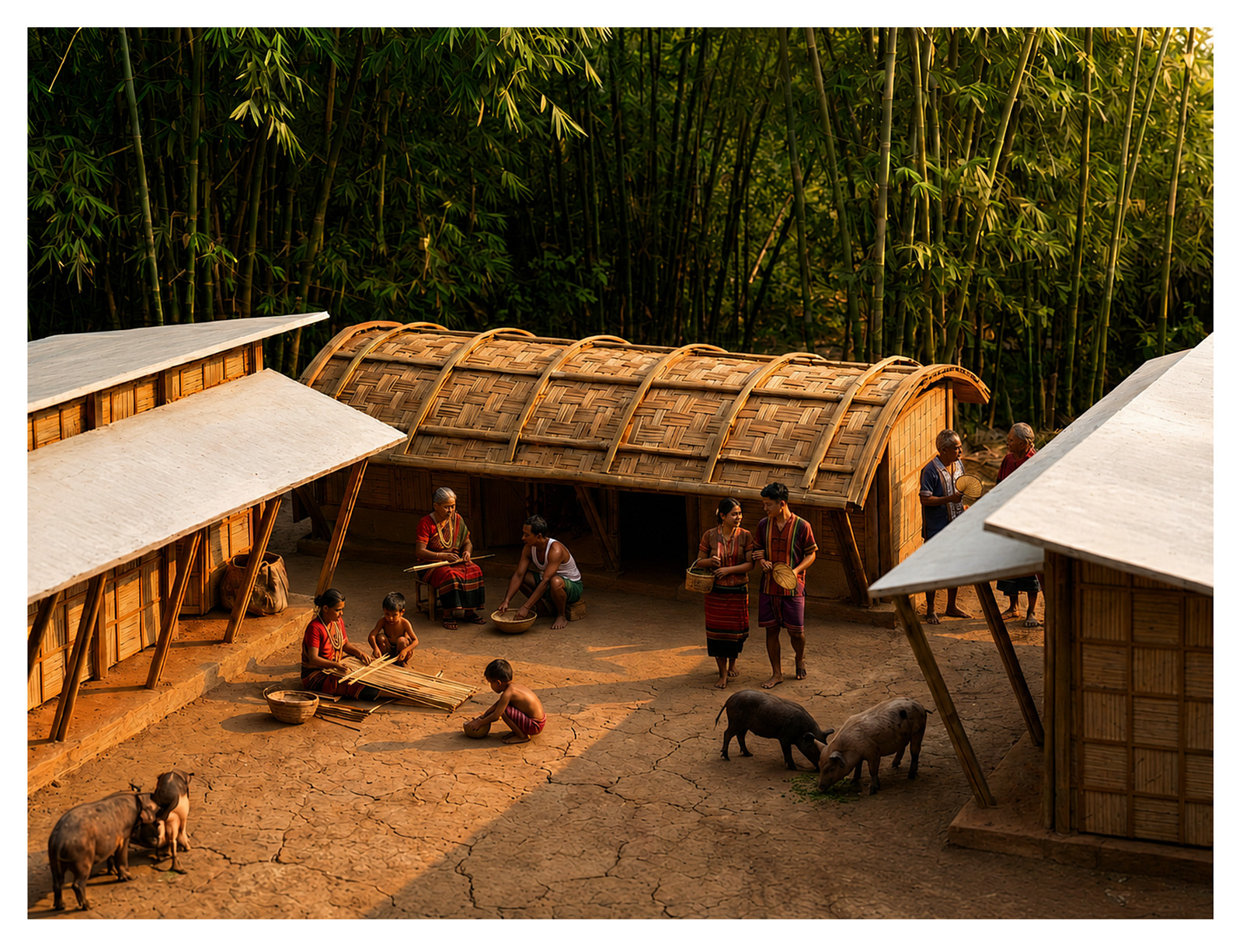
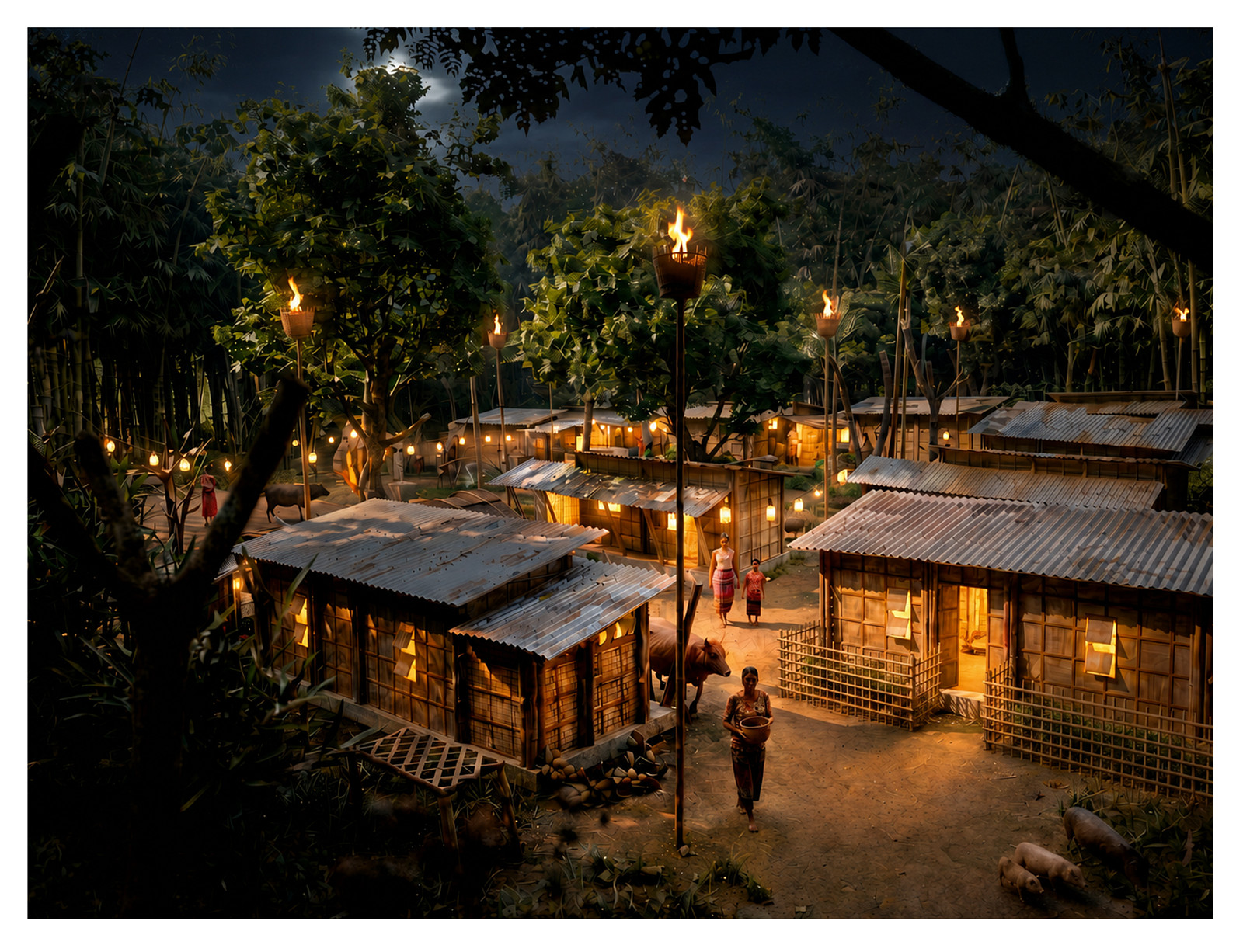
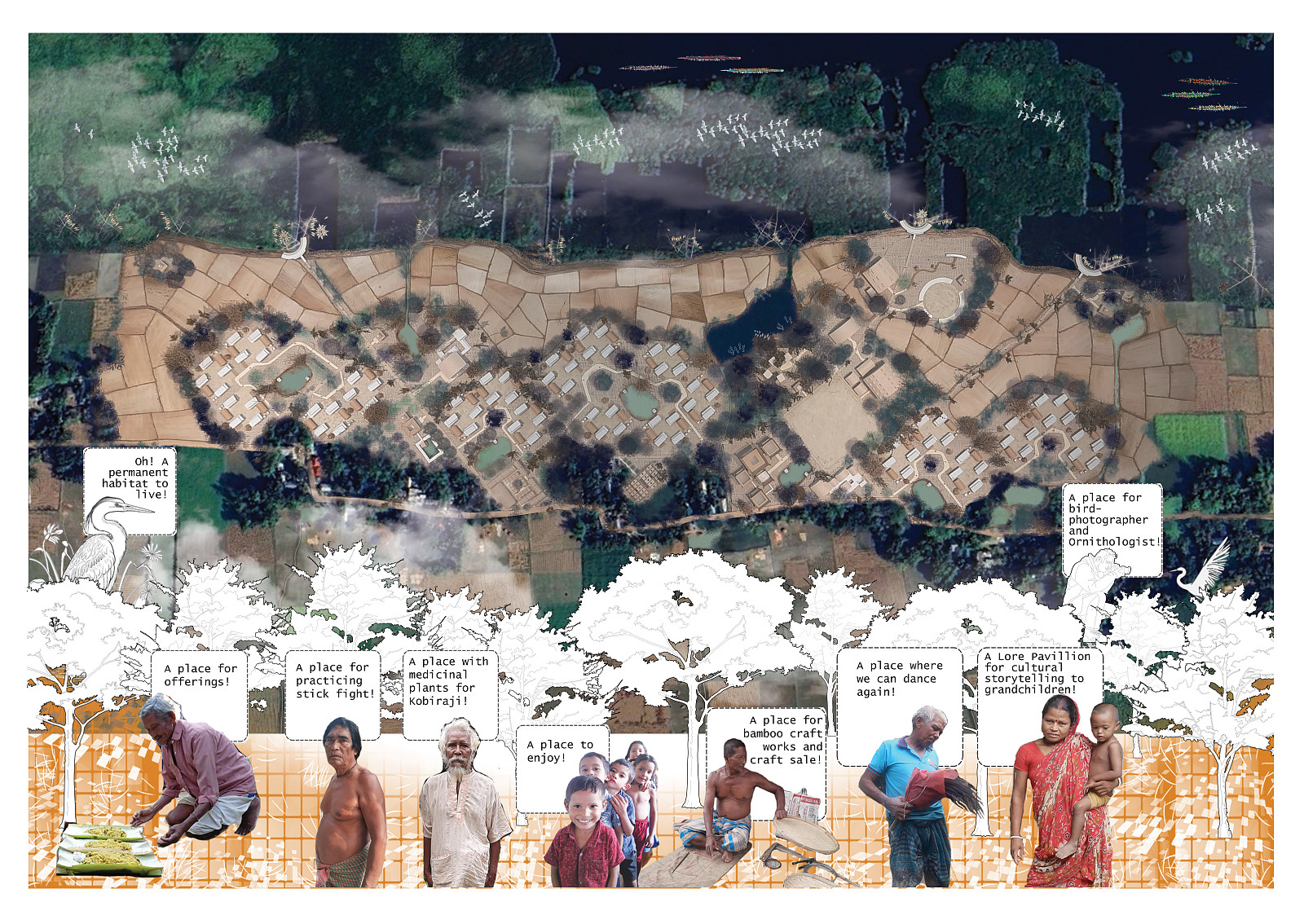
a. 80 Housing Units – Flexible homes designed for vertical expansion and material adaptability, integrating Hodi traditions such as Uthan (inner courtyard), Dohol (outer courtyard), and Bondo (animal and poultry ground), while incorporating climate-responsive design for future generations. Grids are applied to allocate functions as per survey data.
b. Shared Kitchens & Animal Sheds – Spaces for collective cooking and livestock of one Ghar, echoing community livelihood.
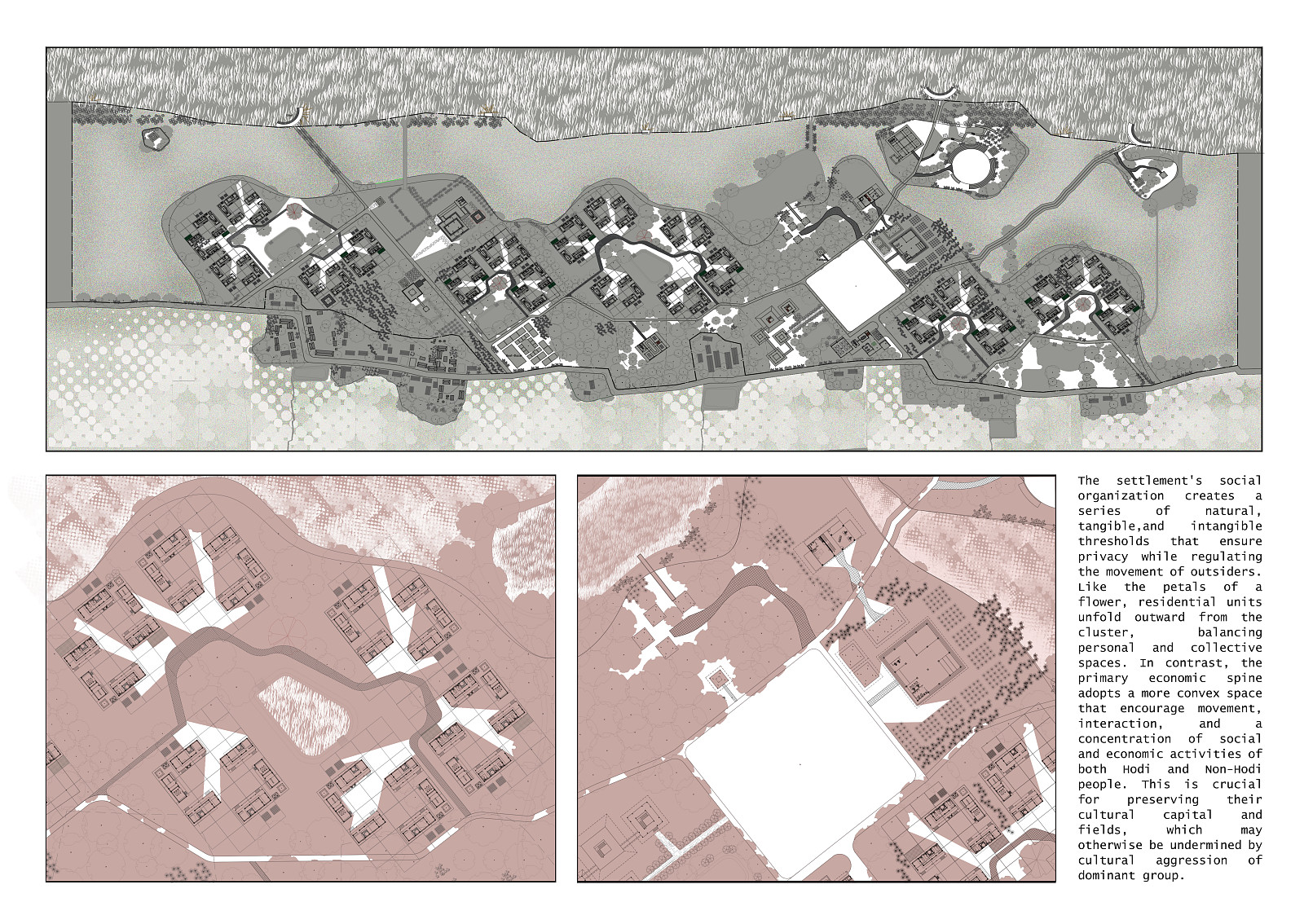
c. Rice husking spaces for preparing rice beer and Dhenki Puja. The clusters are introverted in nature.
Cultural & Social:
d. Community Hall – Venue for meetings, weddings and collective decision-making.
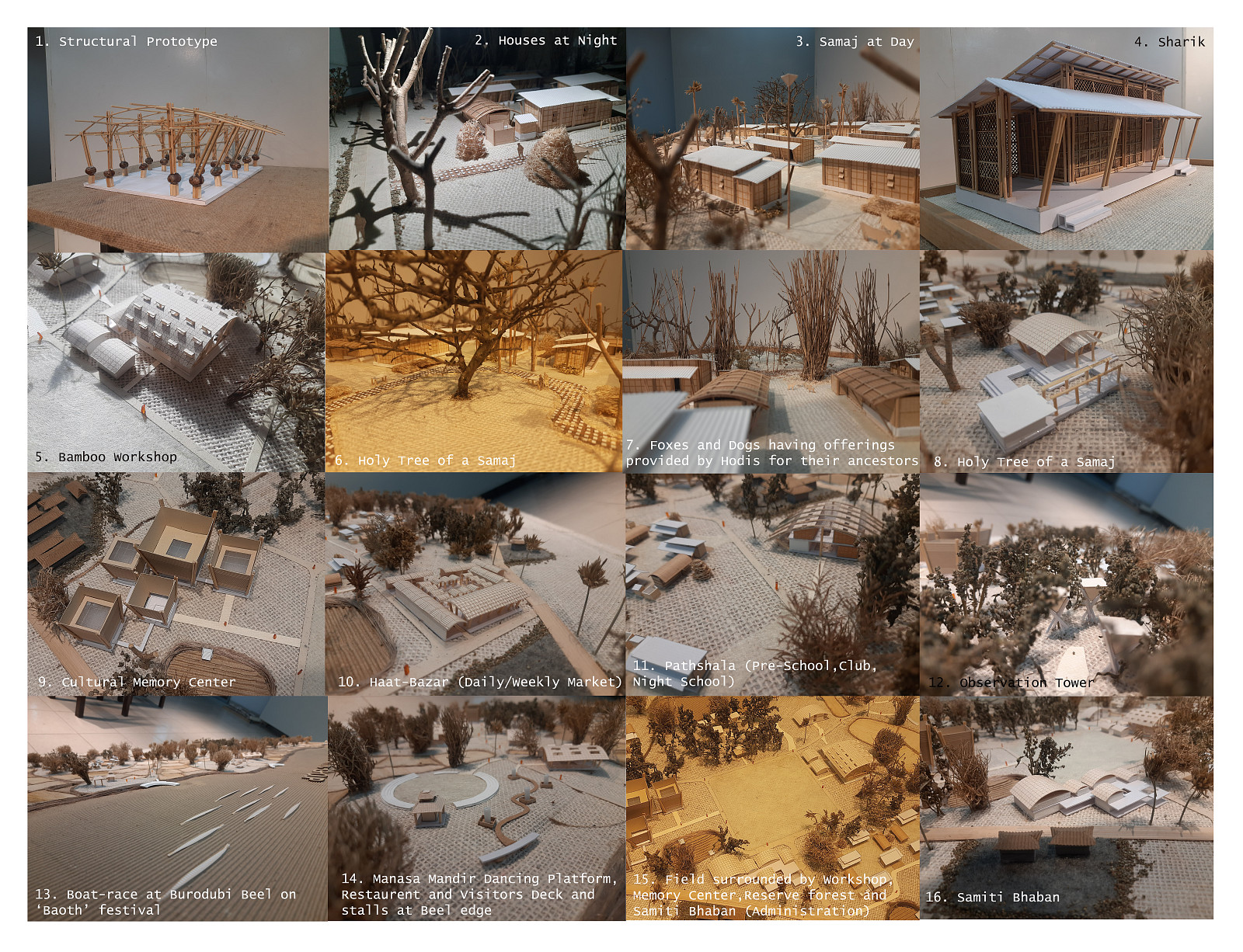
e. Samiti Bhaban (Administrative Building) – Houses offices, a handloom training center, a computer lab, and a community medicine center. Its form is modeled as a replica of the traditional Dera organization, reflecting local architectural and cultural identity.
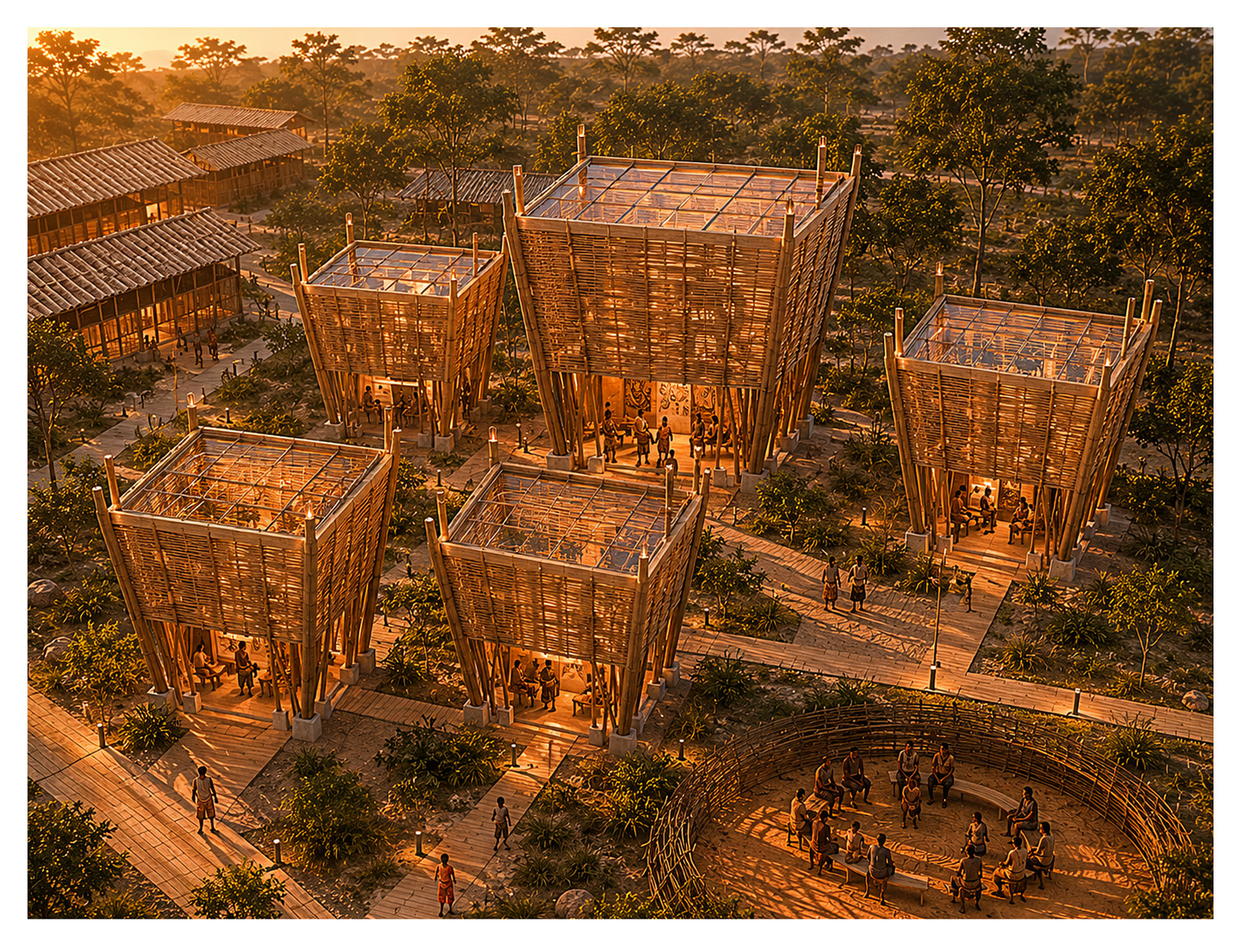
f. Cultural Memory Center – An archive and exhibition space dedicated to oral history, rituals, and craft heritage. The form of this building contrasts with the larger masterplan, creating a visual focal point. Its shape is inspired by the Aakas-Kuppa (sky torch), which the community lights for their ancestors, symbolically conveying that their culture remains alive on Earth.
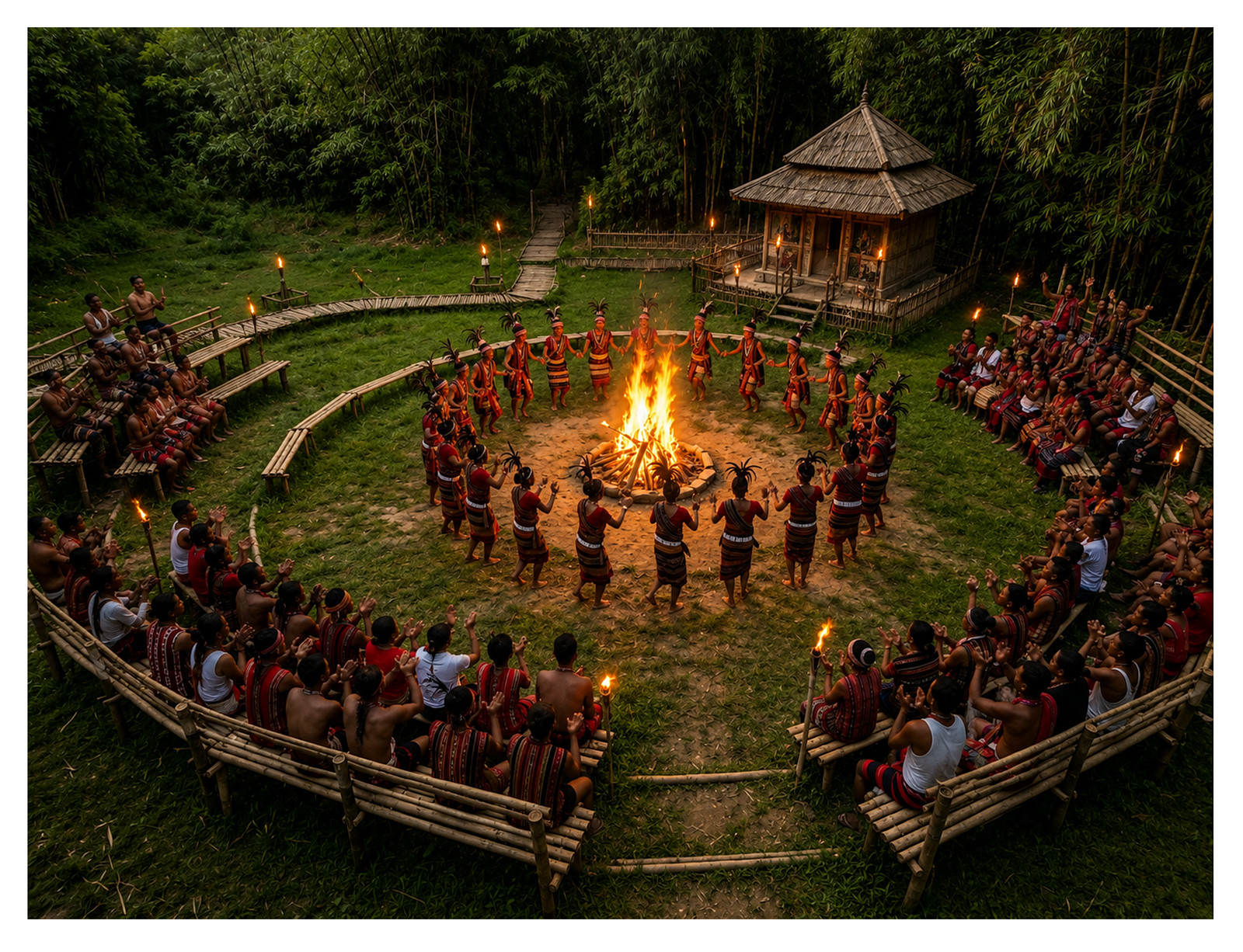
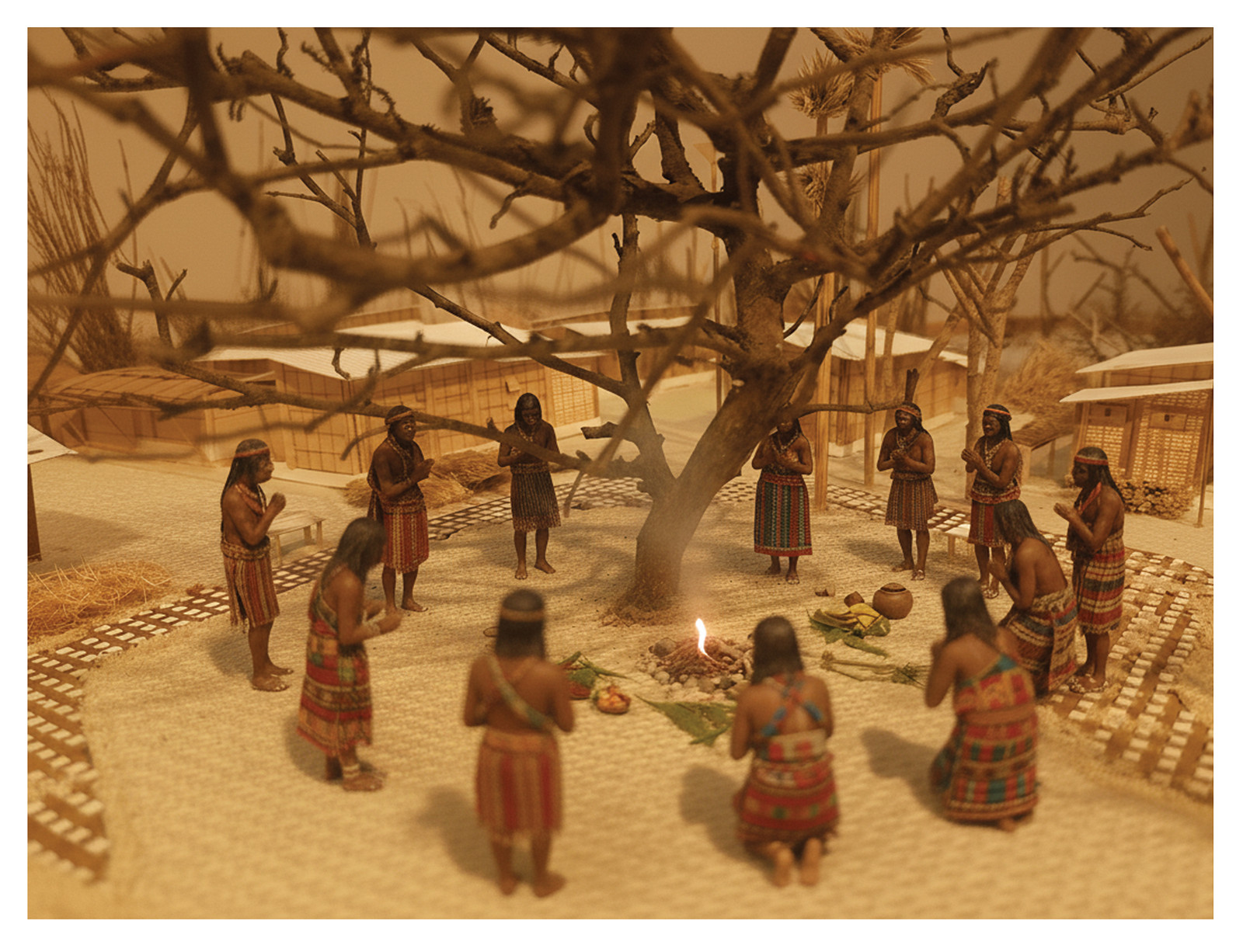
g. Dancing Ground & Ritual Forest (Jica Tree/Temple Belt) – Outdoor sacred spaces for puja, seasonal rituals, and performances. Occasionally, the area also serves as a Tulamuni (picnic) spot for the community. Spattered Religious Spaces strategically placed to emphasize the importance of empowering the Samaj, ensuring that each community cluster has at least one significant Hindu temple. This provides a sense of security and respects their dual cultural identity.
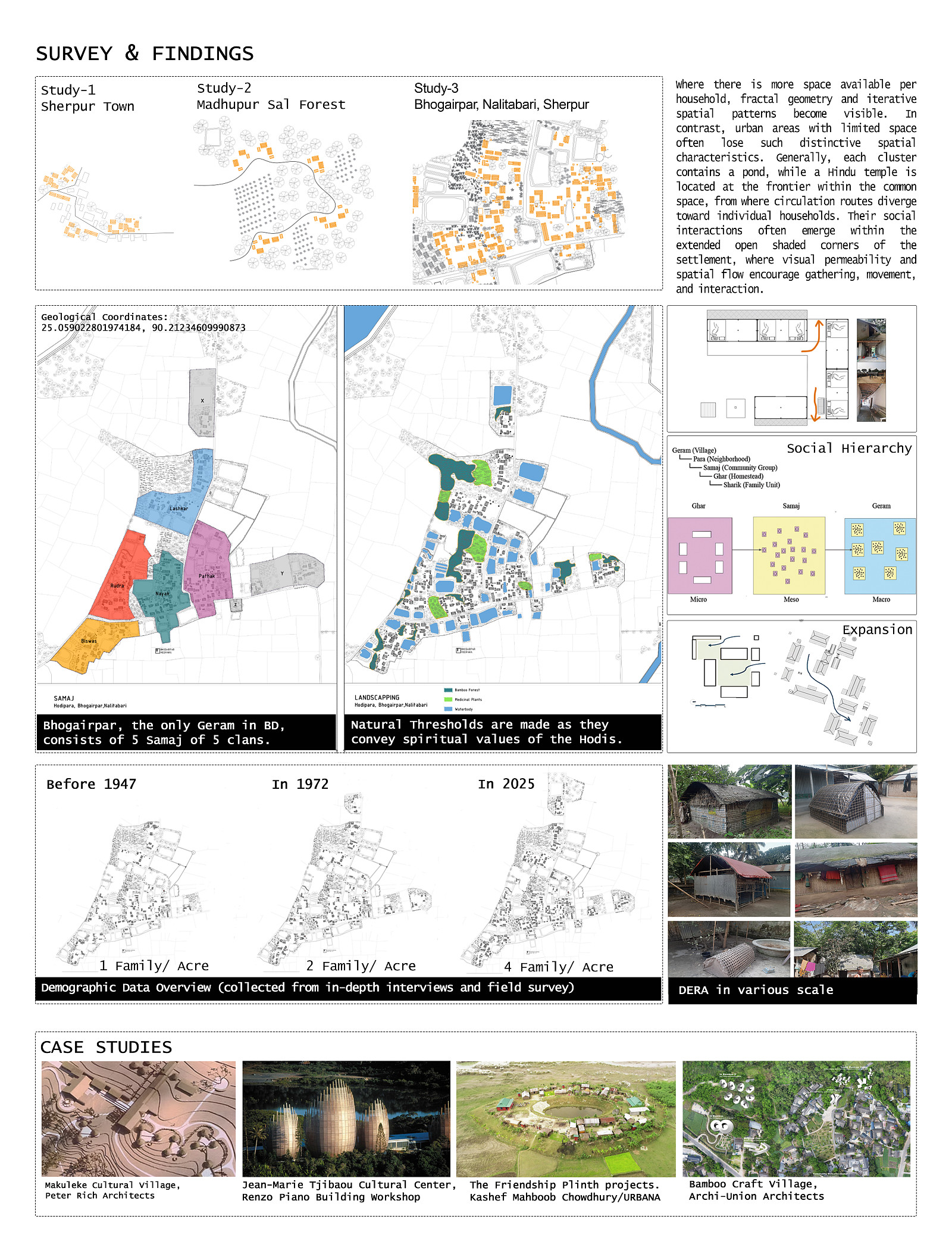
The shape of the Dera flows from micro to macro scale - household to public spaces, inspired by the community’s belief that this form provides visual comfort and strengthens cultural identity.
Education & Learning:
h. Pathshala (Pre-School, Primary & Night School) – An intergenerational learning hub combining formal education with cultural transmission. It facilitates youth club activities and is nestled within the existing forest, providing a sense of protection and calmness.
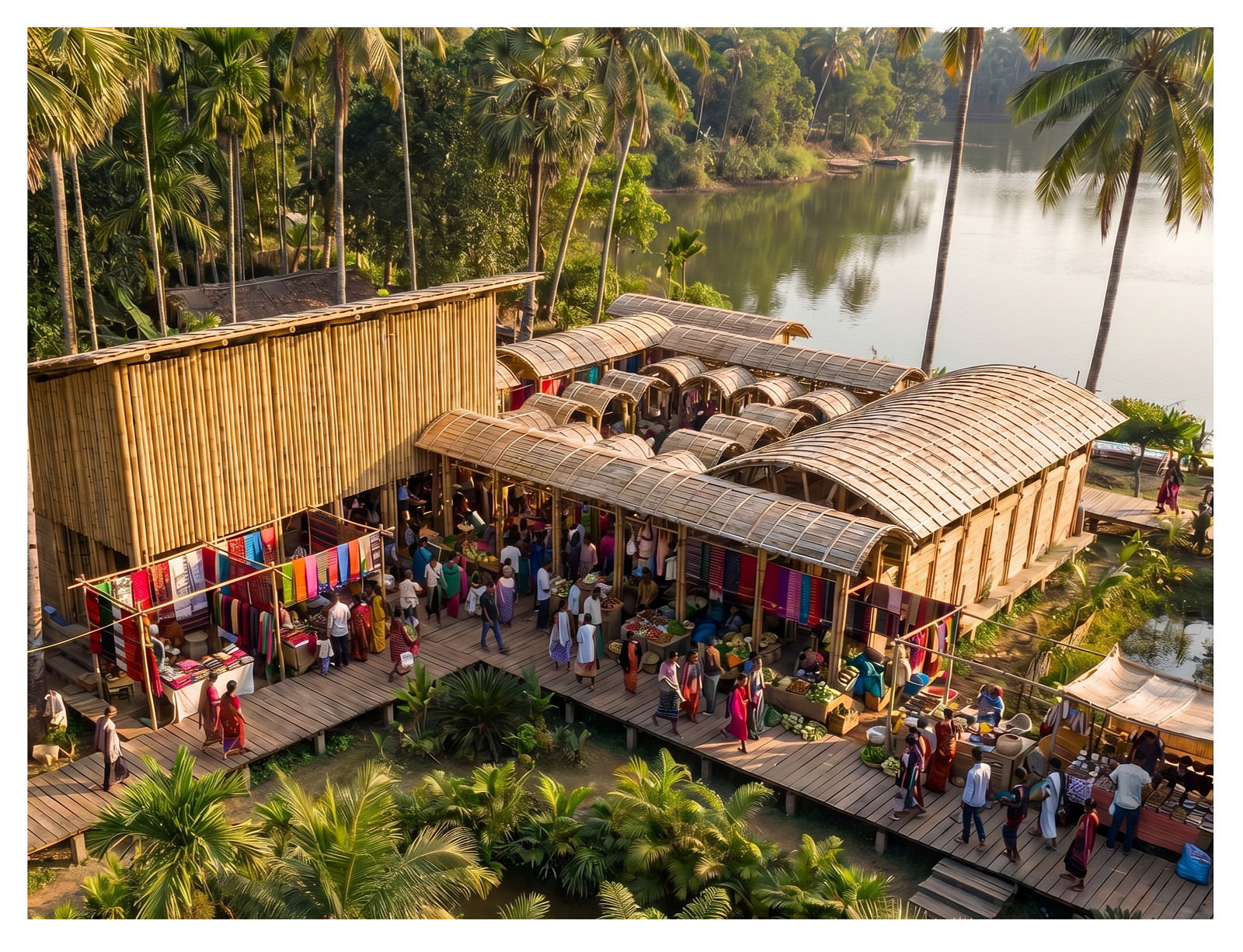
i. Workshop and Sales – Bamboo treatment, weaving, carpentry - sustaining the traditional craft economy.
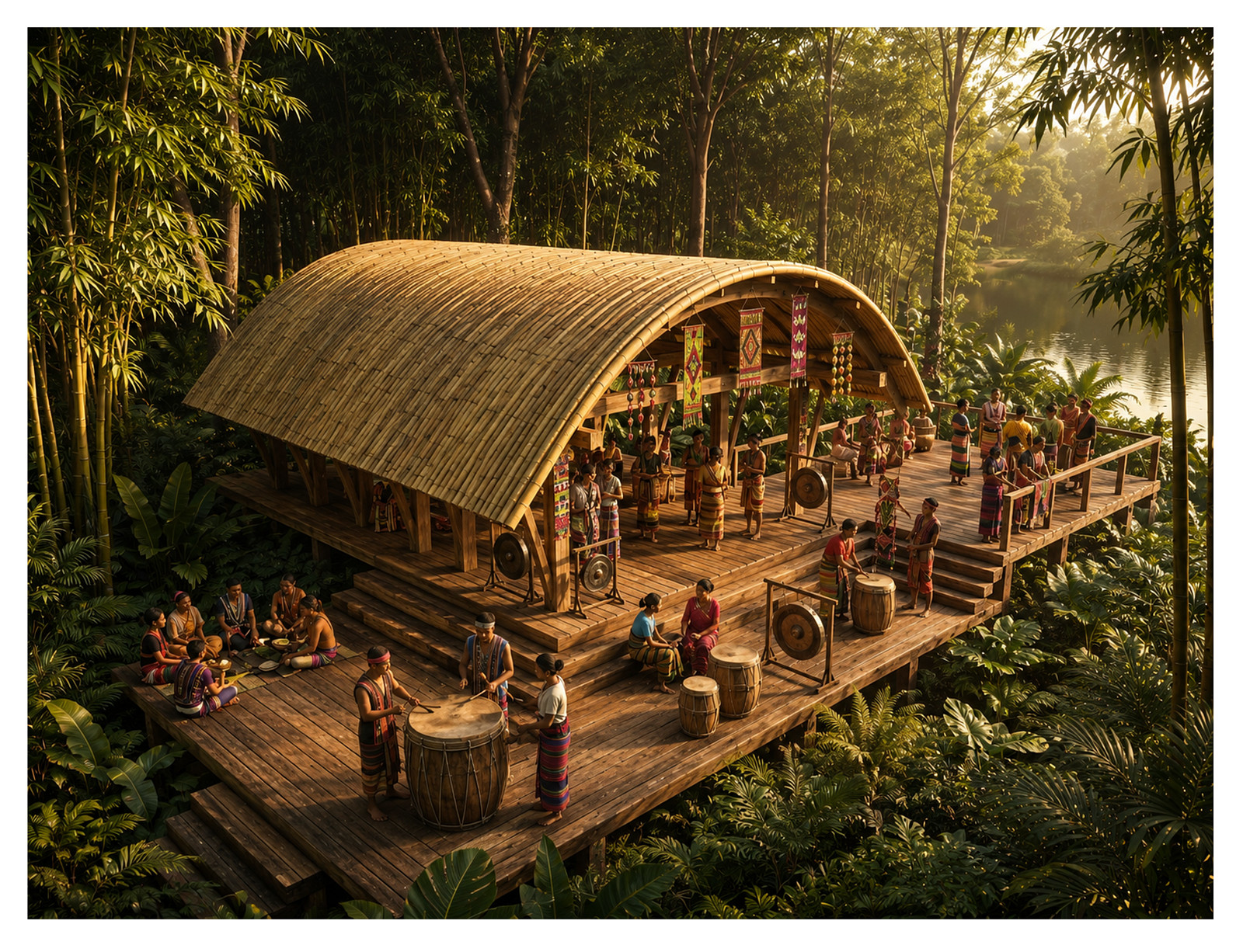
j. Bamboo Music Garden – For recreation.
Livelihood & Market:
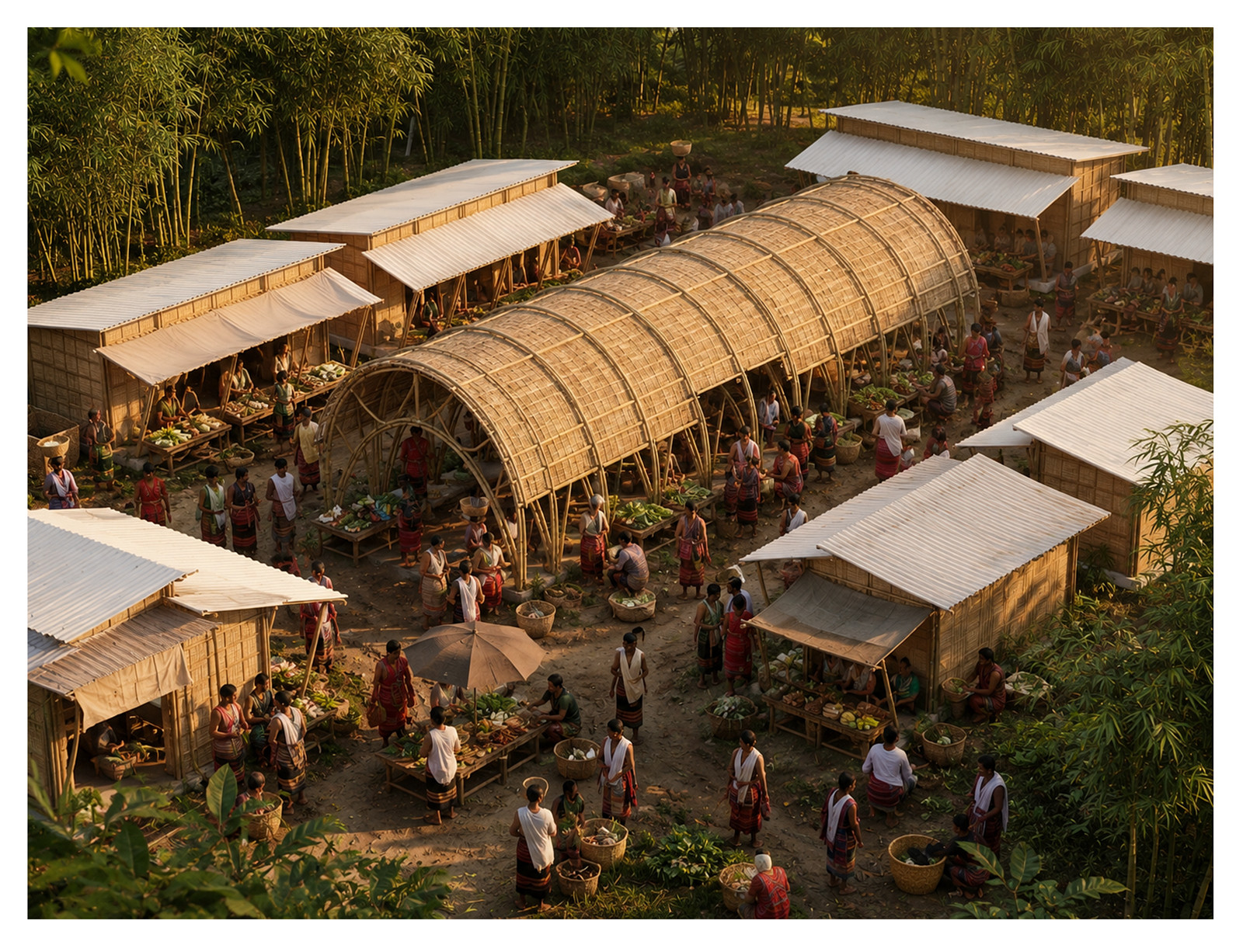
k. Haat-Bazar – Marketplace for daily needs and intercultural exchange.
l. Craft Development Agencies’ Hub – Training micro-enterprise support.
Public Amenities:
m. Rest House – Shelter for visitors, migrants or intercultural exchange programs.
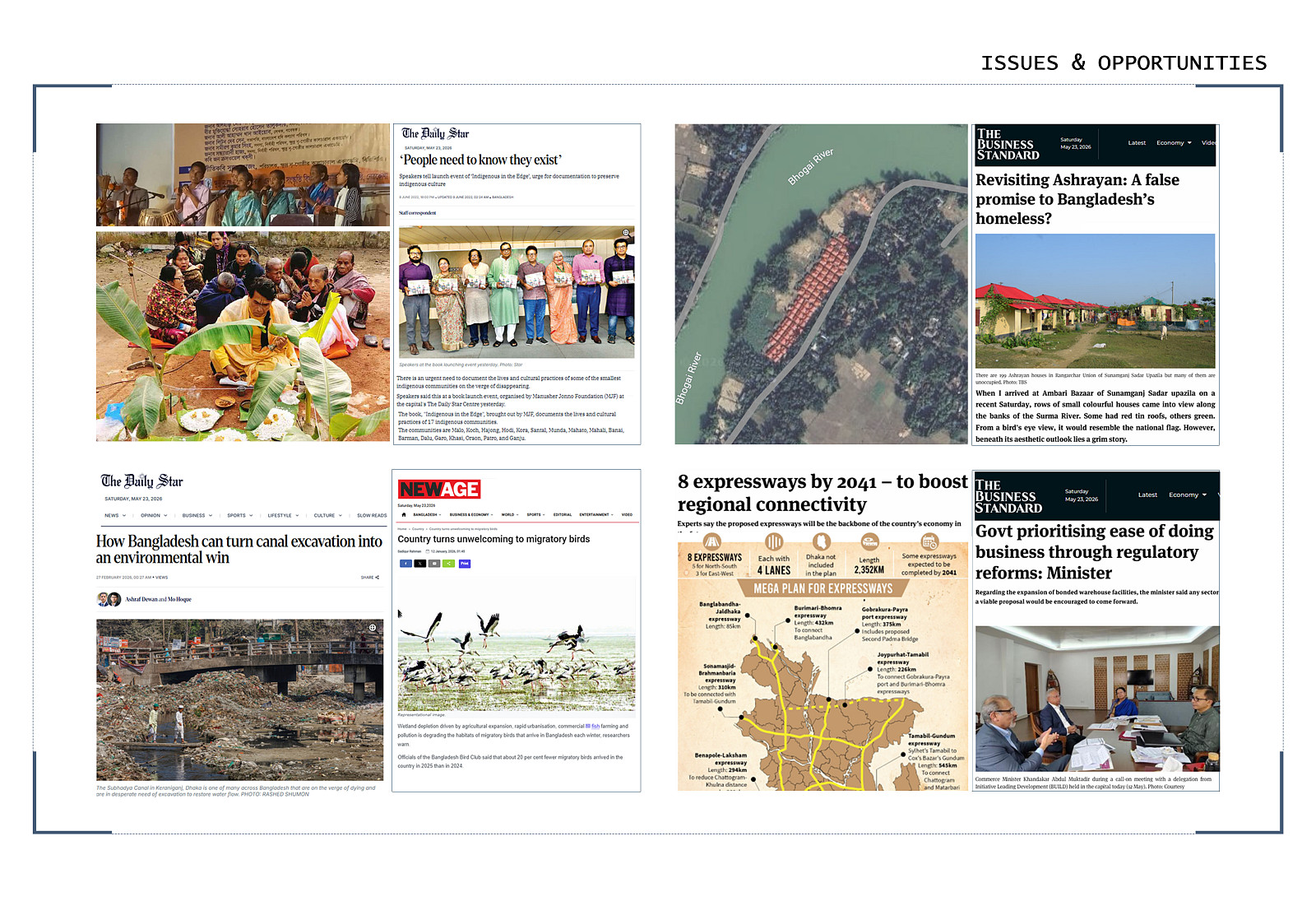
n. Observation Facilities / Viewing Decks – Ornithology & eco-tourism linked to the Beel landscape.
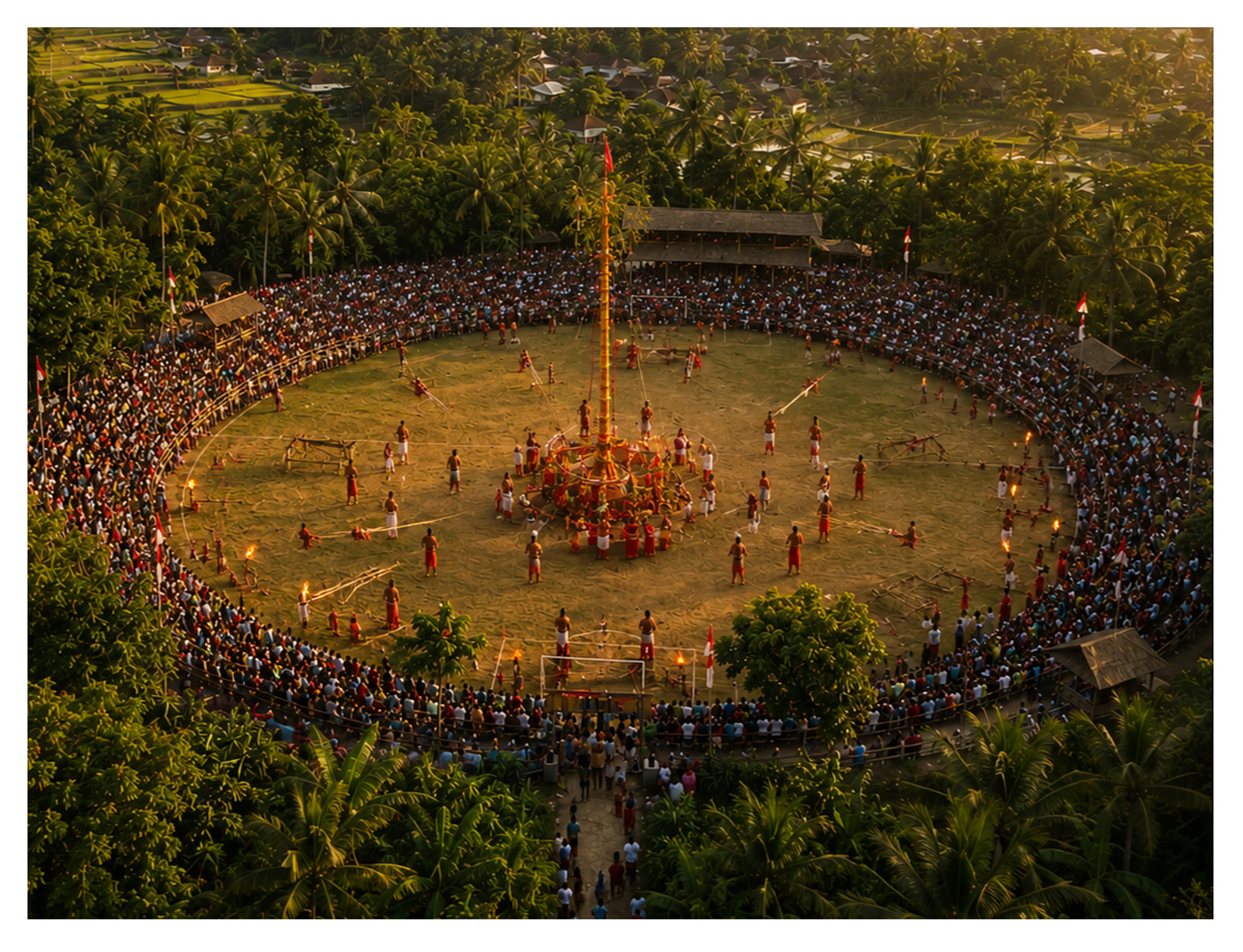
o. Field- For public gathering during Charak Puja or Durga Puja, or for any fair or sports.
Waterfront & Ecology:
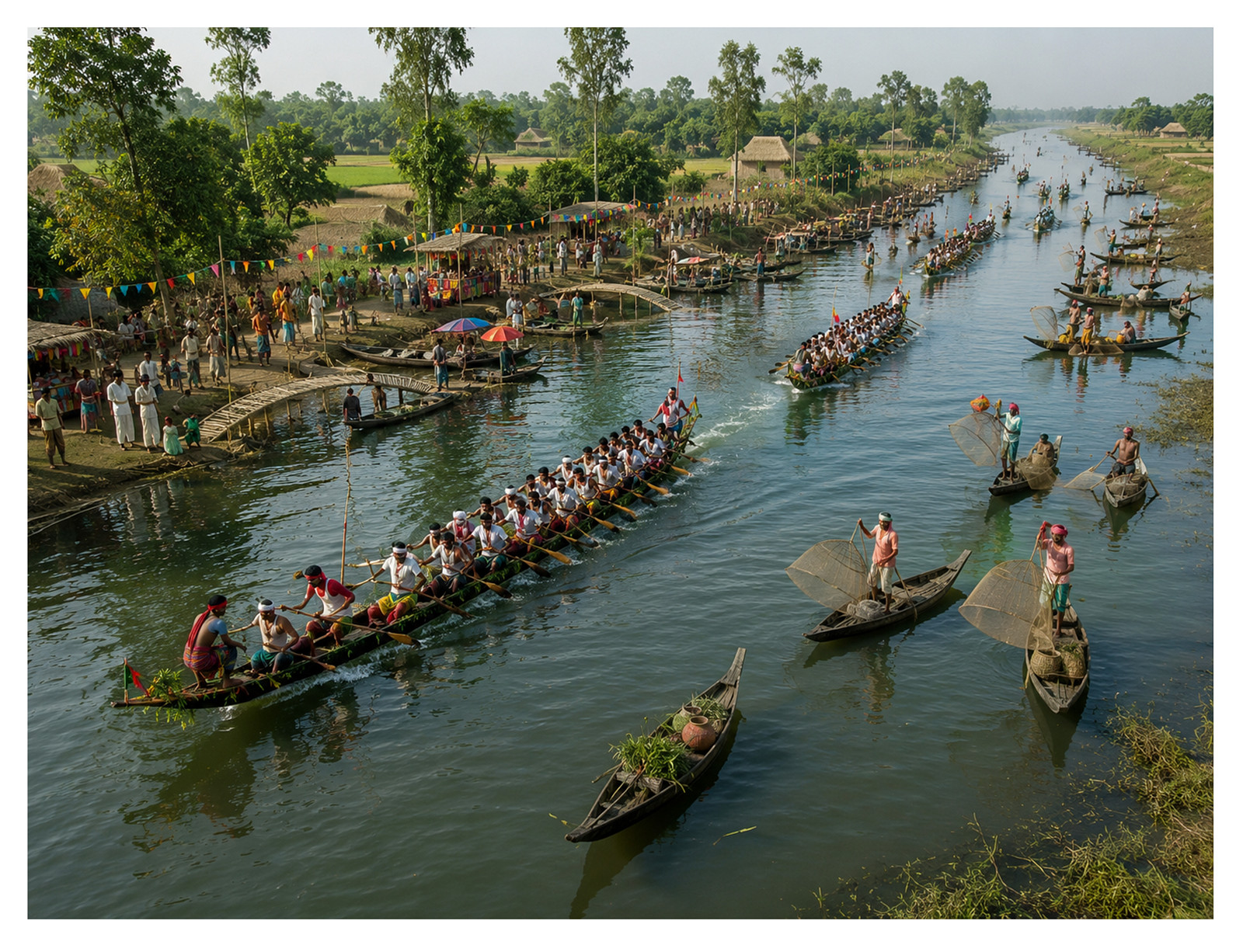
p. Ponds & Ghats – Designed for bathing, fishing, cremation rituals, and managing seasonal flooding. All water bodies are interconnected, reflecting the community’s traditional knowledge and water management practices. Mandar means cavity under a natural waterbody, generally used for making a fish trap at this locality.
q. Bamboo & Medicinal Forest Belt – An ecological buffer that supports traditional crafts, community health, and biodiversity. The bamboo belt prevents soil erosion, provides habitat for heron species, and reinforces the “one village, one product” concept by sustaining local craft resources.
r. Reserve Forest– Habitat for migratory and endangered bird species.
s. Community Agricultural Land – According to them, there is nothing individual. Everything is communal and should be distributed equally to individuals.
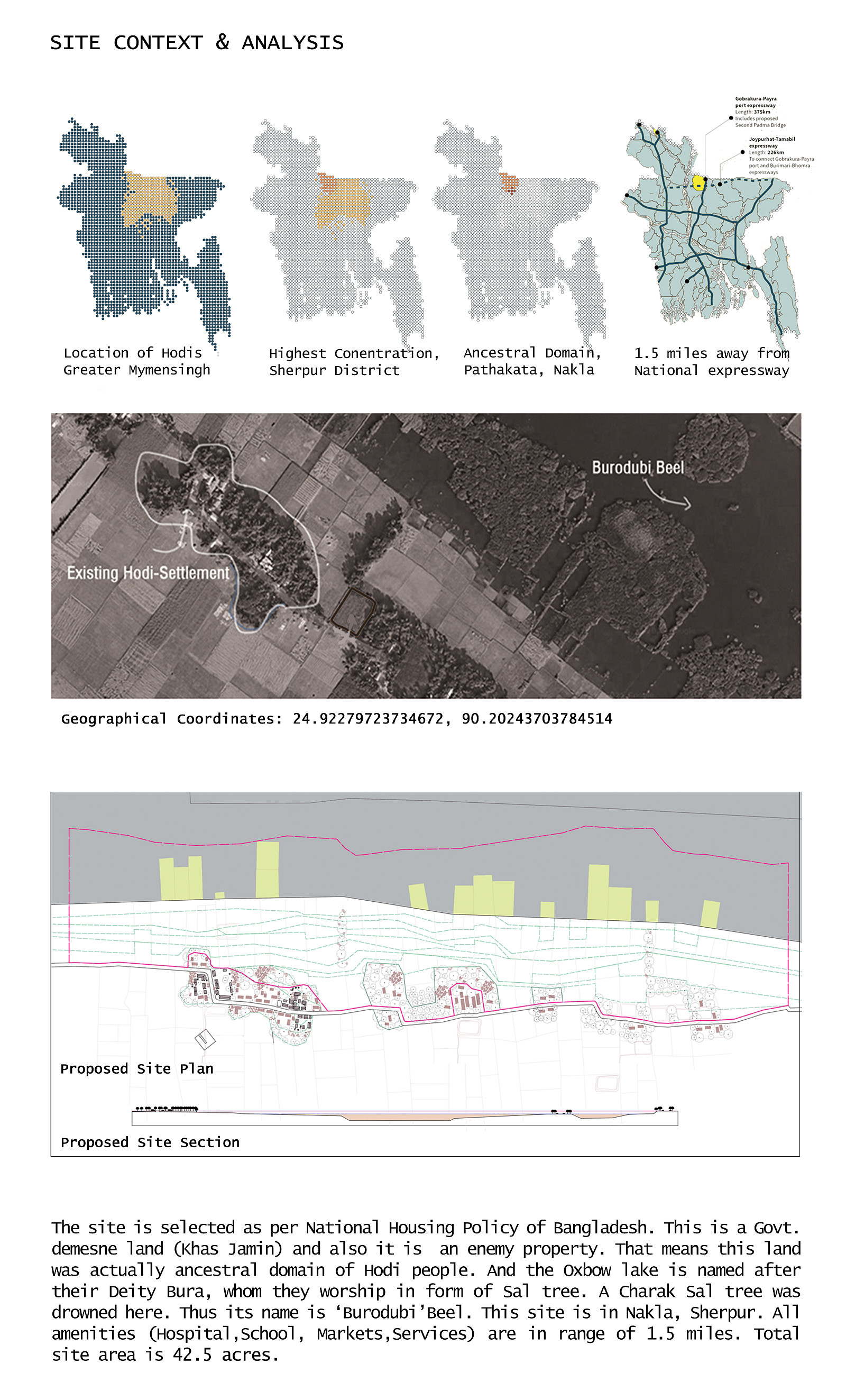
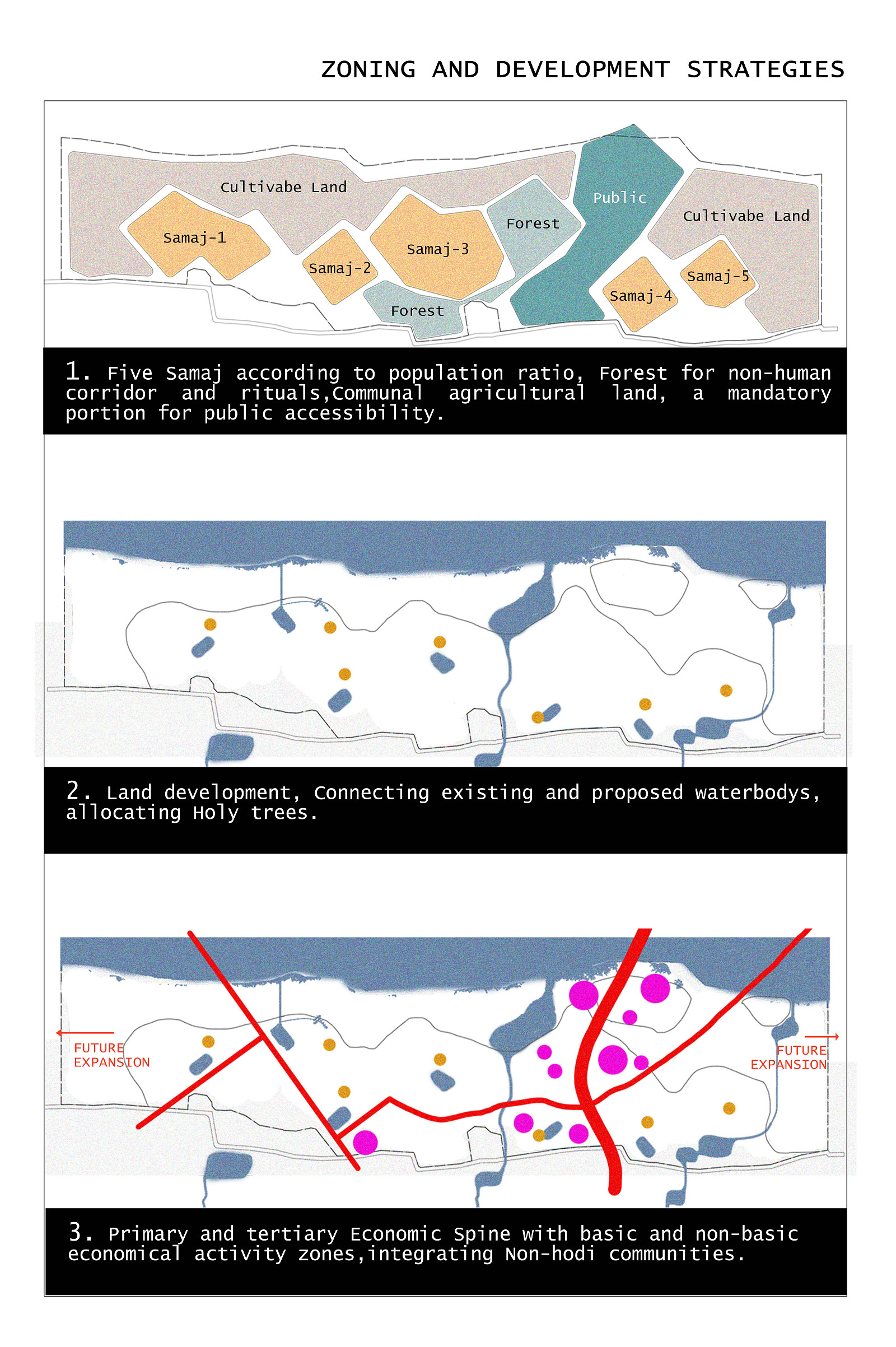
Although the site slopes towards the lake, land development is feasible due to the advantage of the existing government lake excavation project. The site’s layout has been derived from the contour lines along the edge of the water body. Three river offtakes around the site act as natural barrier channels, reducing flood risk and ensuring the settlement remains safe during seasonal inundation.
Technical information
The project suggests a regenerative settlement that links together ecology, culture, economy, and architecture through their interconnected systems of canals, ponds and wetlands to improve water circulation, allow for irrigation, restore fish and other aquatic species for food sources to encourage the protection of both the food security of the area as well as the area’s biodiversity. All the bridges and culverts connecting each component also maintain the ability of the inhabitants to travel within the space while still maintaining an ecological connection.
The development of the settlement occurs in three phases. The first set of families consists of forty residents of Hodi already settled and eight new families, which will take place over time and at approximately double its current size (eighty families). The existing residents of Hodi rely on their traditional networks of kinship and support to assist new families as they establish their homes. As the settlement continues to grow, bamboo forests, medicinal gardens, and ecological corridors will also be developed in harmony with the growth of the community.
Bamboo plantations which are exclusively dedicated to the production of bamboo serve the dual purpose of providing renewable materials, as well as functioning as carbon sinks. A Bamboo Prefabricated Factory would convert harvested bamboo within the local area into modular components that will be used to build dwellings for the community; the factory will also create jobs and positively impact the local economy. An Administration/Community Resource Center will be created to facilitate the coordination of agricultural production, bamboo fabrication, crafts, markets, and other community based resources.
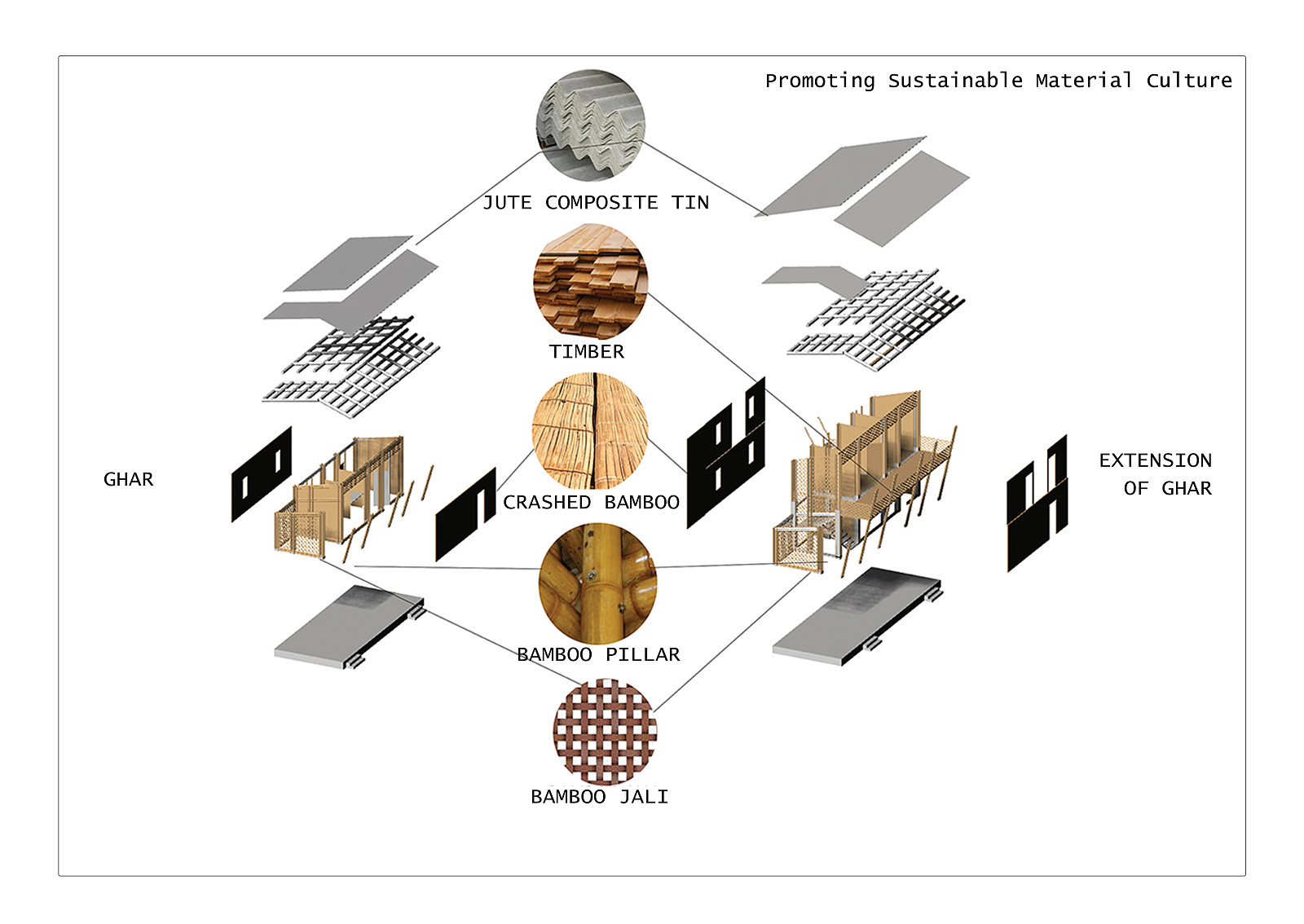
For residential blocks, there will be ferro-cement flooring, and there will be a jute polycarbonate and polymer roof system to ensure longevity, daylighting, and thermal regulation. For public buildings, there will be treated bamboo columns, beams, trusses, and bamboo chatai sheets, which will create lightweight and environmentally sustainable architecture based on local building practices. The design incorporates passive ventilation systems, transition spaces, and a permeable building envelope design to minimize energy consumption; however, solar photo voltaic cells have been proposed as decentralizing renewable energy sources.
The proposal also seeks to incorporate existing Muslim families into a cohesive society through shared public spaces, markets, and facilities. Thus the project creates an environmental, socio-cultural, and economic model of sustainability using renewable construction materials, restoration ecology, community production processes, and sustainable growth principles.

Copyright © 2026 INSPIRELI | All rights reserved. Use of this website signifies your agreement to the Terms of Use, Privacy Policy, and use of cookies.