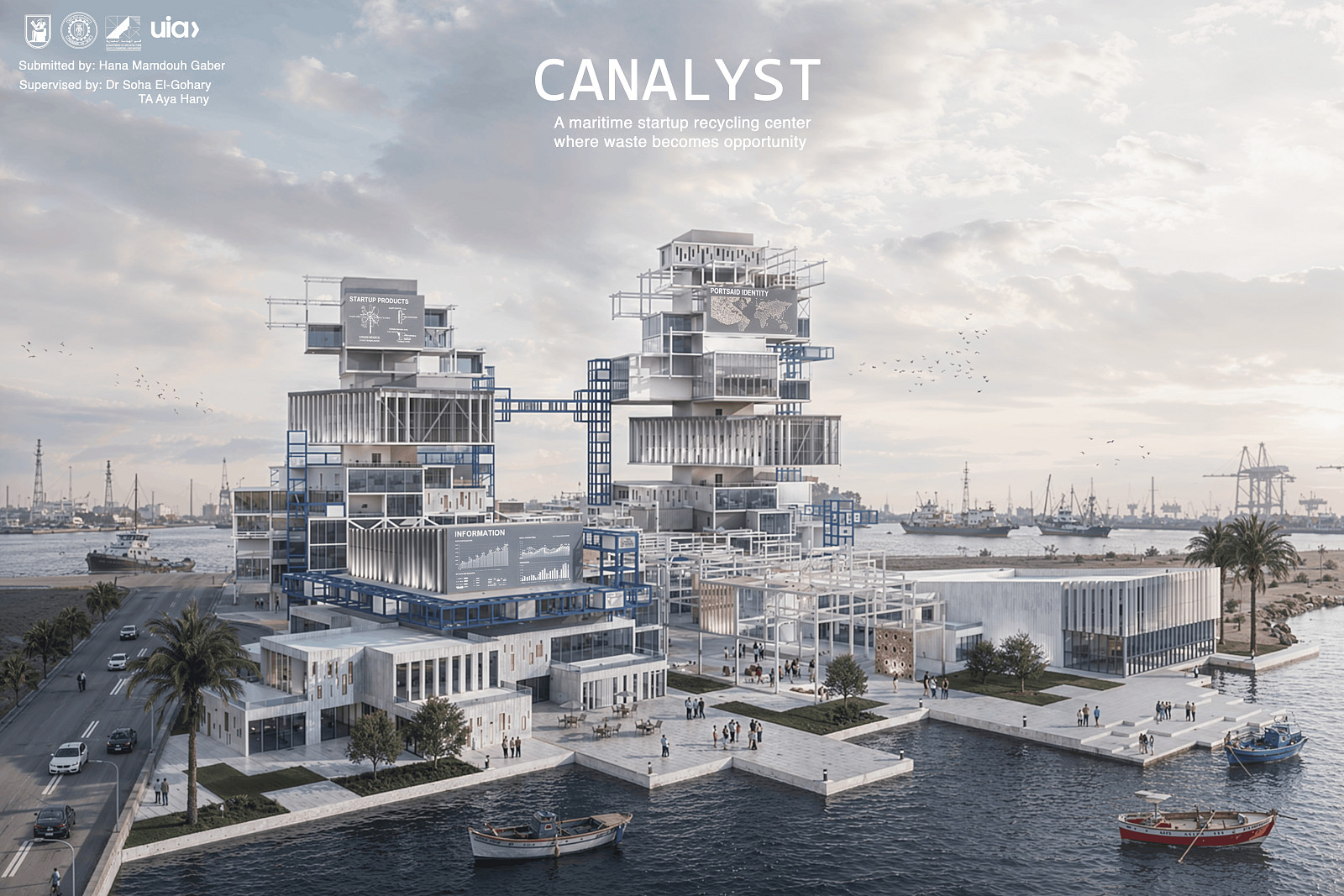
Canalyst


 Soha Elgohary
Project idea
Maritime Startup Hub: Turning Waste into Value
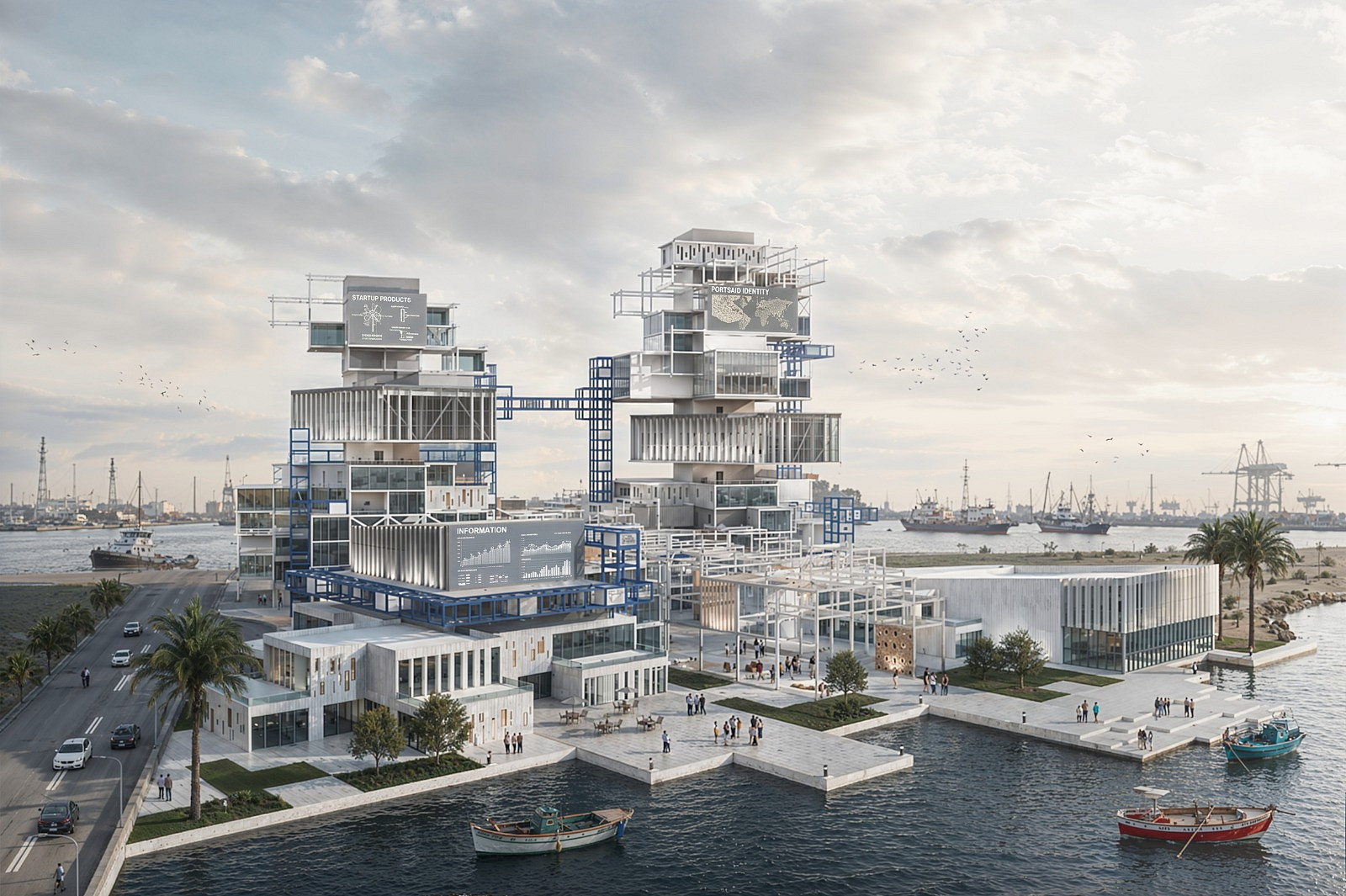
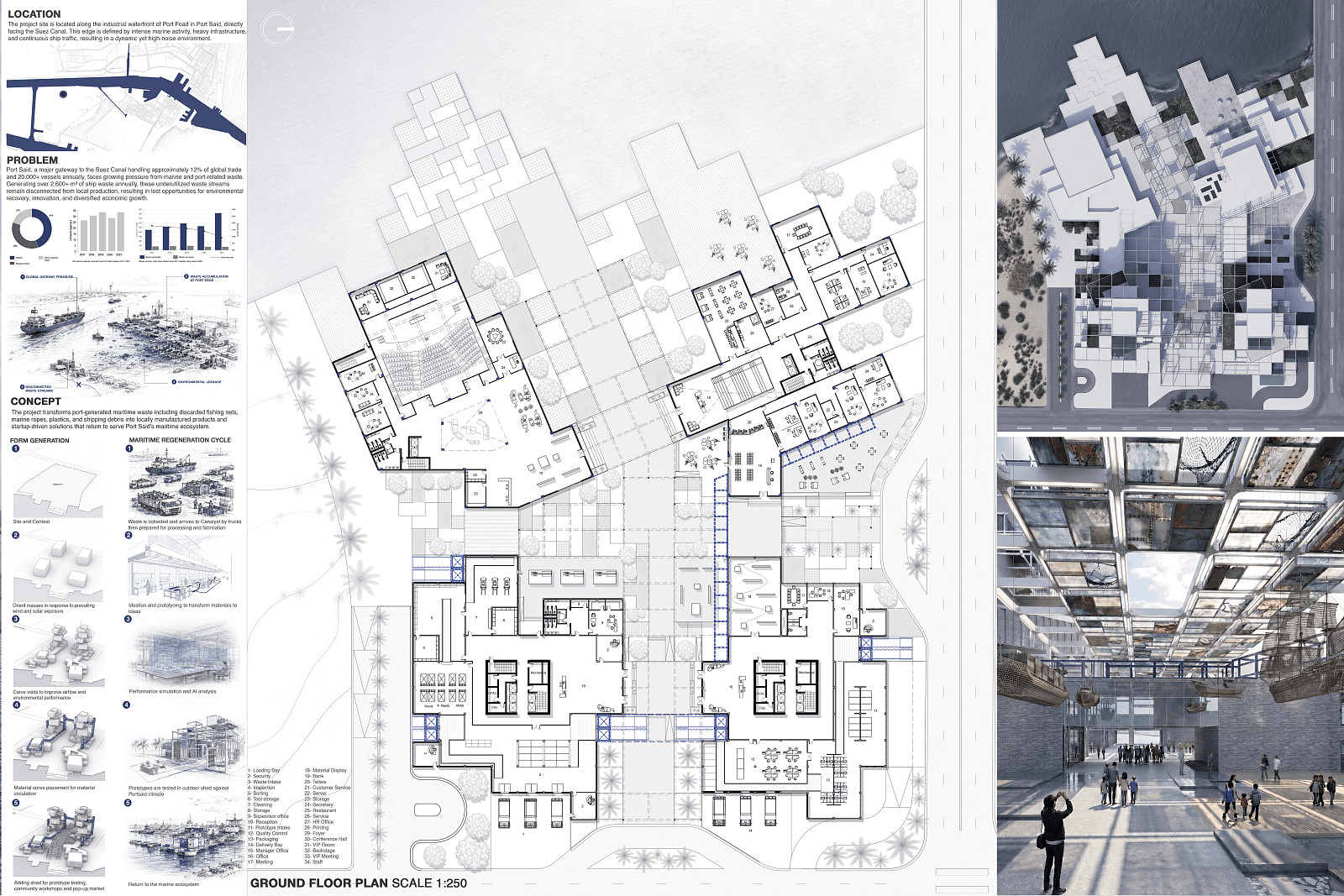
Placed near the port and industrial area of Port Said at the gateway of the Suez Canal, the Maritime Regeneration Hub seeks to address one of the lesser known issues of the area: the increasing amount of waste produced by maritime and port activities in one of the busiest shipping channels in the world.
The Suez Canal carries about 12% of international trade traffic annually, receiving in excess of 20,000 ships yearly. The constant activity at the canal results in a steady production of waste such as plastics, metal, fishing nets and ropes, among others. Much of these waste materials go untapped, creating environmental concerns alongside missed opportunities for economic gain.
Instead of considering the waste as an issue, the project creates a cycle where the discarded waste materials can be used for research and the development of products, along with the creation of new businesses based on these concepts. More than a simple recycling center, the project functions as a base for economic sustainability in the long run, allowing Port Said to convert the world’s waste into local benefits, thus enhancing its position in Egypt’s maritime future.
Project description
The Maritime Startup Hub presents an alternative to the existing method of using hidden recycling plants, where all processes remain unseen and untouched by the public eye.
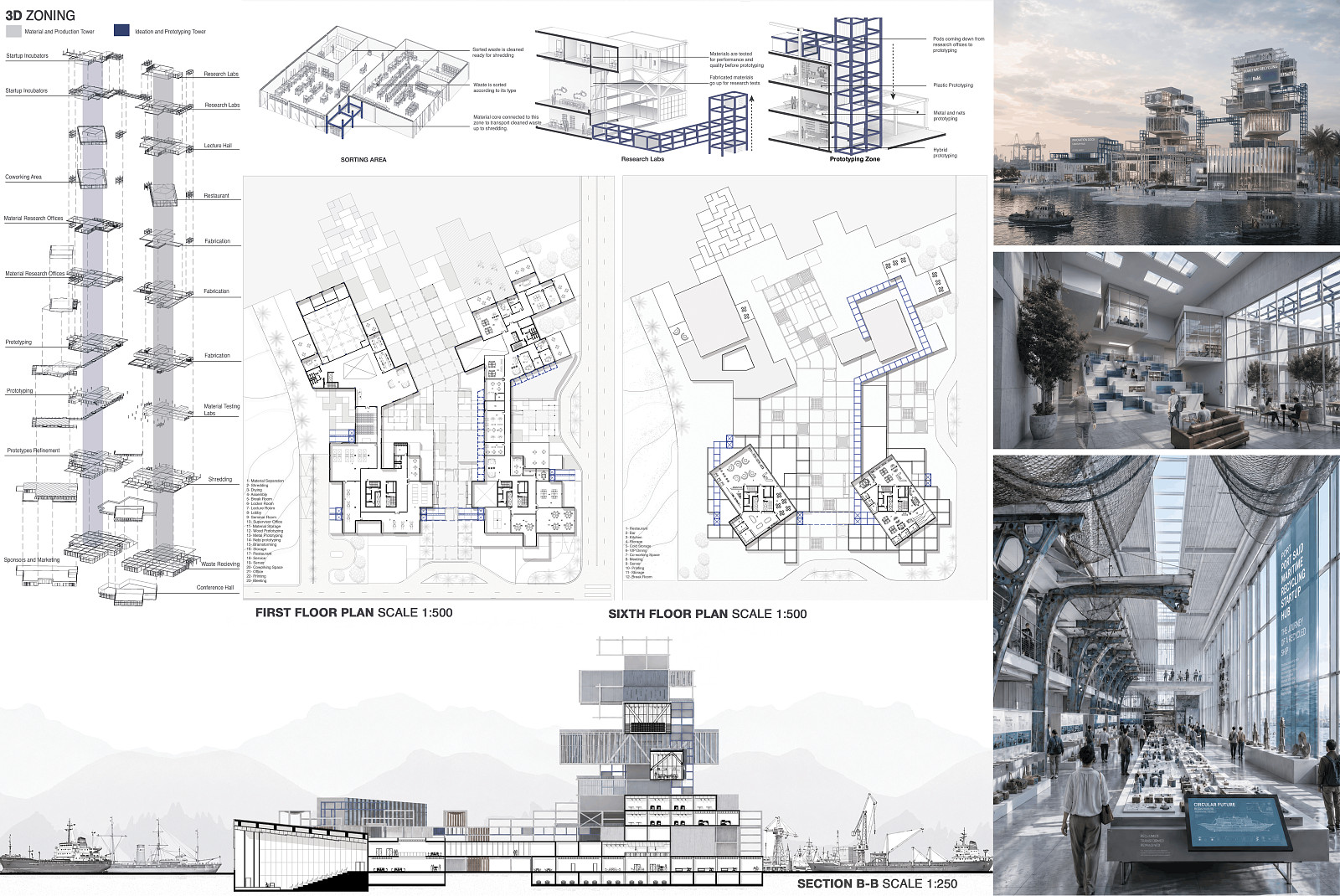
There are two major elements of the project: the Material and Production Tower, focused on waste reception, sorting, analysis, and production; and the Ideation and Prototyping Tower, comprising the facilities for research, start-ups, co-working, and education. In combination, they represent an entire ecosystem which combines recycling and innovation.
Connecting the towers are transfer pods that will enable transportation and public interaction with the recycling processes throughout various stages of their development. Circulation paths, exhibition halls, workshops, and education programs help establish connections between people and the regeneration cycle, thus giving the idea of recycling an entirely different dimension. Combining all of these aspects within one architectural system, the project sets up an entirely new concept of circular development for Egypt's maritime corridor.
Technical information
Circular Material Recovery System
The hub serves to treat maritime waste streams produced through port activity, shipping, and coastal industry operations. These include plastic, metals, wood, fishing nets, and rope, which are collected, classified, analyzed, and repurposed as raw material used to create prototypes and innovative maritime products.
Modular Transfer System
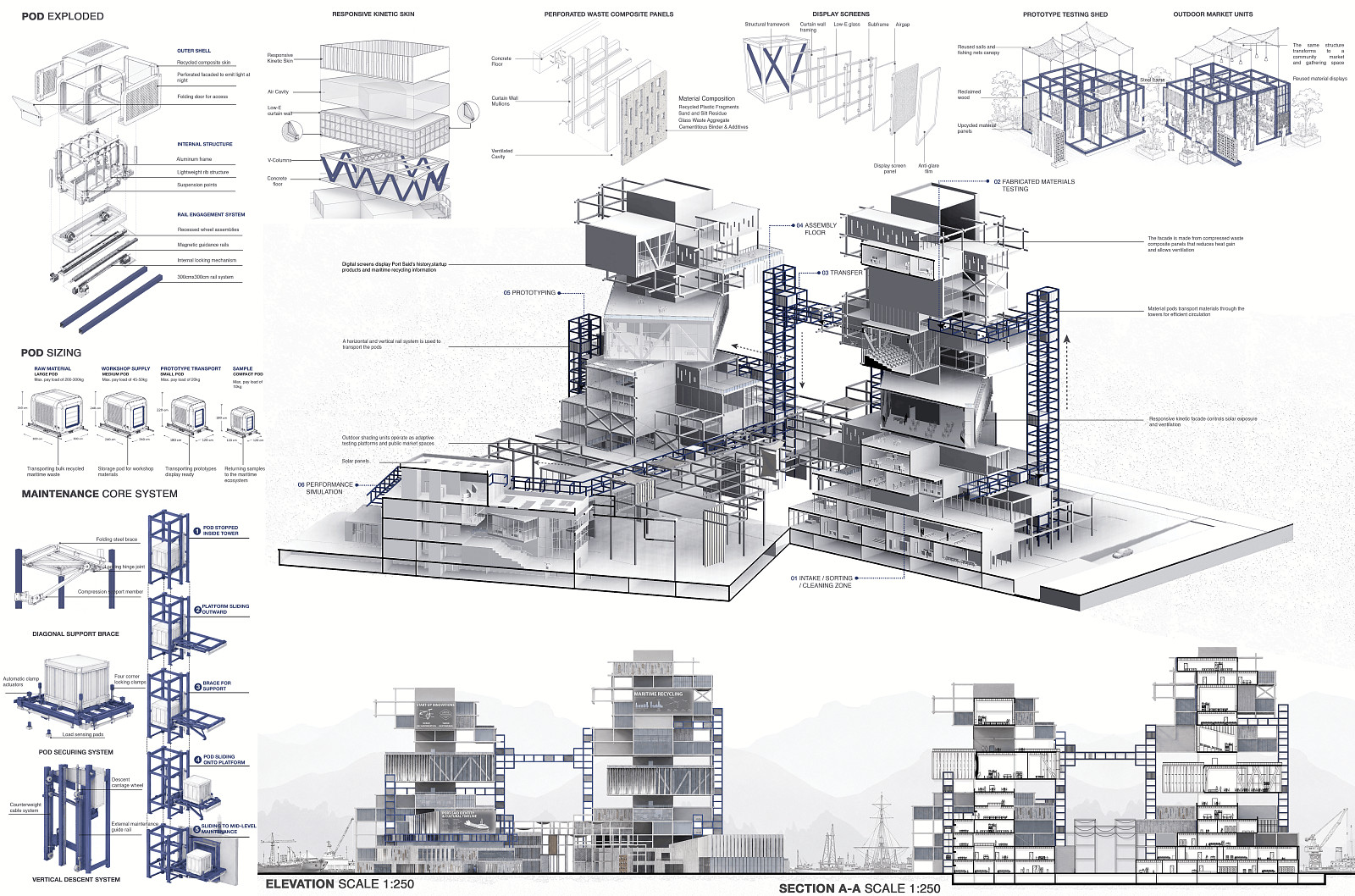
Through the use of a pod-based transport system, materials are transported across production, research, and prototype spaces. The pods operate as logistical systems and learning mechanisms, making the material transportation process clear for the entire facility.
Building Strategy
The structure itself uses a steel structural grid of 6m x 6m for primary floor plates and a more condensed 3m x 3m grid within the towers to house specific programs and connect pods. Steel structural systems are coated in concrete to provide protection against the saline conditions of Port Said's coastal environment.
Designing for Climate Resilience
The environmental efficiency is improved through climate-responsive kinetic facades, waste composite perforated panels, shaded public squares, and naturally ventilated transition spaces. The use of recycled materials within the entire design is also supported as a way of promoting circularity within the hub.
Economic and Social Benefits
In addition to collecting maritime waste, the hub will provide a launchpad for the establishment of startups, research on materials, labor training, and education among other benefits. The conversion of waste into products and technologies will contribute to the shift from a linear to a circular maritime economy within Port Said.

Copyright © 2026 INSPIRELI | All rights reserved. Use of this website signifies your agreement to the Terms of Use, Privacy Policy, and use of cookies.
