PALIMPSEST OF PLAY AND PEDAGOGY : Designing a Child-Centric Madrasa through Sympathetic Re-use of Boro Katra


Project idea
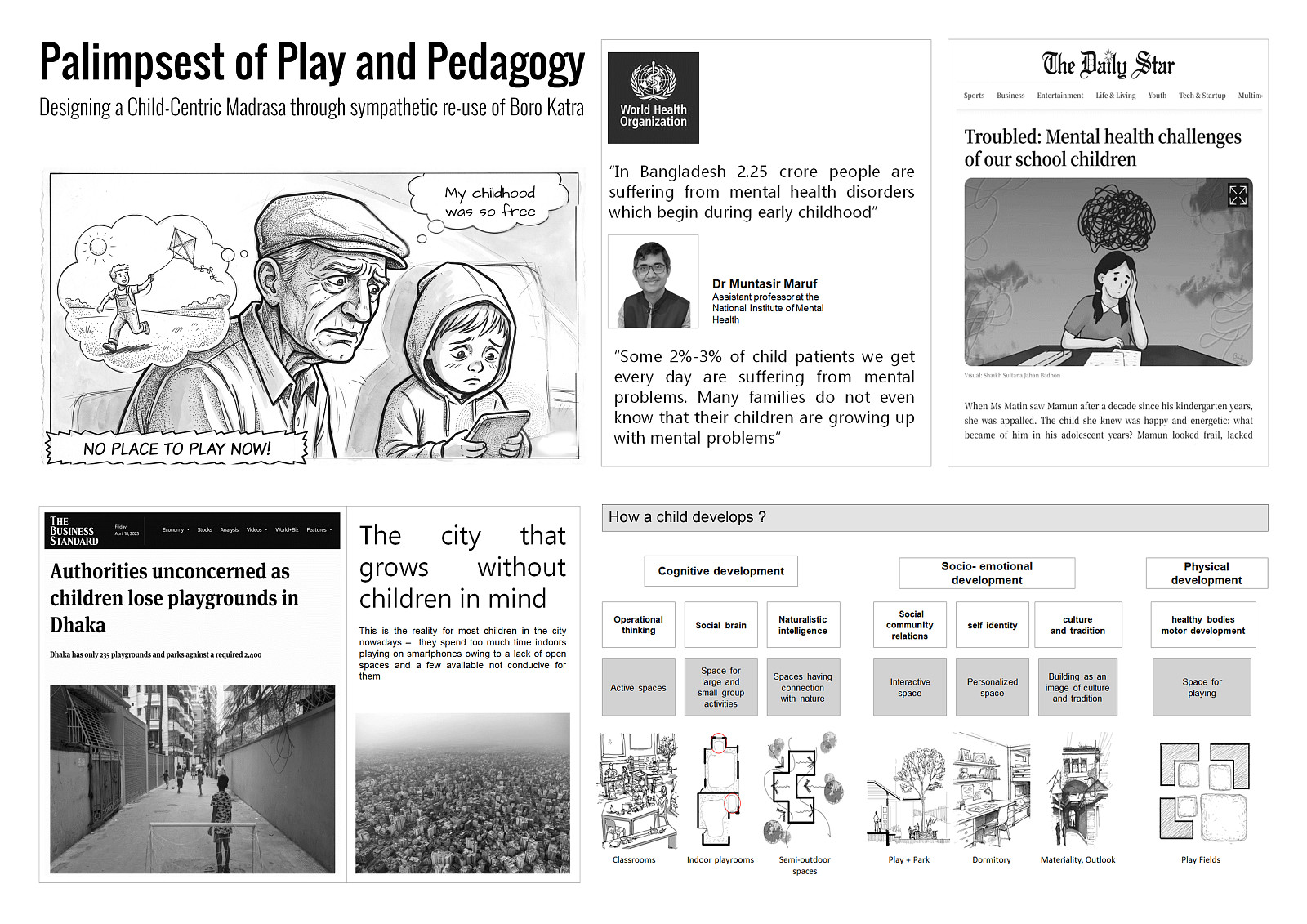
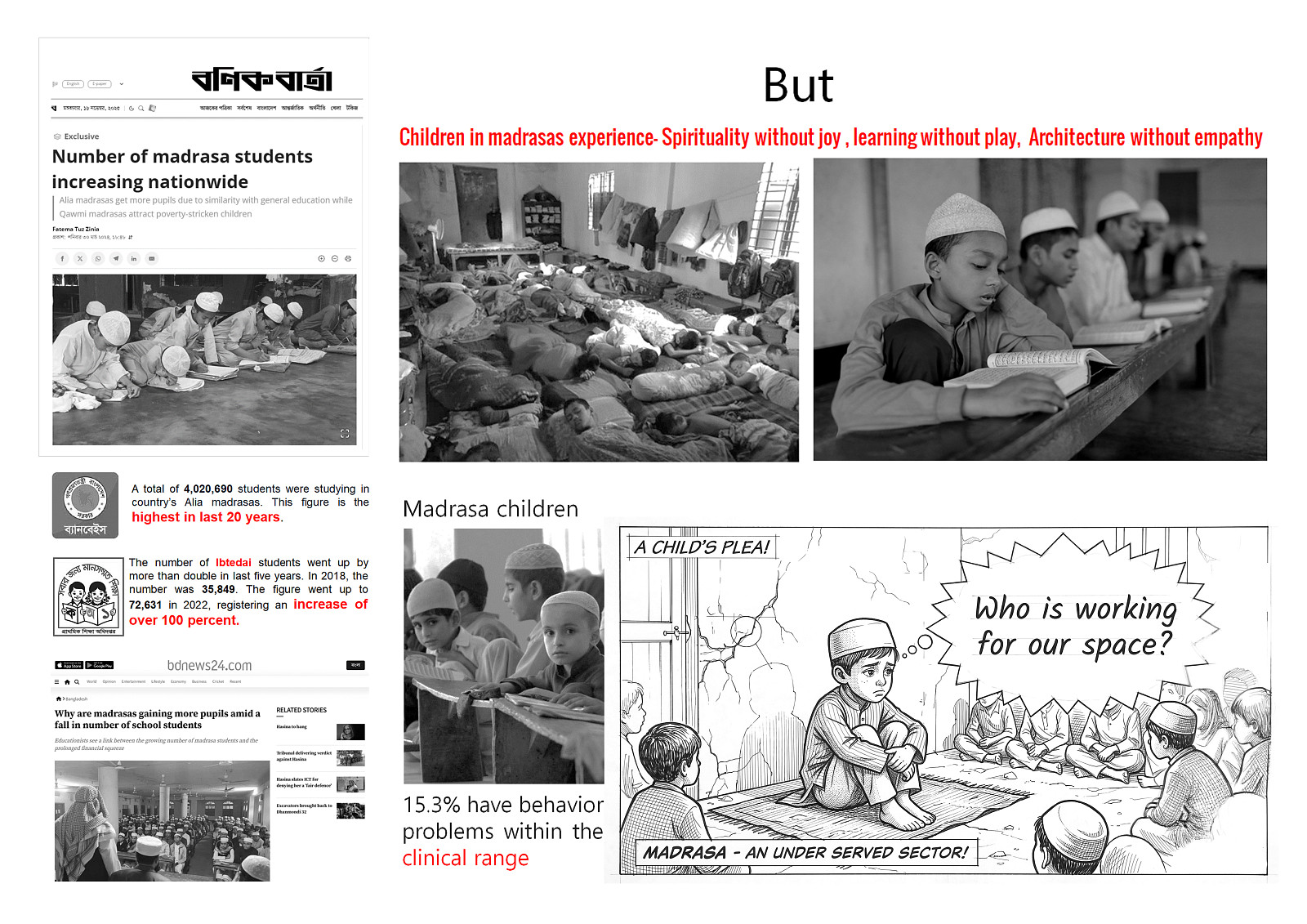
Bangladesh is experiencing a growing crisis of childhood, particularly within its rapidly urbanizing cities. In Dhaka, uncontrolled urban growth has dramatically reduced access to open and recreational spaces. While the city requires thousands of playgrounds and parks to serve its population, only a small fraction currently exists. As a result, traditional childhood activities are disappearing, replaced by increasingly screen-based and indoor lifestyles. The loss of meaningful play environments has profound consequences for children's physical, social, and emotional development. Mental health concerns among children are rising, often remaining unnoticed within families and communities. Alongside this urban challenge, the issue is more pathetic within Bangladesh’s expanding madrasa education sector. Enrollment in Alia and Ibtedai madrasas has increased significantly over recent years, making madrasas one of the largest educational networks in the country. Yet many institutions continue to operate within spatial environments that are not designed for children. For many students, daily life is characterized by overcrowded dormitories, austere classrooms, and a lack of recreational opportunities. Learning often occurs without play, spirituality without joy, and education without environments that nurture curiosity and well-being. Research indicates that a significant number of madrasa children experience behavioral and psychological challenges, highlighting the urgent need for more empathetic and child-centered educational spaces.
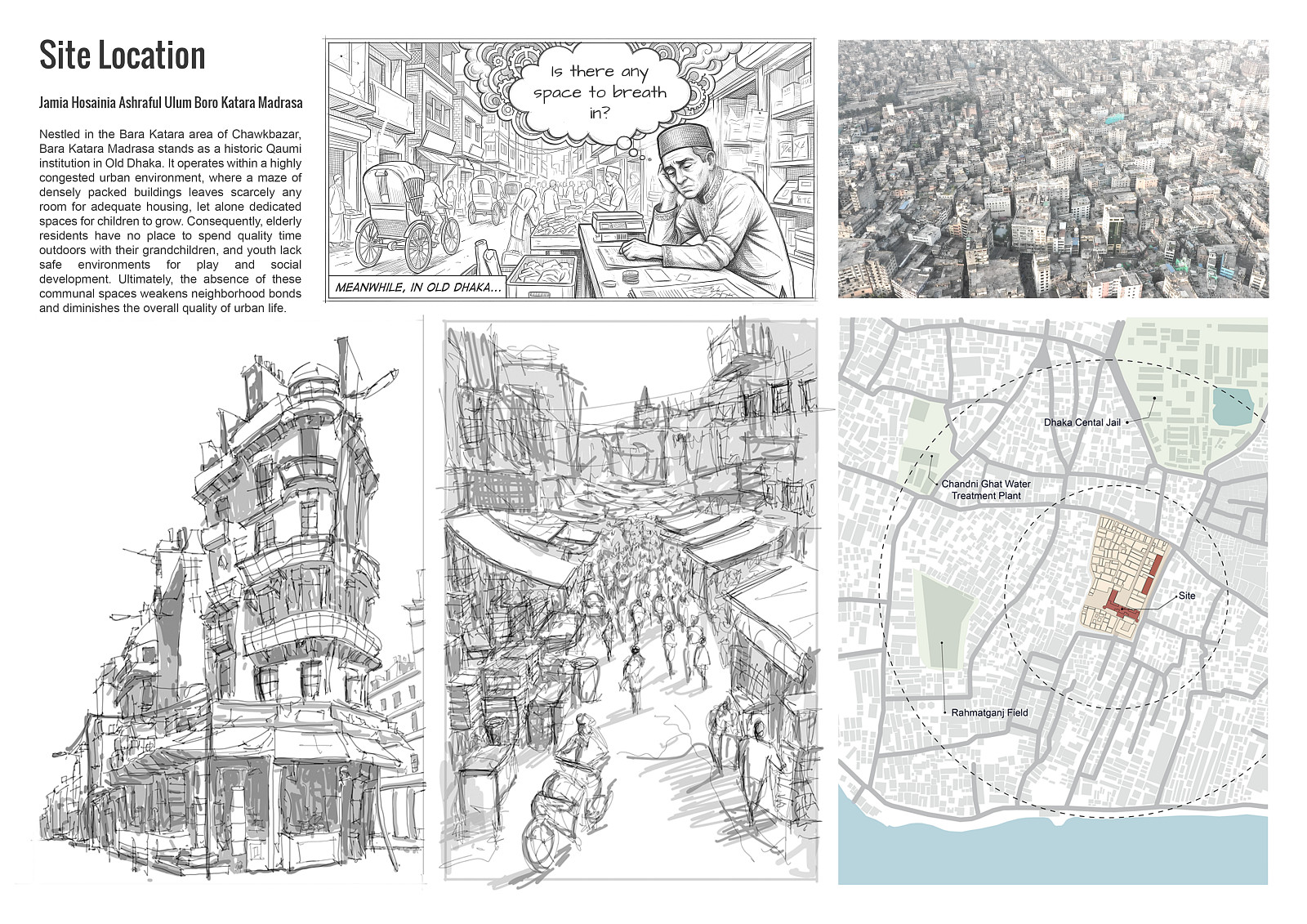
The project is located at Jamia Hosainia Ashraful Ulum Boro Katara Madrasa within the historic Bara Katara precinct of Chawkbazar, Old Dhaka. The surrounding urban fabric is one of the densest environments in the city. Buildings are tightly packed together, circulation routes are narrow, and open space is virtually nonexistent. Here comes the second challenge that The absence of communal open space, which affects the entire community. Elderly residents lack places to gather with younger generations, The neighborhood suffers from a severe shortage of urban breathing space, limiting both social cohesion and the quality of everyday life.
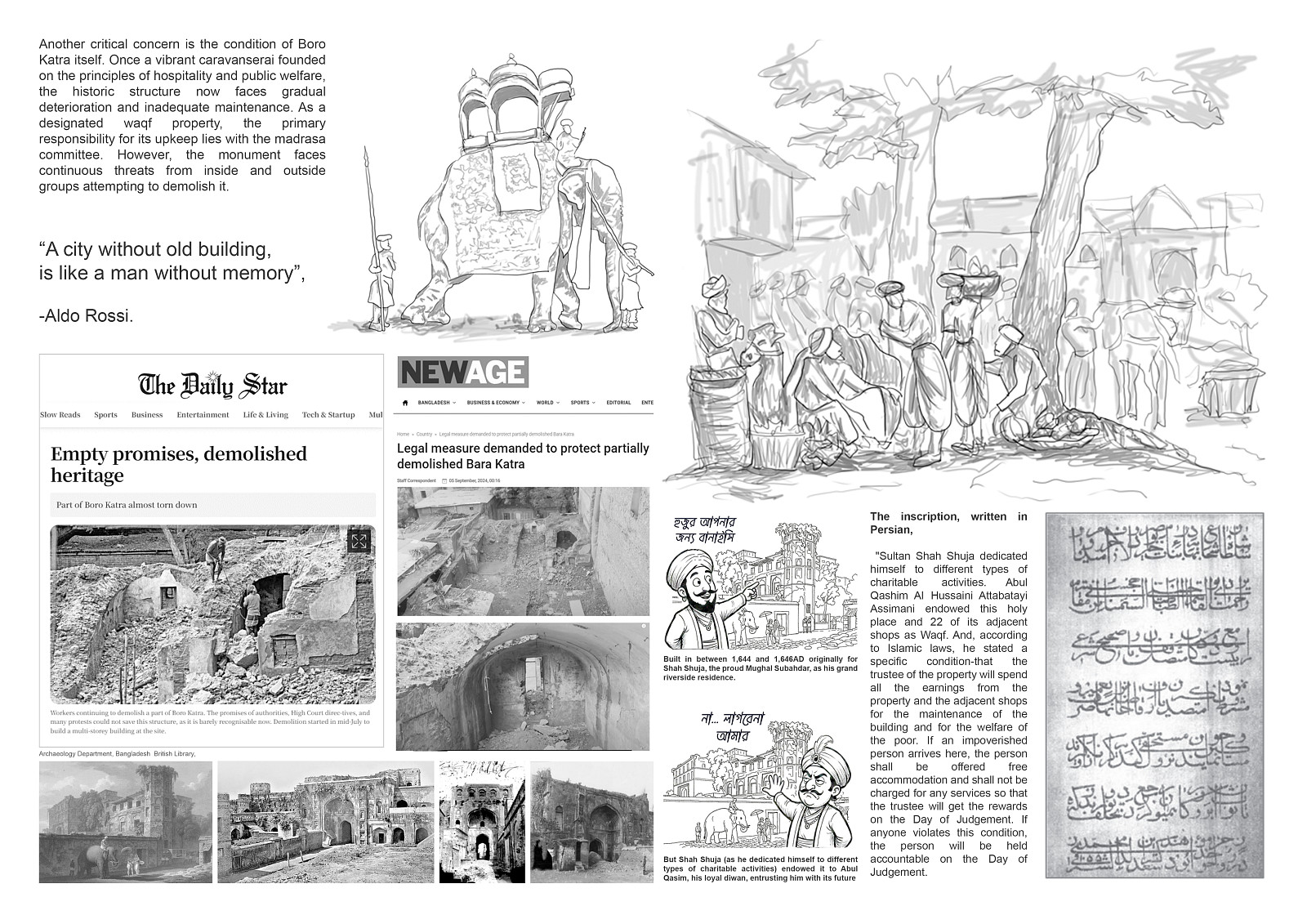
The third challenge concerns the deteriorating condition of Boro Katra itself. Constructed between 1644 and 1646 as a grand riverside residence of Mughal Subahdar Shah Shuja, the complex was later dedicated as a waqf property intended to provide hospitality and free accommodation for the poor. Revenue generated from the property was meant to support its maintenance and public welfare functions. Over centuries, however, the monument has experienced continuous encroachment, neglect, and physical degradation. Portions of the historic structure have already been demolished, while remaining sections face ongoing pressure from surrounding development. The loss of Boro Katra represents more than the destruction of a historic building. It signifies the erosion of collective memory and the disappearance of a cultural institution that once served the public realm. Preserving this monument therefore becomes both a heritage responsibility and a social obligation.
Finally the project emerges from the intersection of three critical issues:
1) The lack of child-friendly spaces in traditional madrasas,
2) The shortage of recreational spaces for the surrounding community of old dhaka, and
3) The ongoing challenge of conserving an important historic structure.
Project description
SITE PREPARATION
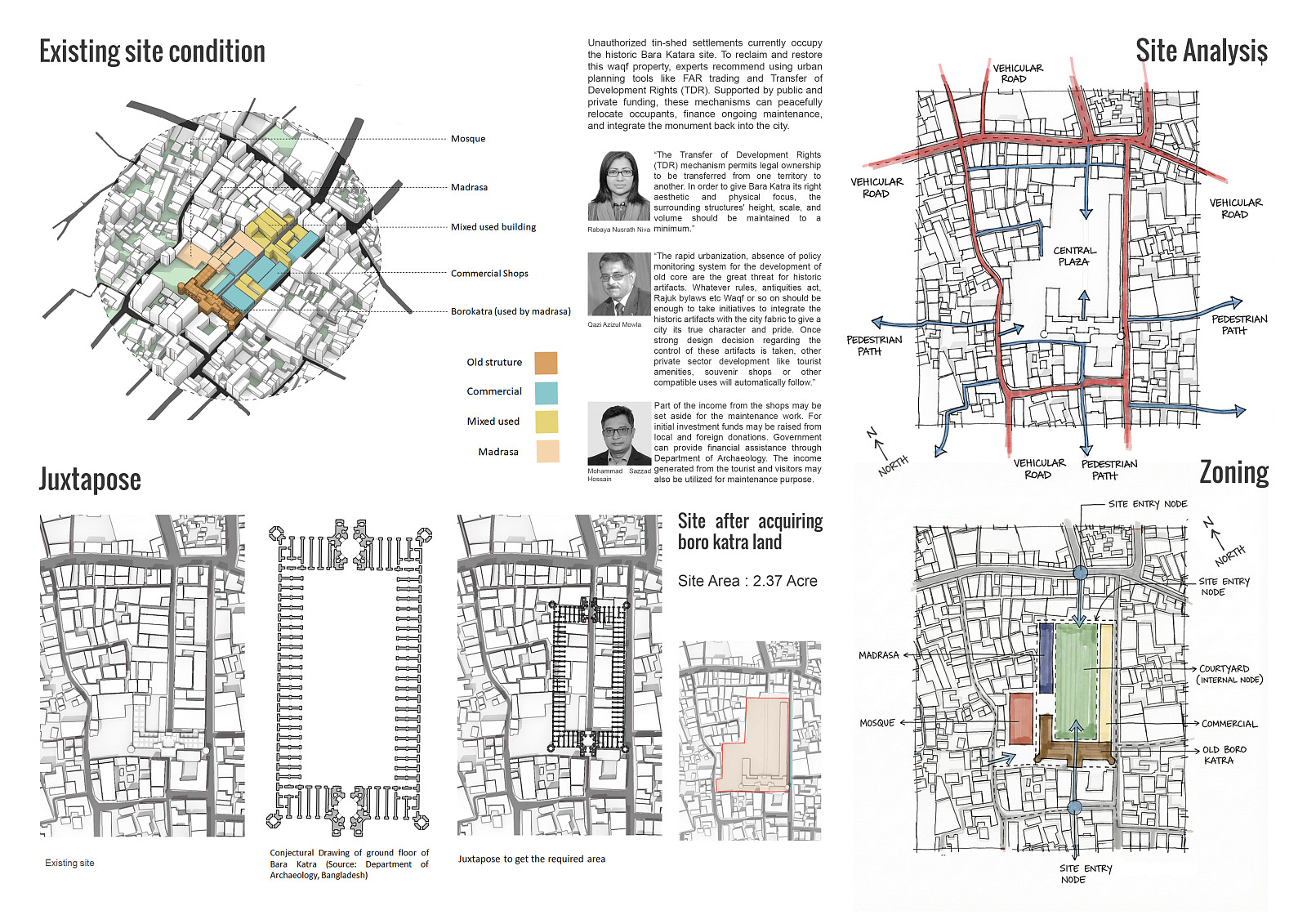
The site analysis reveals a highly congested mixed-use environment in which the historic Boro Katra complex is surrounded by commercial establishments, unauthorized tin-shed settlements, and existing madrasa facilities. Rather than pursuing forceful displacement, the project adopts strategies such as Transfer of Development Rights (TDR), government support, and other conservation-based approaches informed by urban planning experts and heritage conservation principles. A key component of the site preparation is the process of historical juxtaposition. The existing site plan was overlaid with a conjectural reconstruction of Boro Katra’s original ground-floor layout obtained from the Department of Archaeology, Bangladesh. This comparison between the historical footprint and contemporary encroachments allowed the identification of the spatial extent necessary to restore the monument’s original integrity. Through this process, a target reclamation area of approximately 2.37 acres was established, providing a foundation for future intervention and conservation efforts.
ZONING
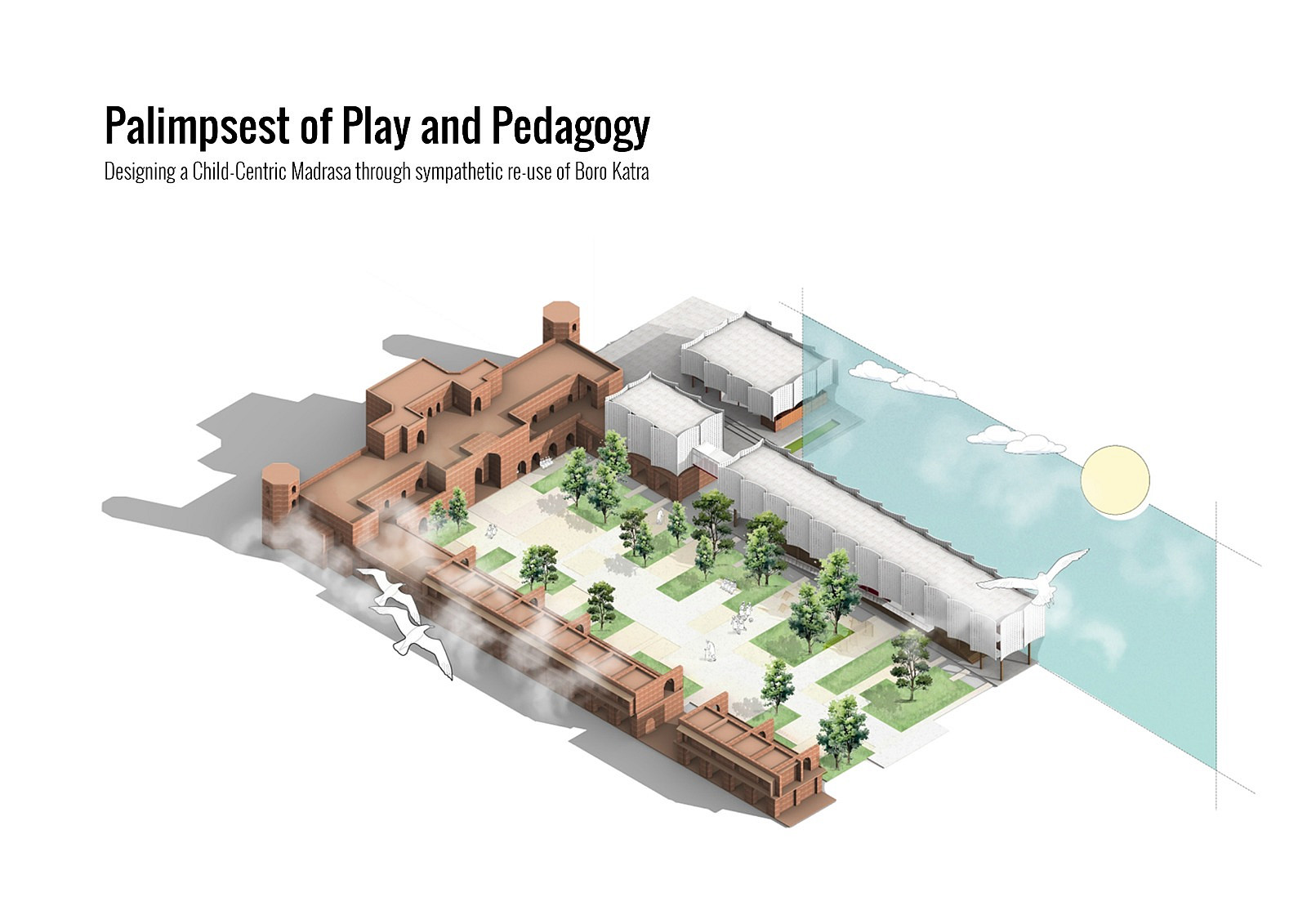
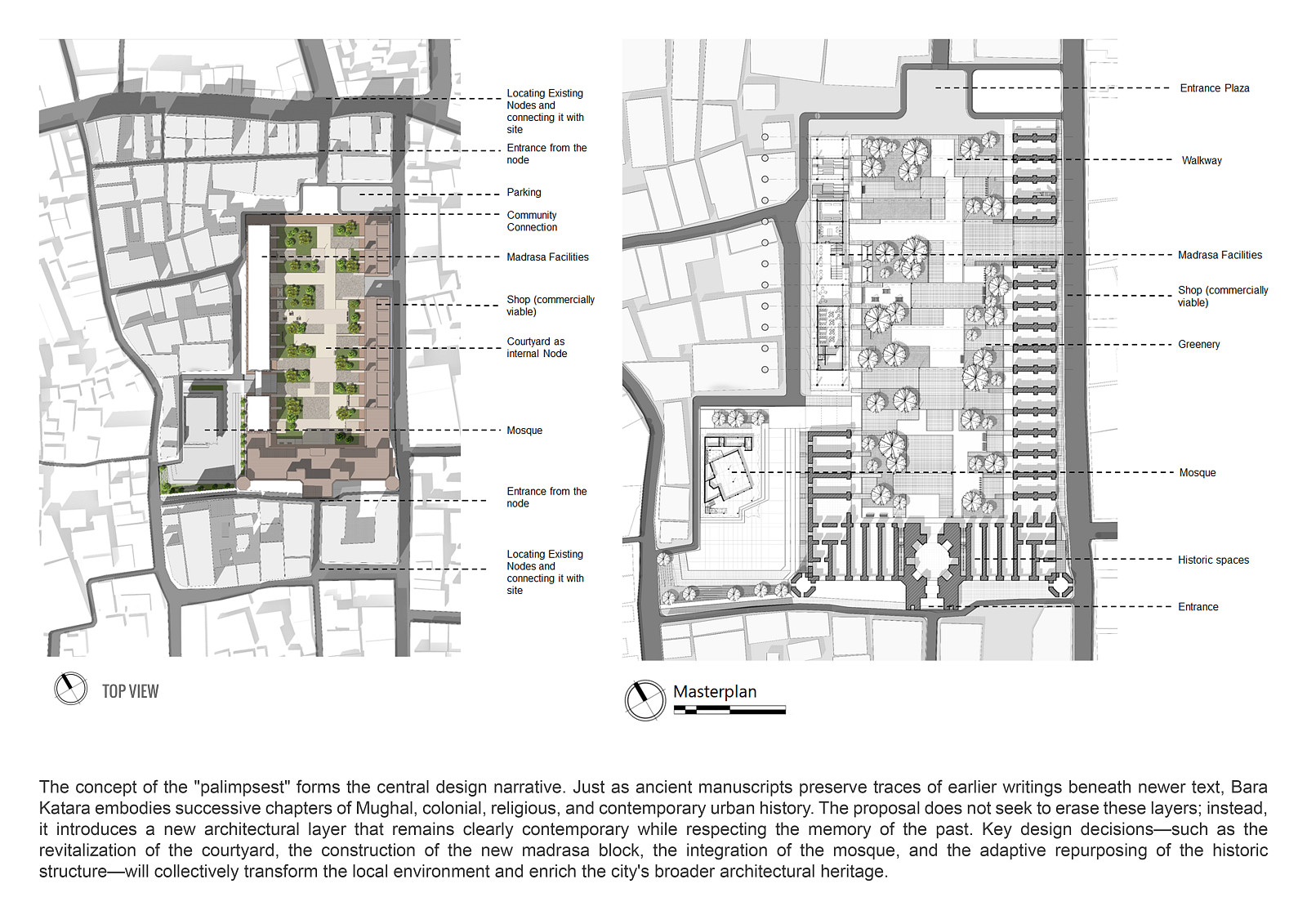
The concept of the Palimpsest serves as the central narrative of the project. Similar to ancient manuscripts that preserve traces of previous writings beneath newer layers of text, Bara Katra embodies successive layers of Mughal, colonial, and contemporary urban history. Rather than erasing these accumulated layers, the proposal introduces a new architectural intervention that remains distinctly contemporary while acknowledging and respecting the memory of the past. Through the revitalization of the courtyard, the introduction of a new madrasa block, the integration of the mosque, and the adaptive reuse of the historic structure, the project seeks to enrich both the local community and the broader architectural heritage of the city.
COURTYARD DESIGN STRATEGY
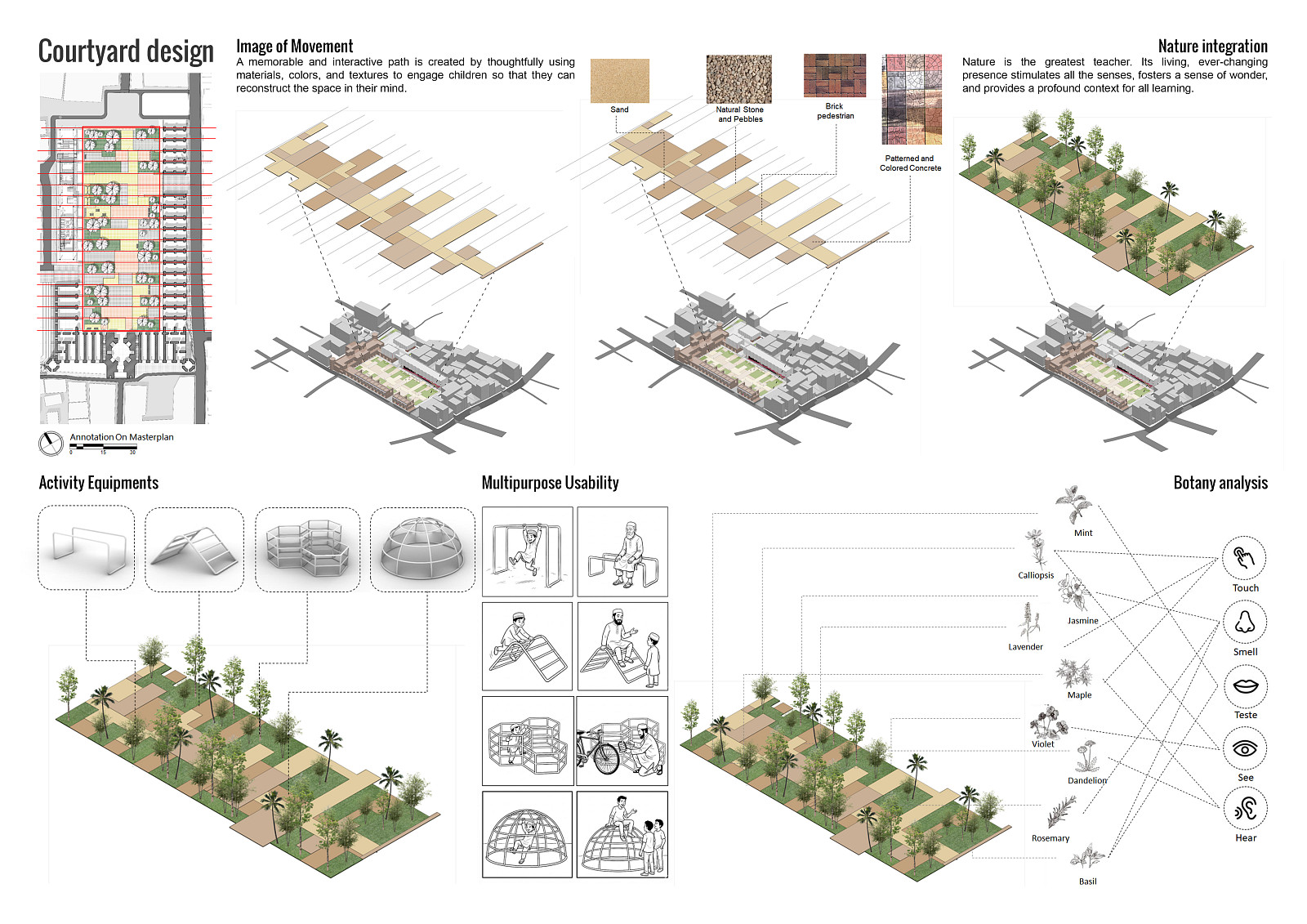
The courtyard serves as the heart of the proposal—a shared landscape where learning, play, and social interaction intersect.
A network of interconnected pathways encourages exploration and movement. Instead of a uniform paved surface, the courtyard is composed of interlocking patterns and varied textures that create a rich sensory experience.
Materials include sand, stone, pebbles, brick, and textured concrete. Together they encourage tactile engagement and help children develop stronger spatial awareness through movement and discovery.
Nature becomes an essential educational element within the project. Trees, vegetation, and seasonal planting create a living landscape that contrasts with the dense urban surroundings. The courtyard provides shade, biodiversity, and opportunities for observation, transforming outdoor space into an environment for informal learning and reflection. Planting strategies are organized around the five senses. Aromatic herbs, edible plants, flowering species, and textured vegetation encourage children to see, touch, smell, and interact with nature. The landscape therefore functions not only as recreation space but also as an outdoor classroom.
Play structures are designed as abstract geometric forms rather than conventional playground equipment.
Domes, arches, climbing frames, and modular structures support a variety of activities including climbing, balancing, crawling, sitting, and gathering. These elements are equally usable by children, teachers, and visitors, promoting intergenerational interaction and ensuring that play becomes an integrated part of daily life rather than a separate activity.
MADRASA BLOCK DESIGN
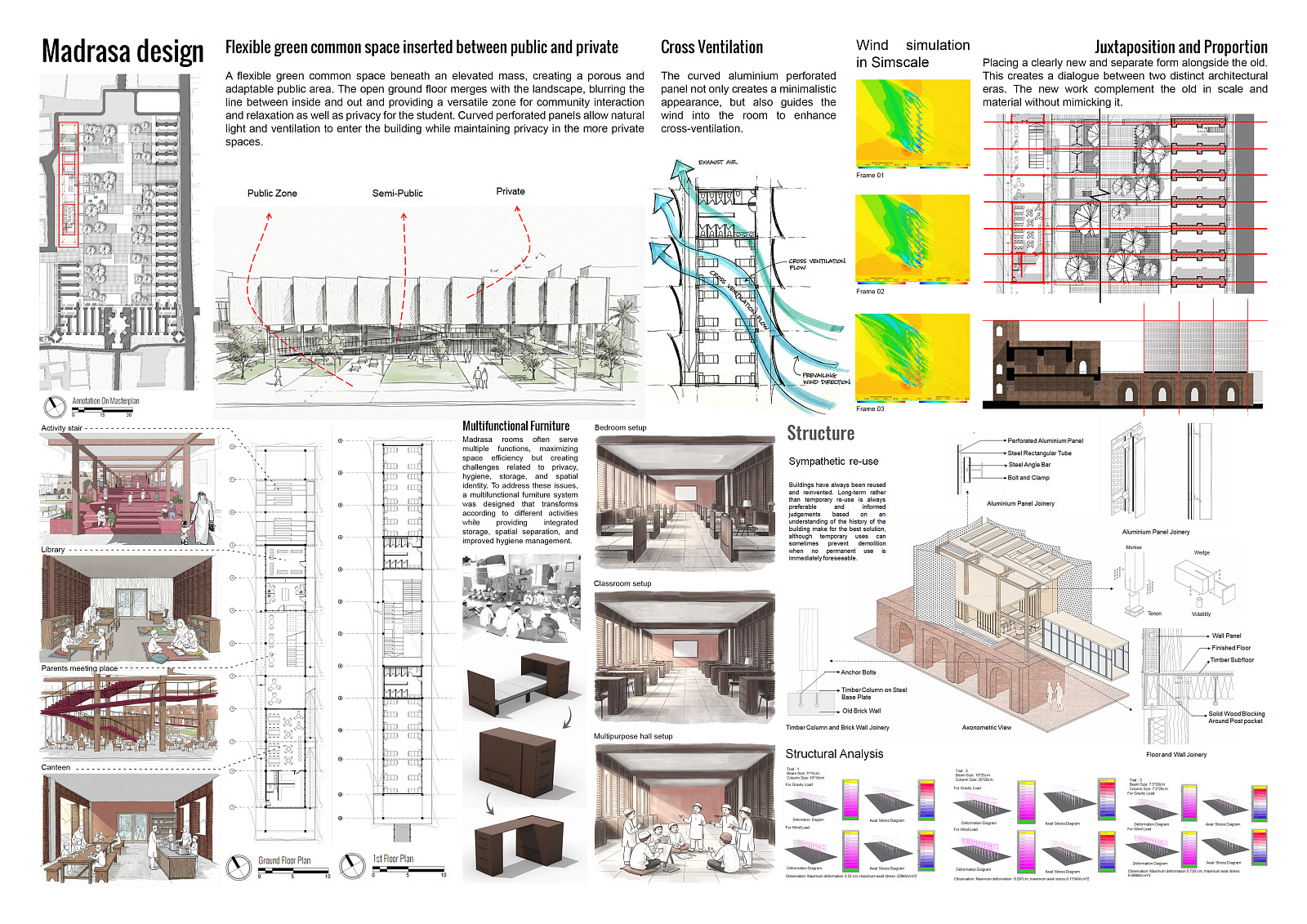
The new madrasa block is elevated above the ground, freeing the lower level to function as an open extension of the courtyard. This strategy maximizes public space while improving permeability across the site. The raised building creates shaded gathering areas and strengthens visual connections between different parts of the complex. The facade is composed of perforated curved aluminum panels that provide privacy while encouraging airflow.
The project avoids imitation of historical architecture. Instead, the new intervention is clearly contemporary while remaining respectful to the existing monument. Alignments of scale, proportion, and rhythm establish a relationship between old and new without reproducing historical forms. A lightweight construction system of timber, steel, and aluminum contrasts with the heavy masonry of Boro Katra, emphasizing reversibility and minimizing impact on the heritage structure.
At ground level, the madrasa incorporates communal facilities including a library, activity stair, canteen, and parent interaction spaces. The upper floors accommodate study and sleeping areas. Madrasa rooms often serve multiple functions, maximizing space efficiency but creating challenges related to privacy, hygiene, storage, and spatial identity. To address these issues, a multifunctional furniture system was designed that transforms according to different activities while providing integrated storage, spatial separation, and improved hygiene management.
In one configuration, spaces function as dormitories. In another, they become classrooms. Furniture can also be fully compressed to create large multipurpose halls for gatherings, events, or prayer. This flexibility maximizes spatial efficiency while improving daily life for students.
MOSQUE DESIGN
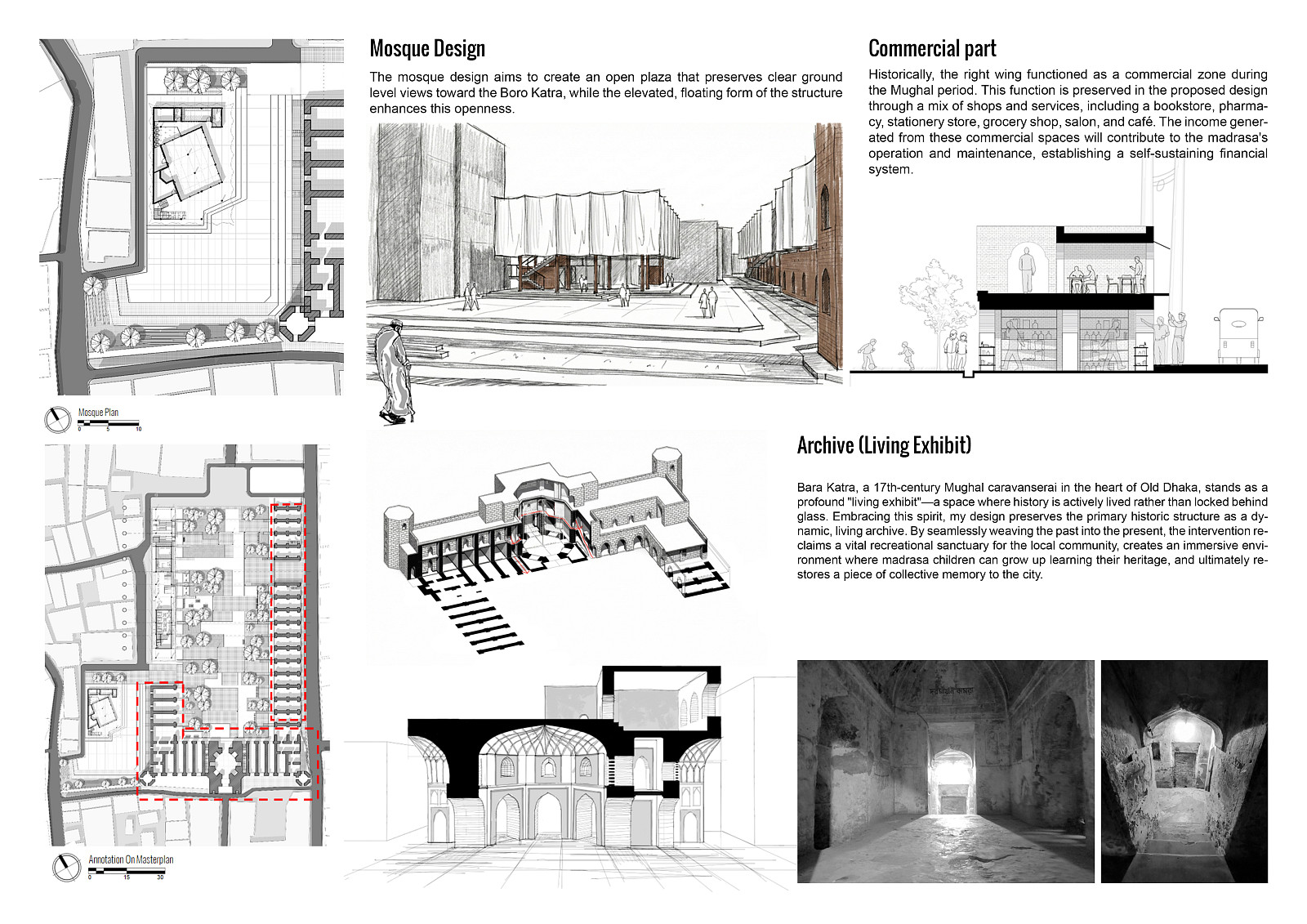
The mosque is conceived as a floating architectural element elevated above an open public plaza.
By lifting the prayer hall above ground level, uninterrupted visual connections toward Boro Katra are maintained while creating an accessible gathering space beneath. The design reinforces openness, continuity, and collective use of the site.
LIVING ARCHIVE
Bara Katra, a 17th-century Mughal caravanserai in the heart of Old Dhaka, stands as a profound "living exhibit" , a space where history is actively lived rather than locked behind glass. Embracing this spirit, my design preserves the primary historic structure as a dynamic, living archive. By seamlessly weaving the past into the present, the intervention reclaims a vital recreational sanctuary for the local community, creates an immersive environment where madrasa children can grow up learning their heritage, and ultimately restores a piece of collective memory to the city.
COMMERCIAL COMPONENT
Historically, the west wing functioned as a commercial zone during the Mughal period. This function is preserved in the proposed design through a mix of shops and services, including a bookstore, pharmacy, stationery store, grocery shop, salon, and café. The income generated from these commercial spaces will contribute to the madrasa's operation and maintenance, establishing a self-sustaining financial system.
FINAL OUTCOME
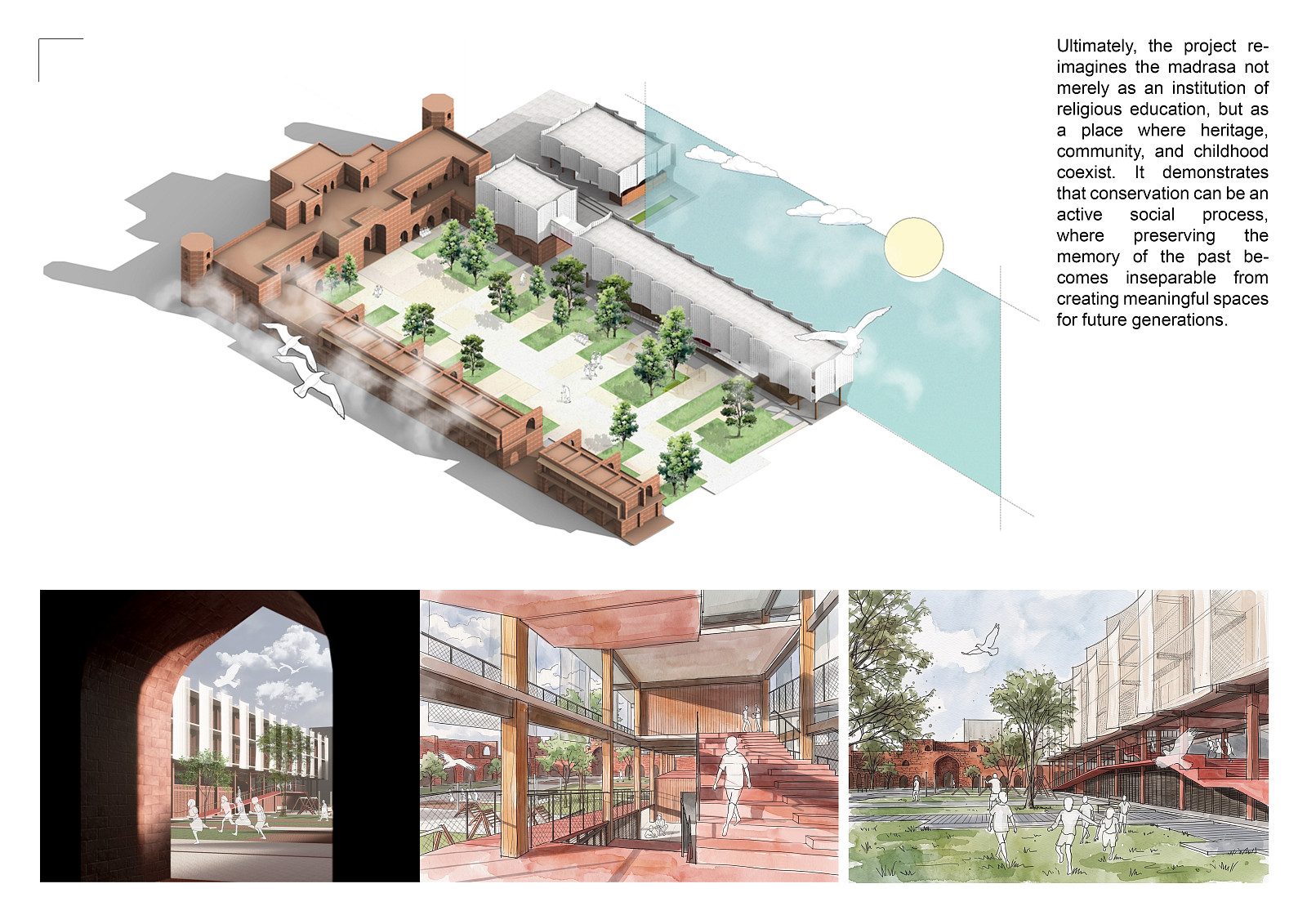
Ultimately, the project reimagines the madrasa not merely as an institution of religious education, but as a place where heritage, community, and childhood coexist. It demonstrates that conservation can be an active social process, where preserving the memory of the past becomes inseparable from creating meaningful spaces for future generations.
Technical information
The project employs a lightweight steel, timber, and aluminum construction system to minimize impact on the historic Bara Katra structure. Perforated aluminum screens provide shading, privacy, and natural airflow, while the courtyard incorporates permeable surfaces, sensory landscaping, and passive cooling strategies. Flexible interior spaces are supported by multifunctional furniture systems, allowing classrooms, dormitories, and multipurpose functions to coexist efficiently. The design prioritizes reversibility, sustainability, and the preservation of heritage sightlines.
Created in:


Copyright © 2026 INSPIRELI | All rights reserved. Use of this website signifies your agreement to the Terms of Use, Privacy Policy, and use of cookies.