Reviving the Spirit of Art and Culture in the Walled City of Famagusta


Project idea
Cities have historically been shaped by culture, creativity, and public interaction. Yet contemporary urban environments increasingly separate artistic and cultural activities from everyday life, weakening their role within society. This challenge is particularly evident in the historic core of Famagusta, a city layered with Venetian, Ottoman, British, Turkish and Cypriot heritage, where valuable cultural assets remain disconnected despite their significance.
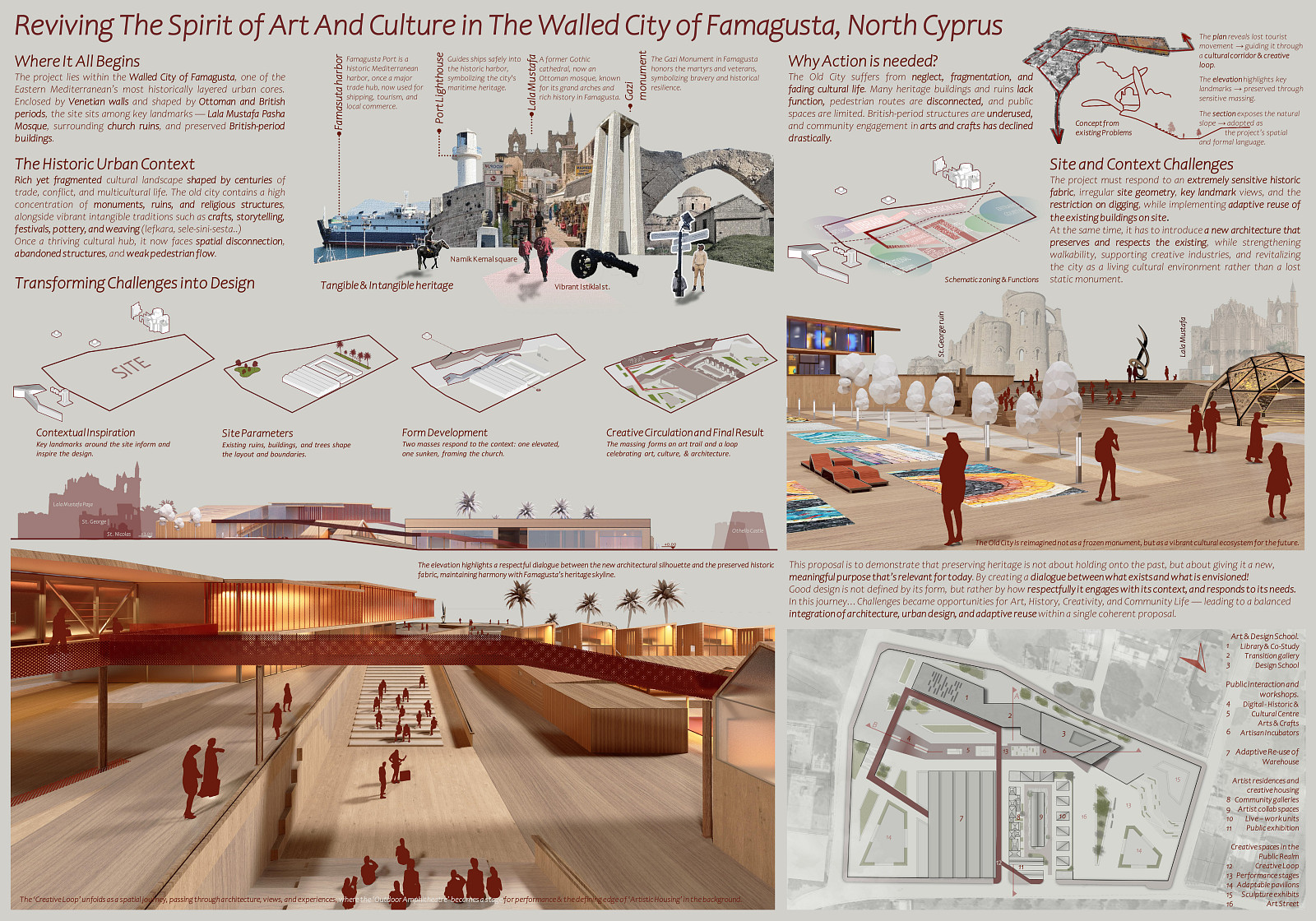
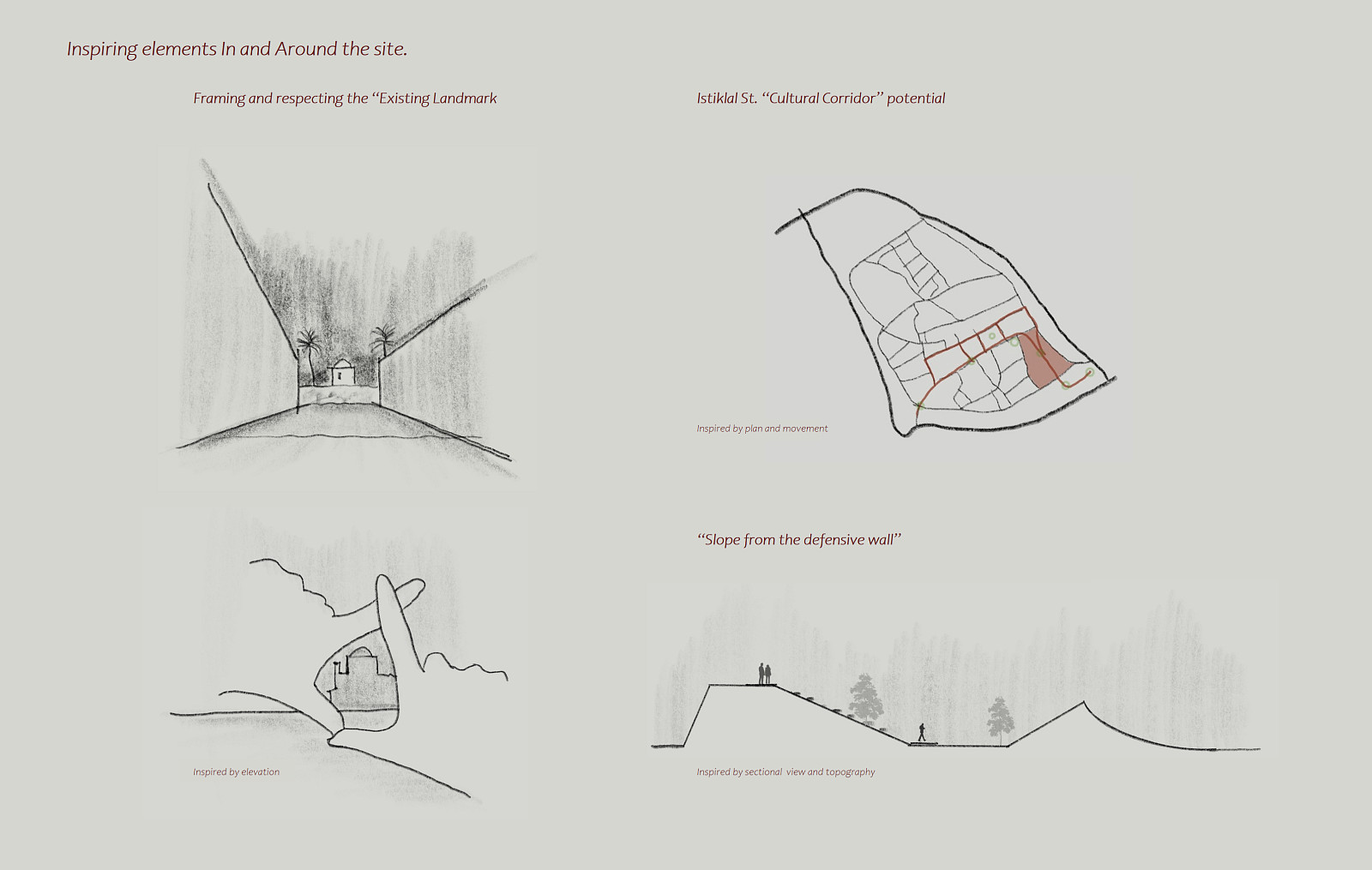
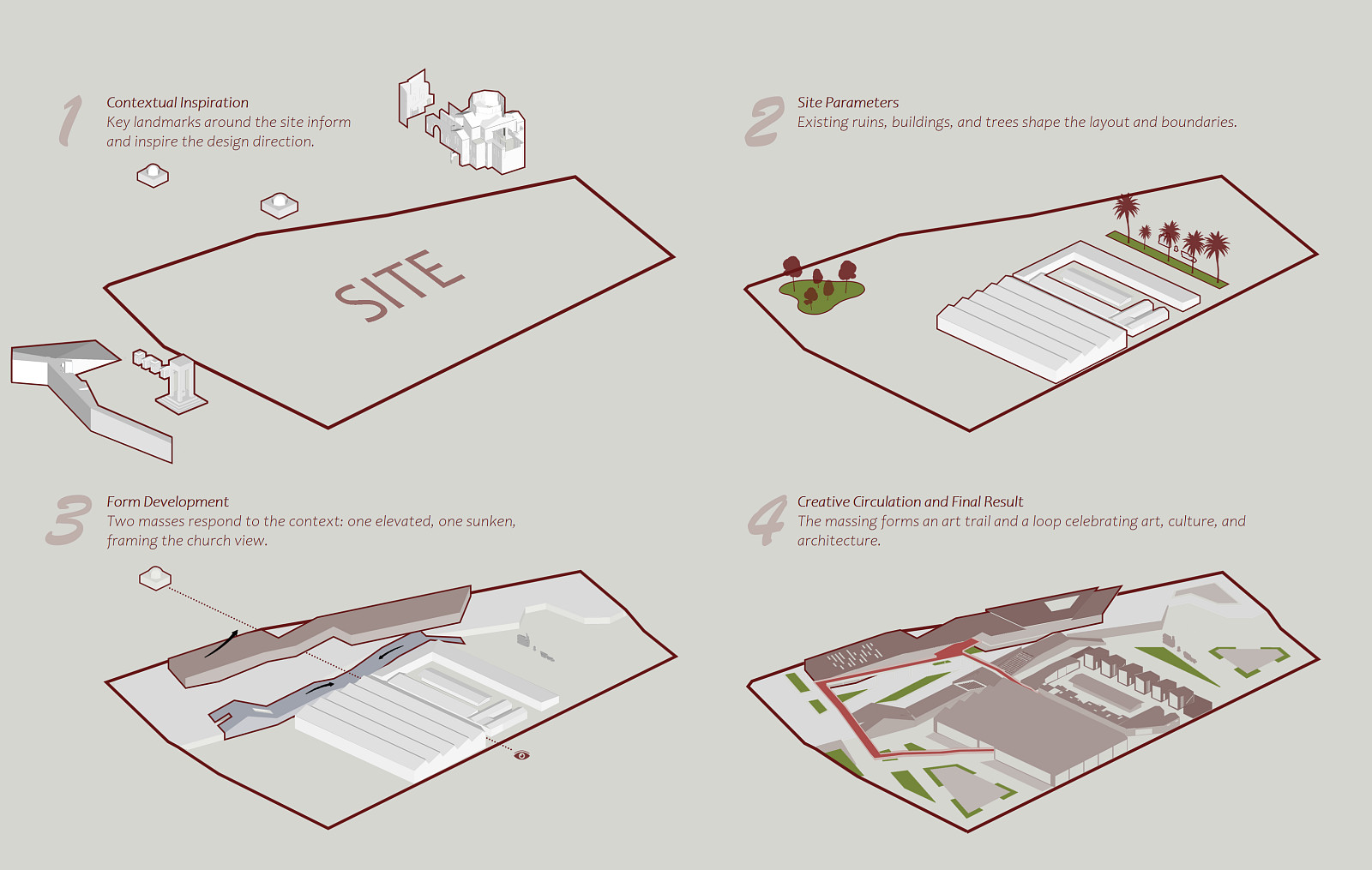
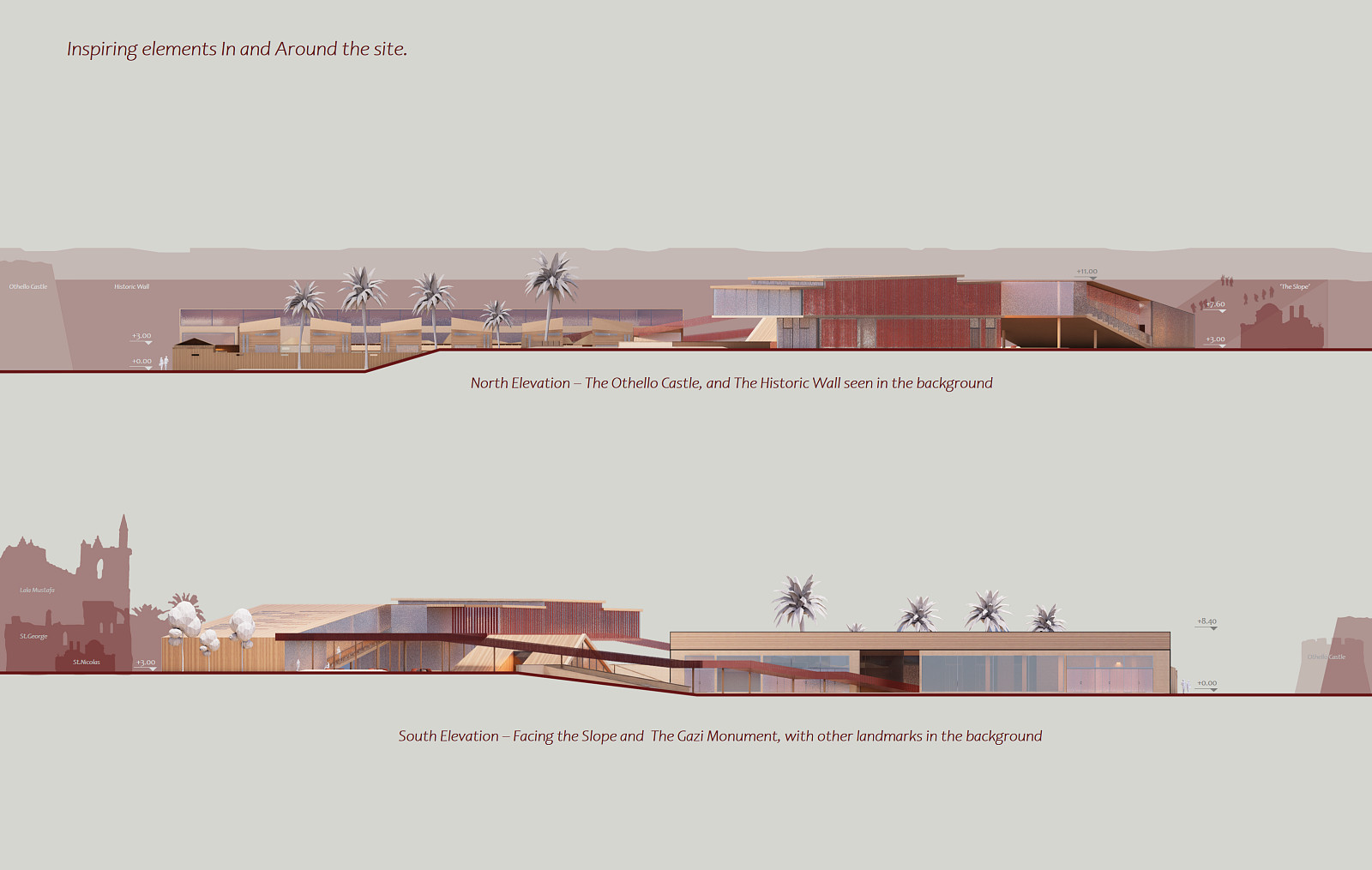
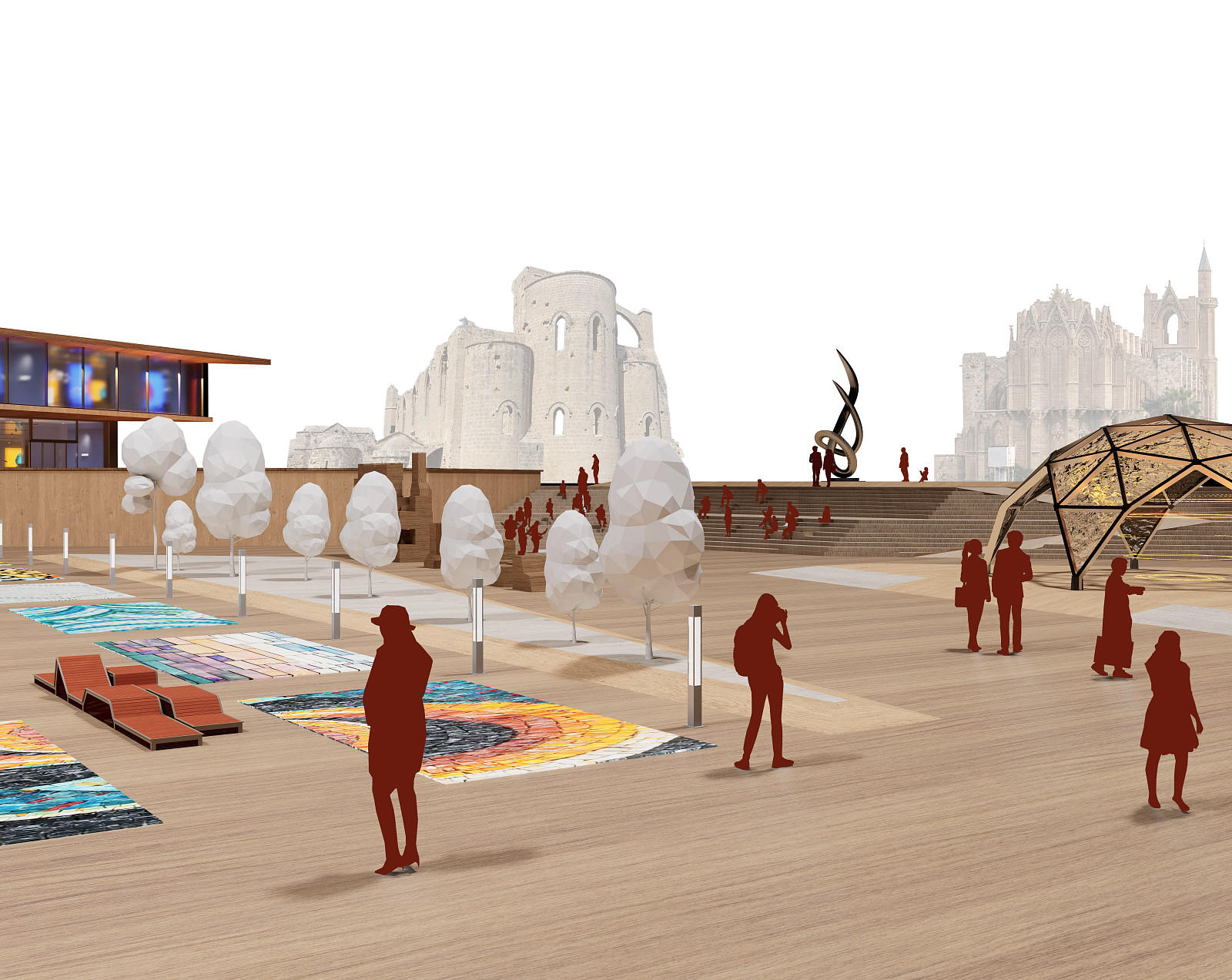
Located within the Walled City of Famagusta, the project responds to a site surrounded by important landmarks including the Gazi Monument, St. George Ruins, Lala Mustafa Pasha Mosque, Historic Warehouses, Defensive Walls, A Monumental Slope and existing archaeological remains. Rather than treating these elements as obstacles, the proposal uses them as generators of design.
The project revitalizes the area through art, culture, and education by establishing a continuous cultural corridor that reconnects fragmented urban experiences. Inspired by the idea of a creative city, the proposal transforms the site into a living cultural organism where architecture, heritage, and public life are woven together. Existing buildings are adaptively reused, historic traces are preserved, and new creative spaces are integrated into the urban fabric, allowing art and culture to once again become active components of daily life
More than a cultural intervention, the project represents a vision of reunification through creativity. In a place marked by historical divisions and conflict, art becomes a common ground where differences are respected and shared identities are celebrated. Through education, collaboration, cultural exchange, and artistic expression, the proposal creates spaces where people connect beyond borders, backgrounds, and ideologies. It promotes the belief that in today's world, creativity and culture possess the power to heal, unite, and inspire a collective future.
Project description
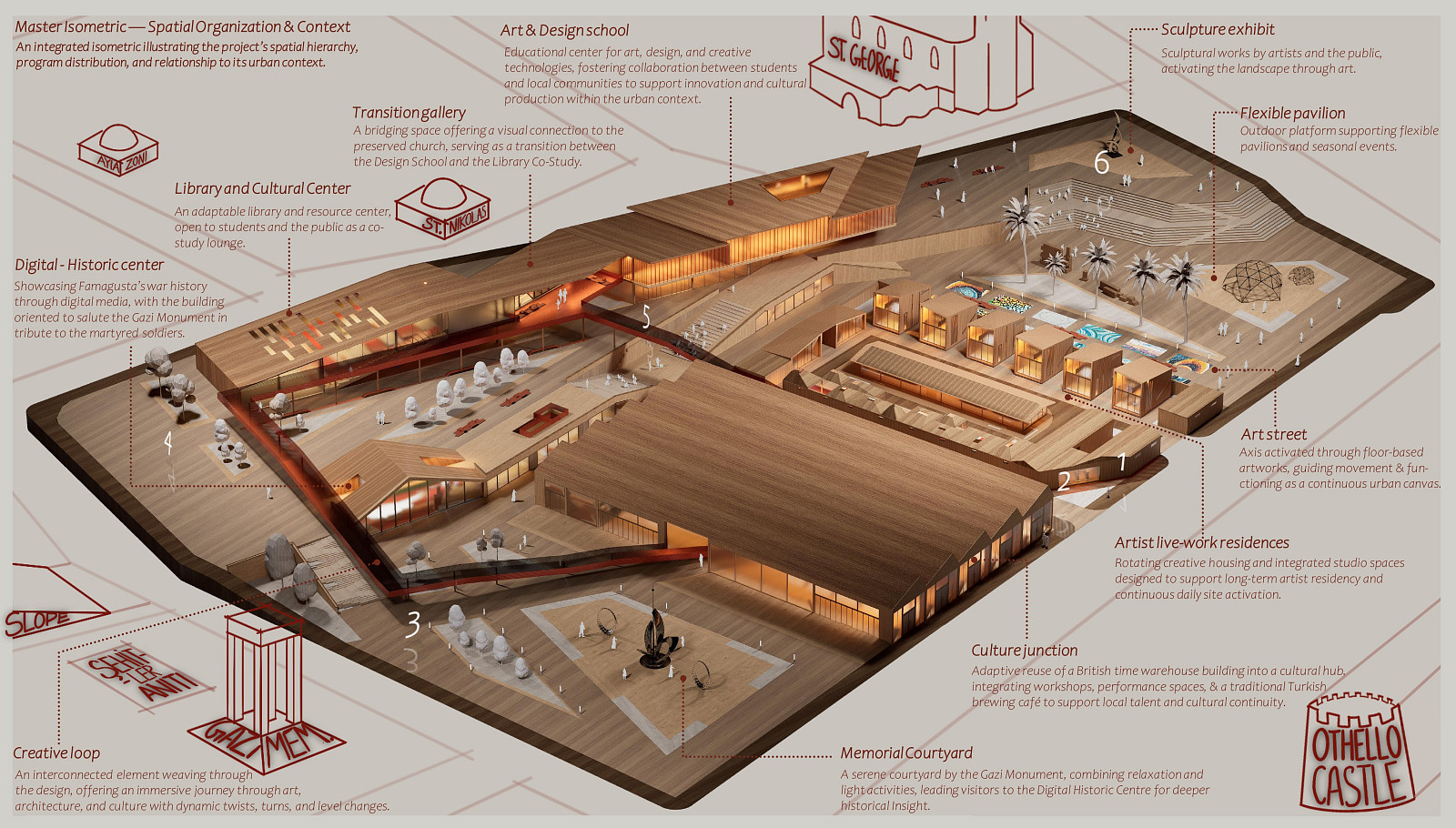
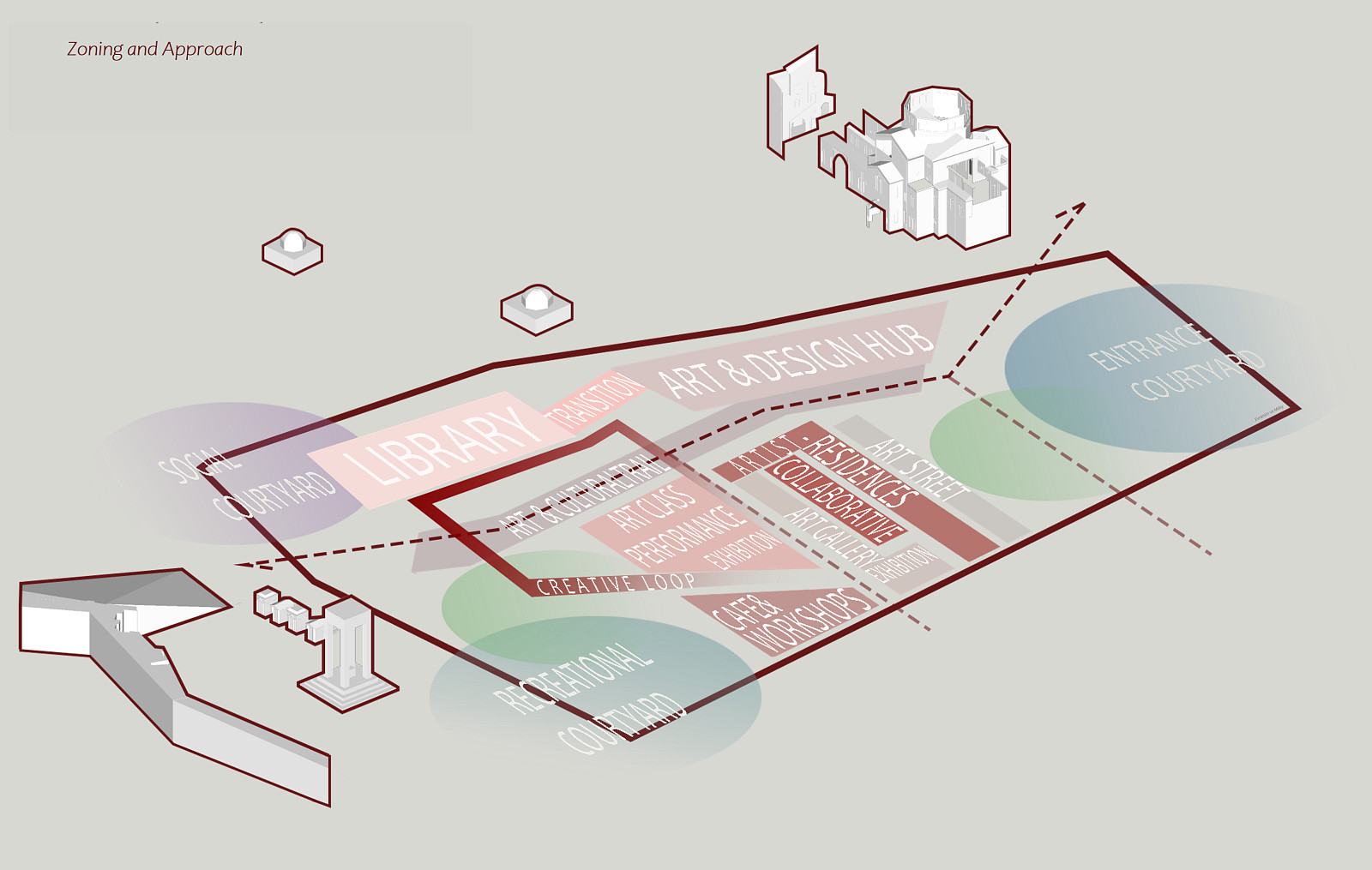
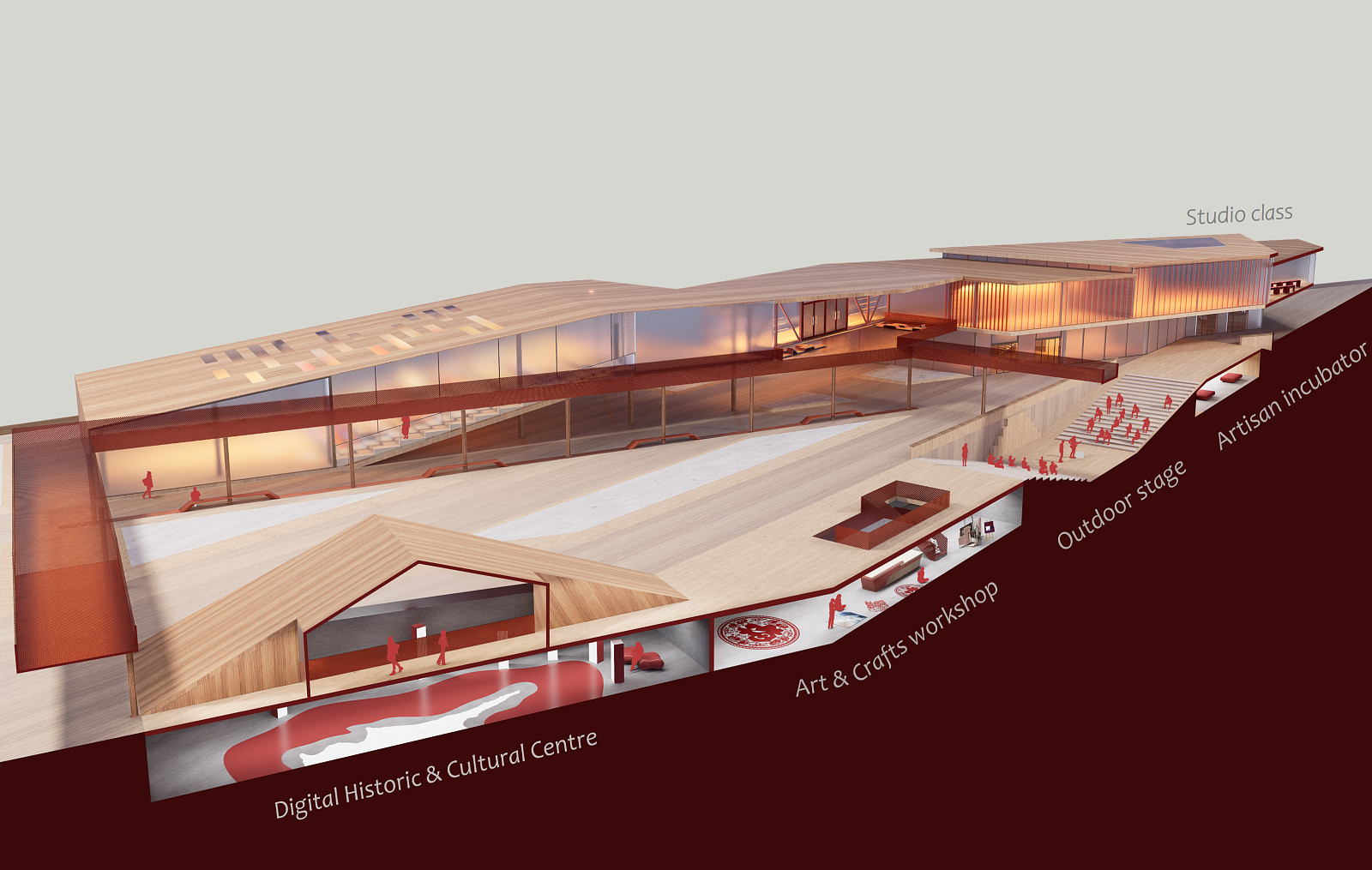
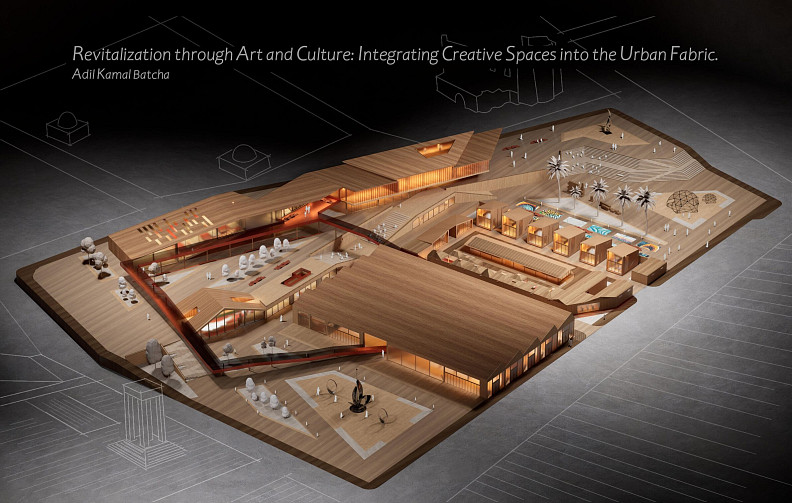
The project reimagines the old city of Famagusta as a creative and cultural hub where heritage preservation and contemporary life and artistic production coexist. The proposal is organized around three primary interventions: an Art and Design School with a Co-Study Library and a historic and cultural digital centre, a cluster of Creative Artist Residences, and the adaptive reuse of historic warehouse structures.
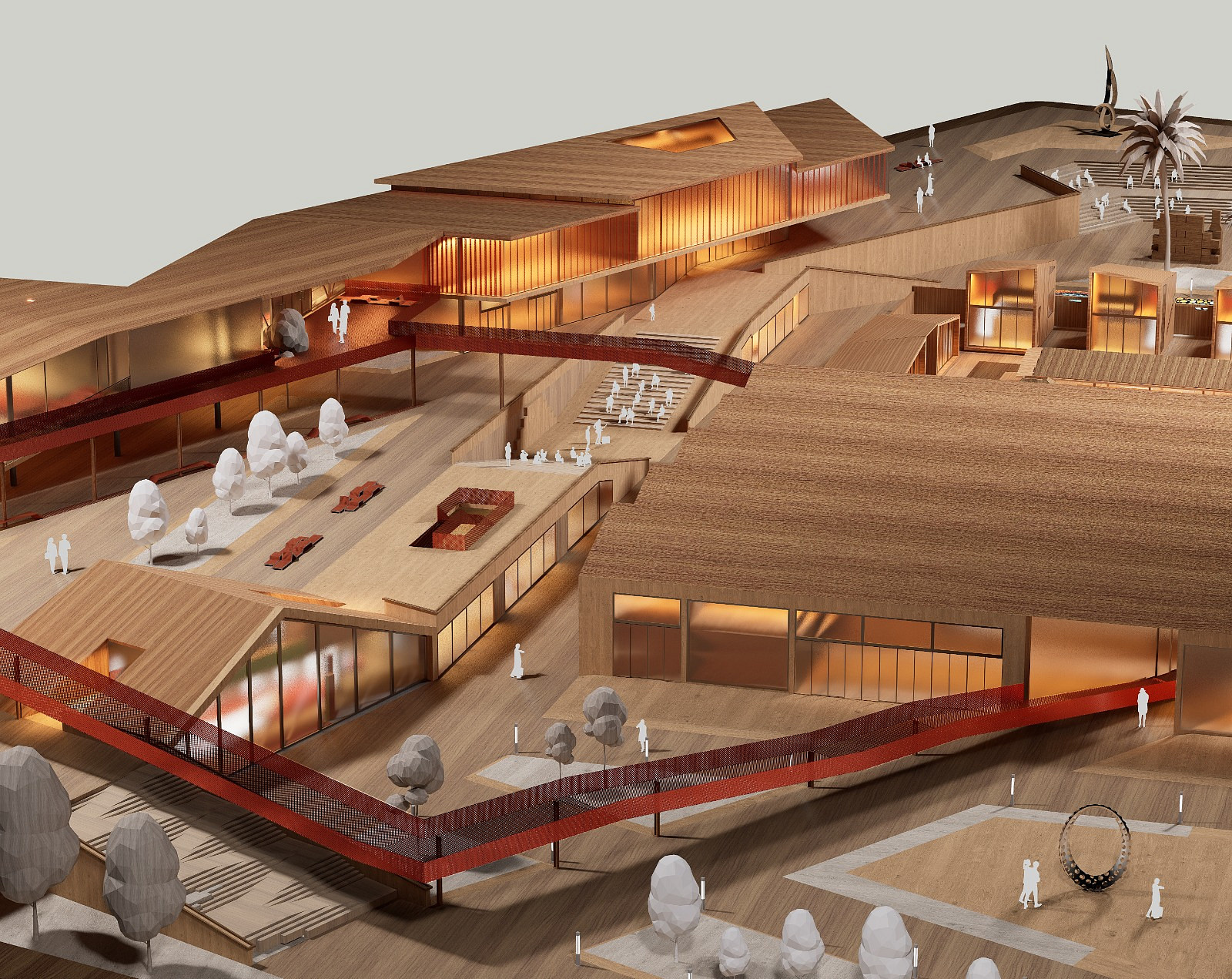
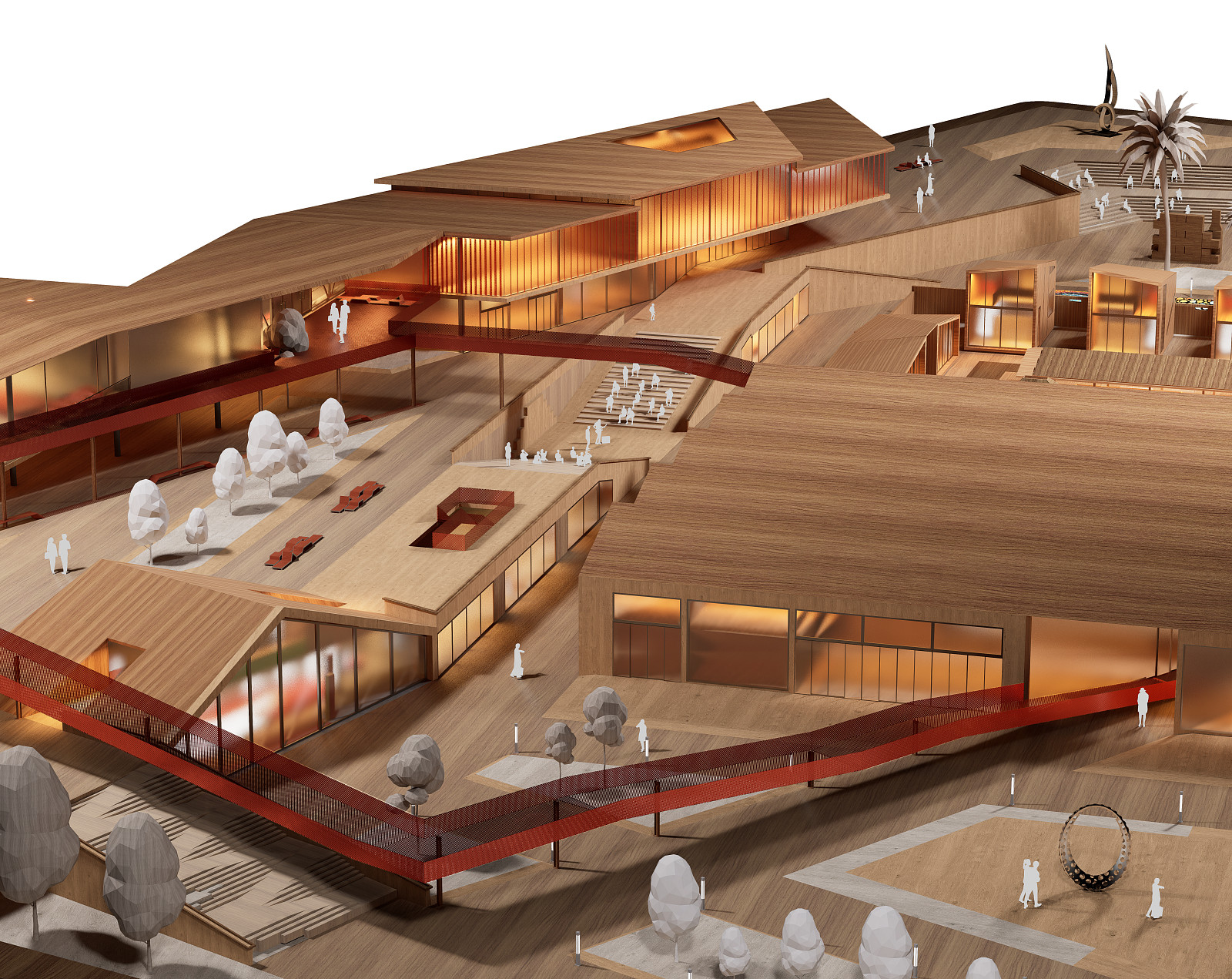
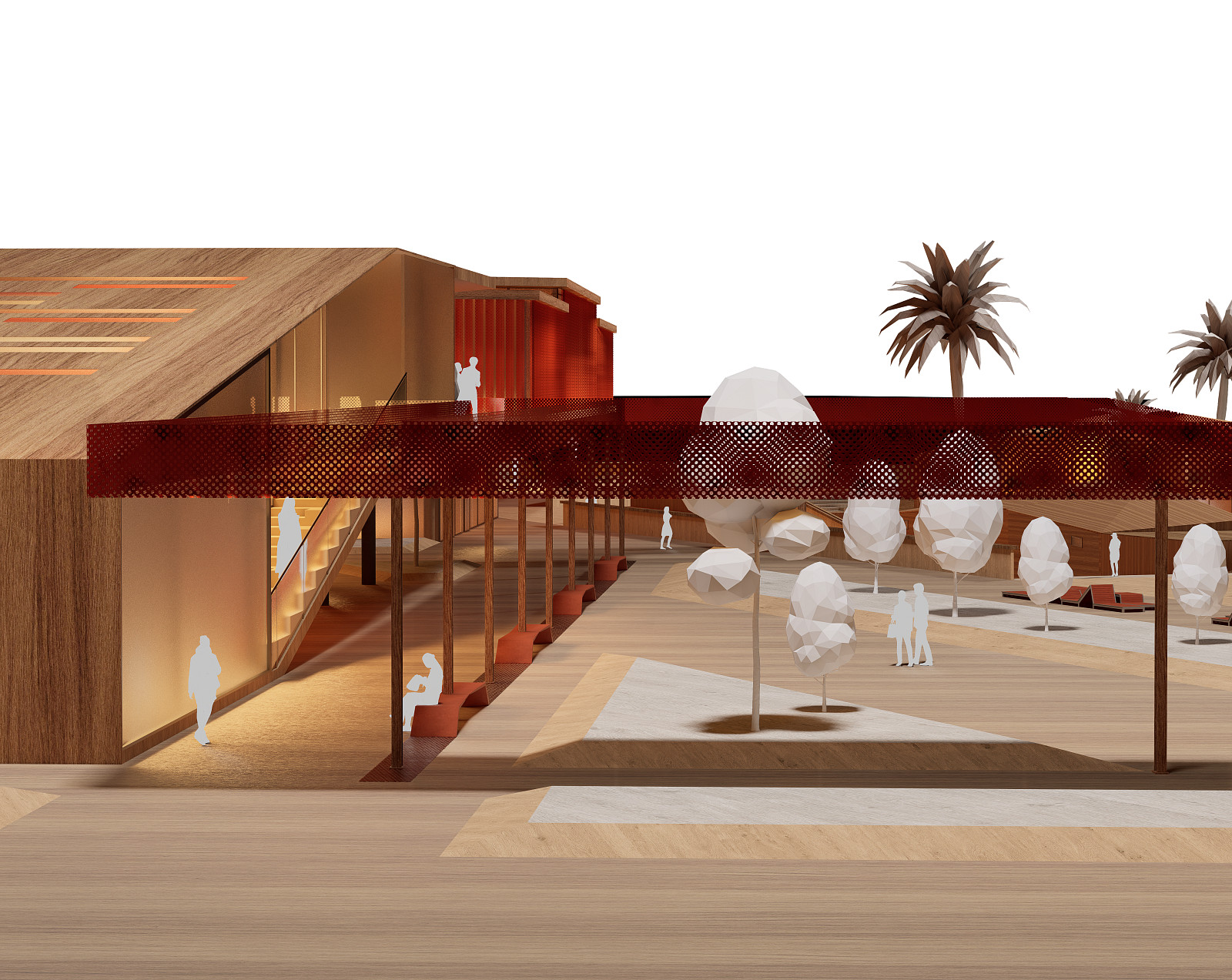
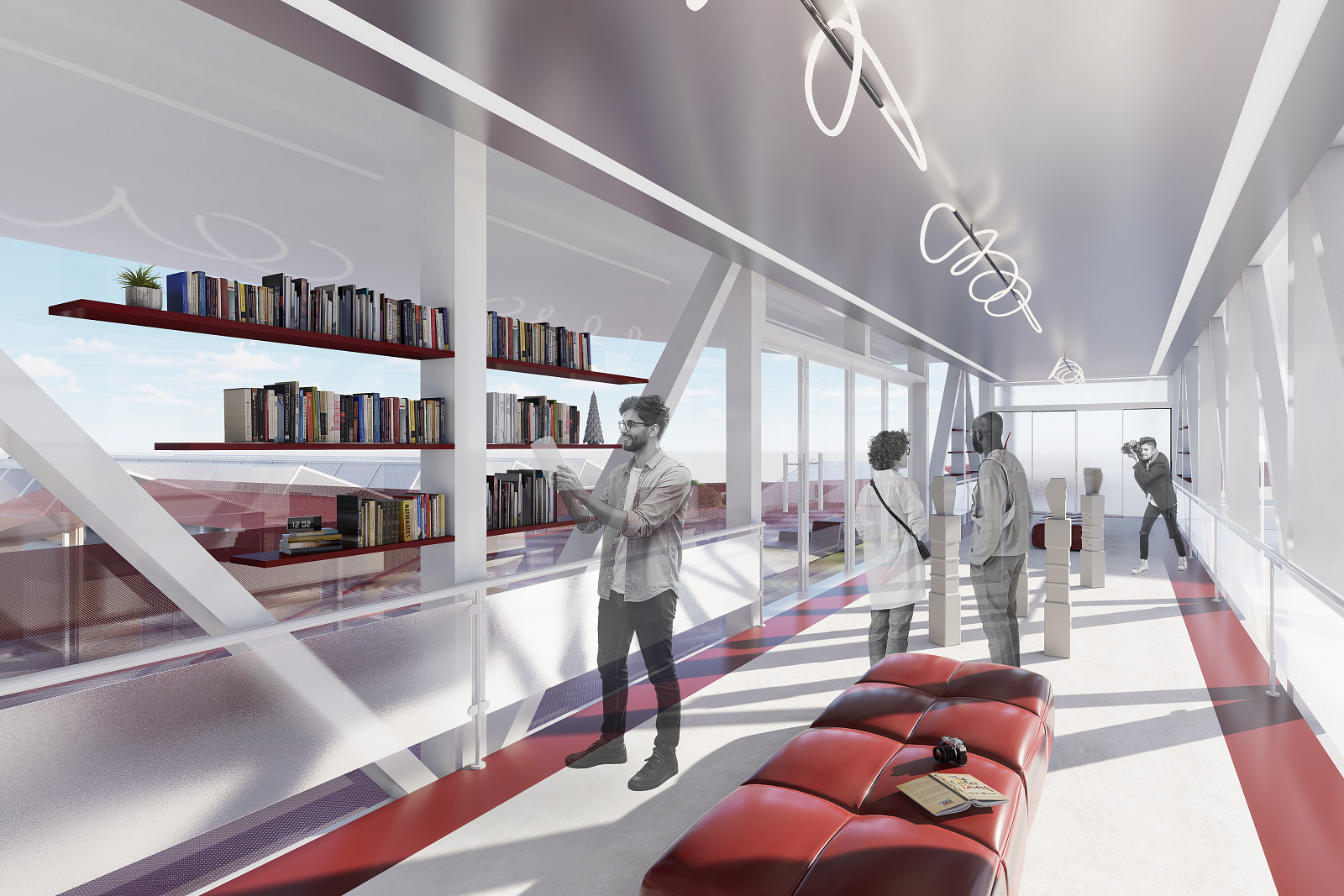
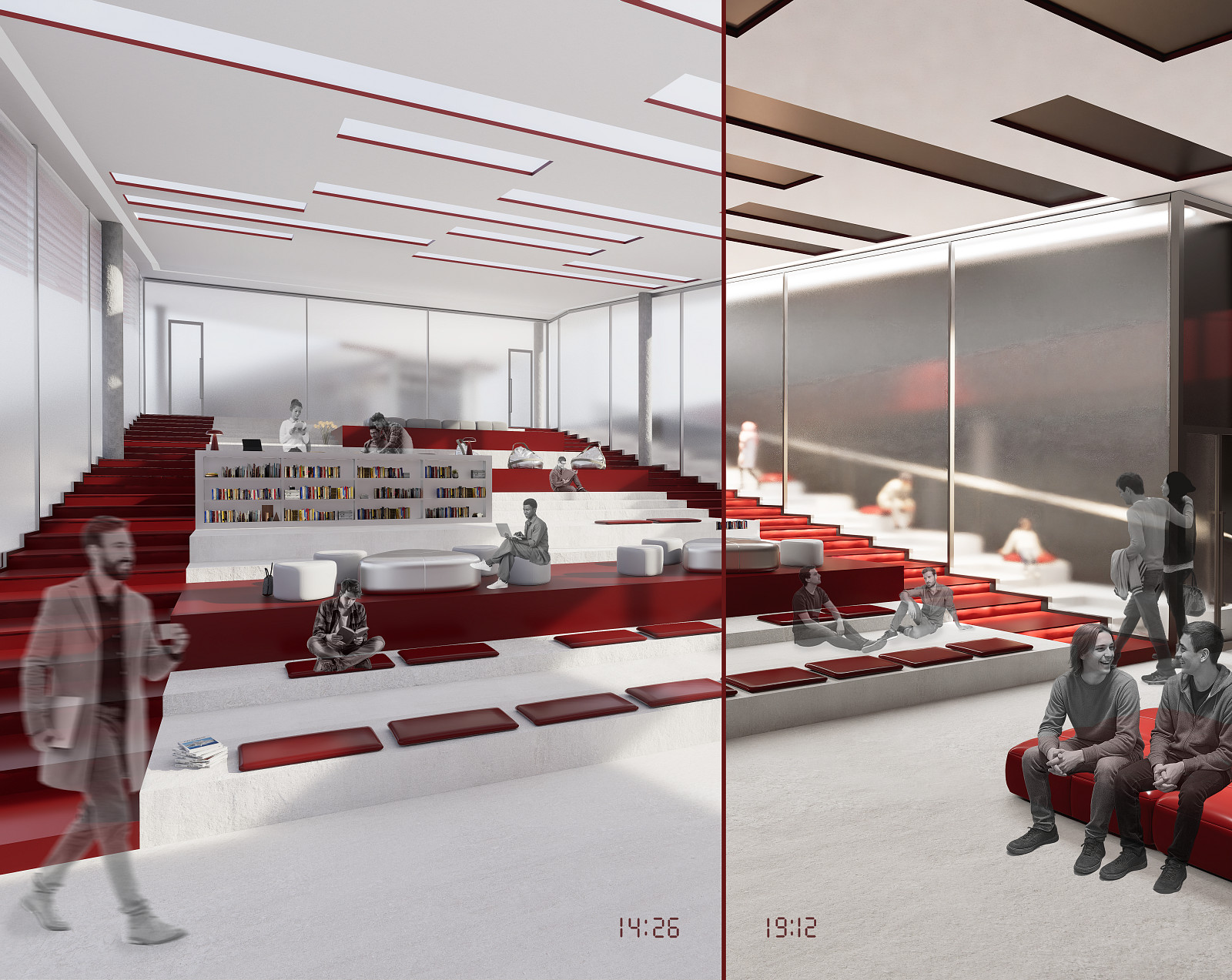
The Art and Design School serves as the educational heart of the project, providing workshops, studios, collaborative learning spaces, and a library. The building adopts a rising sloped form inspired by the monumental incline descending from Famagusta’s historic walls, emerging from the ground as a continuation of the existing topography and as a respectful response to the surrounding historical context and landmarks. This portion of the building accommodates a Co-Study and Co-Work Adaptive Library, providing flexible spaces for learning, collaboration, and creative exchange.
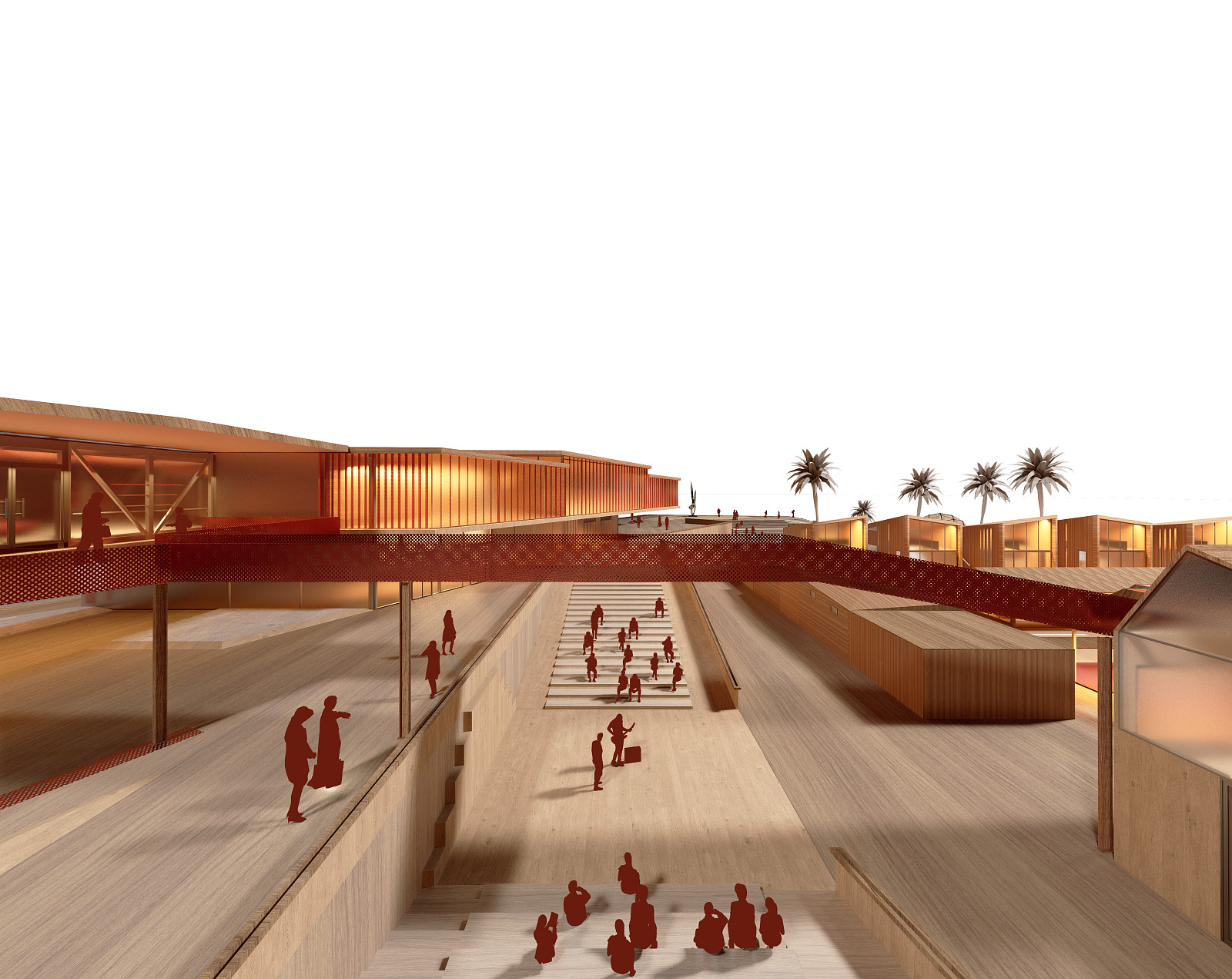
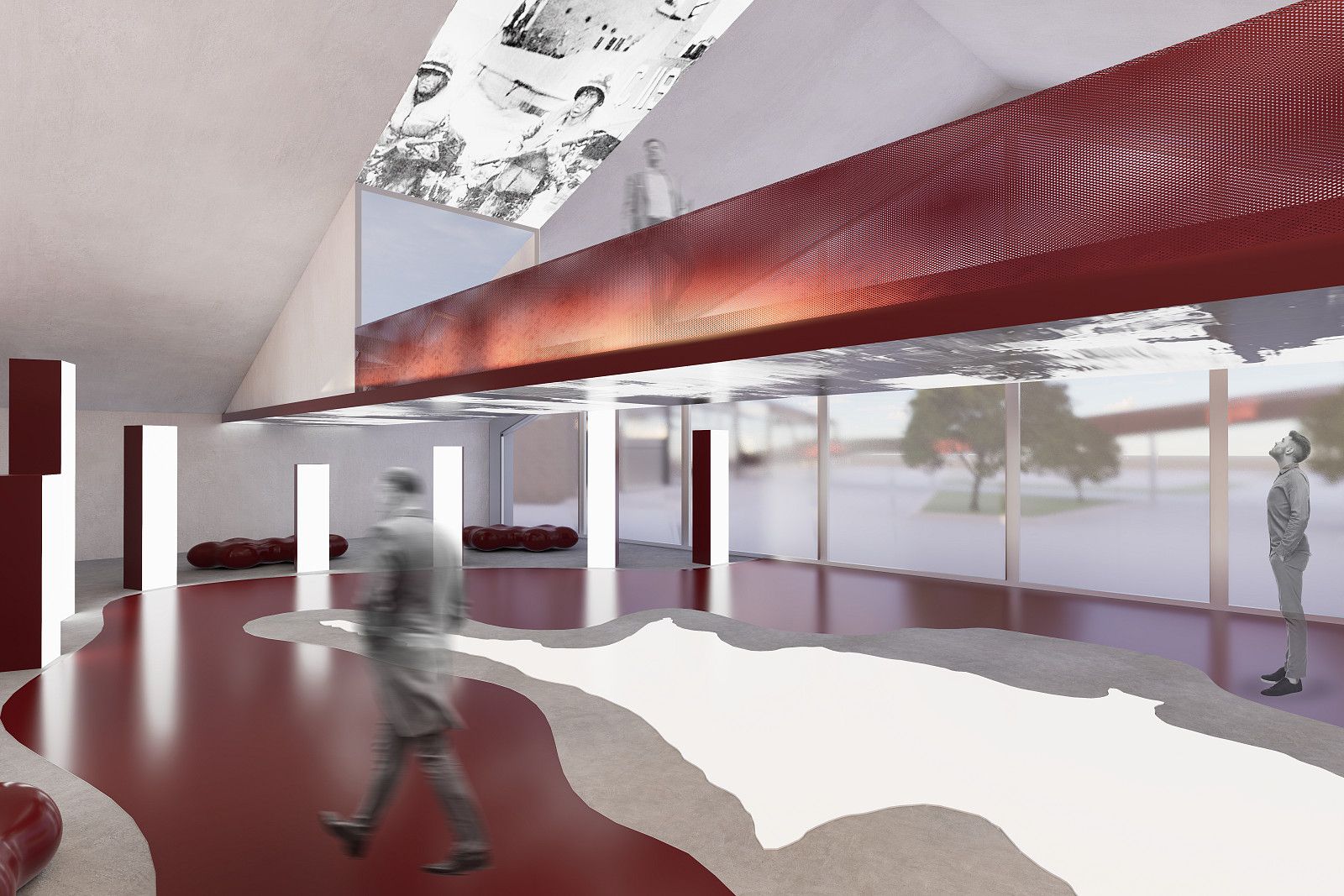
Connecting these functions is an elevated transition gallery that acts as both circulation and exhibition space.
The Digital Historic & Cultural Centre is designed using the contextual sloped roof language found throughout the proposal and context, creating a sense of familiarity and belonging for local residents. Its form is carefully angled towards the Gazi Monument as a gesture of respect and remembrance for the soldiers who lost their lives during the conflict. Through digital exhibitions, interactive displays, visual archives, and immersive storytelling, visitors are introduced to the rich history, culture, and collective memory of Famagusta and Cyprus.
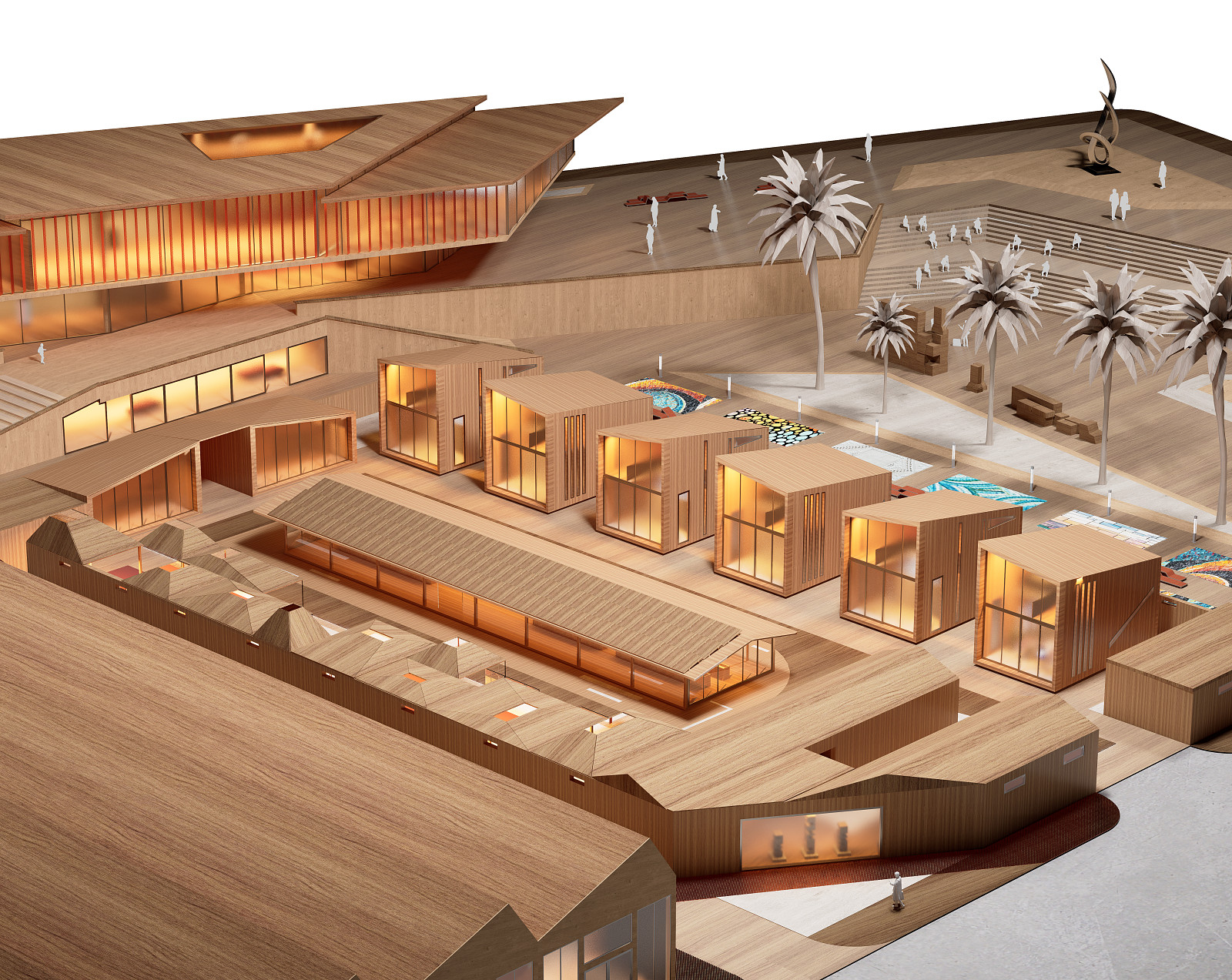
The Creative Artist Residences are developed through the adaptive reuse of an existing abandoned horse stable within the site, transforming it into a flexible living and working environment for visiting artists. The residences encourage cultural exchange, collaboration, and community engagement, while maintaining a strong sense of adaptability. Individual units are designed with rotational flexibility, allowing artists to reconfigure their spaces based on collaboration needs, privacy requirements, seasonal conditions, or special events. This creates a dynamic residential ecosystem that supports continuous artistic interaction and production.
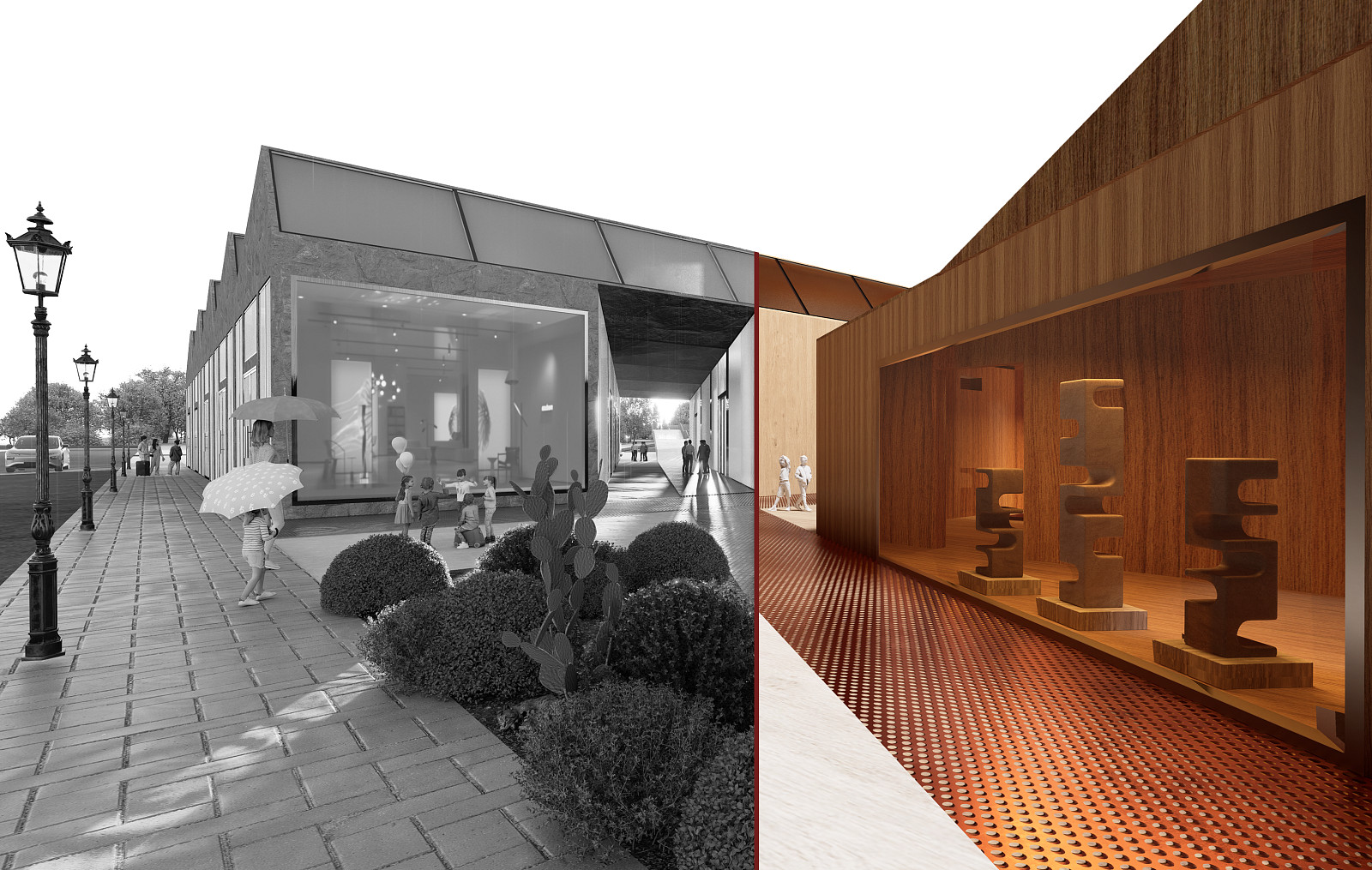
The historical warehouses are redesigned through adaptive reuse strategies and opened to public engagement through Turkish coffee brewing workshops, pottery making, basket weaving, Lefkara crafts, and other local art forms that visitors can actively participate in and learn from. These spaces also include public performance zones, exhibition areas, and creative gathering spaces, forming a fully flexible cultural environment.
All interventions are connected through a continuous creative loop that guides visitors through the site, linking indoor and outdoor experiences, historic landmarks, public plazas, art pavilions, and performance spaces. Together, these elements create a vibrant cultural destination that revitalizes the urban fabric while preserving the memory and identity of Famagusta.
Technical information
The project adopts a hybrid structural strategy combining adaptive reuse, prefabrication, and lightweight new construction within the historic walled city of Famagusta.
Existing workshop and warehouse buildings are preserved as load-bearing stone masonry structures, with selective concrete infill reinforcements introduced for stabilization, while interior partitions are removed to create open-plan adaptable spaces within the original structural shell.
The Creative Artist Residences are developed as prefabricated reinforced concrete modular units, designed for off-site fabrication and on-site repetition, enabling scalability and flexible site deployment. New interventions, including the main cultural building and circulation bridges, are designed as steel frame structures with glass infill, enabling long-span, column-free spatial configurations and visual transparency between interior and exterior environments.
The envelope strategy responds directly to solar orientation and climatic conditions, where vertical aluminium shading elements are applied on east-facing façades to filter morning light, and horizontal shading devices are used on southern exposures to reduce solar gain.
In the reused stone structures, selective north-oriented glass openings are introduced to bring in diffused daylight while minimizing heat gain, combined with stack ventilation strategies that facilitate passive air movement and thermal release. Together, these systems establish a climatically responsive architectural approach integrating heritage conservation, modular construction logic, and environmentally driven envelope design.
Documentation

Copyright © 2026 INSPIRELI | All rights reserved. Use of this website signifies your agreement to the Terms of Use, Privacy Policy, and use of cookies.