
Urban Canopy


Project idea
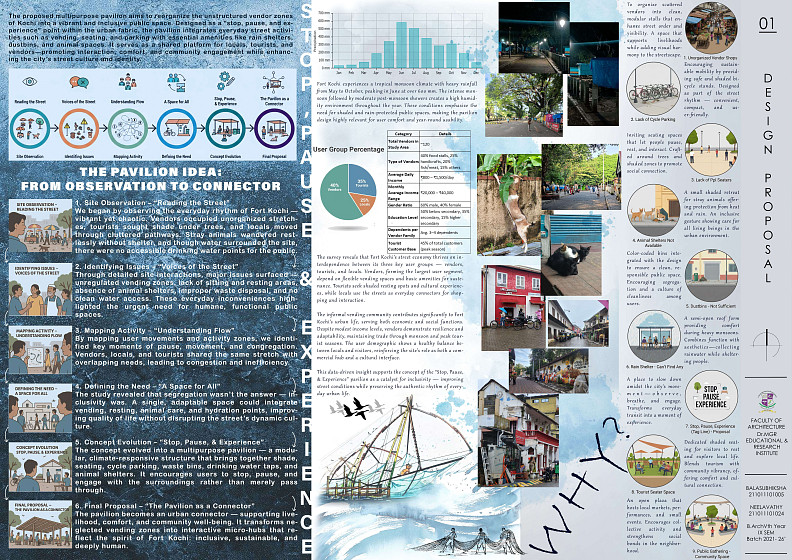
The project aims to revitalize the unorganized vendor zone along River Road, Fort Kochi, into an inclusive and multifunctional public space. Inspired by the cultural identity of Fort Kochi and the form of the Chinese fishing nets, the proposal creates a shaded urban pavilion that supports local vendors, tourists, and residents. The pavilion addresses issues such as lack of seating, inadequate shelter, poor waste management, insufficient bicycle parking, absence of drinking water facilities, and lack of animal shelters. It transforms the waterfront into a vibrant social and cultural destination that encourages interaction, comfort, and community engagement
Project description
The project consists of an 80-metre-long modular tensile pavilion located along River Road, Fort Kochi. Designed as a series of interconnected modules, the pavilion accommodates vendor kiosks, shaded seating areas, bicycle parking facilities, animal shelters, drinking water stations, waste disposal units, and community gathering spaces. The design promotes social interaction, supports local livelihoods, enhances the waterfront experience, and provides climate-responsive public infrastructure. The pavilion serves as a cultural interface where residents and visitors can meet, rest, shop, and participate in community activities while enjoying uninterrupted views of the backwaters and heritage streetscape
Technical information
The pavilion is inspired by the structural geometry of the traditional Chinese fishing nets of Fort Kochi. It utilizes a lightweight tensile membrane system made from recycled rPET fabric supported by zinc and powder-coated steel columns, stainless steel tension cables, membrane rafters, and structural base plates anchored to concrete foundations. The modular structure is designed to withstand coastal climatic conditions and wind speeds of approximately 41 m/s. Sustainable features include rainwater harvesting integrated into the tensile roof, on-site filtration and recharge systems, solar-powered lighting, bicycle parking facilities, drinking water stations, waste management units, and shaded public seating. The open and breathable design maximizes natural ventilation while providing protection from heavy rainfall and intense solar radiation.
Documentation


Copyright © 2026 INSPIRELI | All rights reserved. Use of this website signifies your agreement to the Terms of Use, Privacy Policy, and use of cookies.