LOW-COST RESIDENTIAL COMPLEX


Project idea
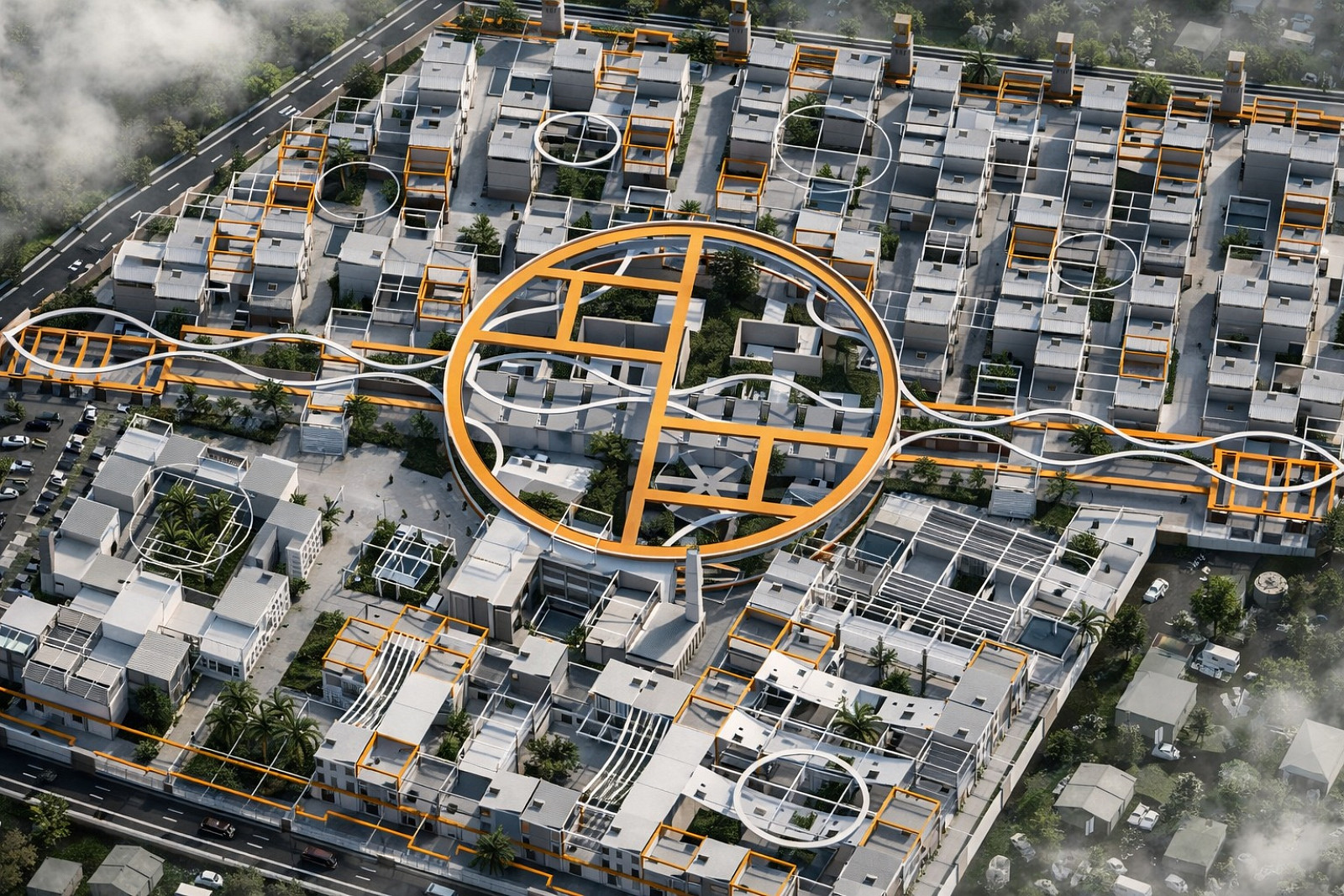
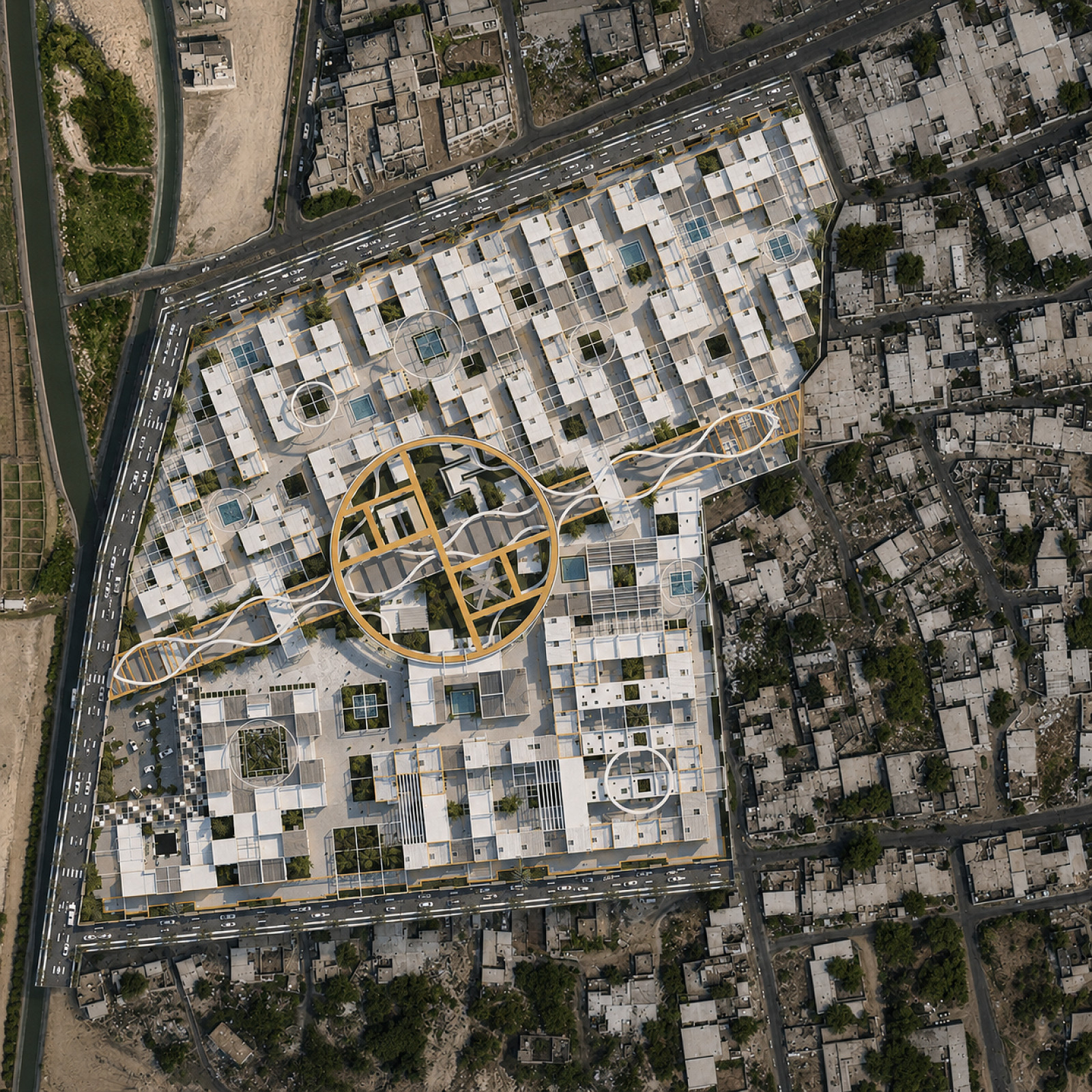
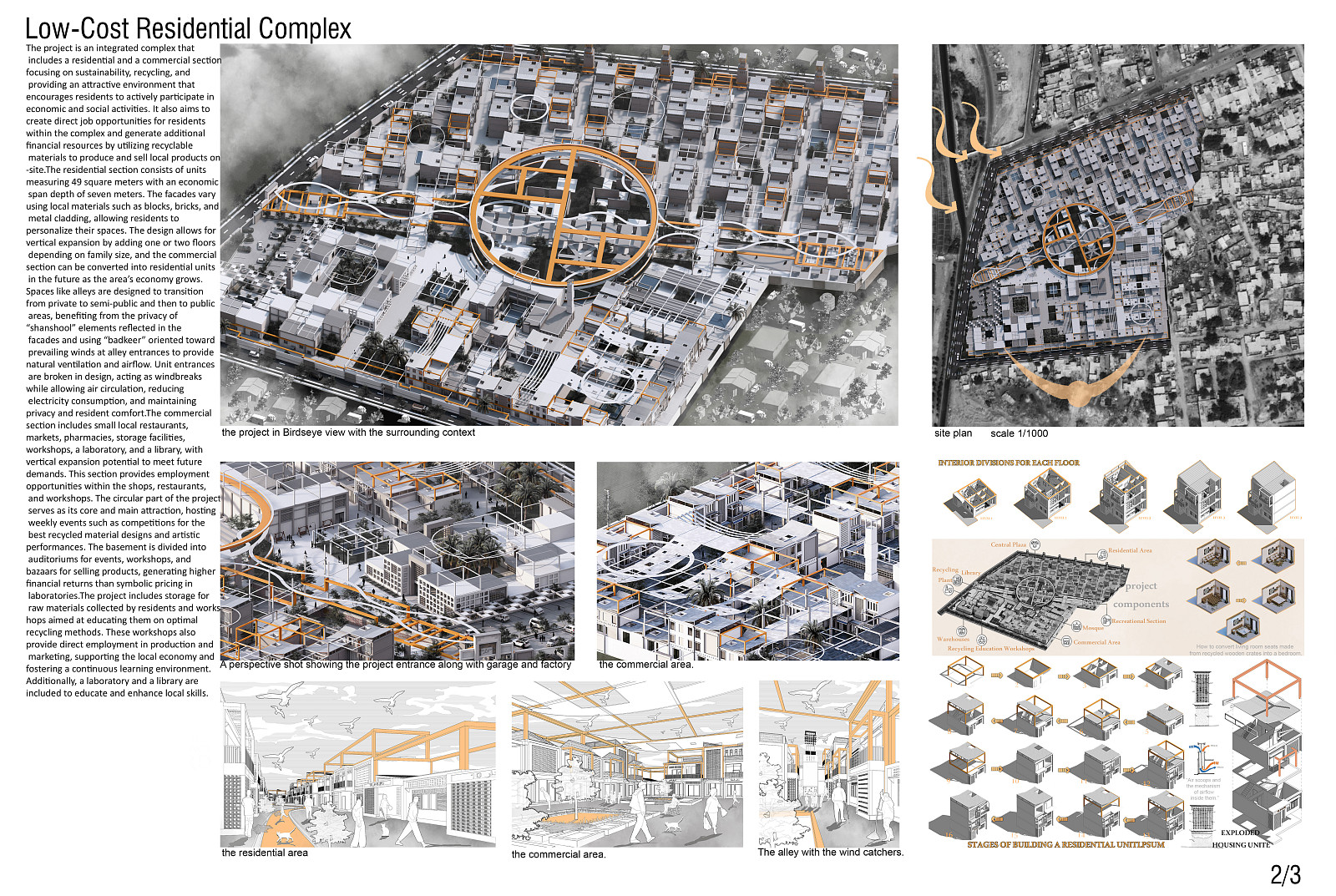
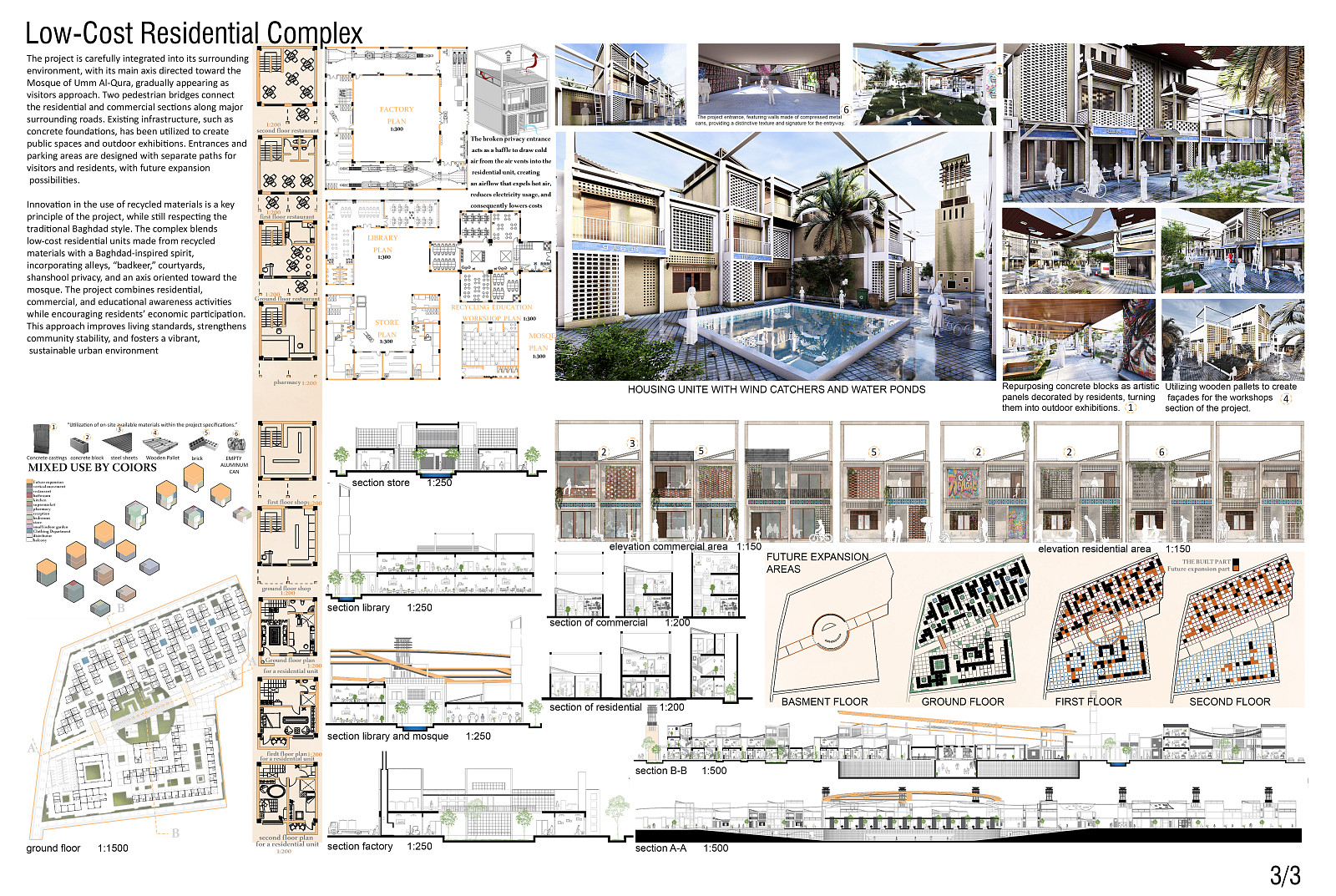
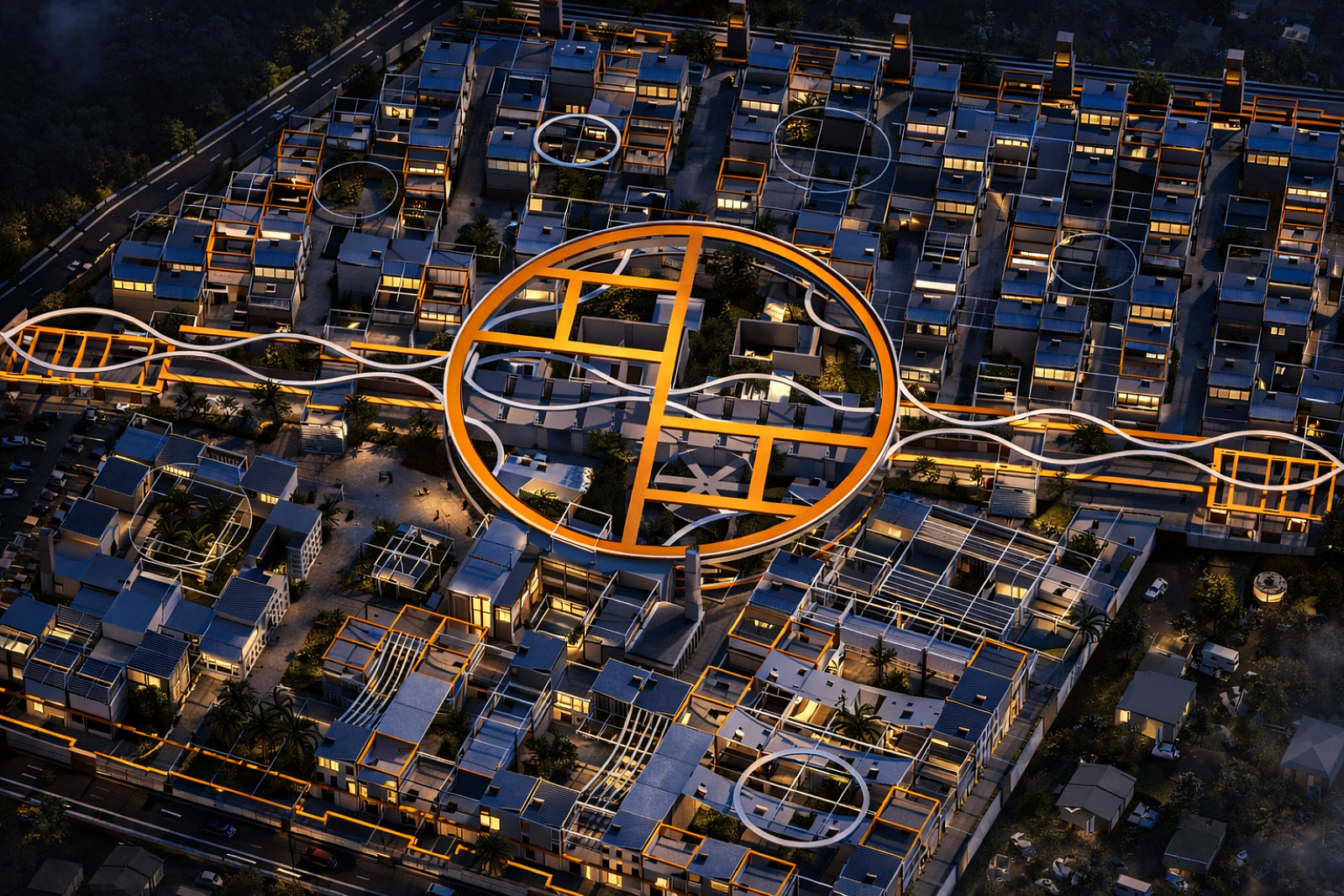
Al-Raja Complex is a low-cost residential redevelopment project that transforms an informal settlement in Baghdad into a sustainable, inclusive, and resilient community. The project aims to provide affordable housing while improving living conditions, creating economic opportunities, and preserving local cultural identity. It integrates housing, education, commercial activities, public spaces, and recycling-based economic initiatives within a unified urban framework.
Project description
Modular Construction System: Standardized residential units designed for efficient and cost-effective construction.
Recycled and Locally Sourced Materials: Use of recycled construction materials and locally available resources to reduce costs and environmental impact.
Reinforced Concrete Structure: Durable structural system suitable for local climatic and urban conditions.
Passive Cooling Technologies: Integration of traditional Baghdadi Badkeer (wind towers) for natural ventilation and reduced energy consumption.
Shanshool Facades: Traditional architectural elements that improve shading, privacy, and thermal comfort.
Flexible Structural Design: Housing units are designed to allow future vertical expansion according to family growth and changing needs.
Sustainable Infrastructure: Energy-efficient design strategies, natural lighting, rainwater management, and waste recycling systems.
Circular Economy Approach: Incorporation of recycling workshops and material recovery facilities that contribute to both construction and community livelihoods.
Technical information
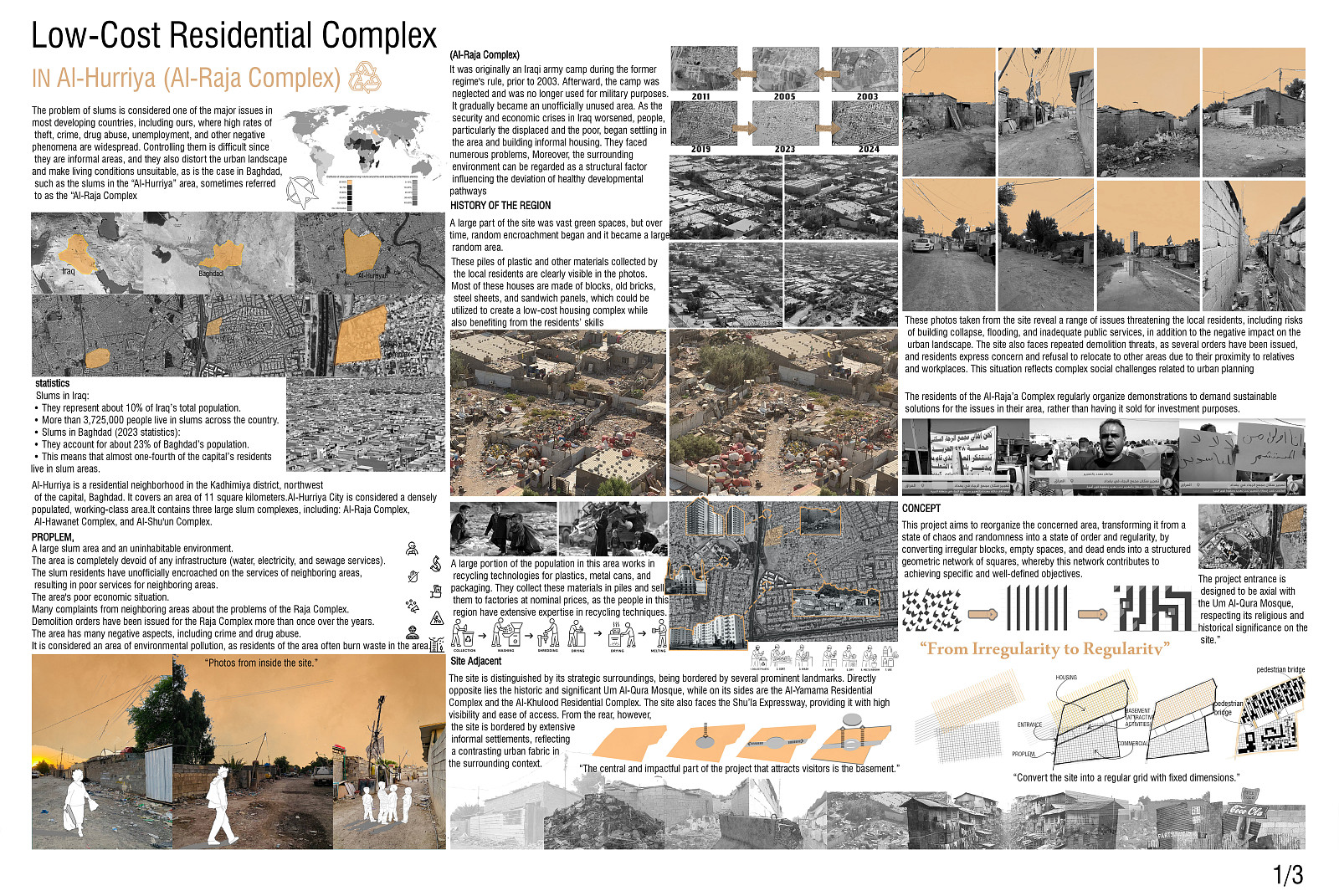
Al-Raja Complex is an urban regeneration project located in Al-Hurriya District, Baghdad, Iraq. The project addresses the challenges of informal housing, inadequate infrastructure, and social vulnerability by creating a safe, affordable, and sustainable residential environment.
The development consists of compact 49-square-meter housing units organized around a network of public spaces, pedestrian pathways, commercial areas, educational facilities, workshops, and community services. The design promotes social interaction, economic empowerment, and environmental responsibility while maintaining strong connections to local culture and architectural heritage.
Traditional Baghdadi design elements, including Shanshool facades and Badkeer wind towers, are combined with modern sustainable construction techniques to enhance thermal comfort, energy efficiency, and cultural identity. Through community participation, affordable housing solutions, and recycling-based economic activities, Al-Raja Complex serves as a replicable model for sustainable urban regeneration in Iraq and similar developing regions.

Copyright © 2026 INSPIRELI | All rights reserved. Use of this website signifies your agreement to the Terms of Use, Privacy Policy, and use of cookies.