Between Fiction And Debris


Project idea
This project explores how architecture can exist within fictional worlds and what that means for how we understand and design space in reality. While fictional environments are often viewed as imaginative constructs, they are frequently grounded in real systems, conditions, and constraints. Films, games, and speculative narratives create worlds that respond to climate, resources, infrastructure, and social organization, allowing architecture to emerge from the internal logic of the world itself.
Through the concept of Diegetic Architecture, this research investigates how architecture can be understood from within a world, through the experiences of its inhabitants rather than through the perspective of an external observer. The project proposes that architecture is not only defined by its physical form, but also by the systems, narratives, and conditions that shape it.
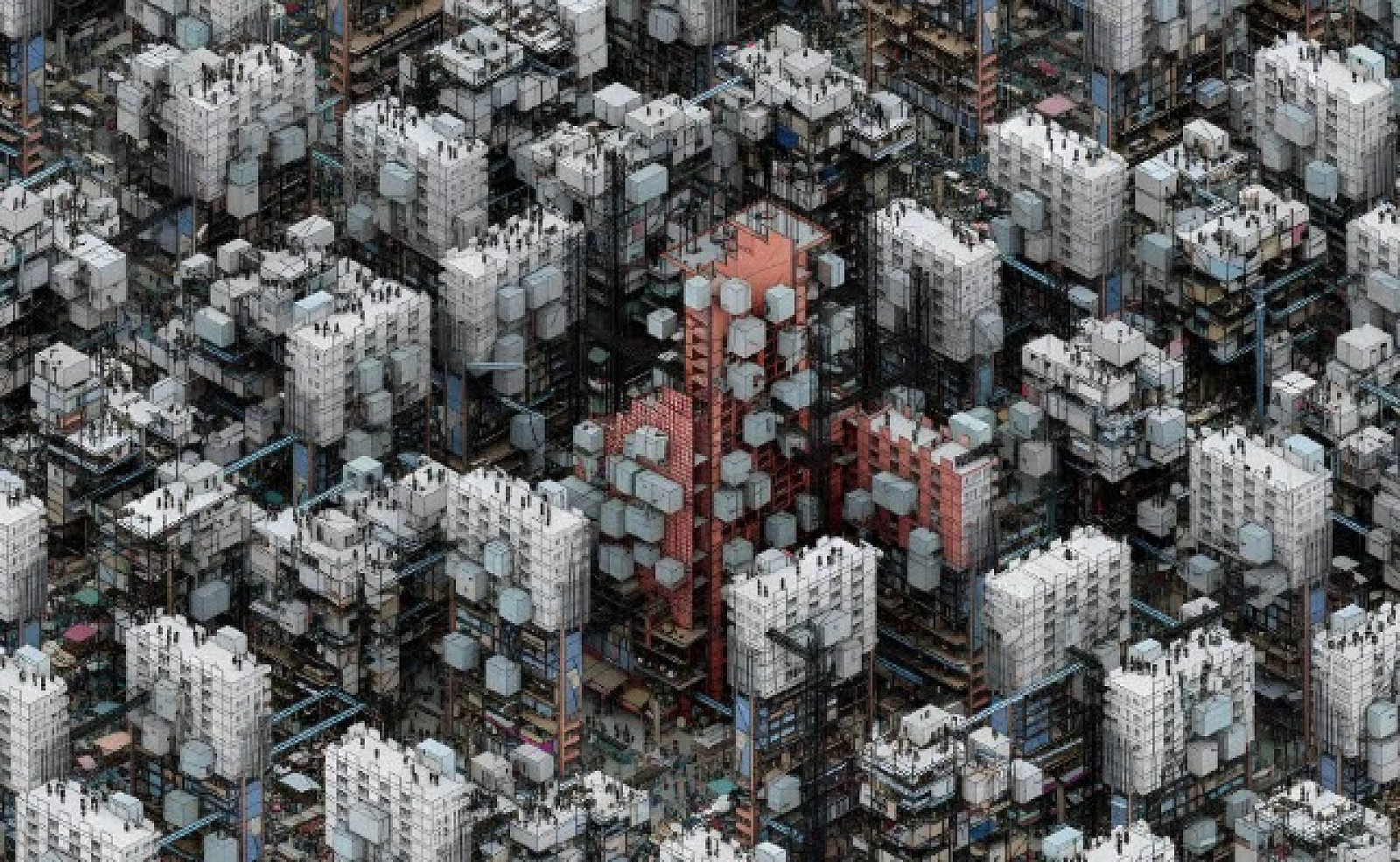
This idea is explored through Waste World, a speculative future set within Mumbai's docklands. By projecting the site from the present day to the year 2200, the project examines how accumulation, adaptation, scarcity, and survival can influence urban development. Instead of designing a single building, the project imagines an evolving environment where architecture grows from existing conditions and available resources, creating a world that feels both fictional and believable.
Project description
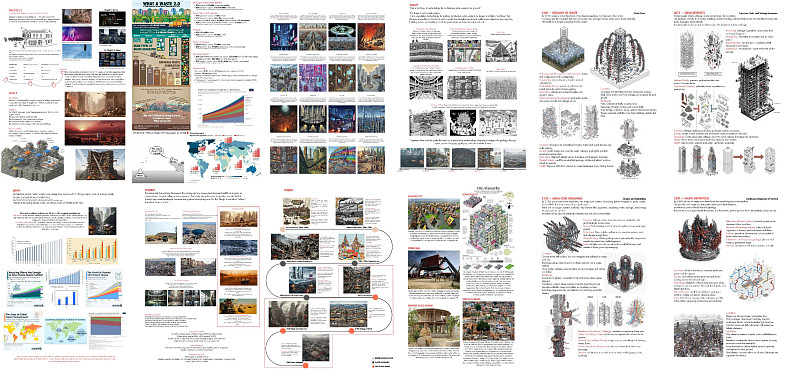
The project is divided into a research component and a speculative design exploration.
The research investigates fictional environments from cinema, games, and speculative architectural projects to understand how worlds are constructed through spatial logic. Through this study, recurring themes such as adaptation, environmental response, resource management, and infrastructural dependence were identified as key drivers of architectural development.
These findings informed the creation of Waste World, a speculative future located within Mumbai's docklands. The proposal develops a timeline from 2025 to 2200, illustrating how the site transforms under increasing waste accumulation and changing environmental conditions. Rather than treating waste as a problem to be removed, the project explores its role as a primary resource for construction, habitation, and urban growth.
Existing dock infrastructure, industrial buildings, steel frameworks, shipping containers, and abandoned structures are reused, retrofitted, and expanded over time. Water collection, filtration, recycling, and redistribution become critical components of the urban system, while circulation networks evolve from existing port infrastructure and waste-processing routes.
As the timeline progresses, architecture emerges through continuous adaptation rather than centralized planning. Buildings attach to existing structures, infrastructure becomes inhabitable, and the distinction between architecture, landscape, and urban systems gradually dissolves. The project ultimately proposes a model of urban growth driven by resource availability, environmental pressures, and the evolving needs of its inhabitants.
Technical information
The project is set within the Mumbai Docklands and is based on the reuse of materials and infrastructure already available within the site. Existing port structures, industrial buildings, steel frames, shipping containers, and abandoned infrastructure are adapted and incorporated into new architectural interventions rather than replaced.
Waste functions as both a material resource and an environmental condition. Buildings evolve through incremental additions, retrofitting, and extensions using reclaimed steel, salvaged construction materials, shipping containers, and industrial components sourced from the docklands.
Water management is integrated into the urban system through collection, filtration, recycling, and reuse. Circulation networks emerge from existing port infrastructure, transportation corridors, and waste-processing systems, creating a layered relationship between movement, production, and habitation.
The project prioritizes adaptation over demolition, allowing architecture to grow through available resources and changing environmental conditions. As a result, architecture, infrastructure, and landscape become interconnected systems that evolve over time between 2025 and 2200.
Documentation


Copyright © 2026 INSPIRELI | All rights reserved. Use of this website signifies your agreement to the Terms of Use, Privacy Policy, and use of cookies.