PERFORMING TECTONICS


Project idea
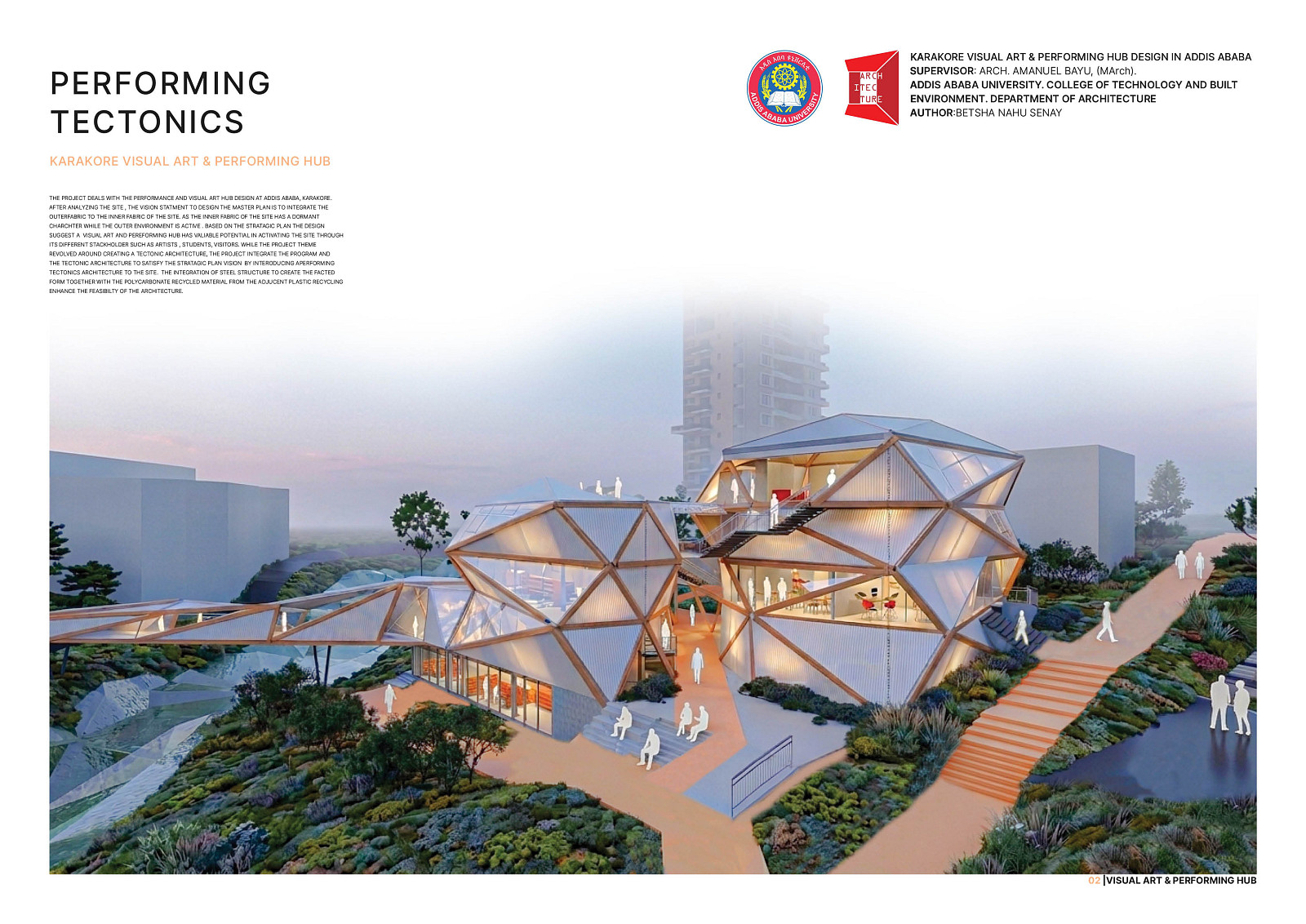
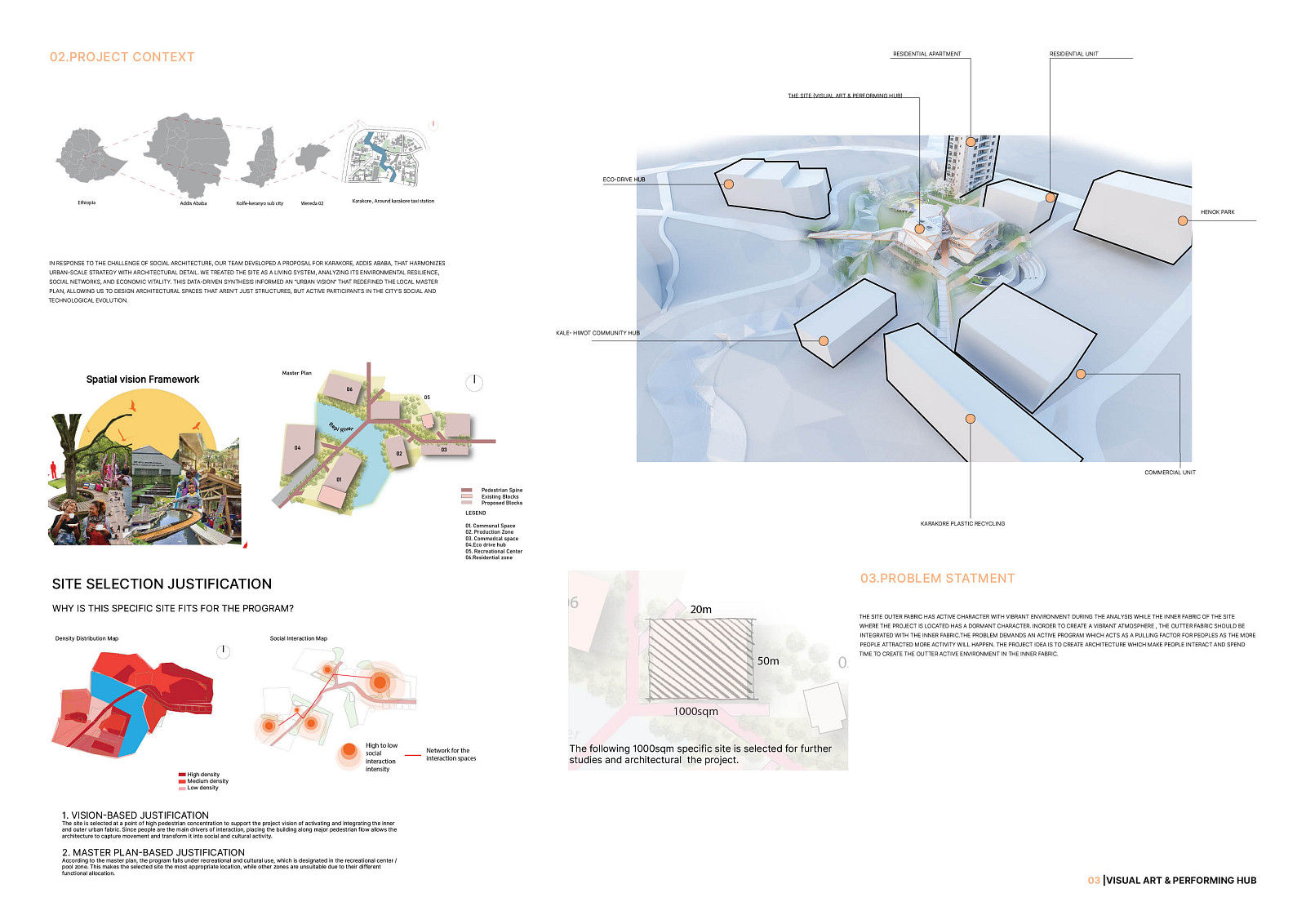
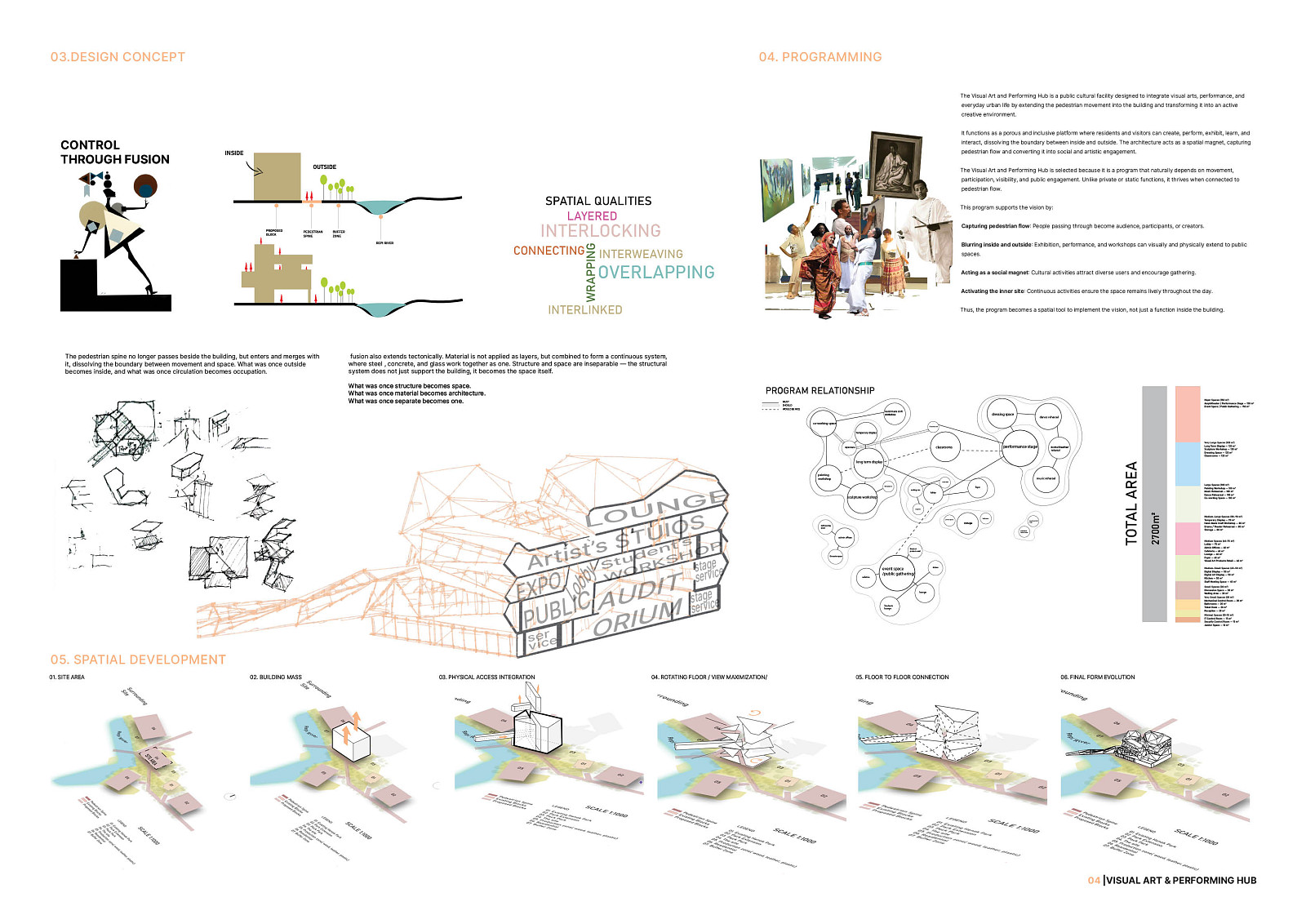
The main project idea behind the design of the Visual Art and Performing Arts Hub was to create a space which can enhance the activeness of the inner fabric at Karakore, Addis Ababa, Ethiopia. According to the vision statement of the strategic plan of the site, the area has an active outer fabric while the inner section seems to exist in another fabric. The project aims to solve this problem by introducing an active program with stakeholders, including local residents, outside visitors, students, and artists.
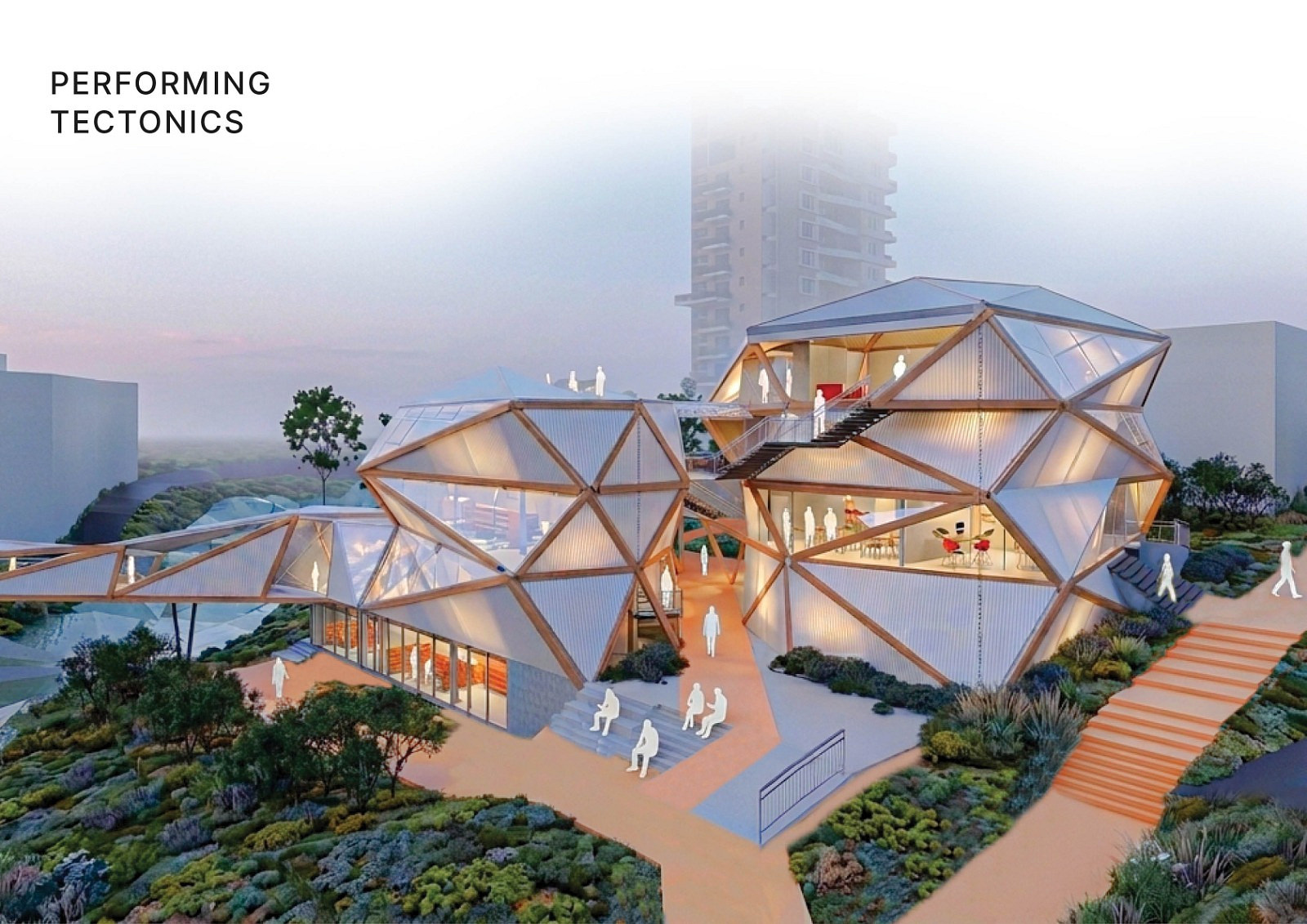
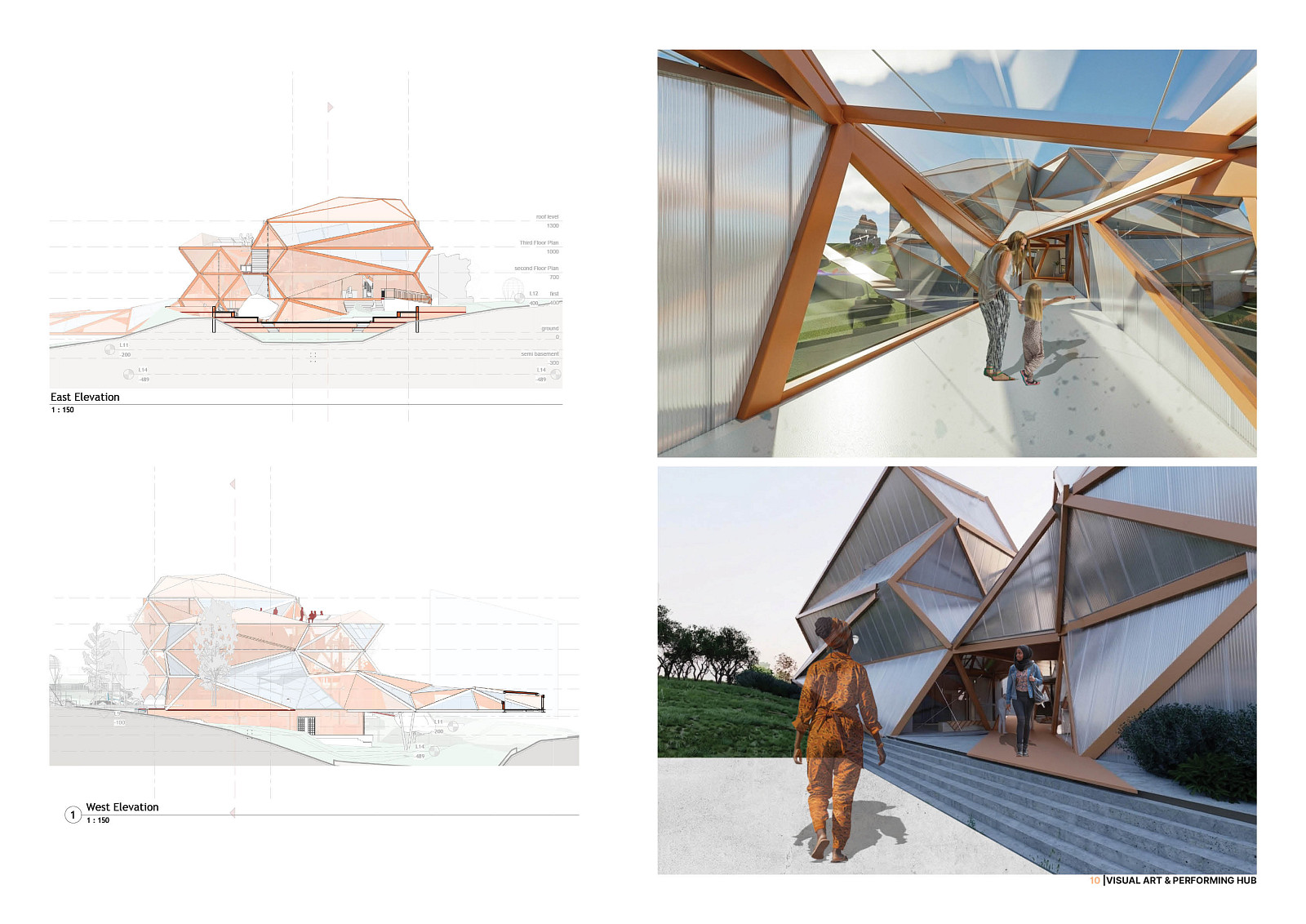
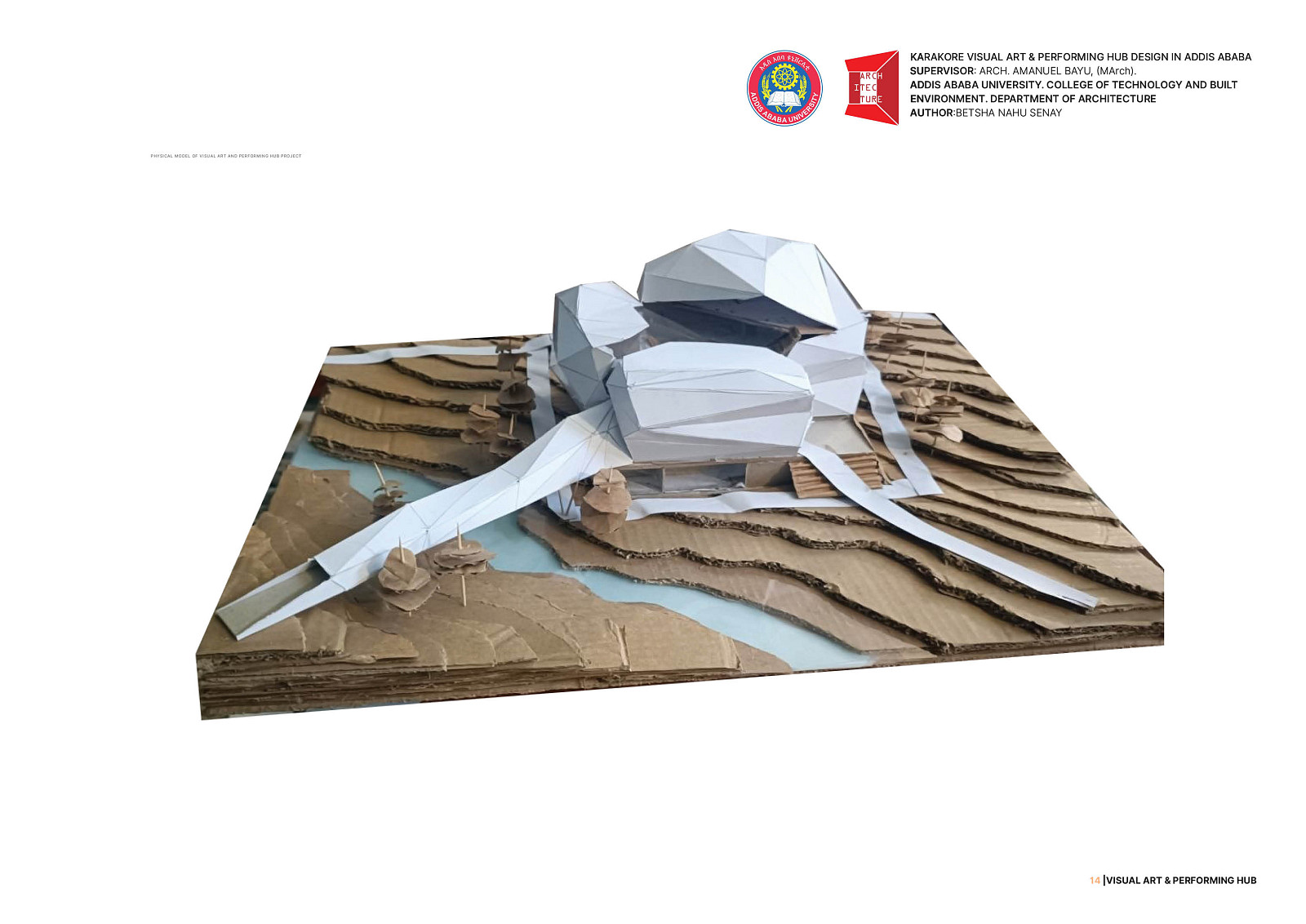
While introducing the architecture, the project invites pedestrians to the space by creating a controlled fusion of physical access nodes with the form, rather than placing built mass along the nodes. The chosen exoskeleton structure, together with the translucent polycarbonate plastic material from a nearby plastic recycling site, were valuable inputs towards creating a performing tectonic architecture.
Project description
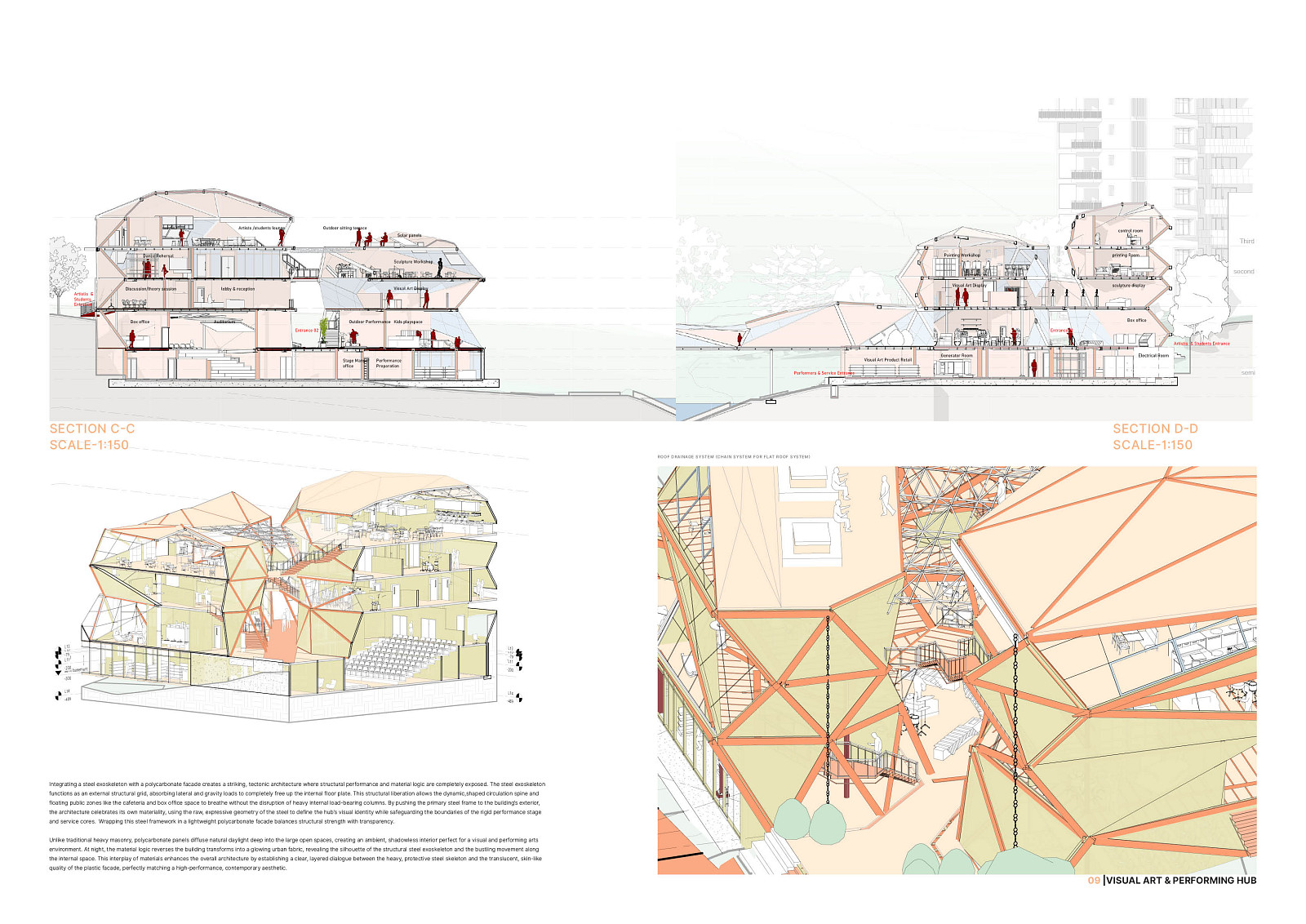
The building is mainly zoned into four main zones:
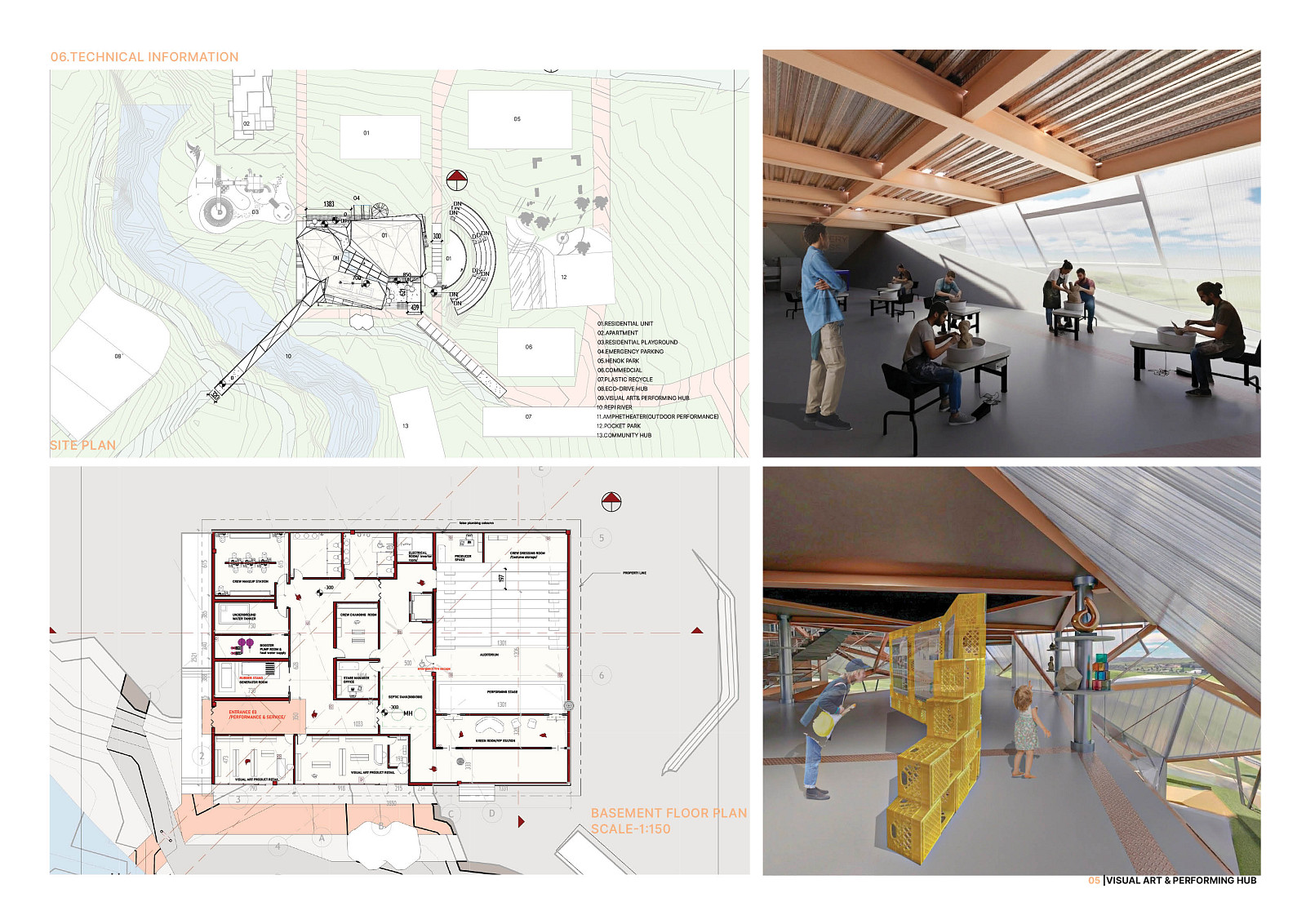
Performers and Service Zone: Where performers' spaces such as dressing rooms and backstage exist together with building services in the semi-basement level.
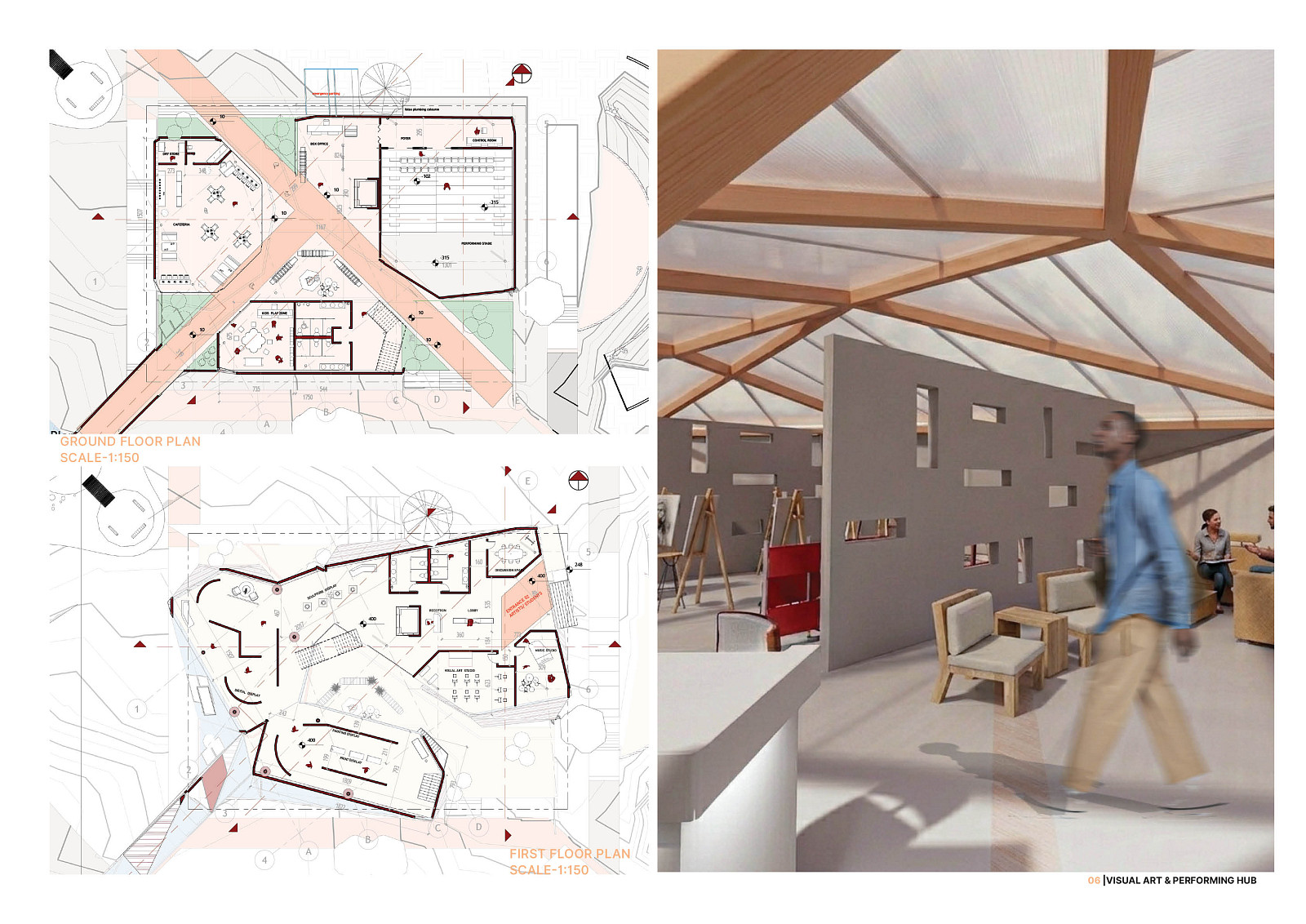
The Public Zone: Which includes the theater, the kids' play zone, the cafeteria, the outdoor performances, and the box office areas from the ground level where the pedestrian spine integrates. This aims to create an active and catchy environment when people are bypassing through the access.
The Students Zone: While visitors are drawn in by the activities on the ground floor, the ongoing exhibitions, displayed sculptures, and paintings will catch their eyes through the open-down space on the first floor. This is the students' zone, where students practicing visual and performing arts create an active visual connection from the ground.
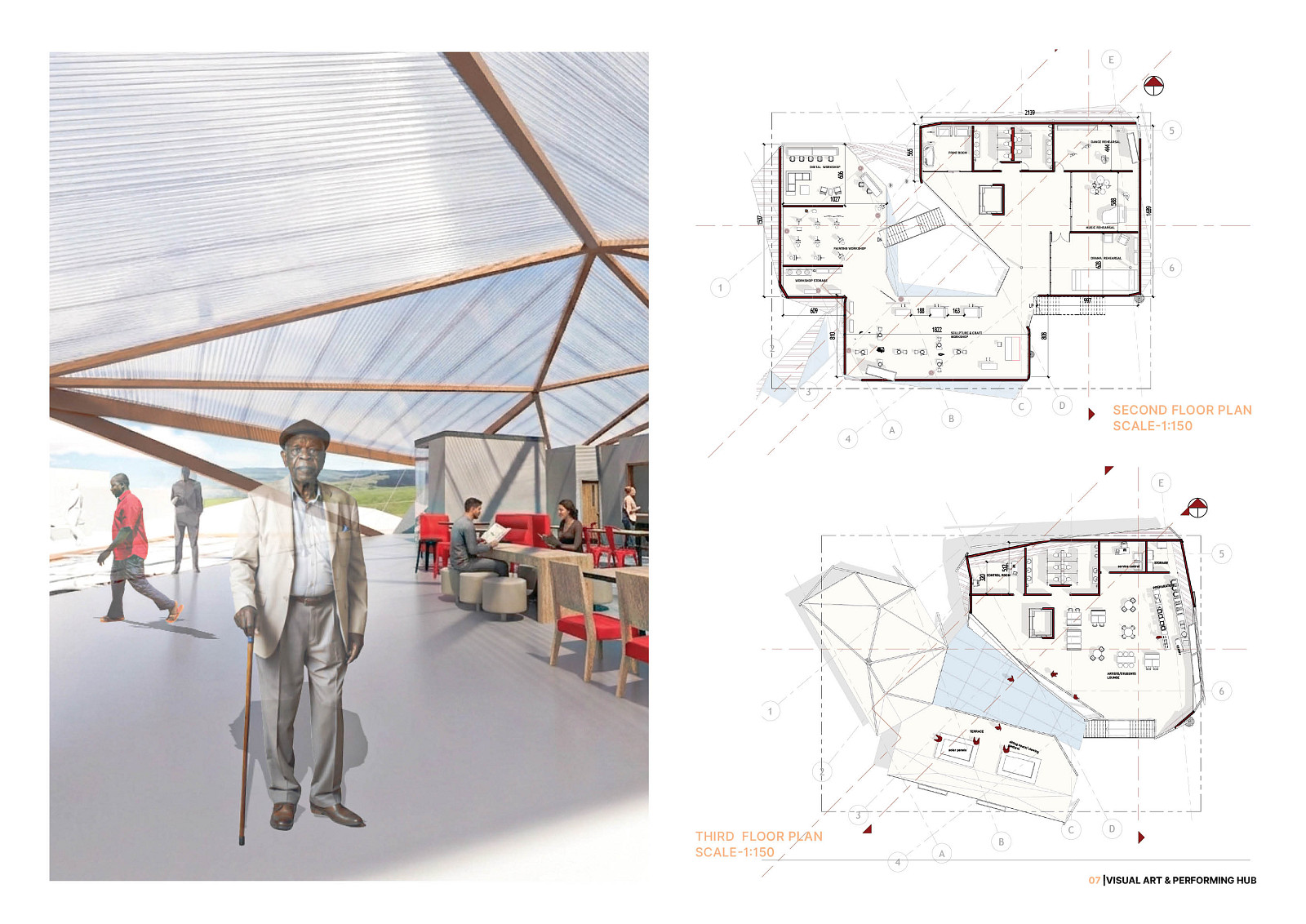
The Artists Zone: The second floor is the artists' zone, where professionals practice visual and performing arts within their dance, drama, painting, sculpting, and music studios.
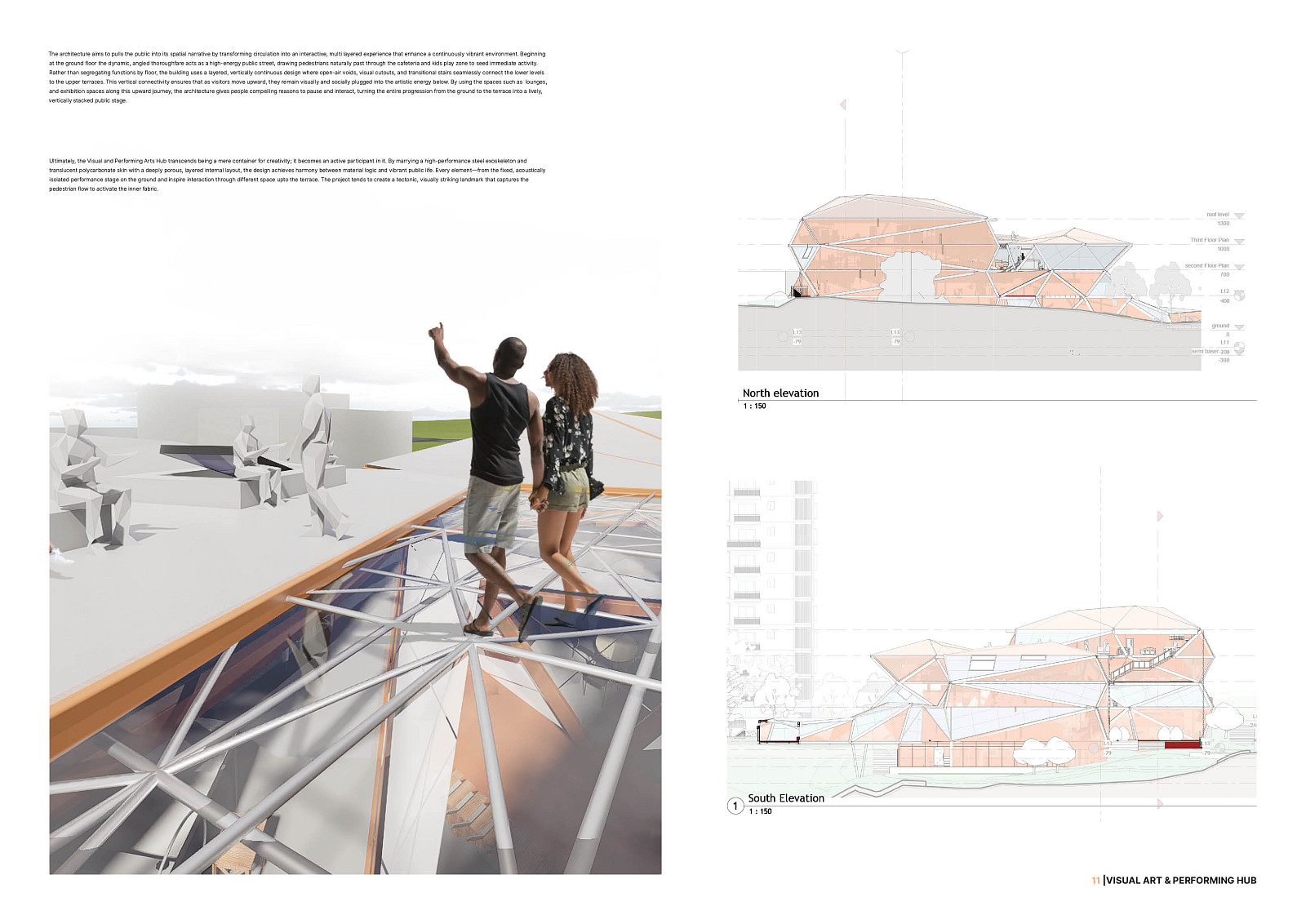
At the end, the performing tectonic architecture allows visitors to experience and fuse with the outer fabric through the terrace next to the recreational lounge. The central lightwell with the translucent polycarbonate facade enhances the space's lighting quality, while the internal steel truss skylight makes the project the best place to spend time through harsh weather condition days without being confined within the space with a feeling of being outdoors. All of this aims to achieve the ultimate goal of creating an active environment in the inner fabric of the site.
Technical information
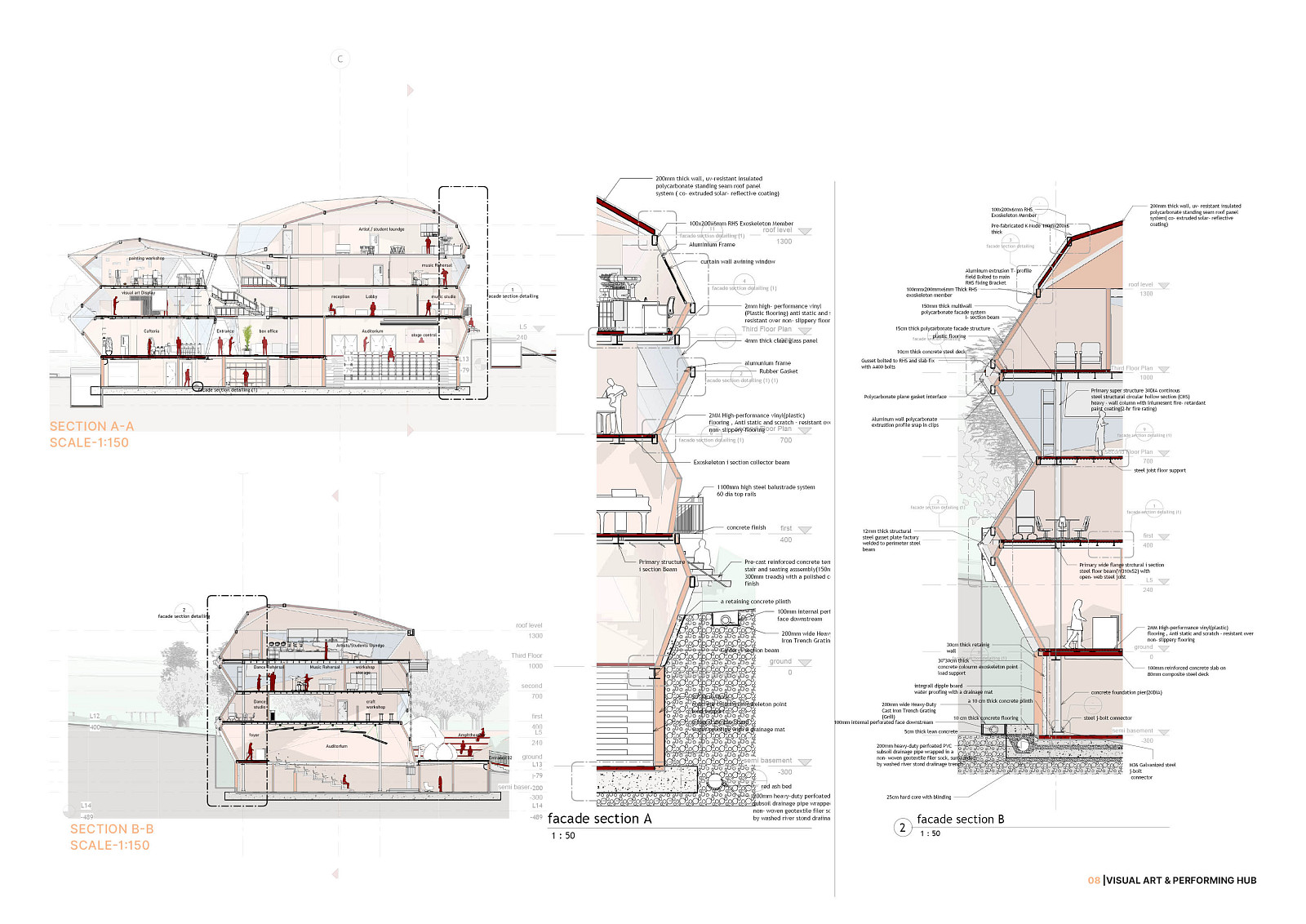
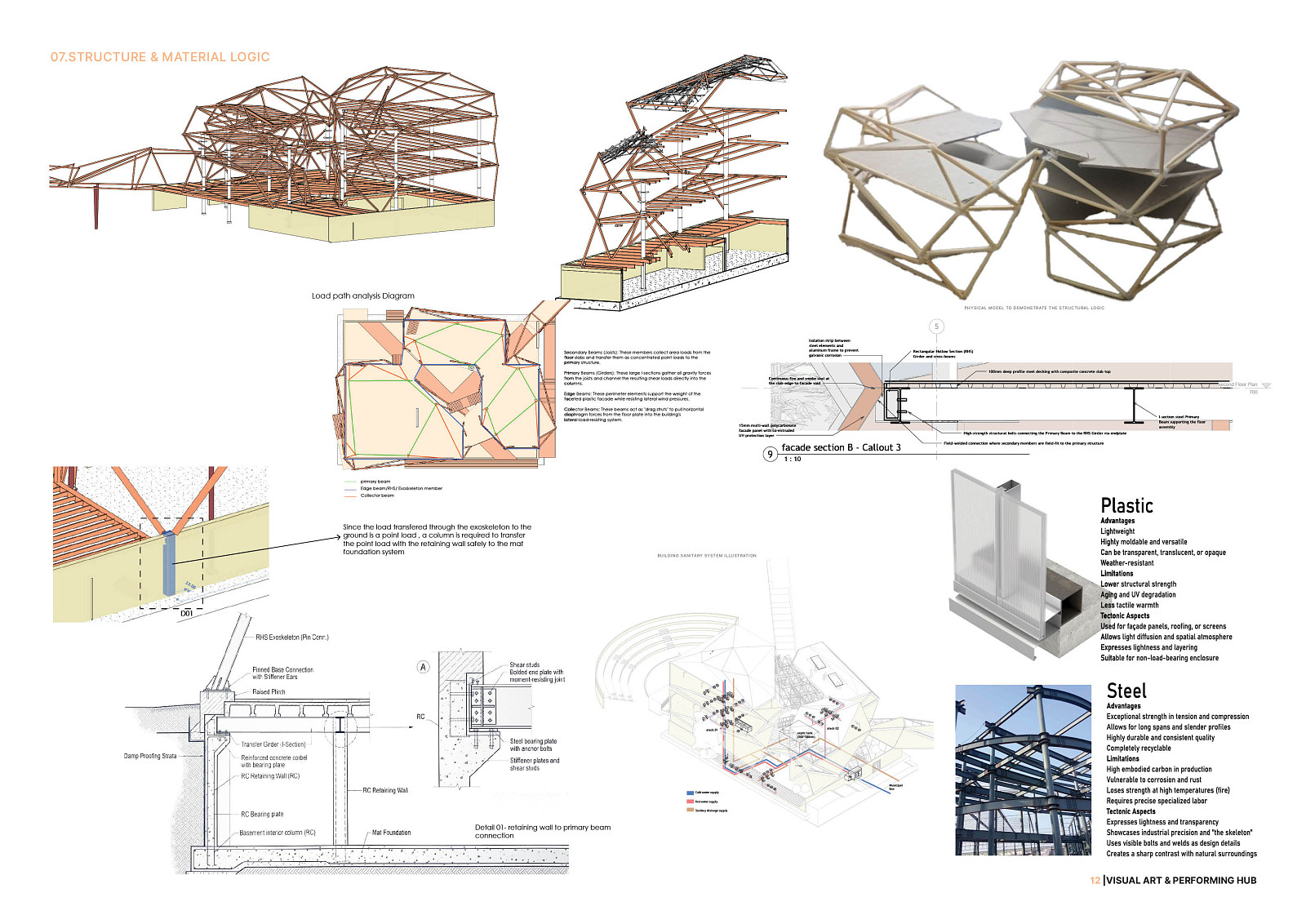
The project mainly uses a hybrid structure of a steel RHS exoskeleton to support the facade and the cantilevers created by the rotation of the floors, alongside a steel CHS frame system which supports the rotating floors.
It also has a dual structural load path system. The first path is from the concrete steel deck slabs to the I-section secondary and primary beams, connecting directly to the mat foundation through the internal CHS columns. The other path handles forces around the edge and cantilevers; these loads move through the slabs, secondary beams, collector beams, and the RHS girder beams, utilizing the exoskeleton facade to get safely down to the mat foundation.
Materially, the building relies on a polycarbonate facade and steel structural materials. As the space is dedicated to the visual and performing arts, the translucent effect and its property to cast shadows and diffuse light add a quality layer to the program. The steel not only serves us as a workable material to create such a faceted architecture, but also gives a pure tectonic essence for the audience to experience.
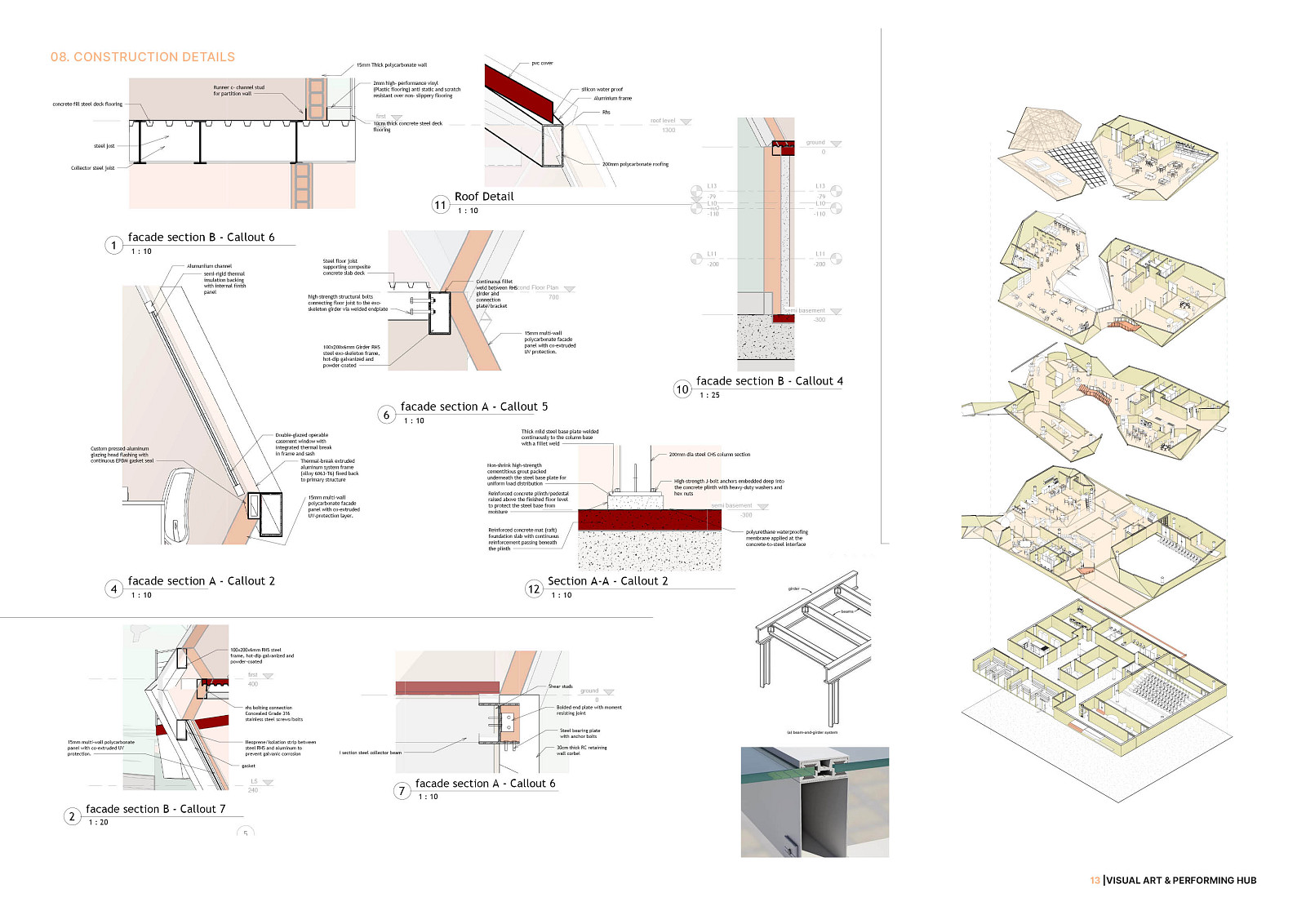
In the construction process, after the substructure work and the erection of the columns and the rotating floor slab deck, it will be a clear task to create the faceted facade angles, as all connections are floor-to-floor with only location information.
Using a girder RHS bolted to the web of the I-section, the facade RHS structure can be welded on-site to create the exoskeleton. Finally, bolting the aluminum frame for the polycarbonate facade holder and applying technical solutions regarding waterproofing—such as capping—marks the external form, ensuring the detail work of the building can smoothly proceed.


Copyright © 2026 INSPIRELI | All rights reserved. Use of this website signifies your agreement to the Terms of Use, Privacy Policy, and use of cookies.