Hidden Plant


Project idea
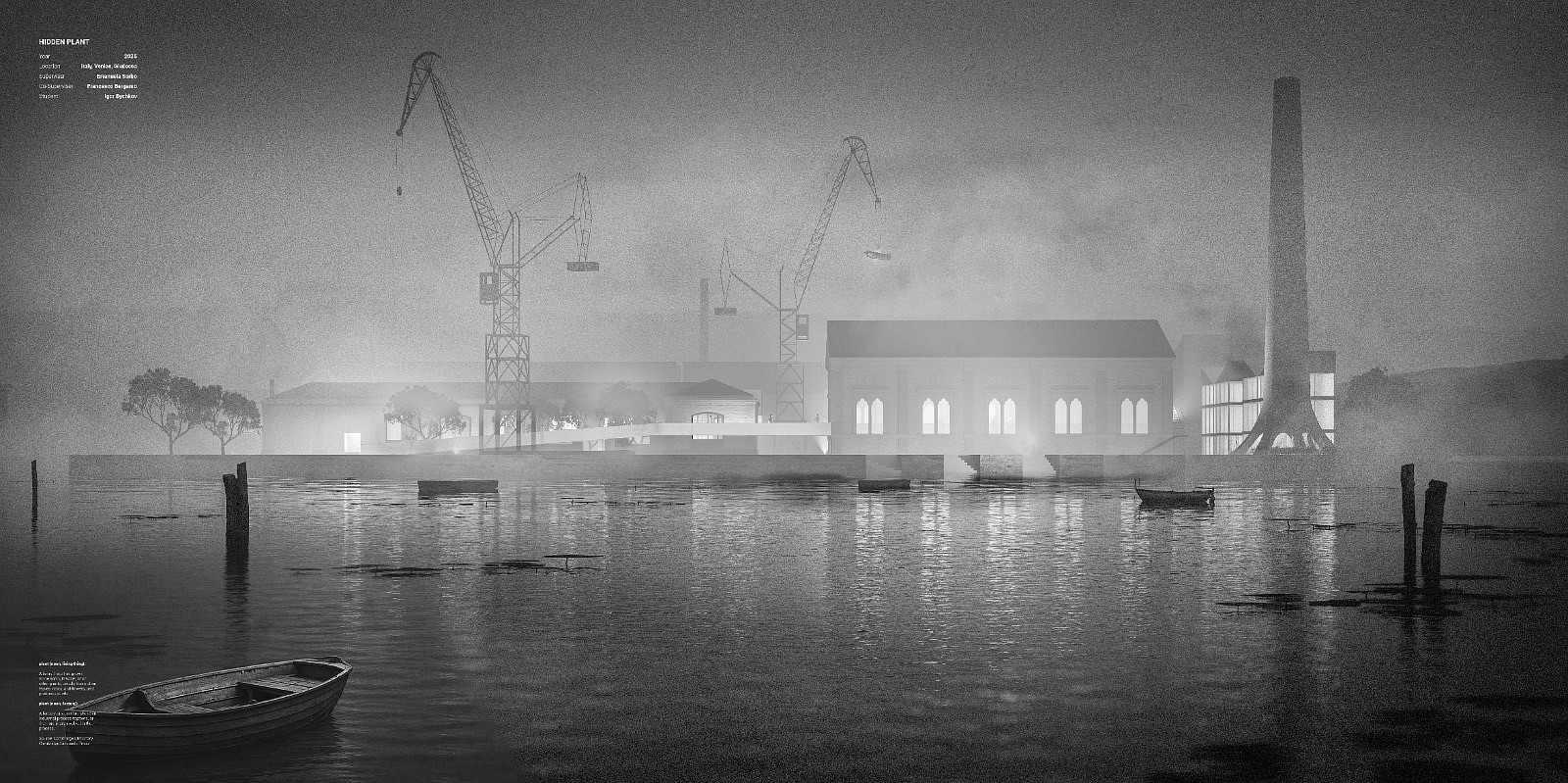
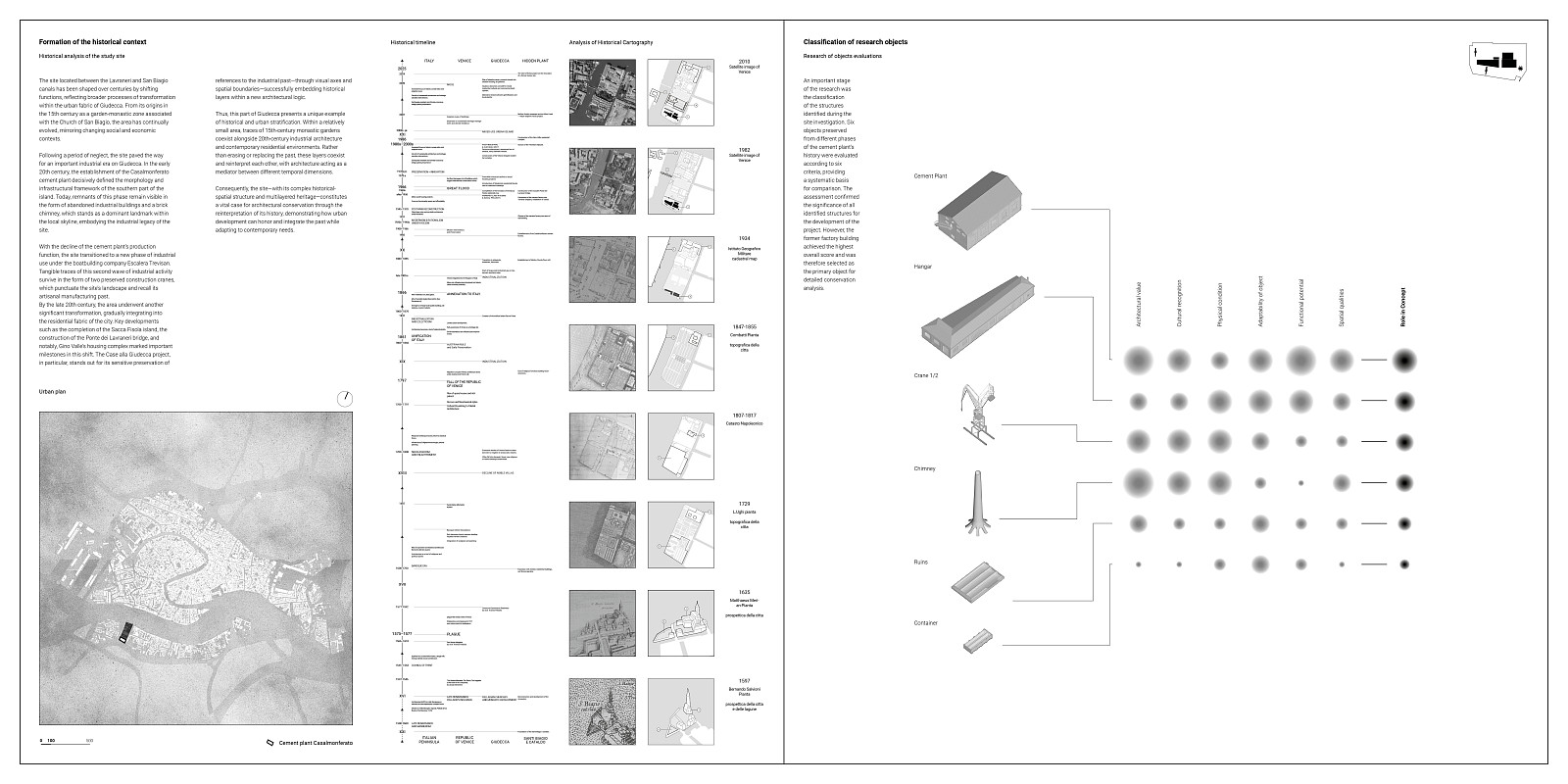
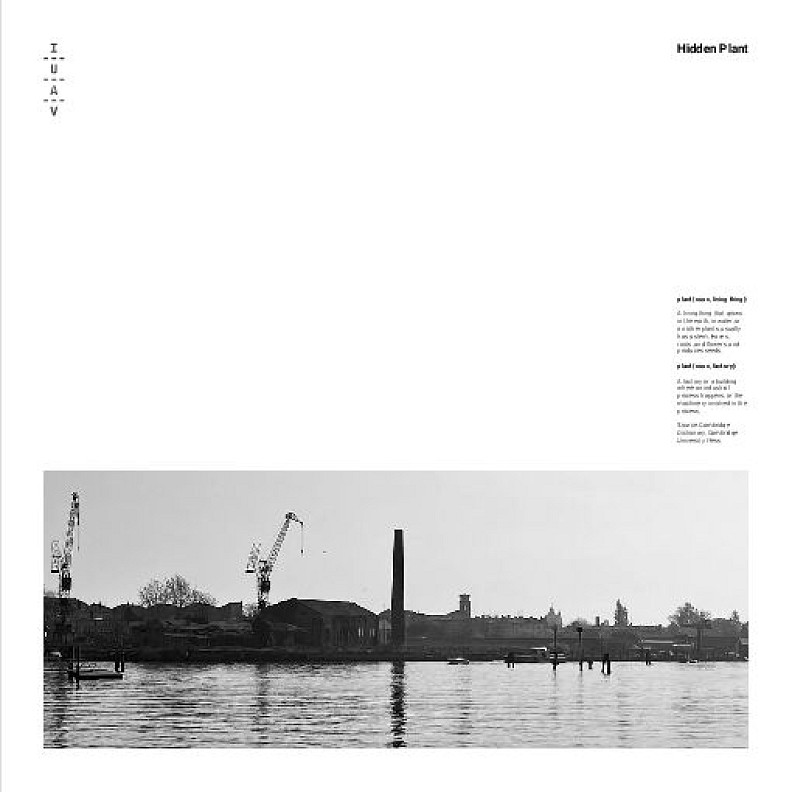
The project addresses the adaptive reuse of the abandoned Casalmonferato cement plant, located on the western edge of Giudecca Island in Venice. As one of the earliest and most technologically advanced Portland cement factories in Italy, the complex played a significant role in the industrial development of the island and remains an important witness to its transformation over time.
The site embodies multiple historical layers, evolving from monastic gardens to an industrial landscape and later becoming part of a predominantly residential district. Today, despite its historical and architectural value, the former industrial complex remains abandoned and disconnected from the urban life of Giudecca.
The project explores how industrial heritage can become a catalyst for sustainable urban regeneration. Through conservation, adaptive reuse, and the reinterpretation of historical spatial structures, the proposal seeks to reconnect the site's fragmented historical layers and transform them into a contemporary cultural destination. Particular attention is given to the dialogue between heritage and new interventions, allowing the site’s past to remain visible while supporting new cultural, educational, and social activities.
Project description
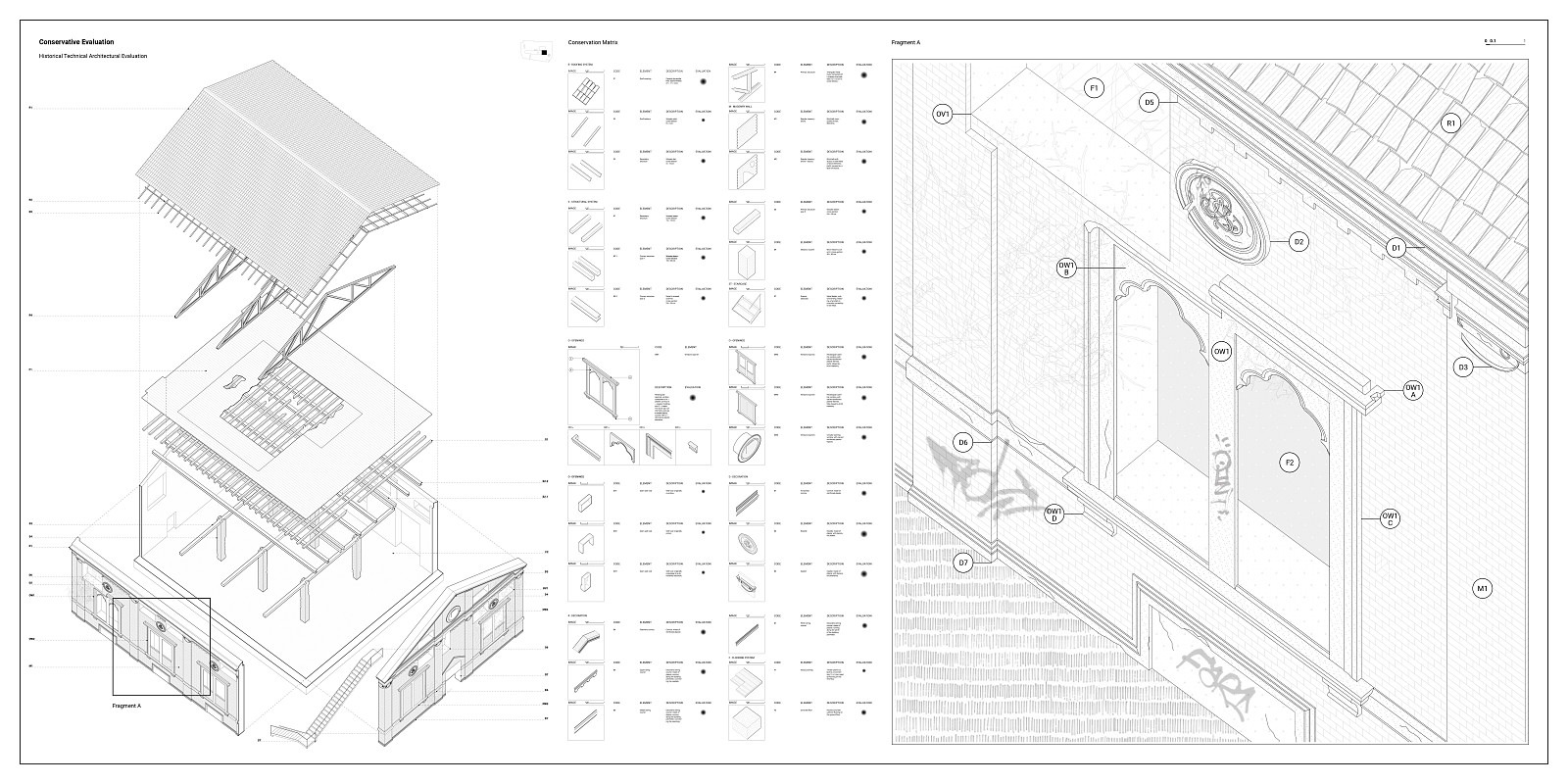
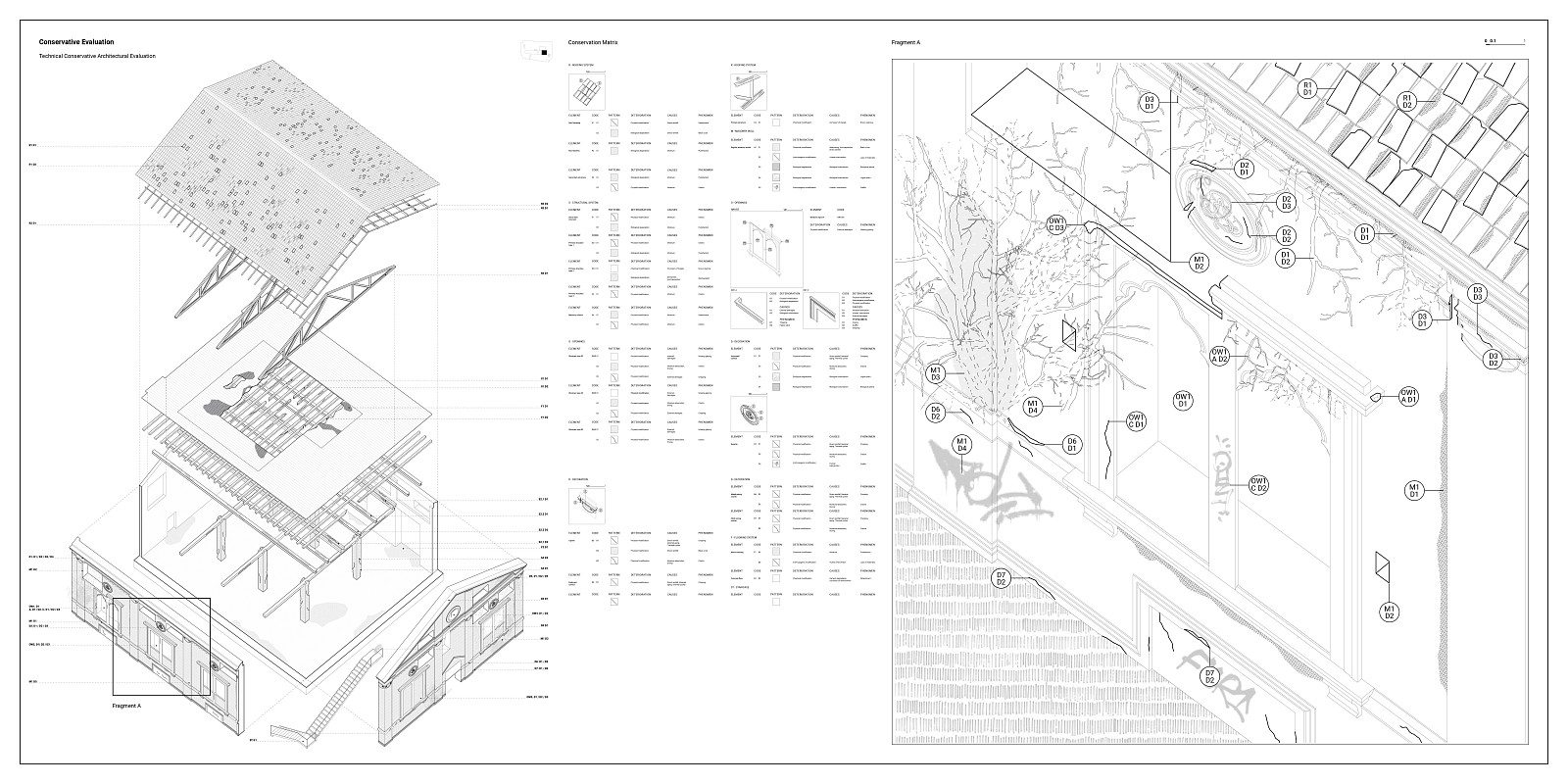
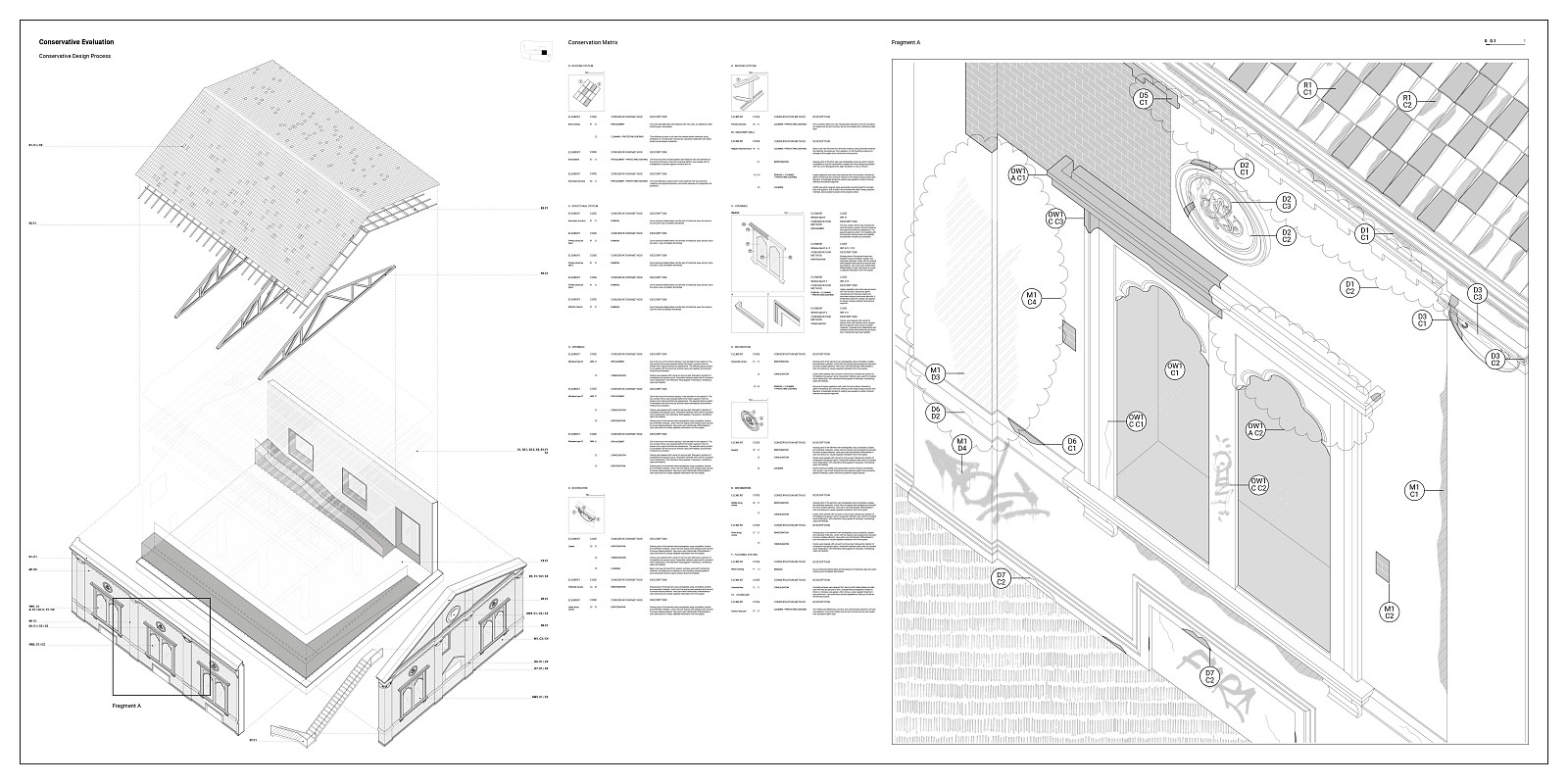
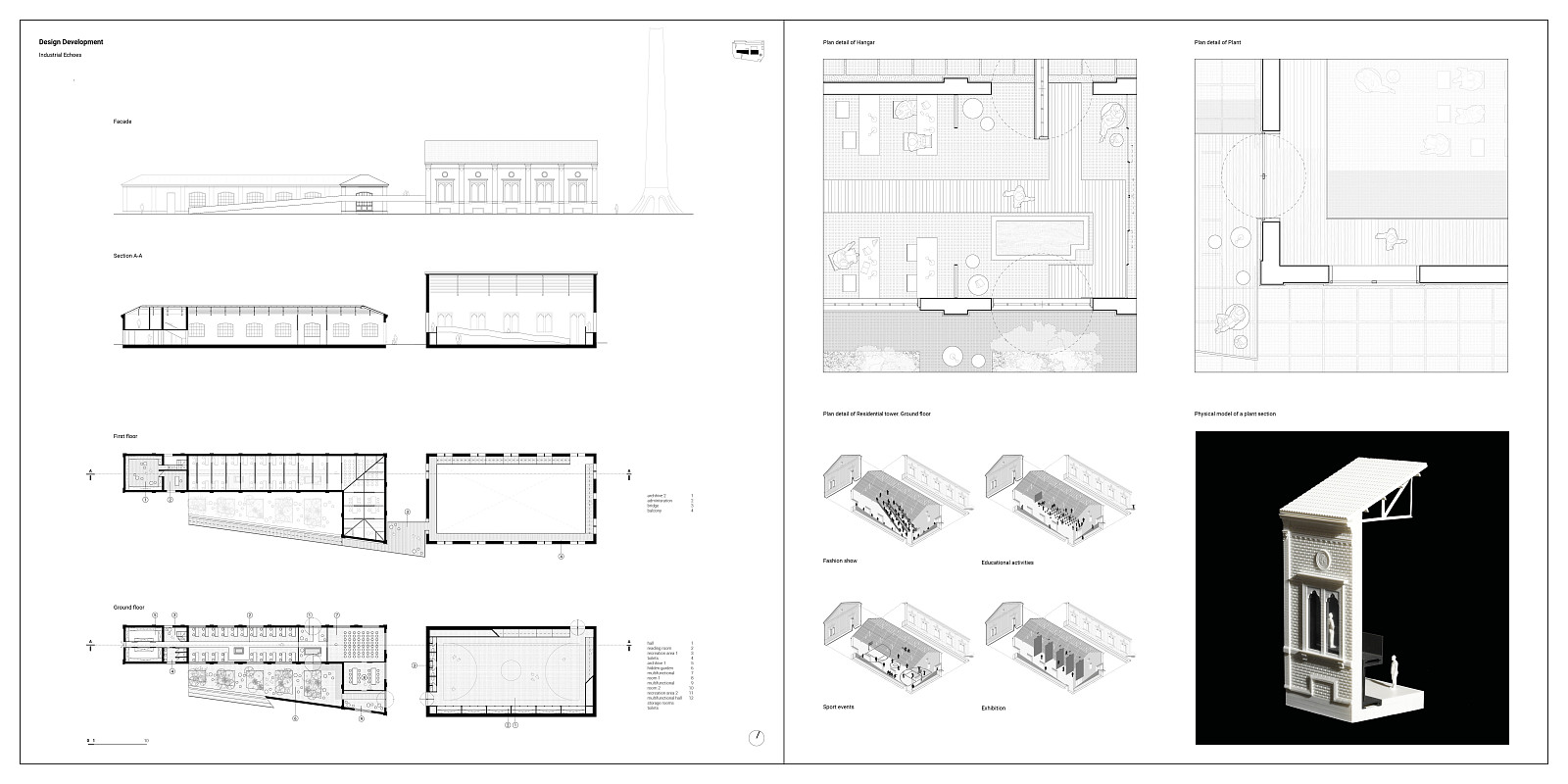
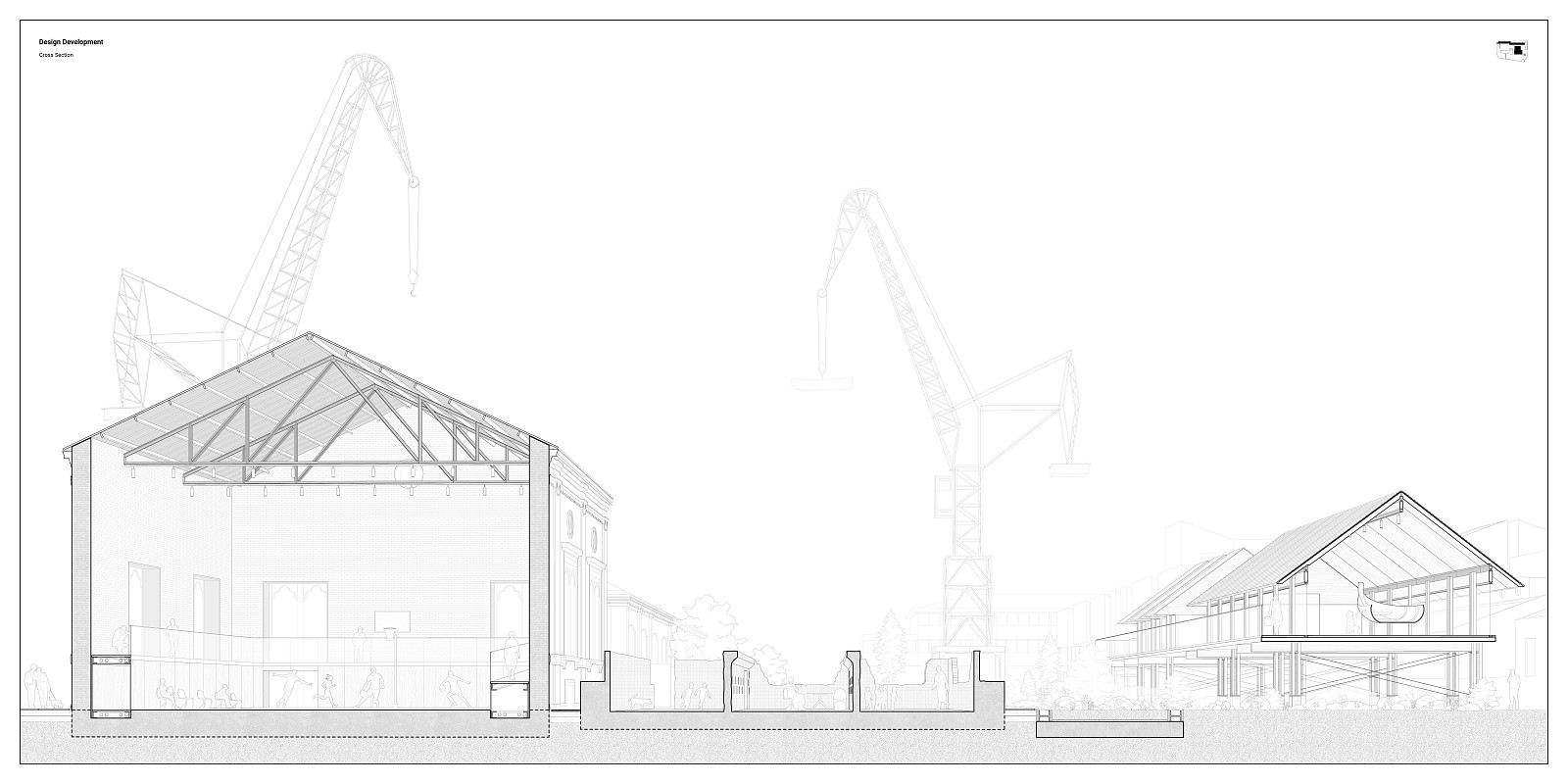
The proposal transforms the former Casalmonferato cement plant into a multifunctional cultural and educational complex. The design is based on the preservation of significant industrial buildings and architectural elements identified through historical, architectural, and conservation analysis.
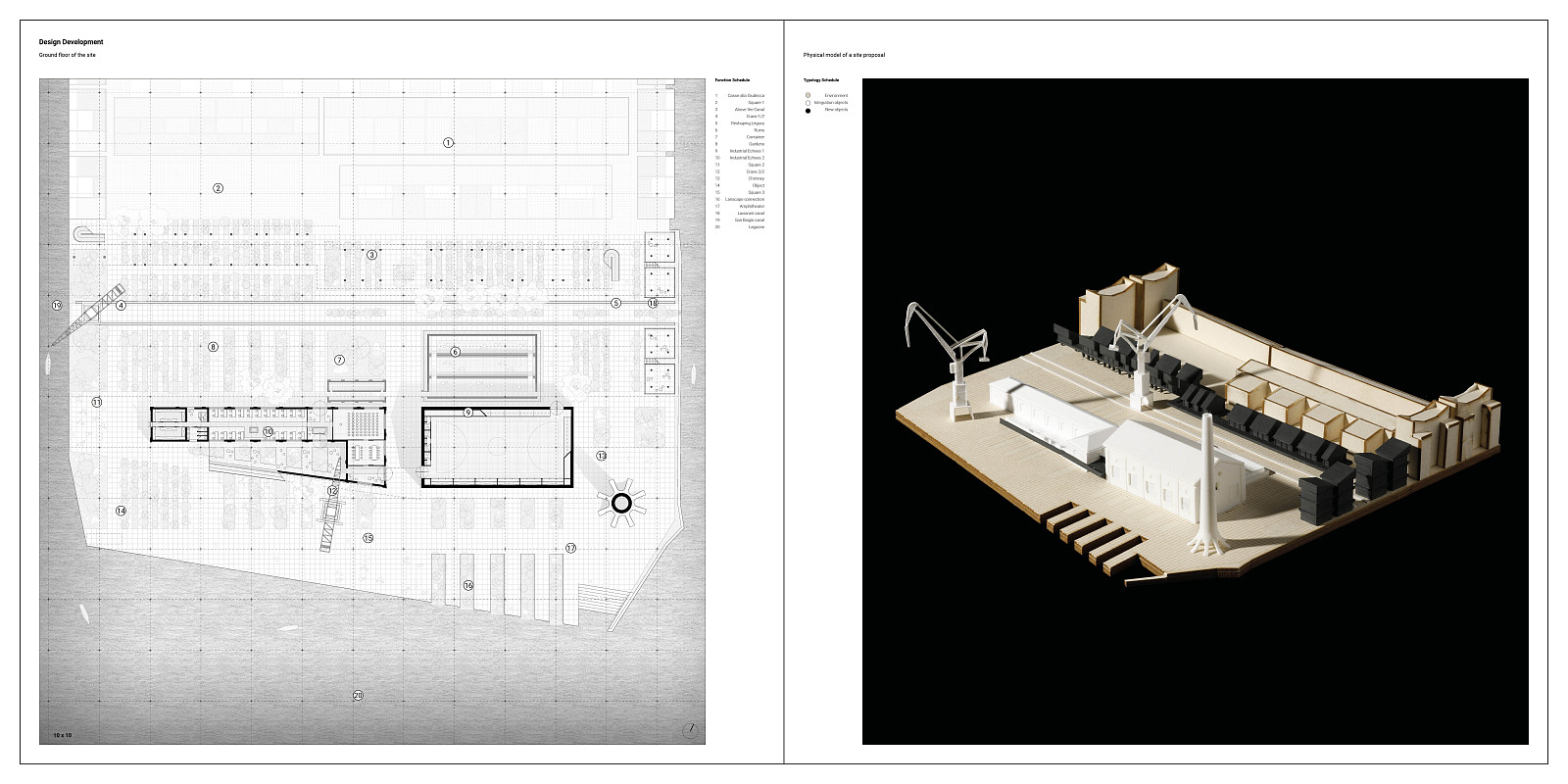
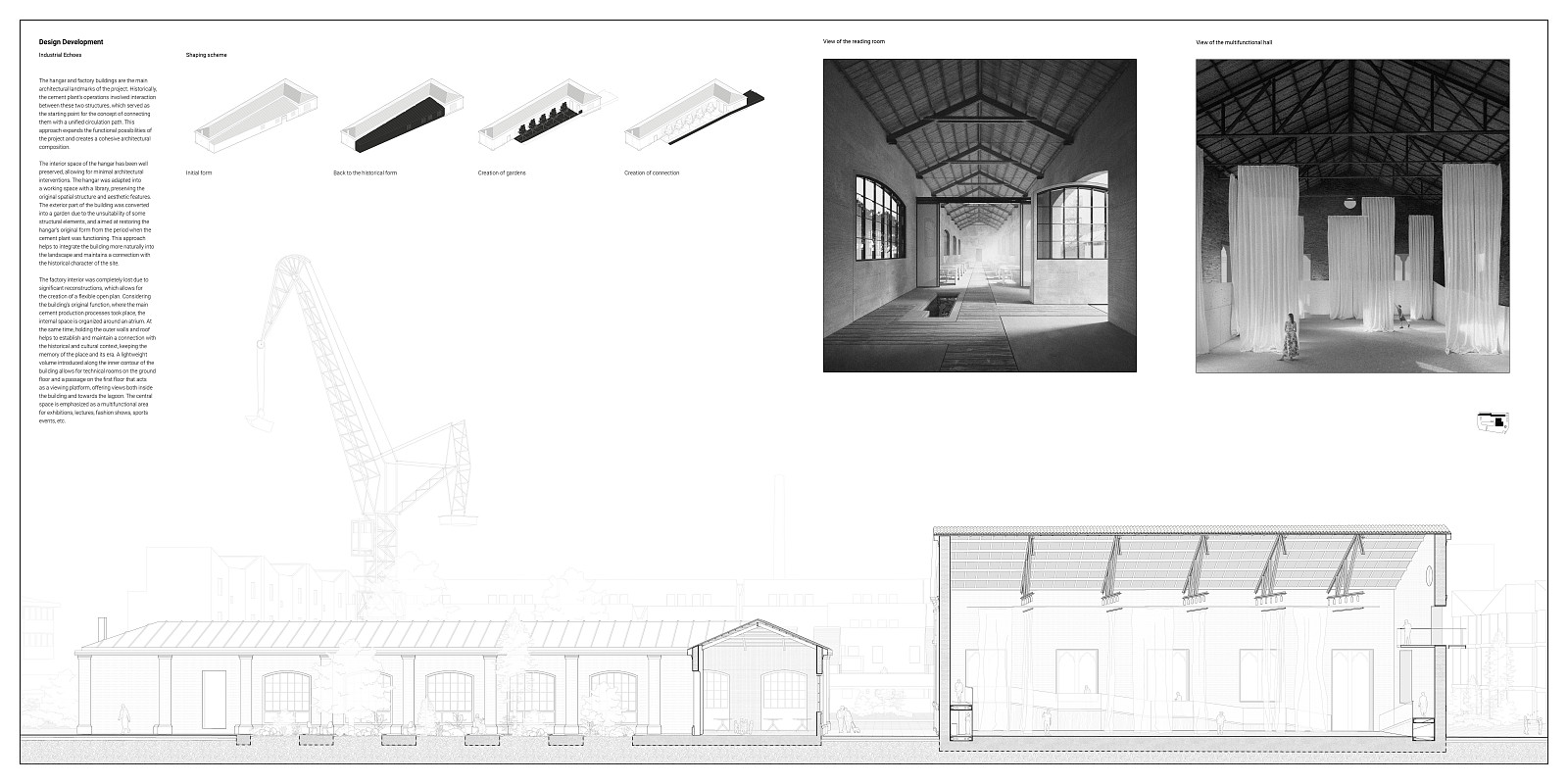
The project integrates three major historical layers of the site: the monastic landscape, the industrial heritage of the cement plant, and the shipbuilding period. Existing structures are adapted to accommodate flexible spaces for cultural events, workshops, educational programs, and craft activities. Landscape interventions reinterpret the historical monastic gardens, while conservation strategies emphasize the industrial character of the complex and reveal its historical evolution.
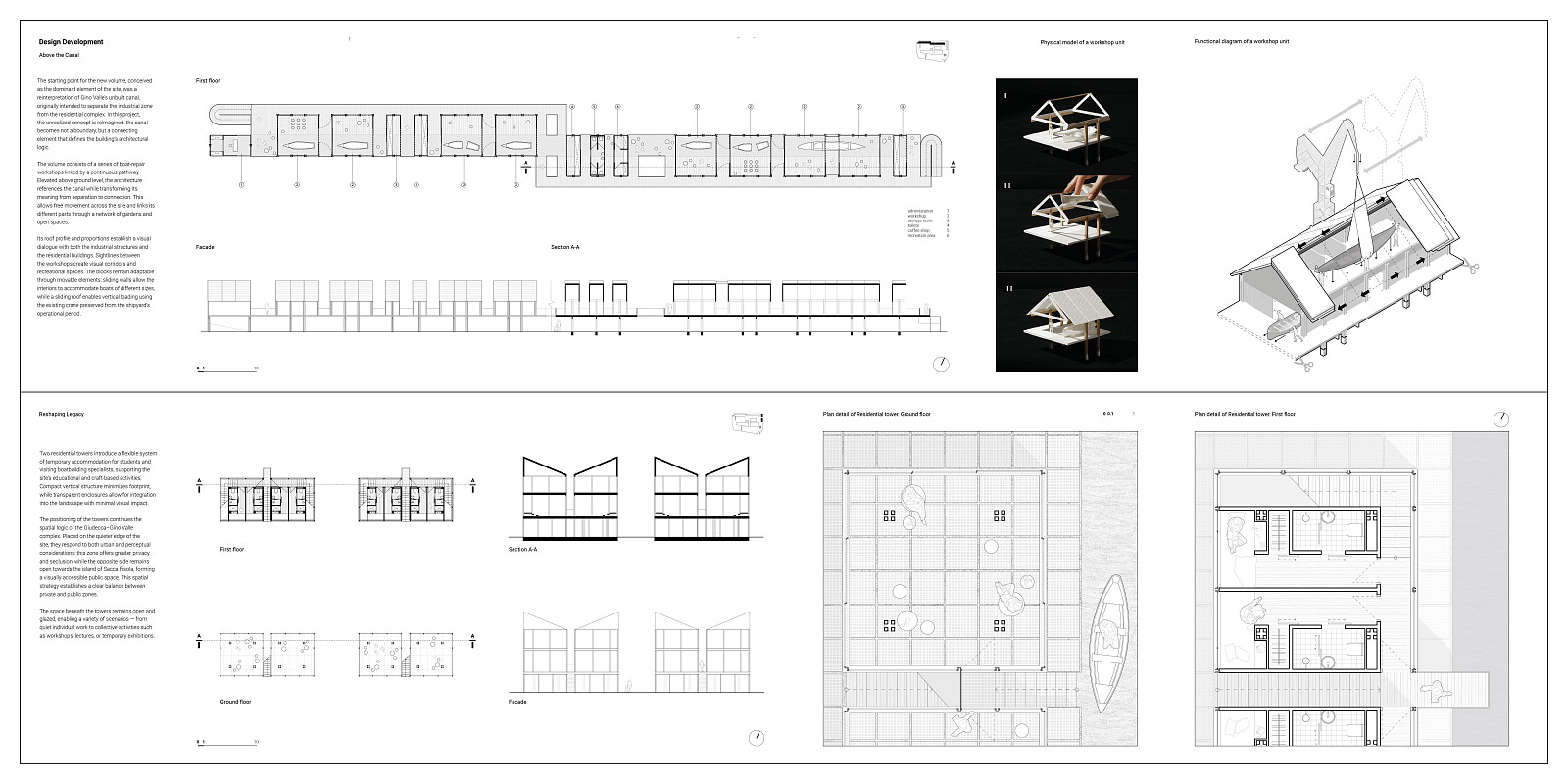
A central element of the proposal is the reinterpretation of Gino Valle’s unrealized canal concept. Originally conceived as a boundary, the canal is transformed into a unifying spatial device that connects different parts of the site and establishes a dialogue between preserved heritage and contemporary architecture.
The project also includes temporary accommodation for students, researchers, and specialists, strengthening the educational and cultural potential of the complex. By combining conservation, adaptive reuse, and new architectural interventions, the proposal creates a sustainable framework for the long-term revitalization of this historically significant area of Giudecca.
Technical information
Project Type: Adaptive Reuse and Heritage Conservation
Category: Architecture
Location: Giudecca Island, Venice, Italy
Site: Former Casalmonferato Cement Plant
Project Status: Master's Thesis Project
Documentation
Created in:


Copyright © 2026 INSPIRELI | All rights reserved. Use of this website signifies your agreement to the Terms of Use, Privacy Policy, and use of cookies.