Ocean and Marine Research Center


Project idea
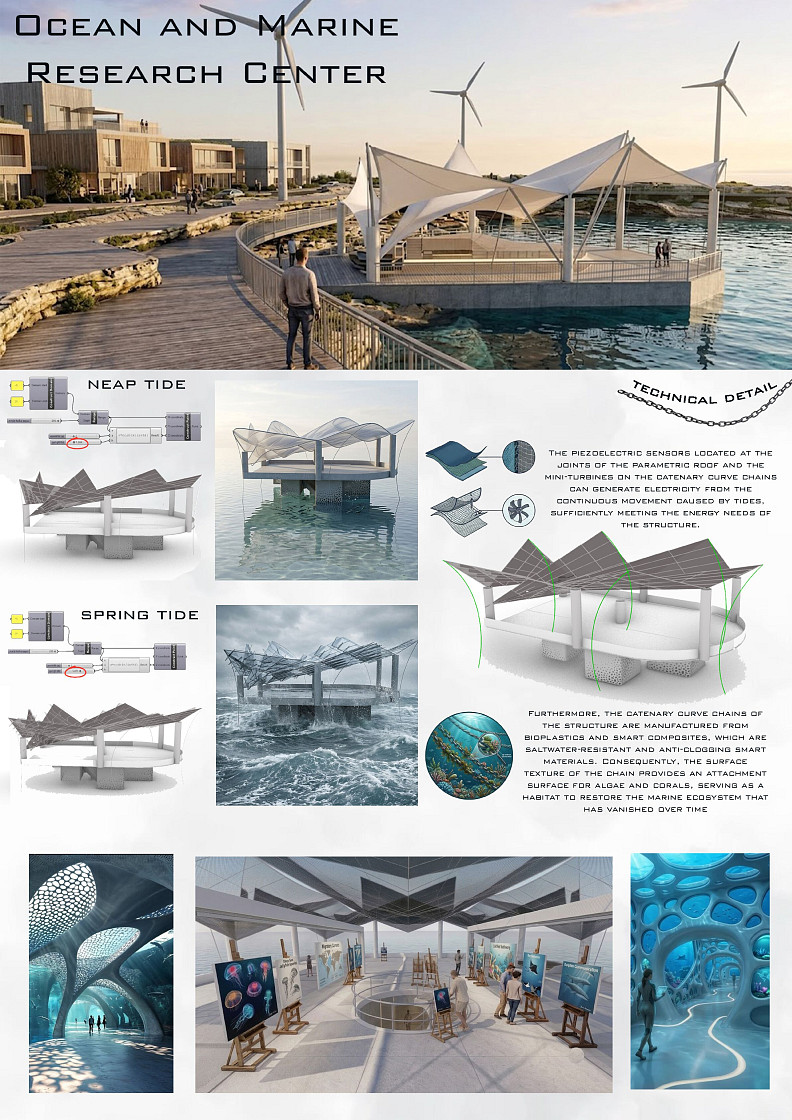
A marine research center based on catenary curves, where one end of chains is submerged beneath the sea while the other is fixed to the roof, allowing tidal energy to directly shape a dynamic parametric roof structure aligned with nature and tidal factors.
Project description
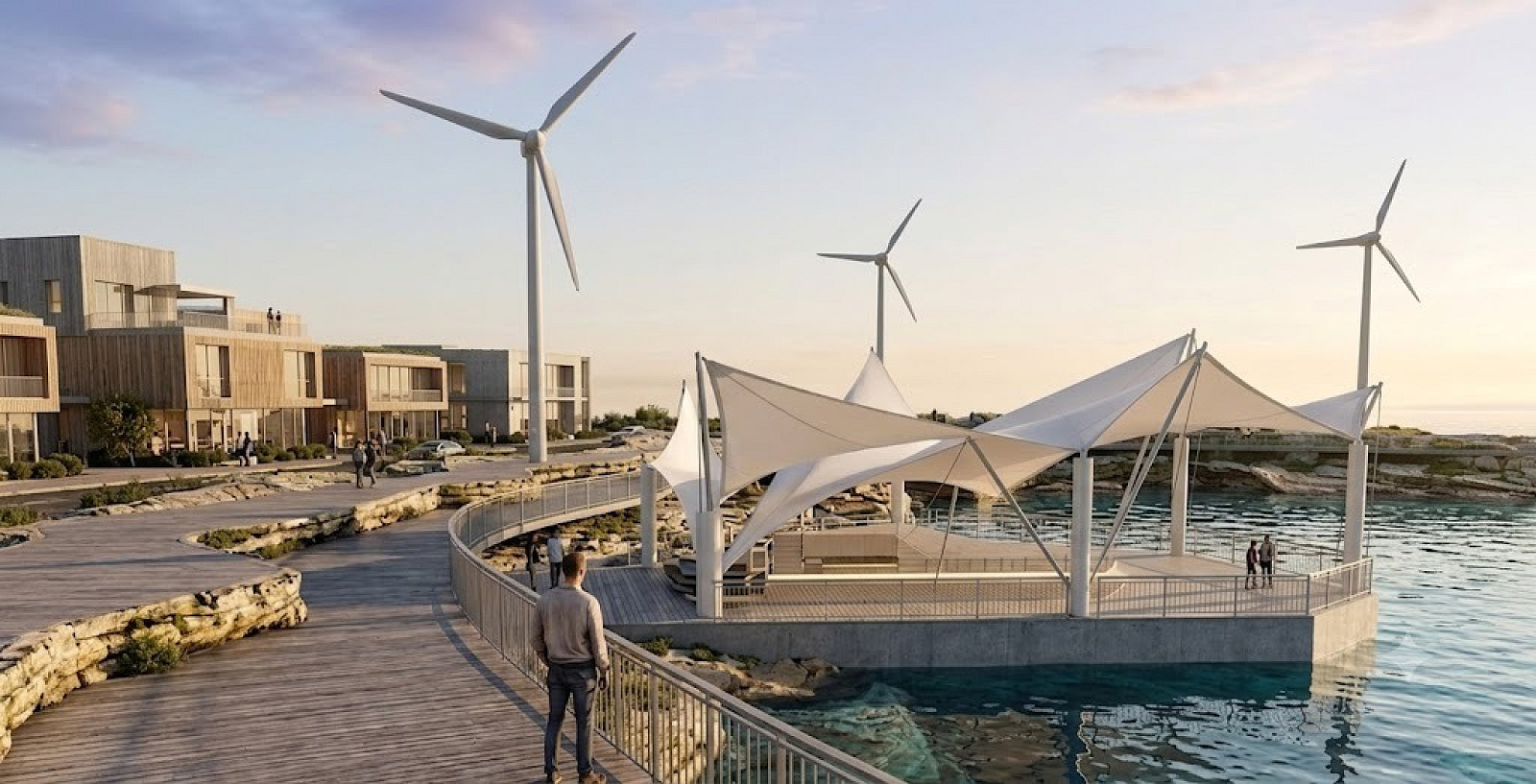
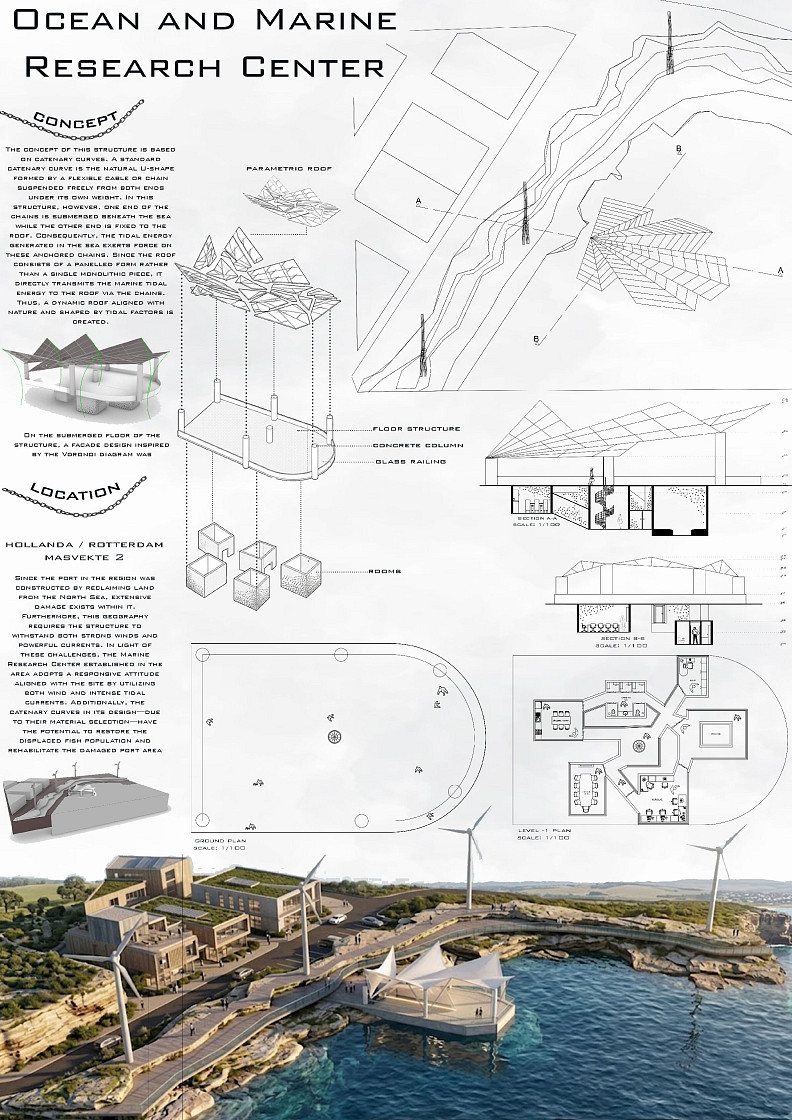
Located in Rotterdam, Holland (Masvekte 2), the Ocean and Marine Research Center responds to the challenging geography of a port constructed by reclaiming land from the North Sea. The structure is designed to withstand strong winds and powerful currents. The concept is based on catenary curves — the natural U-shape formed by a flexible cable or chain suspended freely from both ends. In this design, chains are anchored beneath the sea with their other ends fixed to the roof, transmitting marine tidal energy directly to the panelled roof structure. The submerged floor features a facade design inspired by the Voronoi diagram. The Marine Research Center adopts a responsive attitude aligned with the site by utilizing both wind and intense tidal currents. The catenary curves in the design, due to their material selection, have the potential to restore displaced fish populations and rehabilitate the damaged port area.
Technical information
The structure features a parametric roof system, floor structure with concrete columns and glass railing. Drawings include ground plan at 1/100 scale, level -1 plan at 1/100 scale, section A-A at 1/100 scale, and section B-B at 1/100 scale. The submerged level incorporates rooms and Voronoi-inspired facade elements.
Documentation

Copyright © 2026 INSPIRELI | All rights reserved. Use of this website signifies your agreement to the Terms of Use, Privacy Policy, and use of cookies.