HANDLOOM ECOSYSTEM HUB FOR INNOVATION, TRAINING, & MARKET ACCESS, JAMALPUR CREATING A GLOBAL PLATFORM


Project idea
In response to the current declining condition of handloom traditions of the nation, the Bangladesh Handloom Board under the authority of the Ministry of Textiles and Jute has proposed setting up a few specialized training facilities in different parts of the nation’ this also calls for a comprehensive approach that integrates training, innovation, and market linkages. A Handloom Ecosystem Hub for Innovation, Training, and Market Access in Jamalpur aims to provide such a platform- all together, in one place, to help the stakeholders, visitors, learners, and cultural enthusiasts learn better about the handlooms. The hub will serve as a center where artisans, entrepreneurs, and students
can interact, exchange knowledge, and develop contemporary design solutions rooted in heritage crafts. It will bridge the gap between traditional expertise and modern industry demands by introducing skill-development programs, collaborative workspaces, design innovation labs, and platforms for national and international market access.
Ultimately, the project aims to revitalize the handloom sector by creating a functional, adaptable, and culturally rooted space that empowers artisans, encourages entrepreneurship, and positions Bangladesh as a global leader in heritage-based textile innovation. By blending tradition with modernity, the hub aspires to secure livelihoods, preserve cultural heritage, and strengthen the country’s identity in the
global fashion industry.
The goal is to design and construct a Handloom Ecosystem Hub for Innovation, Training, and Market access in Jamalpur to promote the traditional handlooms of Bangladesh on both national and global platforms and to enhance the economic viability of artisans through direct market access. It offers a variety of functional spaces to create an ecosystem hub for handloom training, innovation, collaboration of different parties and market access for artisans for the overall betterment of handloom and handloom artisans in the country.
Objectives:
● Designing an innovative sustainable built environment of the hub, emphasizing promotion of traditional handlooms on a global platform.
● Defining and designing an environment that represents our traditional spatial qualities combined with contemporary design where needed.
● Fostering artisan empowerment and skill preservation
● Enhancing fashion education in Bangladesh through combining contemporary fashion industry knowledge with practical handloom techniques.
● Improvising socio-economic security of the craftspeople by offering scope for direct market access via institutional channels.
● Offering an experiential learning journey that aims to preserve and celebrate cultural heritage
● Establishing a sustainable handloom craft ecosystem
Project description
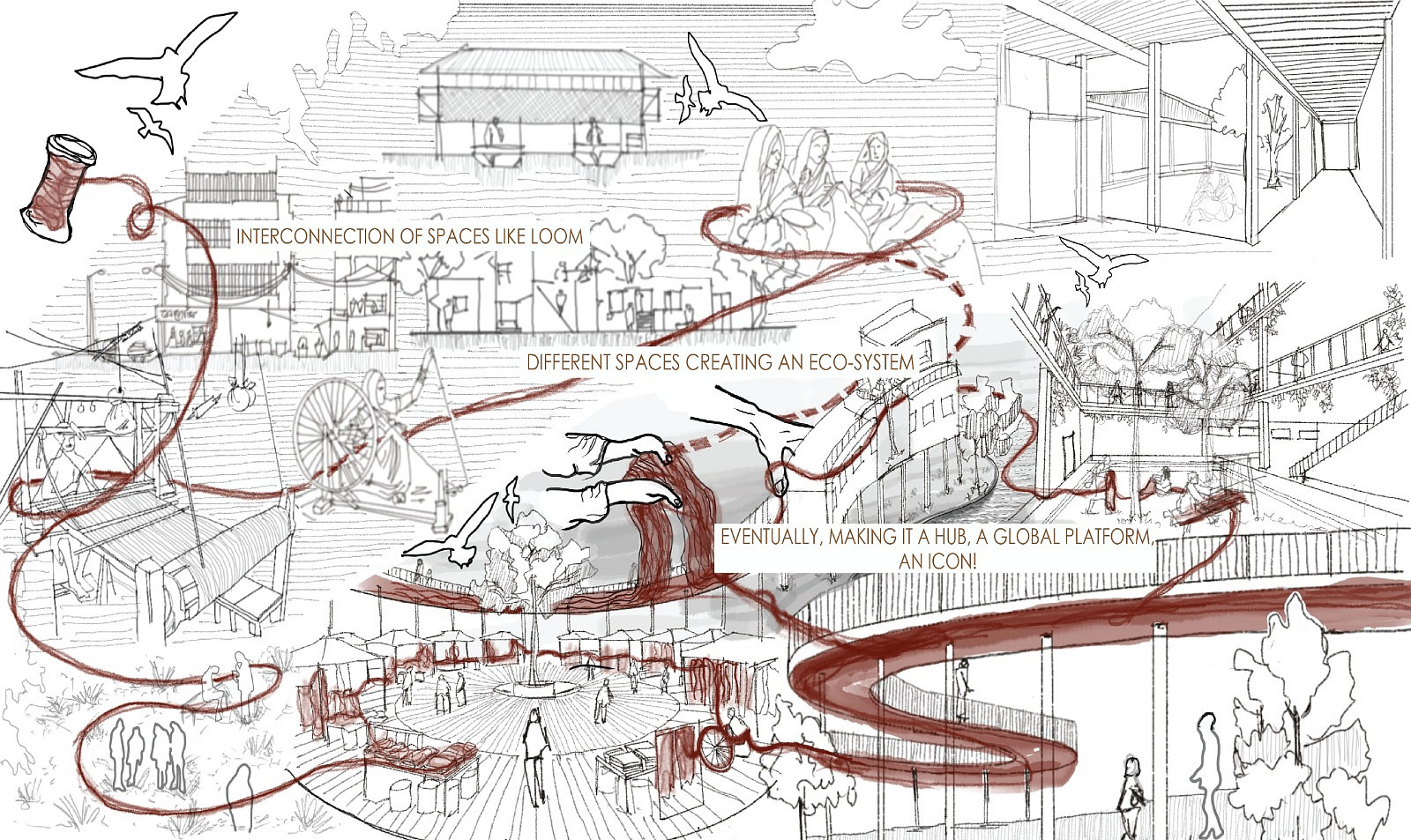
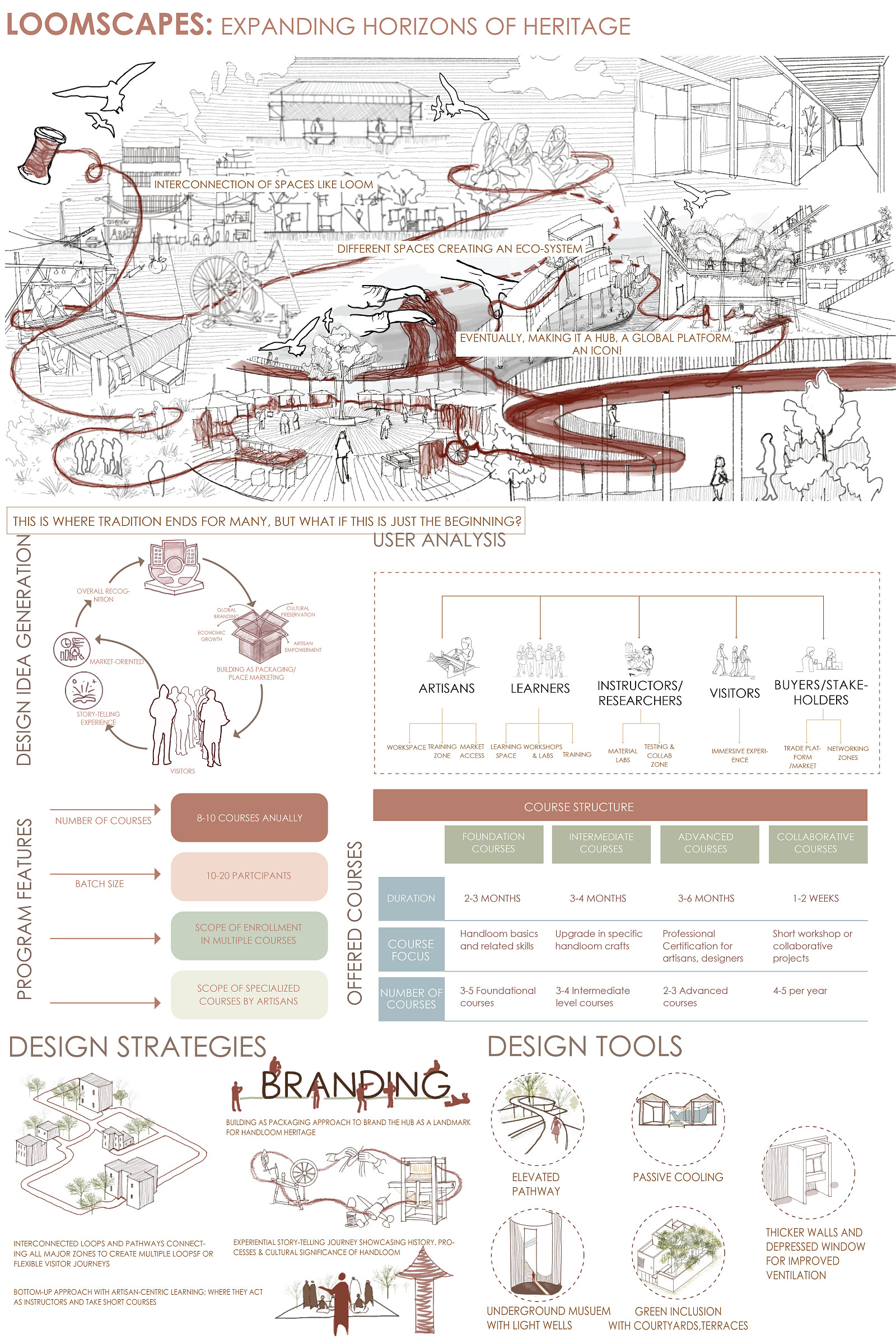
The idea of the ecosystem comes from the general description of an ecosystem. An ecosystem works with 4 elements, the input, the output and the processes and the feedback loop. In my design, the raw materials, artisans and knowledge acts as the input, then they are processed through weaving, dyeing [for yarn], training, skill development [for learners], collaboration between artisans and learners and then finally the outputs are finished textiles and products economic value and preservation. And for further feedback, the products are sent to market/exhibition zone, revenue supports artisans, training, waste materials are reuses and knowledge flows back into training from further feedback.
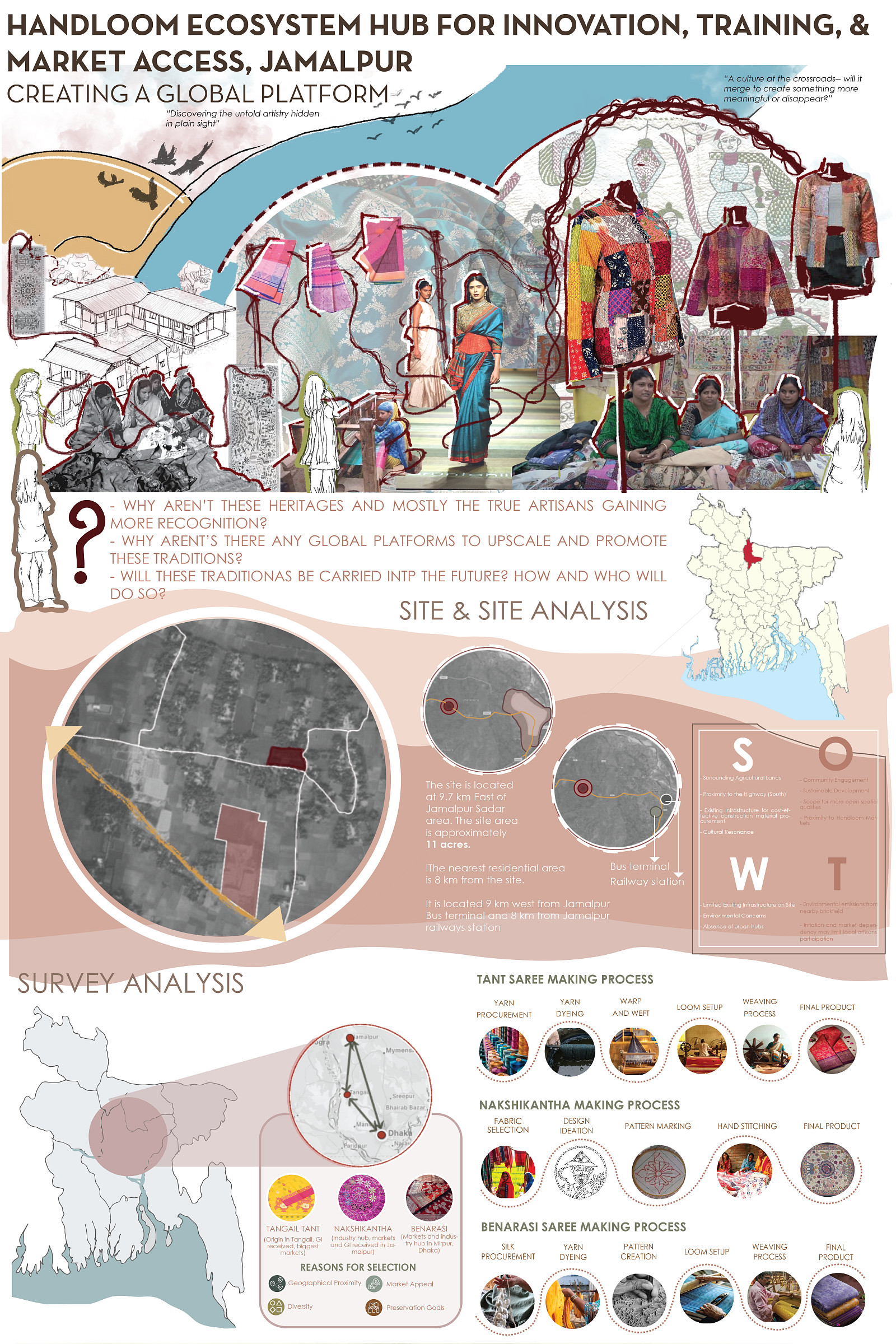
Even though handloom artistry has a long and rich history in Bangladesh, there isn’t a specialized and dedicated institution for market for education, innovation, cultural preservation, and market growth specifically considering the handloom context in this region. For the proposed fashion institute at Jamalpur- which is well-known for its Nakshikantha handloom tradition, the location is culturally rich and
strategically beneficial. Jamalpur offers a solid basis for interacting with regional artisans and utilizing the distinctive craftsmanship of the area since it has a number of established industries, commercial zones focusing on the handloom market, and a concentration of local artisans.
The proposed Handloom Ecosystem Hub for Innovation, Training, and Market Access aims to bridge this gap by creating a comprehensive center that combines research and development facilities, training spaces for artisans and learners, collaborative production studios, and market-oriented infrastructures such as exhibition galleries, retail outlets, and buyer-seller interaction zones. By situating the hub in Jamalpur, a district renowned for its Nakshikantha and diverse handloom practices, the project benefits from an authentic cultural context and proximity to skilled artisans. The hub will serve multiple stakeholders- artisans seeking skill upgradation and fair trade opportunities, trainees and students learning traditional and modern weaving techniques, entrepreneurs aiming to develop handloom-based businesses,
and buyers and fashion professionals exploring collaborations with local craftspeople. This convergence of education, innovation, and commerce will create a sustainable model that not only strengthens the handloom value chain but also uplifts the
socio-economic conditions of the local communities. The architectural vision of the hub extends beyond functionality, contributing to
cultural preservation, economic empowerment, and community resilience. By fostering an environment where artisans and learners can coexist, exchange knowledge, and co-create innovative products, the project enhances social equity and encourages intergenerational transfer of skills. Sustainable design strategies, such as climate-responsive planning, use of local materials, and spaces for cultural
interaction, will ensure that the hub remains environmentally responsible while providing a platform for continuous learning and growth.
Aligned with national development goals and the UN Sustainable Development Goals (SDGs), particularly SDG 8 (Decent Work and Economic Growth), SDG 10 (Reduced Inequalities), and SDG 11 (Sustainable Cities and Communities), the hub has the potential to redefine the role of handloom in Bangladesh’s economy. By integrating innovation with tradition and connecting local craftsmanship to global opportunities, the project envisions a thriving ecosystem that preserves heritage while positioning Bangladesh as a competitive player in the global fashion and textile industry.
Technical information
Structural and Material Strategies
Thermal Mass and Ventilation: The design utilizes thicker walls and depressed windows to improve natural ventilation and thermal comfort
Vernacular Materials: Drawing from case studies like the LLDC, the project emphasizes rammed earth walls, sandstone, and lime plaster to reflect local ecology and ensure high thermal performance
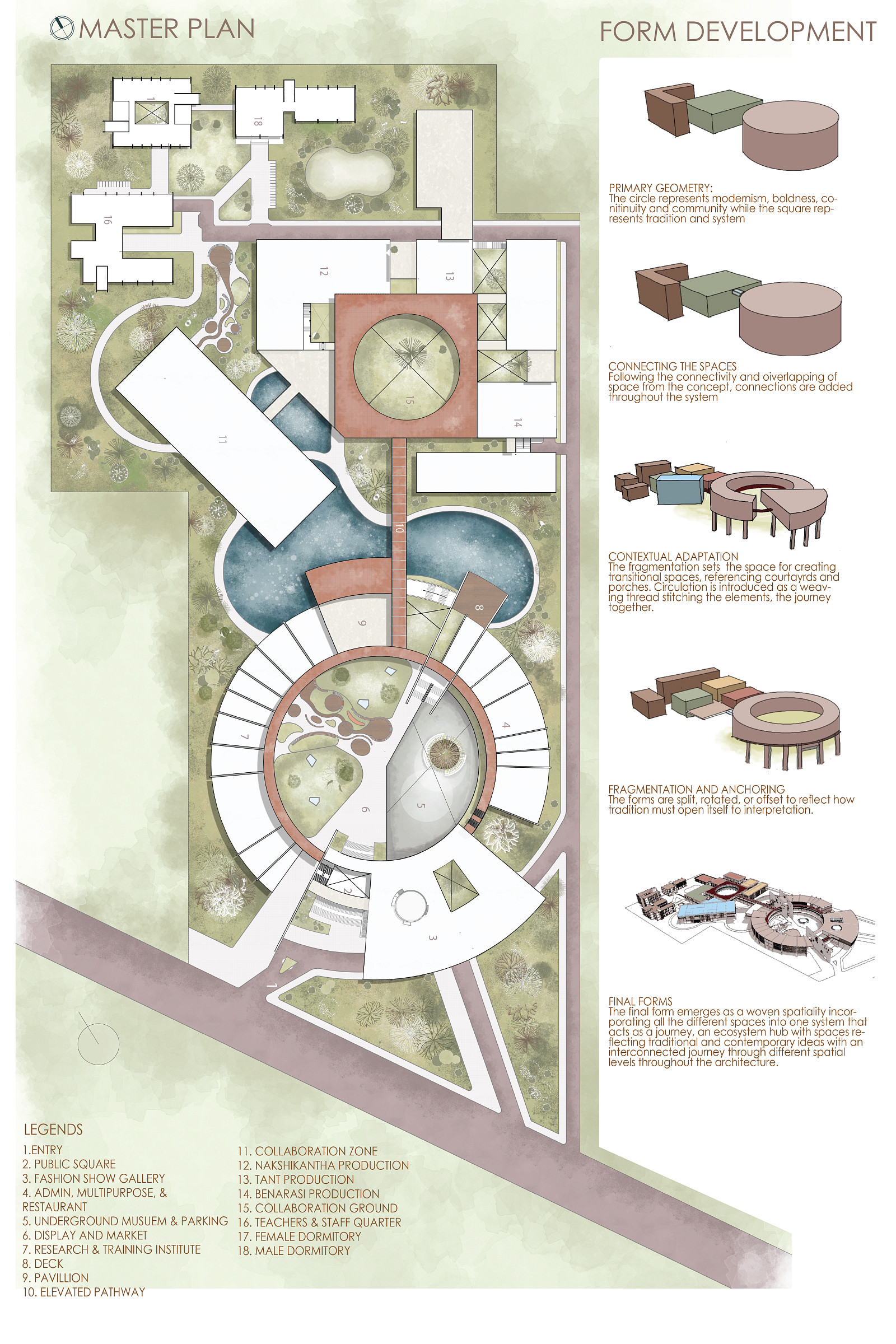
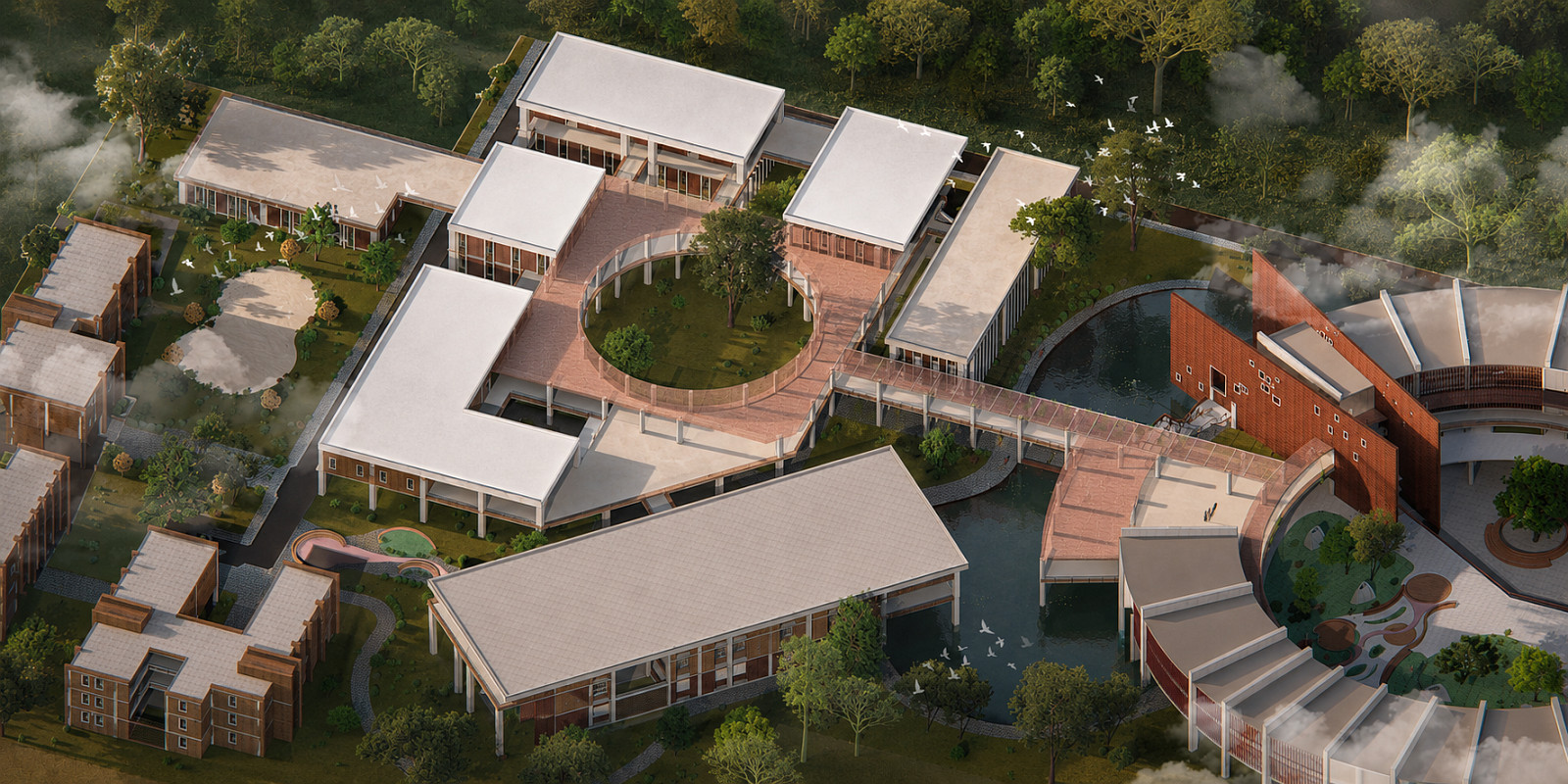
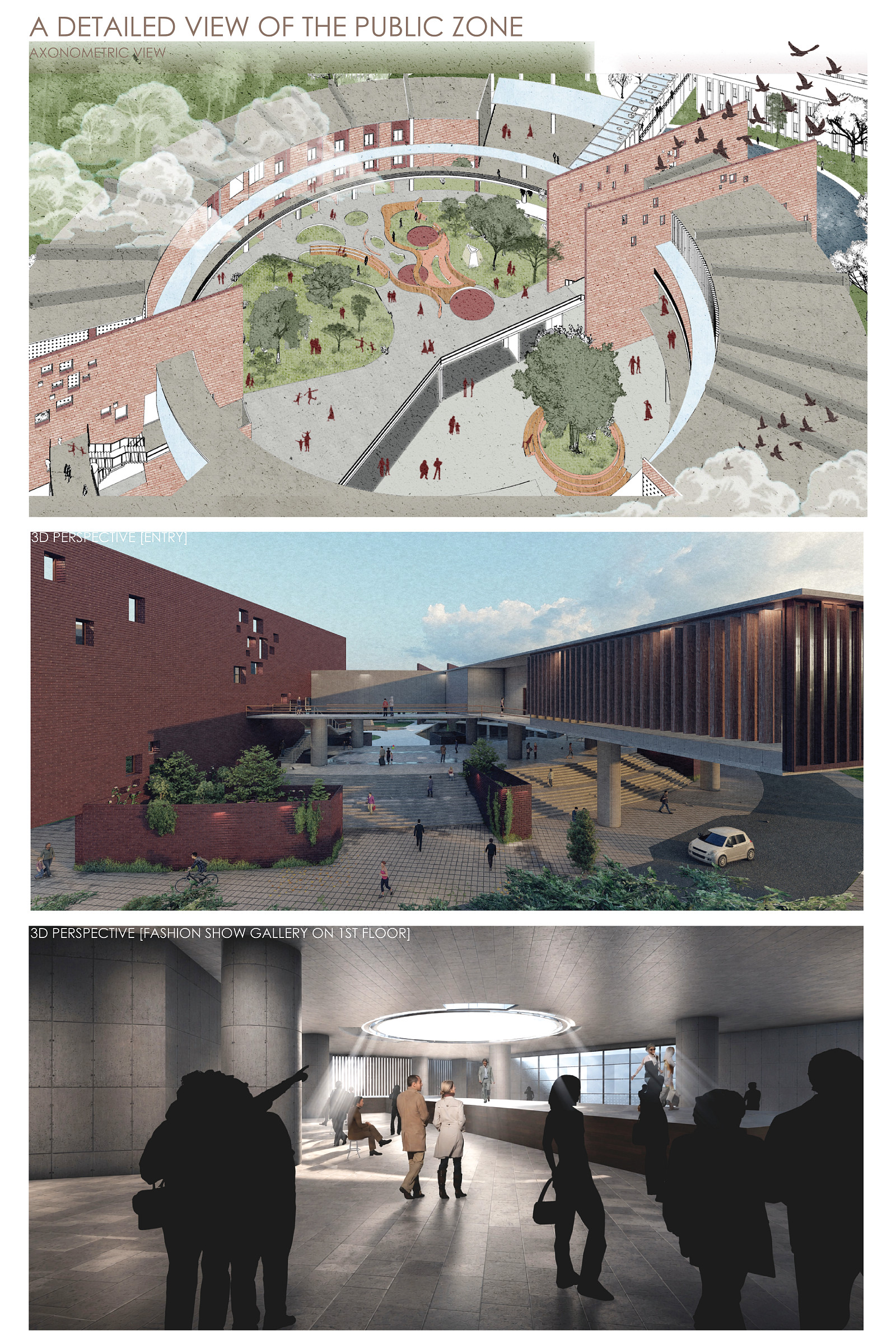
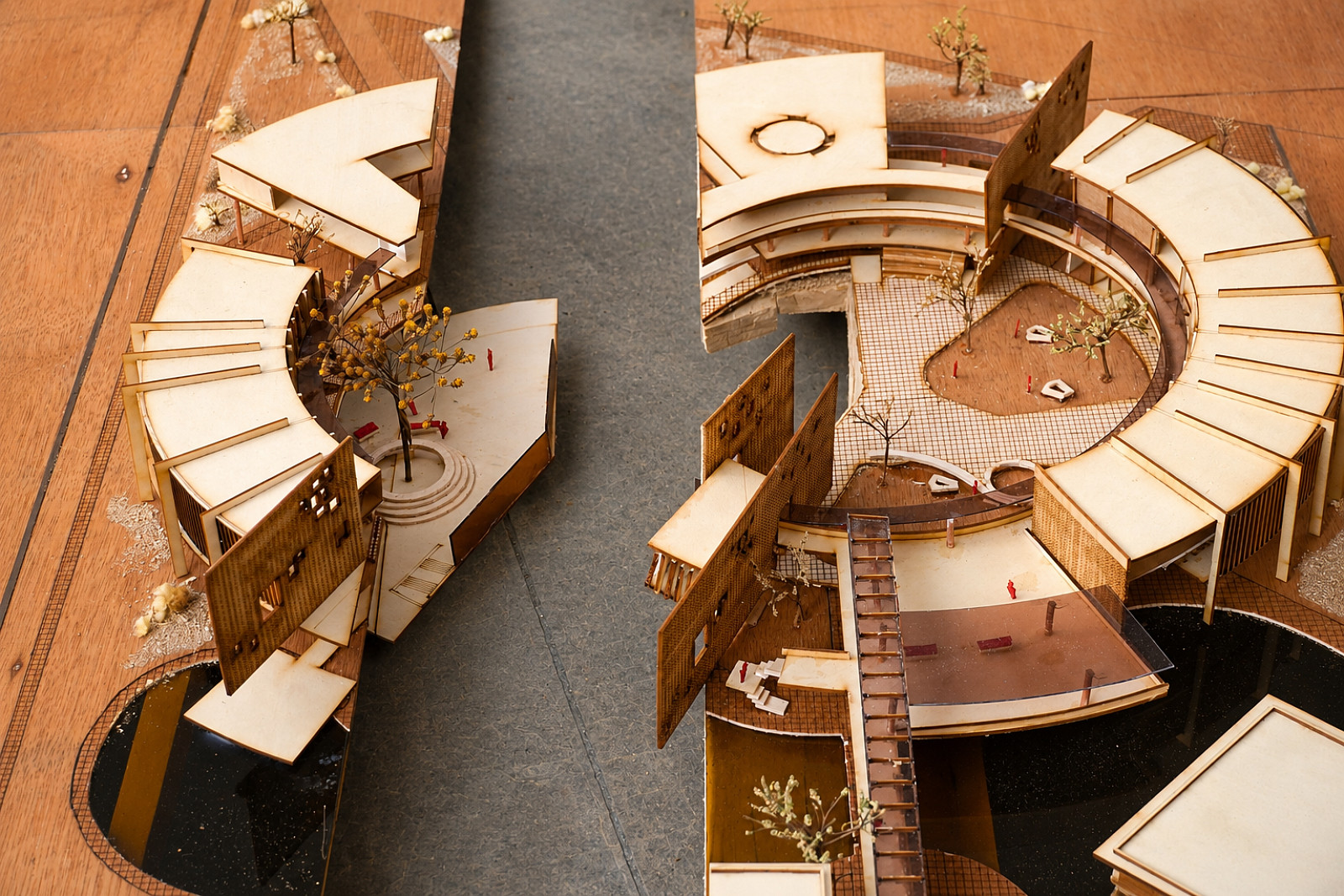
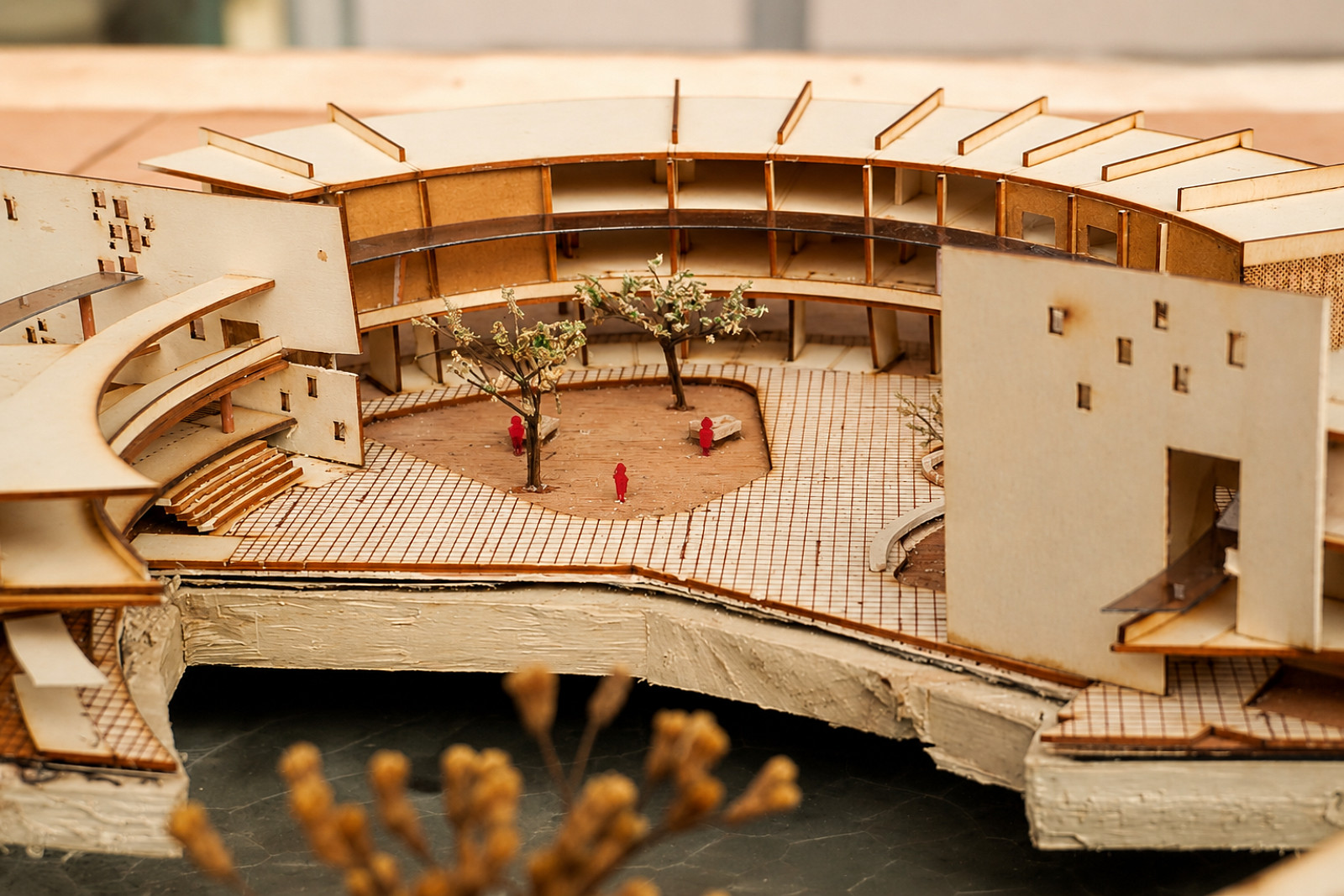
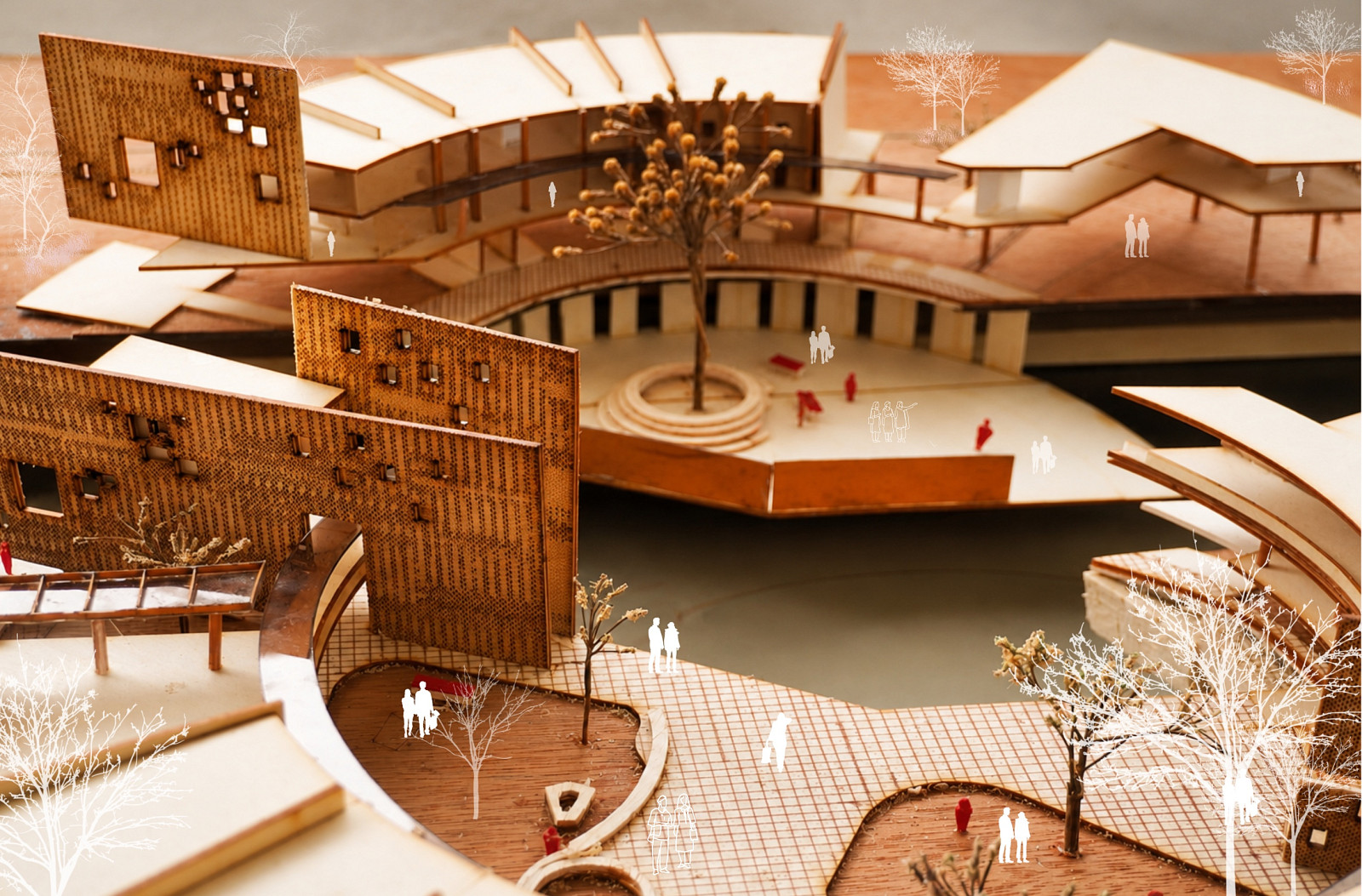
Massing Strategy: The project employs sculptural volumes for public zones and fragmented, interconnected masses for private areas to create a "spatial weaving" effect
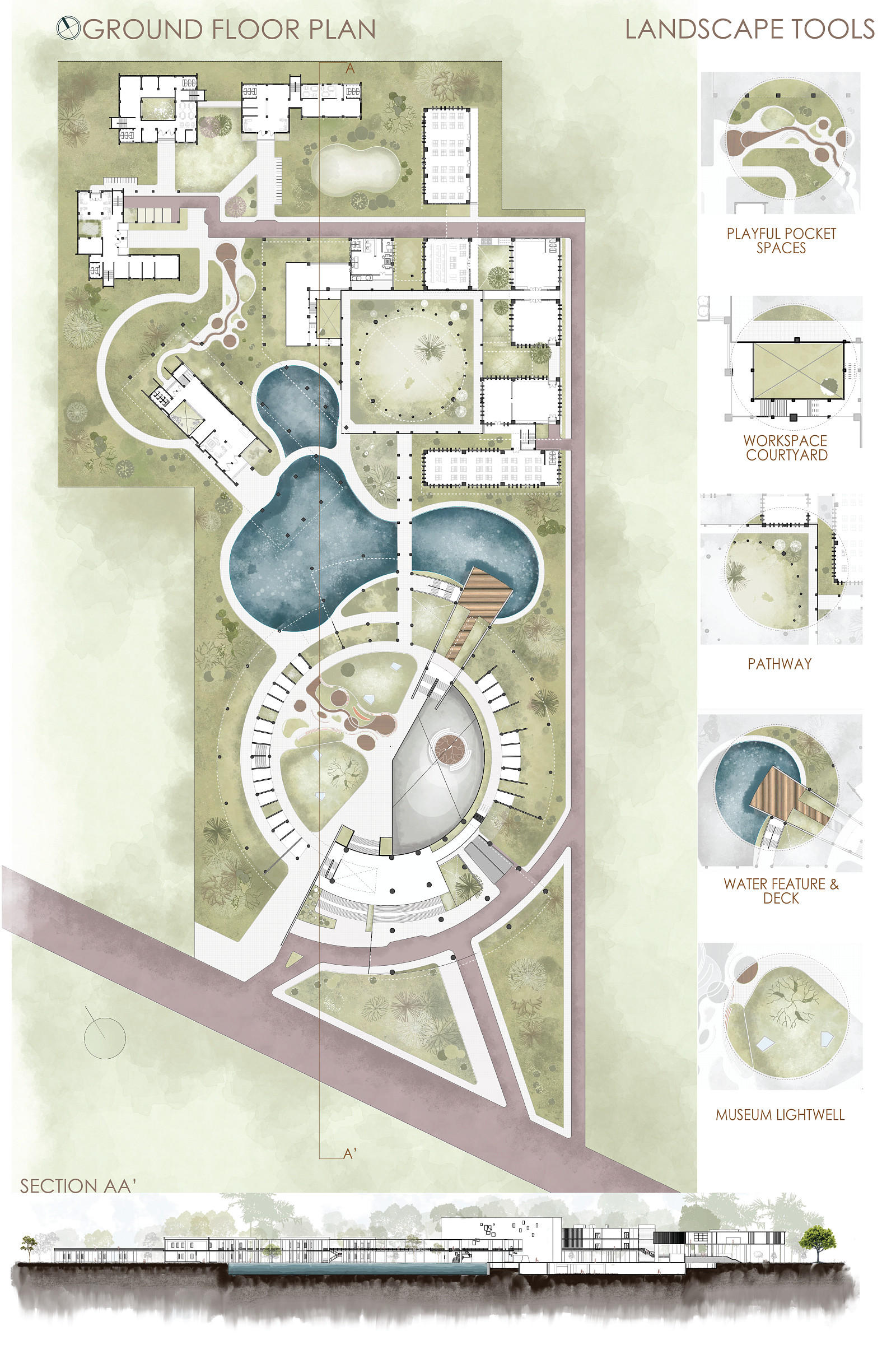
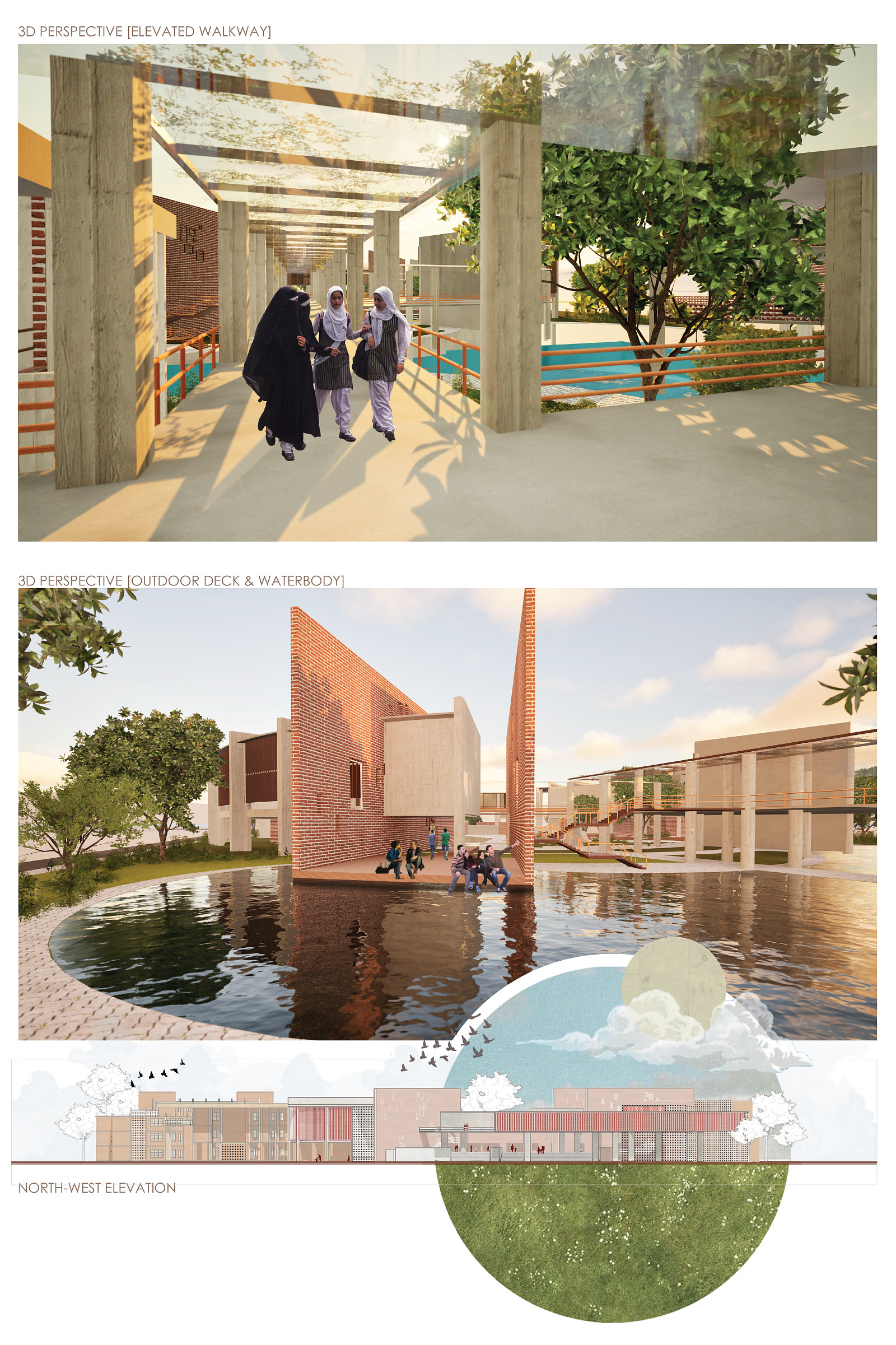
Environmental Features: Technical inclusions such as light wells for underground museum spaces, waterbodies for natural humidification, and passive cooling are integrated into the structural fabric.
Craft-Specific Technical Requirements
The construction accommodates three distinct production workflows with specific spatial needs:
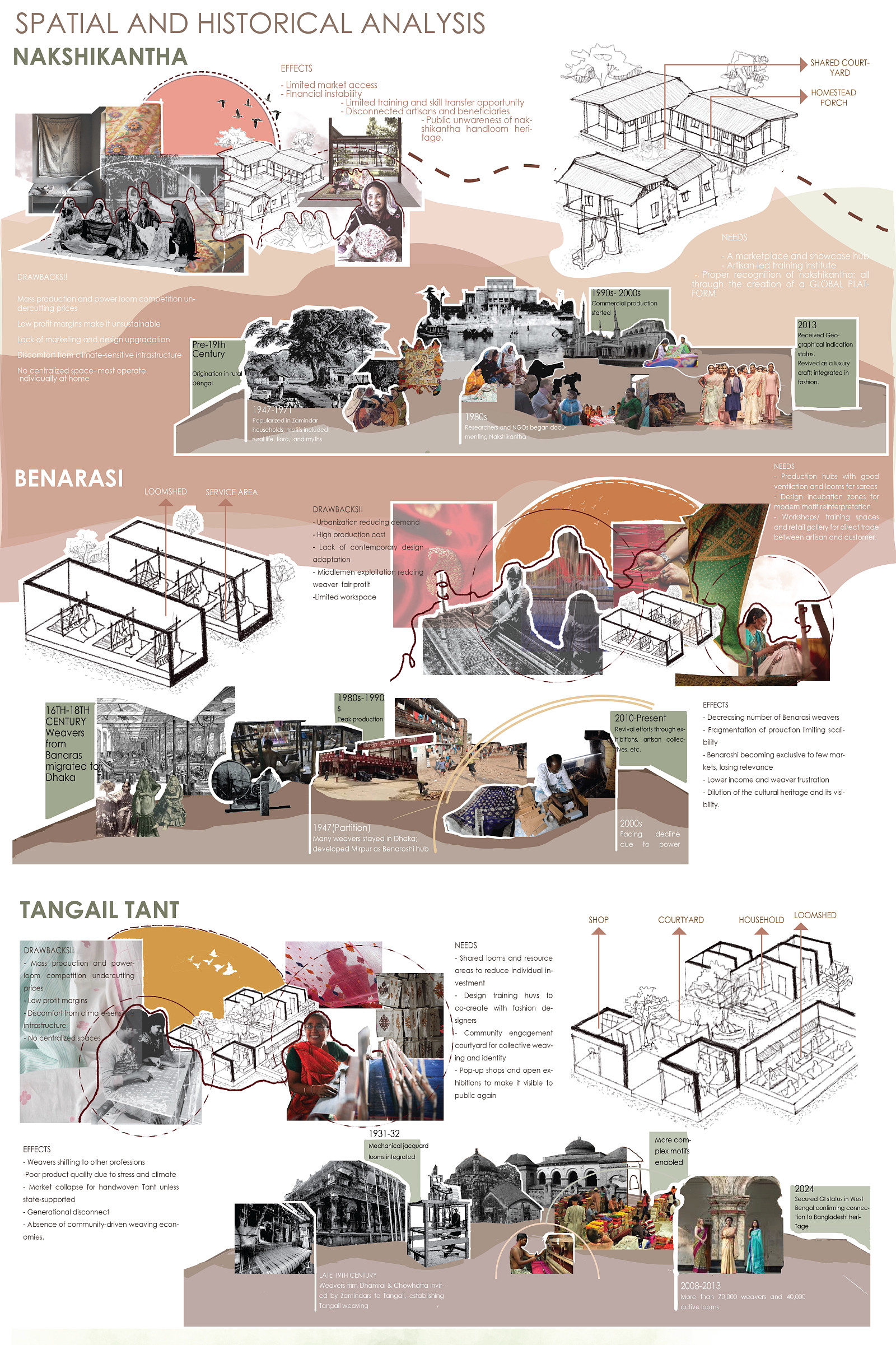
Benarasi Weaving: Requires pit looms recessed into the floor and closed, humid environments to maintain yarn elasticity
Tangail Tant: Requires high-ventilation shaded indoor spaces for looms and open domestic-style courtyards for yarn drying and starching
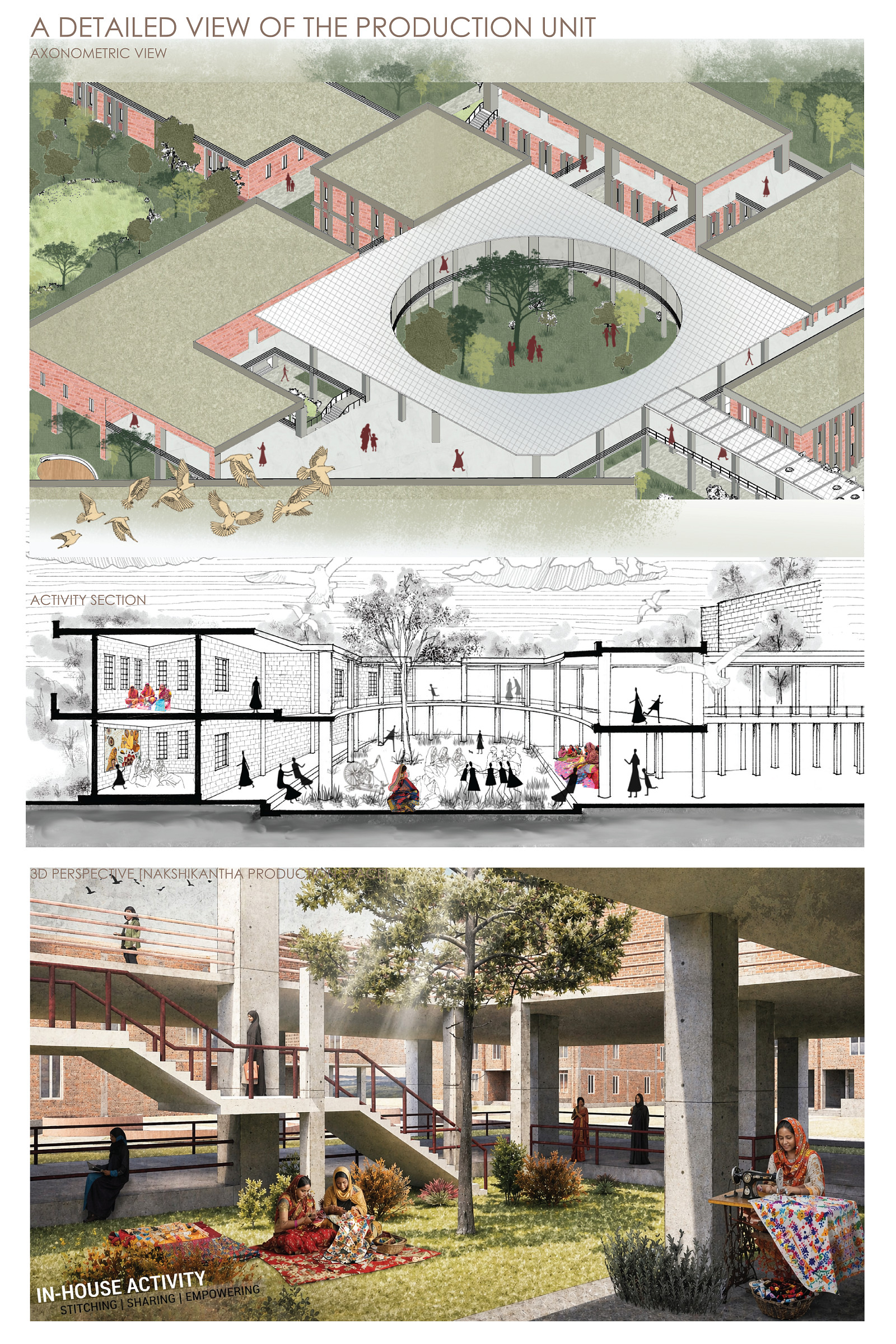
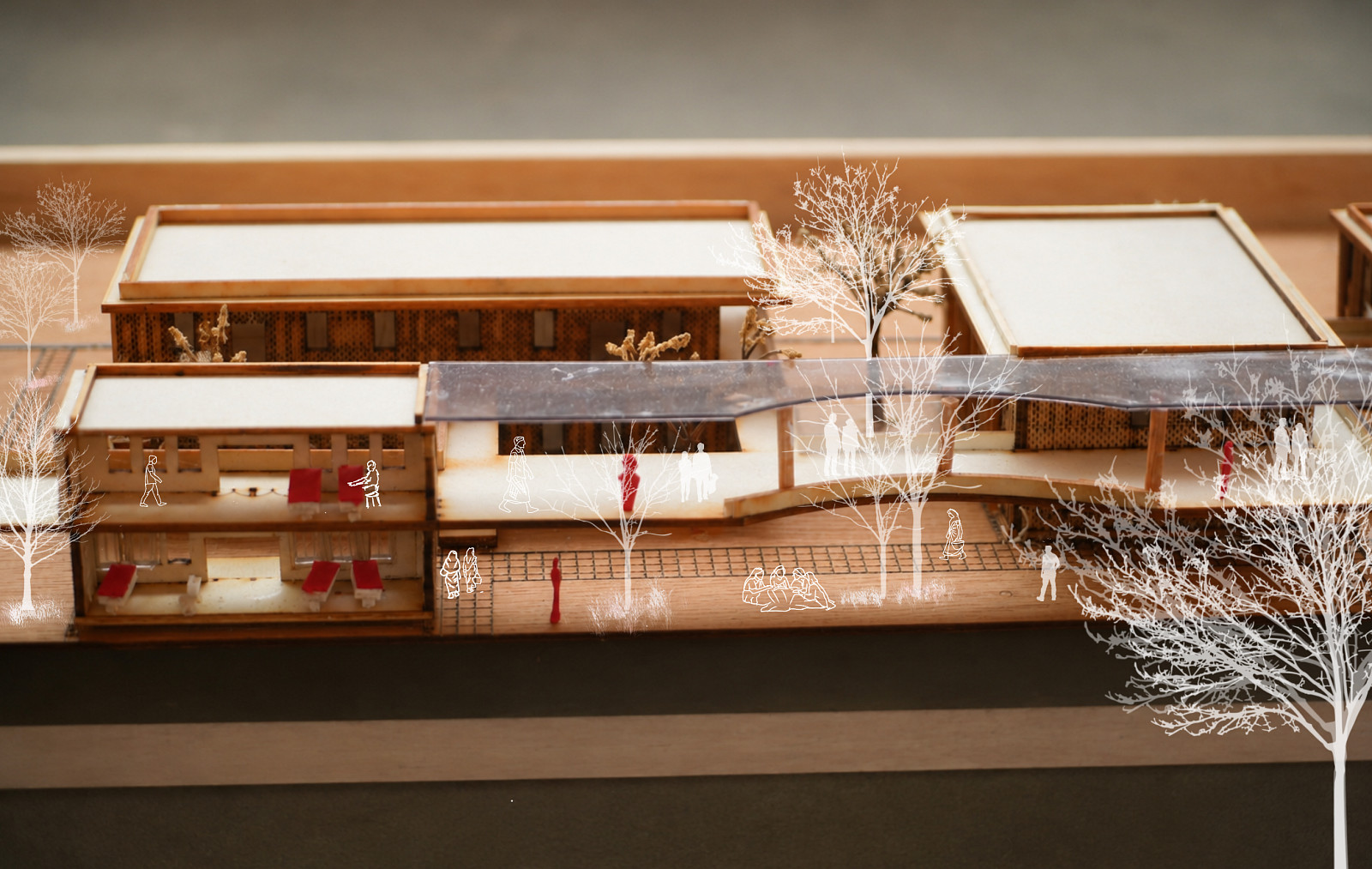
Nakshi Kantha: Prioritizes flexible, shared shaded zones (like extended verandas) with strong natural light rather than specialized machinery


Copyright © 2026 INSPIRELI | All rights reserved. Use of this website signifies your agreement to the Terms of Use, Privacy Policy, and use of cookies.