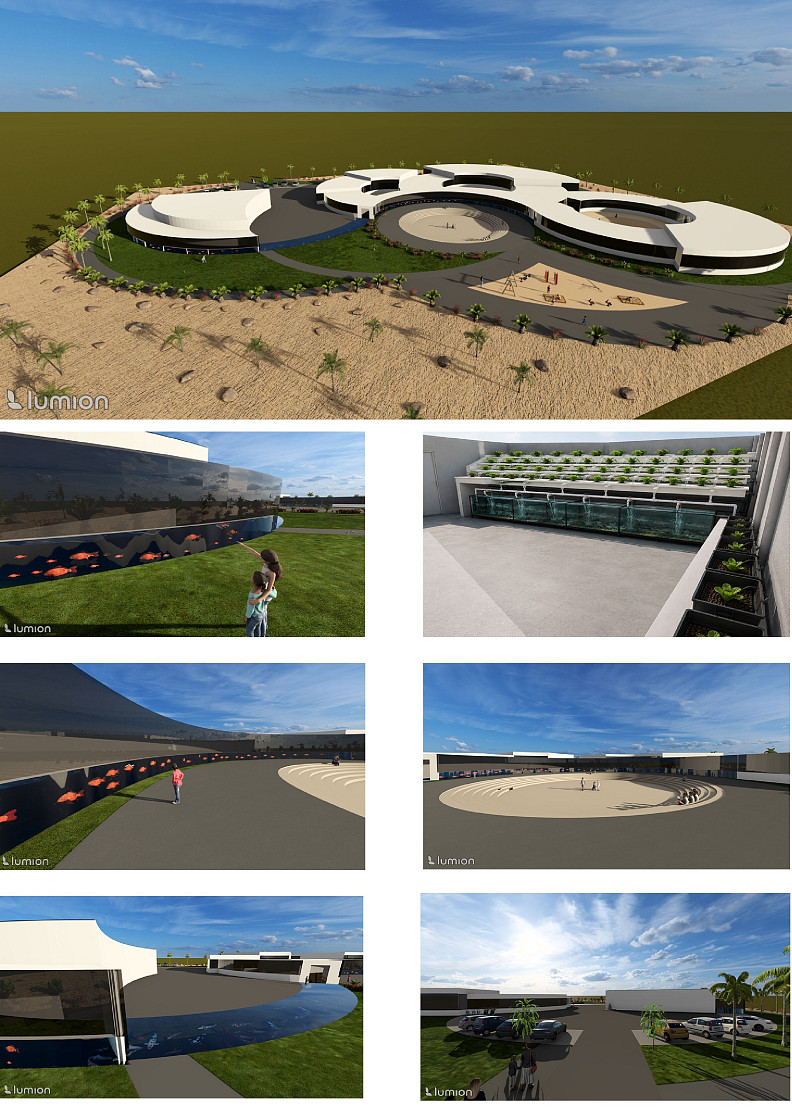
Aquaponics Kindergarten


Project idea
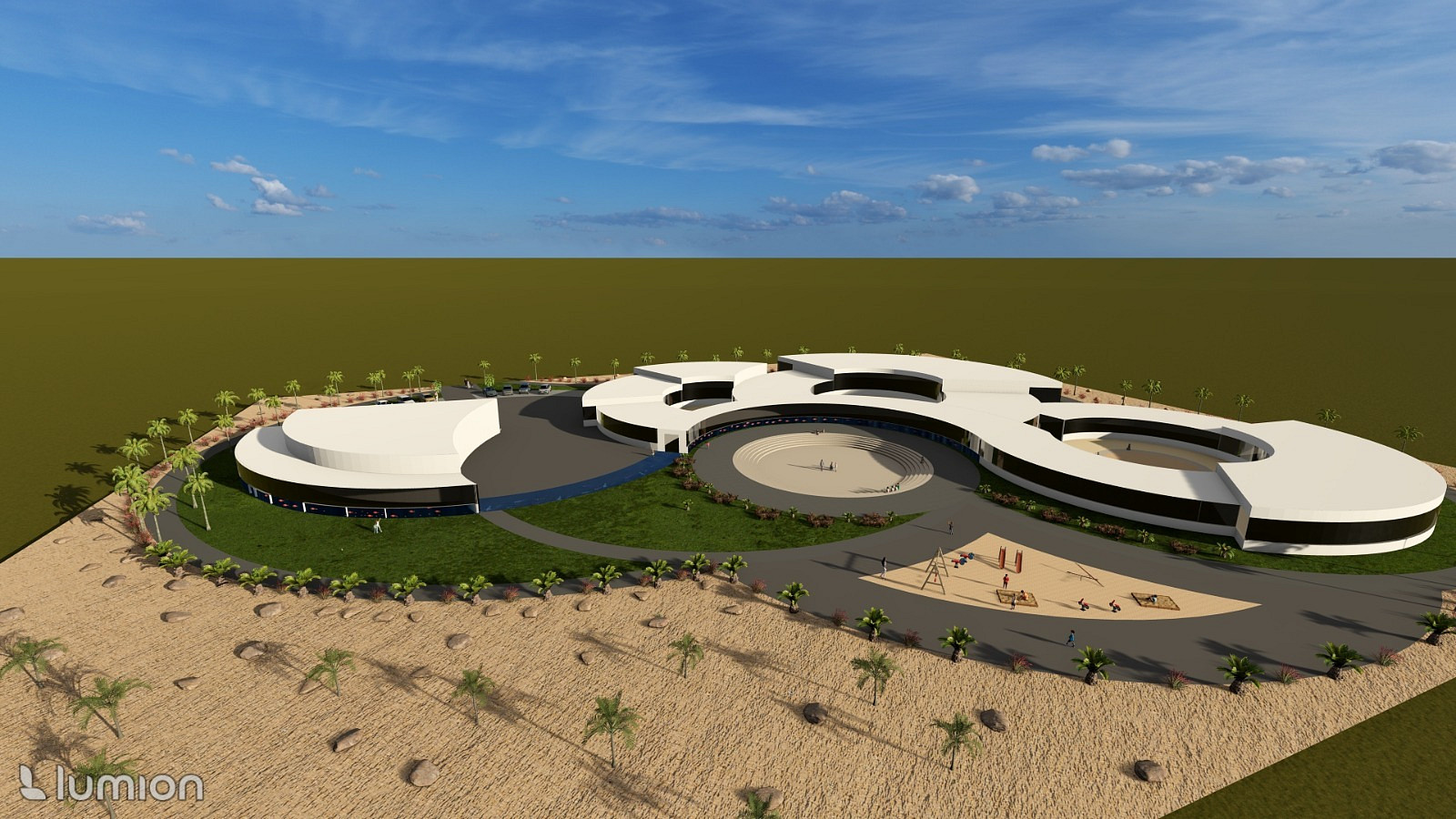
An aquaponic kindergarten that enables children to learn not by simply observing nature, but by becoming a part of it, integrating educational spaces with a sustainable aquaponic production system in the arid climate of Almeria, Spain.
Project description
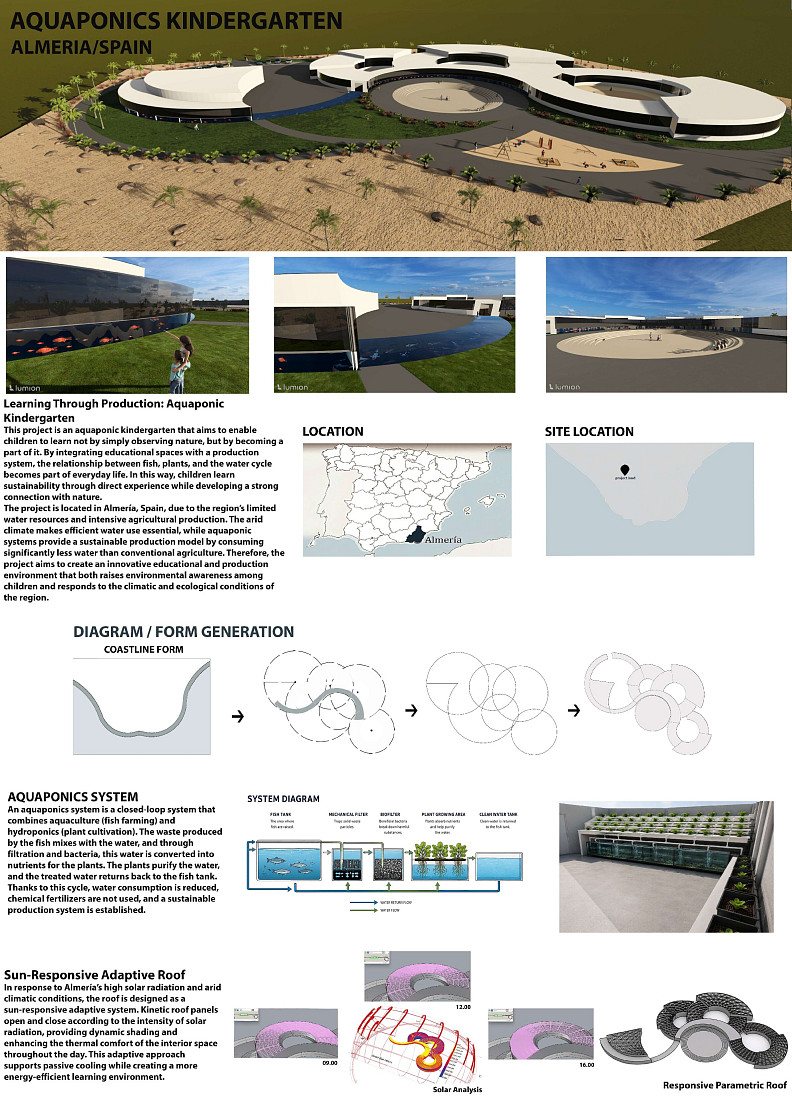
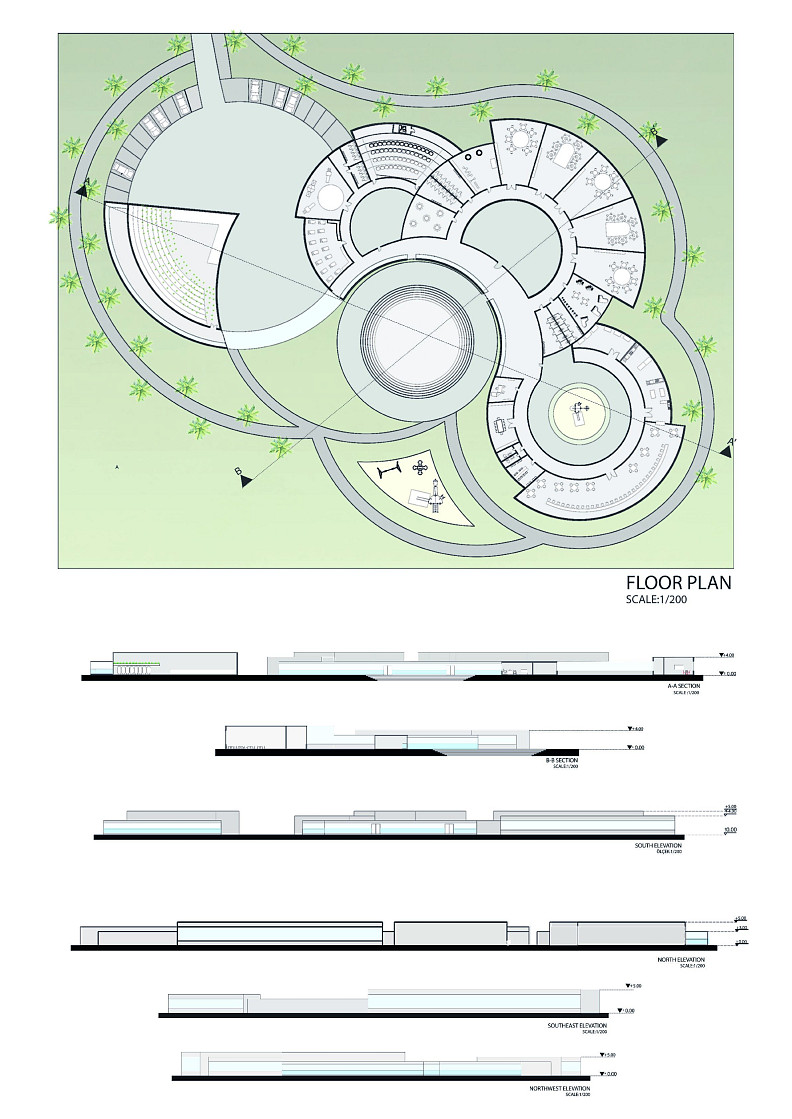
This project is an aquaponic kindergarten that integrates educational spaces with a production system combining fish farming and hydroponics. The relationship between fish, plants, and the water cycle becomes part of everyday life, allowing children to learn sustainability through direct experience while developing a strong connection with nature. Located in Almeria, Spain, the project responds to the region's limited water resources and intensive agricultural production. The arid climate makes efficient water use essential, and aquaponic systems provide a sustainable production model consuming significantly less water than conventional agriculture. The building form is derived from the local coastline morphology through a form generation process. The roof features a sun-responsive adaptive system with kinetic panels that open and close according to solar radiation intensity, providing dynamic shading and enhancing thermal comfort throughout the day.
Technical information
The aquaponics system is a closed-loop system combining aquaculture (fish farming) and hydroponics (plant cultivation). The system includes a fish tank, mechanical filter for trapping solid waste particles, biofilter where beneficial bacteria break down harmful substances, plant growing area where plants absorb nutrients and help purify water, and a clean water tank where treated water is returned to the fish tank. The sun-responsive adaptive roof uses kinetic parametric panels that respond to solar radiation at different times of day (09:00, 12:00, 16:00), supporting passive cooling and creating an energy-efficient learning environment. Renderings produced in Lumion.
Documentation

Copyright © 2026 INSPIRELI | All rights reserved. Use of this website signifies your agreement to the Terms of Use, Privacy Policy, and use of cookies.