Family house - Fluidum


Project idea
The design philosophy is based on the concept of spatial fluidity, natural movement, and subtle separation of functional zones. The proposal seeks to incorporate the shape of the surrounding environment into the floor plan and eliminate sharp boundaries between the exterior and interior. Fluidity is also reflected in the shaping of the architectural mass and the orientation of movement in relation to the cardinal directions. The space is conceived as a dynamic organism in which individual functions naturally connect to one another, creating a high level of user comfort.
Project description
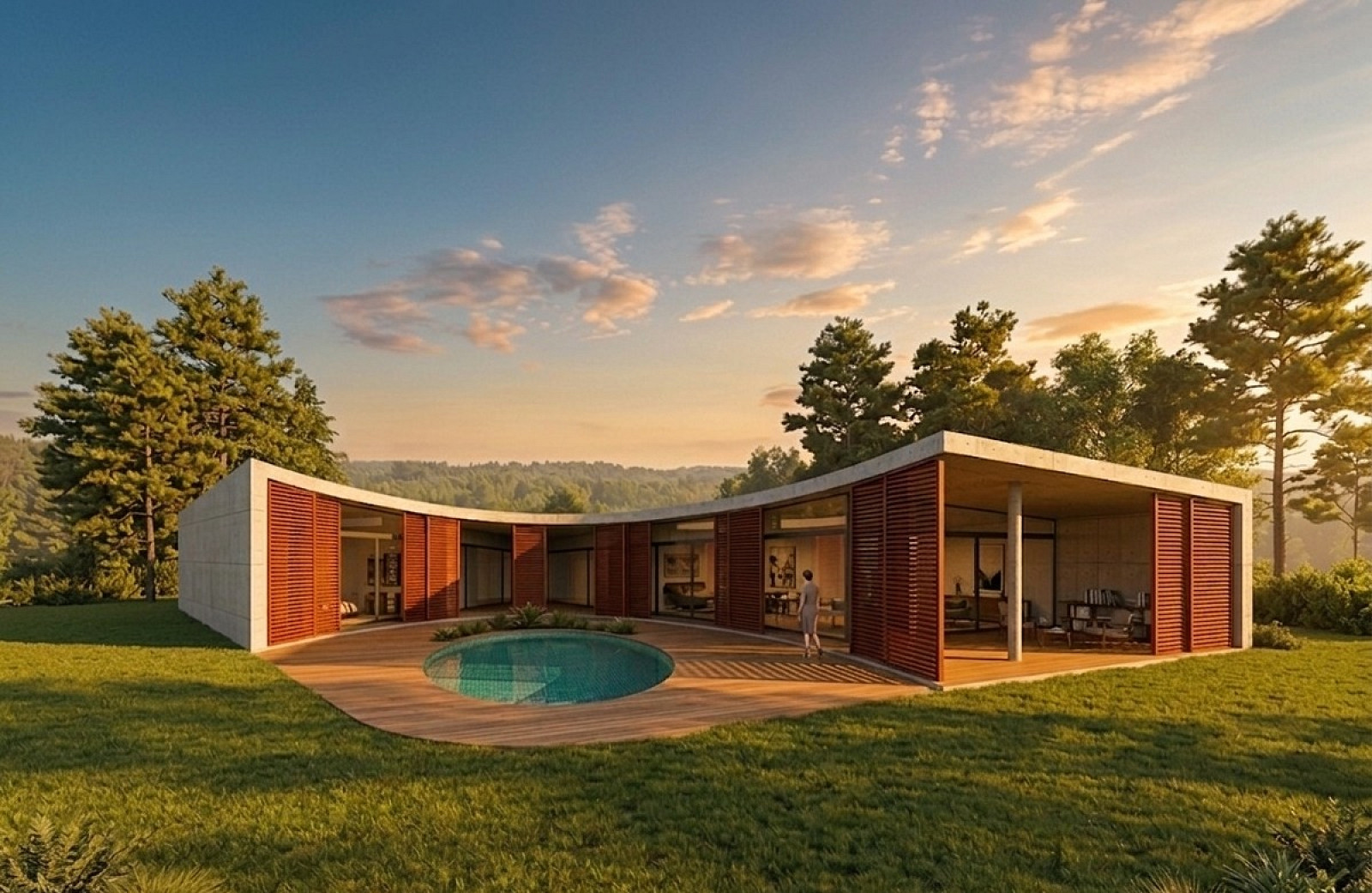
The architectural solution is based on soft mass modelling, dominated by fluid roof and façade lines. The building opens to the exterior through large glazed surfaces, supporting both visual and functional integration of the interior with its surroundings. The façade articulation, using vertical panels, creates rhythm, filters light, and provides shading while simultaneously emphasizing the building’s dynamic character.
The layout of the building, with a usable floor area of 261.7 m², is designed with an emphasis on fluid movement, functional zoning, and the natural connection between interior and exterior spaces.
The building is divided into three functional zones:
The day zone, oriented towards the south and southwest, includes the kitchen, dining area, and living room, with direct access to the swimming pool and covered terrace.
The night zone, oriented towards the southeast, includes the parents’ bedroom with an en-suite bathroom and walk-in wardrobe, two children’s bedrooms, an additional bathroom, and a study.
The technical and utility zone includes a utility room with a laundry area and a storage room.
Technical information
The building is designed using a prefabricated structural system with sandwich panels and reinforced concrete columns. The façade is complemented by wooden sliding panels. Window openings are designed using aluminium window systems. The roof structure is envisaged as reinforced concrete.
Documentation

Copyright © 2026 INSPIRELI | All rights reserved. Use of this website signifies your agreement to the Terms of Use, Privacy Policy, and use of cookies.