Arsenal Memory Park


 Juraj Dulencin
Project idea
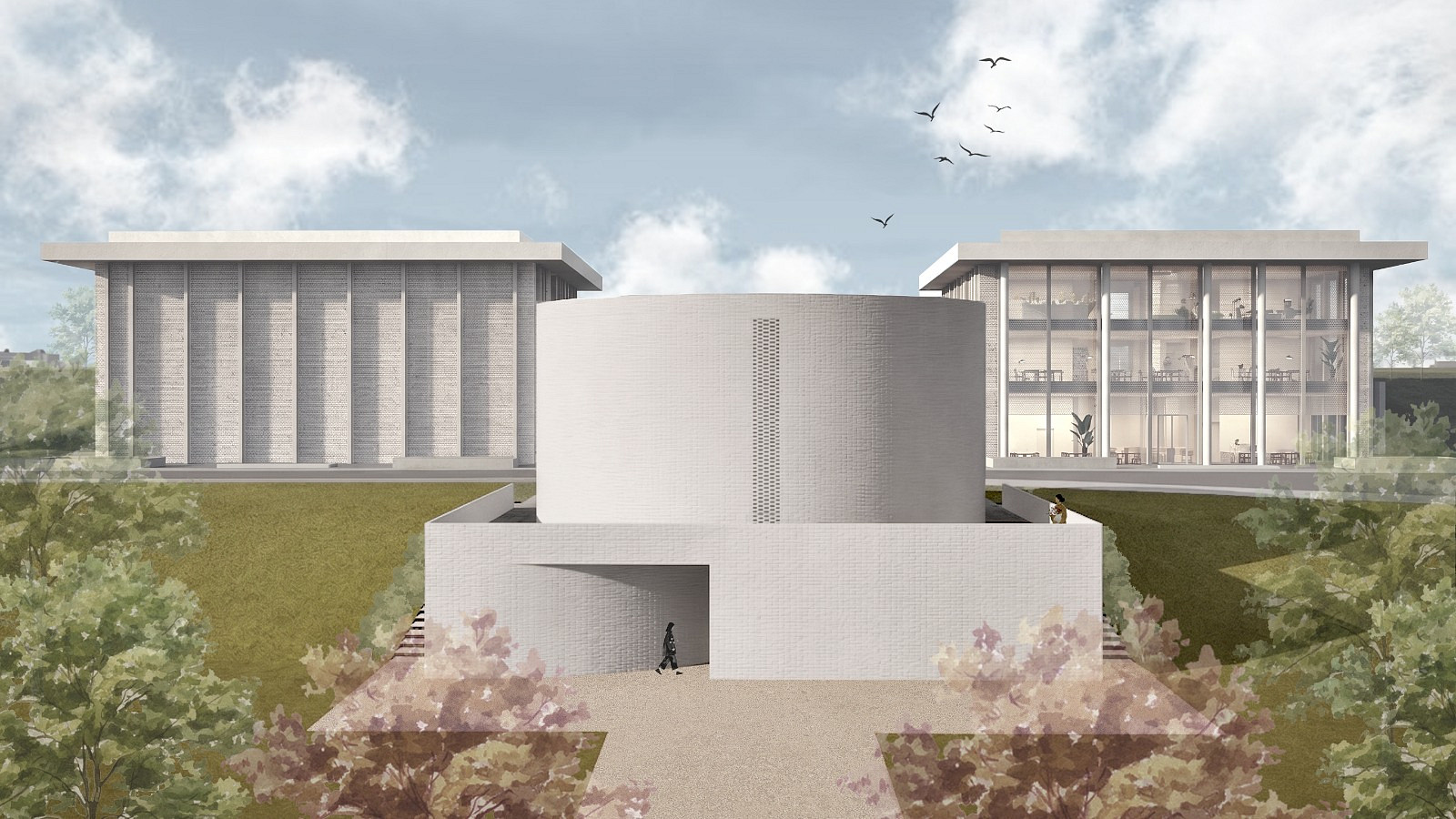
The project proposes the design of an Interpretive Memory Center in San Miguel de Tucumán, Argentina, on the site of the former detention center Galpón 9. The project responds to the historical trauma associated with the military dictatorship and aims to preserve collective memory through architecture, landscape, and public space.
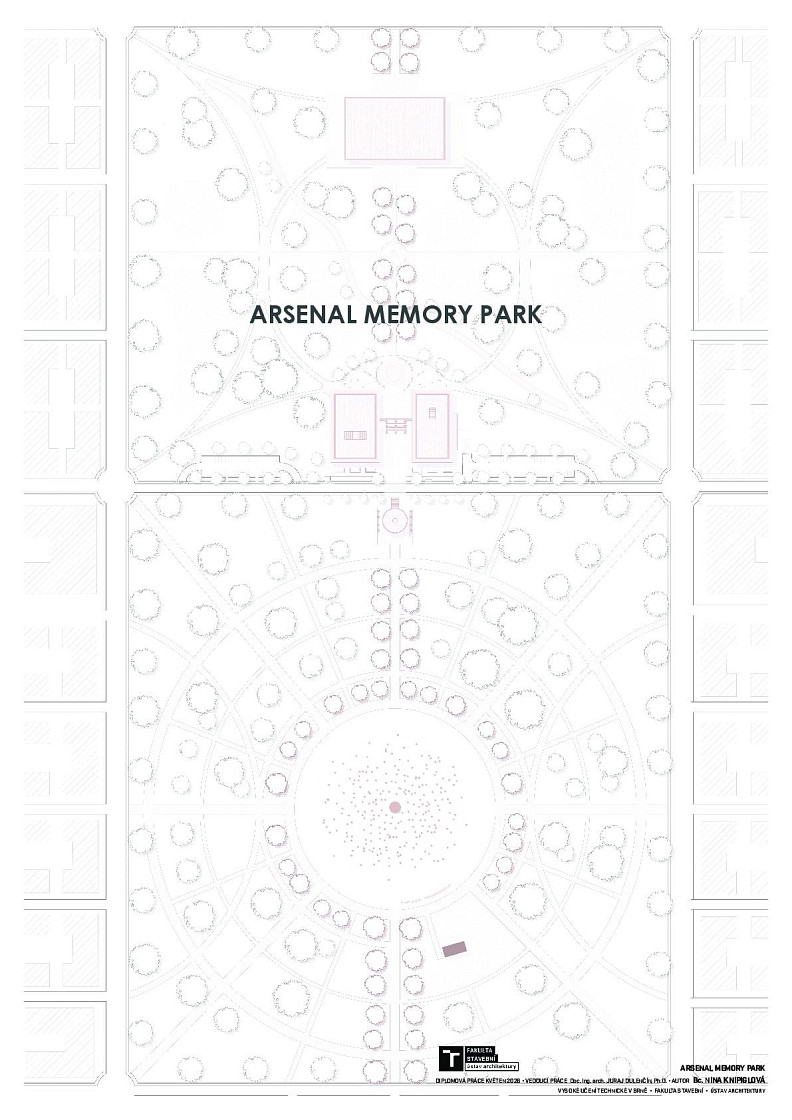
The main objective is to create a symbolic journey that guides visitors from remembrance and reflection toward dialogue, education, and social reconciliation. The proposal consists of a memorial museum, gallery spaces, administrative and educational facilities, and a cultural square integrated within a memory park. Through the use of local materials, filtered light, perforated façades, and sustainable design strategies, the project seeks to create a meaningful cultural environment that connects history with contemporary public life.
Project description
The scope of the project focuses on the architectural design of the Interpretive Memory Center located within the former Galpón 9 detention site in San Miguel de Tucumán, Argentina. The proposal includes three main buildings: a memorial museum, a gallery, and an administrative building with educational and workshop spaces. The project also incorporates a cultural square and the immediate public spaces surrounding the buildings.
The design addresses architectural, functional, structural, environmental, and technical aspects of the proposed buildings, with particular emphasis on collective memory, public engagement, and sustainable architectural solutions adapted to the local climate and context.
Technical information
The Gallery and Administrative Building are connected through a shared underground level containing technical facilities and a parking garage with 80 parking spaces, including accessible parking for disabled visitors.
The buildings are designed as reinforced concrete frame structures with reinforced concrete slabs, beams, and shear walls. The underground level is constructed as a waterproof reinforced concrete structure (white tank system) and founded on piles.
The architectural concept incorporates perforated secondary facades, green roofs, natural shading, and energy-efficient technologies adapted to the subtropical climate of Tucumán.
Documentation
Created in:


Copyright © 2026 INSPIRELI | All rights reserved. Use of this website signifies your agreement to the Terms of Use, Privacy Policy, and use of cookies.
