Tangalle Bay Hotel - reactivating a ruin


Project idea
TANGALLE BAY HOTEL - Reactivating a Ruin for Sustainable Tourism and Cultural Exchange
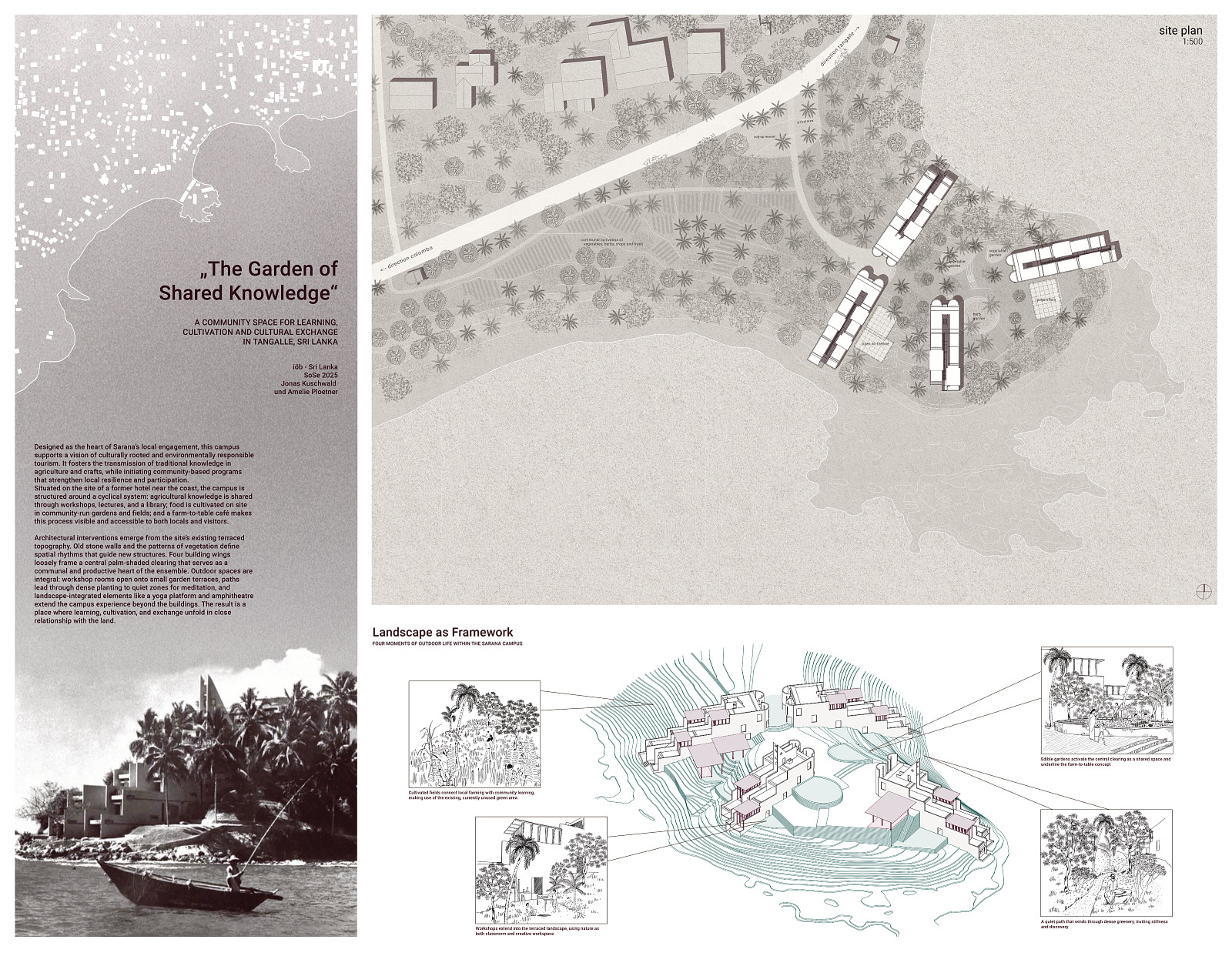
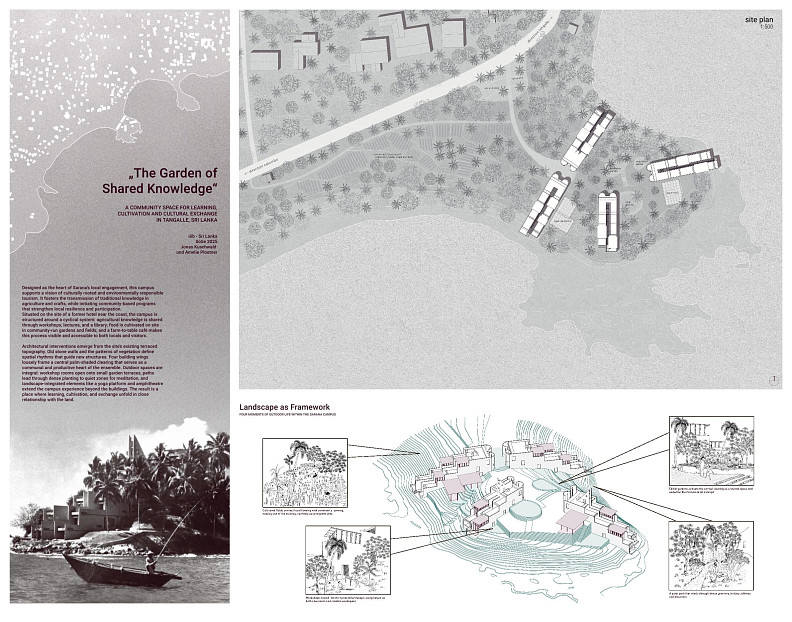
The Tangalle Bay Hotel, designed by Valentine Gunasekara in 1972 and abandoned since 2017, has gradually been reclaimed by nature. Rather than restoring the building to its former state, our proposal embraces this transformation, treating the ruin as the foundation for a new architectural and social narrative.
Developed in collaboration with Sarana, a Sri Lankan organization promoting culturally sustainable tourism, the project reinterprets the former hotel as a center for learning, exchange, and community engagement. Its central ambition is to strengthen the relationship between local initiatives and tourism by creating spaces where both communities meet naturally.
Inspired by Sri Lanka's agricultural traditions and the Sri Lankan culture of home gardening, agriculture becomes the conceptual backbone of the project. A continuous cycle of learning, cultivating, harvesting, preparing, and sharing food and crafts is made accessible through workshops, a library, community gardens, productive landscapes, and a farm-to-table café. These programs encourage knowledge exchange while making local practices visible to visitors.
Project description
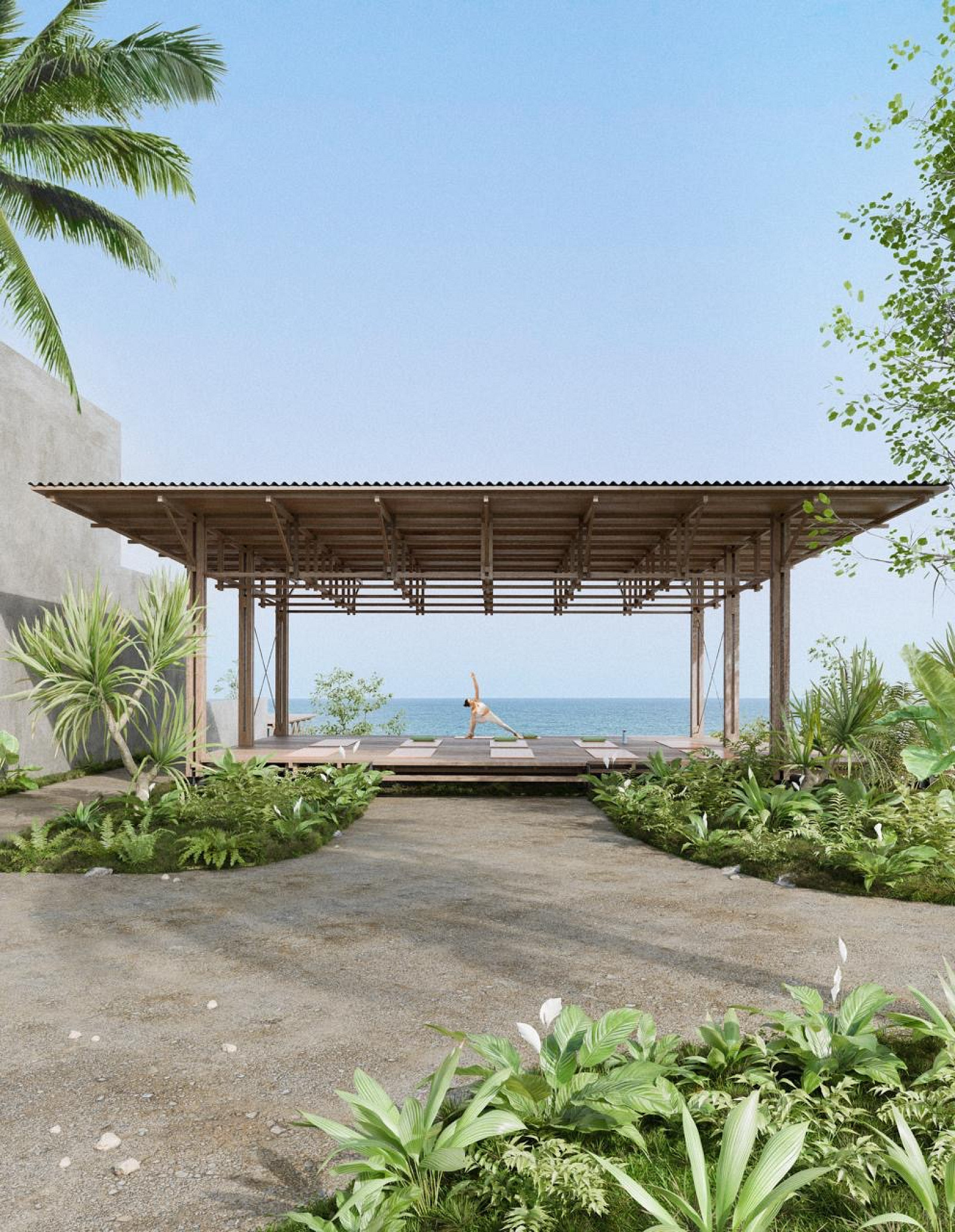
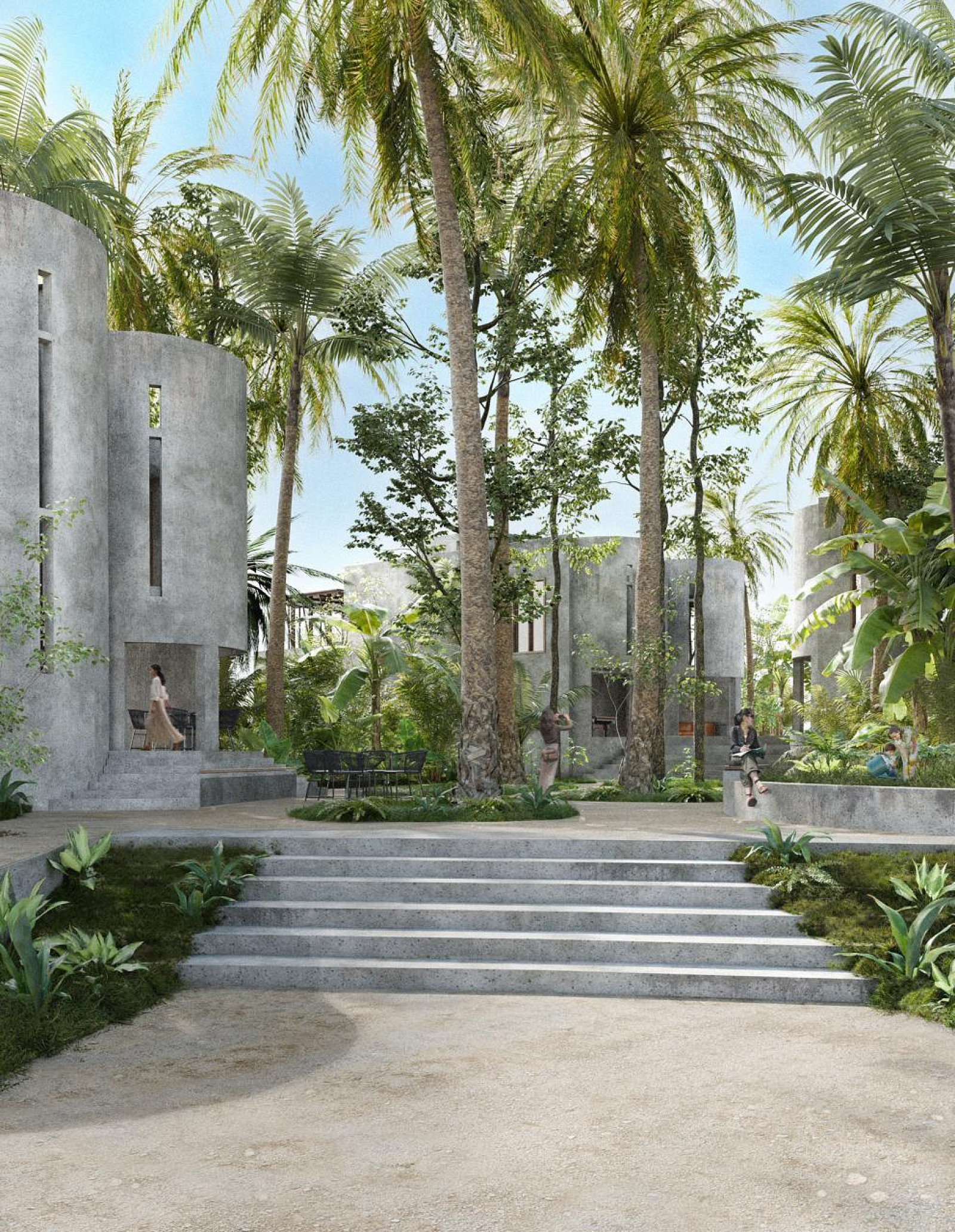
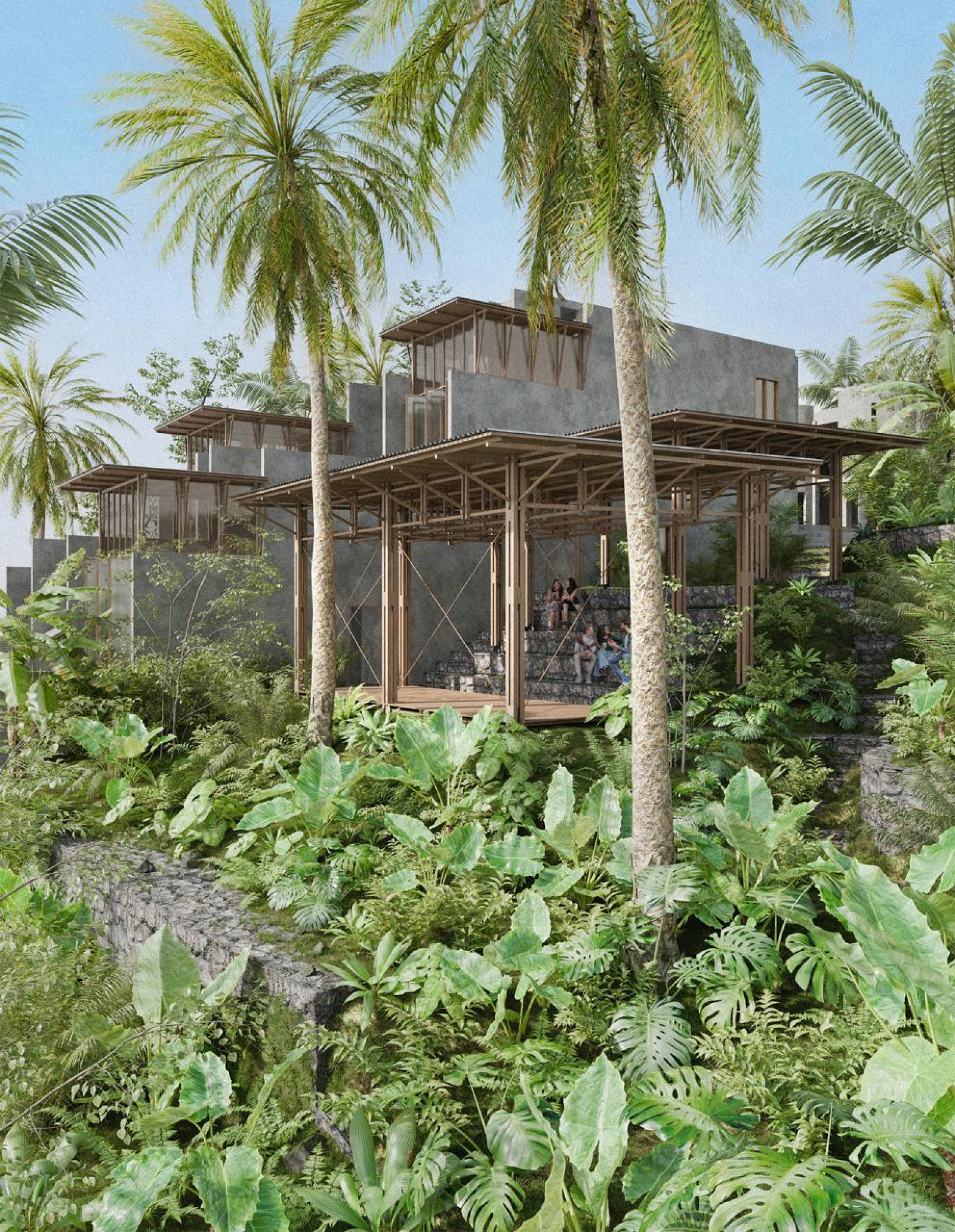
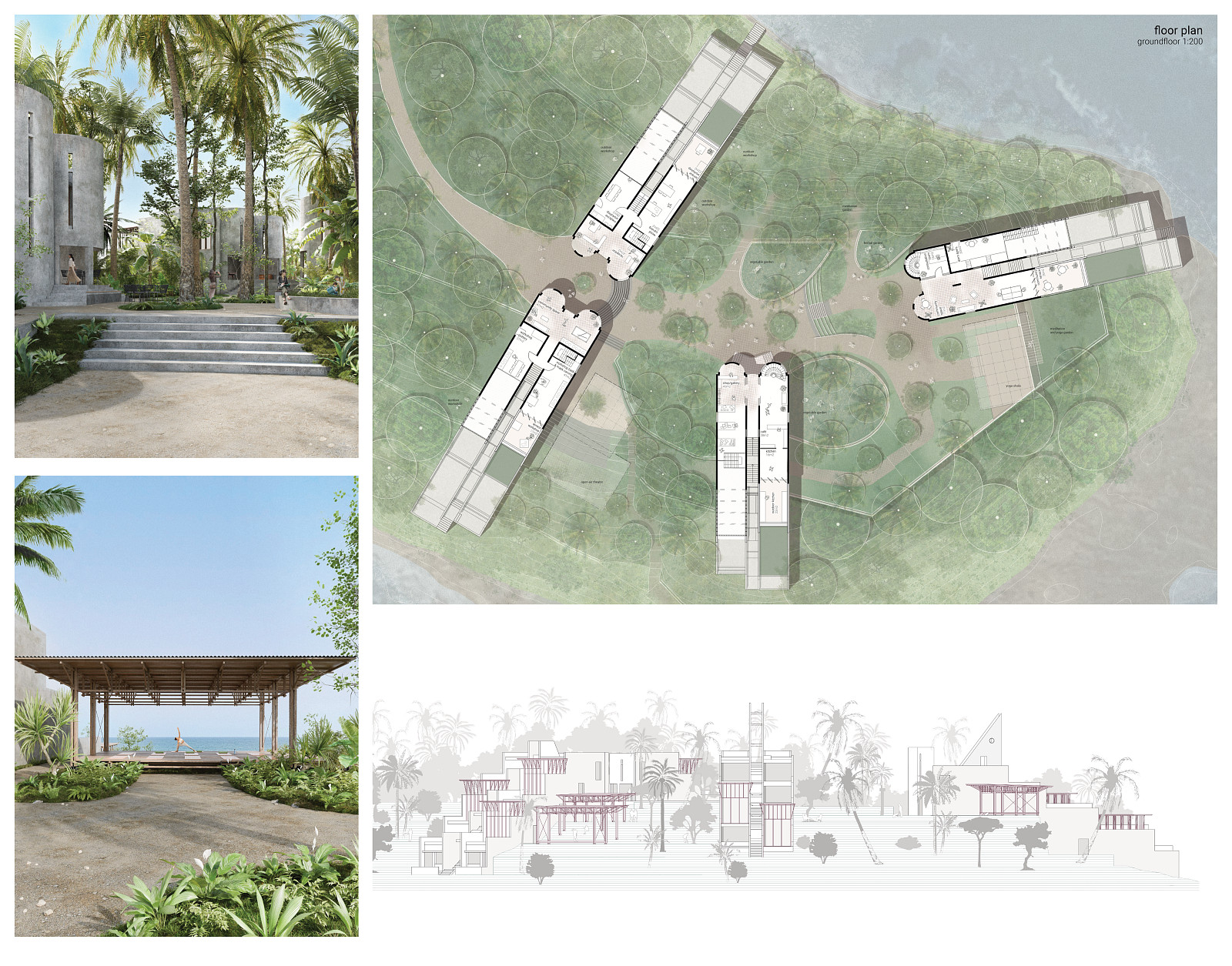
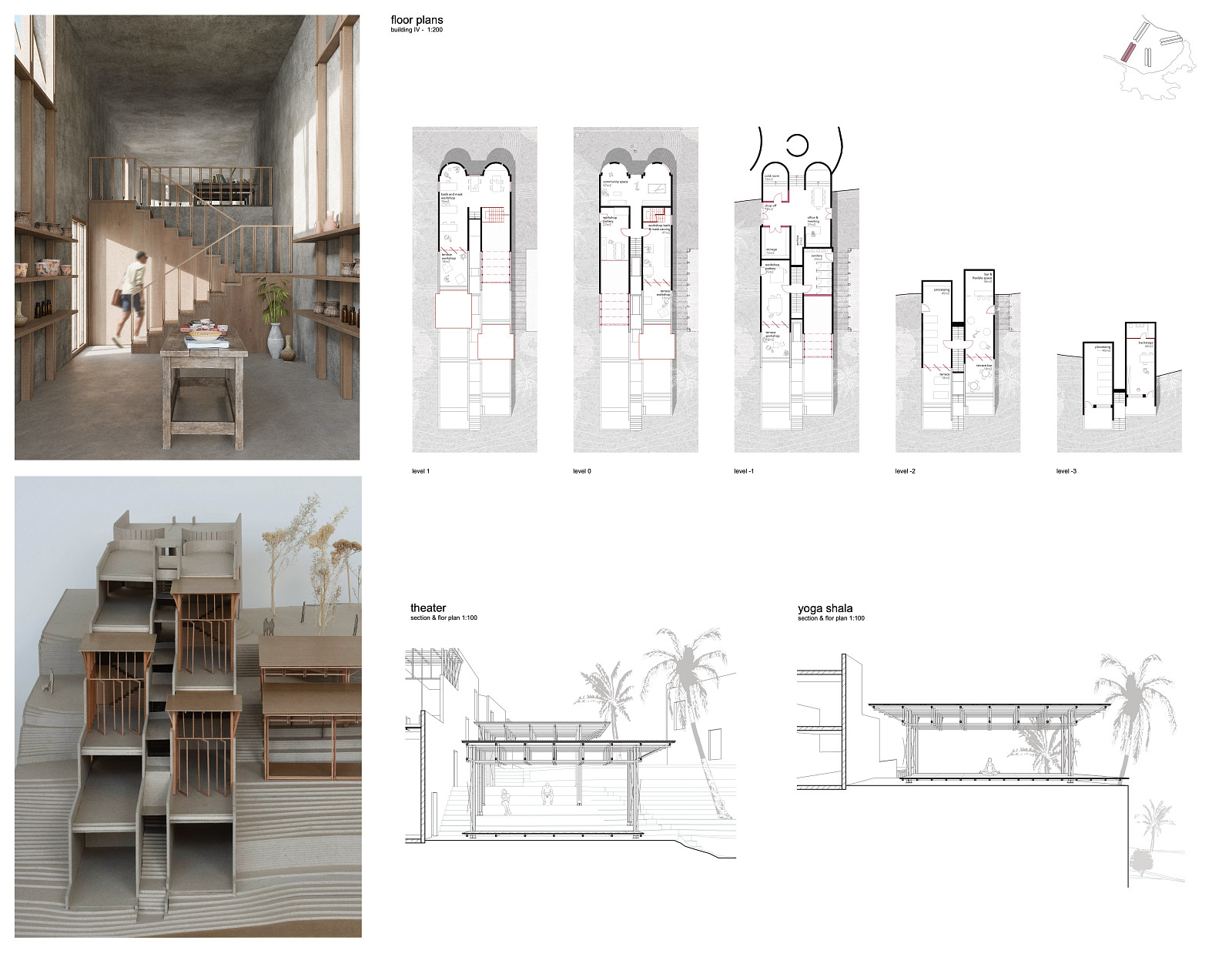
The landscape drives the architectural strategy. Existing terraces, retaining walls, vegetation, and the original concrete structure are carefully preserved and adapted rather than replaced. A palm-shaded central clearing forms the social heart of the campus, connecting workshops, communal spaces, and three thematic gardens: a meditation garden inspired by Bevis Bawa's Brief Garden, a Yoga Shala located on the former infinity pool, and an open-air theater shaped by the site's existing topography.
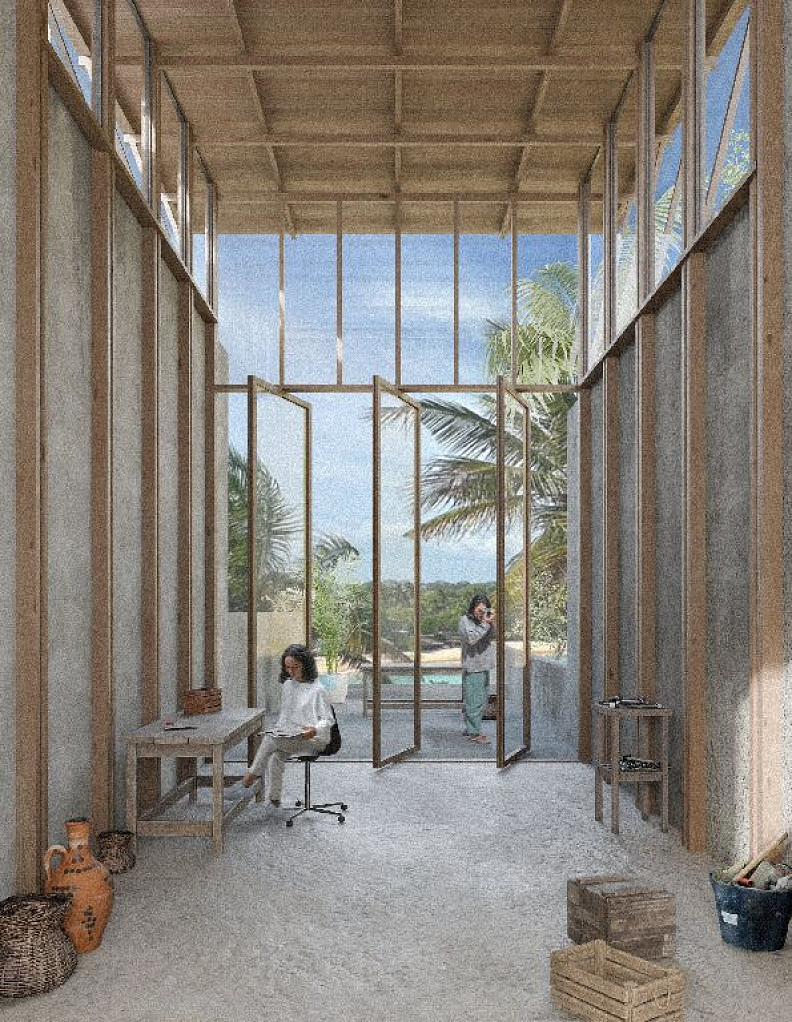
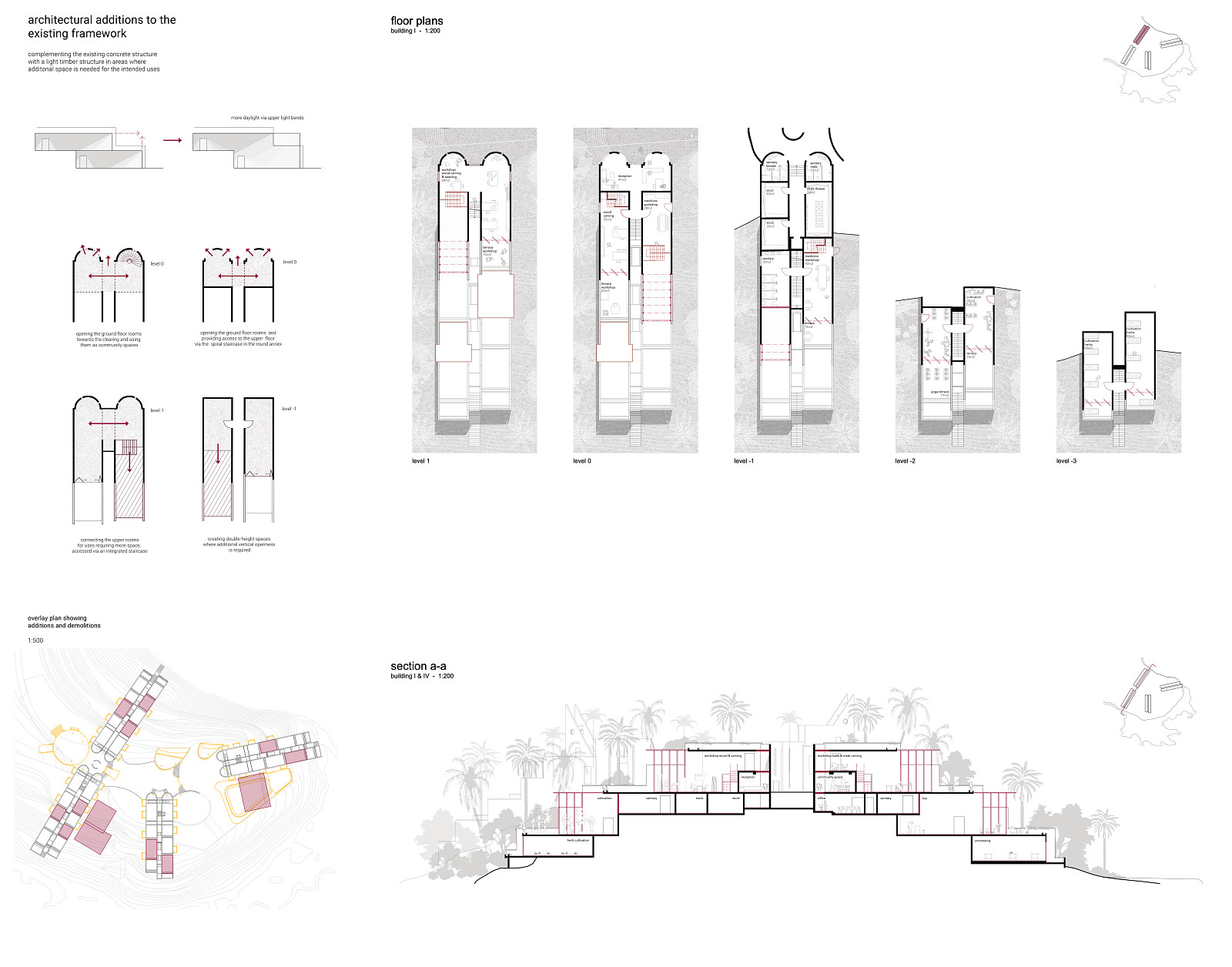
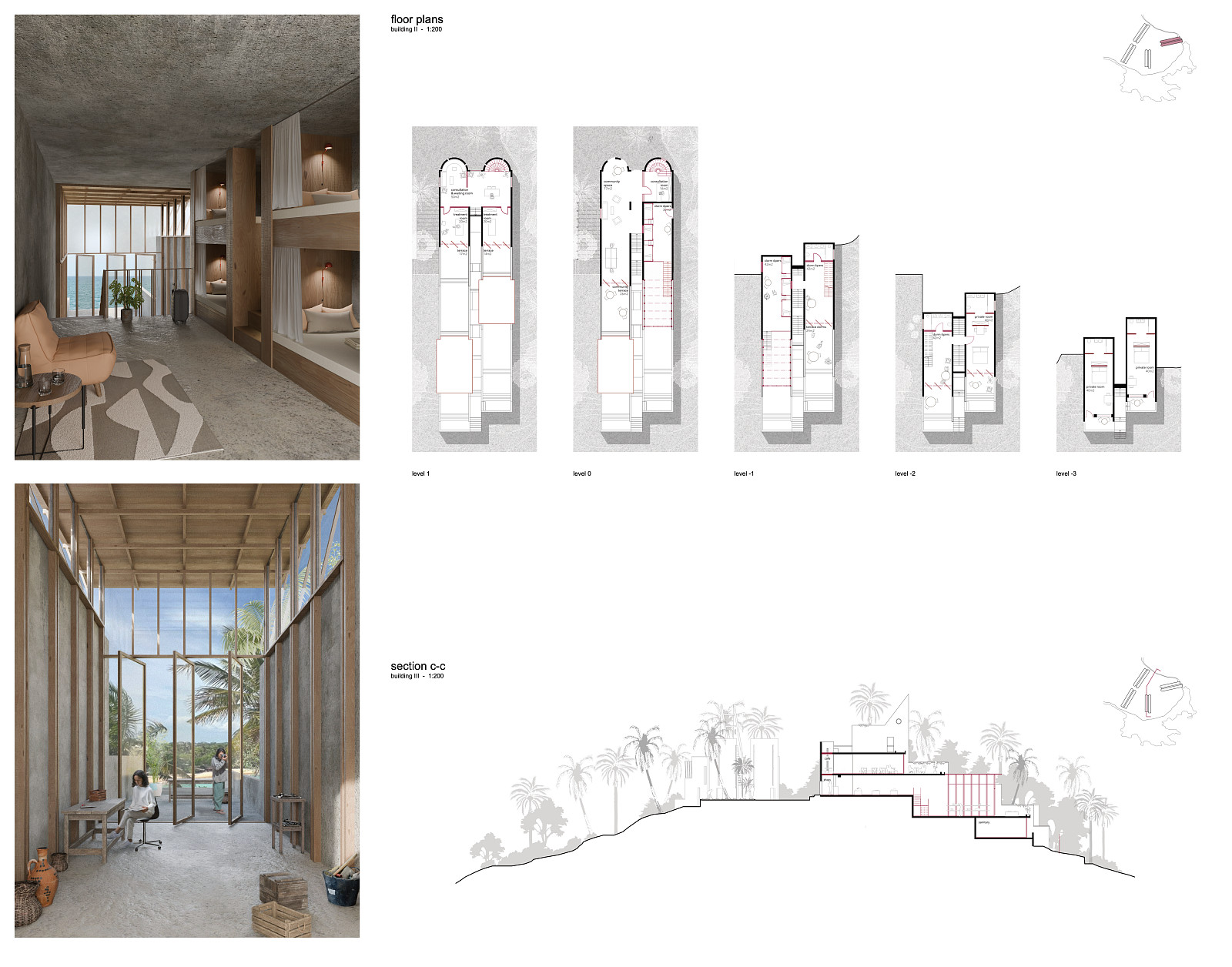
Architectural interventions remain deliberately restrained. Selected sections of the existing concrete structure were removed to create open, naturally ventilated workshop spaces, while lightweight timber roofs replace the lost roofscape without obscuring the original architecture. Public functions are organized around the central clearing, with quieter spaces descending through the building toward the sea. Every interior space extends into the landscape through terraces and outdoor learning areas, reinforcing the dialogue between architecture and nature.
By combining adaptive reuse with productive landscapes and community engagement, the project transforms a neglected hotel ruin into a place where architecture mediates between history, nature, tourism, and local life.
Technical information
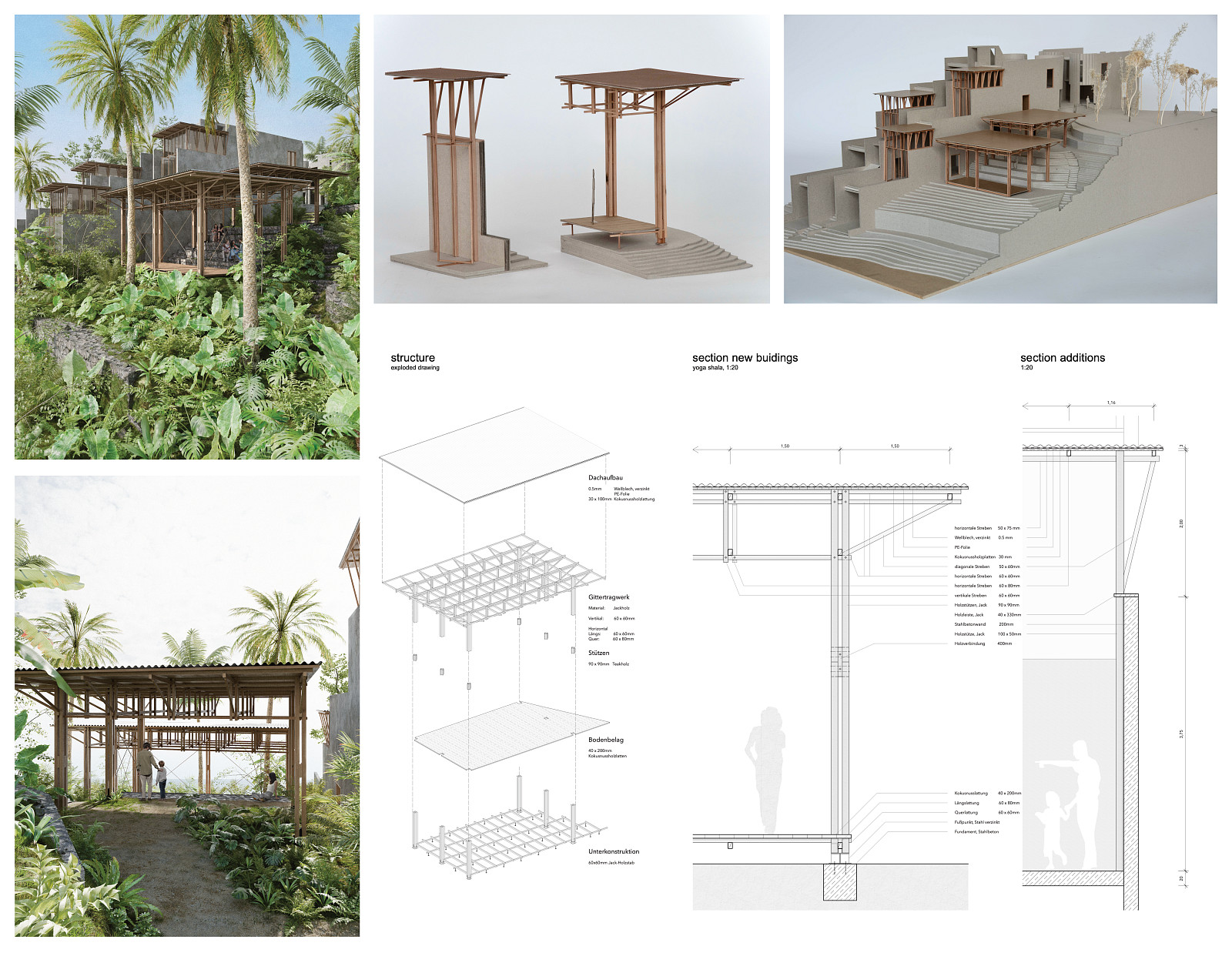
The structural concept of the new interventions establishes a deliberate material and tectonic dialogue between the existing, heavy reinforced concrete base and the newly introduced lightweight timber additions. Directly inspired by traditional Sri Lankan timber architecture, the design utilizes a contemporary, modular framework that serves as a visual and physical counterweight to the massive concrete structures. Local Jackwood was chosen as the primary material not only for its lightness and high structural efficiency but also to create an elegant, airy aesthetic that integrates seamlessly into the lush environment.
The vertical extensions built directly onto the existing rooftops are executed as a straightforward timber frame construction mounted precisely along the heavy concrete walls. These additions feature a generous roof overhang designed to maximize shading, which significantly improves the indoor climate of the rooms below. Furthermore, the light openings and clerestory bands created along the upper section above the concrete walls are utilized to channel natural light deep into the interior spaces.
In contrast, the freestanding new structures, such as the open-air Yoga Shala, function entirely as sheltered outdoor spaces where the primary objective is to provide shade and protection from heavy tropical rains. These structures feature an expressive timber truss system directly inspired by traditional local architecture, reinterpreted into a simplified, modern framework. The entire system is highly modular, based on standardized timber lengths that allow for efficient prefabrication off-site and quick, precise assembly on-site. Devoid of heavy insulation or thermal layers, these standalone pavilions embrace an open-frame design with wide, dramatic roof cantilevers. This creates a completely breathable, shaded outdoor environment that elegantly shields users from the elements while fostering a direct connection to nature.
Documentation

Copyright © 2026 INSPIRELI | All rights reserved. Use of this website signifies your agreement to the Terms of Use, Privacy Policy, and use of cookies.
