Museum of emotions

Project idea
Museum of Emotions is an architectural exploration of two opposing emotional states: Hatred and Love. The project investigates how architecture can influence human perception, behavior, and emotional experience, guiding visitors through two fundamentally different journeys.
Project description
Before entering either exhibition space, visitors arrive in a neutral area called the Hall of Choice. This space contains no strong emotional cues and serves as a moment of reflection. Here, visitors must make a decision: turn left toward the Hall of Hatred or right toward the Hall of Love.
This choice symbolizes the decisions people make every day in their relationships, thoughts, and actions.
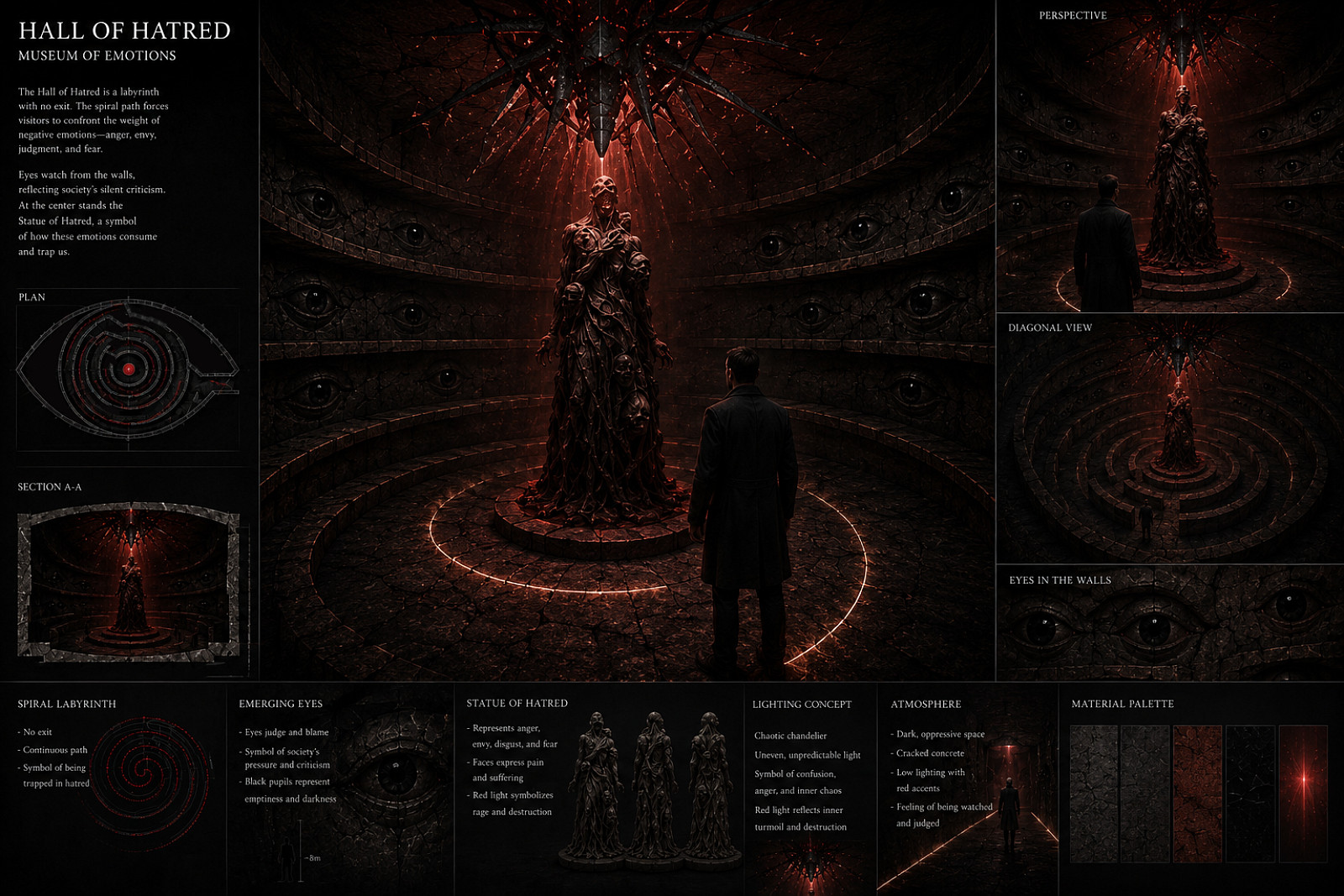
The first route leads to the Hall of Hatred. The space is designed as a spiral labyrinth that resembles an eye when viewed from above. The eye symbolizes constant observation, judgment, and social pressure. Throughout the hall, eyes emerge from the walls, creating the unsettling sensation of being watched wherever one goes. Scratches, damaged surfaces, and dark materials represent emotional wounds, anger, resentment, and internal conflict.
At the center of the spiral stands the Statue of Hatred, representing hatred, envy, and disgust. A single red beam of light illuminates the sculpture from above, emphasizing how destructive emotions can become the center of a person’s life. Suspended above the statue is a sharp chandelier composed of triangular spikes, reinforcing the atmosphere of tension, hostility, and discomfort.
Unlike a traditional museum, the Hall of Hatred has no direct exit. Upon reaching the center, visitors discover that the only way out is to retrace their steps through the same labyrinth. This architectural decision reflects the nature of hatred itself: it traps people in repetitive cycles of negative thoughts, forcing them to revisit the same emotions again and again. Rather than moving forward, hatred keeps a person emotionally stuck.
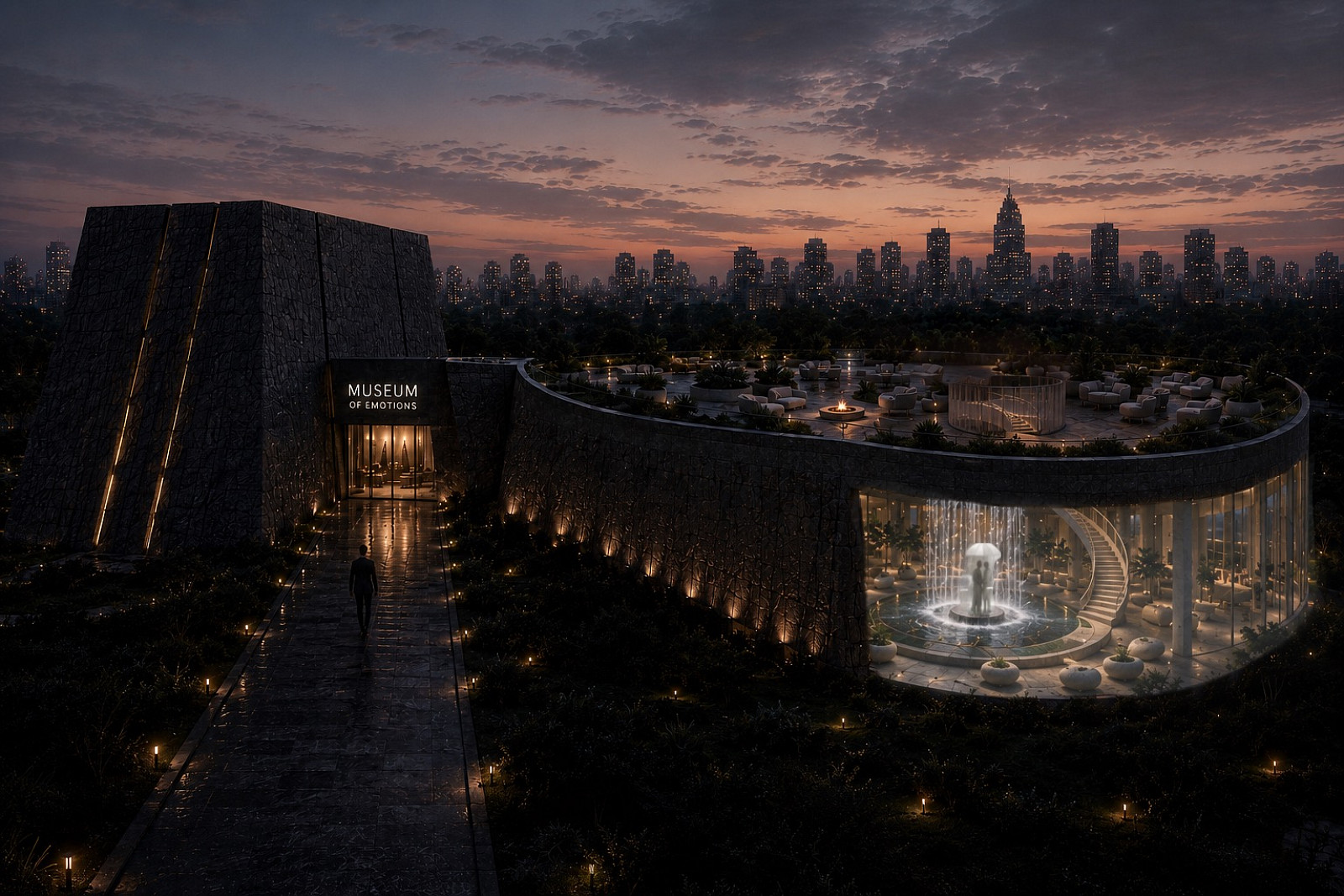
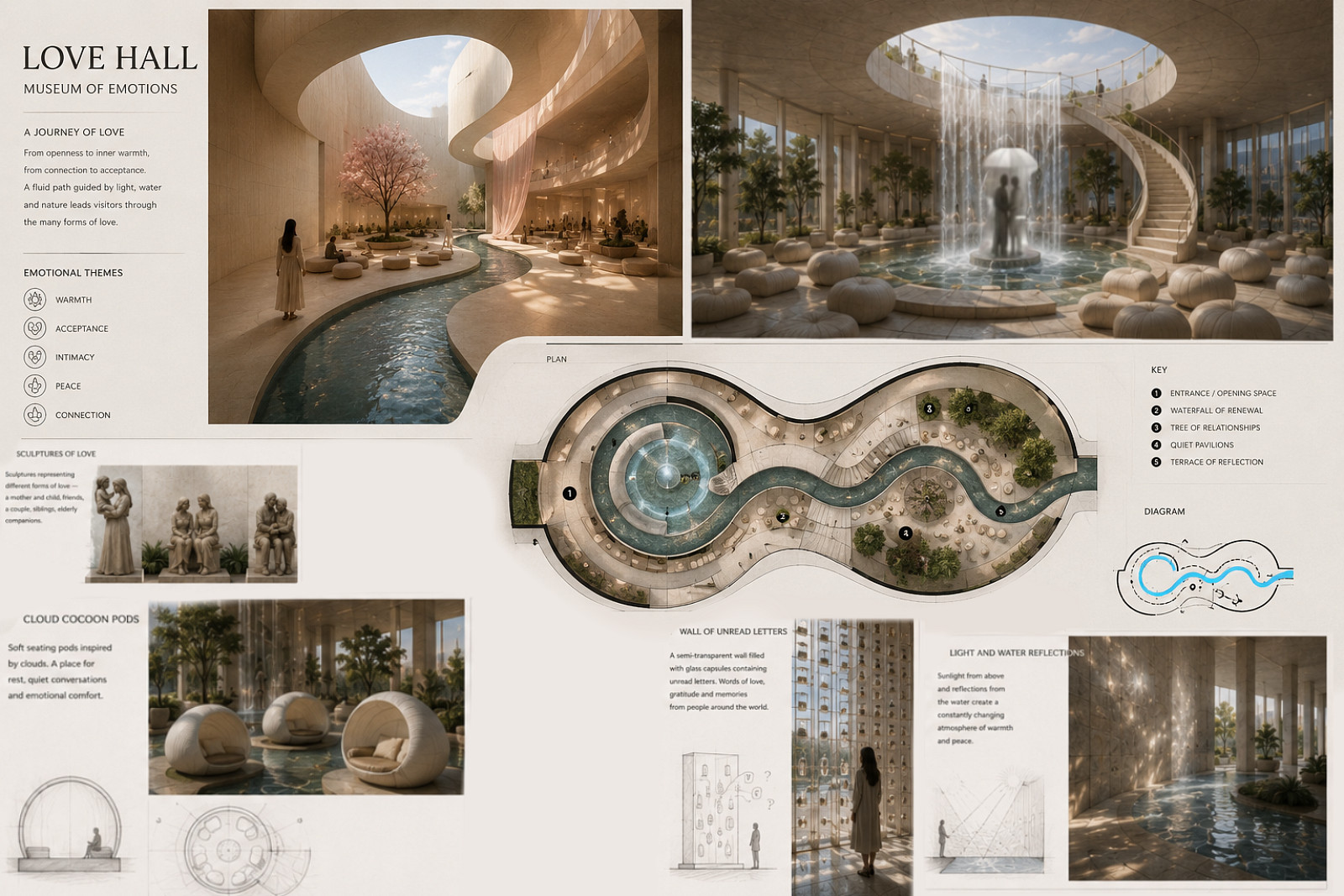
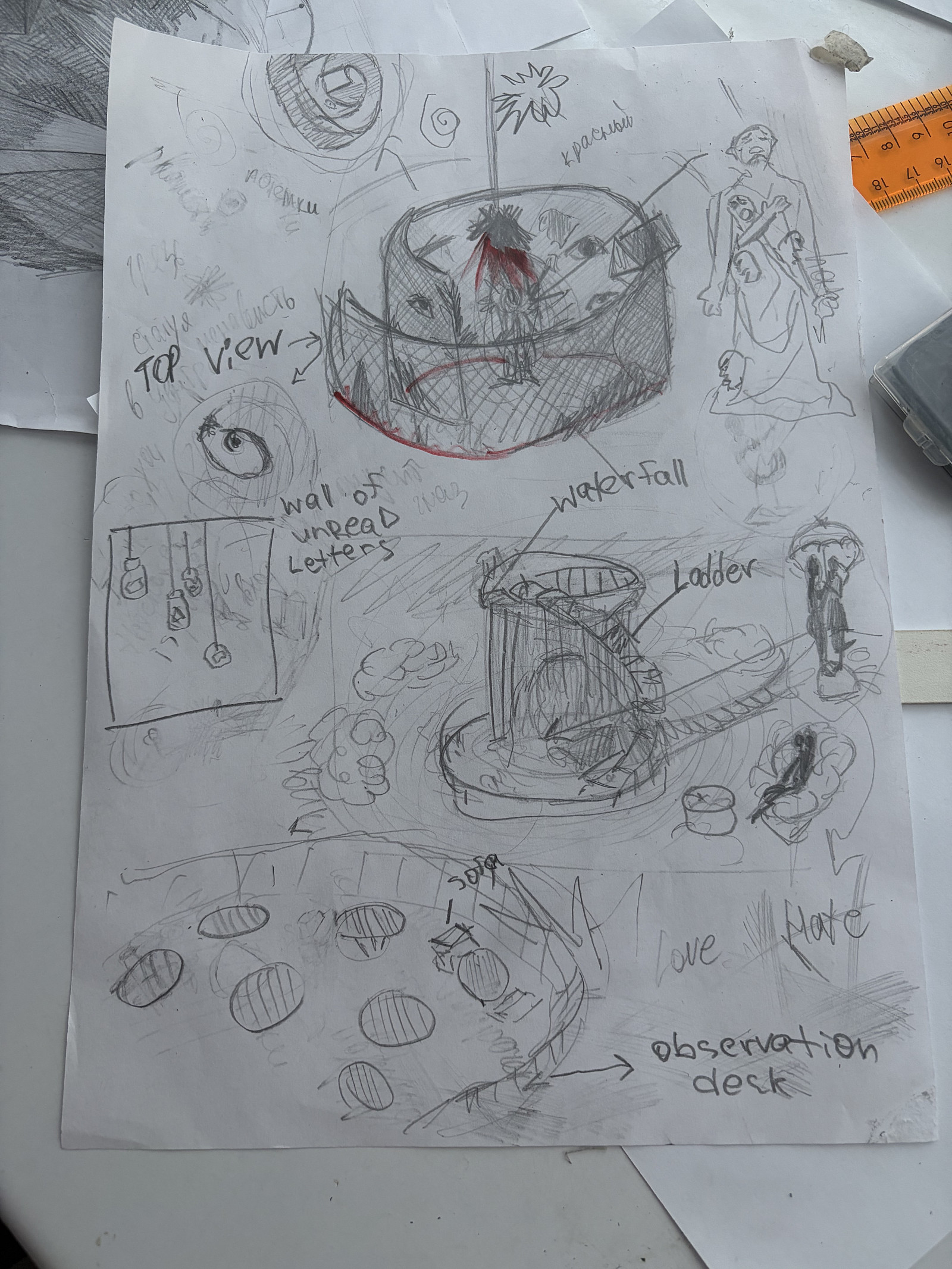
The second route leads to the Hall of Love, a space designed around openness, movement, and connection. Water becomes the central element of the experience. A river flows through the hall and ends in a waterfall, symbolizing healing, renewal, and the continuous passage of time.
At the center stands a sculpture of a couple sharing an umbrella in the rain. The sculpture expresses the idea that love does not remove difficulties from life but helps people face them together. Around the hall are soft seating elements inspired by clouds, creating a feeling of comfort, safety, and belonging.
A staircase gently wraps around the waterfall and guides visitors upward. Unlike the Hall of Hatred, this path does not return to where it began. Instead, it leads to an open rooftop terrace overlooking the city.
The terrace symbolizes growth, trust, acceptance, and a broader perspective on life. By moving upward rather than backward, visitors experience architecture as a metaphor for personal development and emotional connection.
Through these two contrasting journeys, the Museum of Emotions demonstrates how different emotional states can shape a person’s path. One route becomes a cycle of repetition and isolation, while the other encourages growth, understanding, and openness to the world.
The project explores architecture not only as a physical environment but also as a storytelling medium capable of expressing complex human emotions without words.
Technical information
Hatred Hall: Black concrete, dark stone, oxidized steel, red lighting.
Love Hall: Light limestone, glass, water, wood, vegetation.
Transition Space: Neutral concrete and indirect lighting.

Copyright © 2026 INSPIRELI | All rights reserved. Use of this website signifies your agreement to the Terms of Use, Privacy Policy, and use of cookies.