Reconstructing the Vernacular: Resilient Post Earthquake Housing at Laprak, Gorkha, Nepal


Project idea
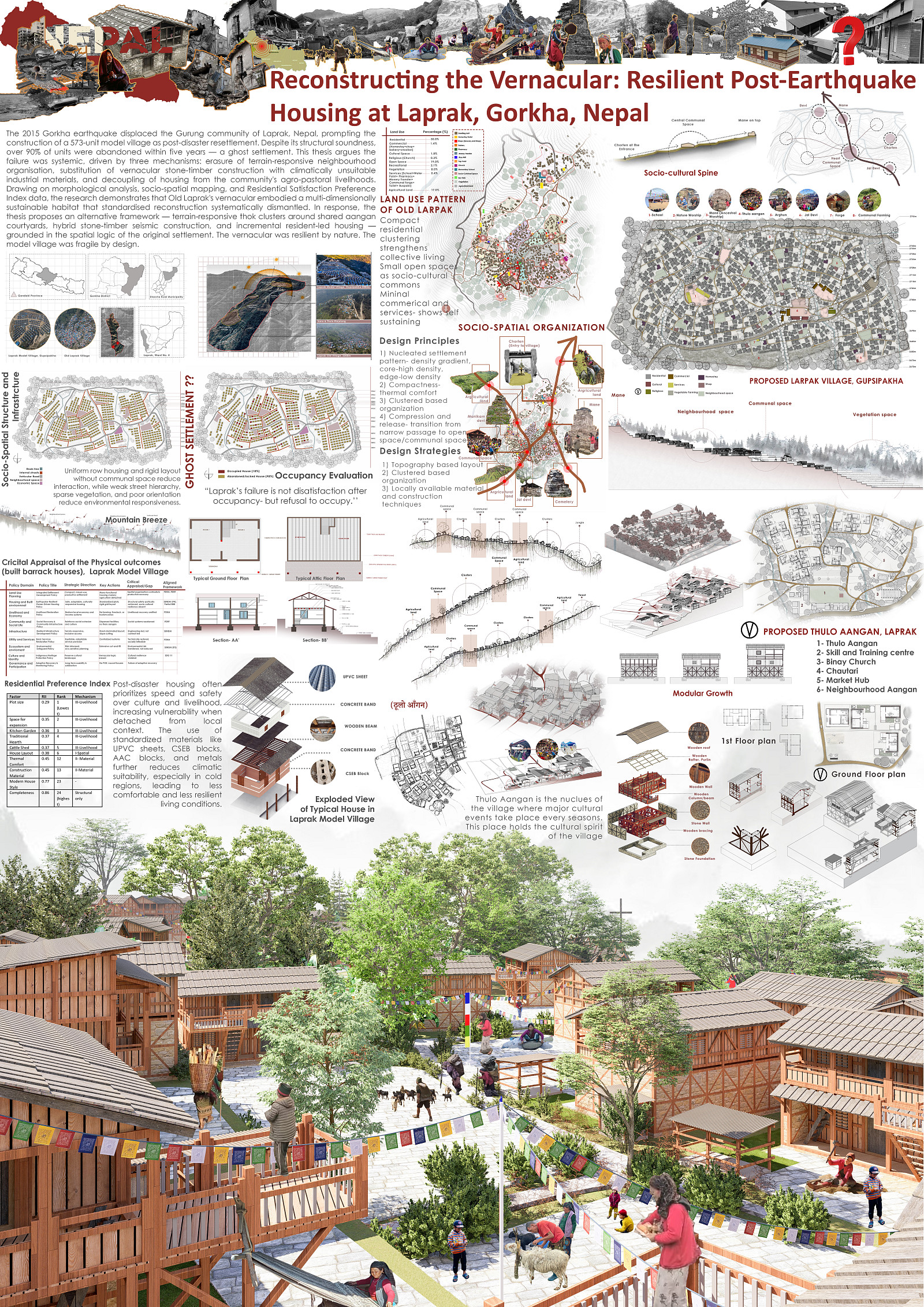
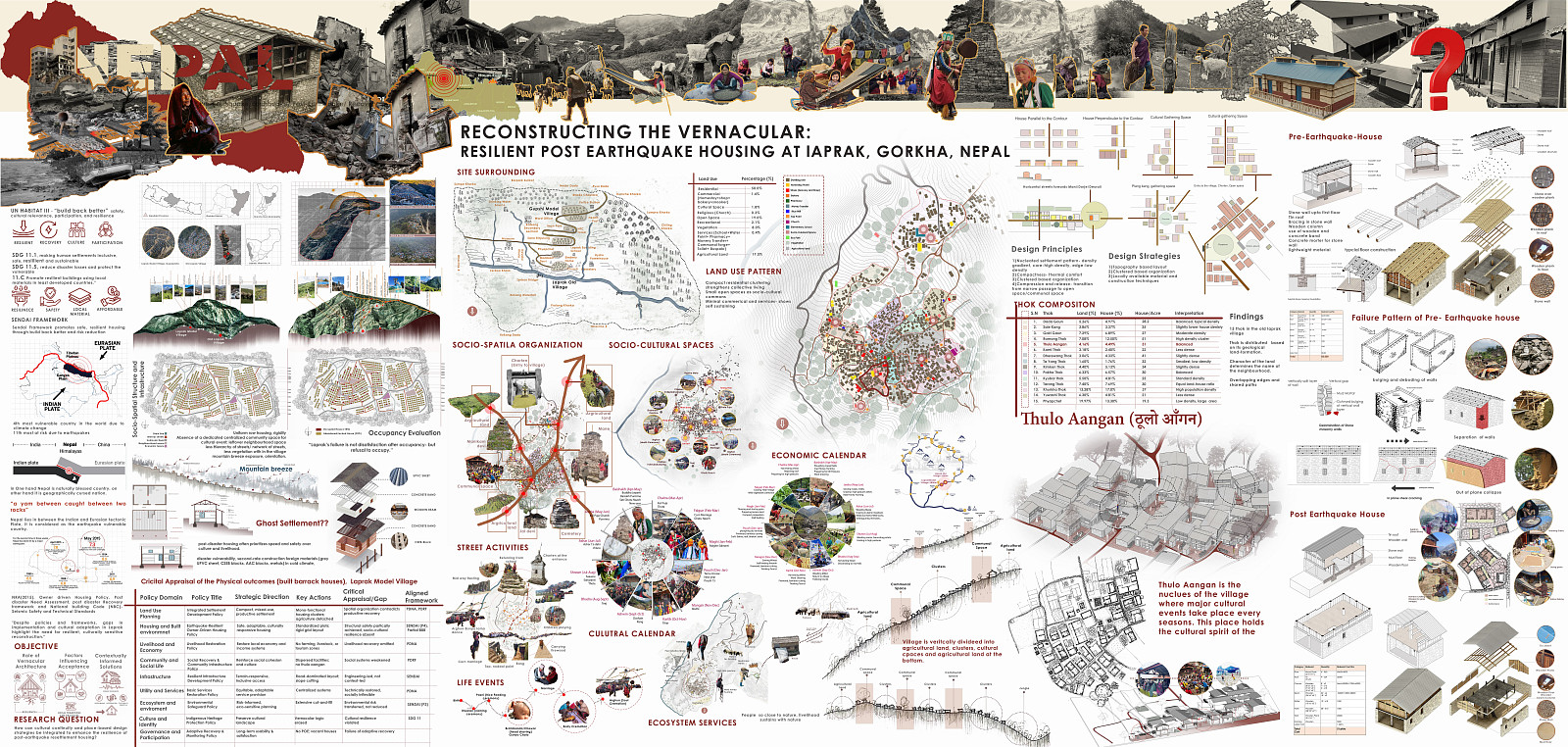
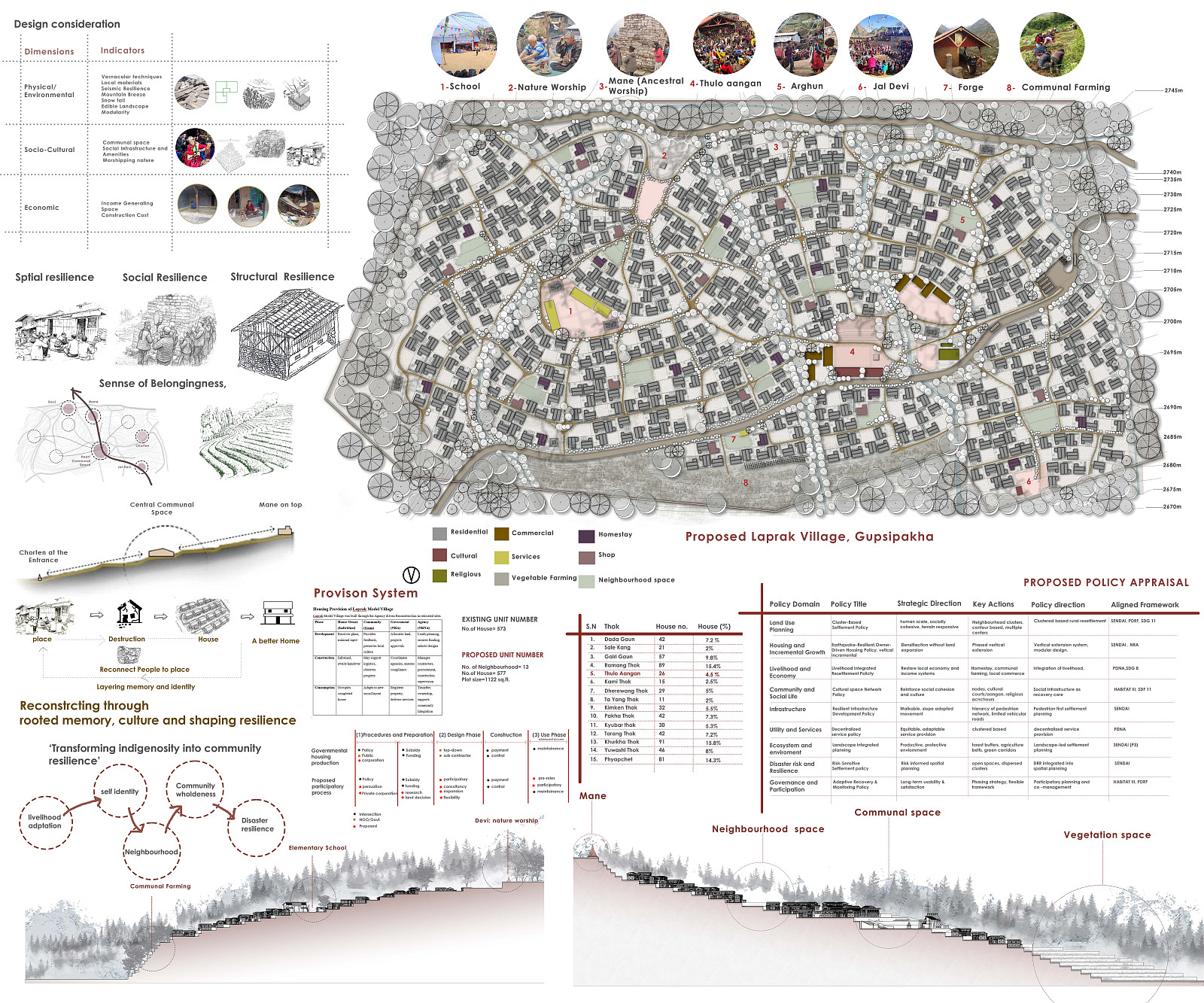
Nepal is ranked 11th in the world for seismic risk, and the 2015 Gorkha earthquake devastated Laprak, a centuries-old Gurung settlement, killing 18 residents and collapsing its vernacular stone houses. In response, the Non-Resident Nepali Association relocated the community to a new site, Gupsipakha, delivering over 573 identical "barrack-type" houses on a rigid grid through a top-down, agency-driven reconstruction model.
The idea behind this project is rooted in a critical paradox: five years after handover, roughly 90% of these earthquake-safe houses remain unoccupied — earning the settlement the label "ghost village." Our research found that the failure was not structural but cultural and spatial: the grid erased the Thok (neighbourhood-cluster) system, removed the Thulo Aangan courtyards where rituals such as Ghatu Naach, corn marriage, and Kul Puja (ancestral worship) take place, and disconnected housing from agro-pastoral life — no kitchen gardens, cattle sheds, grain stores, or traditional hearths.
This project's objective is to prove that earthquake resilience must extend beyond structural safety to encompass cultural and spatial resilience. By critically comparing the failed Model Village against the vernacular logic of Old Laprak, the project develops an alternative resettlement framework — synthesising seismic-resilient timber-stone construction with the Thok–Aangan spatial system and incremental, owner-adaptable housing — so that reconstruction restores not just shelter, but a community's way of life.
Project description
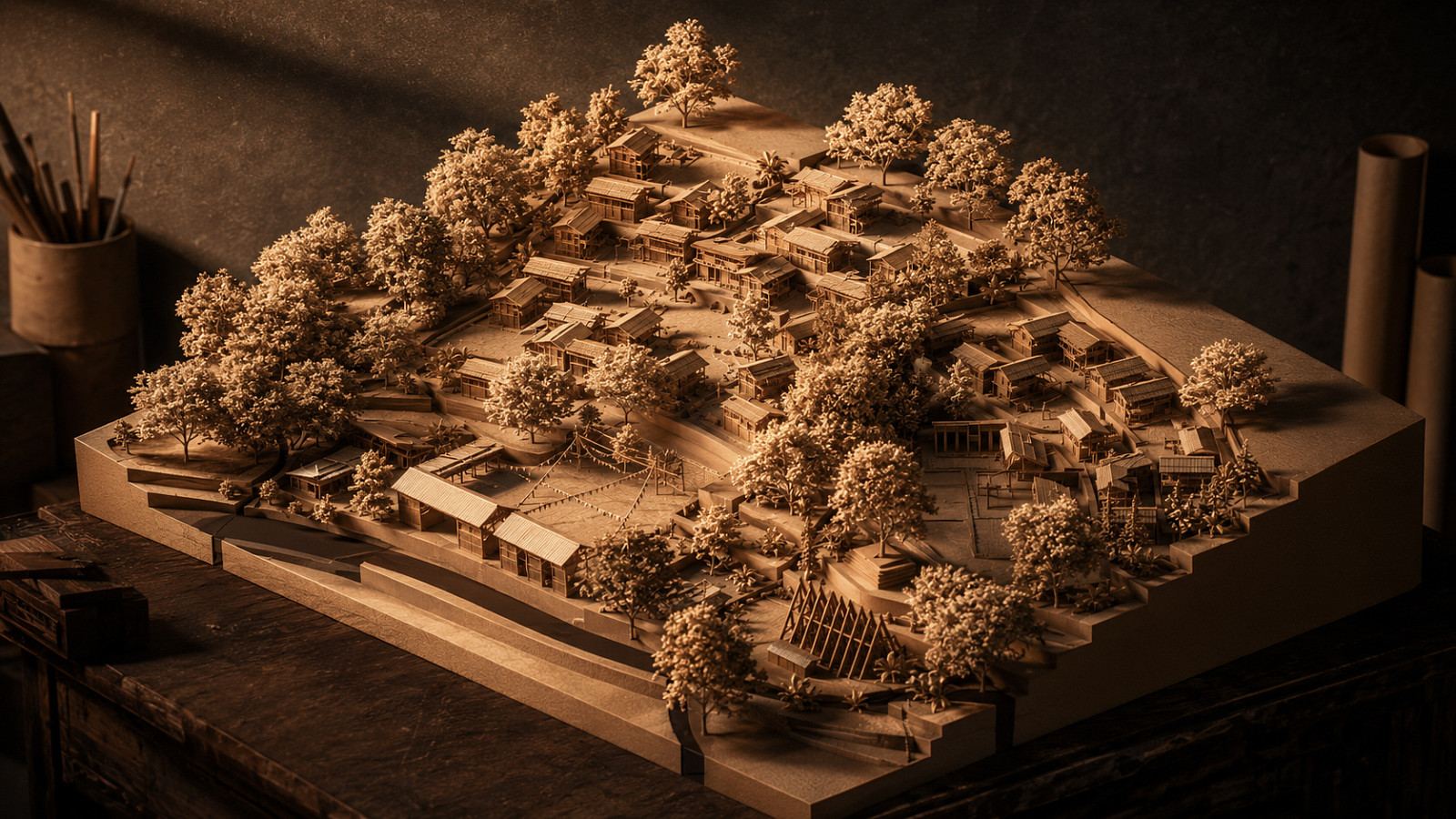
This project proposes an alternative resettlement masterplan and dwelling system for the Laprak community at Gupsipakha (a 45-acre / 18.3-hectare site), structured across three scales.
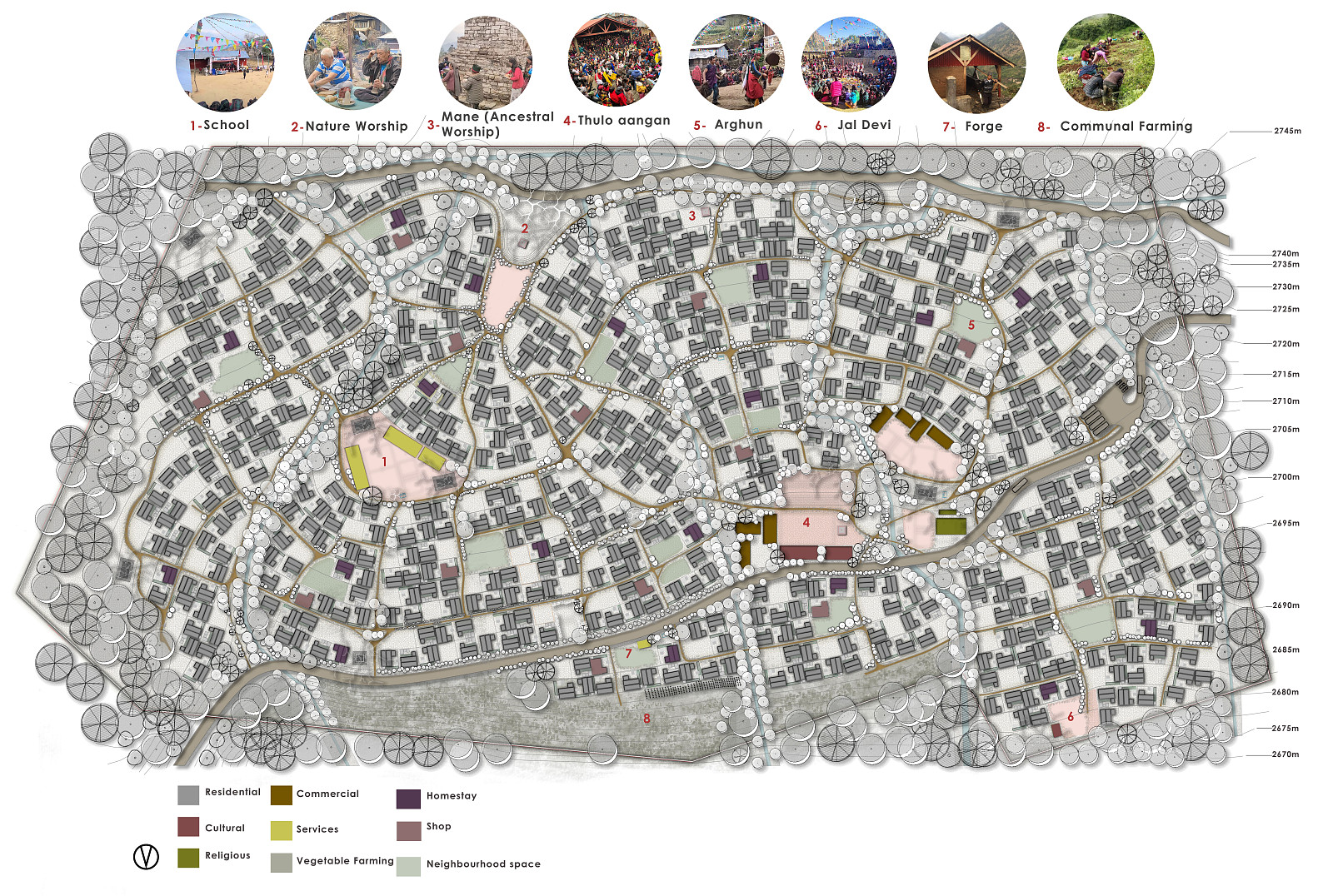
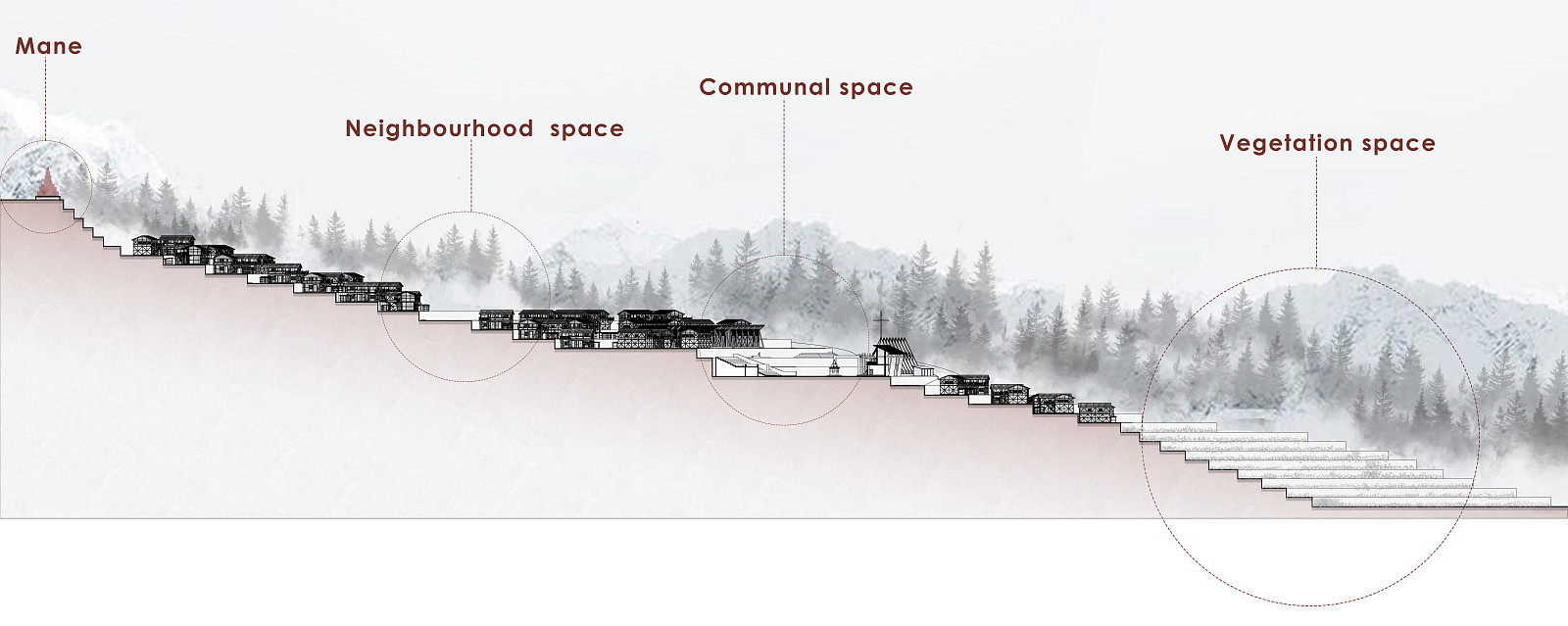
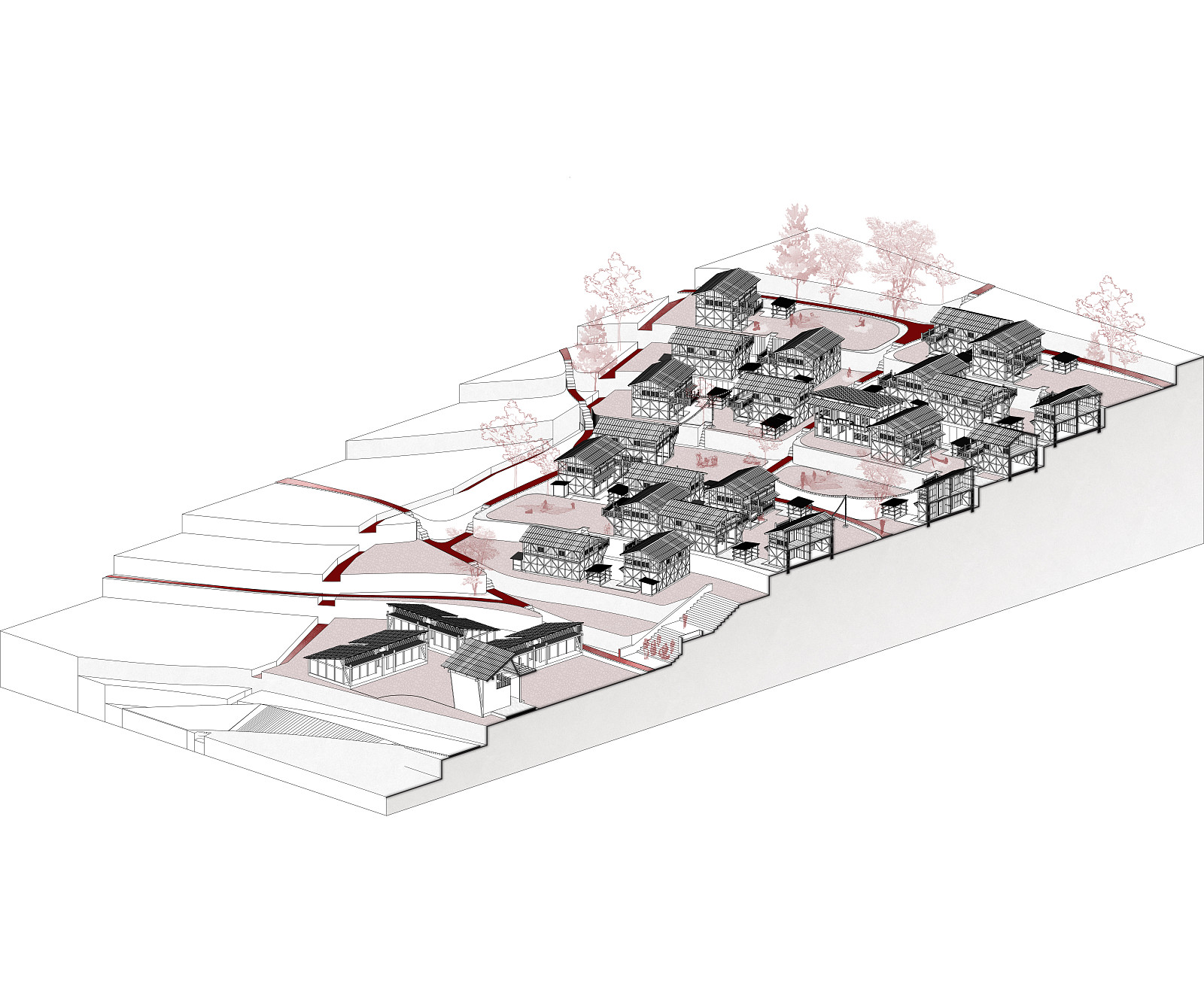
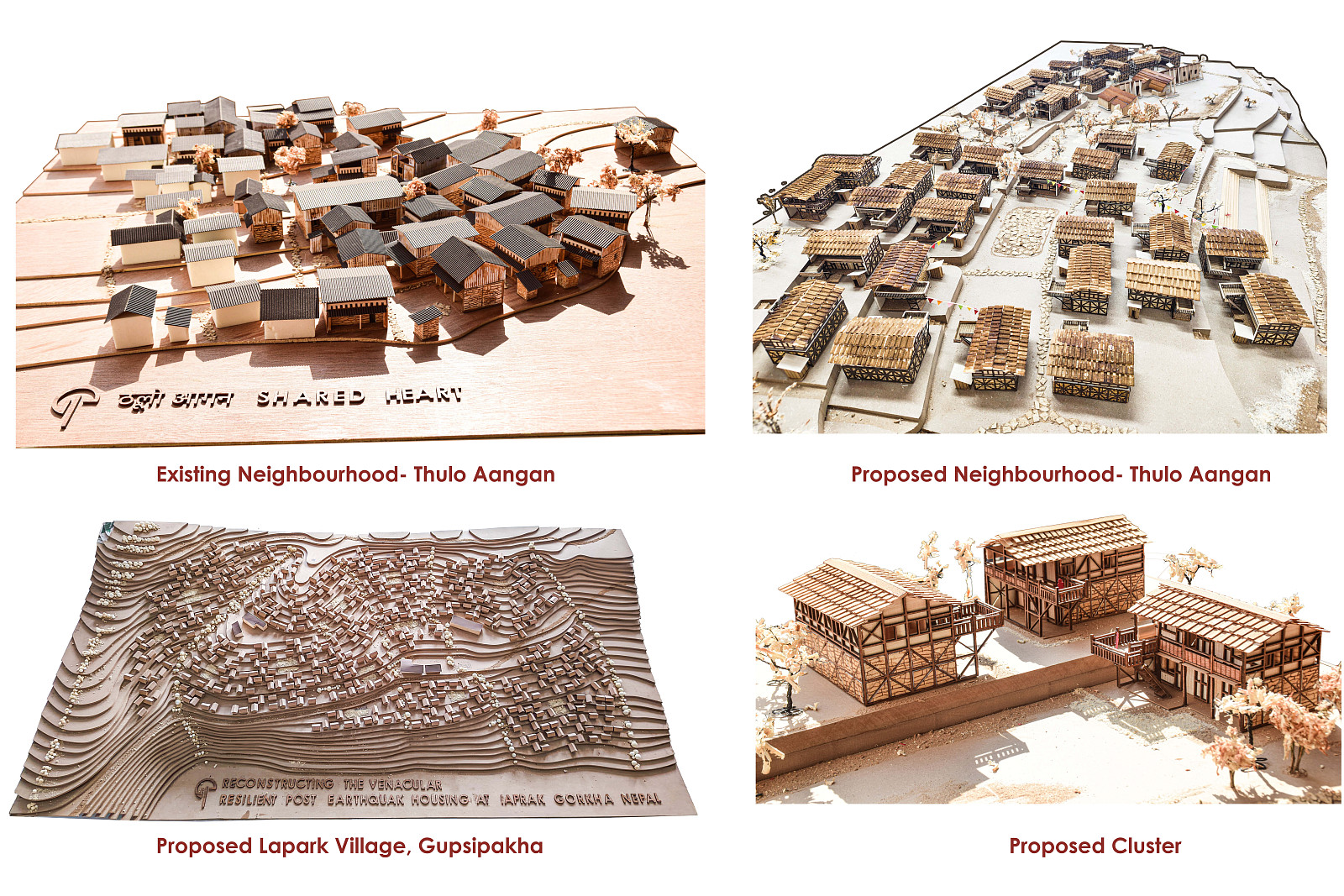
At settlement scale, the existing rigid grid is replaced by a diagonal socio-cultural spine connecting the village entrance (marked by a Chorten), school, workshops, market, a central communal square, and a mane at the highest point. Land is zoned into residential areas (upper slopes), semi-public school/market space acting as a buffer near the road, and agricultural land on the lower slopes, which also absorbs site drainage.
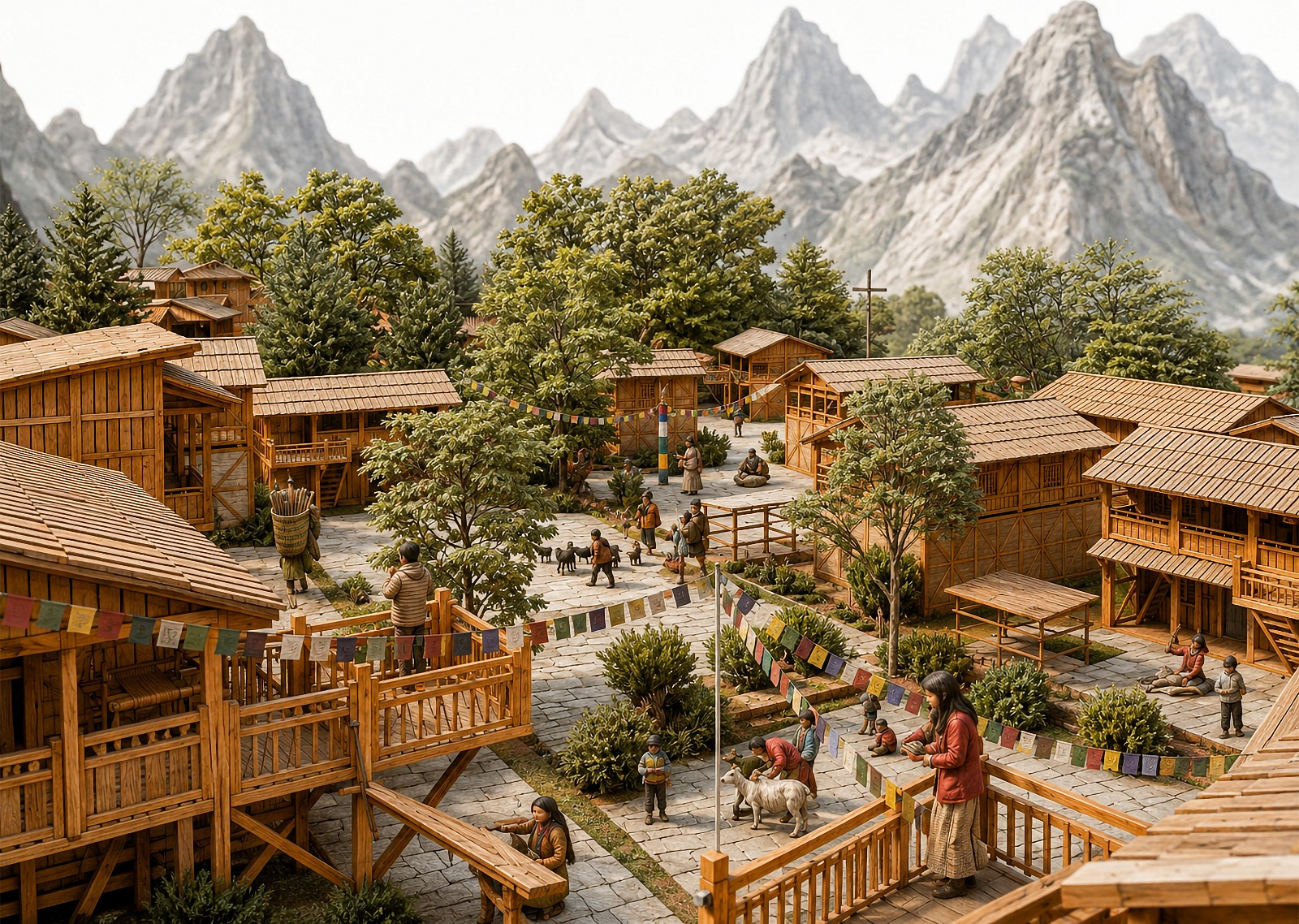
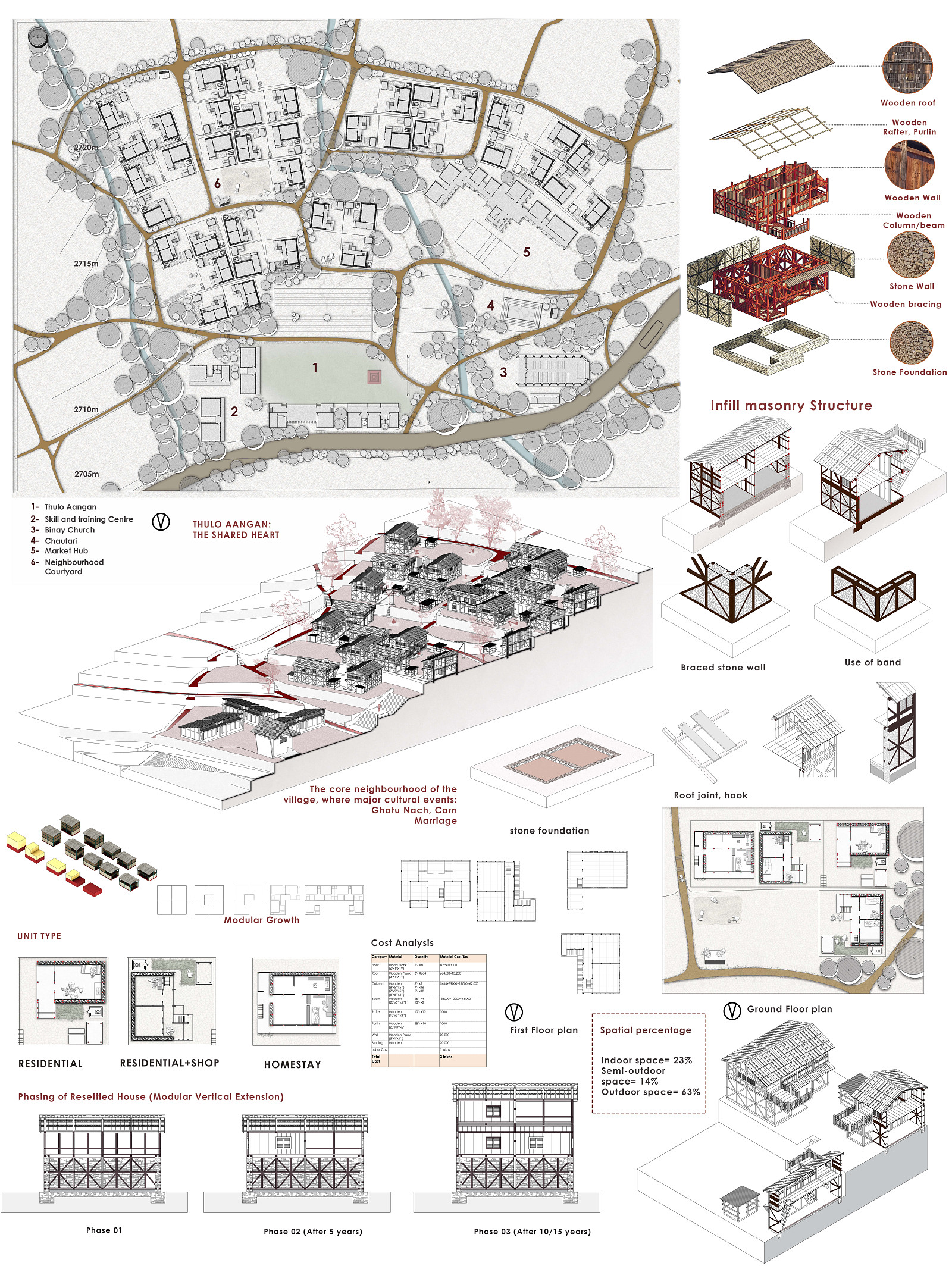
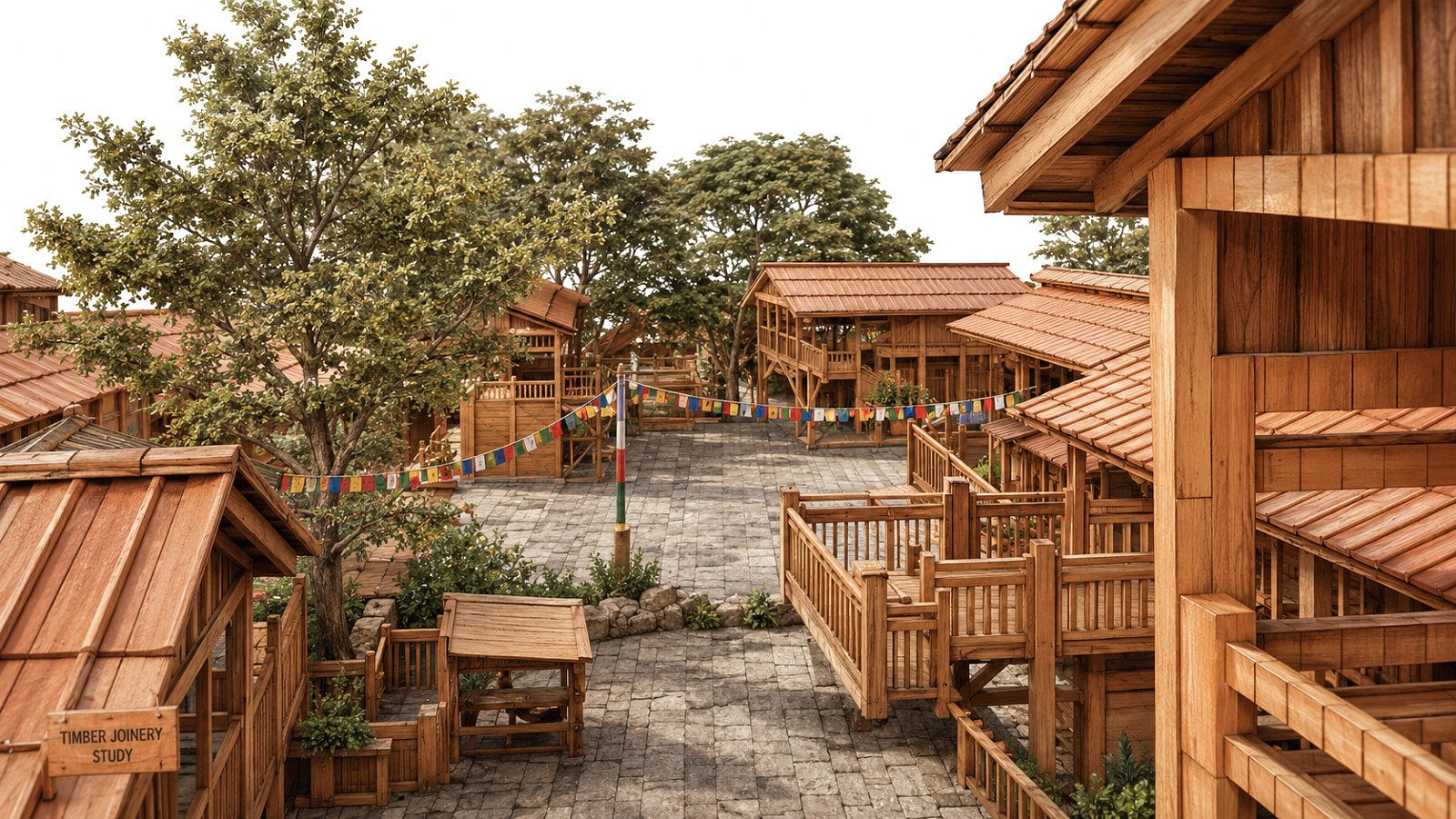
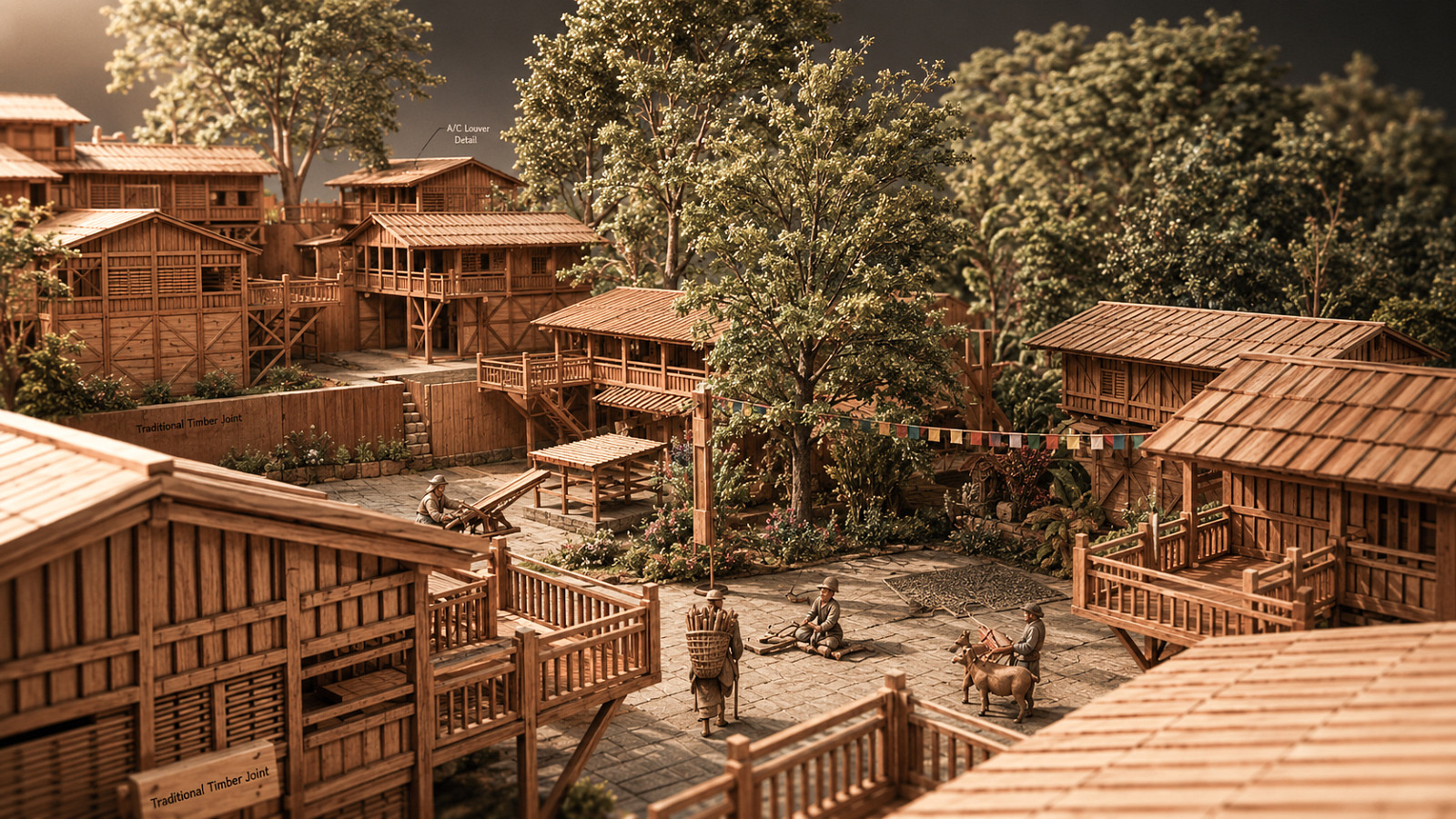
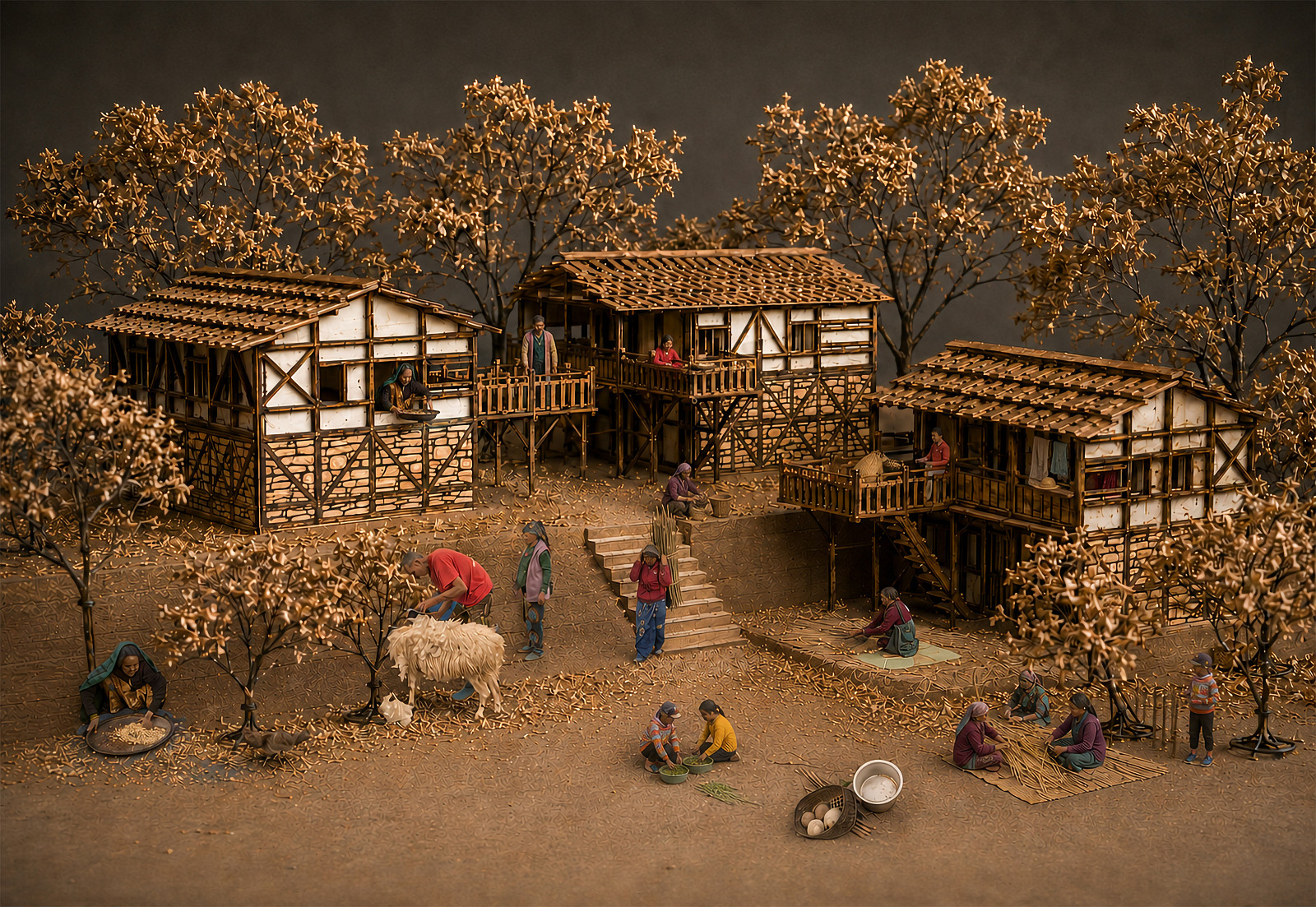
At neighbourhood scale, 577 houses are organised into 13 Thok — neighbourhood-based clusters — each anchored by a Thulo Aangan, a shared courtyard reinstating the setting for communal rituals (Ghatu Naach, Arghun death ceremonies, seasonal gatherings) that the Model Village removed. Clusters take L- or U-shaped "cluster-of-clusters" configurations around shared open space, with plot sizes (~1,122 sq.ft) comparable to the existing barracks but spatially reorganised.
At dwelling scale, each unit grows incrementally — from a safe structural core to a fully expanded home over four phases — and reinstates the ageno/chula (traditional hearth), kitchen garden, cattle shed, and grain storage essential to Gurung livelihoods, alongside provision for home-based income activities such as homestays and craft production.
Technical information
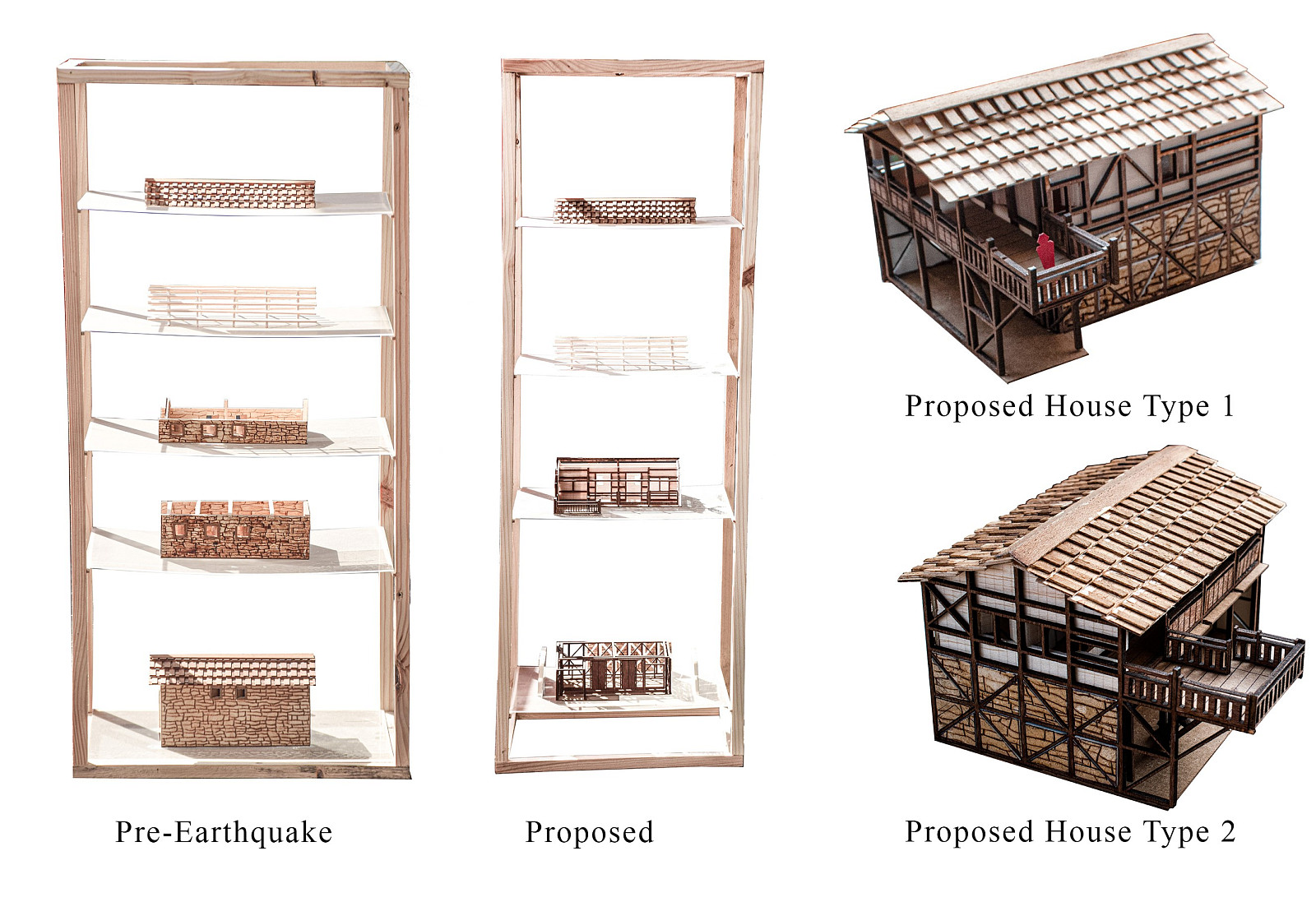
The proposed houses use an infill stone-masonry system within a cross-braced timber frame — a vernacular-revival approach related to Dhajji Dewari construction, combining locally sourced stone and timber with engineered seismic detailing. Vertical timber posts, horizontal bands, and diagonal bracing form the primary frame; stone infill provides thermal mass and material continuity with the traditional Gurung house.
Seismic bands are introduced at plinth, lintel, and roof level to tie the structure together — directly addressing the failure mode of pre-earthquake houses, where unreinforced dry-stone walls and loosely fixed timber roofs (rafters tied with bamboo rope) caused widespread collapse in 2015.
Each unit follows a simple, regular plan with a breadth-to-length ratio of approximately 1:1.6, evenly distributed internal walls for balanced lateral stiffness, minimal openings in external walls, and verandas no deeper than one-third of the building depth — all reducing torsional and out-of-plane failure risk.
Foundations are engineered stone masonry, adapted to the site's slope and bearing conditions. Construction is phased: Phase 1 delivers a structurally complete core (foundation, frame, roof, kitchen/toilet) as immediate safe shelter; later phases add internal partitioning, horizontal room expansion, and a second storey — all pre-engineered into the original frame, avoiding the unsafe informal additions seen in comparable incremental-housing precedents.

Copyright © 2026 INSPIRELI | All rights reserved. Use of this website signifies your agreement to the Terms of Use, Privacy Policy, and use of cookies.