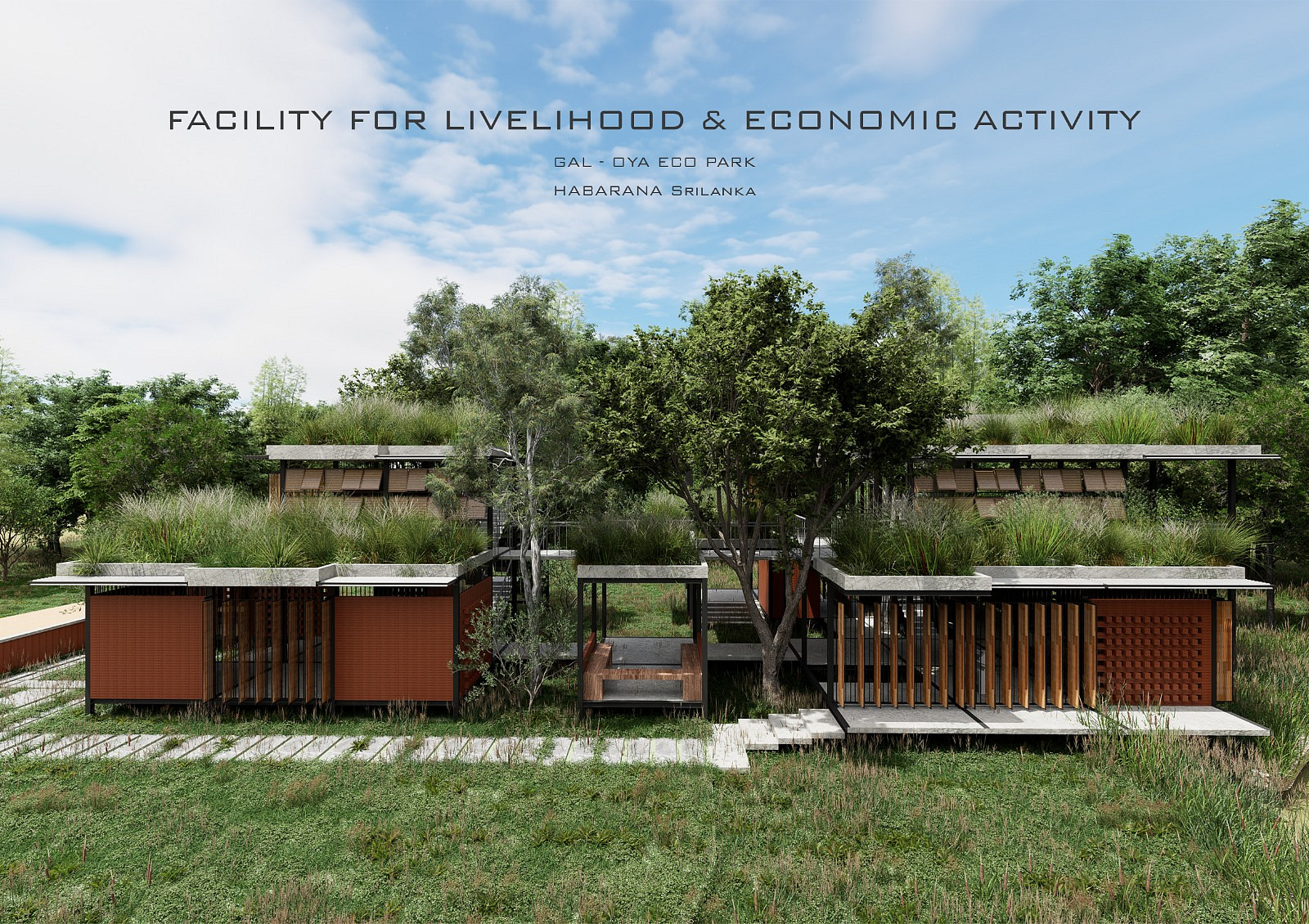
Facility for Livelihood and Economic Activity - Gal-Oya Eco Park


 Chandana Shrinath Wijetunga
Project idea
Adaptive Livelihood Infrastructure for Human–Elephant Coexistence
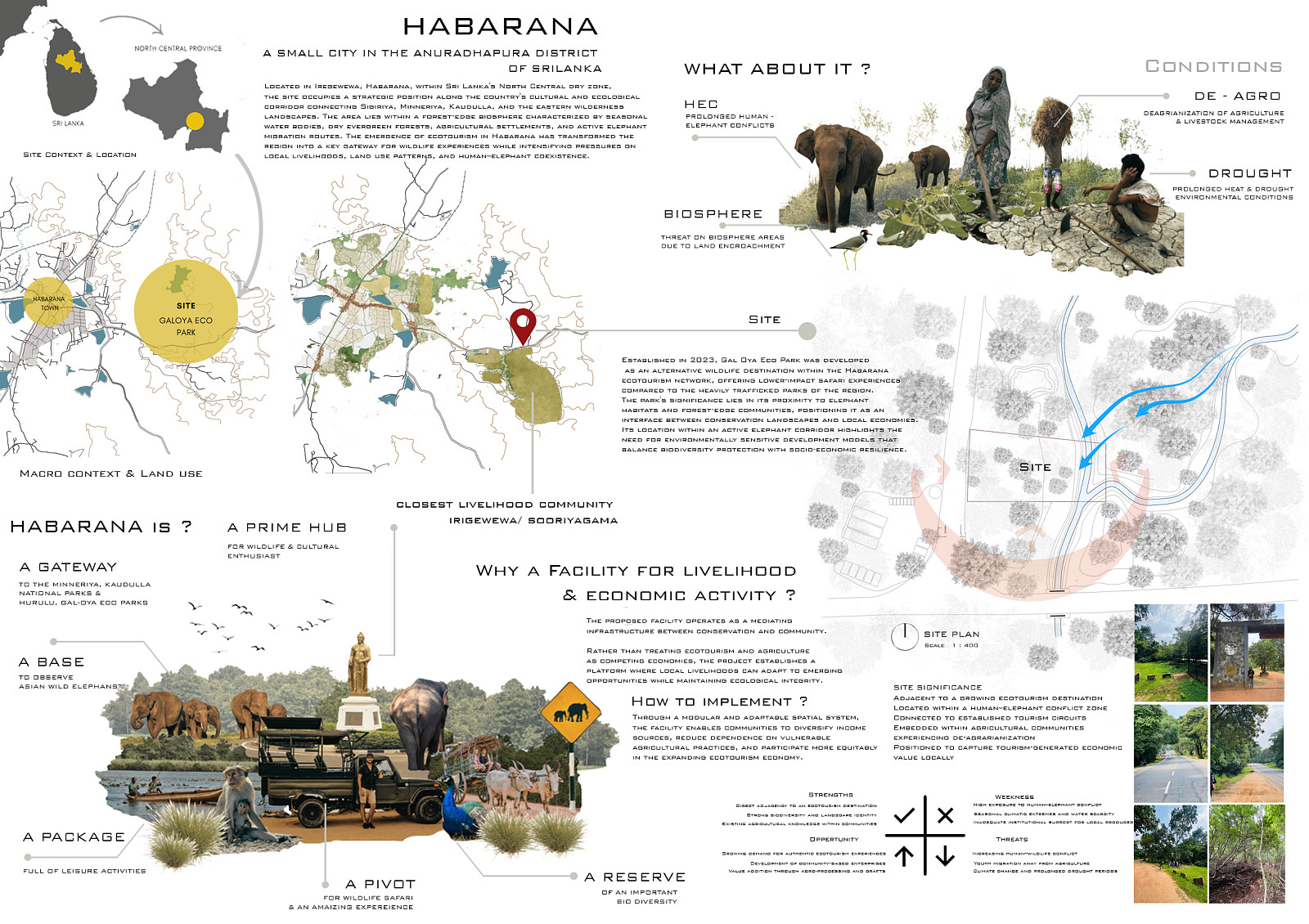
The project addresses the growing imbalance between the rapid expansion of ecotourism and the decline of traditional agricultural livelihoods in Habarana, Sri Lanka. Located adjacent to Gal Oya Eco Park within a forest-edge biosphere and active human–elephant conflict zone, the proposal responds to the need for an adaptive mechanism that reconnects local communities to emerging economic opportunities.
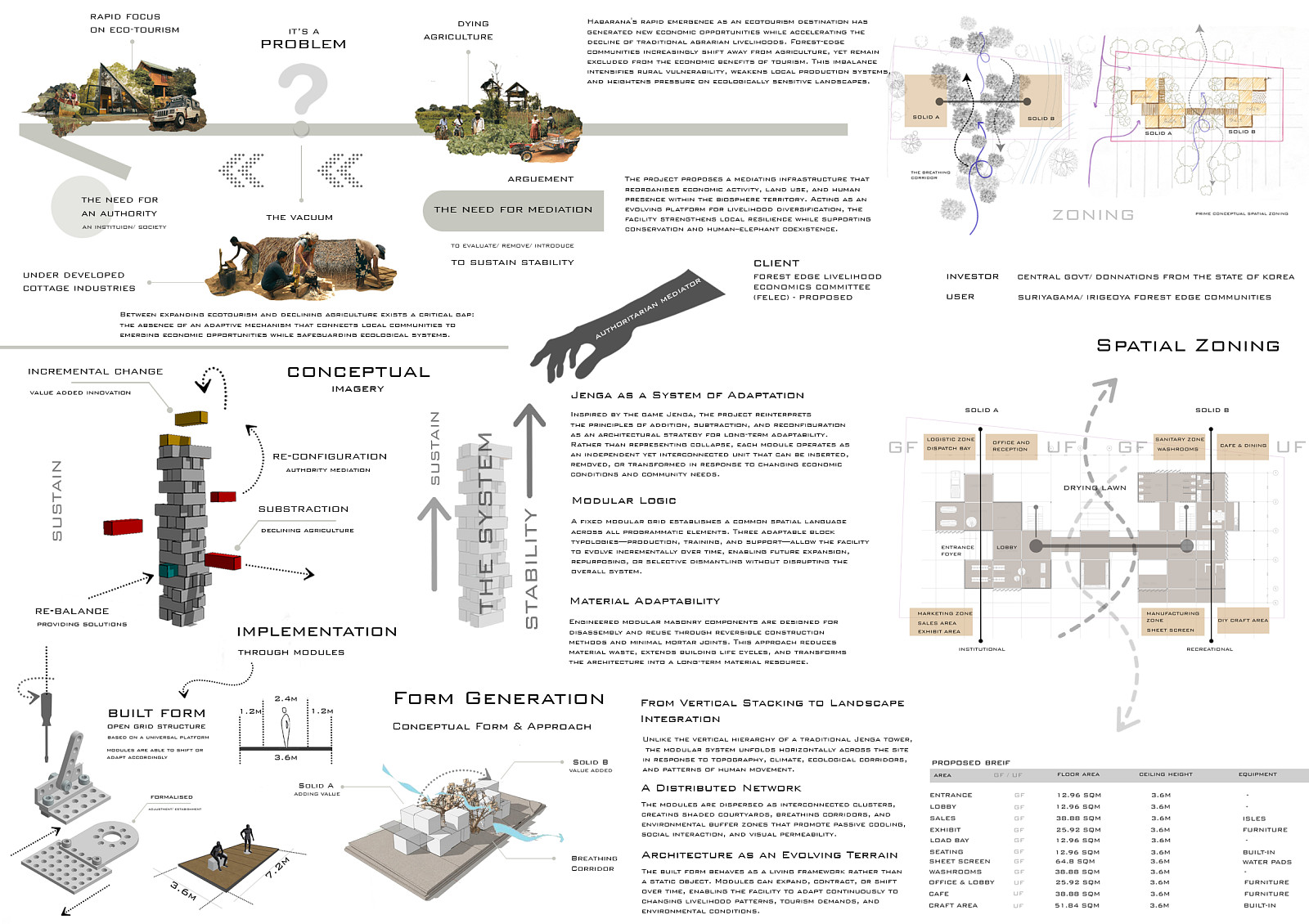
Inspired by the principles of the game Jenga, the project reinterprets addition, subtraction, and reconfiguration as an architectural strategy for resilience. Rather than creating a static building, the proposal establishes a modular system capable of evolving alongside changing environmental conditions, tourism patterns, and community needs.
The project acts as a mediating infrastructure between conservation, ecotourism, and local economies, transforming conflict into coexistence and enabling diversified, sustainable livelihoods for forest-edge communities.
Project description
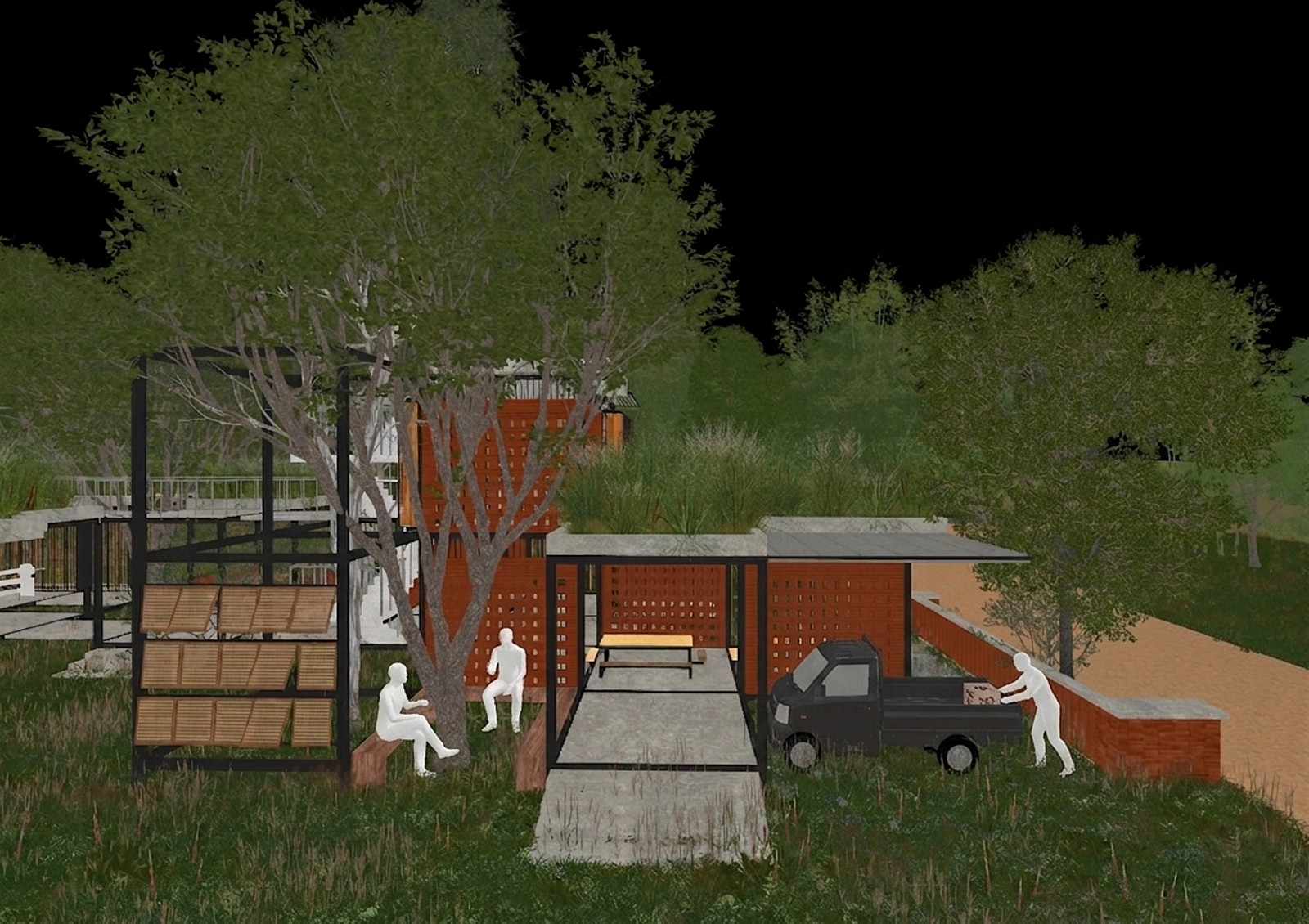
The project proposes a Facility for Livelihood and Economic Activities that supports community-led production, skills development, and value-added industries within the Habarana ecotourism corridor.
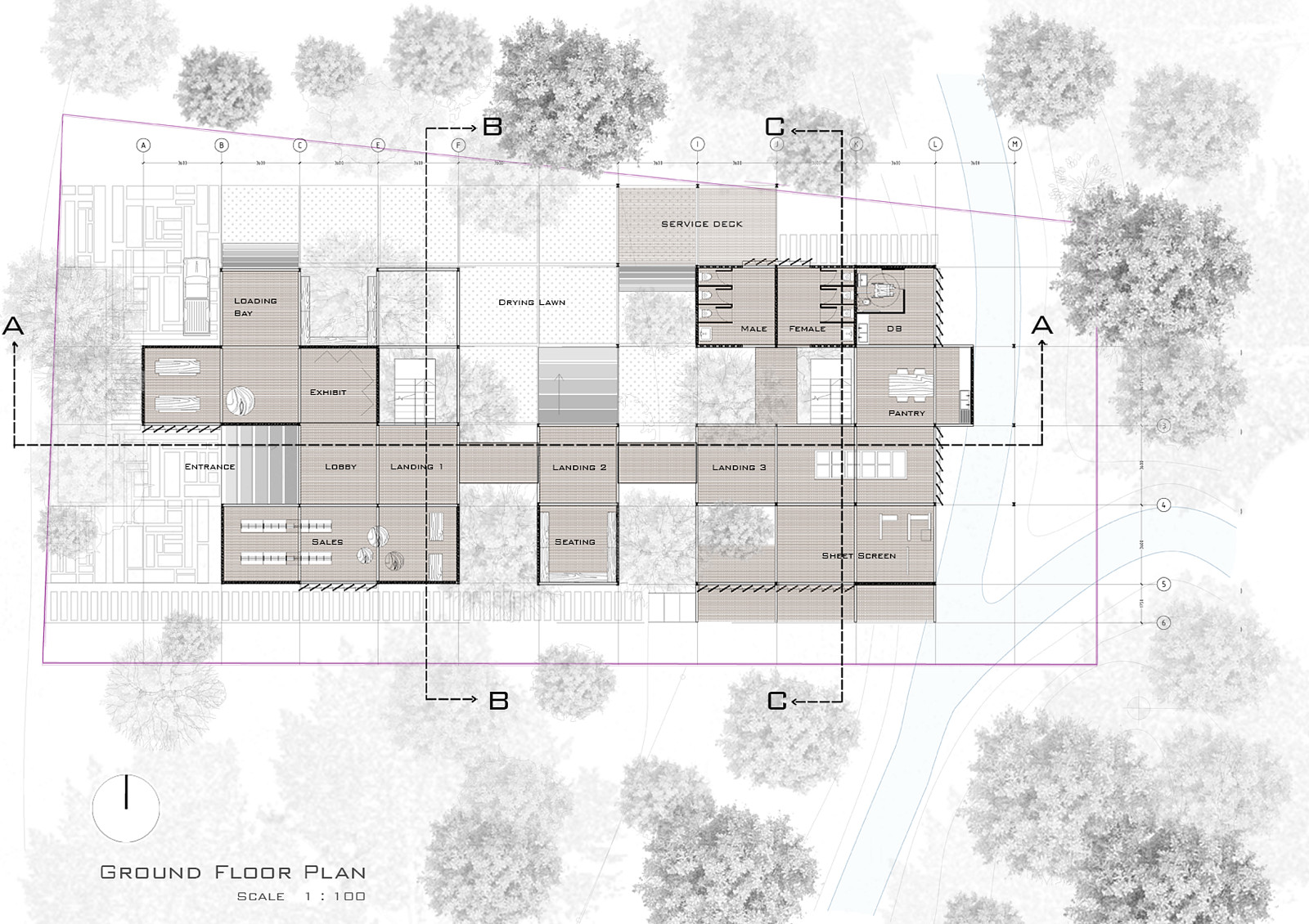
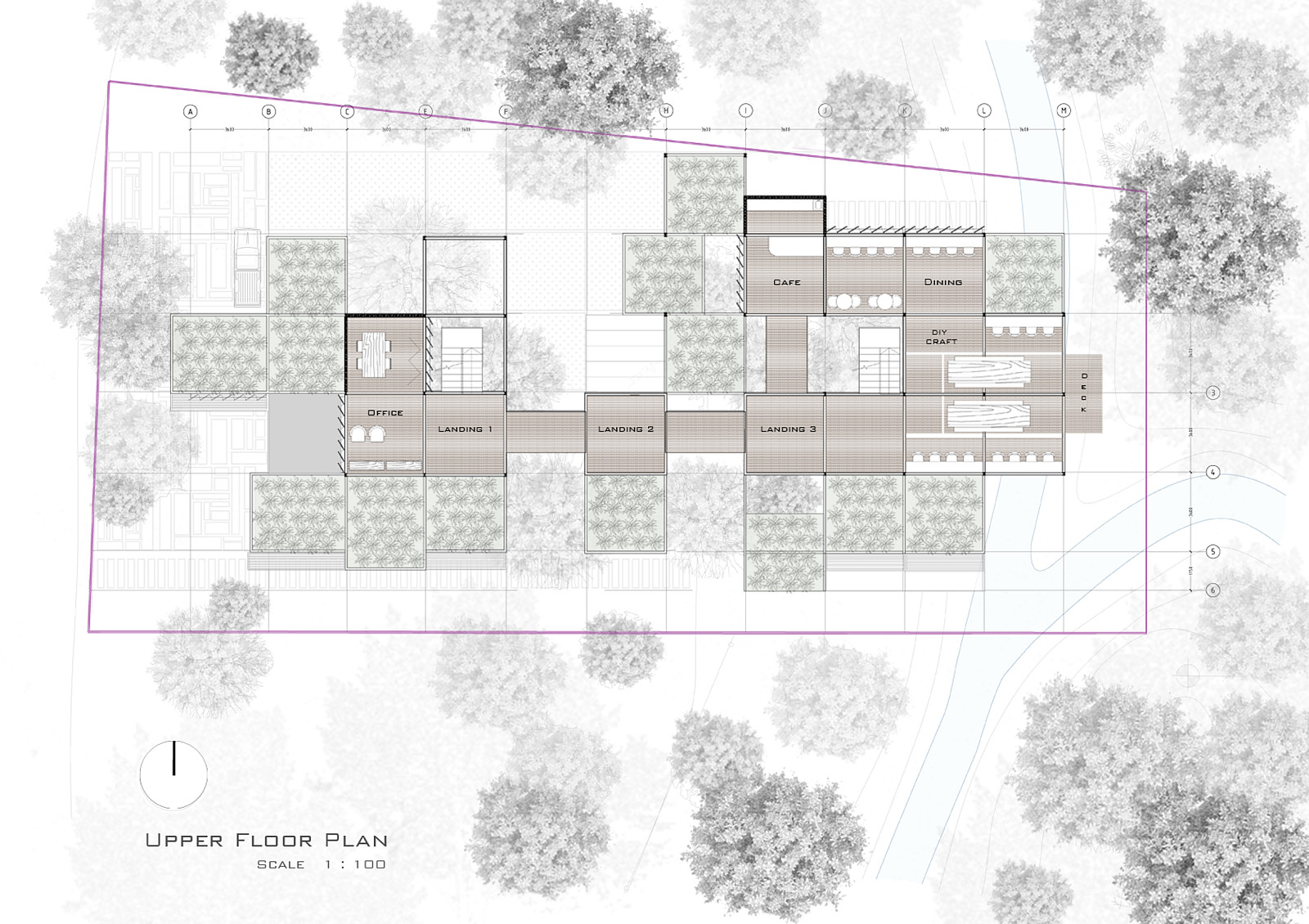
The facility is organised around three adaptable programmatic clusters:
Block A – Agro-processing and Ecotourism Support: spaces for agricultural value-added activities, product processing, and tourism-related services.
Block B – Craft Production and Training: workshops, demonstration areas, and educational spaces that support cottage industries and skill transfer.
Block C – Administration, Storage, and Market Spaces: cooperative offices, logistics facilities, exhibition areas, and community marketplaces.
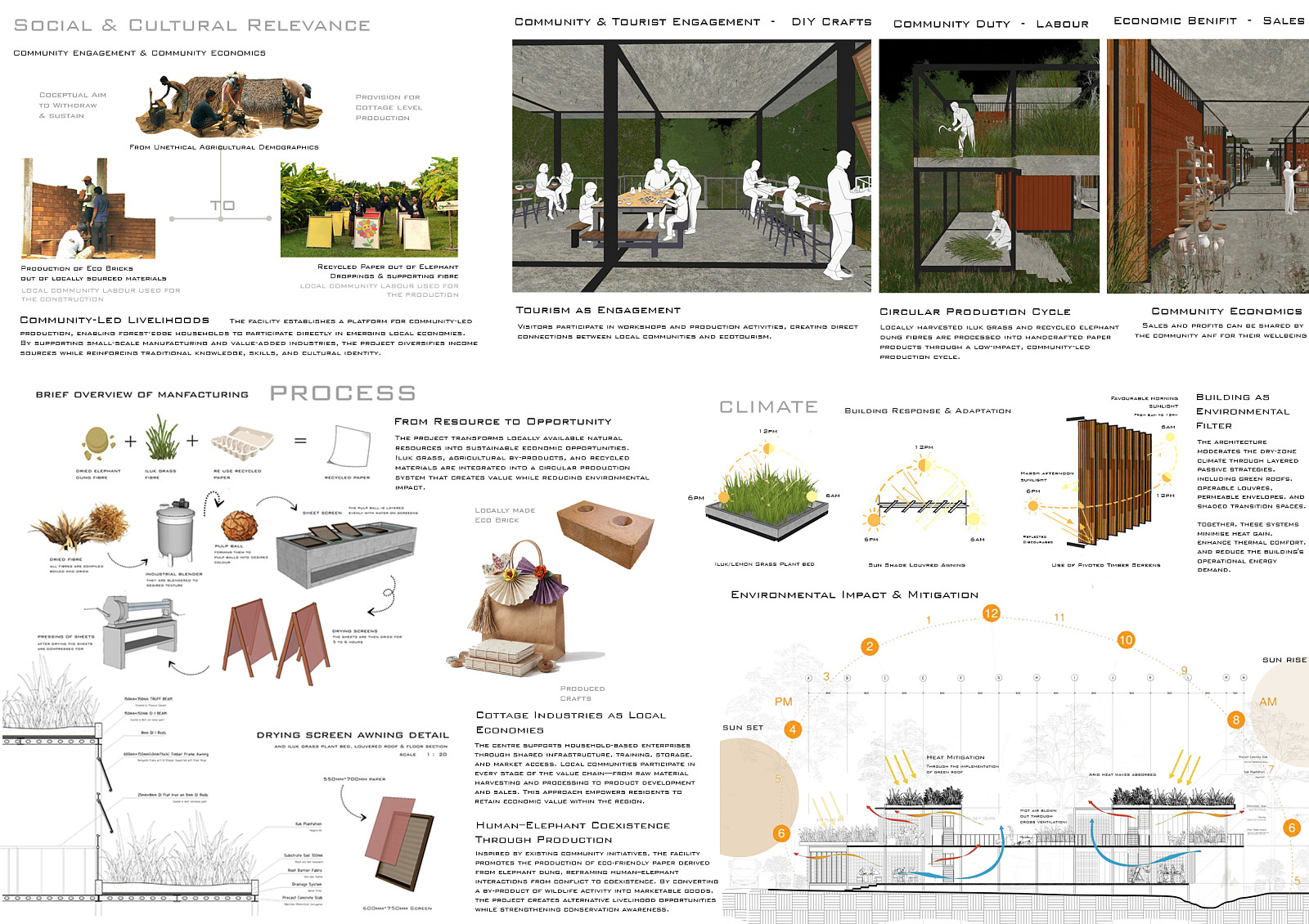
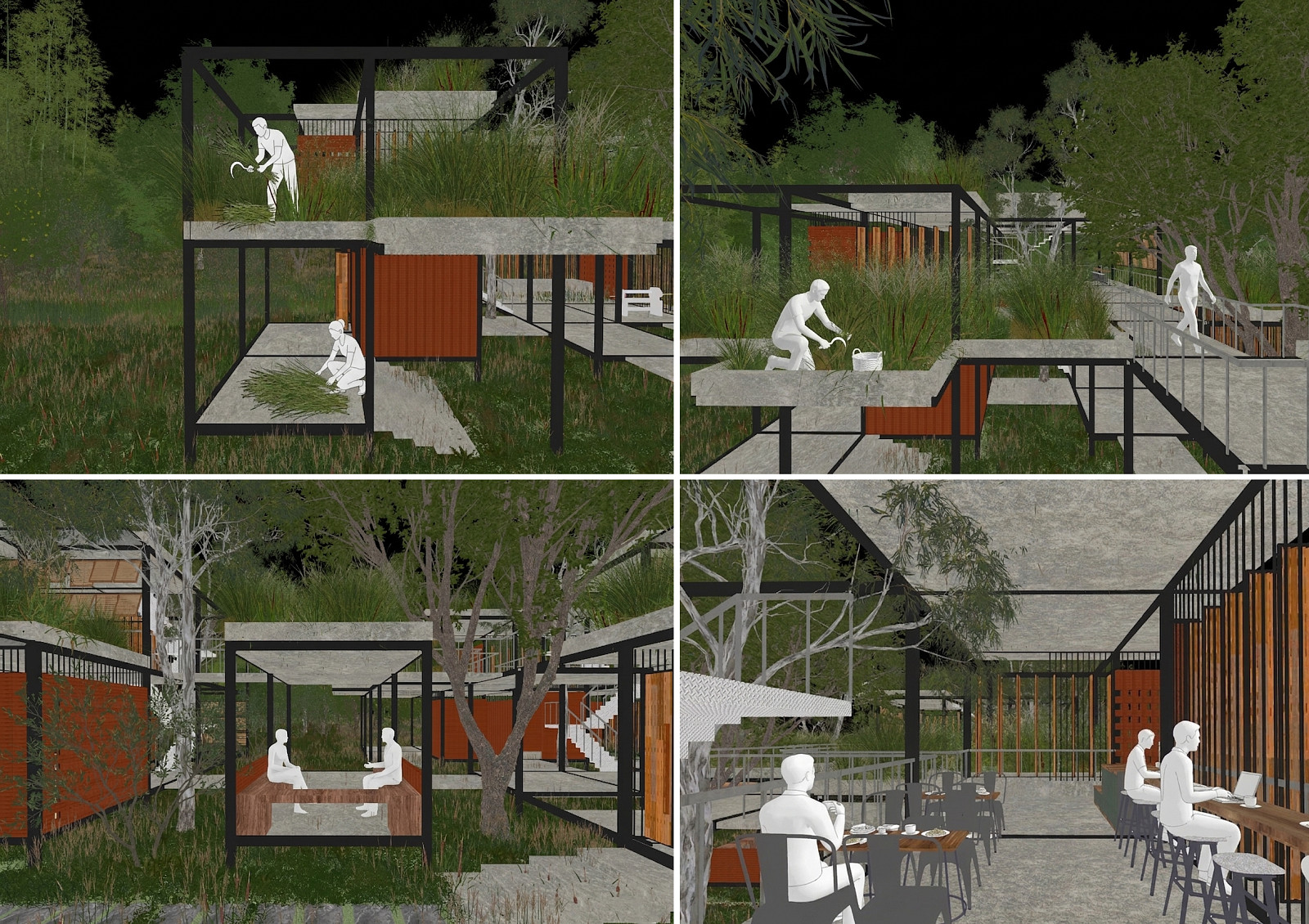
The centre promotes sustainable livelihood initiatives such as eco-friendly paper production using elephant-dung fibres and locally harvested iluk grass, creating marketable products including paper bags, bookmarks, and handcrafted souvenirs.
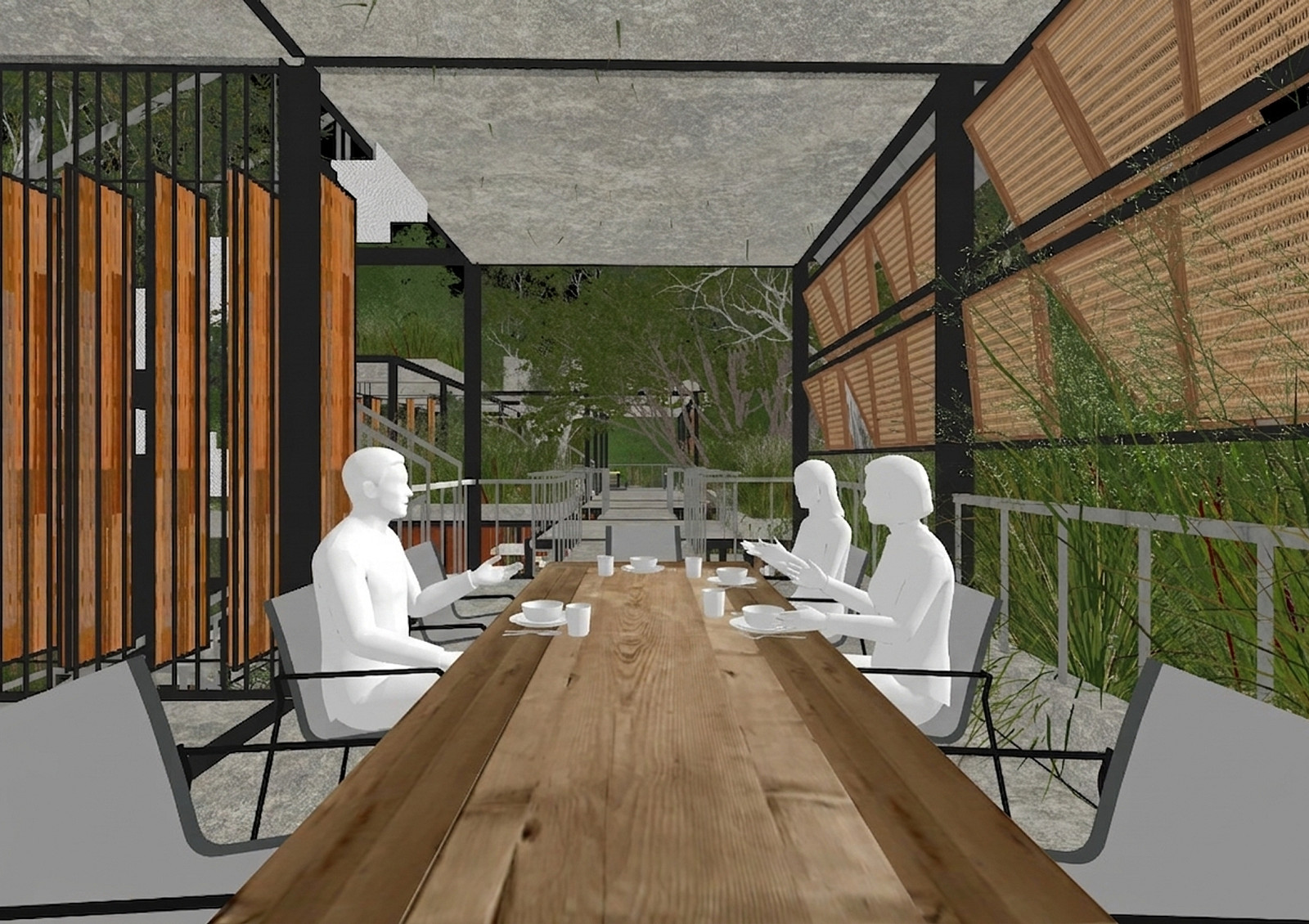
Through direct engagement with tourists, the facility transforms production processes into participatory experiences, strengthening connections between visitors, local communities, and conservation efforts.
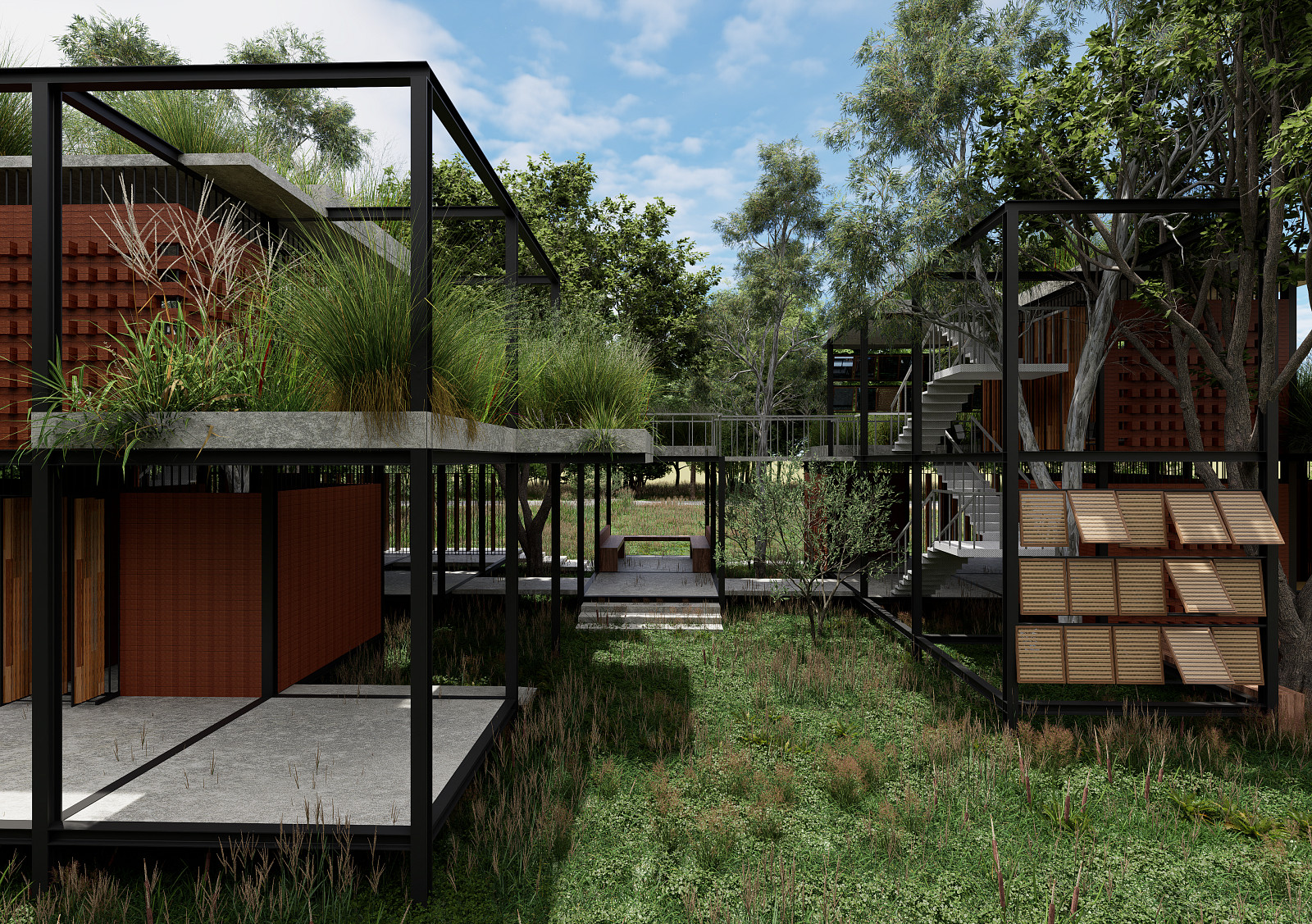
The modular architecture enables incremental growth, allowing spaces to be expanded, reconfigured, or dismantled over time without disrupting the overall system.
Technical information
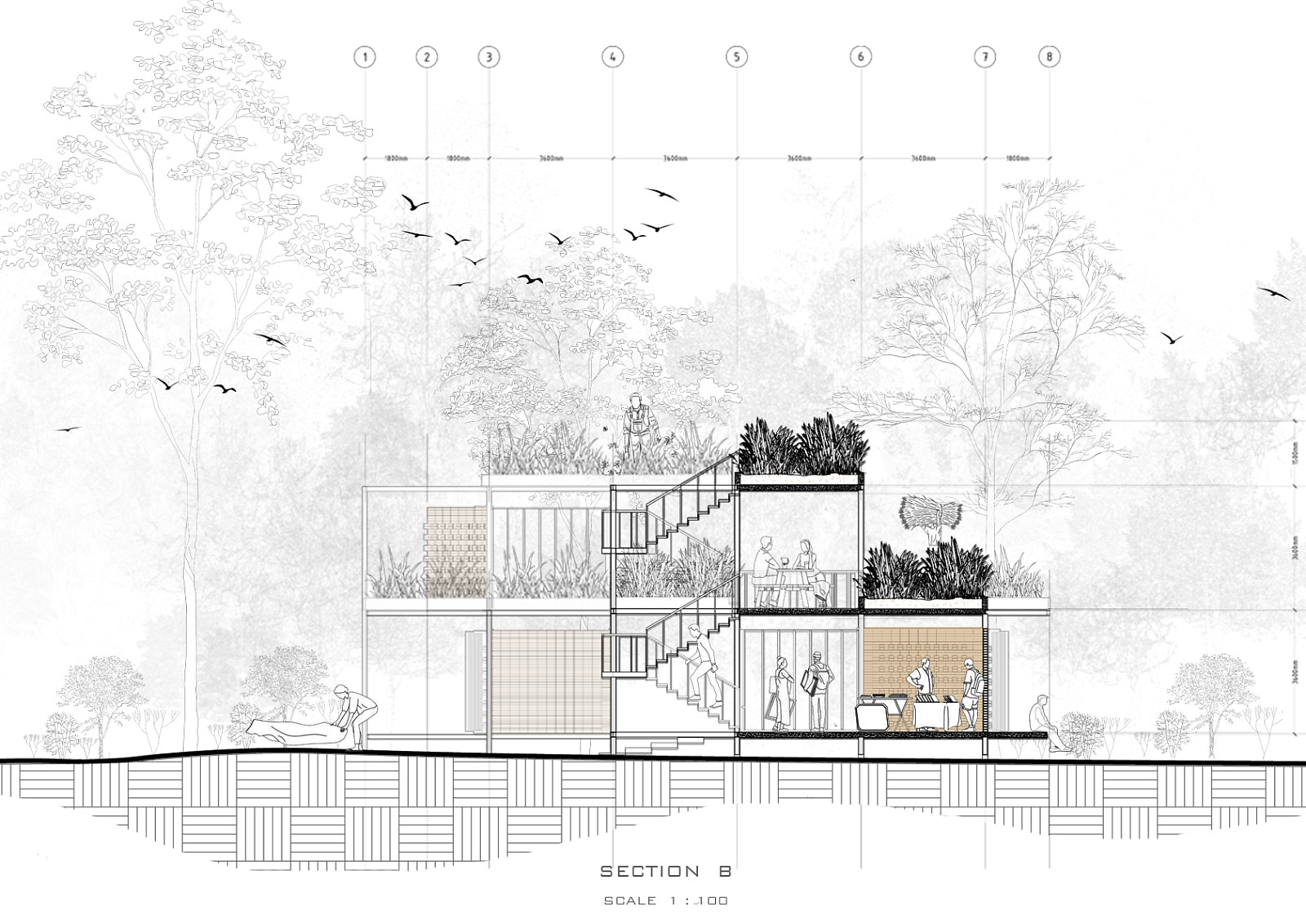
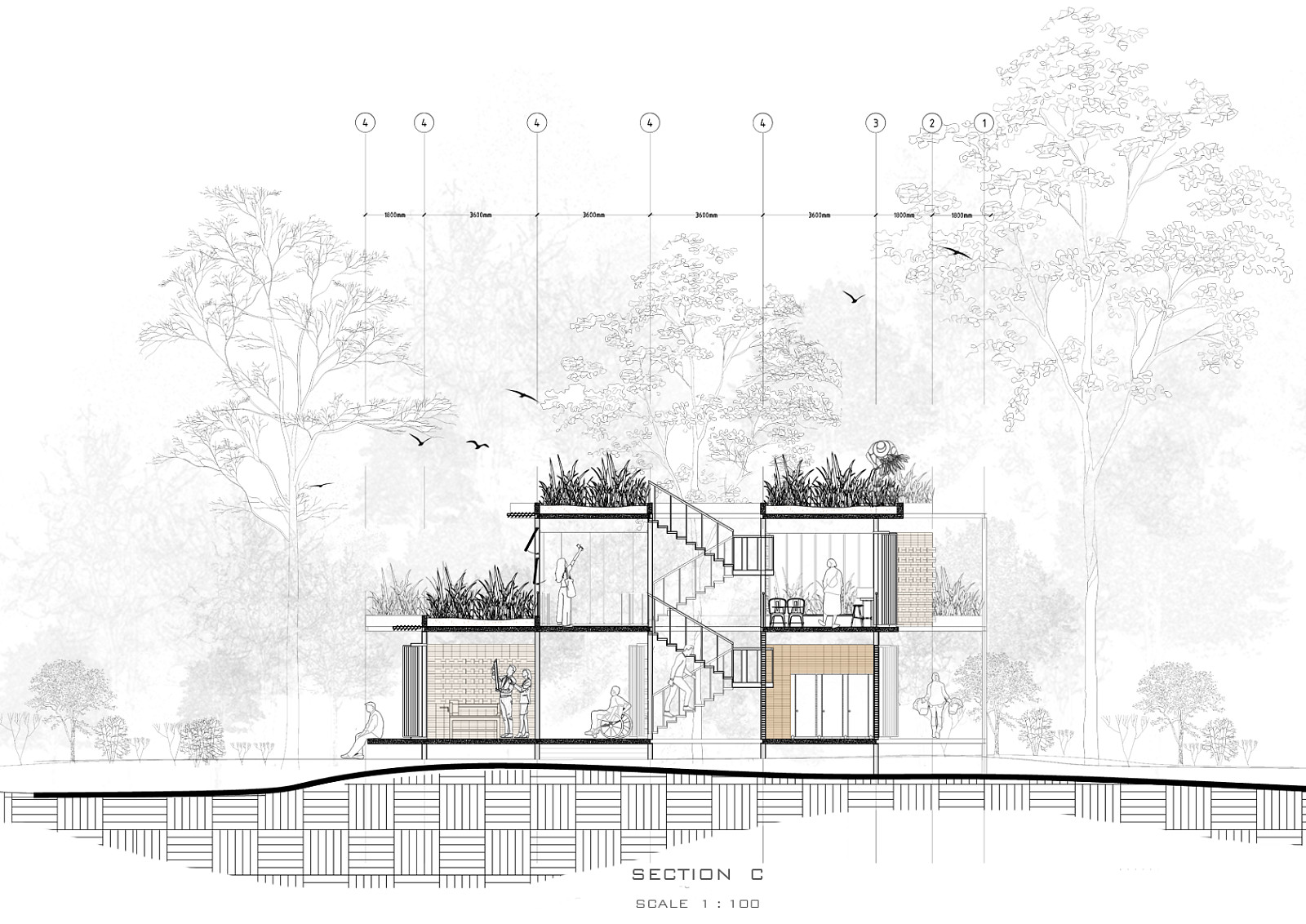
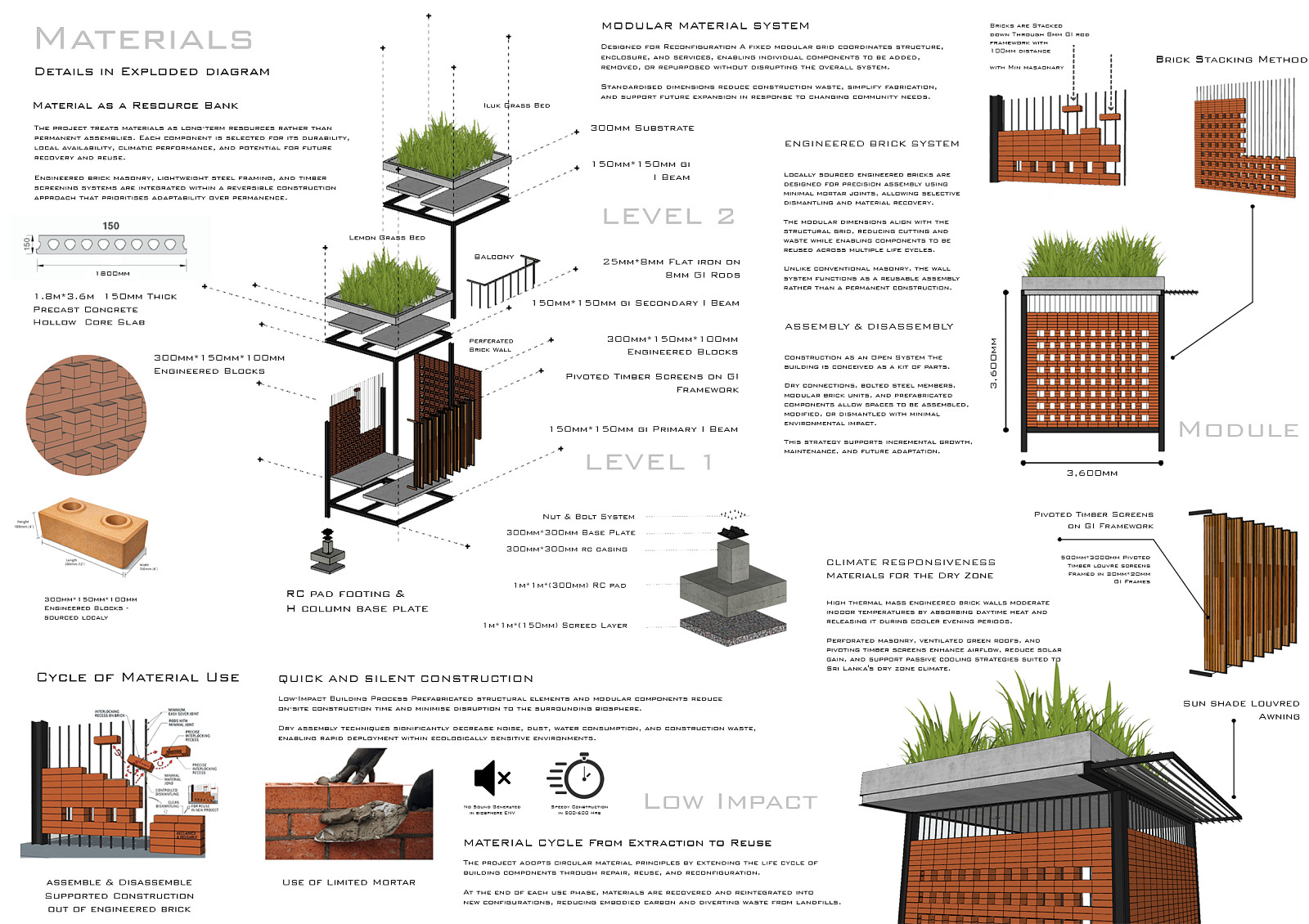
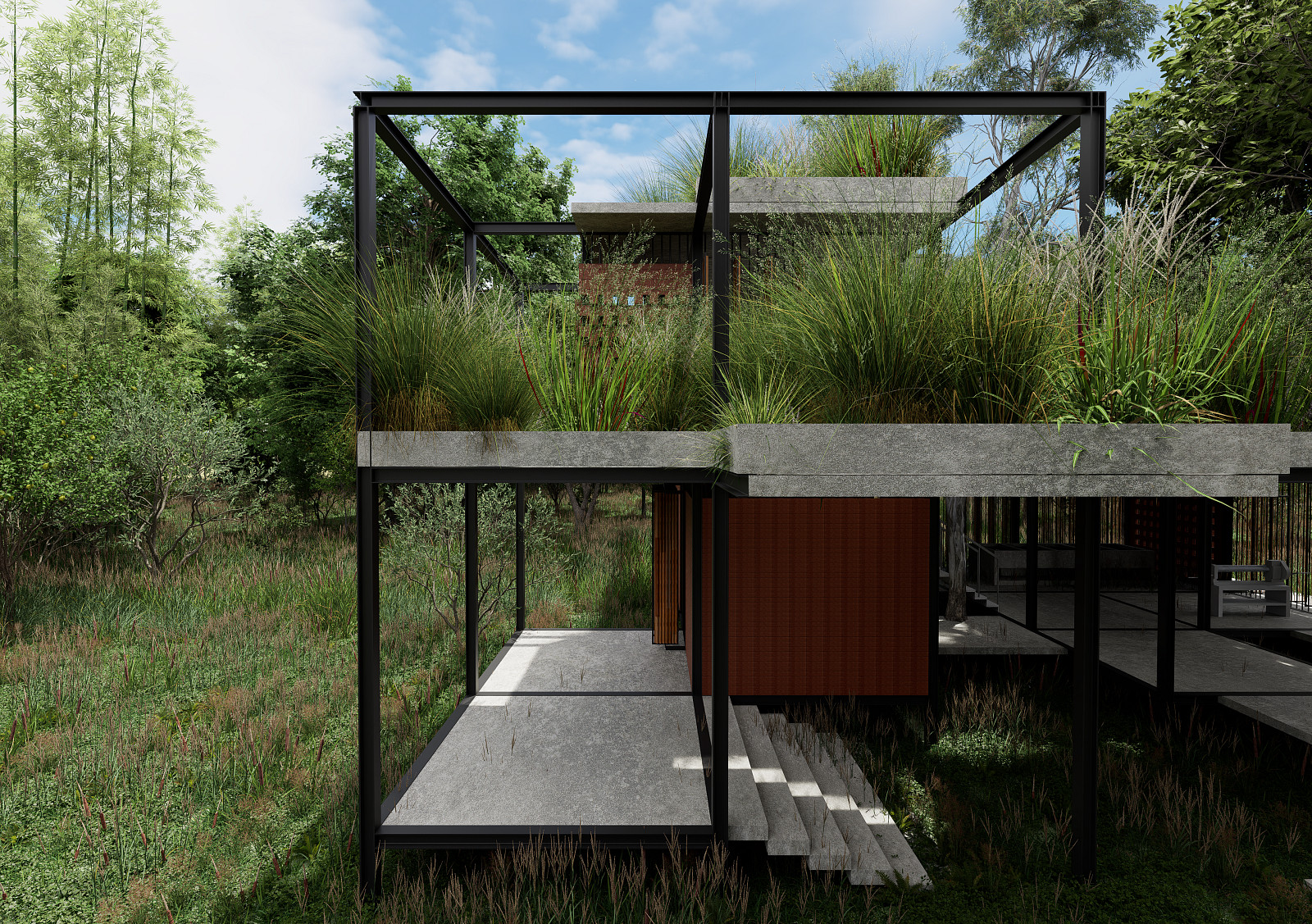
The project employs a modular construction system based on a 3.6 m × 3.6 m structural grid, derived from anthropometric requirements, functional flexibility, and efficient material use.
The primary structure consists of a lightweight steel frame supported by reinforced concrete pad foundations, enabling rapid assembly and future adaptability. The building envelope incorporates:
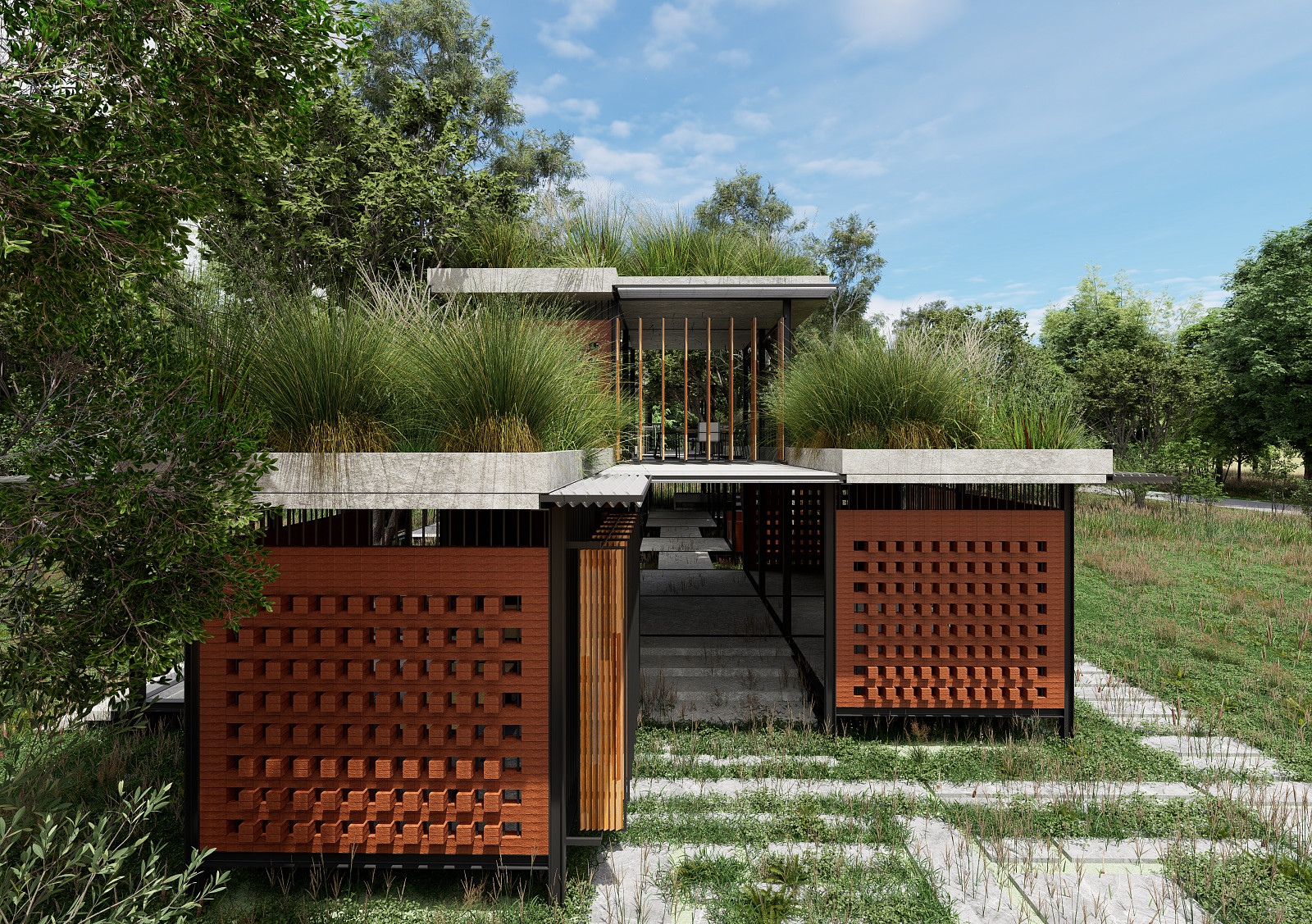
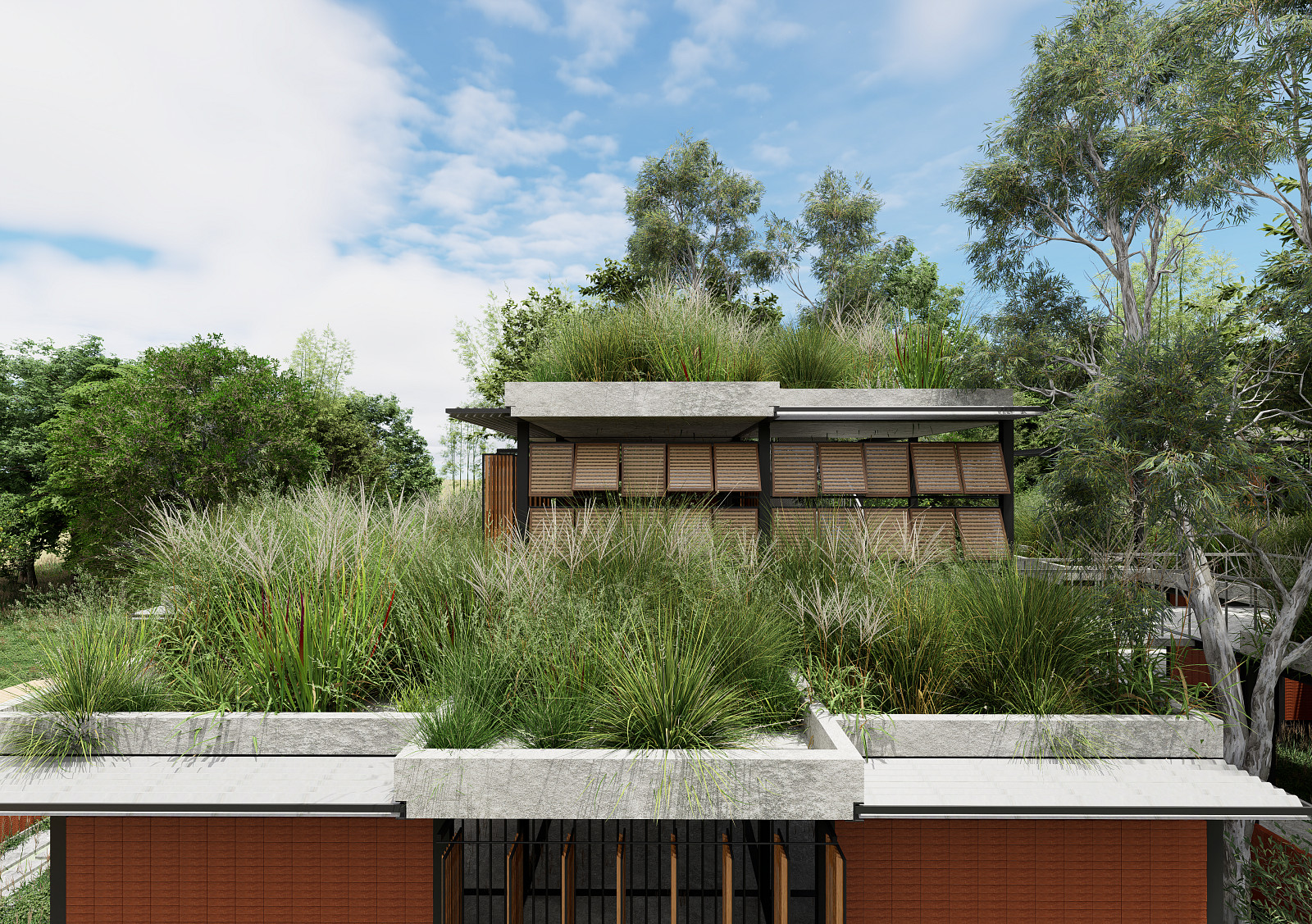
Locally sourced engineered brick modules (300 mm × 150 mm × 100 mm)
Minimal lime-based mortar joints for reversible construction
Pivoted timber louvres for solar control and natural ventilation
Perforated brick screens to enhance airflow
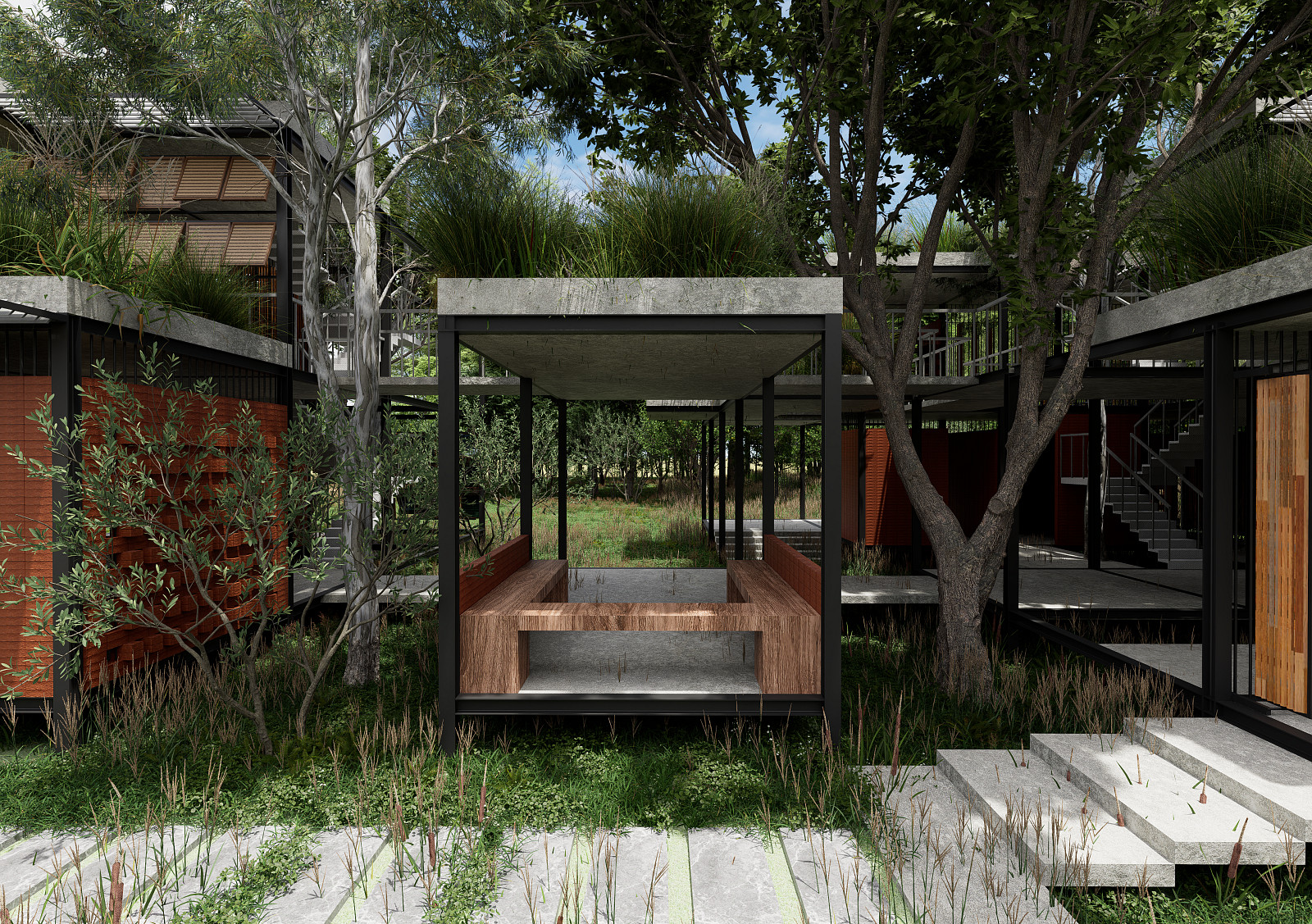
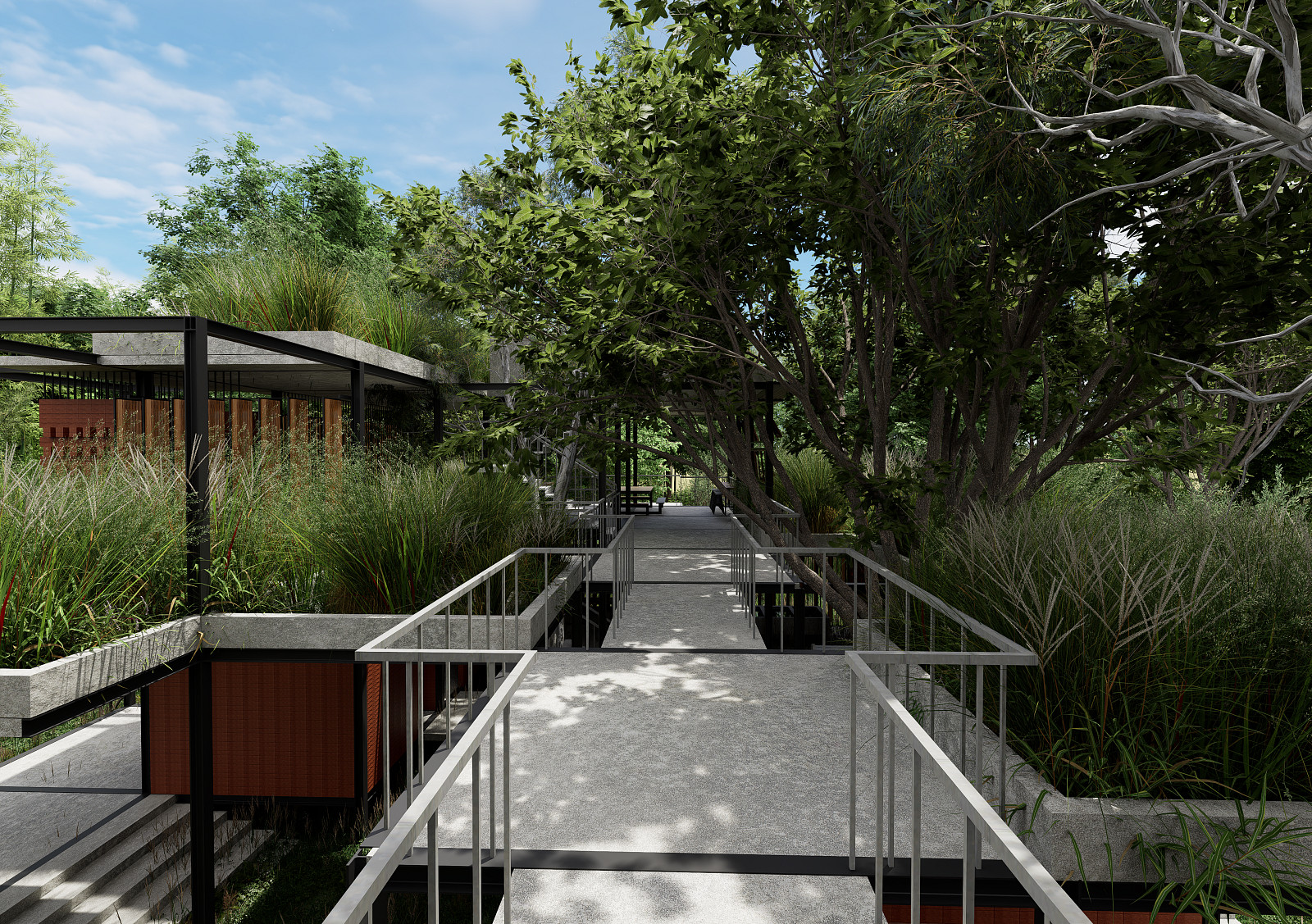
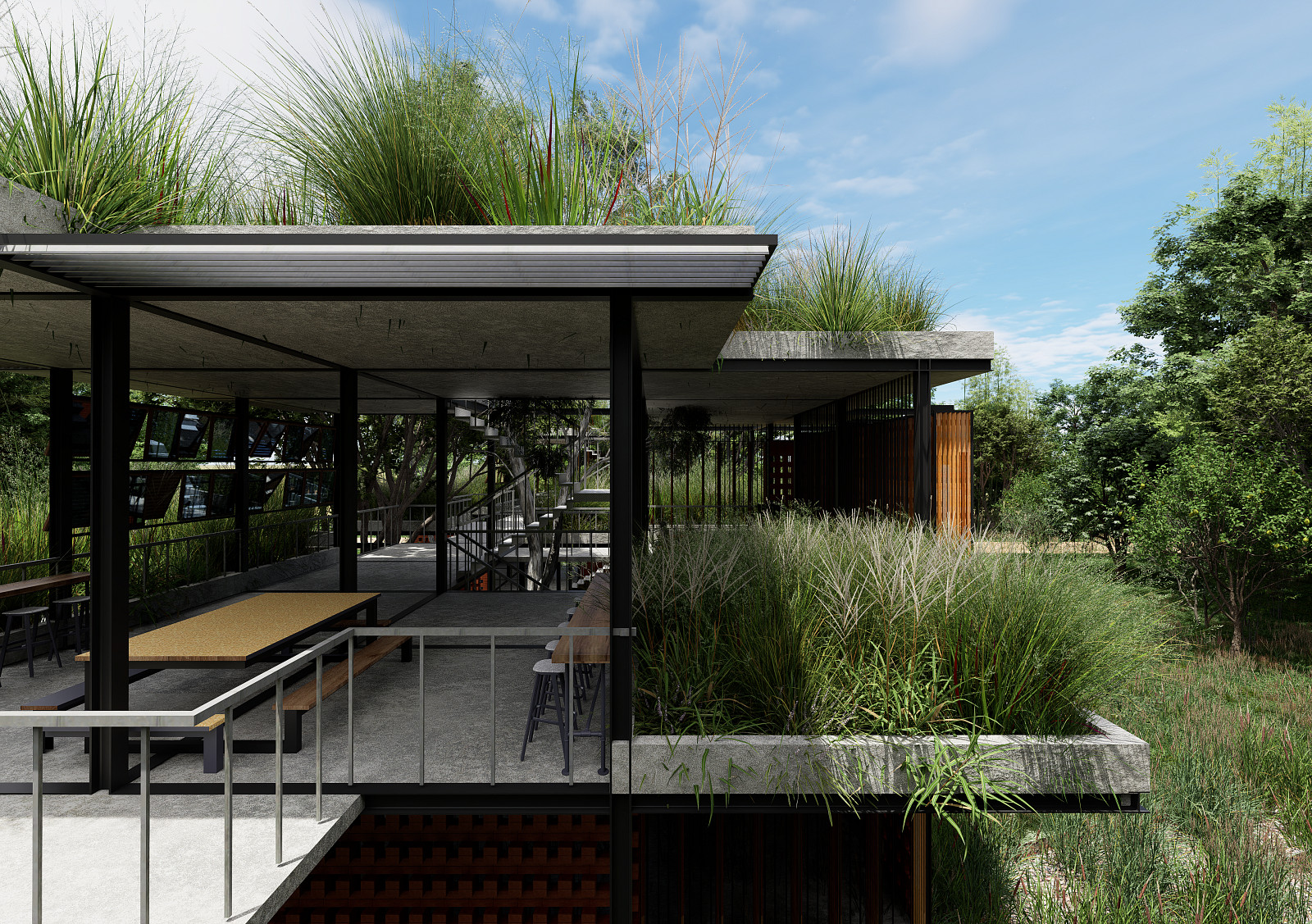
Extensive shaded transition spaces and breathing corridors
Green roof systems to reduce heat gain and improve thermal comfort
The construction strategy follows a design-for-disassembly approach, allowing building components to be assembled, removed, repaired, and reused with minimal material waste.
Passive environmental strategies—including green roofs, operable shading devices, cross-ventilation, and modular courtyards—reduce energy consumption and improve indoor comfort within Sri Lanka's dry-zone climate.
The modular system functions as a flexible kit of parts, supporting future expansion and adaptation while minimising the project's environmental footprint.

Copyright © 2026 INSPIRELI | All rights reserved. Use of this website signifies your agreement to the Terms of Use, Privacy Policy, and use of cookies.
