KITA:KITA


Project idea
How can i elevate the Filipino market experience without diluting it into a miniaturized version of a mall?
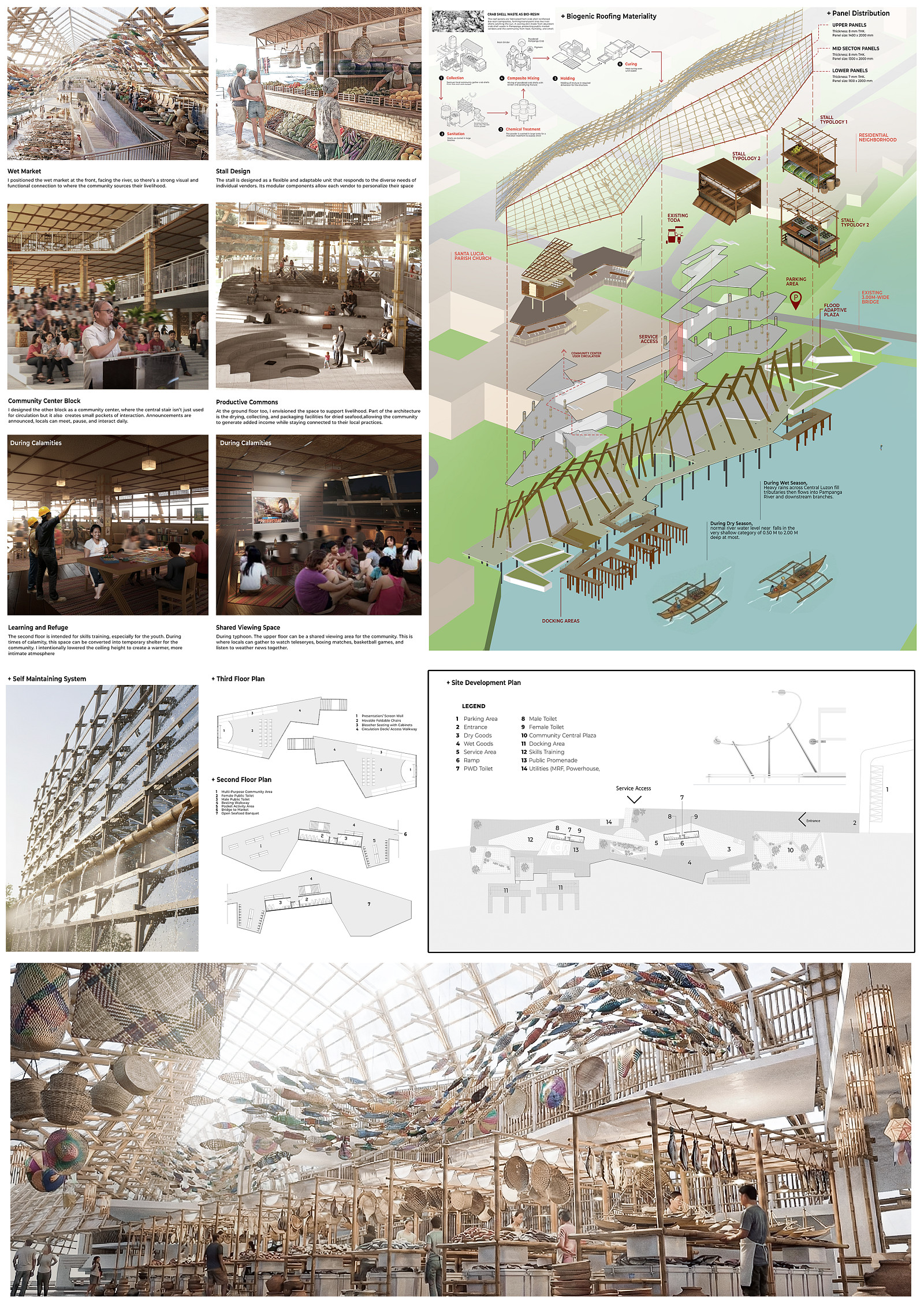
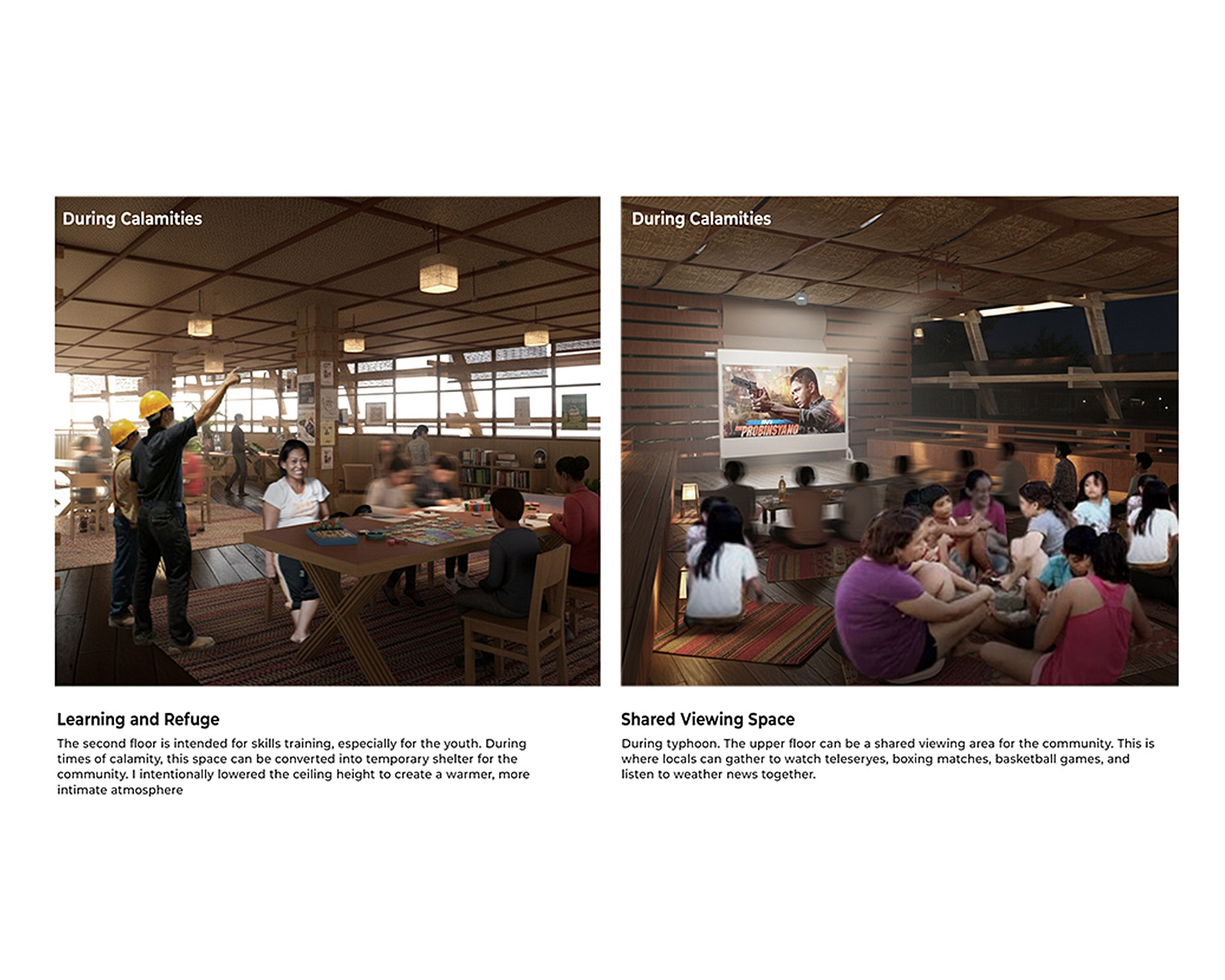
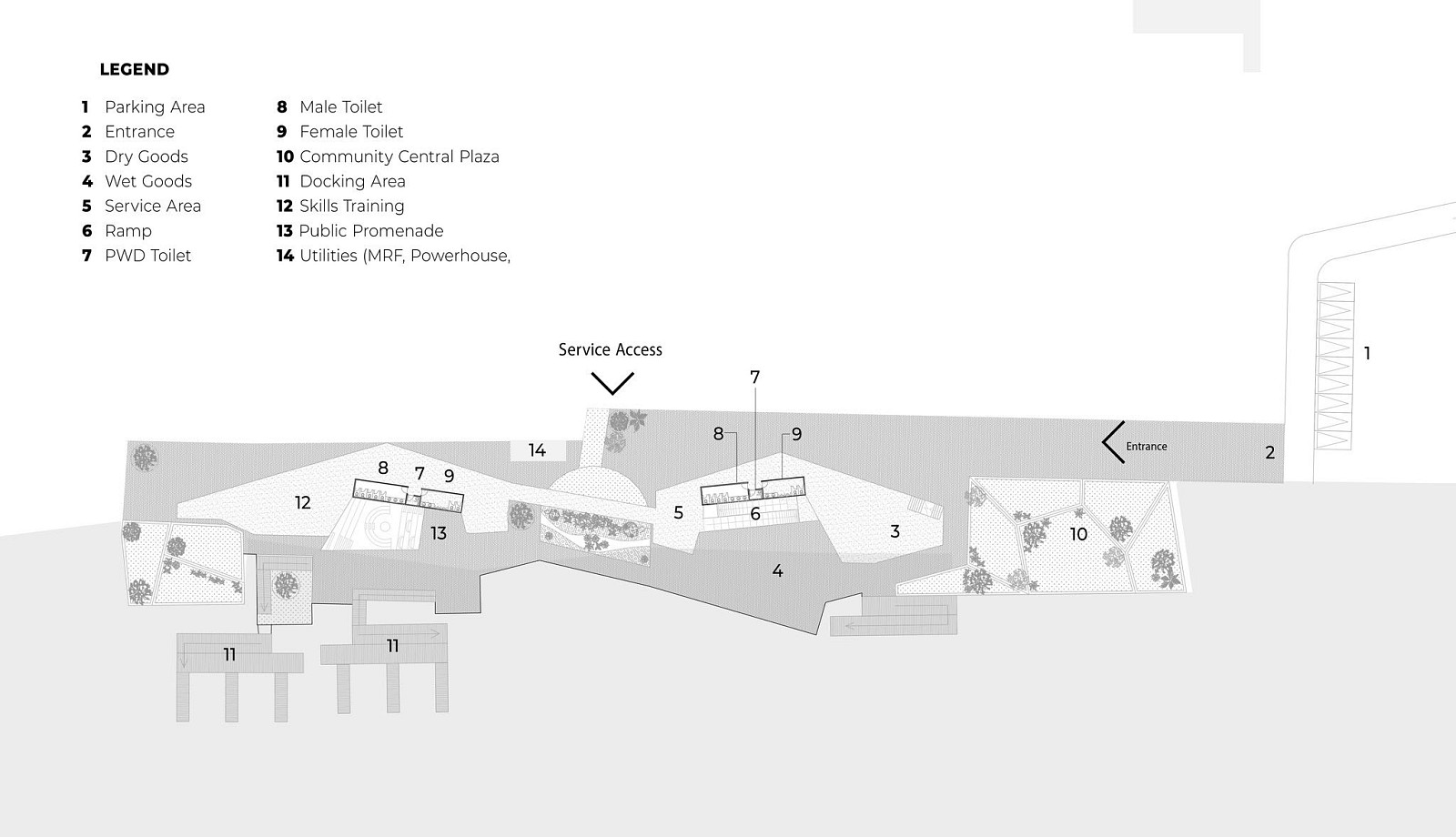
I have spent enough time in public markets to know how products arrive in the late afternoon or night and must be carefully preserved. The way air, temperature, and space work together that is entirely practical. The smells of fish, soil, rain, and sweat, that one would think as inconveniences, but are actually signs of life and the proof of labor. A mall, in contrast, hides all these signs of life and offers the illusion of a perfect product that is distant from the human work behind it. The palengke cannot, and should not, pretend otherwise. In response, I have aligned this community center with the actual rhythms of local life. The design is split into functional blocks, with one specifically dedicated to community resilience. I recognize the reality of the local geography that’s why this area also serves as a vital refuge during flooding. The main stairs was designed with open pockets for community interaction and where announcements are shared and neighbors can pause to meet. The second floor is dedicated to youth skills training, but it is built for versatility. During calamities, it transforms into a temporary shelter. On better days, this upper floor becomes a shared living room for the community to gather for teleseryes, boxing matches, or basketball games.
Project description
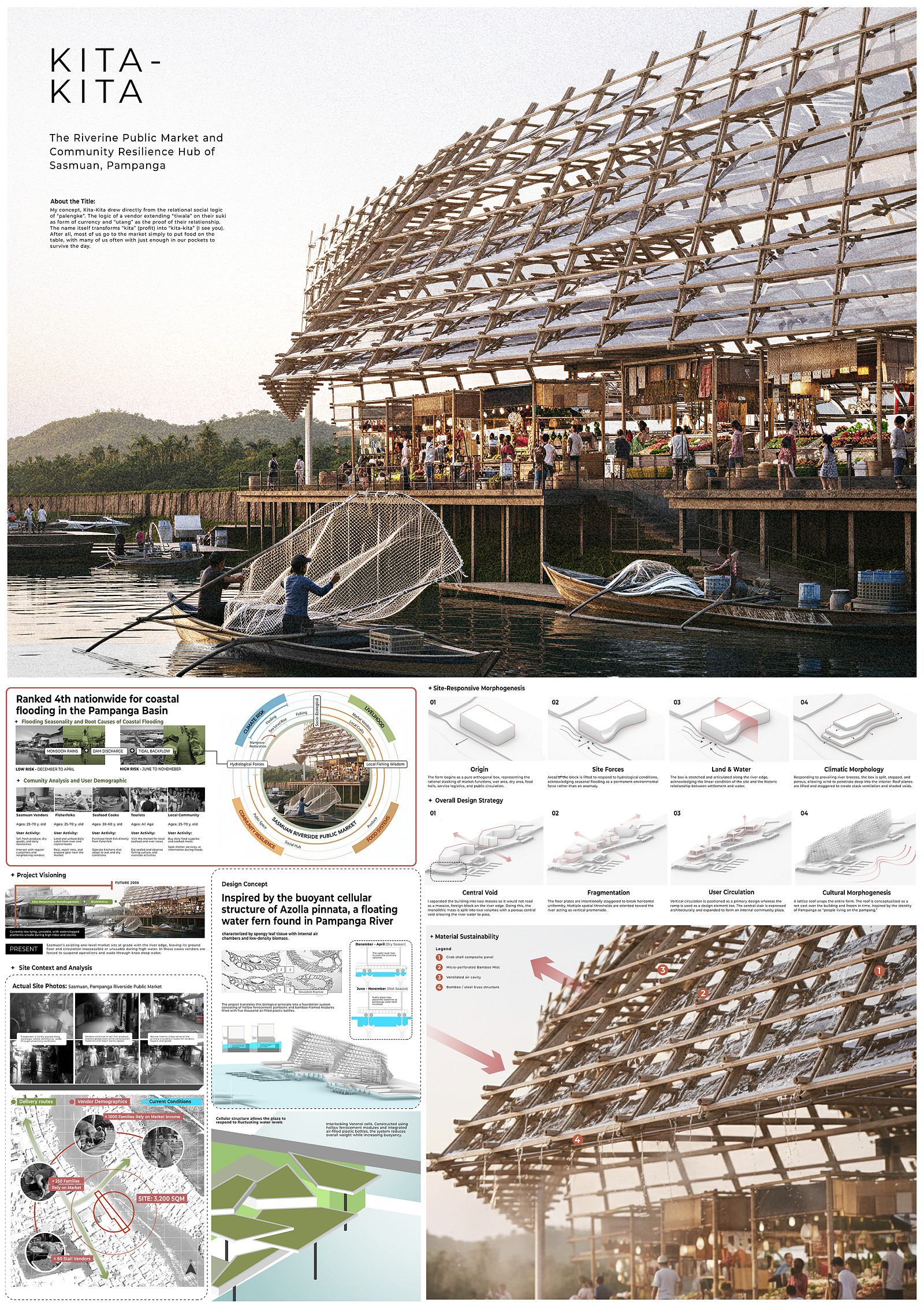
My concept, Kita-Kita, is rooted in the social and economic culture of the Filipino palengke, or public market. In this setting, exchange is not defined by money alone, but by trust, familiarity, and long-standing relationships. A vendor may extend tiwala—trust—to a regular customer, or suki, allowing them to buy on utang, or credit. What may appear as debt is, in reality, a quiet proof of connection: a relationship built through repeated encounters, mutual recognition, and shared survival.
Technical information
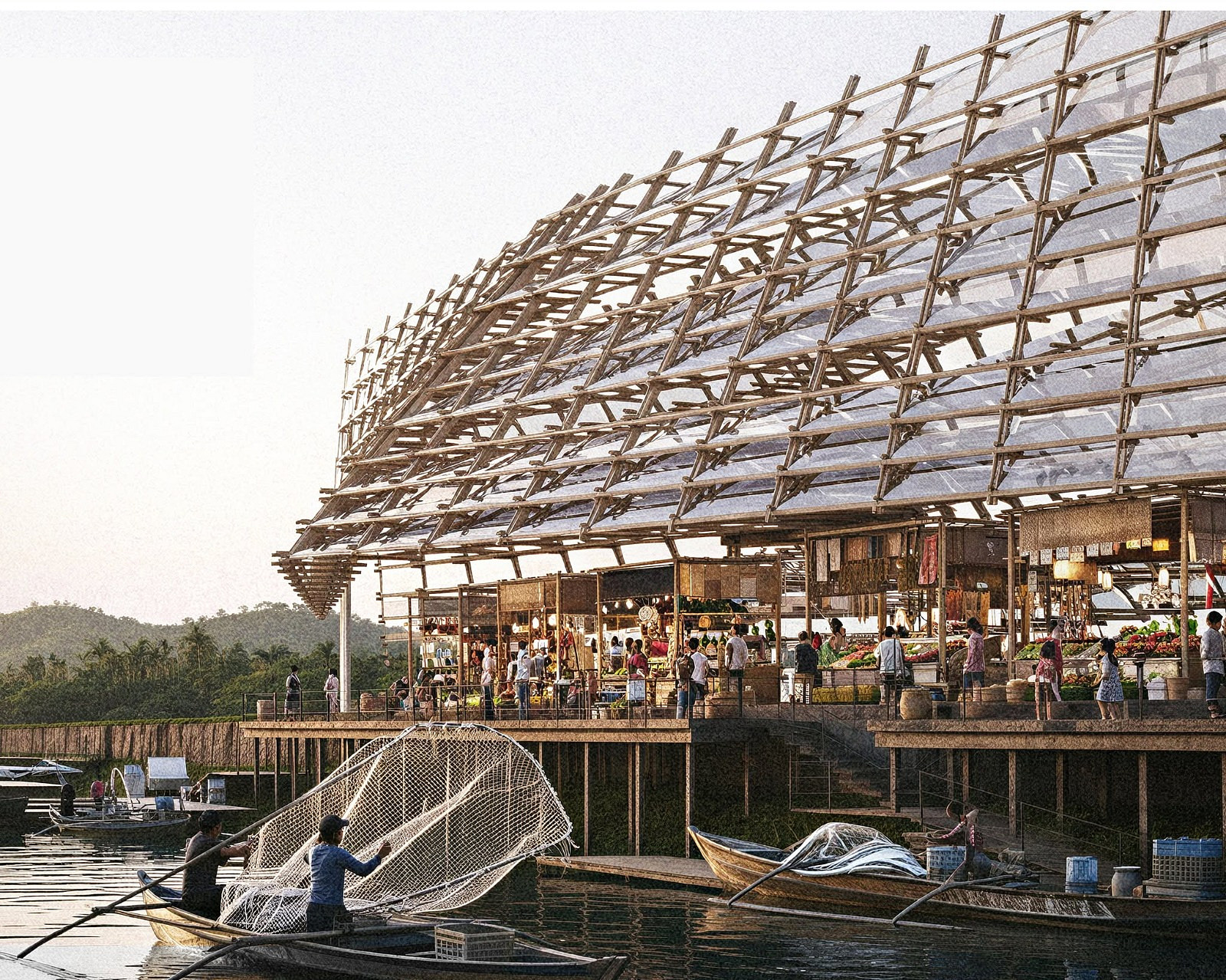
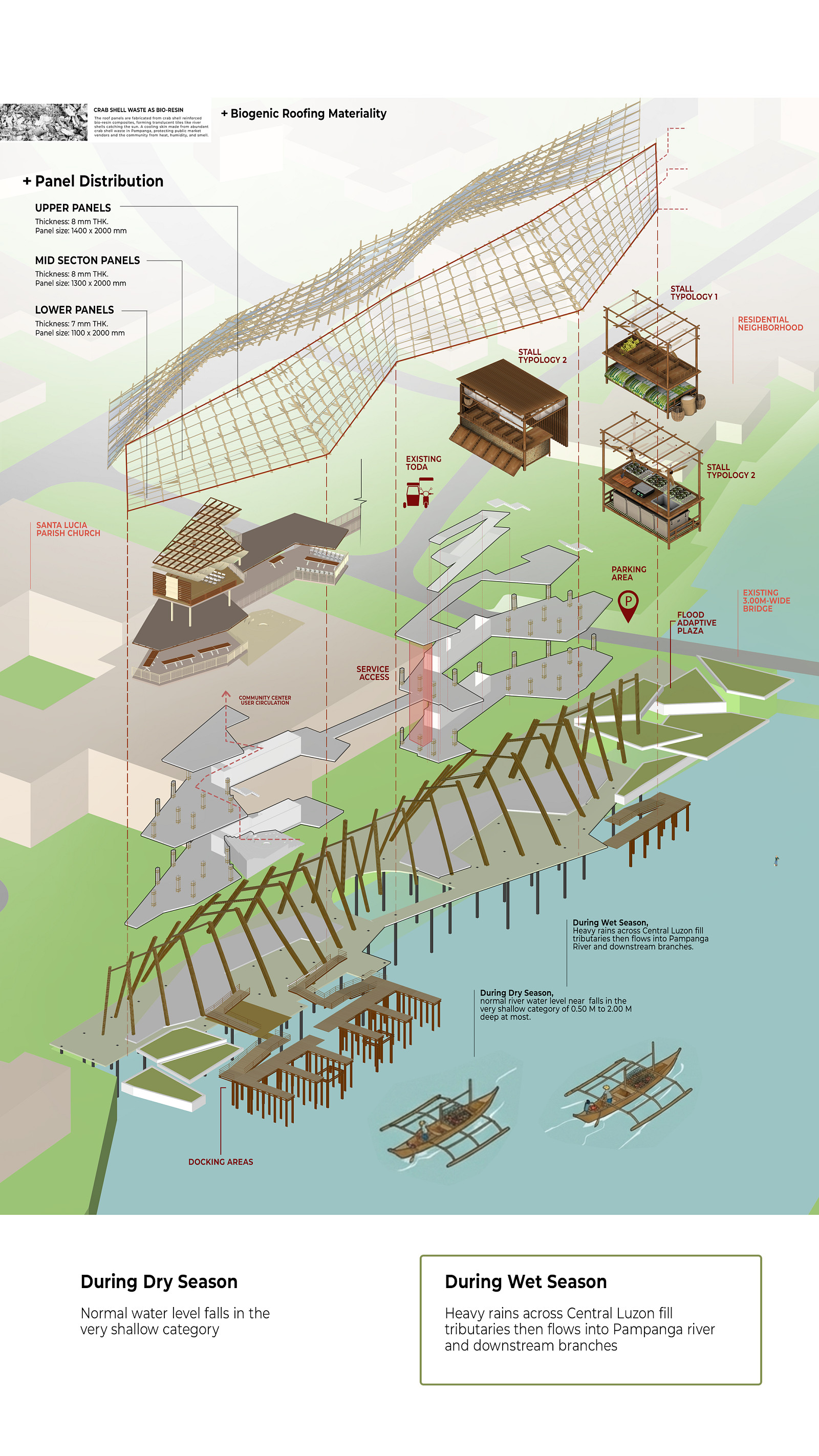
Inspired by the buoyant cellular structure of Azolla pinnata, a water fern found in Pampanga River characterized by spongy leaf tissue with internal air chambers and low-density biomass. The project translates this biological principle into a foundation system consisting of hollow ferrocement pontoons and bamboo-framed modules filled with five thousand air-filled plastic bottles. The plaza is submersible and adaptive with flood serving as terraced courtyard in the shape of Voronoi cells. To respect the river’s path, the building is split into two distinct volumes. This porous central void prevents the architecture from acting as a foreign, monolithic block, instead allowing the water to pass through a submersible plaza of Voronoi-shaped terraced courtyards. The envelope is a direct extension of the region’s tactile identity. A lattice roof is conceptualized as a fisherman’s net cast over the volumes and frozen in time that wraps the entire form. Its tiles are fabricated from a composite of translucent bio-resin and discarded crab shells. These are the bio-resin composites, forming translucent tiles like river shells catching the sun. This "climatic membrane" does more than provide shade, the calcium carbonate and chitin-rich particles filter sunlight and naturally mitigate the humidity and odors of the market through thermal resistance and evaporative cooling.

Copyright © 2026 INSPIRELI | All rights reserved. Use of this website signifies your agreement to the Terms of Use, Privacy Policy, and use of cookies.
