The Machines in Our Garden


Project idea
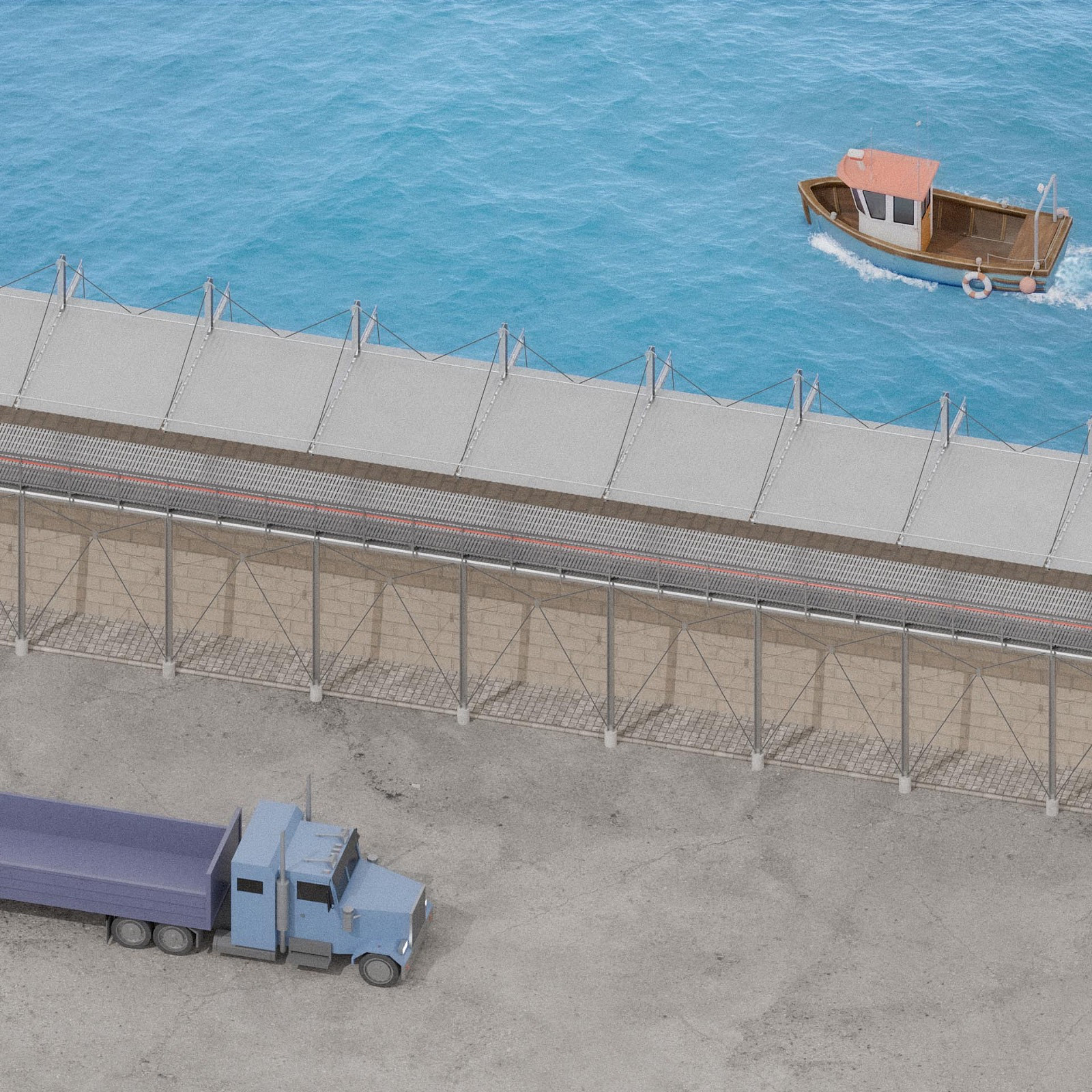
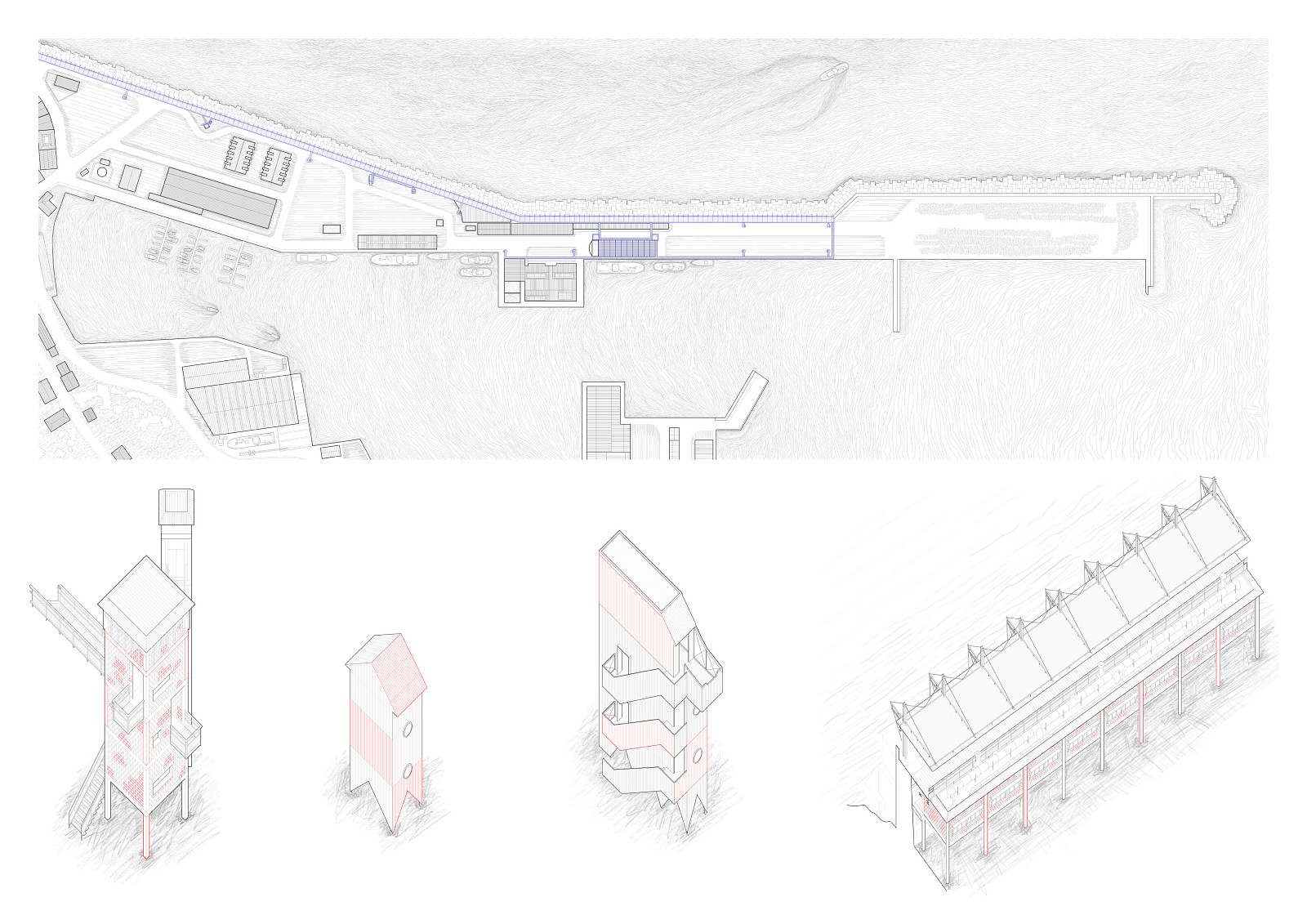
The Machines in Our Garden is an architectural project located in the industrial port of Burela in Galicia, which aims to reveal the often hidden systems of extraction and production that define contemporary port landscapes. The proposal introduces an elevated walkway running along the existing seawall, extending from the public beachfront through the working port and returning to the town, creating a continuous civic route through an active industrial environment.
Along this path, a series of inserted structures provide access points and programmatic spaces, including a café, offices and classrooms, a fish market, and facilities for non-profit organisations. These elements operate both as architectural interventions and as instruments for viewing and engaging with the port’s ongoing industrial activity.
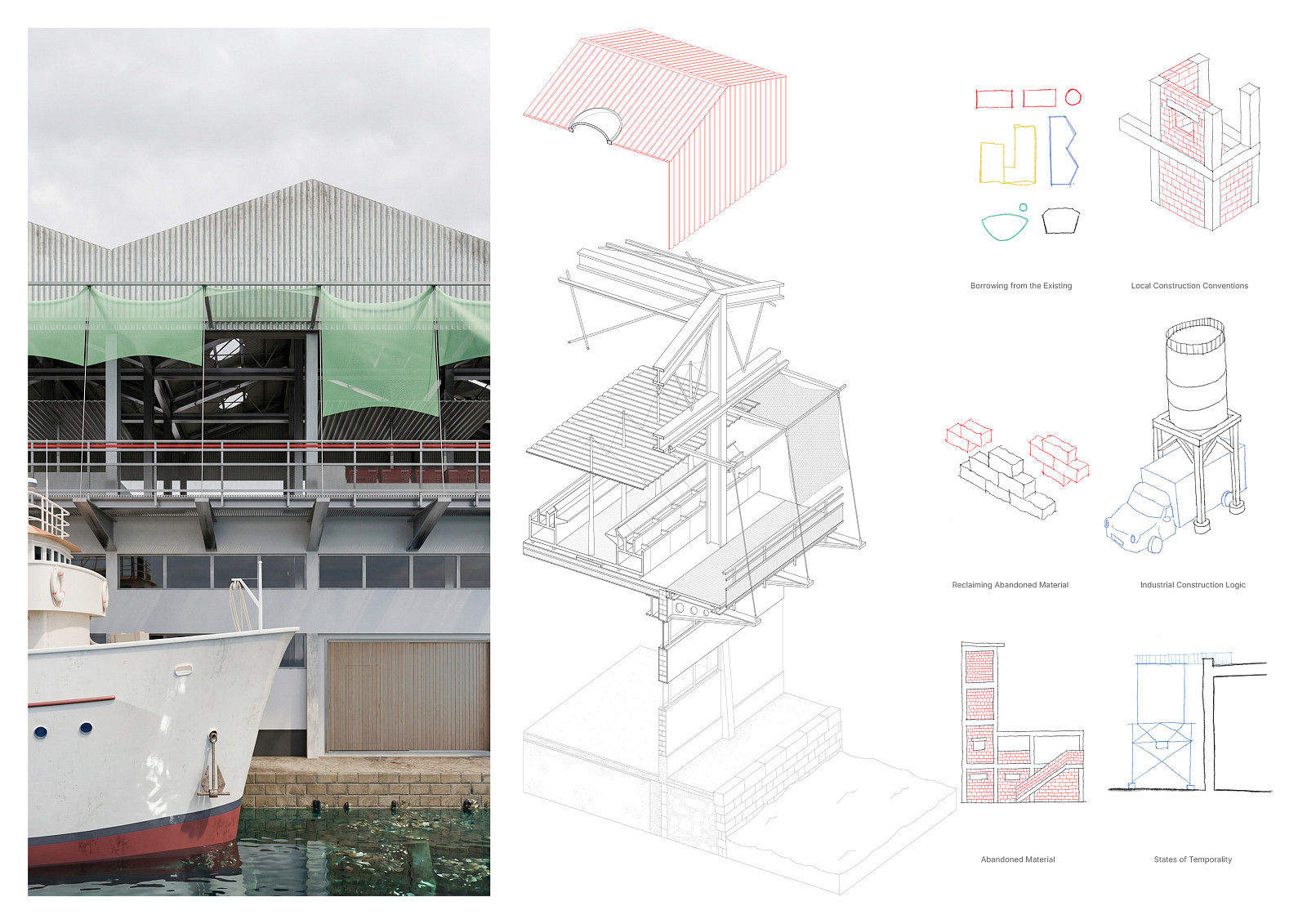
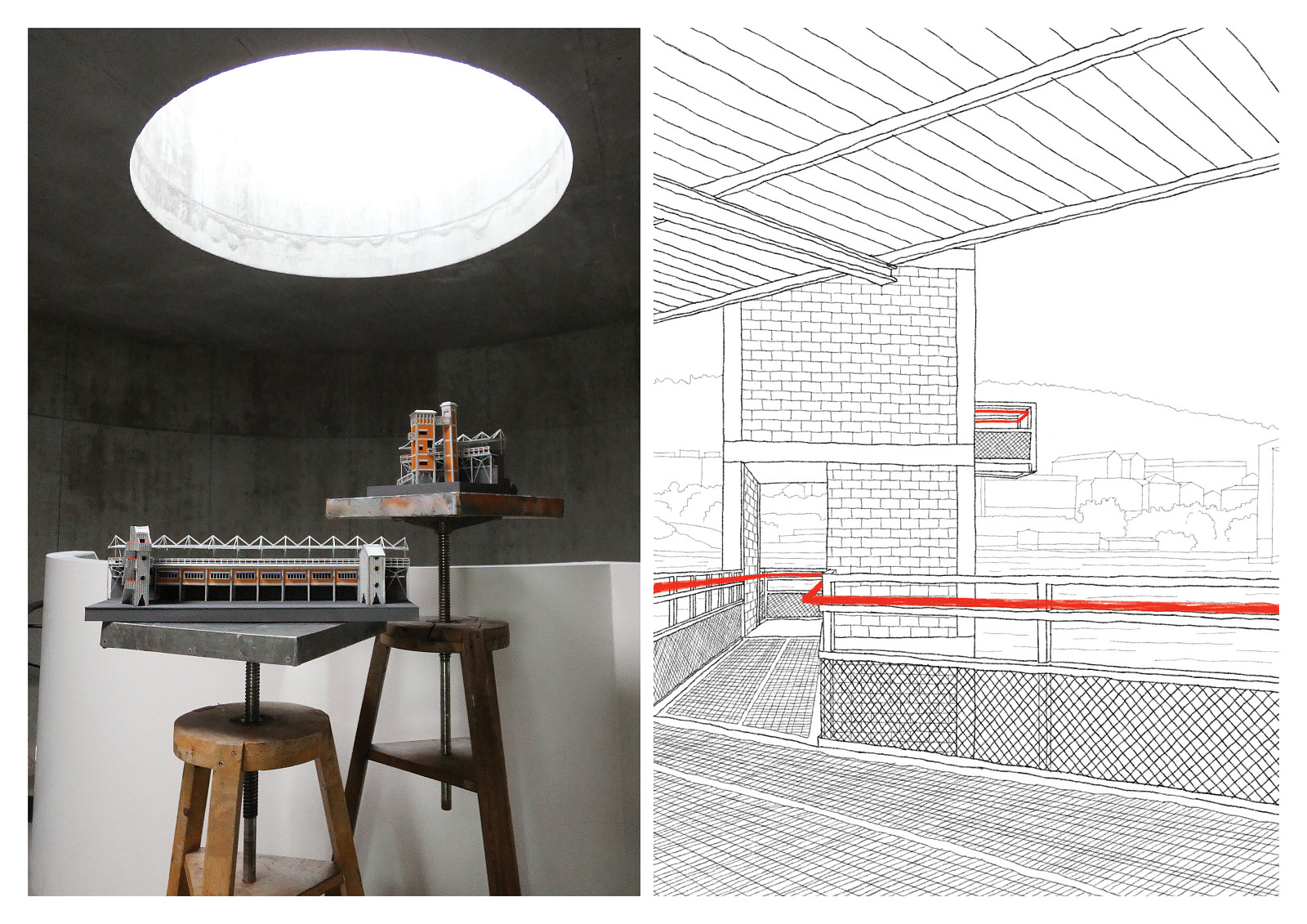
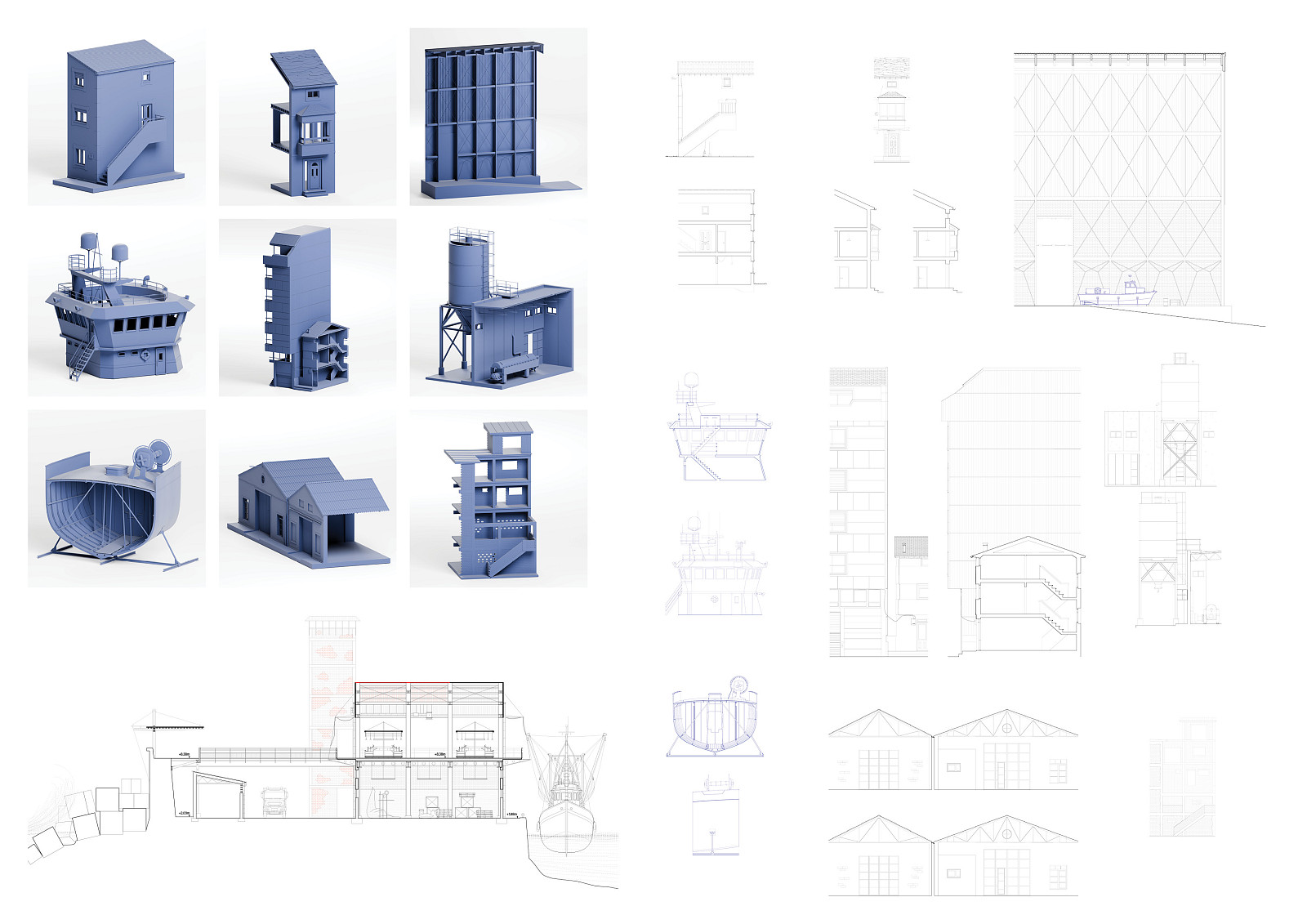
The design emerges from a reading of local industrial logics, shifting urban conditions, and fragmented site observations, combining reclaimed materials with conventional construction systems found in the region. The result is a series of “assembled ruins” that reflect the coexistence of temporary industrial processes and permanent urban structures.
Overall, the project seeks to reposition the port as a shared civic landscape where production is no longer separated from public life, but instead made visible and spatially integrated into everyday experience.
Project description
The project is organised around an elevated public walkway that runs continuously along the seawall of Burela’s industrial port, connecting the beachfront with the working port and returning to the town. This infrastructural route establishes a public presence within an active industrial environment, allowing visitors to move through and observe the port without interrupting its operations.
The programme is distributed along this sequence as a series of specific interventions that engage directly with the existing port activities. A key element is the fish market, positioned above existing fishing infrastructure so that the processes of landing, handling, and storage continue beneath it. In this way, consumption is placed in direct spatial relation to production, allowing goods to be bought and consumed above the very systems that bring them in.
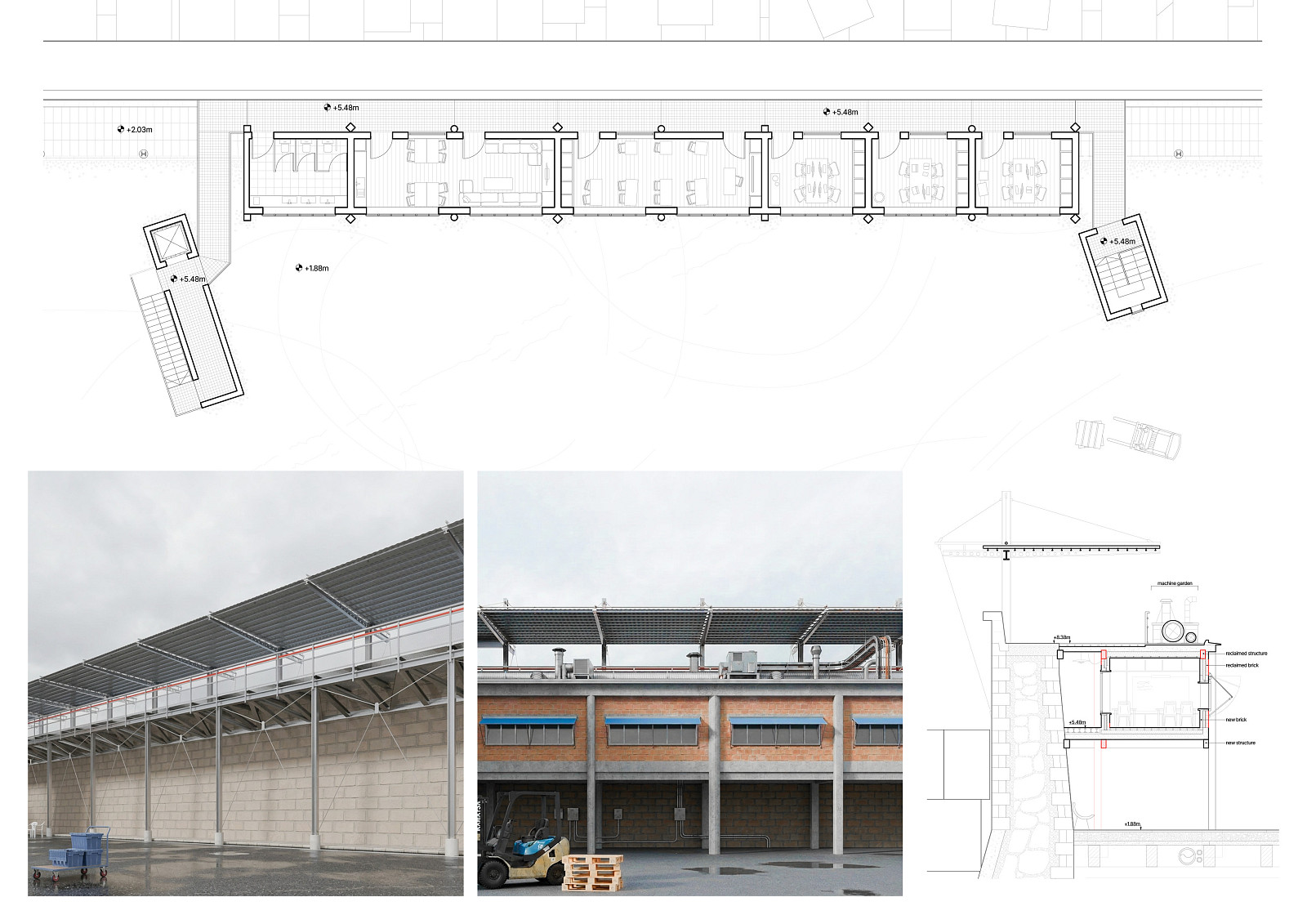
A café is located at a key public threshold where the walkway meets the town, activating the port edge as a social space and encouraging everyday public use of an area that is typically industrial and restricted. Further along the route, office and classroom spaces for non-profit organisations are introduced into the port fabric, giving institutional support to groups that currently operate without a base. These spaces are intended to contribute to a more sustainable and informed future for the port, particularly in relation to overfishing and ecological management.
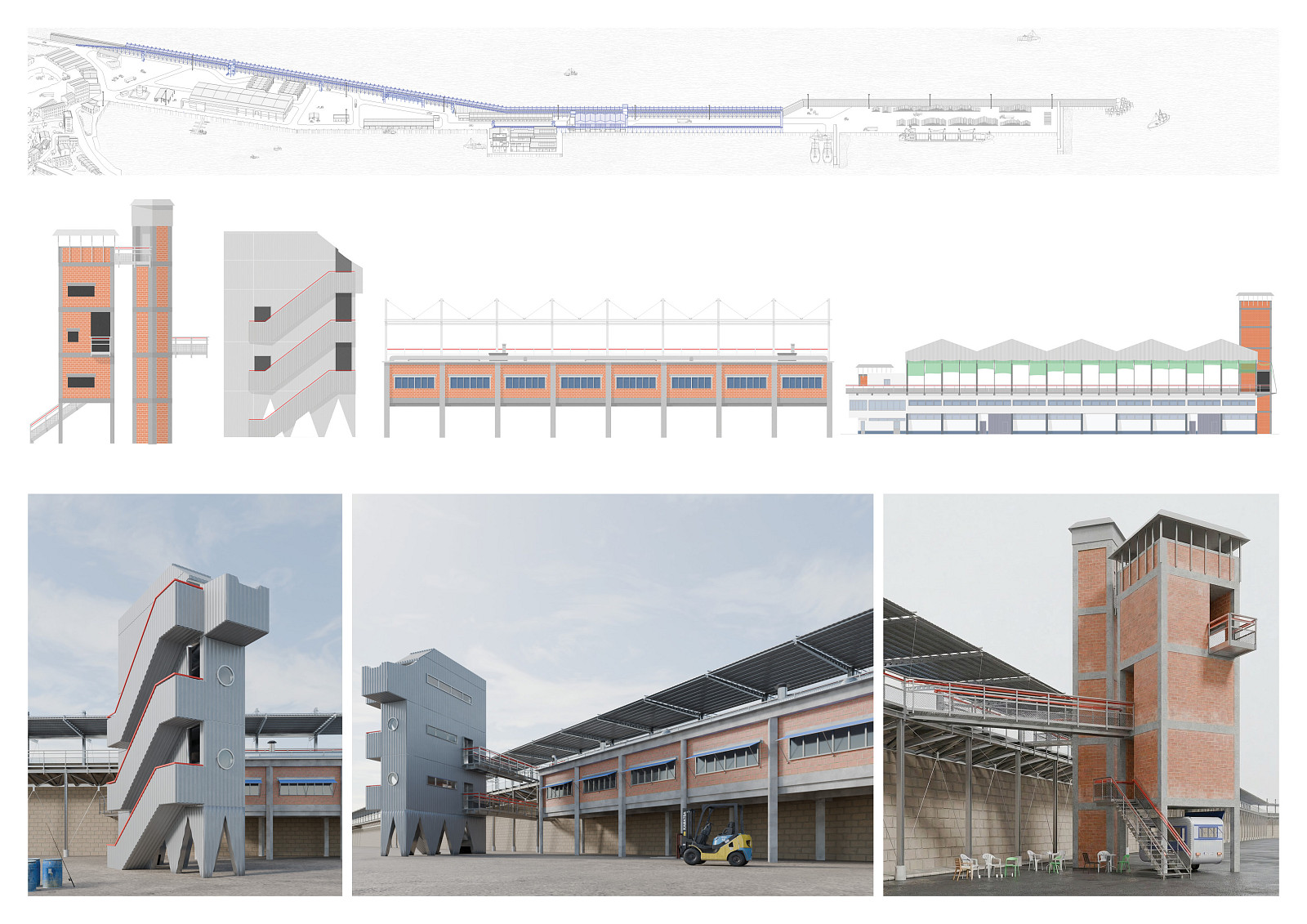
The walkway also connects to a series of access towers that structure movement between ground level and the elevated path. Each tower contains vertical circulation and additional programme, shaping different spatial encounters with the port and its industries.
The project distributes programme across multiple levels of engagement with the port, combining public, productive, and organisational functions to create a continuous relationship between everyday civic life and the ongoing industrial processes of extraction and trade.
Technical information
The structural system develops from the concept of “assembled ruins”, where the main design driver is a close reading of existing industrial logics and local construction methods in order to produce an architecture appropriate to Burela’s port landscape. The intervention is composed of a primary elevated walkway and a series of independent peripheral buildings that together reframe the port as a continuous civic and productive environment.
The elevated walkway is the main structural element, formed as a steel infrastructure following a regular column grid. Its stability is achieved through diagonal cross bracing, where the central node of each bay is lifted above the main structural line to allow movement and circulation beneath. This creates a clear spatial separation between structural support and public passage, while maintaining the open operational character of the port below.
The roof of the walkway extends this logic into a crane like cantilever system. Primary beams are pulled back and counterbalanced towards the seawall, allowing the roof to project outward over the port. This produces long horizontal overhangs that reflect the mechanical and infrastructural language of the site.
Alongside the walkway, the café, offices and classrooms are developed as independent structures embedded within the port. These buildings are not structurally dependent on the walkway and instead operate as grounded interventions. They use steel frames combined with reclaimed brick and concrete from abandoned housing and industrial debris. Their construction relies on familiar local techniques, including masonry infill, reused aggregates in concrete, and exposed structural fragments that preserve traces of previous use.
Together, these elements form a system where new construction is directly informed by existing material and industrial conditions, reorganising them into a coherent spatial and structural framework that reflects the working logic of Burela’s port.
Documentation

Copyright © 2026 INSPIRELI | All rights reserved. Use of this website signifies your agreement to the Terms of Use, Privacy Policy, and use of cookies.