SUNAI - A Seasonal Civic Infrastructure for Chennai


Project idea
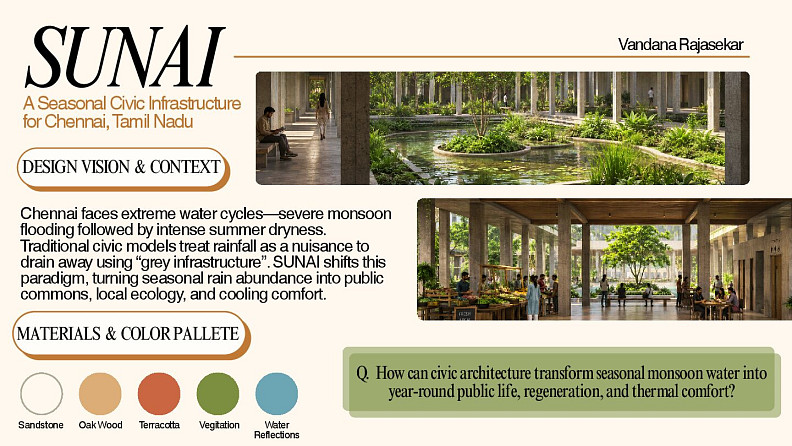
Chennai faces severe climate polarization, ranging from severe monsoon flooding to intense summer dryness. Many traditional civic models treat rainfall as a nuisance to drain away using "grey infrastructure". SUNAI shifts this pattern by turning seasonal rain abundance into a public asset, local ecology, and cooling comfort. The main objective is to create a dual civic space that functions as a water harvesting and filtration system during the monsoon, and transforms into a vibrant, shaded community space during the dry season. By celebrating this movement of water, the project redefines public space as an ecological asset that provides both climate resilience and public comfort.
Project description
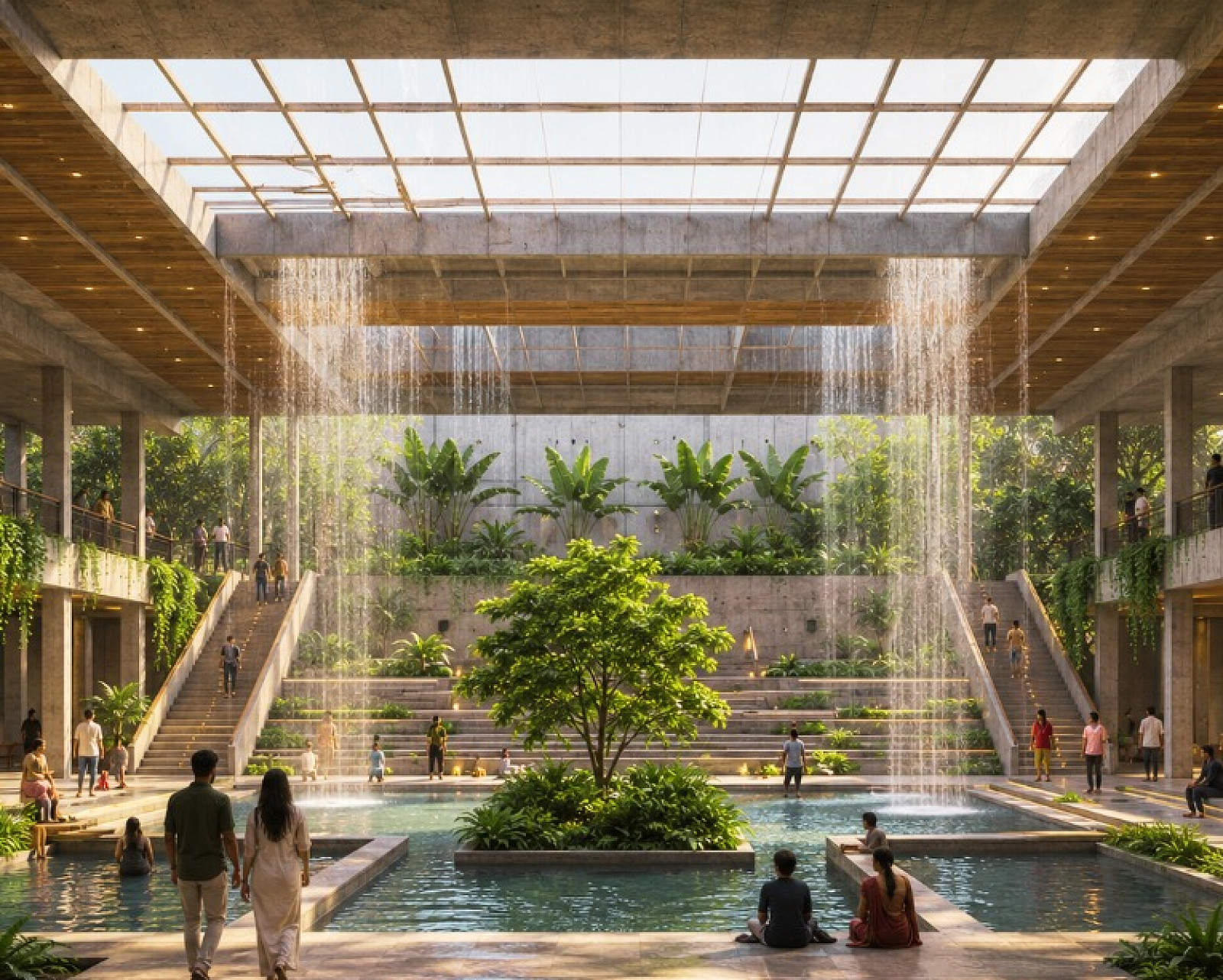
This project introduces an open-air architectural grid structured around three distinct, interconnected hydraulic zones. Zone 1 features an elevated entrance plaza that funnels surface runoff. Zone 2, the Rain Court, acts as the primary "rain catchment" scene where heavy monsoon rainfall drops through an open roof lattice directly into sunken concrete collection basins. This water is then transported through subterranean channels into the deep, monumental Stepwell Court (Zone 3), which serves as a large retention basin. From the stepwell, the collected water flows into the Wetland Garden (Zone 4), utilizing bio-filtration and native plants to naturally purify the water. Raised above these water features is the Community Pavilion (Zone 5), which remains permanently dry, and is a multi-purpose civic hall for gathering, local markets, or educational programs. This design creates a dynamic landscape that adapts to the climate. During the dry months, the empty basins become stepped seating for public space, while rainy weather transforms them into beautiful reflecting pools that naturally cool the air.
Technical information
The pavilion is built from concrete columns and foundations designed to handle wet soil, supporting a dynamic, multi-layered roof structure. The main system features a visible timber grid roof with a large central opening that funnels heavy rainwater into the concrete basins, keeping the surrounding walkways completely dry. The roof uses a perforated timber skin to block harsh sun and let hot air escape, combined with translucent sheets that restrict rain while letting in soft daylight. Water from these basins flows through underground filters into a deep stepwell basin, which controls local runoff while replenishing the natural aquifer. Then, it passes through the wetland garden plants for final natural purification. To keep the space safe and usable all year, all pedestrian paths and balconies are structurally raised above flood levels and incorporate floor drainage grates.
Documentation

Copyright © 2026 INSPIRELI | All rights reserved. Use of this website signifies your agreement to the Terms of Use, Privacy Policy, and use of cookies.