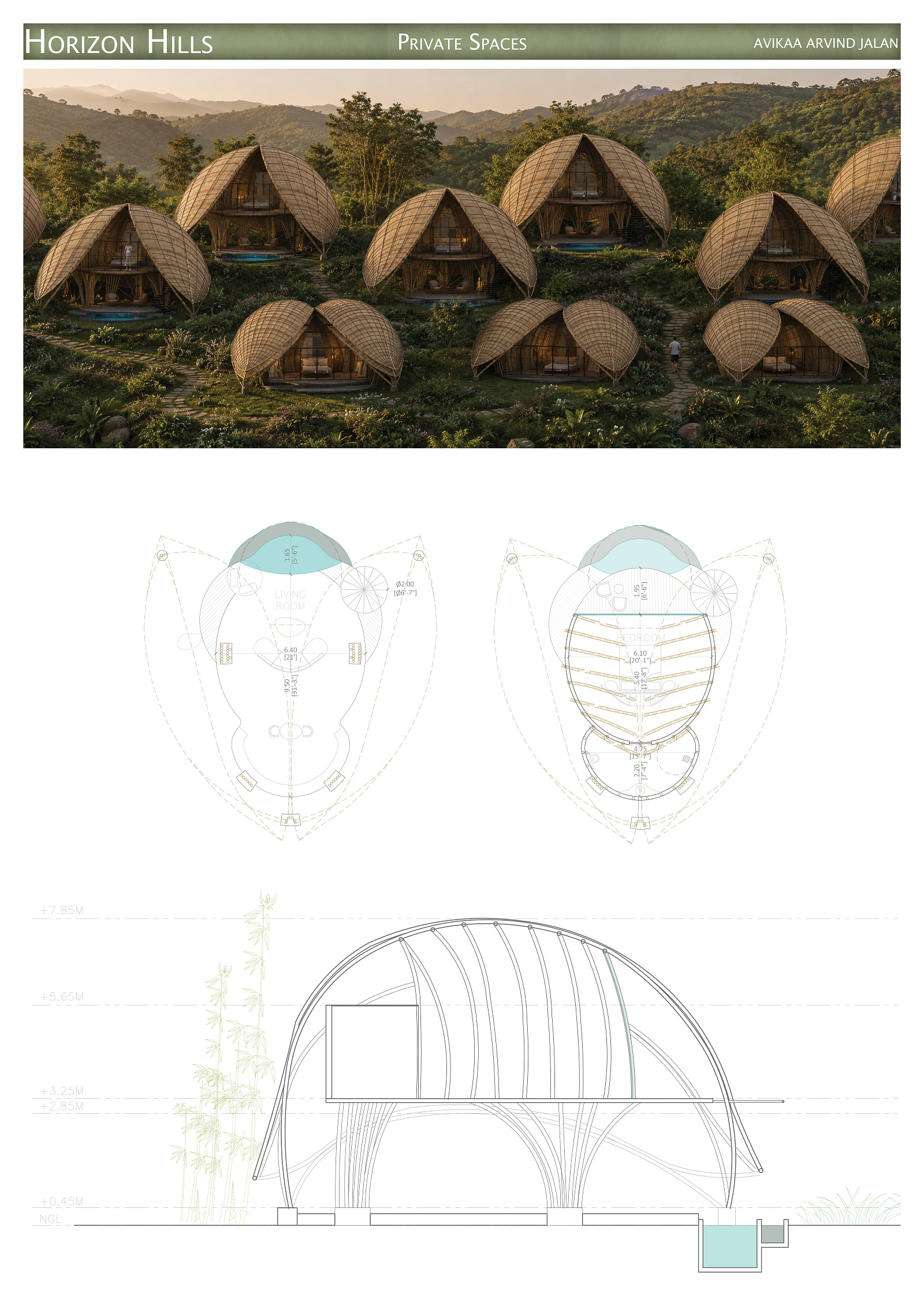
Horizon Hills: Hospitality at the Ecological Threshold


Project idea
PROBLEM STATEMENT:
As the tourism industry expands into ecologically sensitive territories, the natural environment becomes a spatial commodity whose ecological qualities are transformed into economic value. While broader systemic pressures such as policy, mobility, and market demand drive this expansion, architecture operates as the immediate interface through which these forces shape how, and whether, a place is made sensorially available to those who inhabit it. It influences whether the relationship between body, material and site is one of genuine immersion or one reduced to mere visual consumption of a curated image.
Despite the growing discourse surrounding ecotourism, contemporary hospitality architecture continues to rely on standardized construction systems, globally replicated spatial typologies and imported material assemblies that remain detached from site specific contexts. Sustainability is frequently approached through technical performance metrics (e.g., certifications and ratings), overlooking the atmospheric, experiential relationship between the built and unbuilt through which the landscape is engaged. As a result, many hospitality environments reduce nature to a scenic backdrop, a visual corridor observed through glass, rather than a space bodily inhabited. The landscape functions as the economic selling point, yet the architecture systematically isolates the guest from its actual sensorial character. In doing so, it undermines the very ecological and cultural qualities that initially attracted the tourism sector.
This disconnect becomes particularly evident within the forest-agrarian edge landscapes of Tamil Nadu’s Eastern Ghats, where the human-nature relationship is in a constant state of overlap. These territories are defined by ecological liminality, a dynamic field of negotiation between wilderness, cultivation and habitation. However, hospitality developments within these zones frequently reproduce detached architectural models that fail to engage with this hybridity, treating the landscape as a passive backdrop rather than a co-productive system that actively informs spatial organization and thereafter, atmospheric experience.
The erosion of the nature-culture interdependence surfaces explicitly in material practices. Historically, bio-based material traditions mediated this relationship by aligning construction with local climatic conditions and resource cycles. However, contemporary practices have largely detached from these systems, perceiving them as “primitive”, and thereafter, incompatible with the expectations of luxury hospitality markets. The abandonment of these in favour of Western, industrial materials is hence, not only an ecological loss but a phenomenological one due to a severance of the relationship between the built space and the living landscape it occupies.
What such conditions call for is not merely a nostalgic return to tradition, but an adapted re-engagement with the systemic intelligence embedded within vernacular material practices through contemporary design frameworks. In this context, bio-based material systems present the potential to re-establish relationships between nature and culture wherein their inherent properties inform spatial, structural and environmental performance. However, their capacity to develop atmospheric conditions through which architecture engages the landscape beyond simple visual consumption remains highly unexplored.
Drawing from this, the project aims to answer the research question: How can hospitality architecture cultivate atmospheres of inhabitation through bio-based material systems within the ecological liminality of Tamil Nadu’s Eastern Ghats?
OBJECTIVES
1. To examine the socio-ecological conditions of forest-agrarian edge landscapes in the Eastern Ghats of Tamil Nadu as a foundation for site-2. specific hospitality architecture
3. To investigate biomimetic principles for adaptive structural, material and spatial strategies derived from natural systems
4. To explore the potential of bio-based material systems in cultivating immersive, multi-sensorial inhabitable environments
5. To develop a spatial program that navigates the atmospheric range from collective openness to intimate enclosure
6. To reinterpret vernacular practices in ways that challenge dominant contemporary expectations of luxury, shifting the emphasis from superficial ornamentation towards structural and material authenticity
7. To integrate cyclical water and energy systems that are architecturally visible as part of broader ecologically responsive strategies
Project description
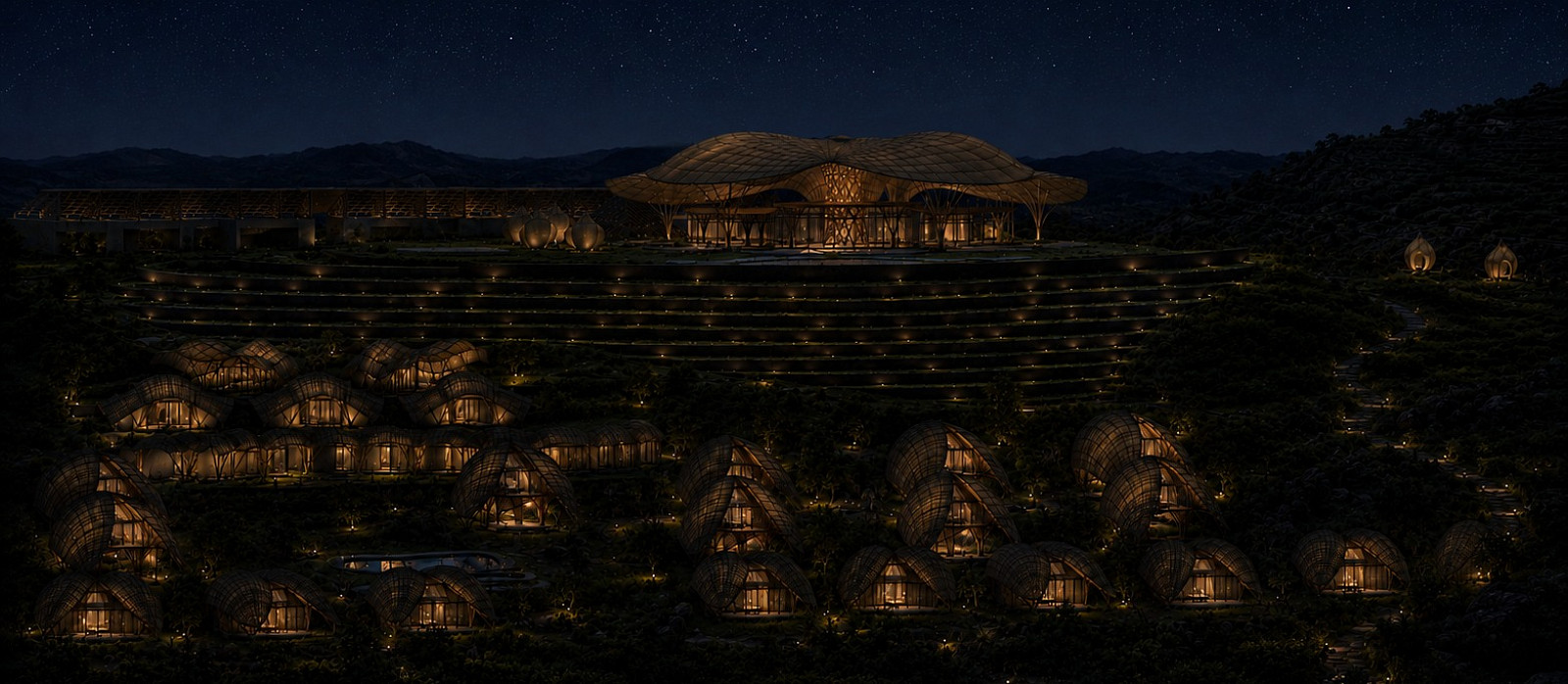
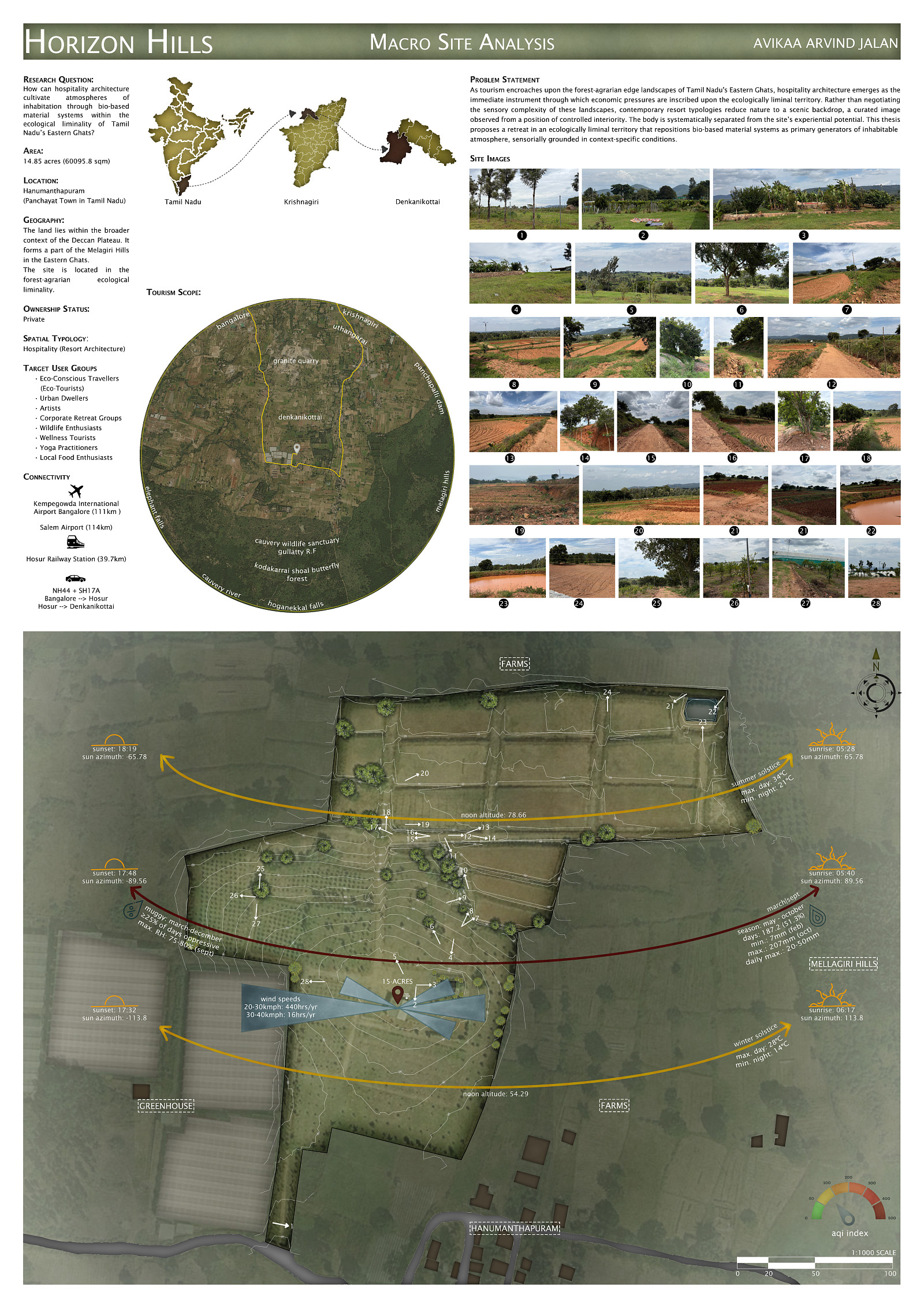
The study is geographically focused on forest-agrarian transition zones, with a specific reference to the land located along the edge of the Cauvery Wildlife Sanctuary in the Eastern Ghats in Krishnagiri District, Tamil Nadu. These landscapes exist in a condition of ecological liminality wherein human habitation intersects with protected wilderness. Rather than treating this as a constraint, the research positions it as the primary generative foundation for architectural inquiry. It frames the “in-between”, not as residual territory, but as a landscape of heightened sensory, ecological and spatial intensity capable of producing distinct inhabitable atmosphere.
The project is imagined as an inhabited threshold between two opposing landscape conditions. On one side is farmland (productive, linear, managed and controlled). On the other side is forest (organic, dense, layered and wild). The architecture is planned as a curated in-between where human use, ecological processes and sensory experiences overlap.
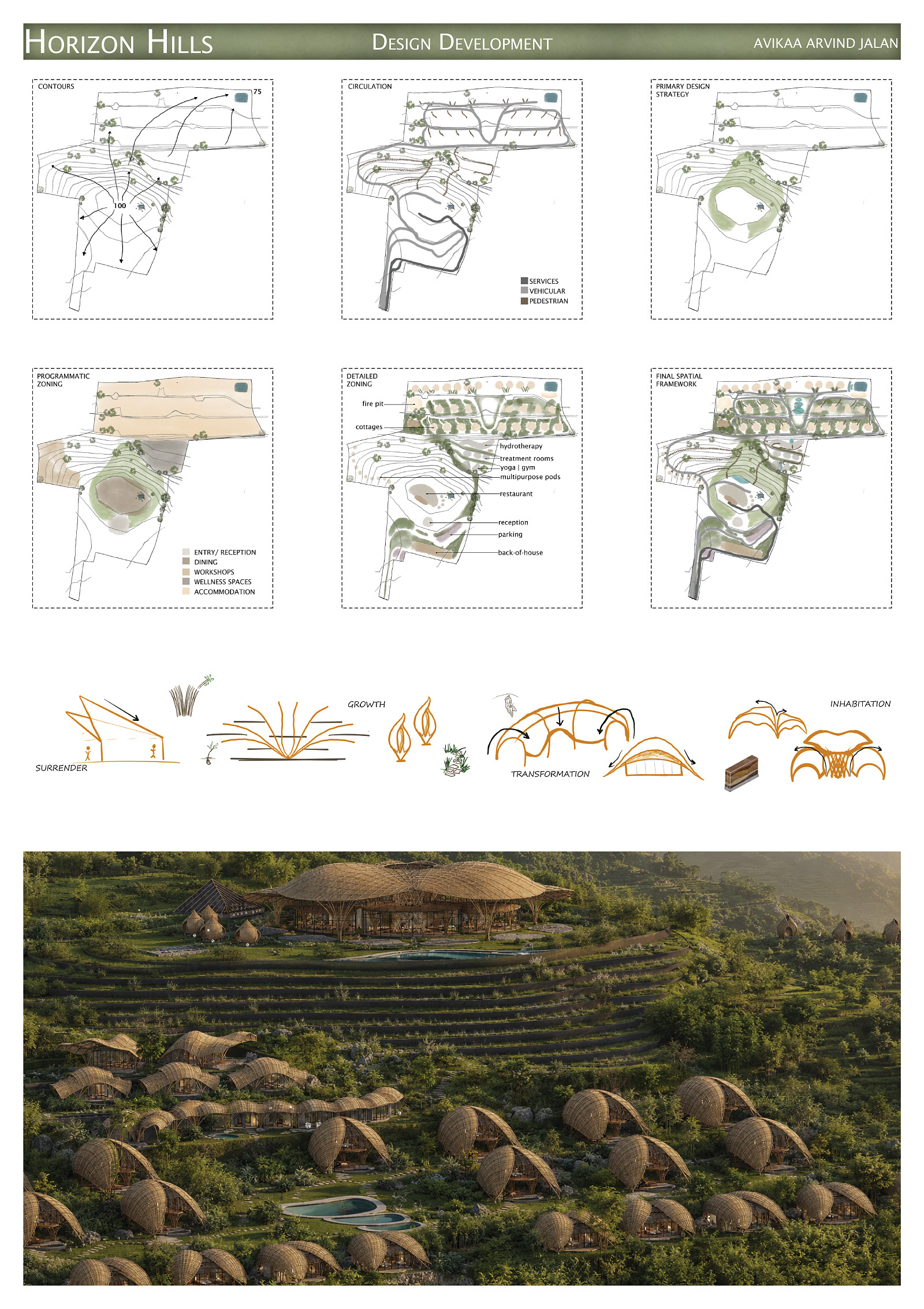
Drawing from this existing liminality, the project aims to negotiate between multiple in-between dichotomies of movement/ pause, public/ private, inside/ outside, and man/ nature. Hence, it becomes a living gradient where guests move through stages of surrender, growth, transformation, and inhabitation or existence.
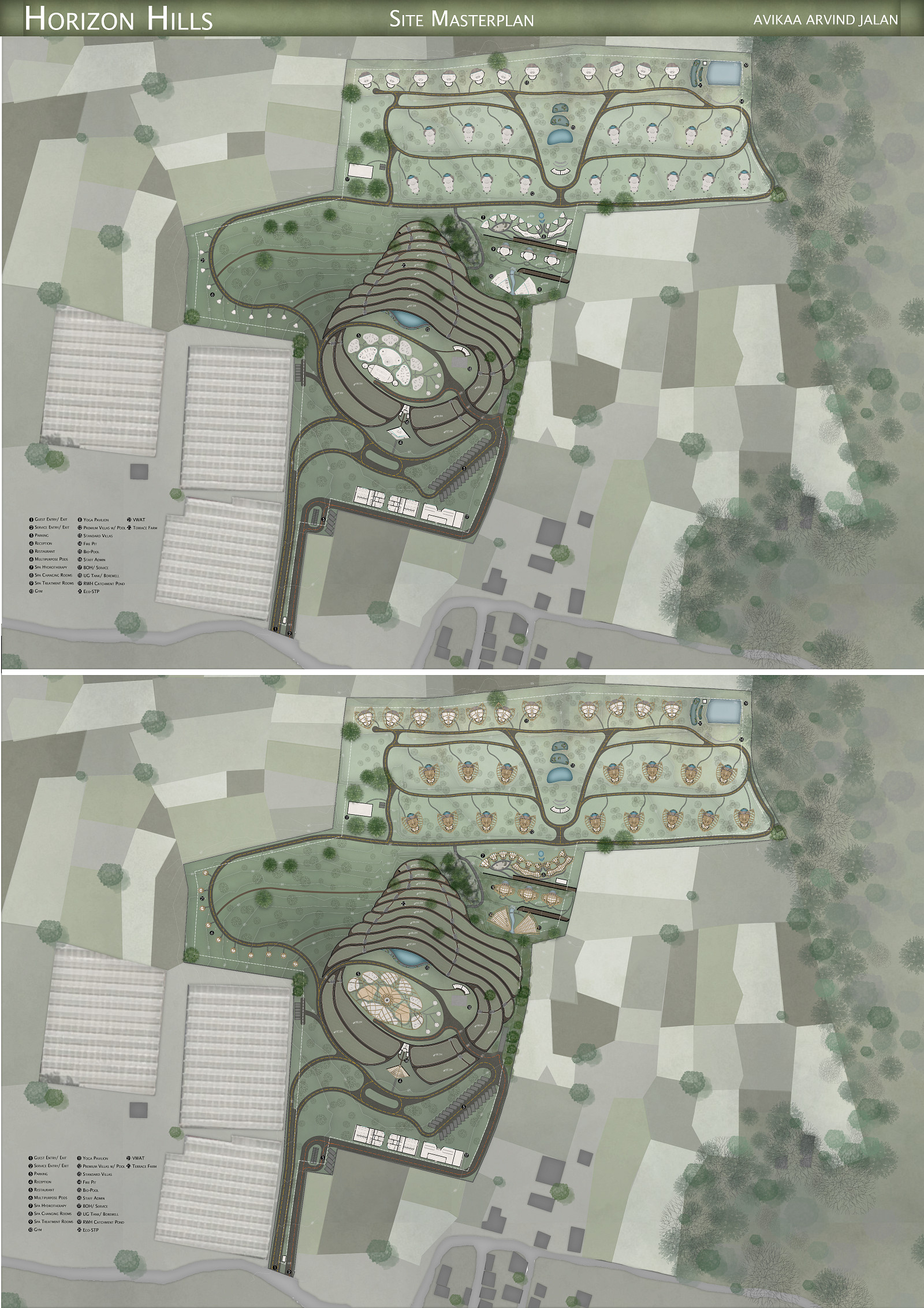
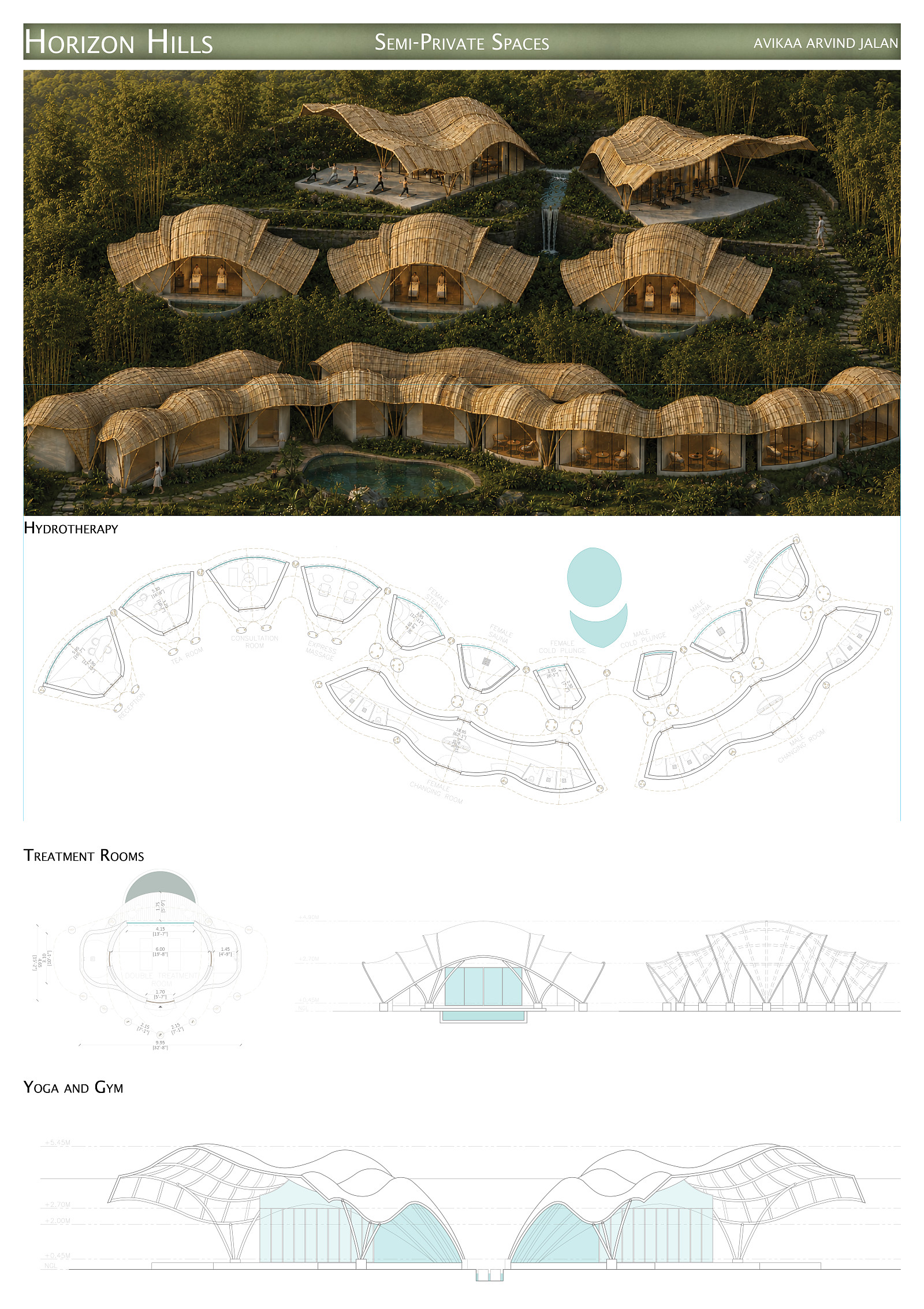
Through a carefully distributed masterplan, the proposal integrates accommodation units, wellness facilities, dining spaces, intimate multipurpose spaces, and landscape interventions into the existing topography, allowing architecture and nature to function as a continuous experience.
Technical information
MATERIALITY:
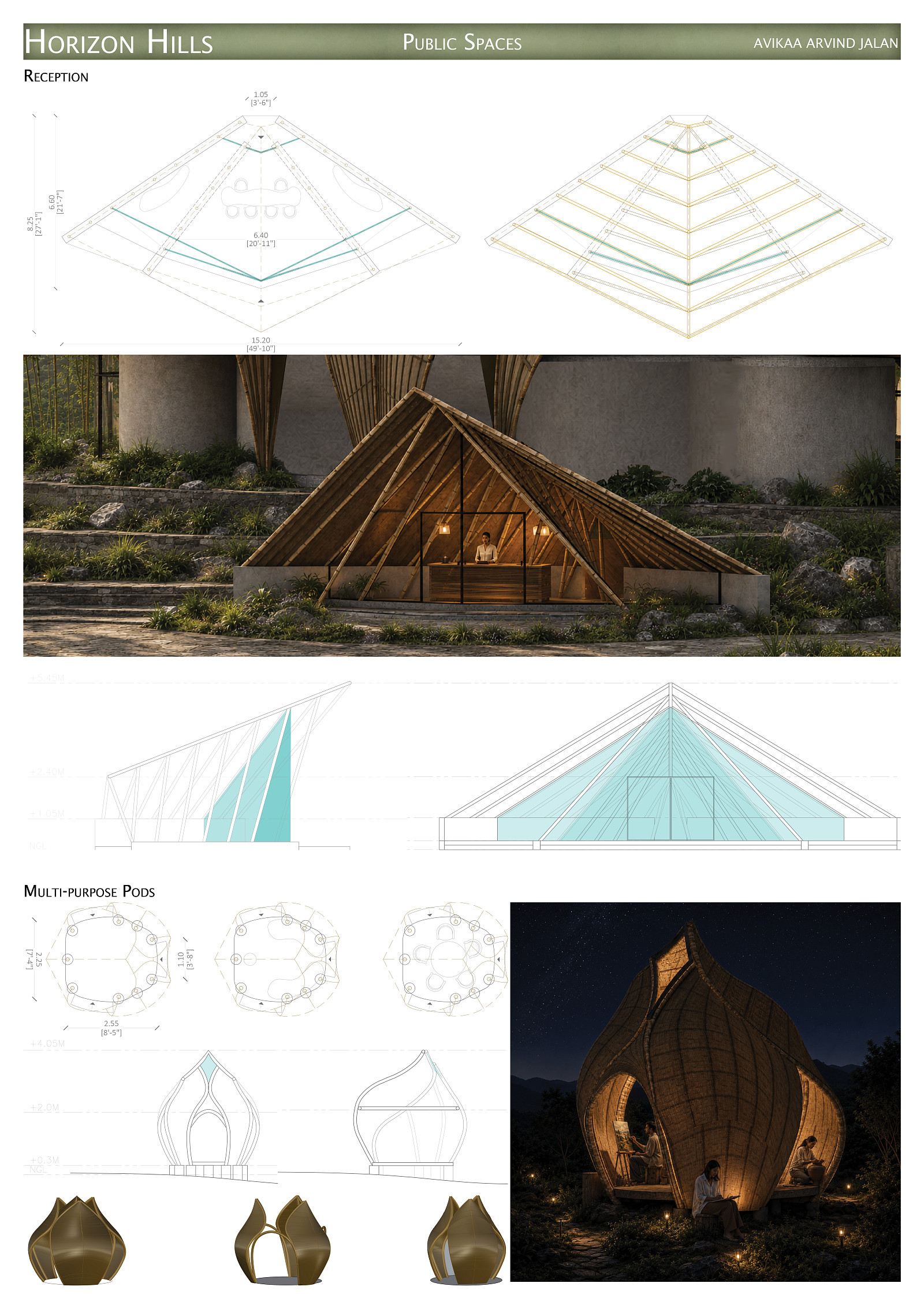
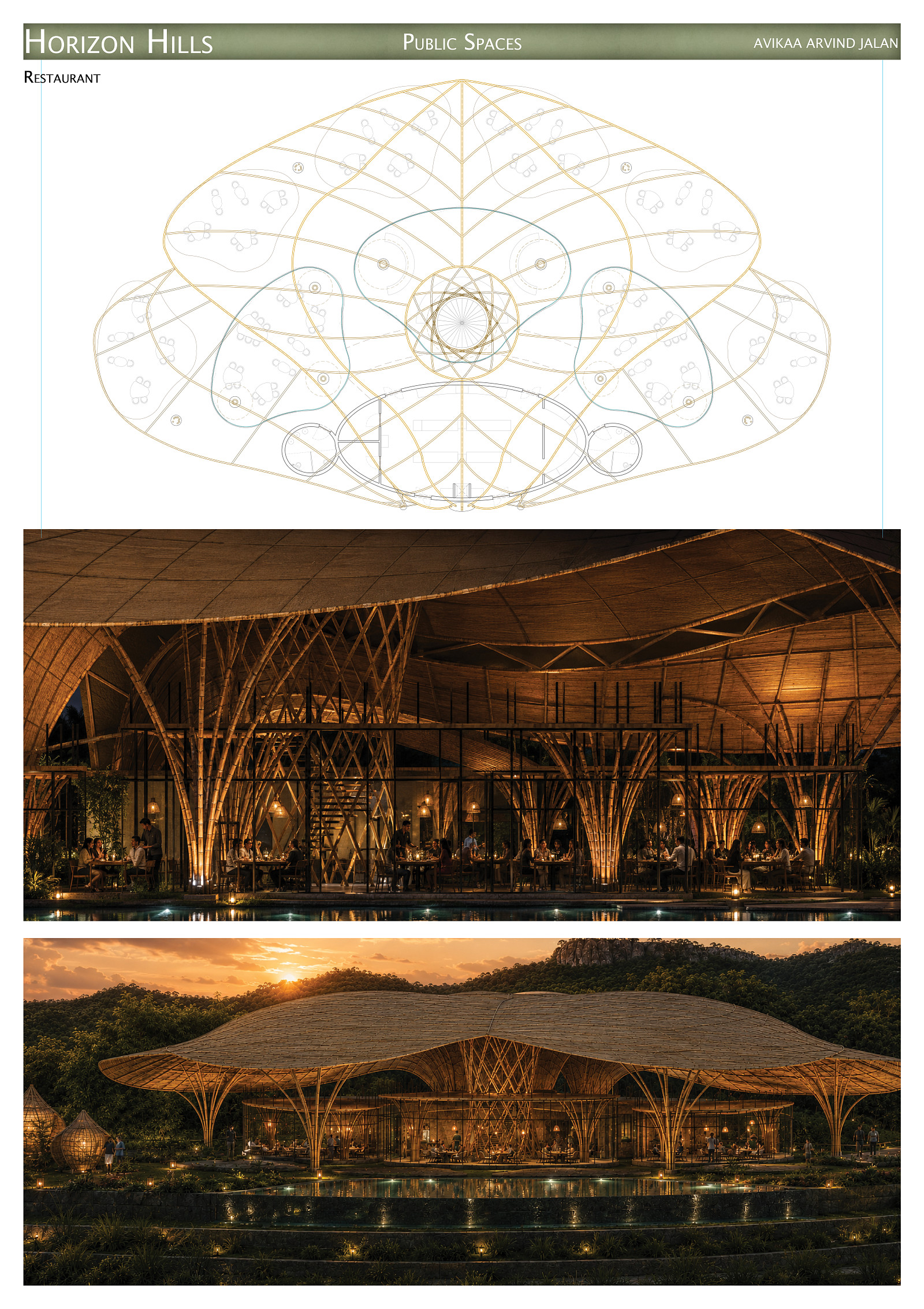
The material language of the project is rooted in the logic of its landscape. All the materials are drawn from the ecological and geological character of the Eastern Ghats. Bamboo, sourced from plantations across the state, is the primary structural and surface material used. It is not a vernacular aesthetic gesture, but a biomimetic proposition. Rammed earth and CSEB blocks are made using the excavated red soil of the site, grounding the retreat in a specific soil strata, hence, preventing any contamination of the site’s terrain. Granite is sourced from quarries around the site. It mediates between the built and unbuilt. Together these materials do not attempt to stimulate nature but instead, participate in it. They age, weather and adapt to the cycles of the forest edge that they inhabit. This is materiality understood through Zumthor’s lens. It is not a surface finish but a sensory presence. It is the capacity to generate atmosphere through weight, temperature, texture, and light.
BAMBOO STRUCTURAL SYSTEMS:
Bamboo performs exceedingly well in tension and bending, but is vulnerable to shear and crushing at the culm wall when loads are applied perpendicular to its fibers. The designs are accomplished through a mix of whole pole bundles (rup-rup or heat where bending is required) or split bundles (splits bent, glued and lashed together). Structural systems used for the project can be organized into the following:
1. Post-and-Beam/ Trusses
2. Hyperbolic Towers
3. Gridshells (using arches)
The relevant joinery are one ear, tow ear, beveled, flute mouth and fish mouth which depend on the angle of the joint. The key principle is to bolt two bamboo poles at the internodes, and not the node as the culm wall may crush otherwise.
The local species of bamboo proposed include:
1. Structure: Bambusa balcoa
2. Secondary Structure: Dendrocolamus strictus
3. Other Species: Bambusa bambos
WATER MANAGEMENT:
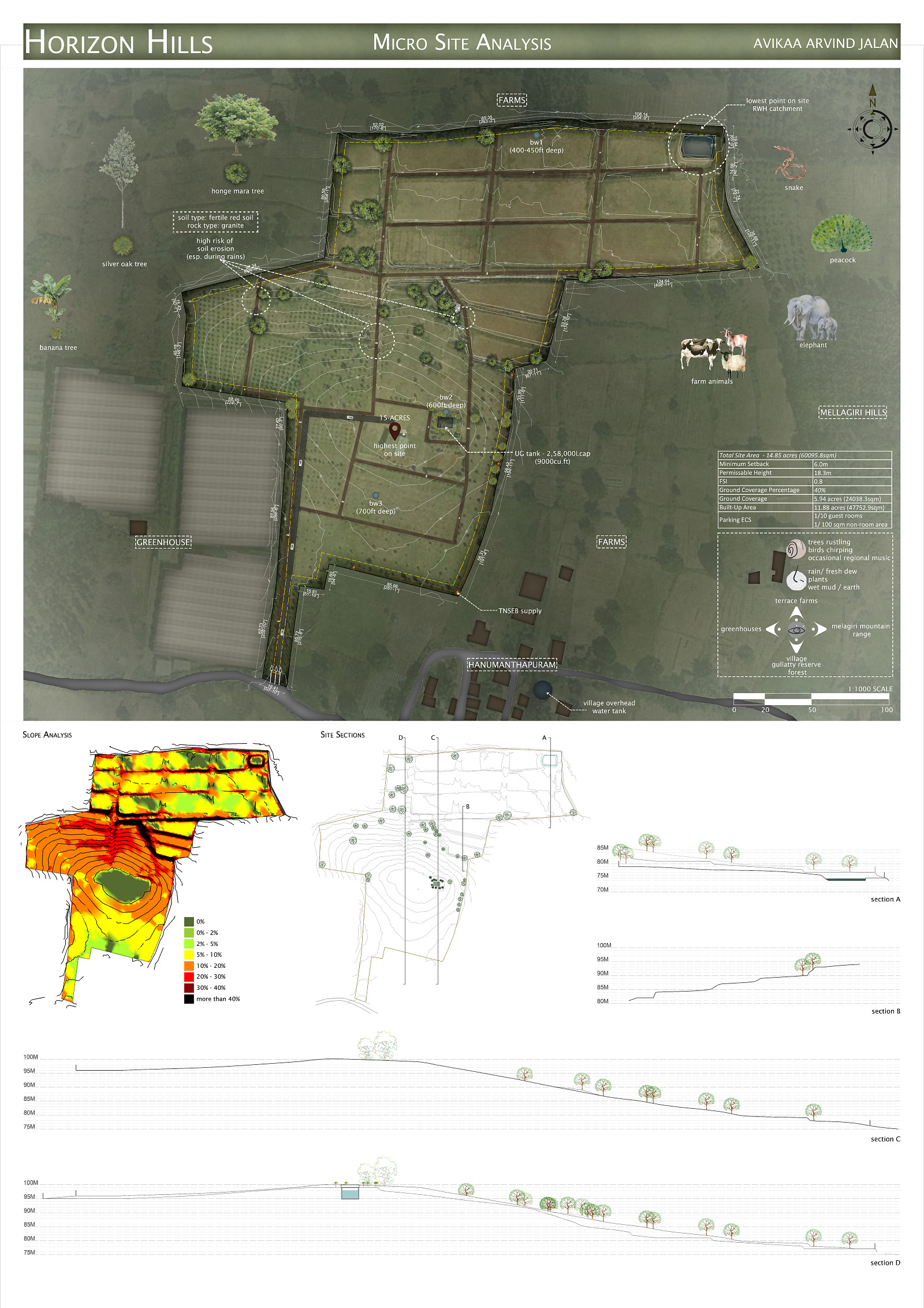
Supply - 3 Borewells (400-700 feet deep) and 258000L (9000 cu.ft.) Underground Tank
Bio- Swimming Pools
Treatment - EcoSTP
Rain Water Harvesting - As documented during the climate analysis of the site, it rains 187.2 days per year, and 867mm per annum. In order to recharge the groundwater levels and reduce the impact of water extraction, the project incorporates rain water harvesting systems. The catchment is at the lowest point of the site, that is, a natural pond at the 75m contour mark.
Stormwater Management - Bamboo swales with smaller recharge pits to allow for natural infiltration across the site
ENERGY:
1. Standard Grid System
2. Solar Energy (925.4 sqm. - 155-185kW energy)
3. Omni-Directional Wind Turbines/ Vertical Axis Turbines (800-1600 kWh/year and 2-4kWh/day per turbine)

Copyright © 2026 INSPIRELI | All rights reserved. Use of this website signifies your agreement to the Terms of Use, Privacy Policy, and use of cookies.
