My World Gallery & Baganuur Museum

Project idea
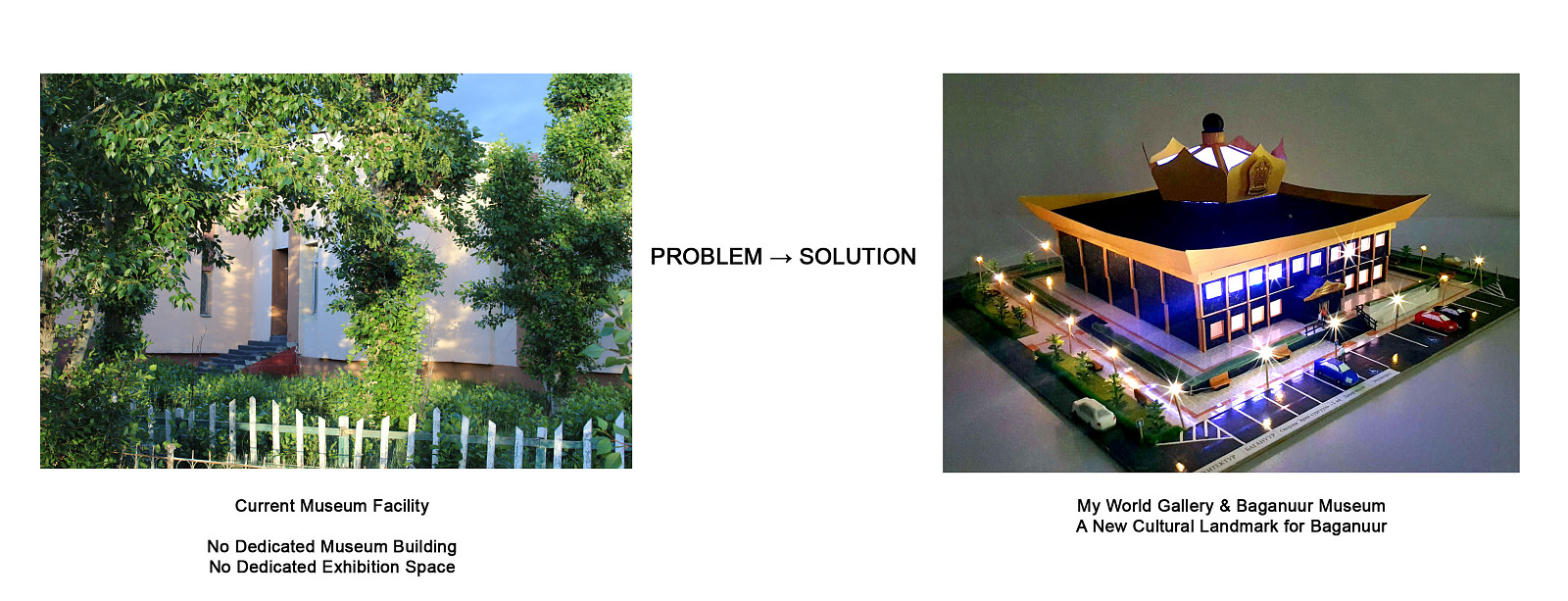
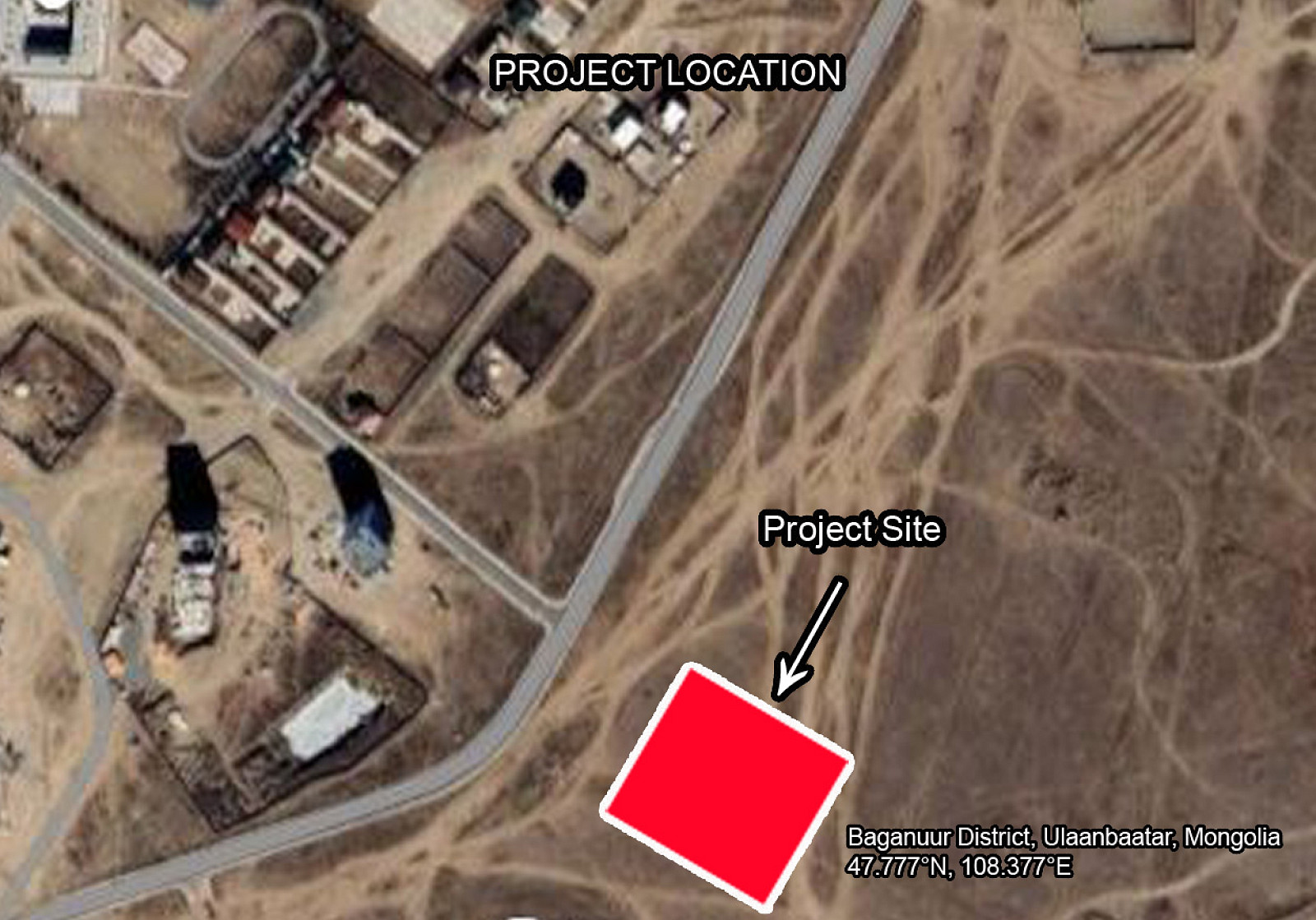
Baganuur District is one of the districts of Ulaanbaatar; however, it is located 130 kilometers away from the capital city. The district is home to many artists, visual arts teachers, students, and people who are interested in art. Despite this, there is no dedicated gallery space where local artists, students, and art enthusiasts can publicly exhibit their work. In addition, the Baganuur Museum does not have its own purpose-built building and currently operates in a limited space within another institution. As a result, it is not easily accessible to the public and its activities reach only a limited audience.
Therefore, this project aims to establish a cultural and community center that combines the “My World” Gallery and the Baganuur Museum. The center is envisioned as an open public space that brings together art, education, cultural heritage, and community participation, while also serving as a venue for various events and gatherings.
The gallery section will provide opportunities for artists, creators, teachers, students, and local residents to exhibit their work and organize exhibitions. In addition, the project includes an open studio space that is accessible to everyone. In this studio, artists, teachers, students, children, young people, and community members can spend their free time creating artwork individually or together with their families. In an era when screen dependency has become increasingly common, such a space plays an important role in encouraging creativity, meaningful face-to-face interaction, and stronger social connections within the community.
The museum section will serve to preserve, promote, and pass on Baganuur’s history, valuable cultural heritage, and local identity to future generations.
Project description
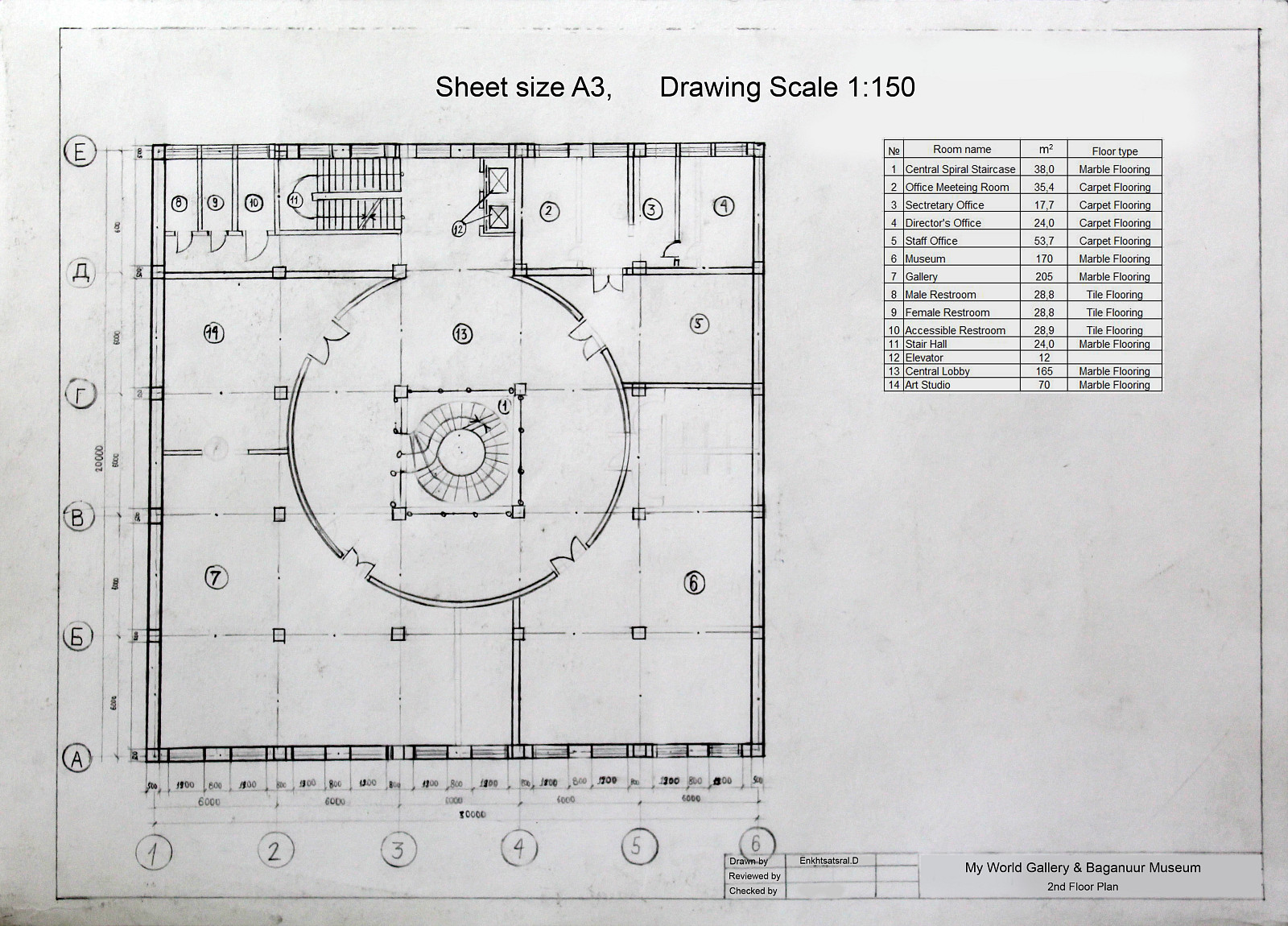
This project consists of a variety of interconnected spaces designed to support art, culture, education, and community participation. These include a gallery for permanent and temporary exhibitions by artists, visual arts teachers, students, and community members; a museum presenting the history, heritage, culture, and unique identity of Baganuur; and an open studio accessible to everyone for drawing, painting, handicrafts, educational programs, and creative activities.
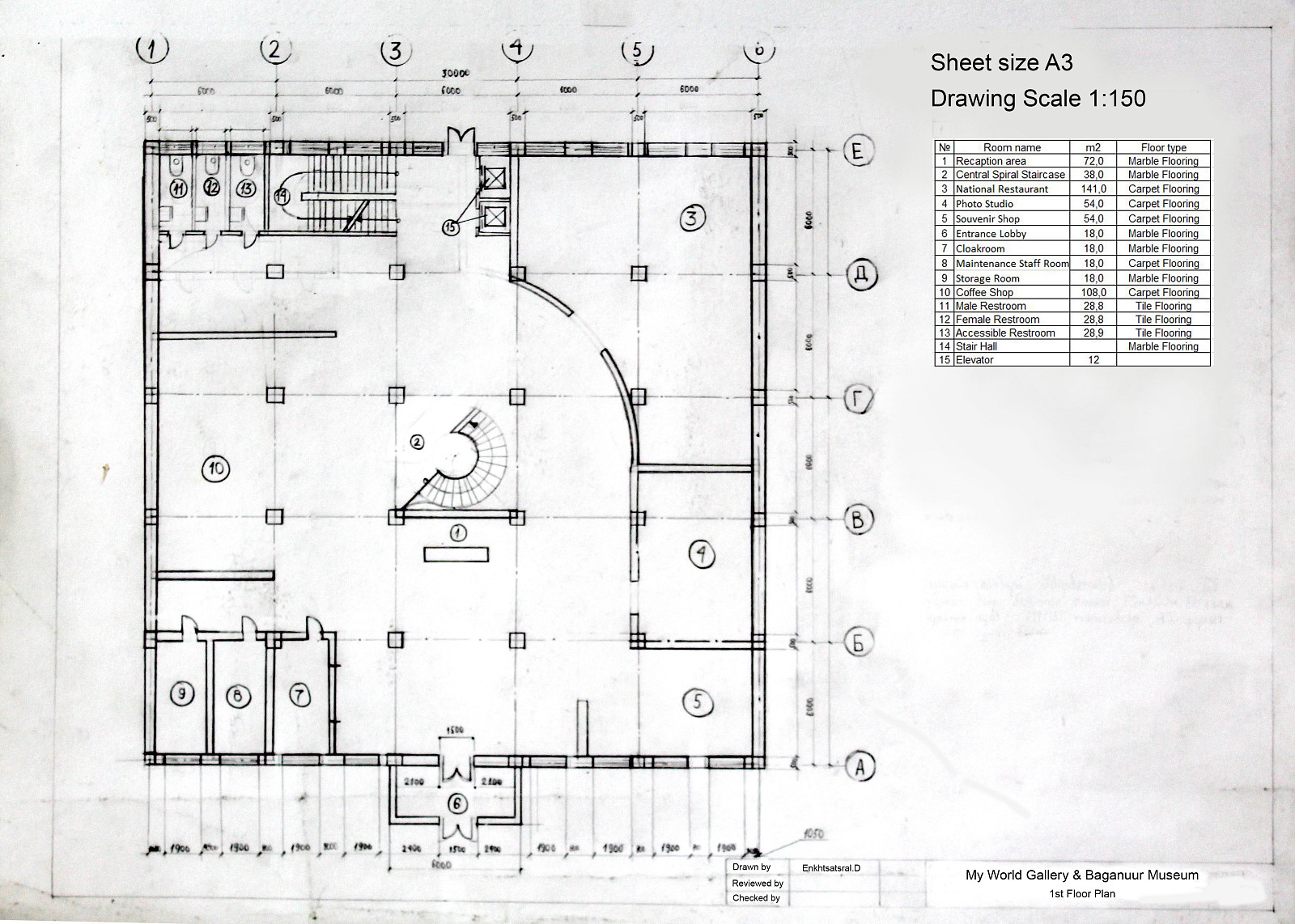
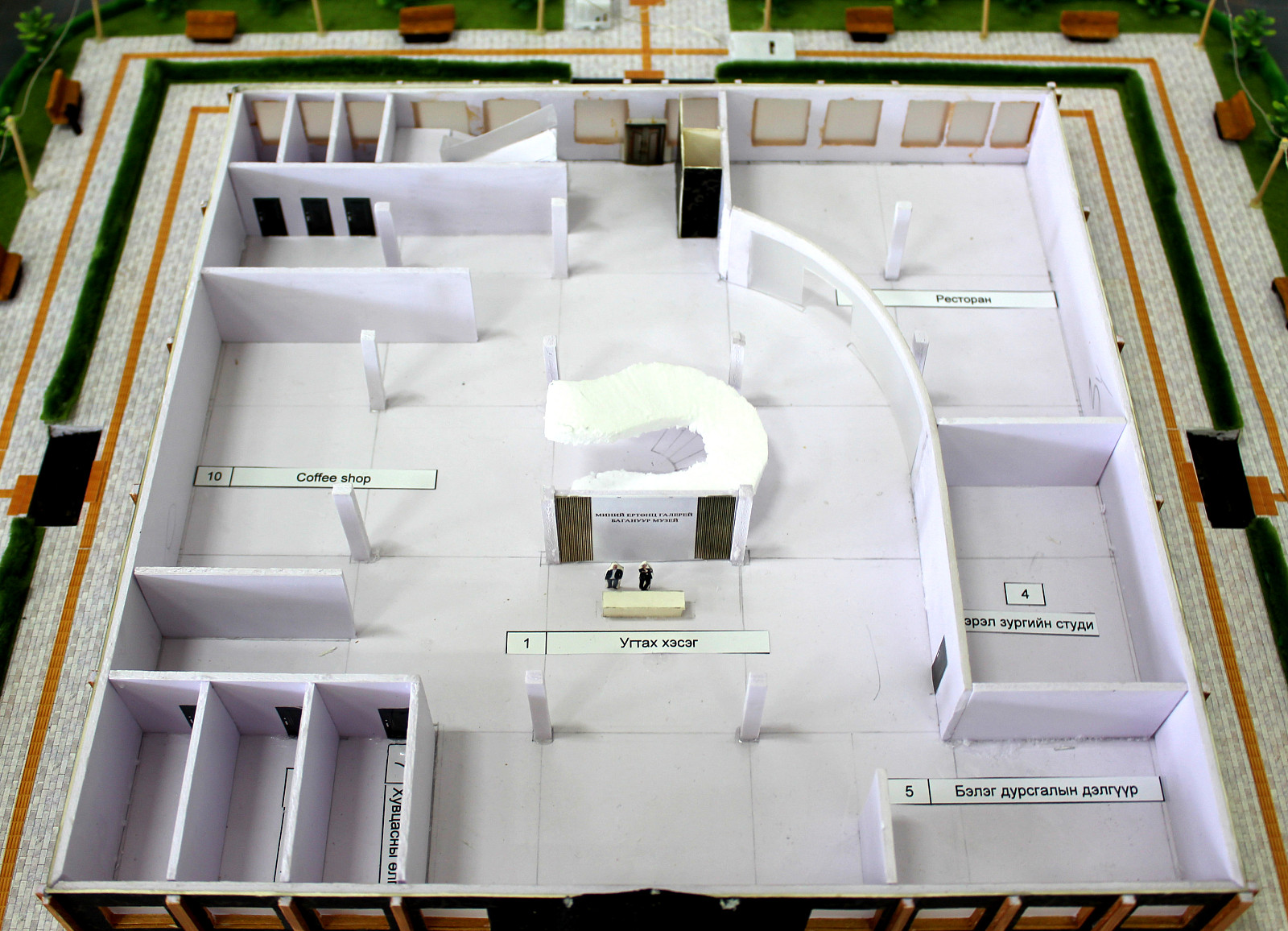
The project also includes a traditional Mongolian restaurant, a coffee shop for relaxation and social interaction, a photography studio where visitors can experience and take photos in traditional Mongolian costumes, a souvenir shop offering products that reflect the history, culture, and identity of Baganuur, as well as administrative and support facilities.
The center serves as an open cultural space where local residents, domestic visitors, and international tourists can enjoy art exhibitions, learn about local history, participate in creative activities, and experience Mongolian culture. The gallery, museum, studio, and supporting facilities work together to create an environment that brings together art, education, cultural heritage, and community participation in one place.
Technical information
Architectural Concept
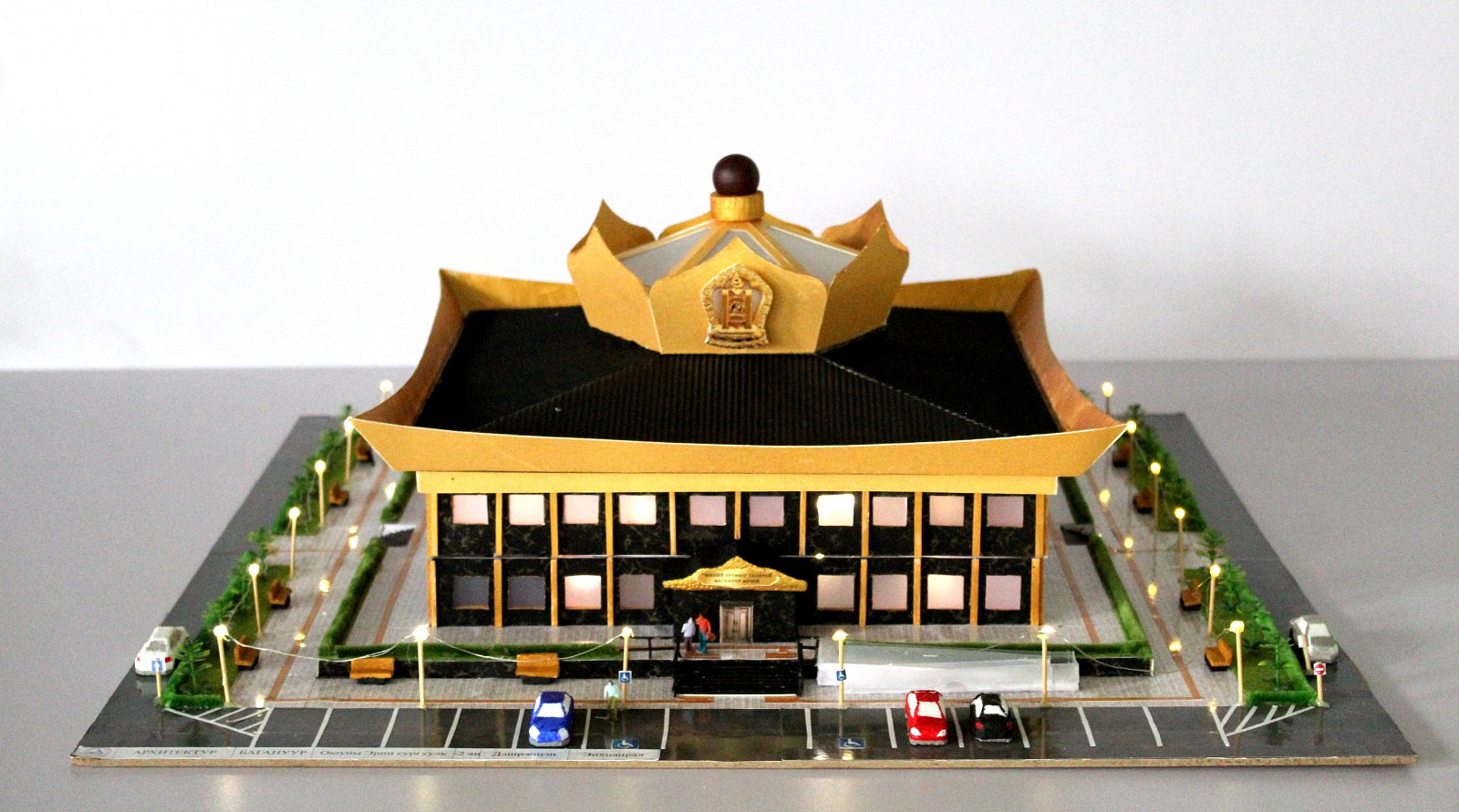
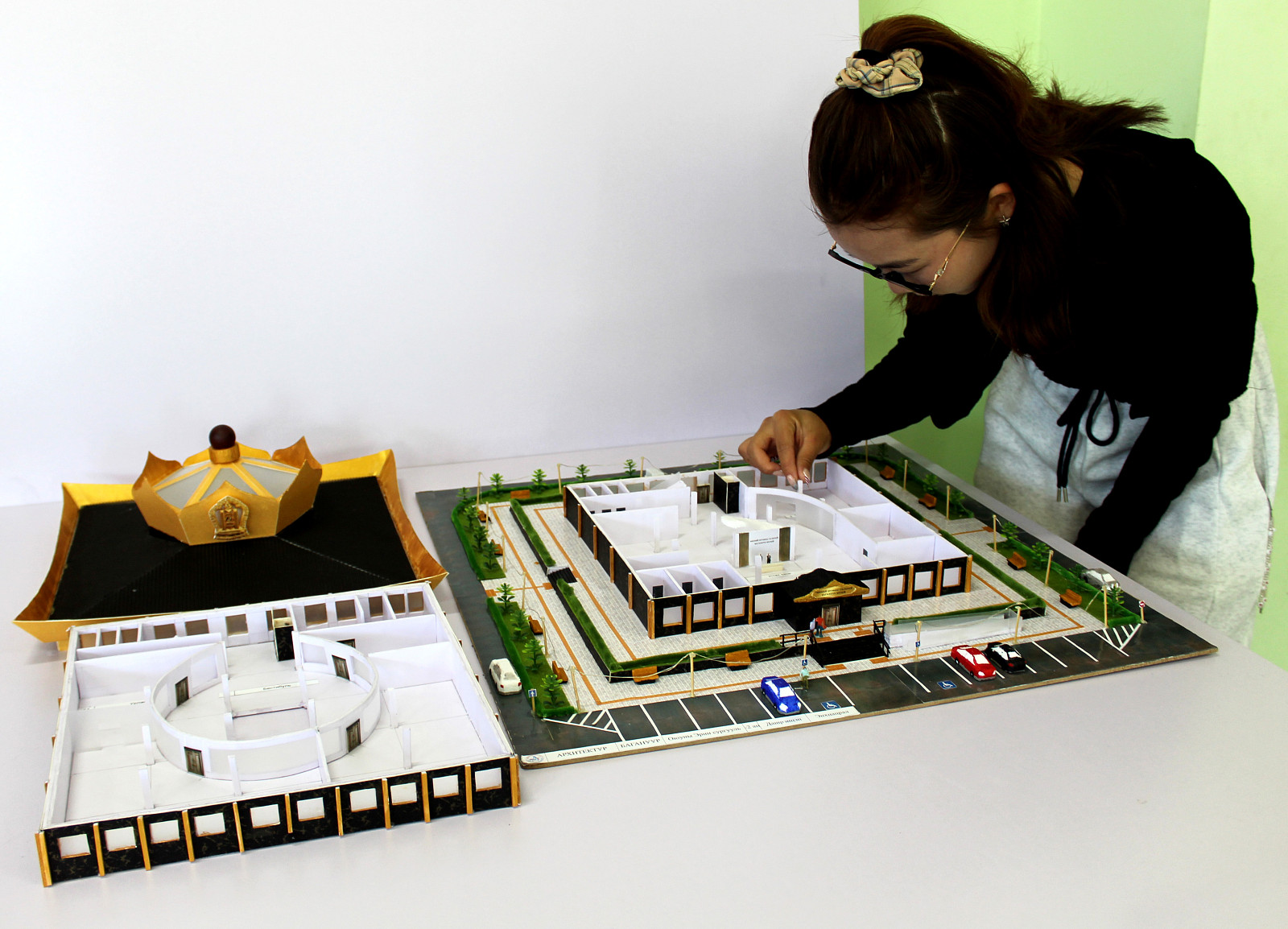
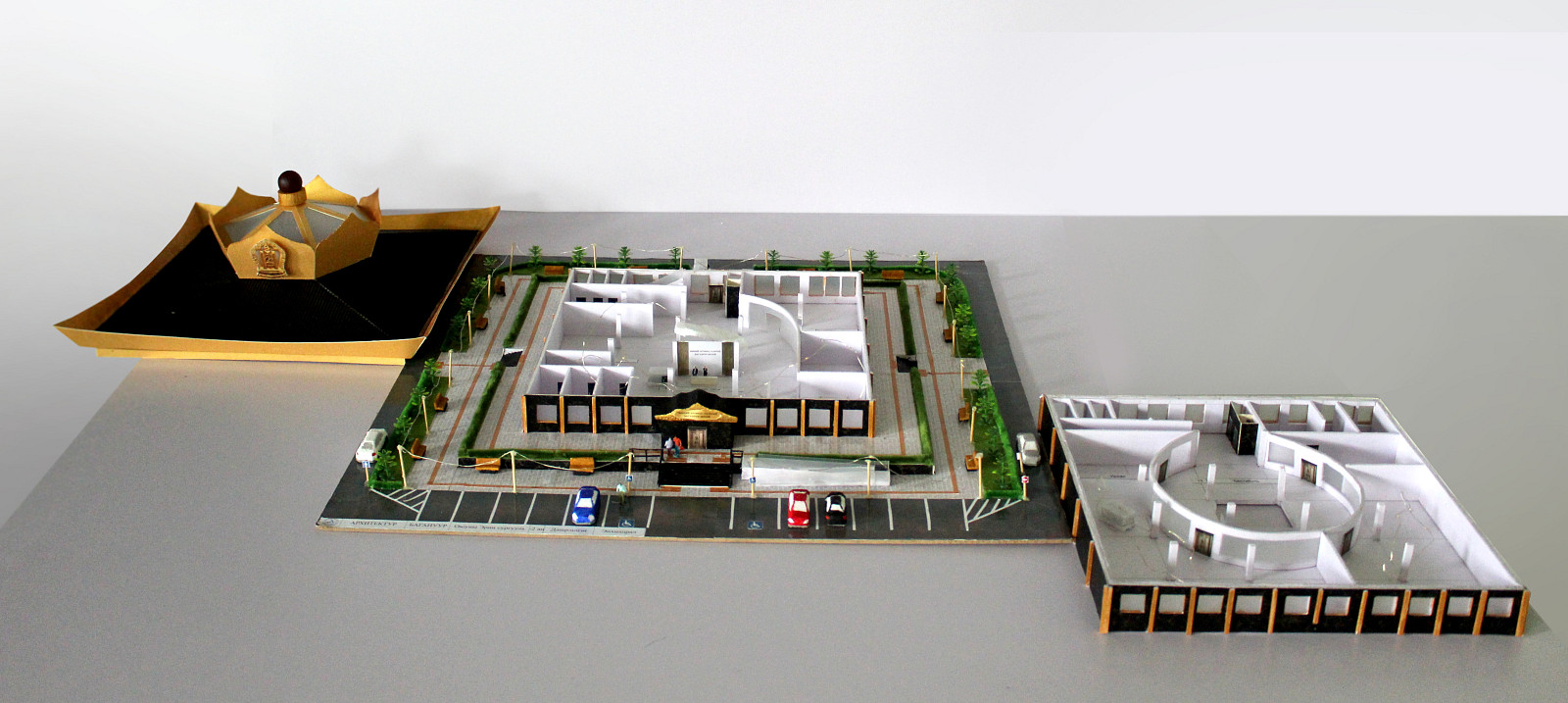
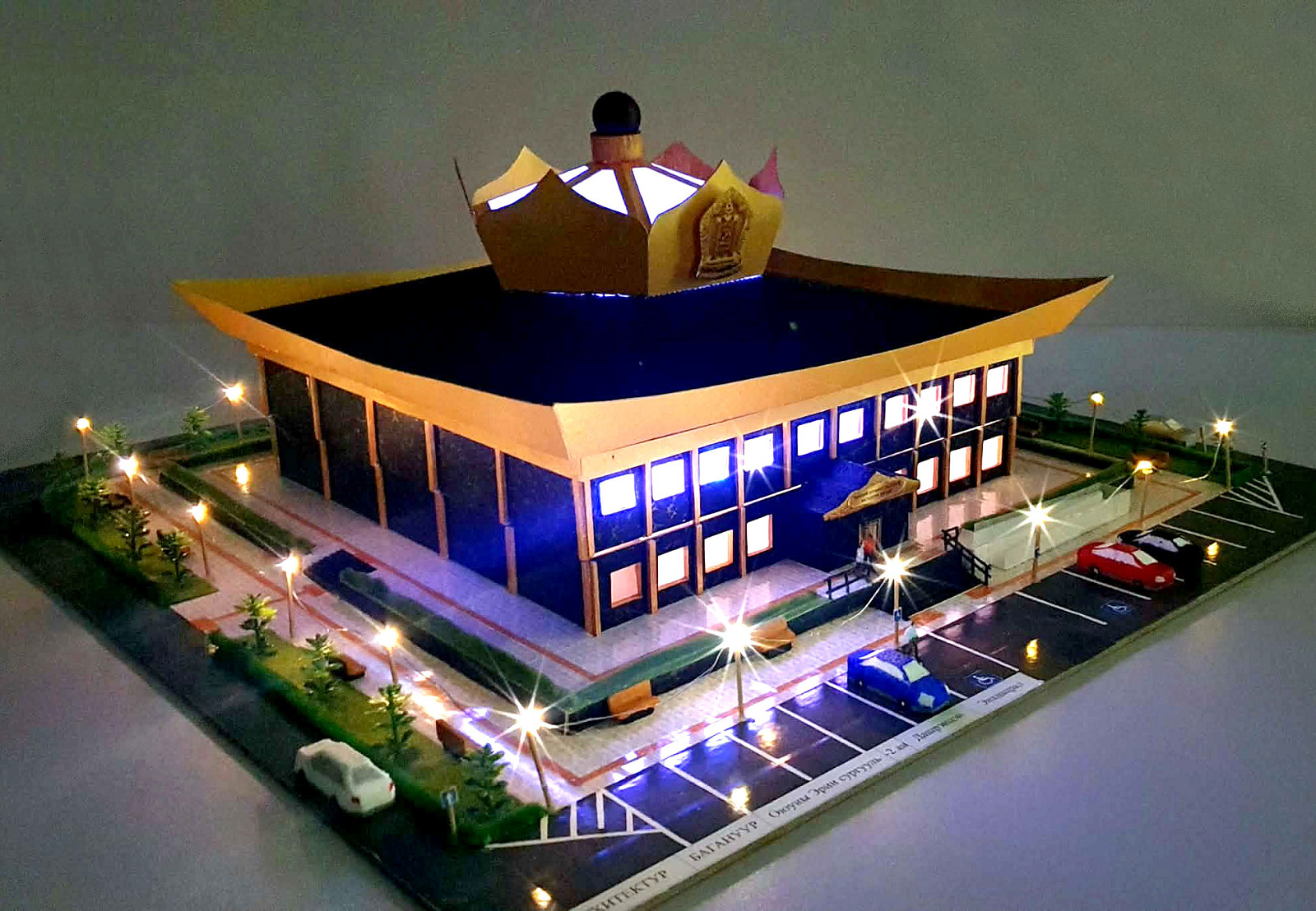
The architectural design is based on the principle of combining traditional Mongolian architectural elements with contemporary forms and spatial organization. The overall appearance of the building is intended to immediately convey its identity as a cultural, artistic, and community facility that reflects Mongolian national character.
Roof Crown and Atrium Design
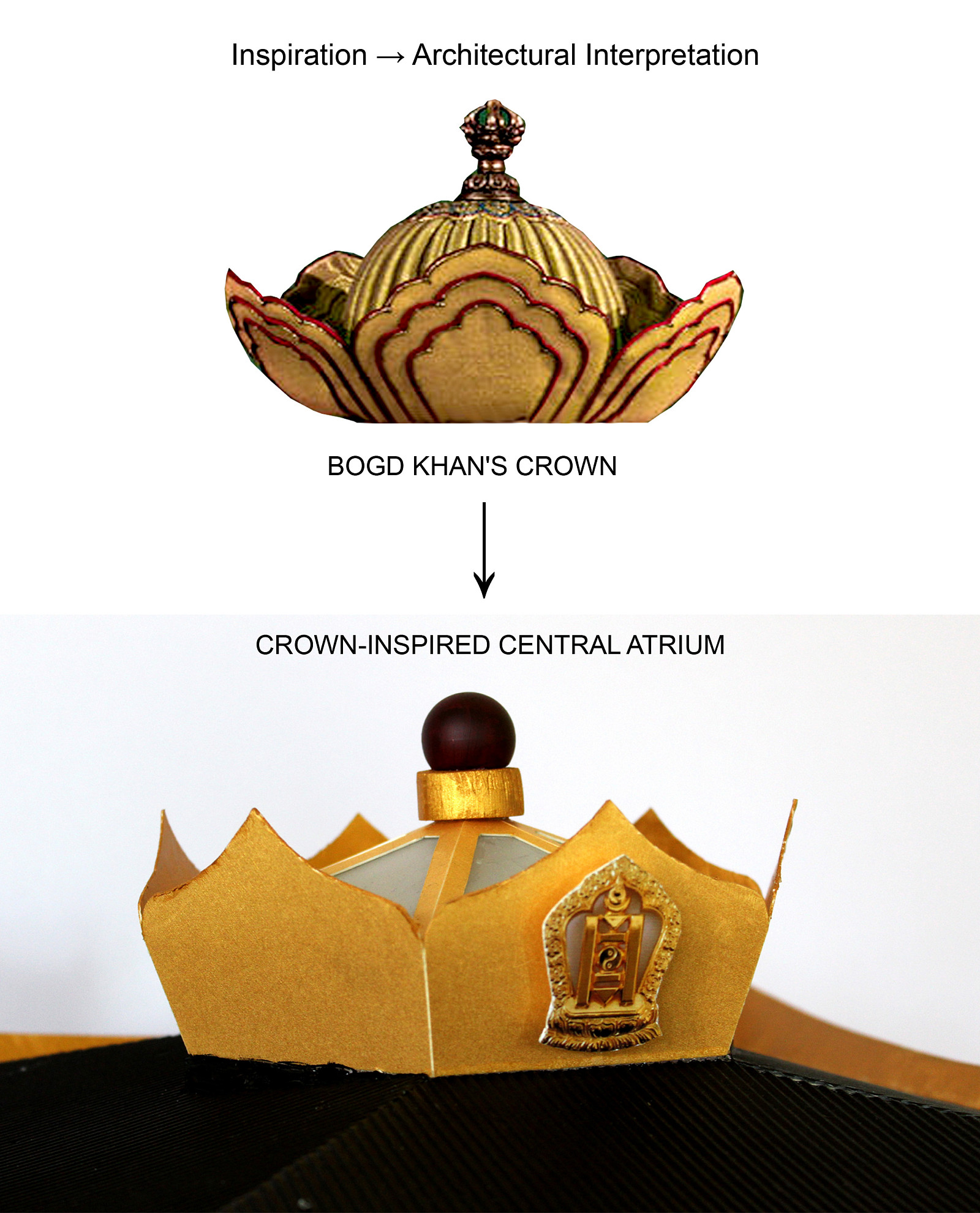
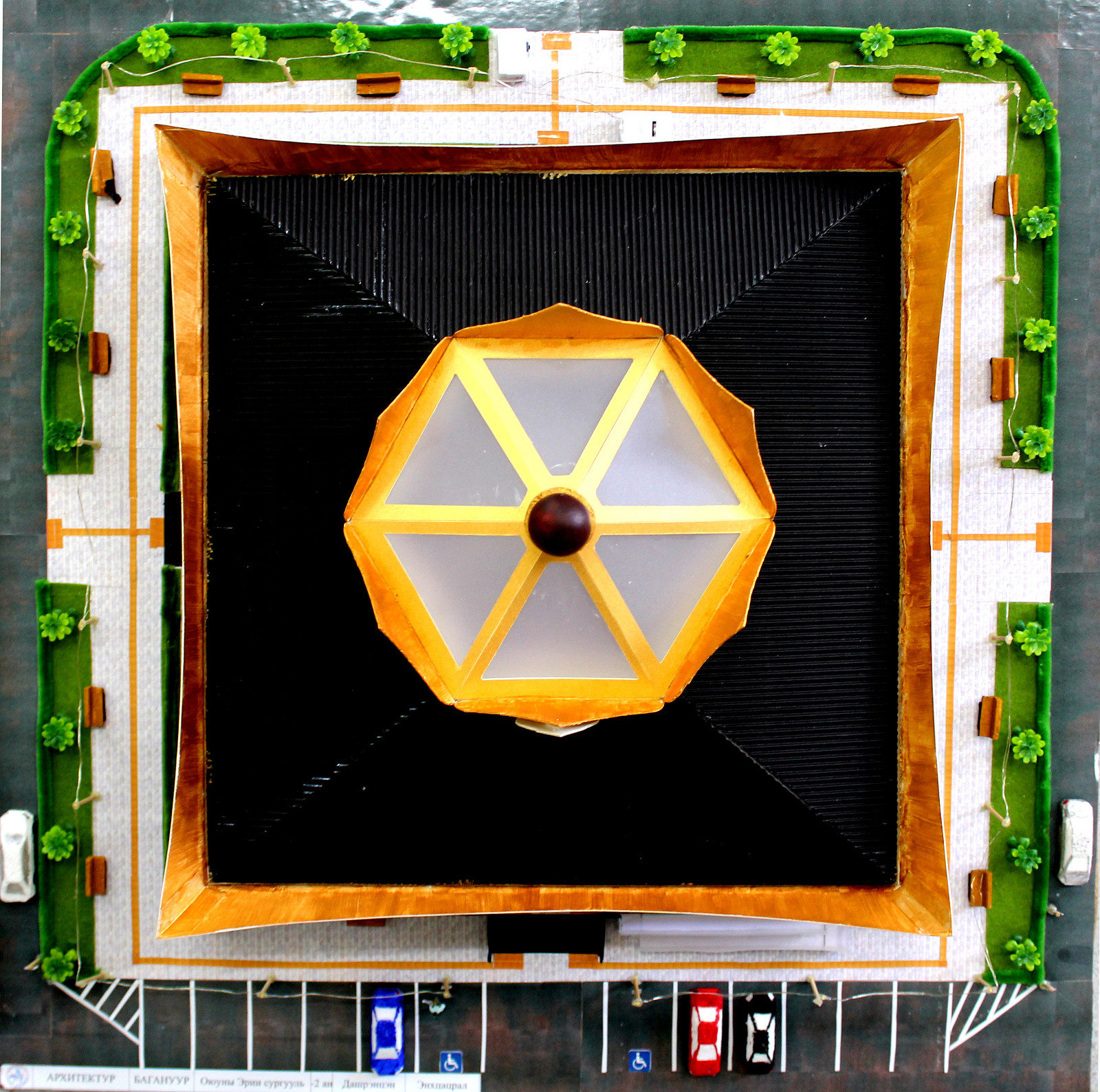
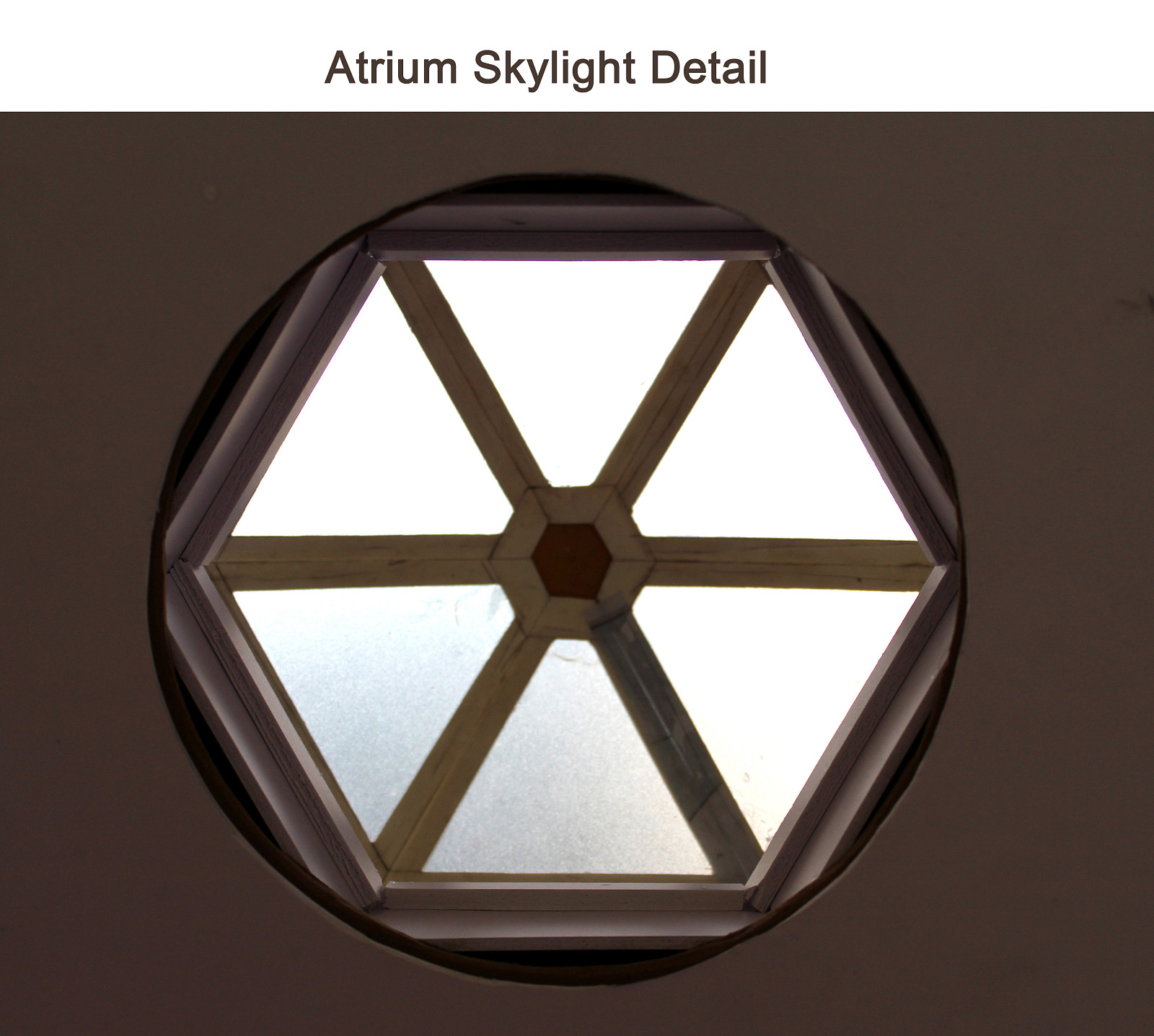
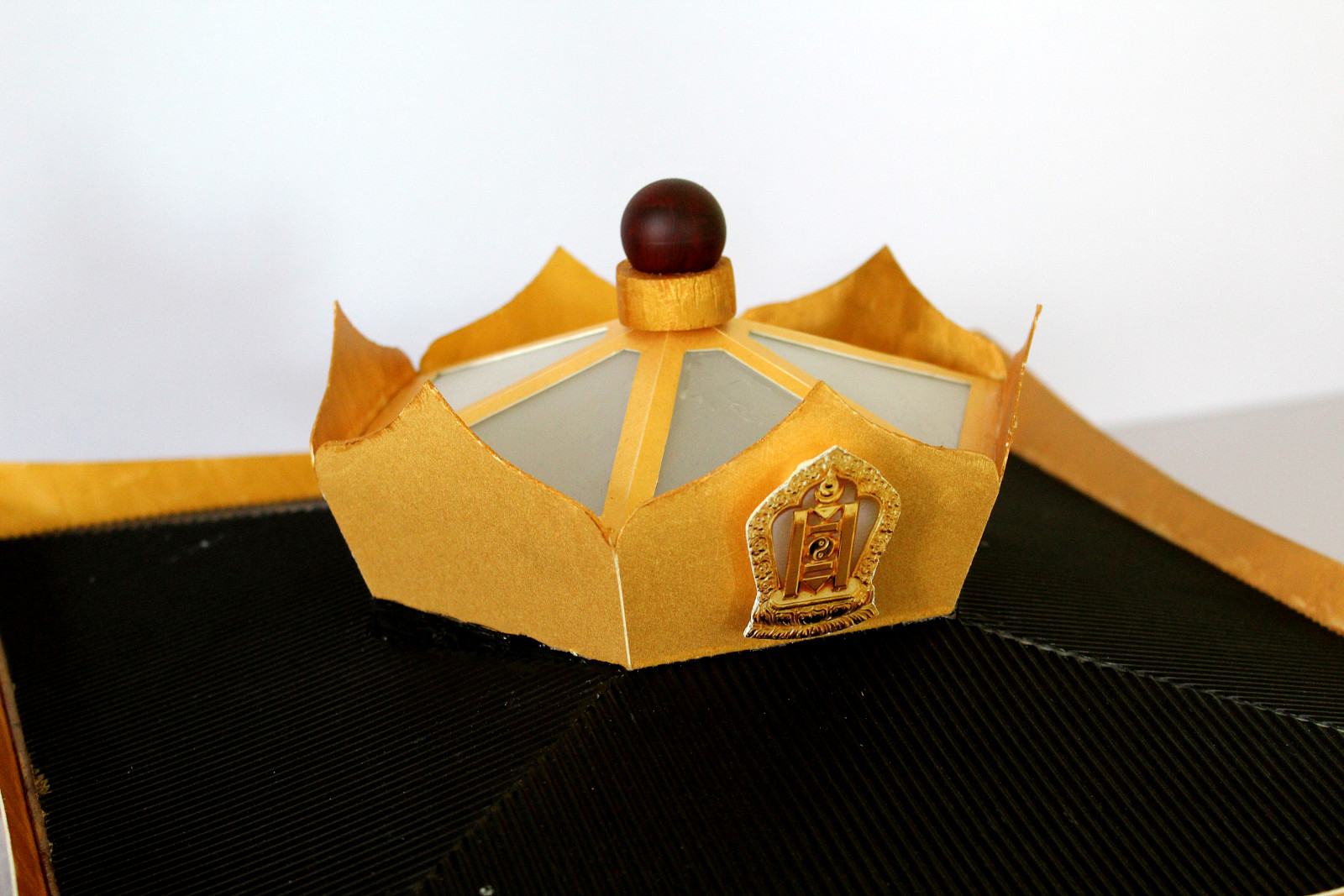
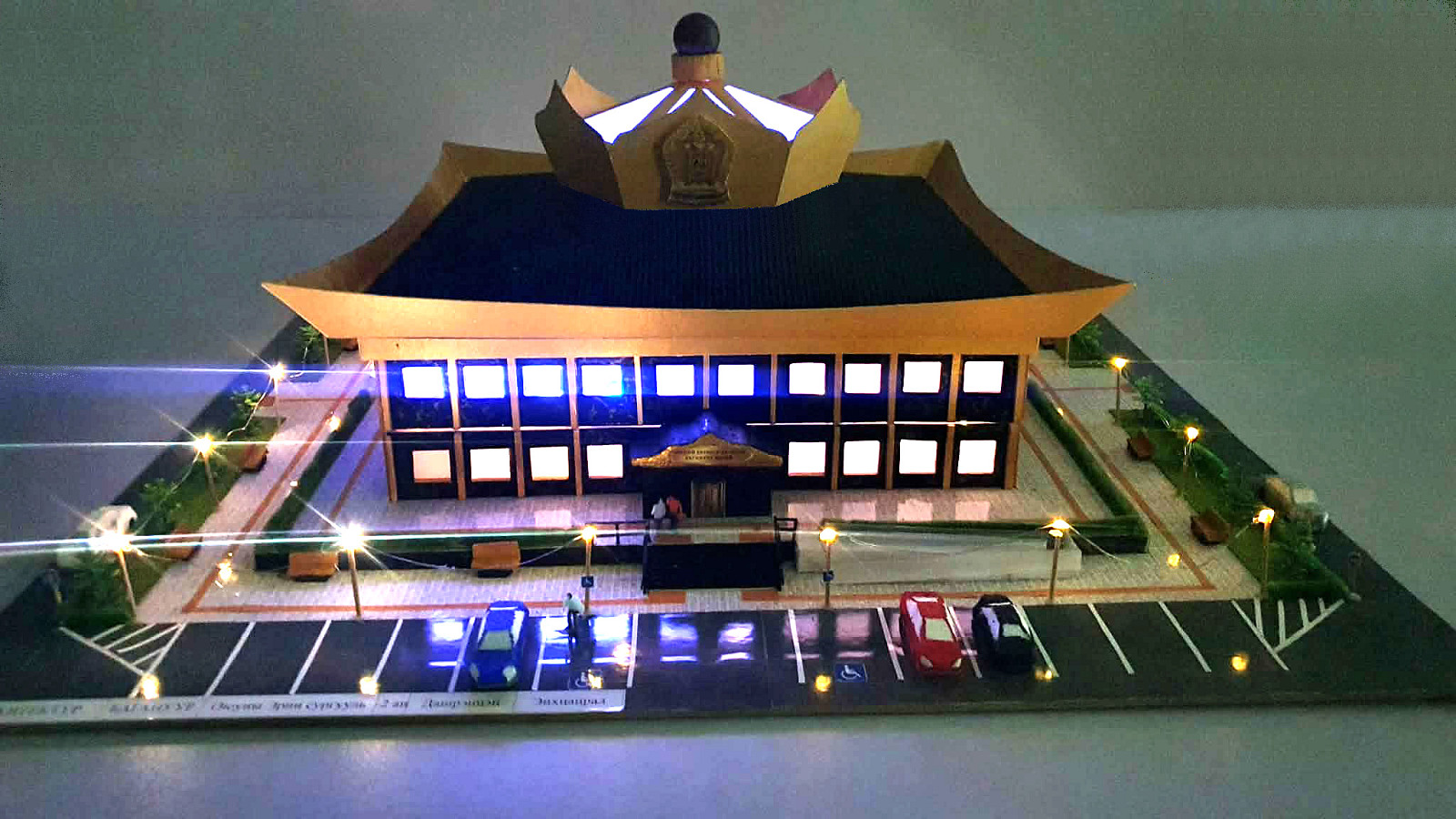
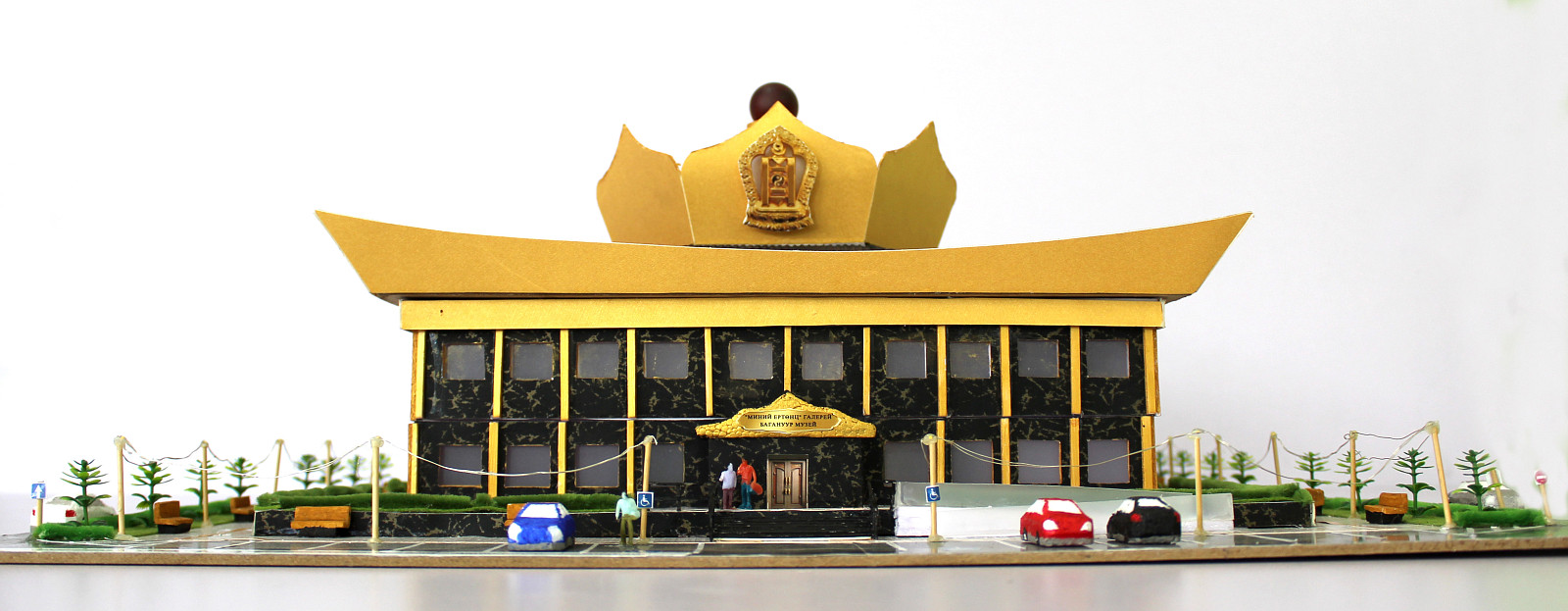
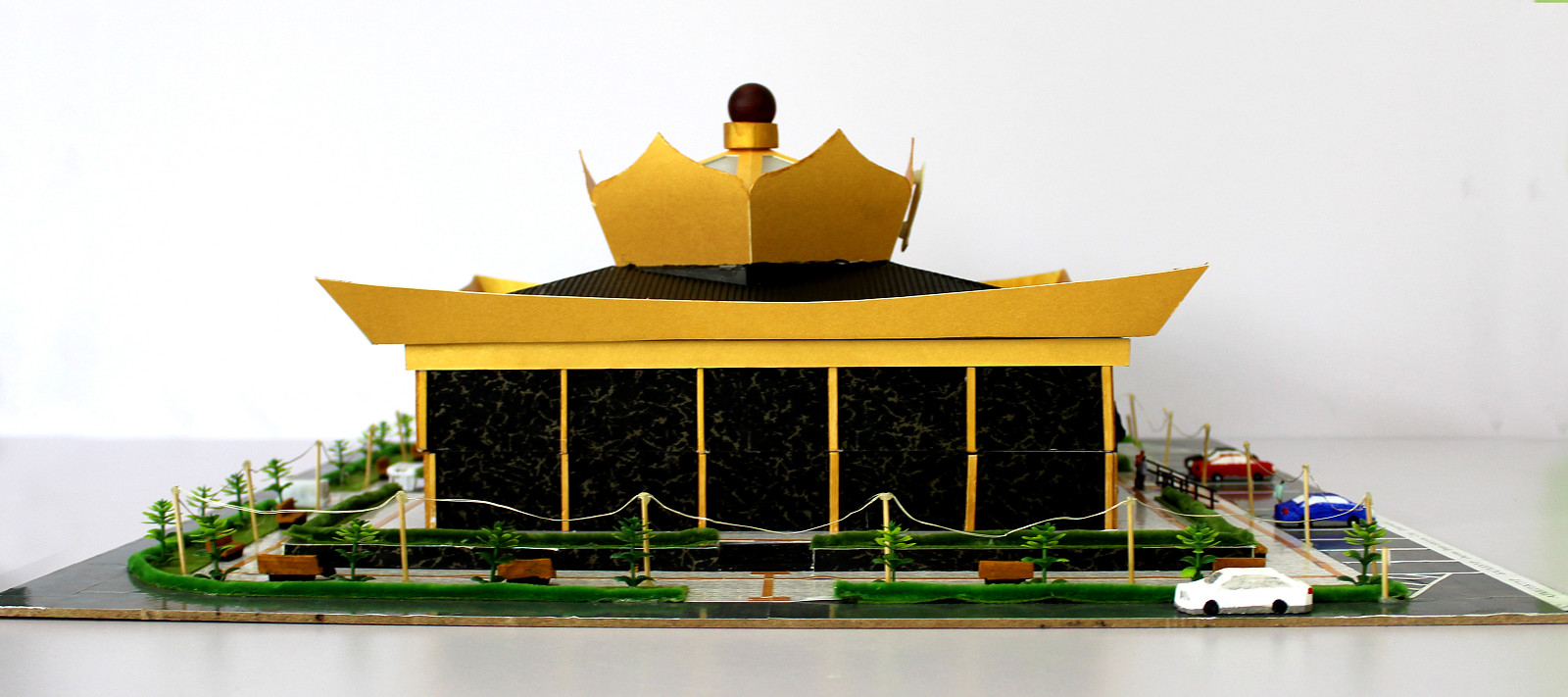
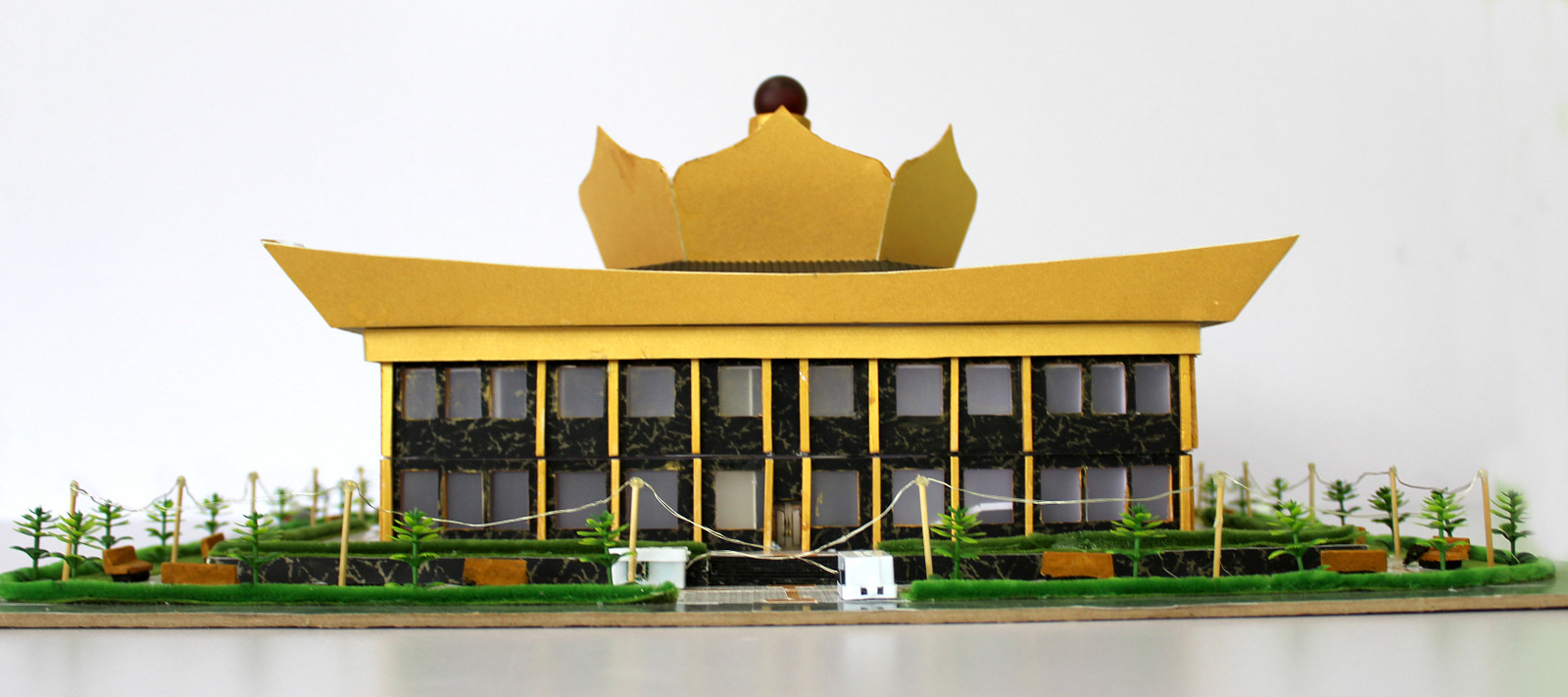
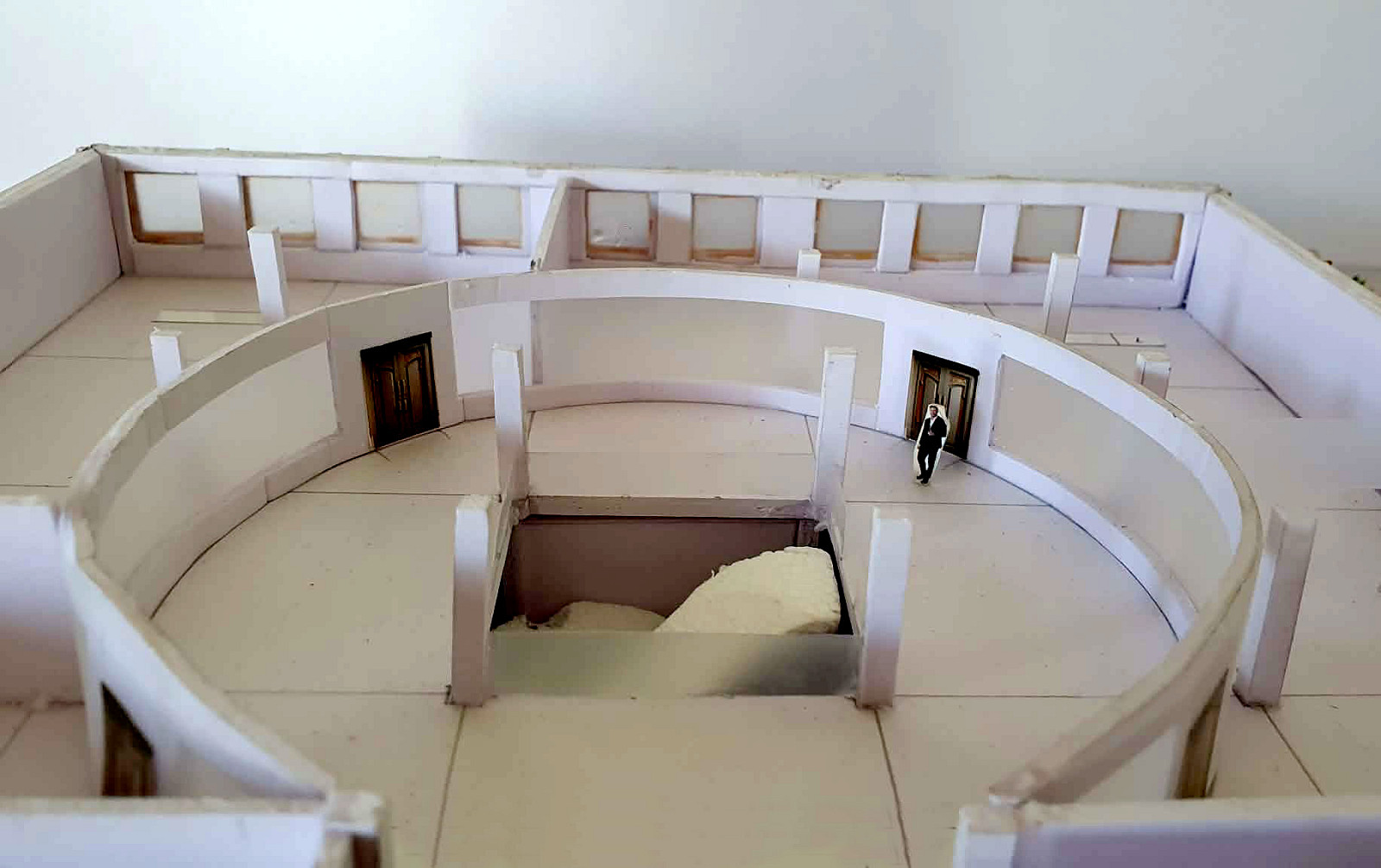
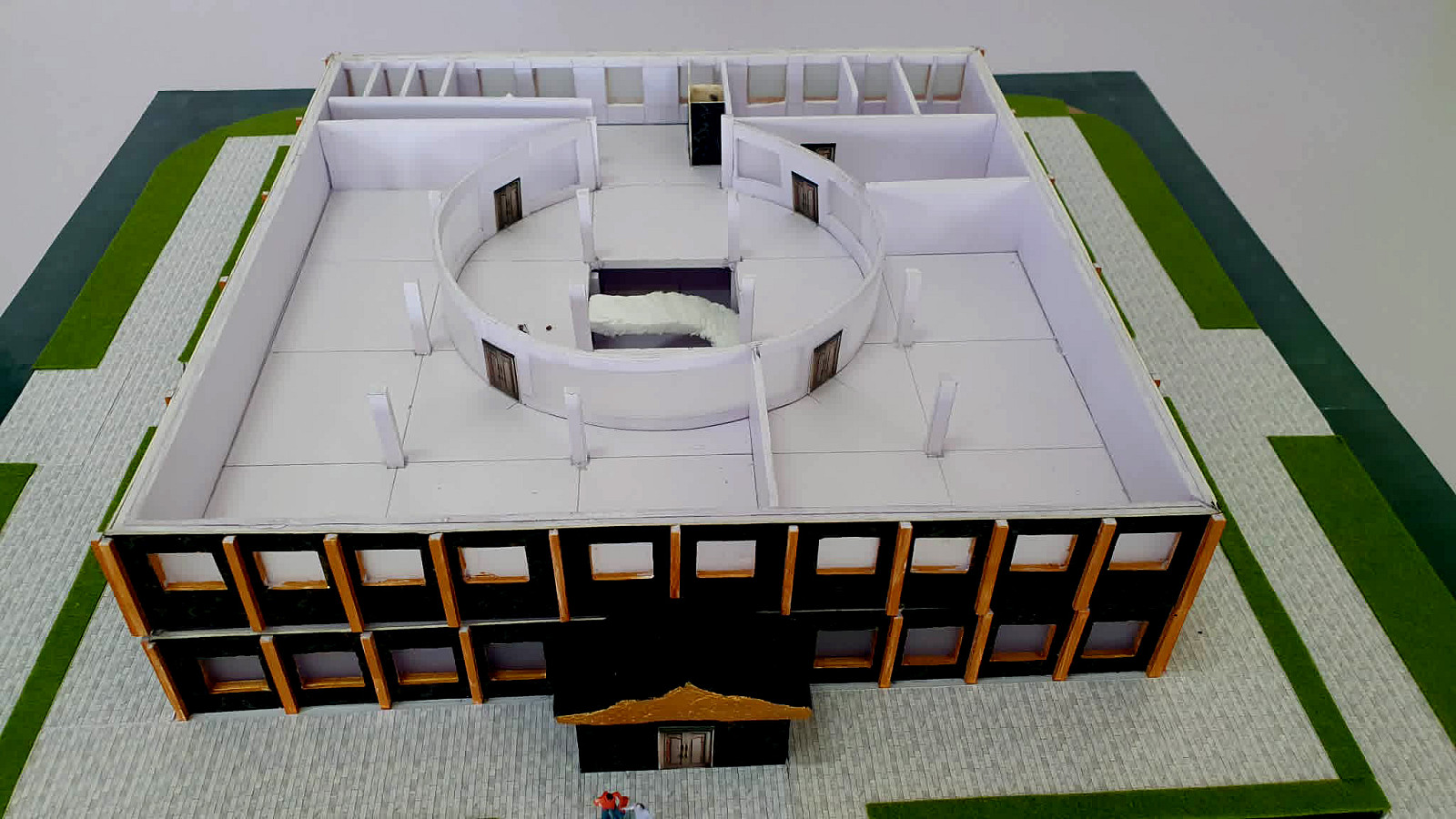
The central roof crown is a symbolic architectural element inspired by the crown of Bogd Khan, the last king of Mongolia. This design not only represents Mongolia’s statehood and historical heritage but also forms the building’s main architectural identity. The upper part of the crown is designed as a glazed atrium, allowing natural daylight to enter the central interior space. Working together with the circular staircase located beneath it, the atrium unifies the two floors and creates the central core of the interior environment.
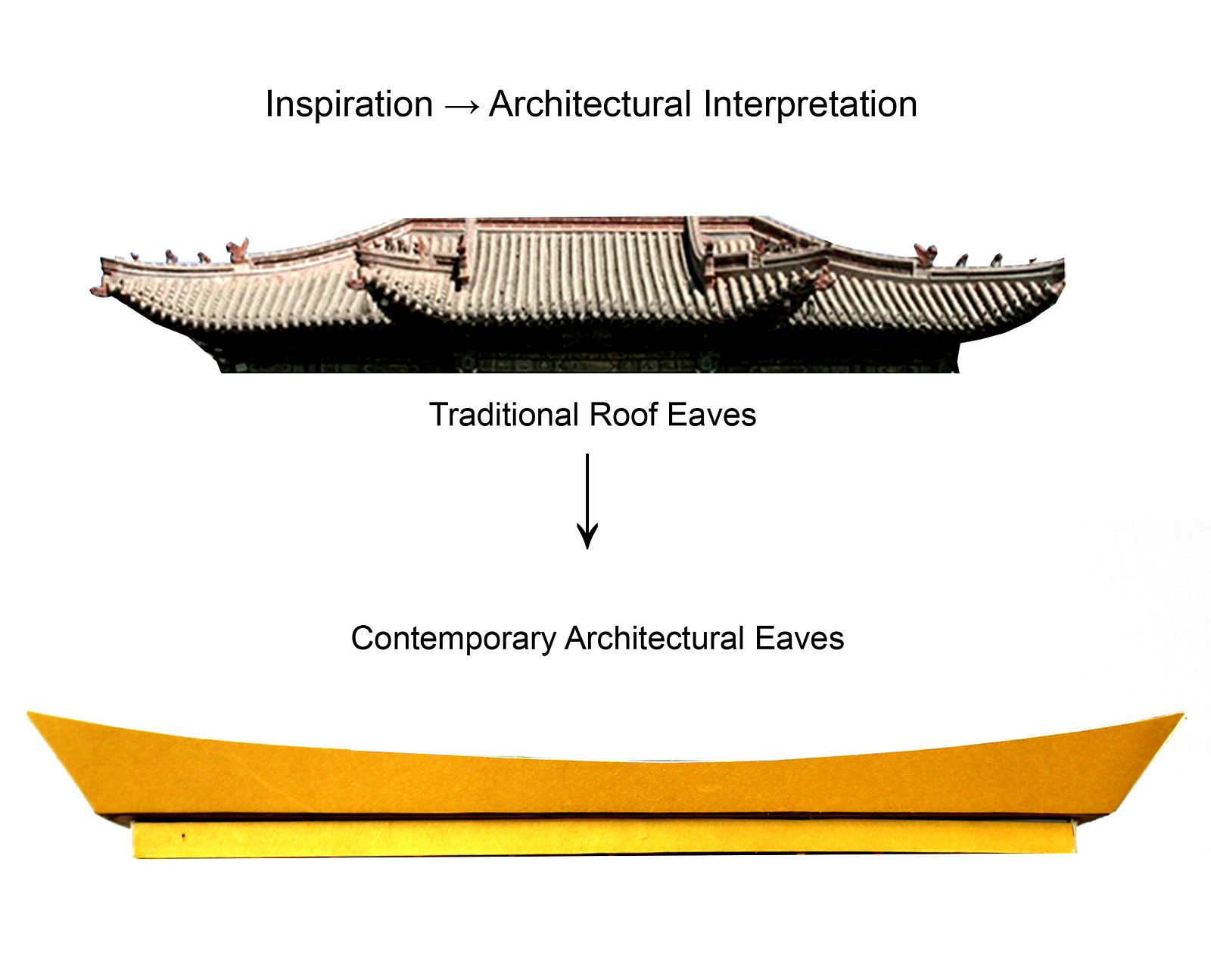
The roof edges are inspired by the forms of traditional Mongolian temples and monasteries and reinterpreted in a contemporary architectural style. Together with the crown-shaped roof element, this design further emphasizes the building’s national character and its function as a cultural and community facility.
Interior Spatial Organization
The building is organized around a centrally located circular staircase. The first floor accommodates public service functions, including a traditional Mongolian restaurant, coffee shop, photography studio, and souvenir shop. The second floor contains the main cultural spaces, including the gallery, museum, open studio, and administrative facilities.
Climate-Responsive Design
Considering Mongolia’s extreme climate, where winter temperatures can reach -40°C, the building is designed with 50 cm thick exterior walls to reduce heat loss. Large windows allow natural daylight and solar warmth to enter the interior spaces during winter. The dark exterior façade was selected not only to create a dignified appearance appropriate for a cultural institution but also to support the absorption of solar radiation during the cold season.
Exterior Appearance and Symbolism
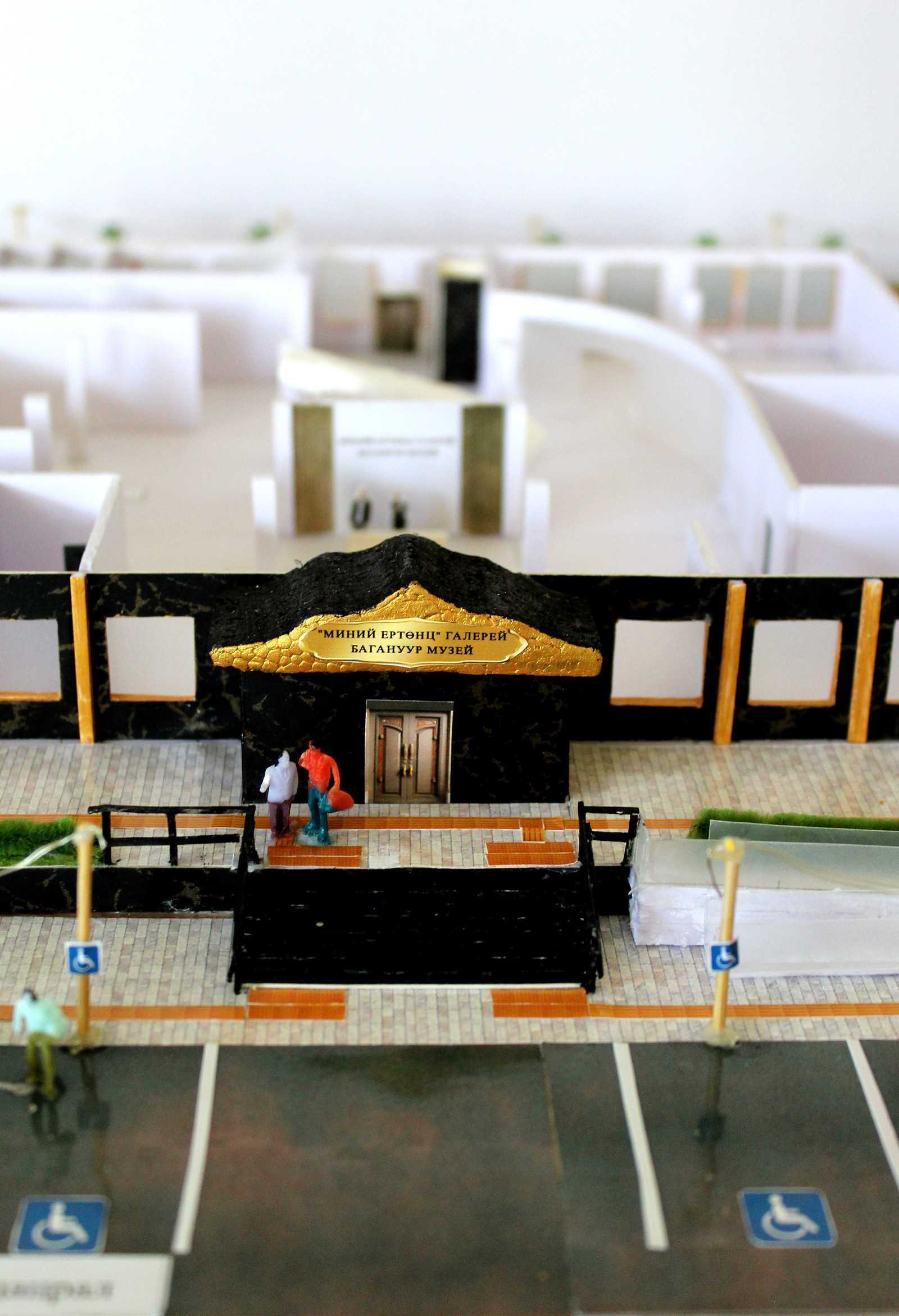
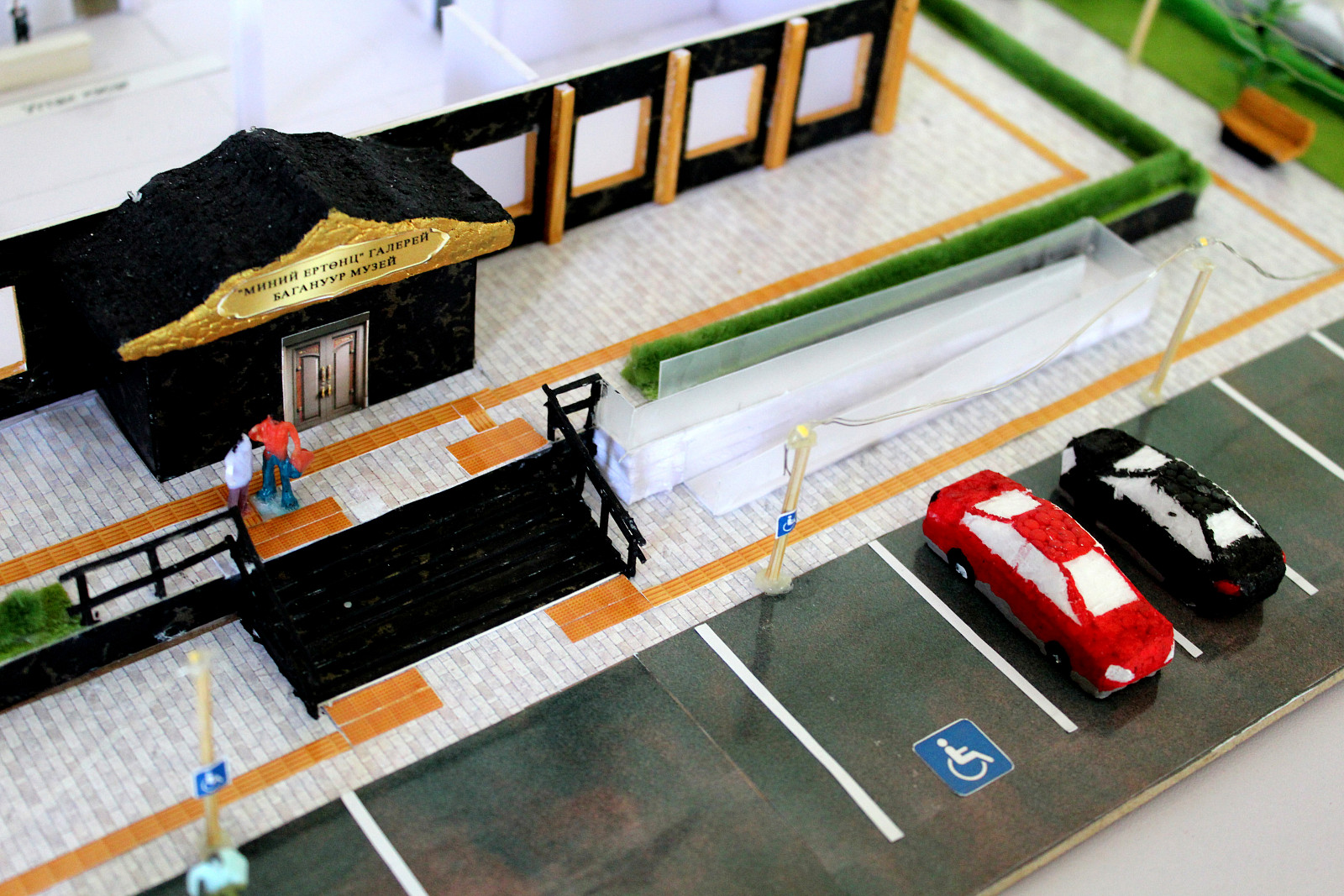
The building is elevated approximately one meter above ground level to strengthen its architectural presence and emphasize the significance of the cultural and artistic institution. The exterior color scheme consists of a combination of dark tones and golden architectural elements. Golden columns and accent features symbolize cultural heritage and artistic value.
Accessibility and Safety The building is designed to be accessible to all users. It includes standard-compliant ramps for people with disabilities, an elevator, dedicated accessible restrooms, tactile paving for visually impaired users, and standard parking spaces for wheelchair users located close to the main entrance of the building. ug burchlen mongoloor orchuul, utga alduulj bolohgui To ensure fire safety and emergency evacuation, an additional staircase and emergency exit are provided on the northern side of the building.
Handmade Physical Model (Scale 1:100)

Copyright © 2026 INSPIRELI | All rights reserved. Use of this website signifies your agreement to the Terms of Use, Privacy Policy, and use of cookies.