Cultural Continum : Reimagining The Living City Block At Chittagong


Project idea
DESIGN CONCEPT : Building as a Purifier
Application of Breathe Brick
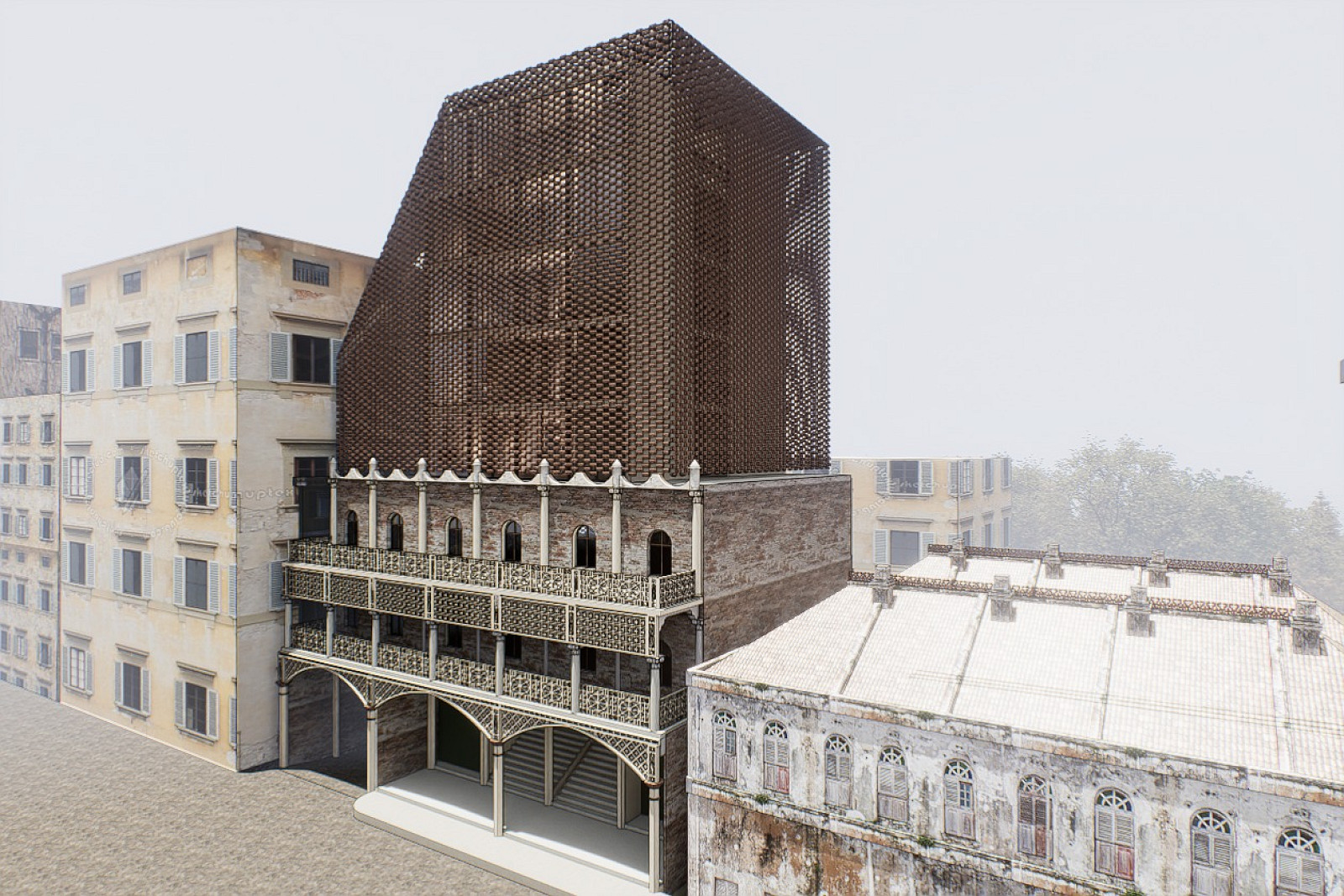
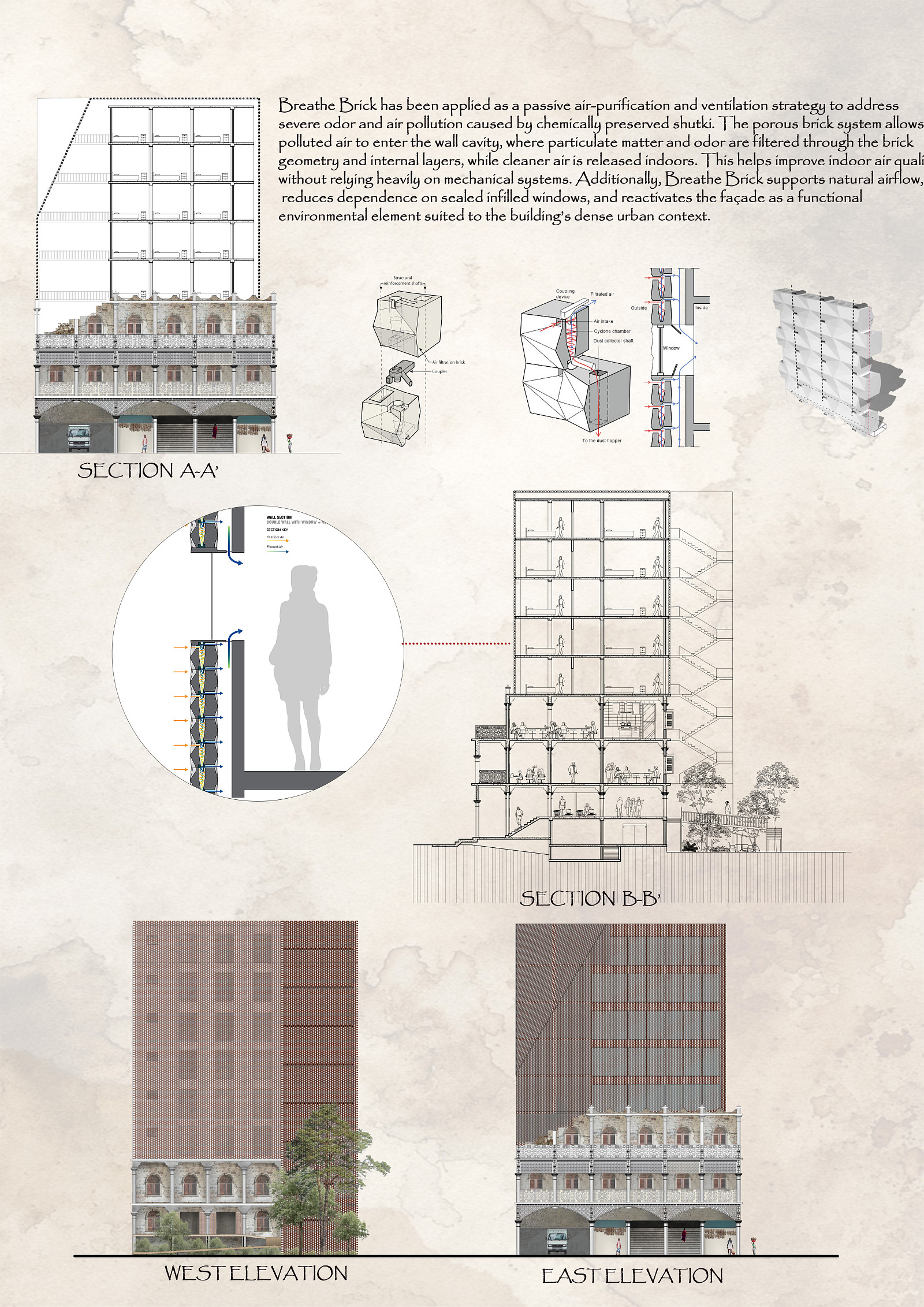
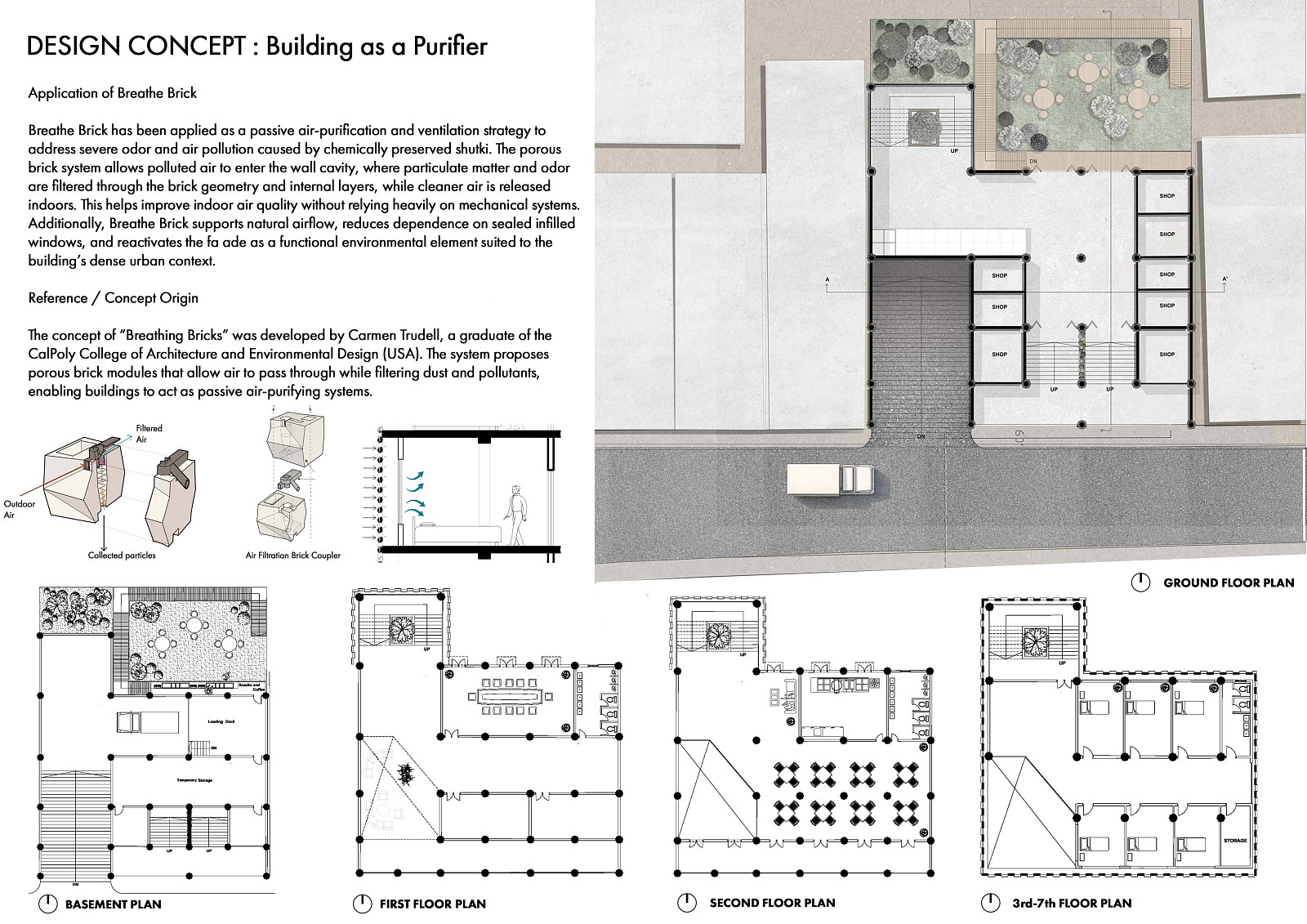
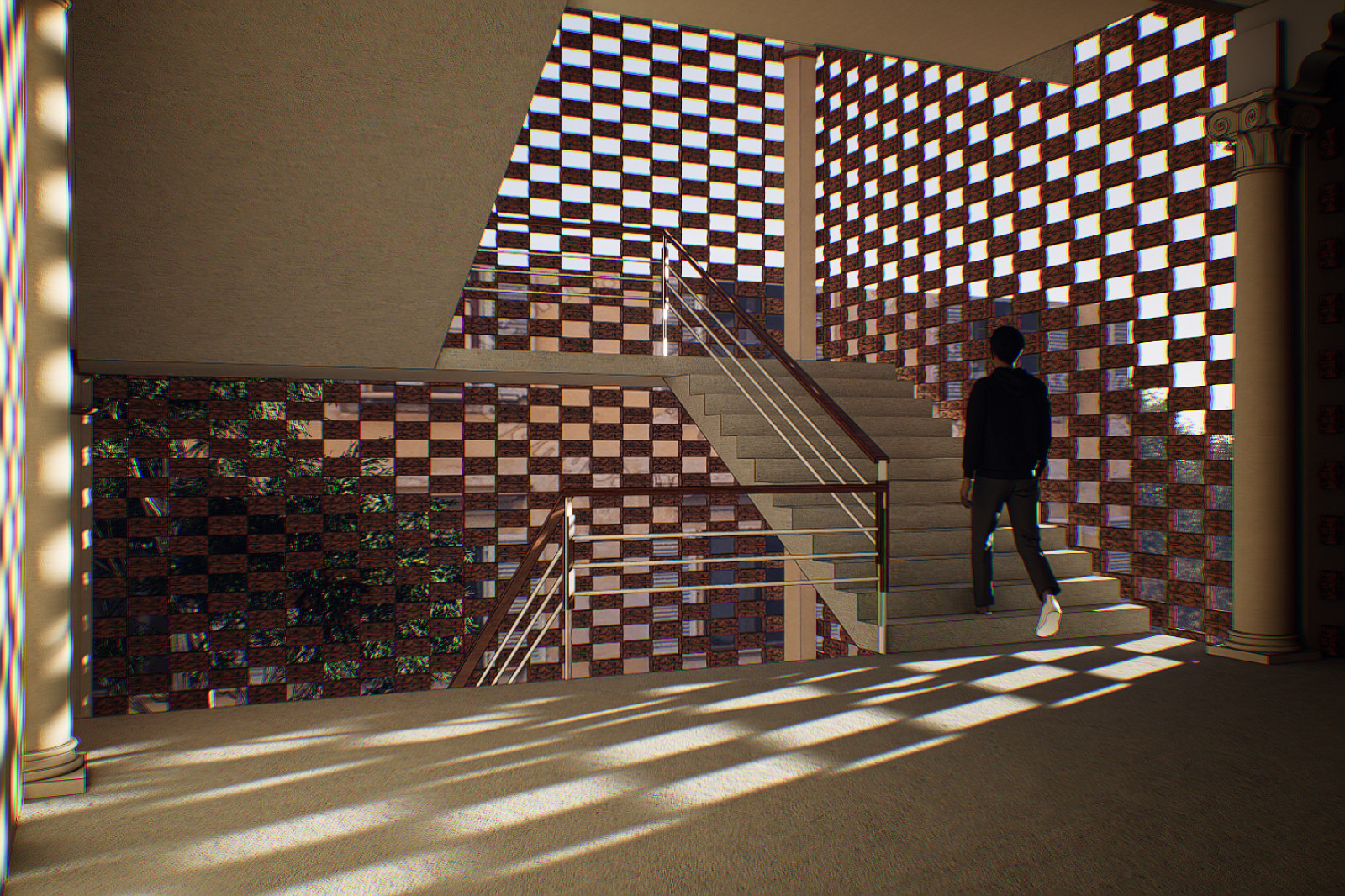
Breathe Brick has been applied as a passive air-purification and ventilation strategy to address severe odor and air pollution caused by chemically preserved shutki. The porous brick system allows polluted air to enter the wall cavity, where particulate matter and odor are filtered through the brick geometry and internal layers, while cleaner air is released indoors. This helps improve indoor air quality without relying heavily on mechanical systems. Additionally, Breathe Brick supports natural airflow, reduces dependence on sealed infilled windows, and reactivates the fa cade as a functional environmental element suited to the building’s dense urban context.
Reference / Concept Origin
The concept of “Breathing Bricks” was developed by Carmen Trudell, a graduate of the CalPoly College of Architecture and Environmental Design (USA). The system proposes porous brick modules that allow air to pass through while filtering dust and pollutants, enabling buildings to act as passive air-purifying systems.
Project description
Project Overview
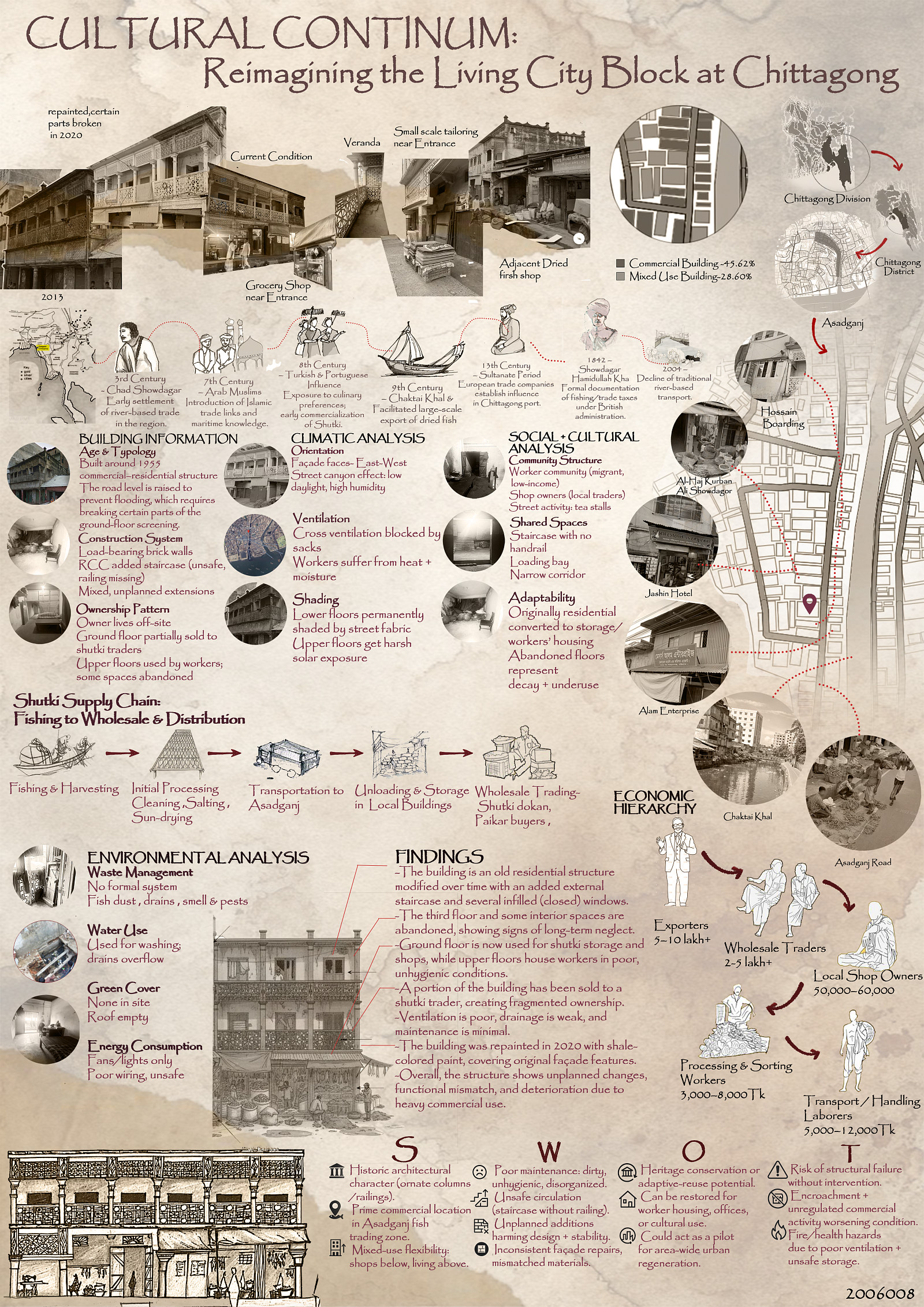
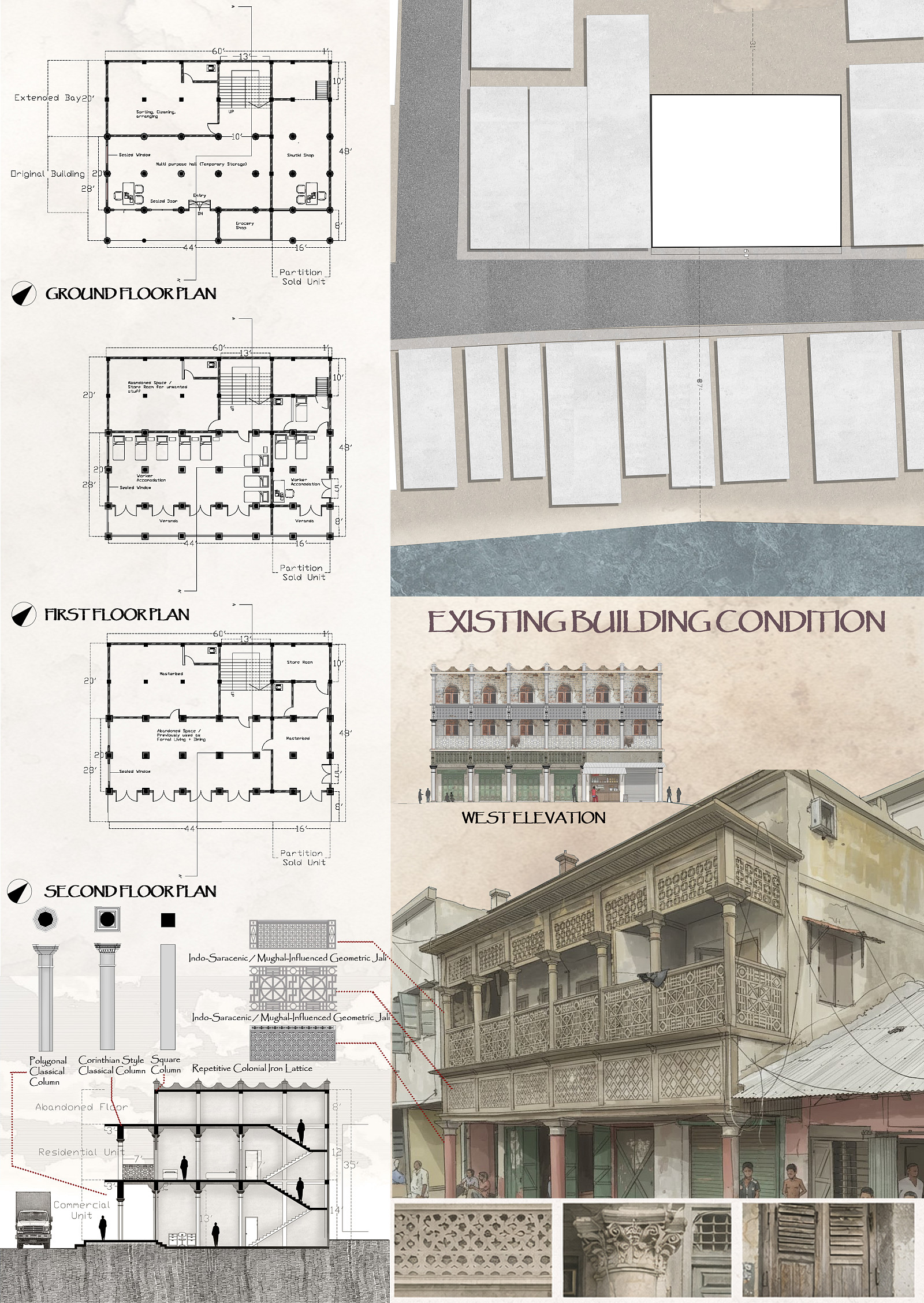
This project focuses on the adaptive reuse and architectural remediation of an old residential building suffering from severe neglect, unplanned modifications, and environmental degradation. The redesign addresses severe odor, poor ventilation, and traffic congestion by transforming the structure into a functional, hygienic space.
Key Challenges
Environmental Pollution: Severe odors and air pollution from chemically preserved shutki (dried fish) storage make the upper floors unhealthy for habitation.
Structural Neglect: Abandoned spaces, poor maintenance, weak drainage, and blocked windows compromise the building's integrity.
Logistical Issues: Loading and unloading trucks on the main road cause severe traffic congestion.
Design Solutions
"Building as a Purifier": The facade integrates the Breathe Brick system—a passive, porous brick module that filters out dust, particulate matter, and odors, delivering clean air indoors without heavy mechanical systems.
Zoning & Logistics:
Basement: Features a dedicated loading dock and temporary storage to take truck traffic off the main road.
Ground Floor: Organizes retail shops safely away from residential zones.
Upper Floors (1st–7th): Reconfigures communal, dining, and residential spaces to ensure hygienic living conditions and proper ventilation.
Technical information
Application of Breathe Brick
Breathe Brick has been applied as a passive air-purification and ventilation strategy to address severe odor and air pollution caused by chemically preserved shutki. The porous brick system allows polluted air to enter the wall cavity, where particulate matter and odor are filtered through the brick geometry and internal layers, while cleaner air is released indoors. This helps improve indoor air quality without relying heavily on mechanical systems. Additionally, Breathe Brick supports natural airflow, reduces dependence on sealed infilled windows, and reactivates the fa cade as a functional environmental element suited to the building’s dense urban context.

Copyright © 2026 INSPIRELI | All rights reserved. Use of this website signifies your agreement to the Terms of Use, Privacy Policy, and use of cookies.