Spatialization of Rhythm: Pulse


Project idea
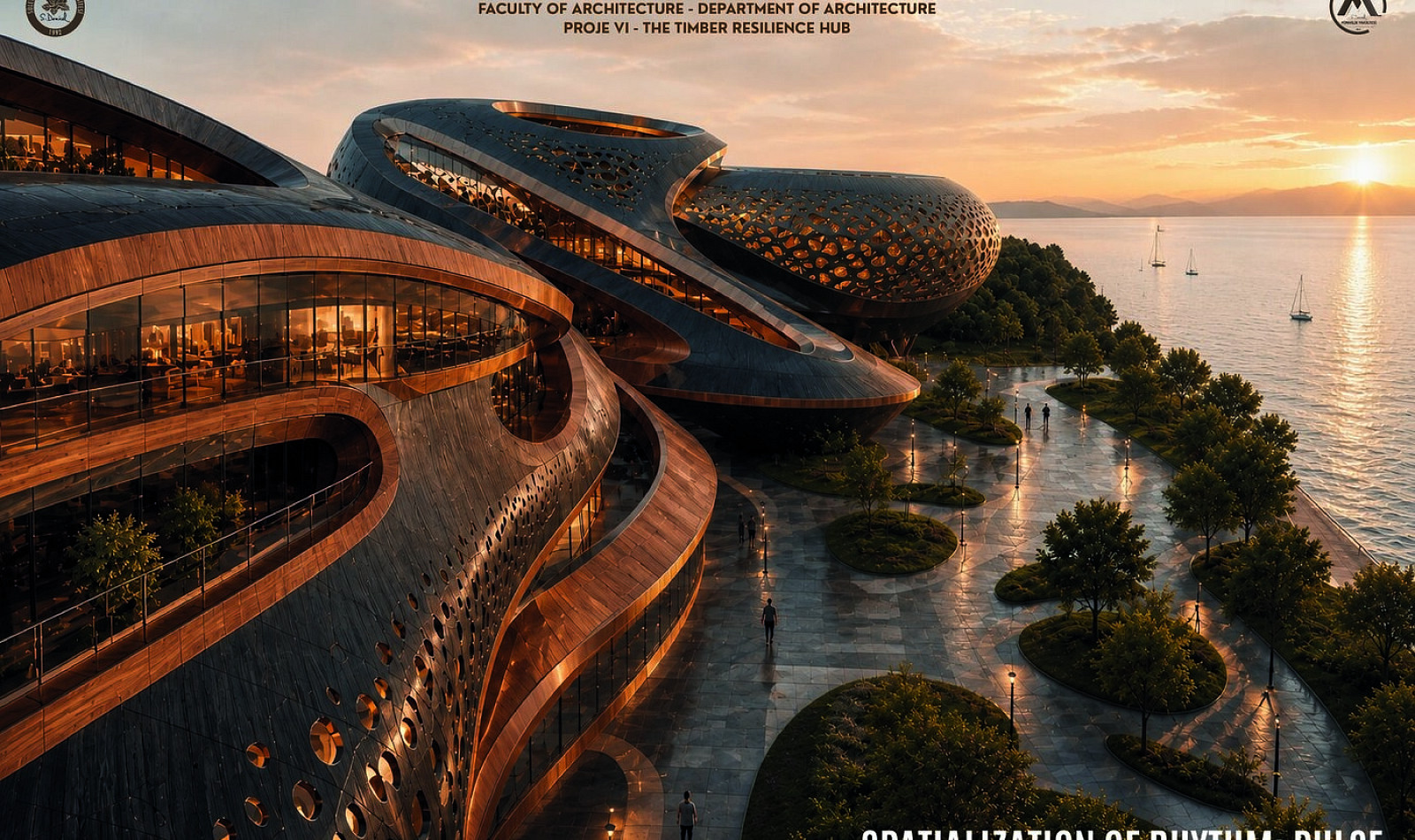
The Timber Resilience Hub - a waterfront architectural intervention in Çeşme, Turkey, that draws on organic, rhythmic forms inspired by natural patterns, integrating timber construction with resilient coastal design.
Project description
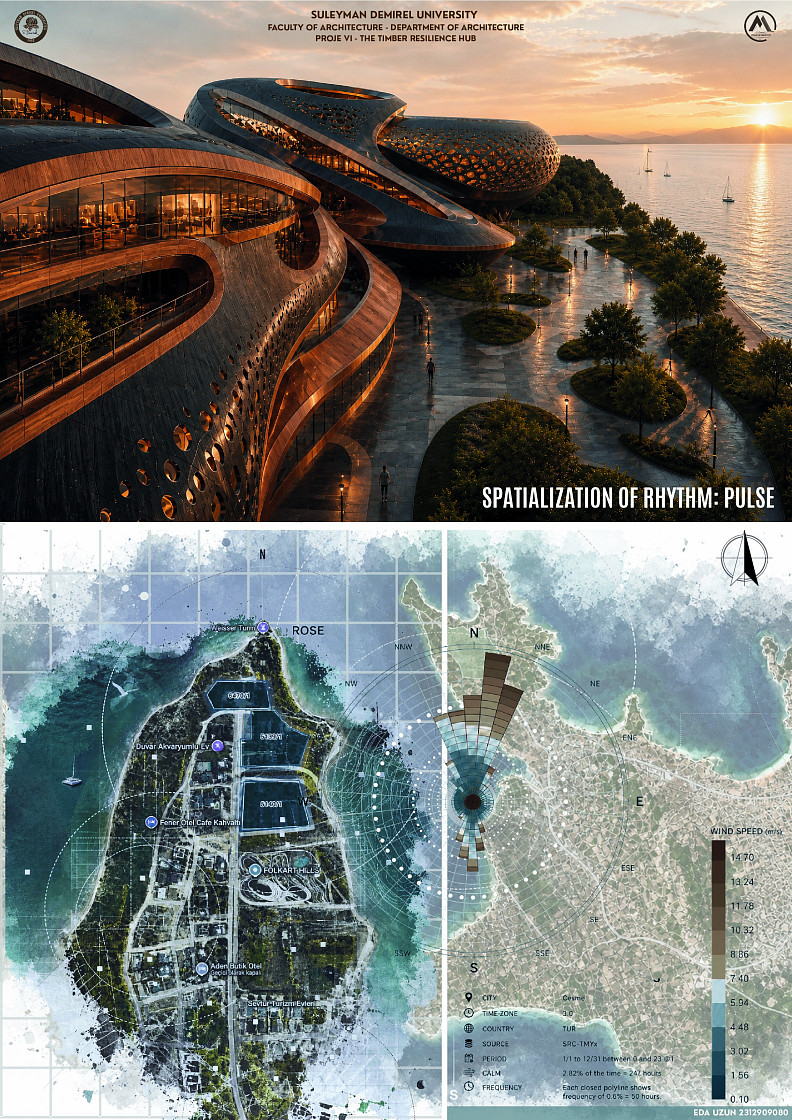
The project is situated on the coast of Çeşme, Turkey, and features a large-scale timber structure with curvilinear, organic forms including perforated shell-like volumes and sweeping wooden surfaces. The design creates a dynamic waterfront public space that merges architecture with the coastal landscape. The building features elaborate timber cladding with parametric perforations, flowing ramps and terraces that connect to the waterfront promenade, and sculptural pod-like structures. Site analysis includes wind rose data and contextual mapping of the surrounding urban and natural environment.
Technical information
The site is located in Çeşme, Turkey (Time-zone 3.0). Wind analysis shows predominant winds from the NNW direction with speeds ranging from 0.10 to 14.70 m/s. Calm conditions occur 2.82% of the time (247 hours). The data source is SRC-TMYx with a period from 1/1 to 12/31. The project uses timber as the primary structural and cladding material with parametric perforated facade elements.
Documentation

Copyright © 2026 INSPIRELI | All rights reserved. Use of this website signifies your agreement to the Terms of Use, Privacy Policy, and use of cookies.