"Dual-Front" - Dual-Use Technology Innovation Center for Gdańsk University of Technology


Project idea
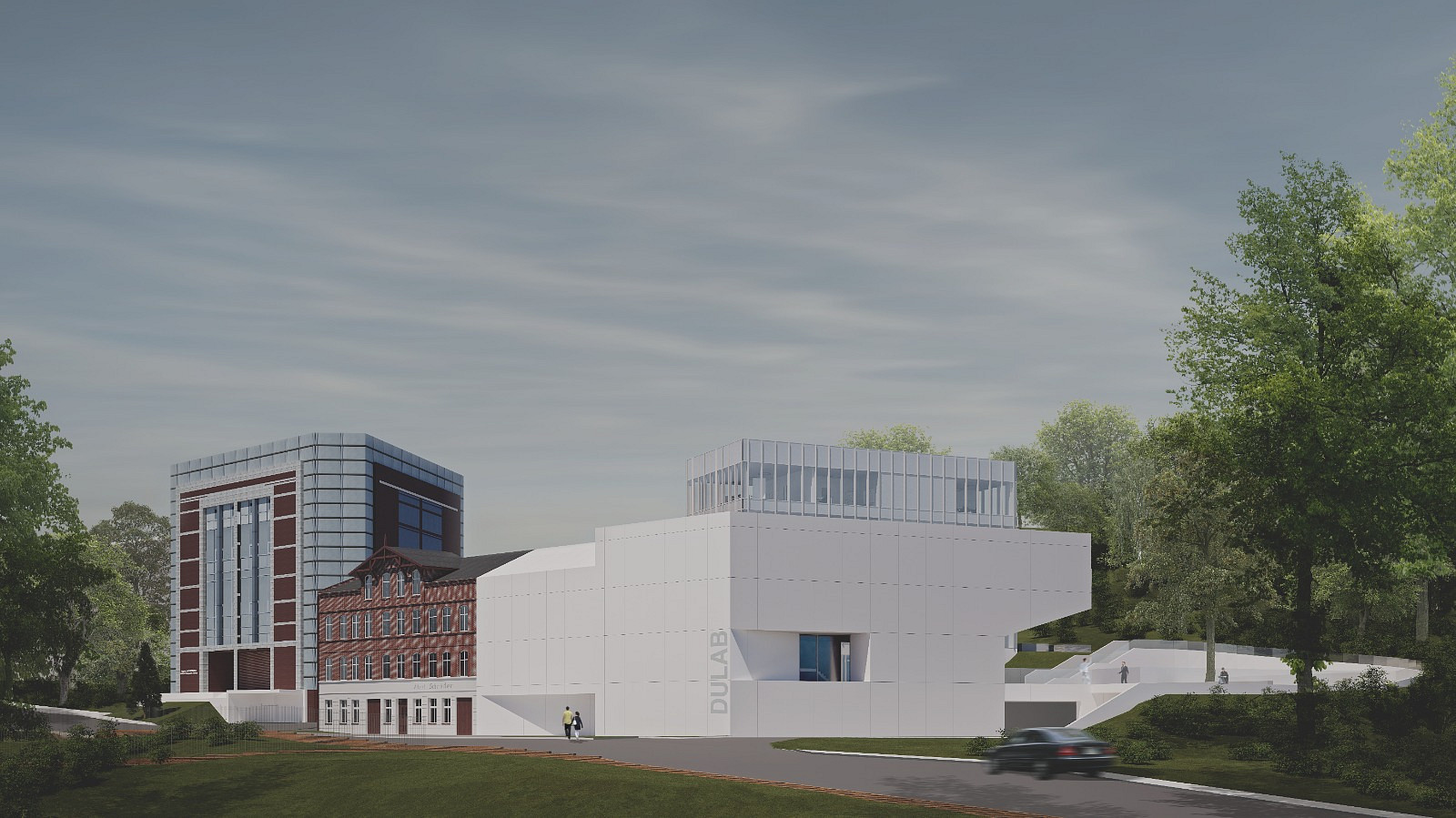
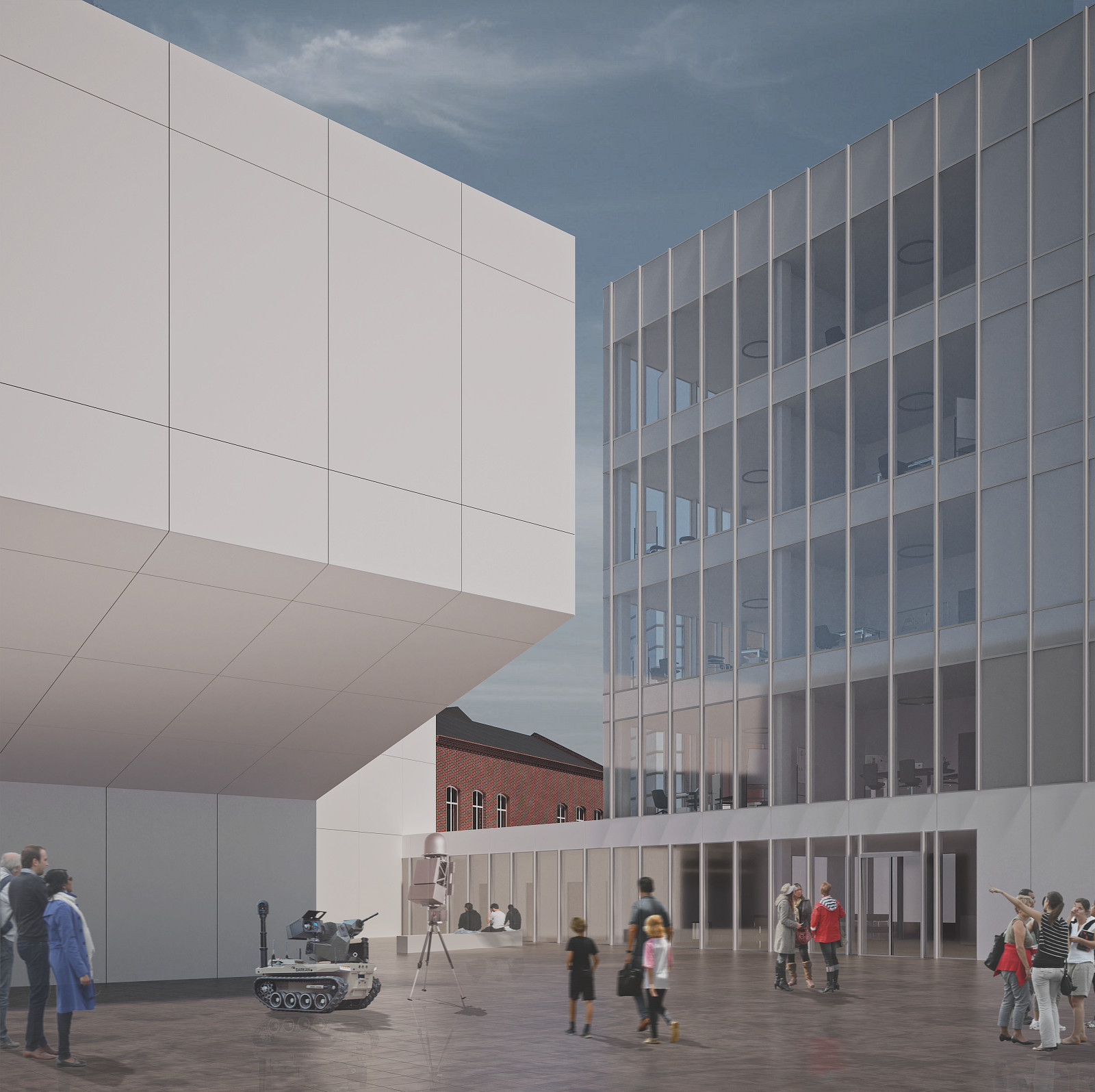
The main objective of the project is to create a modern infrastructure supporting technology transfer between science and industry, with particular emphasis on dual-use innovations serving both civilian and defense purposes. In the face of current geopolitical challenges on NATO's eastern flank, this facility is intended to serve as a physical platform for initiatives such as the NATO DIANA accelerator program, connecting the university's intellectual resources, civilian innovators, and military experts. The conceptual context is based on the "Dual-Front" motto. The term "Dual" refers to the dual purpose of the technologies and the material dualism of the building itself, while "Front" alludes to the main facade of the building as well as a military front line. The main premise is to create an "innovation catalyst" that is neither a typical office nor a factory, but a place that spatially demonstrates the entire life cycle of technology. The architecture is designed to support the creative process from the conceptual phase in incubation zones, through the construction of prototypes in a specialized workshop, to official presentation and market implementation.
Project description
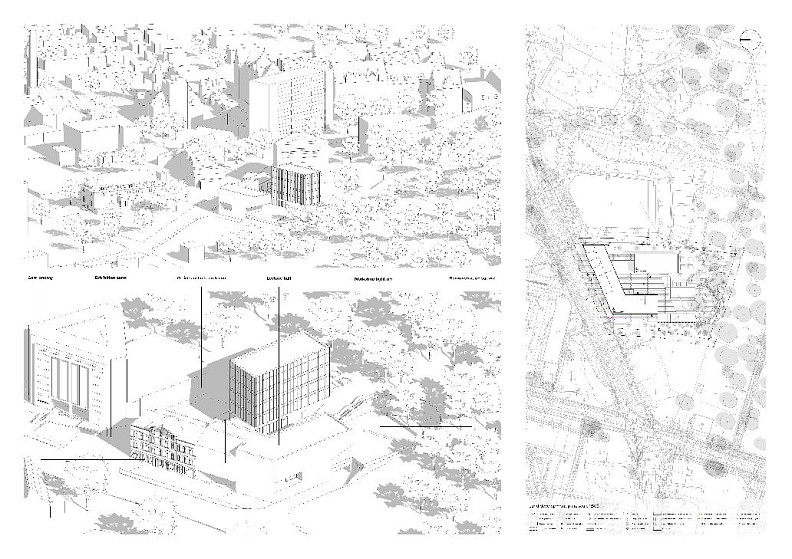
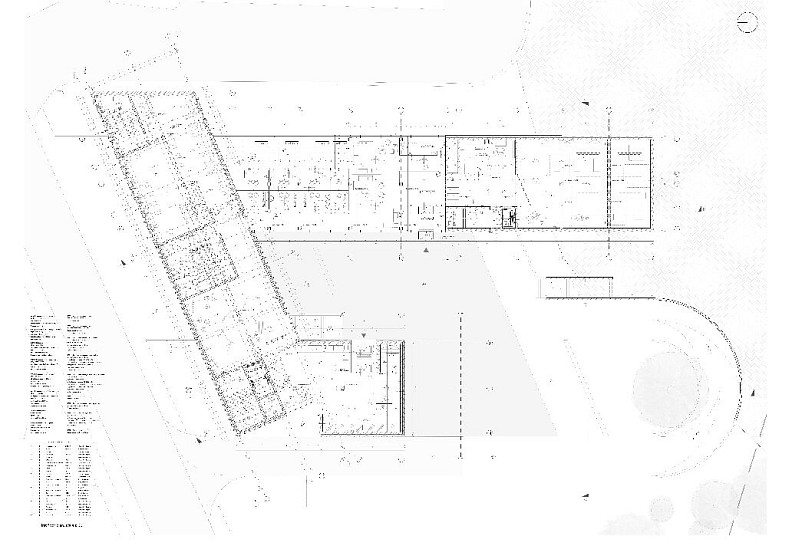
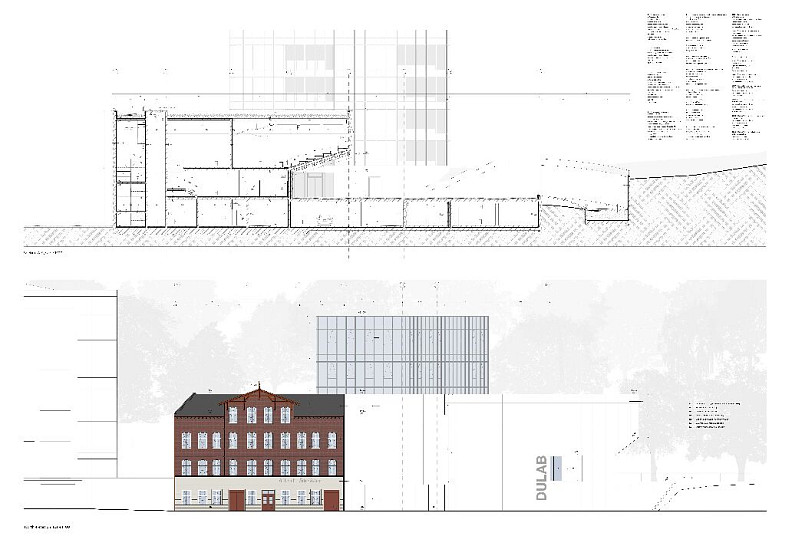
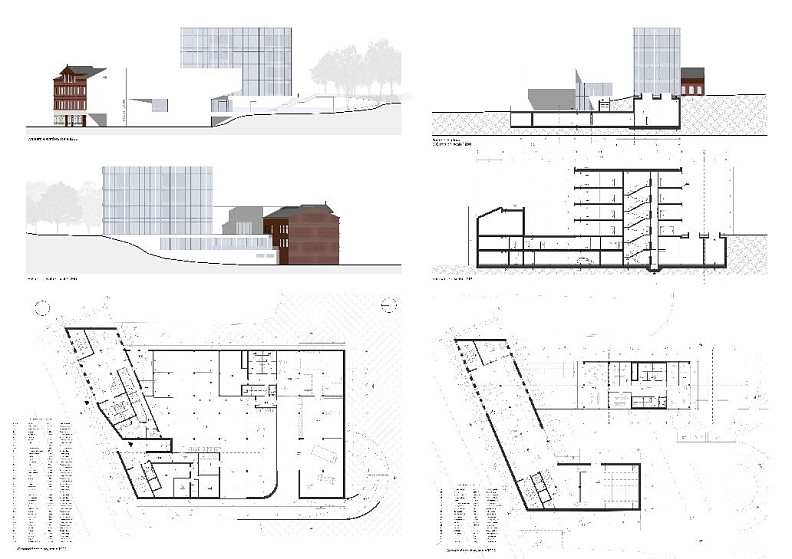
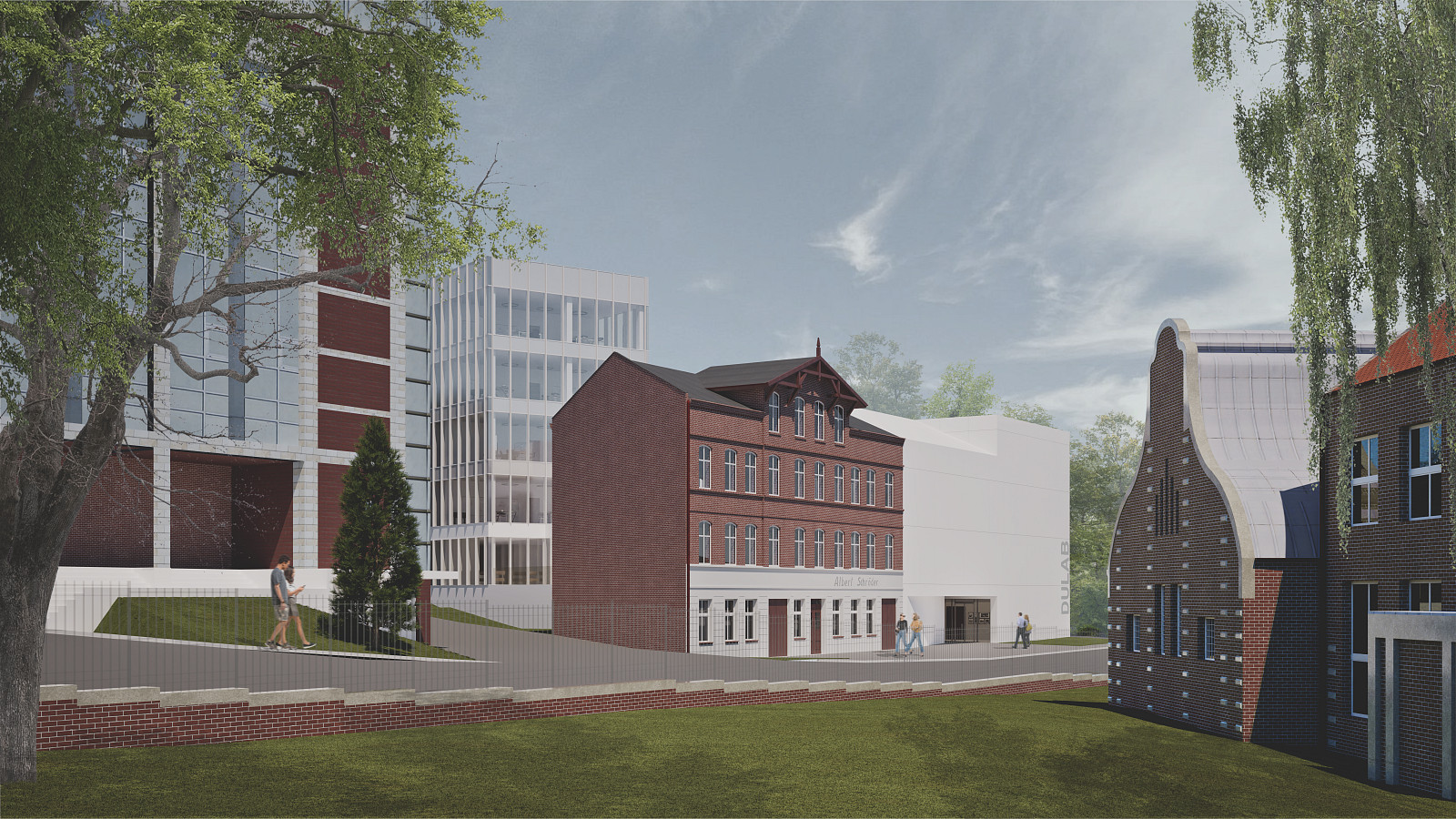
The scope of the project encompasses the architectural and construction design of the Dual-Use Technology Innovation Center, located on a plot with a nearly six-meter slope on the campus of Gdańsk University of Technology. The structure of the facility is based on a composition of three intersecting volumes made of diverse materials, each operating with a different visual code defining its function. The first is an adapted, 19th-century red brick building, which houses the open dining zone and exhibition spaces. The second is a sculptural form made of raw, white architectural concrete with intentionally reduced glazing, which accommodates a secure exhibition zone, facilities for technological trade fairs, and an amphitheater lecture hall cantilevered over the square. The third element is a transparent, fully glazed office and research wing, providing a flexible environment for coworking and the confidential work of engineering teams. The functional layout is organized around an internal courtyard raised to level +1, accessed by representative outdoor stairs that level the height difference. This layout effectively separates public traffic from controlled security zones. Additionally, in the underground level, a specialized prototyping workshop illuminated by skylights was designed. It is served by an independent external ramp dedicated to the collision-free transport of heavy research equipment. The entire complex was designed with rigorous consideration of universal design principles, eliminating all architectural barriers.
Technical information
The facility is classified as a medium-high building with a height of 24.63 m, comprising six above-ground stories and one underground level. The total net area is 4760.5 m², and the building intensity index is 1.32. The load-bearing structure is designed using monolithic reinforced concrete technology in a mixed arrangement, based on load-bearing walls (24 cm and 30 cm thick) as well as columns and beams. The entire structure is founded directly on an 80 cm thick reinforced concrete foundation slab. The building features fire resistance class B, an integrated fire alarm system, and smoke-ventilated staircases. The finishing includes green roofs on reinforced concrete and steel flat roofs. The facility is equipped with mechanical ventilation and full connections to municipal networks: district heating, water supply, sewage, and electricity.
Documentation

Copyright © 2026 INSPIRELI | All rights reserved. Use of this website signifies your agreement to the Terms of Use, Privacy Policy, and use of cookies.