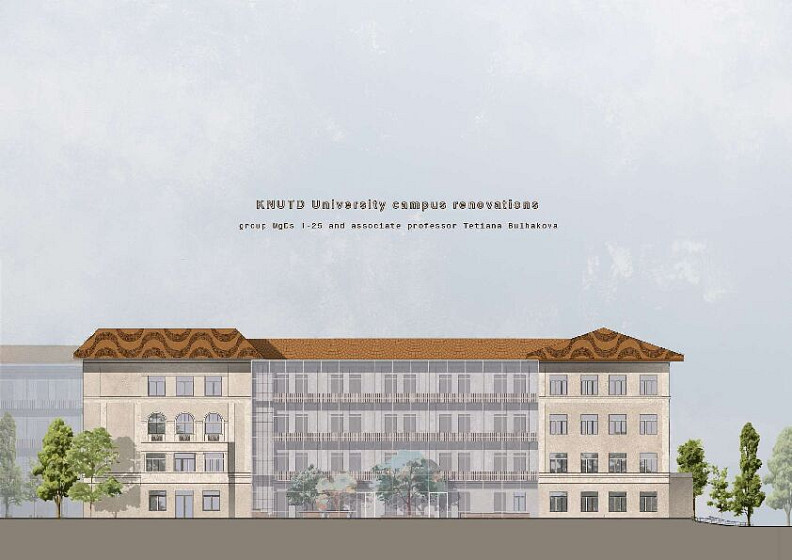
KNUTD University Campus Renovations


 Tetiana Bulhakova
Project idea
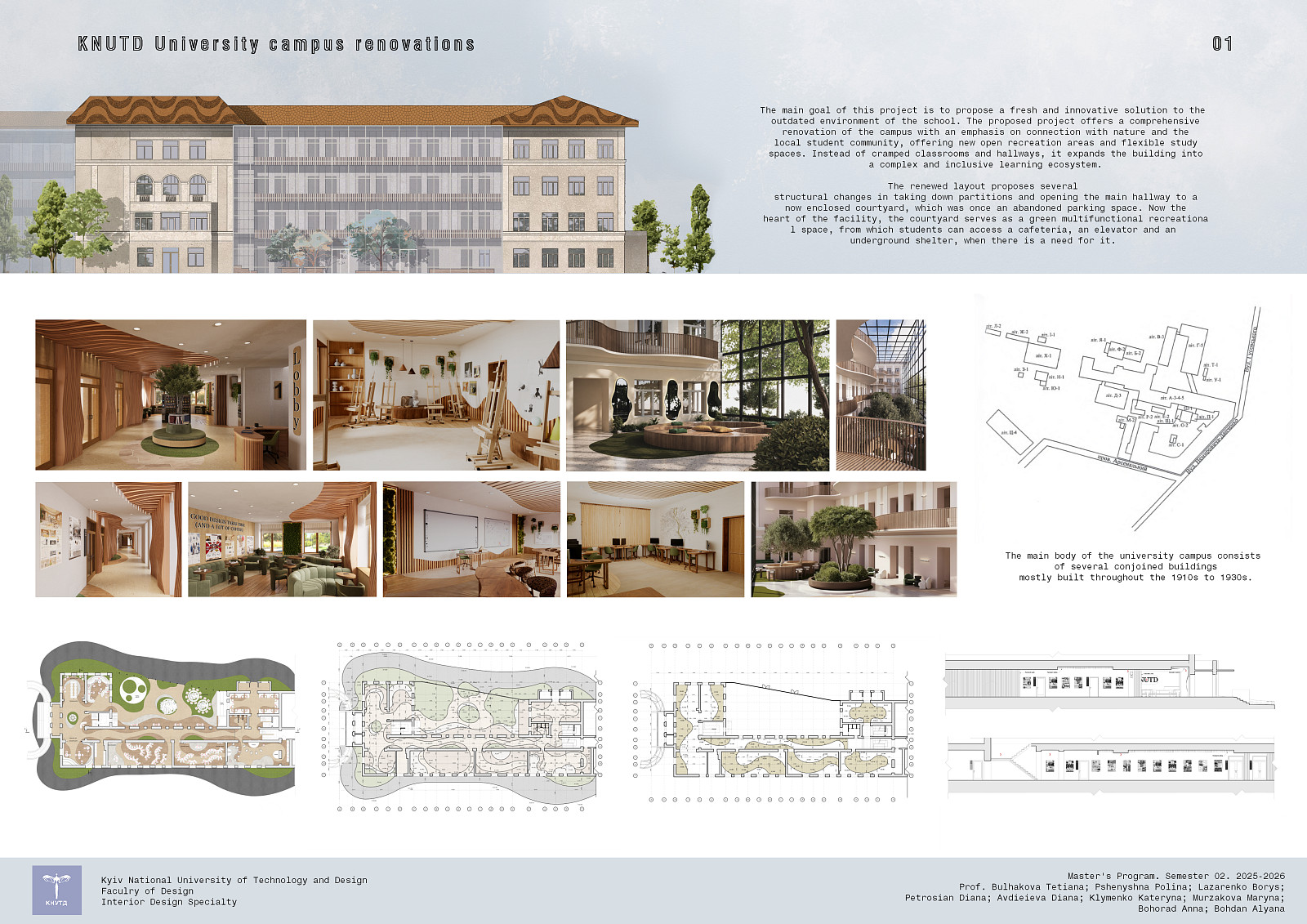
The main goal of this project is to propose a fresh and innovative solution to the outdated environment of the university. The proposed project offers a comprehensive renovation of the campus with an emphasis on connection with nature and the local student community, offering new open recreation areas and flexible study spaces. Instead of cramped classrooms and hallways, it expands the building into a complex and inclusive learning ecosystem.
Project description
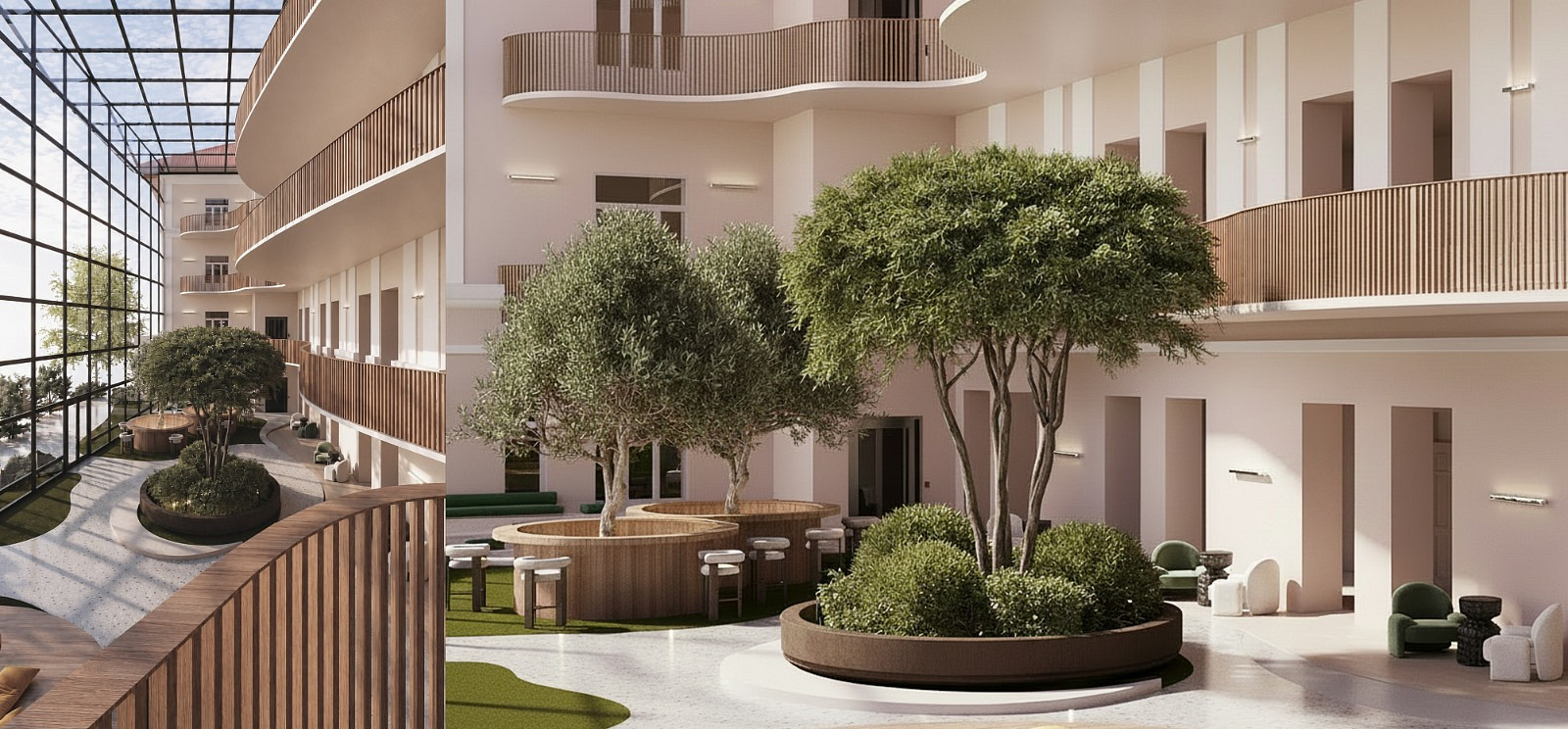
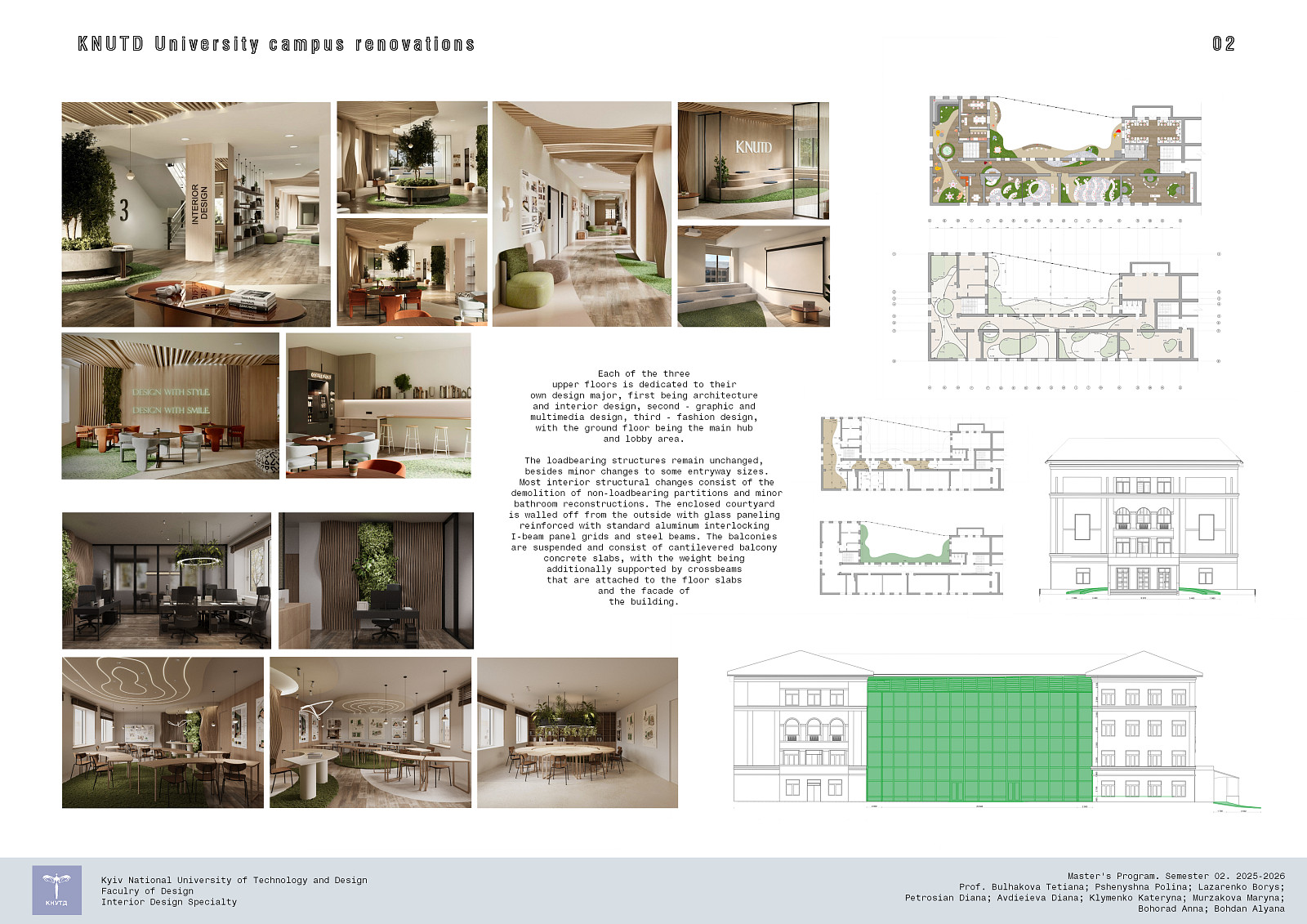
The main body of the university campus consists of several conjoined buildings mostly built throughout the 1910s to 1930s. The renewed layout proposes several structural changes in taking down partitions and opening the main hallway to a now enclosed courtyard, which was once an abandoned parking space. Now the heart of the facility, the courtyard serves as a green multifunctional recreational space, from which students can access a cafeteria, an elevator and an underground shelter, when there is a need for it. Each of the three upper floors is dedicated to their own design major, first being architecture and interior design, second - graphic and multimedia design, third - fashion design, with the ground floor being the main hub and lobby area.
Technical information
The loadbearing structures remain unchanged, besides minor changes to some entryway sizes. Most interior structural changes consist of the demolition of non-loadbearing partitions and minor bathroom reconstructions. The enclosed courtyard is walled off from the outside with glass paneling reinforced with standard aluminum interlocking I-beam panel grids and steel beams. The balconies are suspended and consist of cantilevered balcony concrete slabs, with the weight being additionally supported by crossbeams that are attached to the floor slabs and the facade of the building.
Documentation
Created in:


Copyright © 2026 INSPIRELI | All rights reserved. Use of this website signifies your agreement to the Terms of Use, Privacy Policy, and use of cookies.