
Family Home in Samsun


Project idea
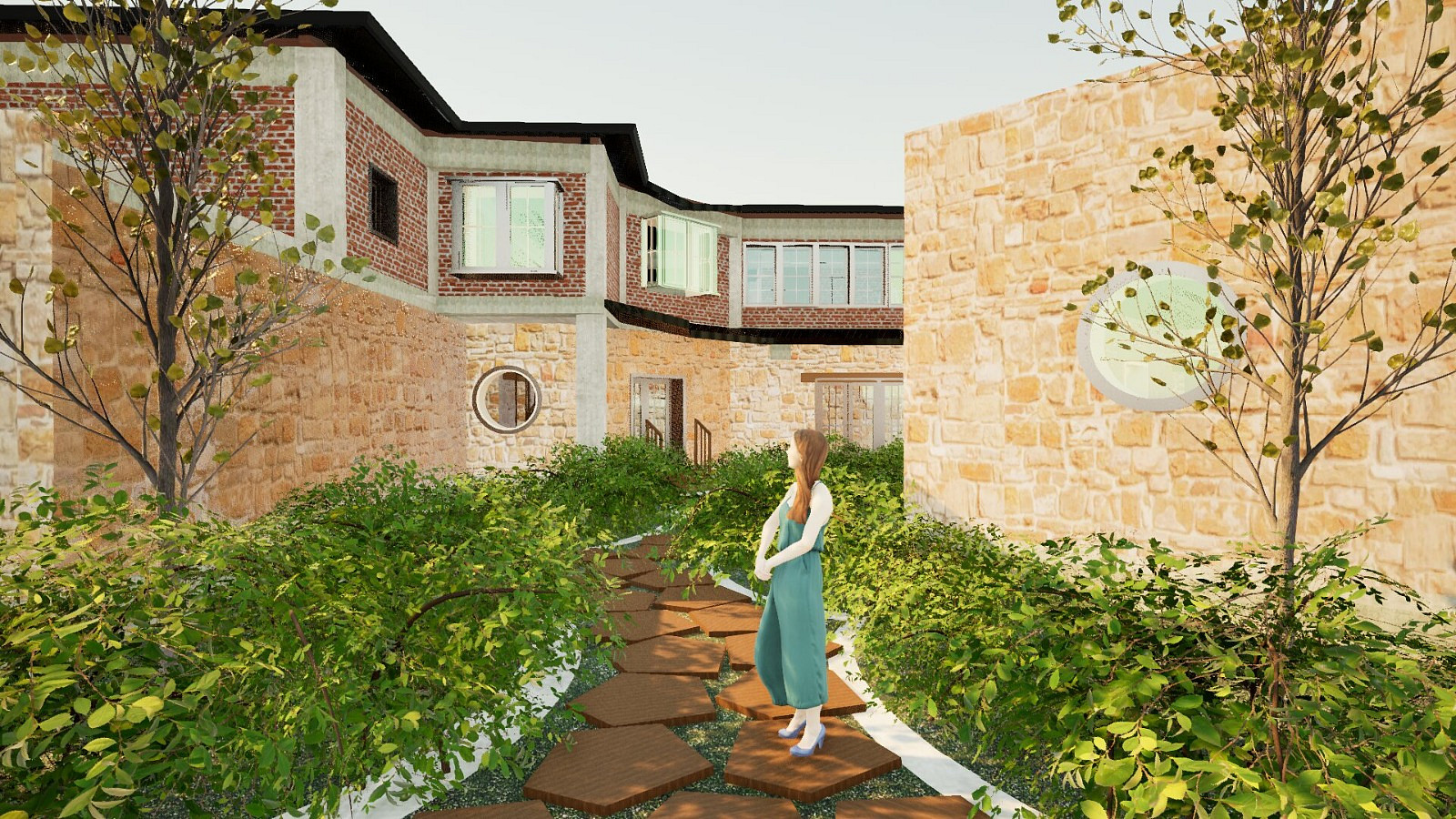
Inspired by the local culture, history, and geographical context of Samsun (especially Ondokuzmayıs and the Kızılırmak Delta), this project is a "hybrid" residential design that blends traditional stonework with a reinforced concrete frame system. The structure offers a modern living space integrated with nature (farmland and landscape), supporting both craft production and family life through its traditional "Sofa"-centered plan scheme with large windows and an open workshop area (Wood and Lantern Workshop).
Project description
The "Family Home in Samsun" project is a craft-oriented and sustainable family home design located in the Ondokuzmayıs district of Samsun, drawing inspiration from the rich history of the Kızılırmak Delta, local inputs such as tobacco and rice farming, and its biodiversity. Reinterpreting the modular structure of traditional Anatolian residential architecture and the large-windowed "Sofa (Large central area)" scheme with modern living standards, the building features a 62 m² living room/kitchen area, a 37 m² lower sofa (Large central area), and an independent "Wood and Lantern Workshop" where family members produce violins and paper lanterns on the ground floor, while the upper floor houses private bedrooms arranged around a second sofa (Large central area) with a 56 m² gallery space. The residence, integrated with the landscaping, includes hanging pergolas, gazebos, and a raised outbuilding/storage unit with wooden slats providing natural air circulation. It features a hybrid construction system that combines traditional stone masonry in the load-bearing walls with a reinforced concrete structure in the upper floors. Technically, the transfer of horizontal loads such as earthquake and wind, as well as vertical loads, is resolved through monolithic reinforced concrete beam-slab connections anchored to the stone wall, and the structure is completed using lintels in the wide spans of the facade.
Technical information
About the Structural System
Ground Floor (Stone Masonry): The ground floor of the building is constructed with stone masonry walls, in accordance with local architecture and climatic conditions. This provides a high thermal mass (thermal comfort) and a solid load-bearing foundation on the lower floor.
Upper Floor and Outbuildings (Reinforced Concrete and Wooden Structure): Reinforced concrete structures are used in the first floor volumes, while wooden elements are preferred in the independent storage/workshop unit located in the garden. The outbuilding in the garden is constructed elevated from the ground to protect against moisture, and spaced wooden panels (wooden planks) are used on its facade to ensure air circulation.
The floor-beam-wall connection point between the stone wall and the reinforced concrete slab is detailed to ensure linear and rigid continuity:
At the top of the stone wall, holes are drilled into the wall for vertical reinforcement.
These reinforcements are tightly connected (interlocked with binding wire) to the stirrups of the reinforced concrete beam of the upper floor and then to the reinforcement of the reinforced concrete slab.
In the final stage, the beam and slab concrete are poured monolithically (together), ensuring that the stone substructure and the reinforced concrete superstructure work as a single unit (forming a rigid diaphragm).
Project Scales
Site plan 1/200: ground floor plan, 1st floor plan and all facade drawings (North, South, East, West) and sections AA and BB are detailed at a scale of 1/100.
Documentation

Copyright © 2026 INSPIRELI | All rights reserved. Use of this website signifies your agreement to the Terms of Use, Privacy Policy, and use of cookies.