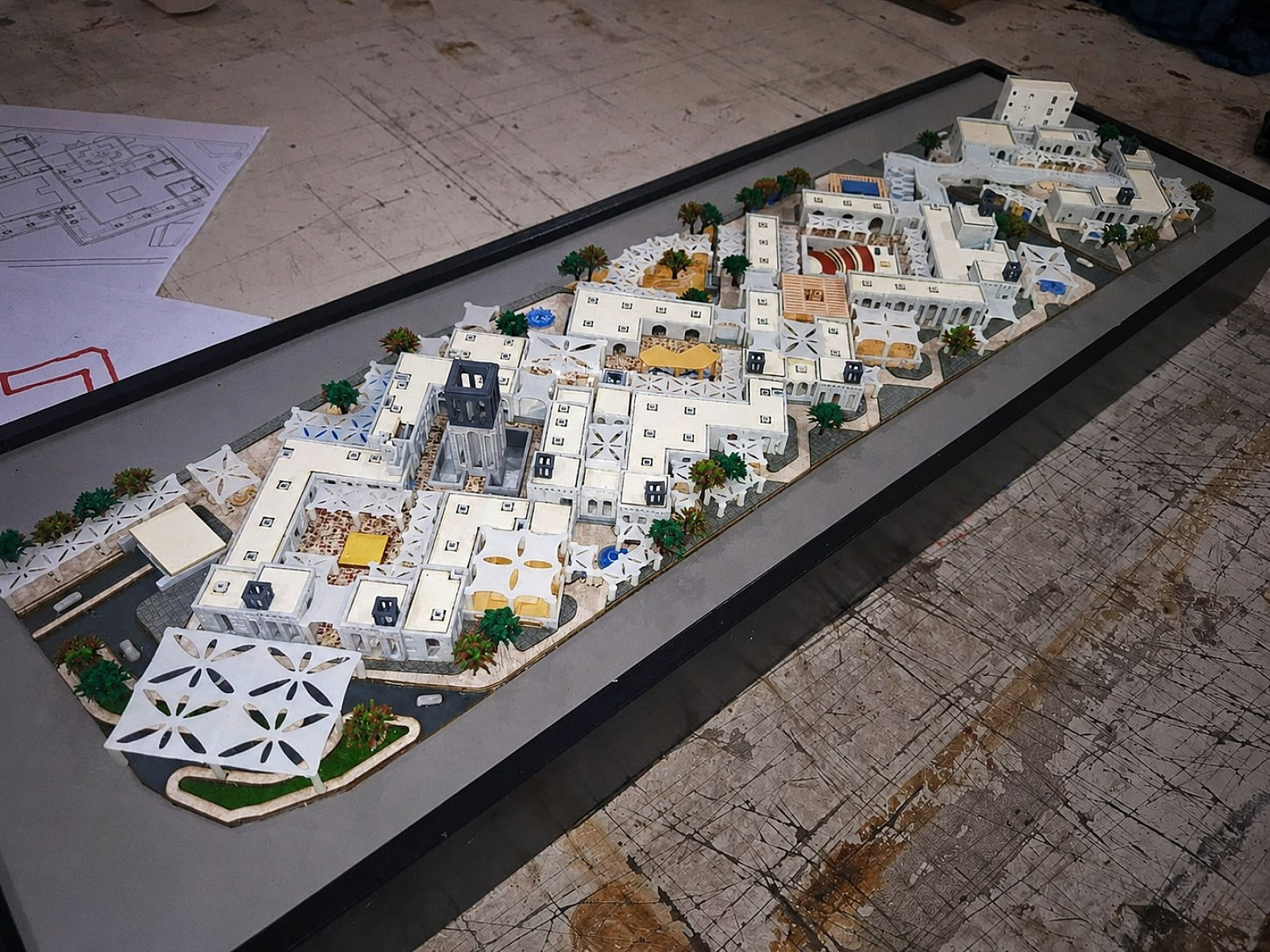
Heritage Market & Cultural Center


Project idea
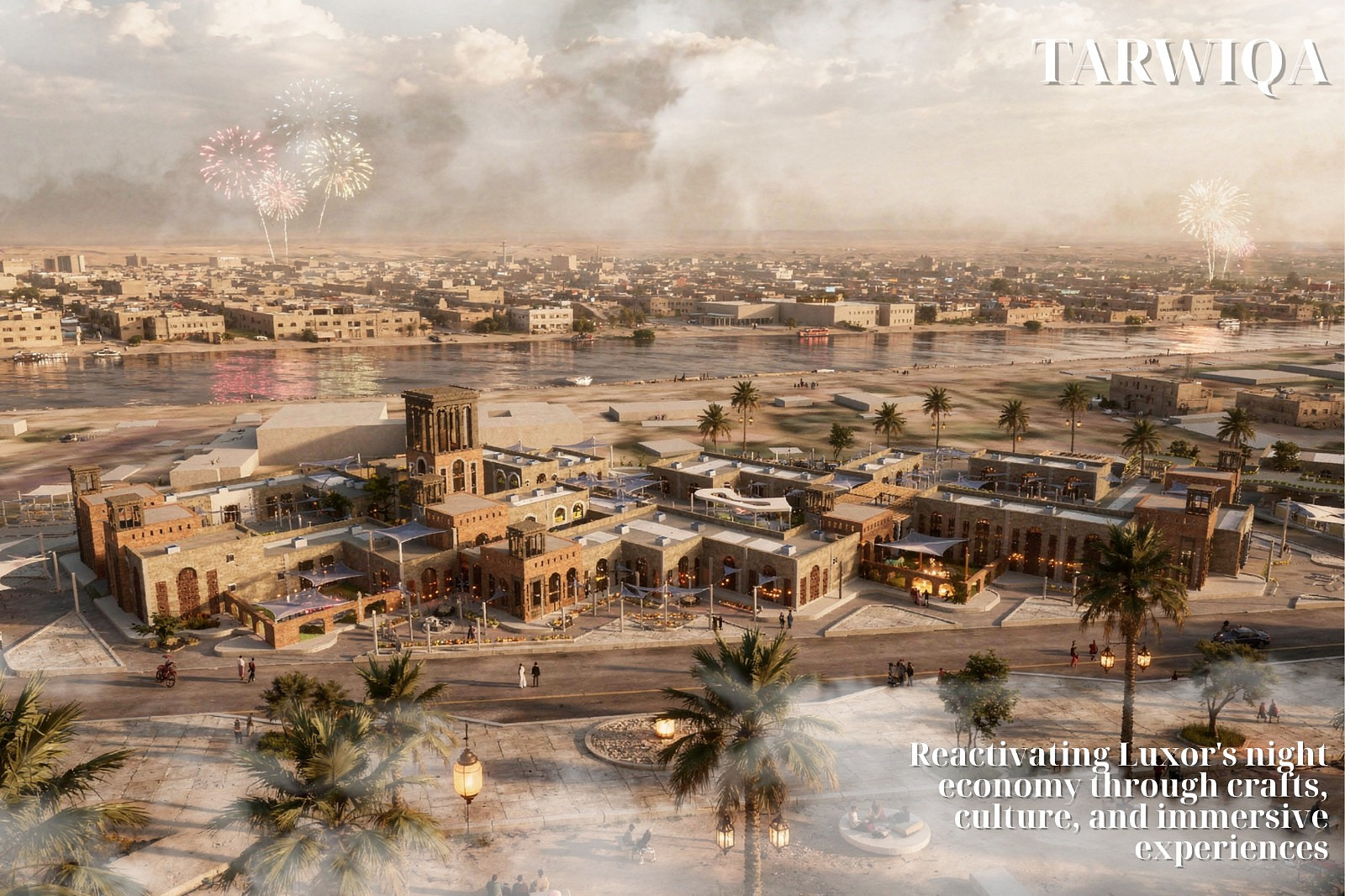
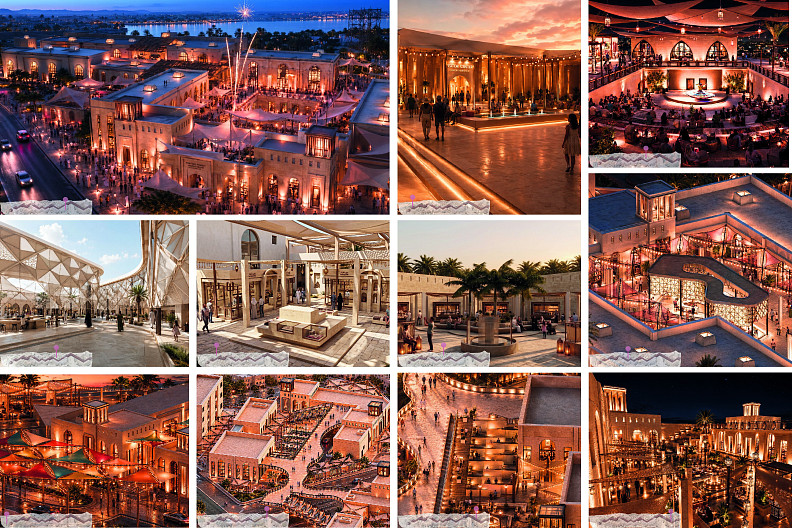
To establish a dynamic Heritage Market and Cultural Center in Luxor that bridges past and present by revitalizing traditional crafts and activating underused urban spaces, creating an immersive cultural experience beyond conventional tourism hours and fostering a nighttime economy while preserving and reinterpreting sustainable historic identity through architecture, performance, and spatial storytelling.
Project description
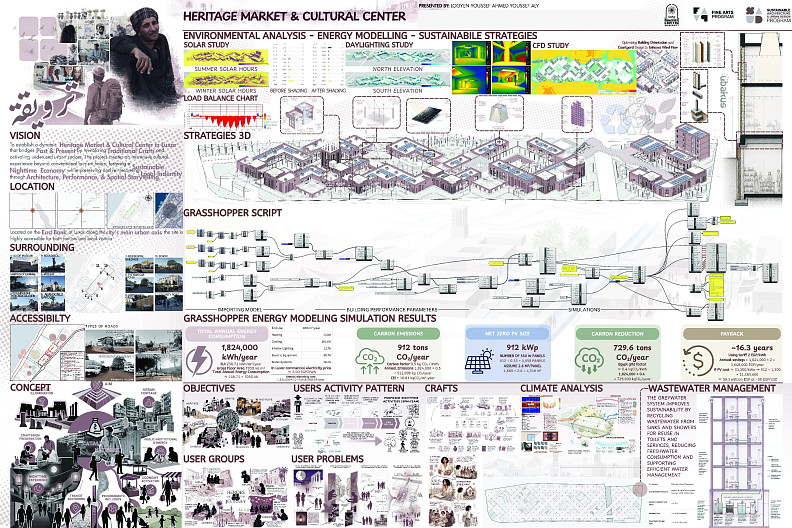
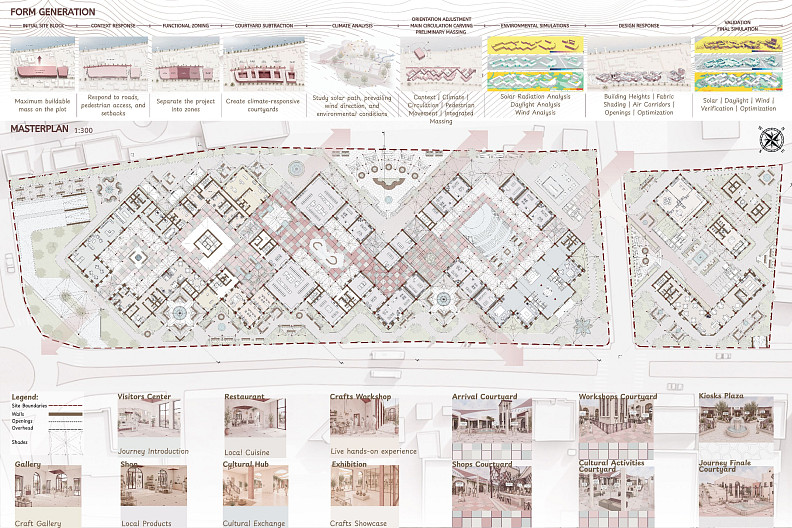
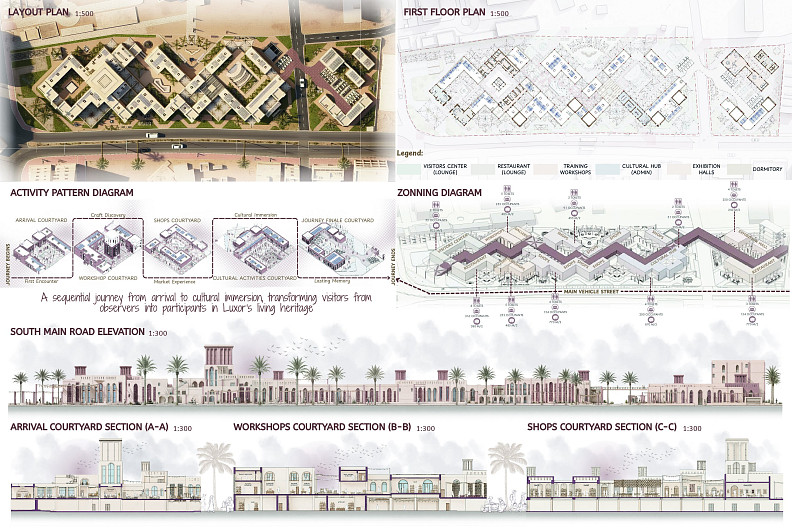
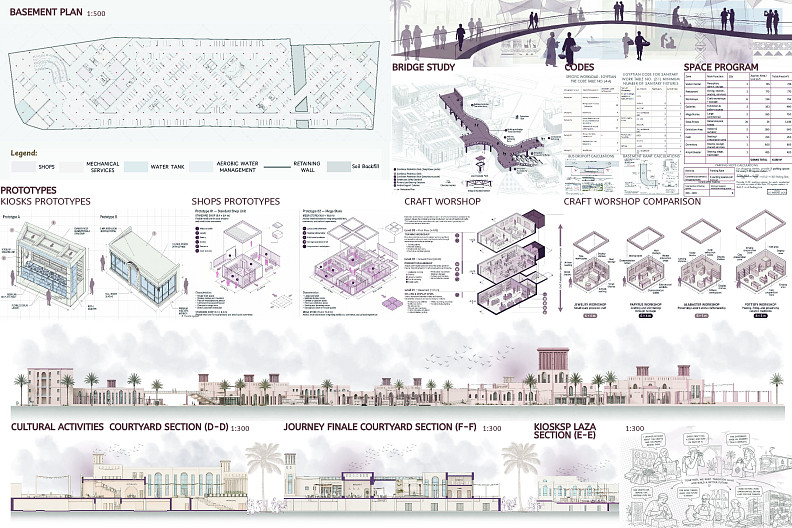
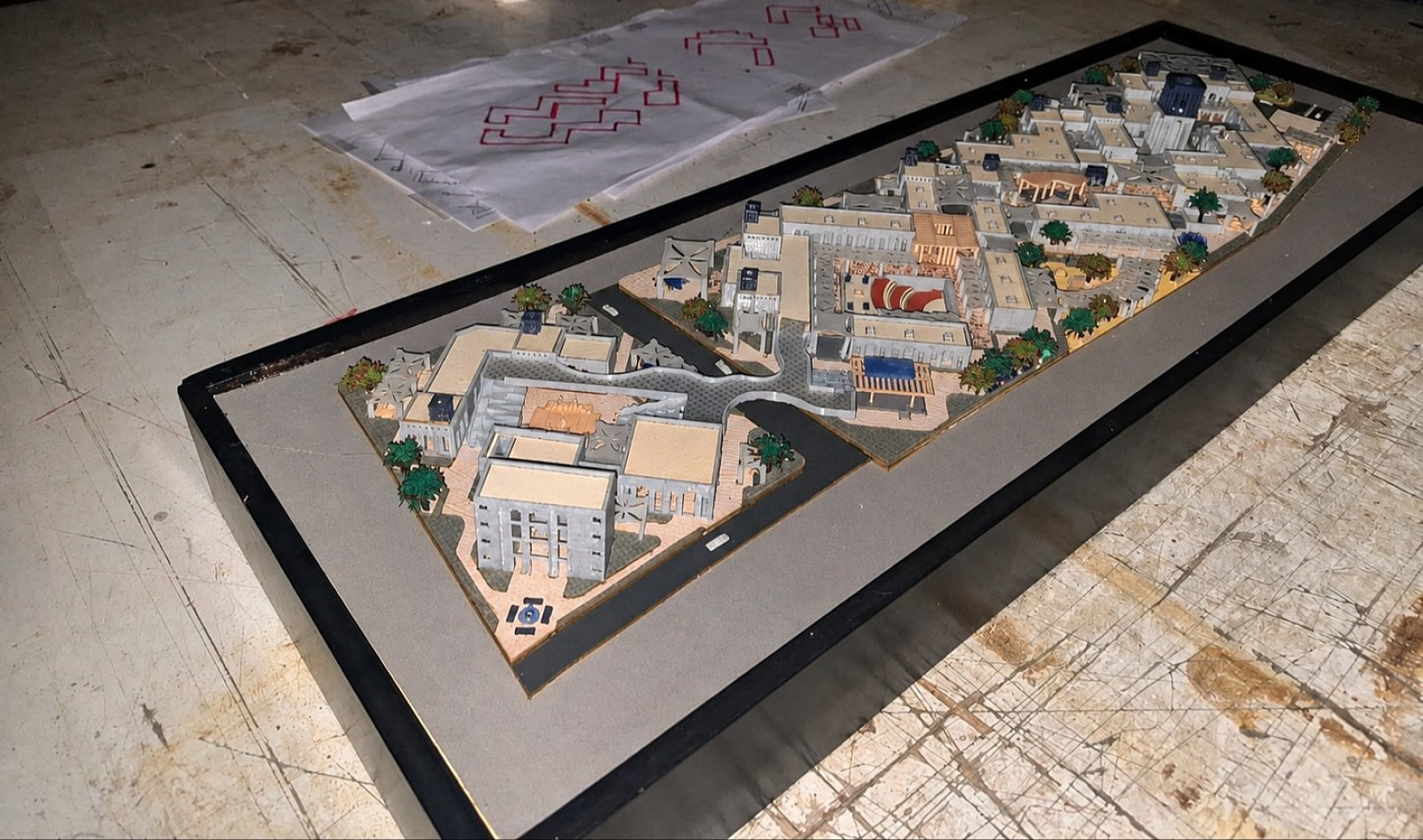
Located on the East Bank of Luxor along the city's main urban axis, the site is highly accessible for both tourists and local visitors. The project addresses the revitalization of traditional crafts, craftsmen preservation, nighttime experience, economy activation, transit anchoring, and programmatic inclusion. The design incorporates environmental analysis including solar studies, daylighting studies, CFD wind flow analysis, and energy modeling through Grasshopper simulations. The concept integrates urban heritage illumination, public-institutional synergy, and nighttime experience programming. User activity patterns were analyzed to propose nighttime activities, addressing user problems and creating inclusive spaces for diverse user groups.
Technical information
Total annual energy consumption is 1,824,000 kWh/year with EUI of 256.71 kWh/m²/year over a gross floor area of 7,056.46 m². Carbon emissions are 912 tons CO2/year. Net zero PV size is 912 kWp requiring 1,658 panels of 550W assuming 2.6 m²/panel covering 4,316 m². Carbon reduction achieves 729.6 tons CO2/year using Egypt's grid factor of 0.4. Payback period is approximately 16.3 years using tariff 2 EGP/kWh. Grasshopper energy modeling simulation was used with building performance parameters. Greywater management system recycles wastewater from sinks and showers for reuse in toilets and services, reducing freshwater consumption. Sustainable strategies include optimizing building orientation and courtyard design to enhance wind flow.
Documentation

Copyright © 2026 INSPIRELI | All rights reserved. Use of this website signifies your agreement to the Terms of Use, Privacy Policy, and use of cookies.