NiCo Experiential Centre Sereď


Project idea
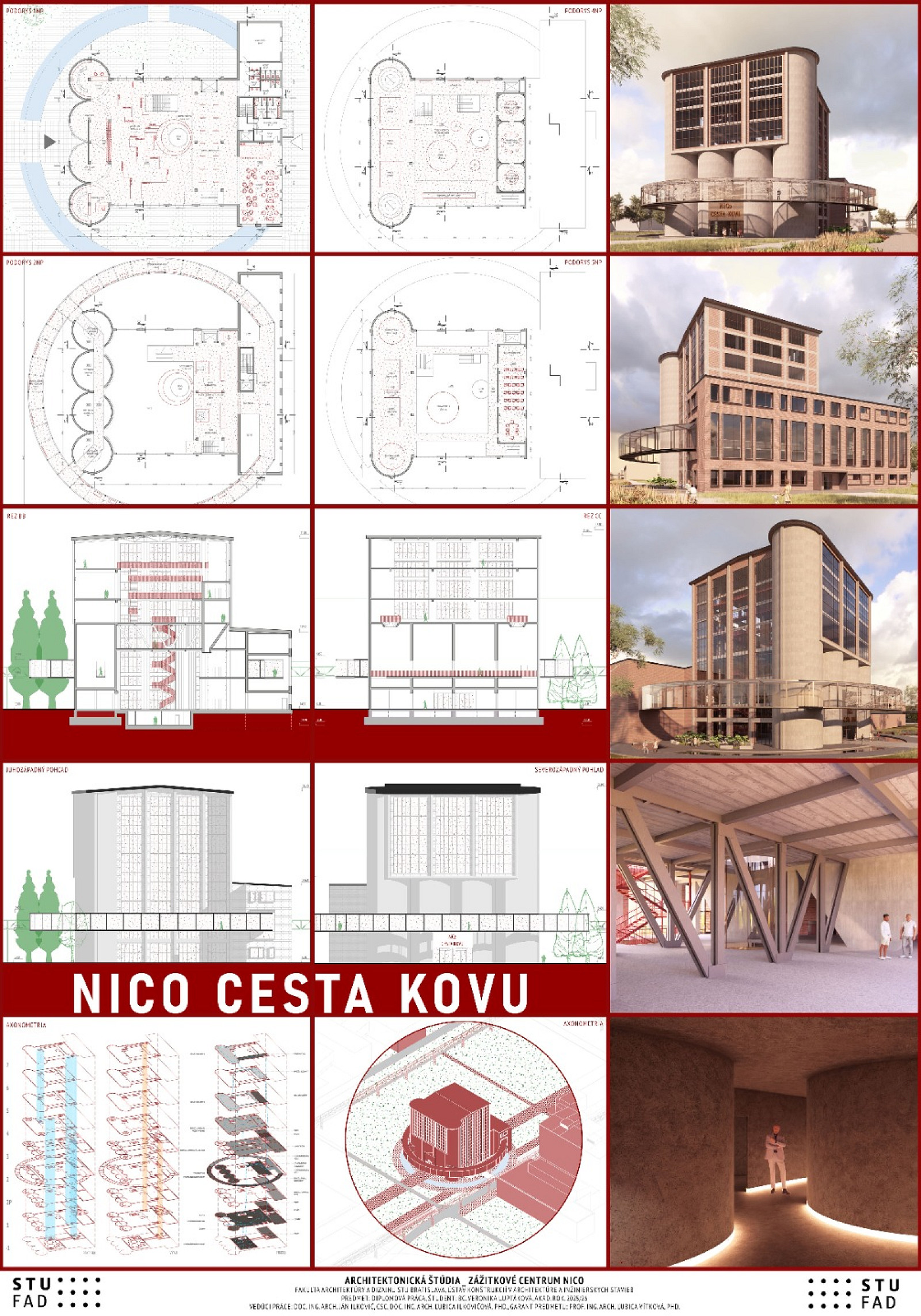
The NiCo Experience Centre transforms the former mill building of the Nickel Smelter in Sereď into an experiential and educational centre dedicated to the journey of nickel. The project is based on the idea of turning an abandoned industrial structure into a place where history, technology, material transformation and architectural experience meet.
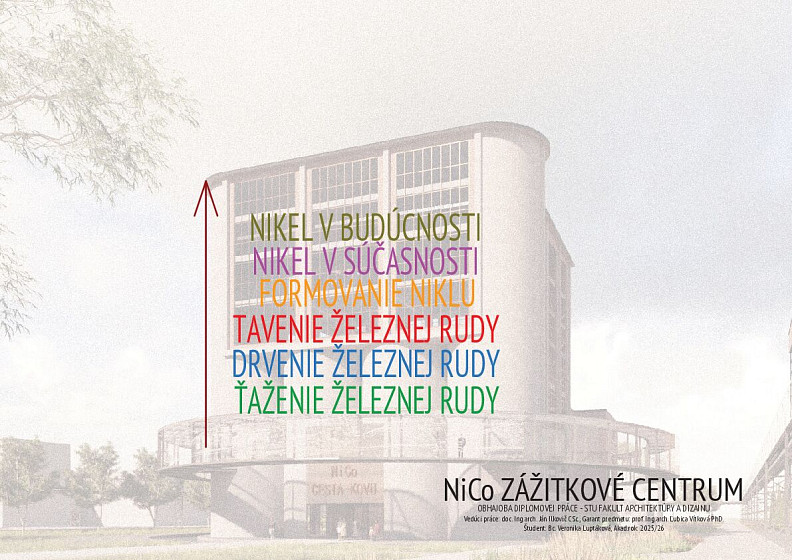
The exhibition follows the complete process chain of nickel production — from iron ore mining and crushing, through smelting and forming, to the present and future use of nickel in advanced technologies, robotics and space research. The visitor route becomes a vertical journey through the building, gradually moving from dark underground spaces to the highest levels of the former industrial hall.
The main goal of the project is to preserve the raw monumental character of the original mill while inserting a new contemporary layer. The circular glazed walkway symbolises the continuous cycle of production, transformation and innovation. The project gives new public value to a neglected industrial site and shows how industrial heritage can become an active part of the future city.
Project description
The project focuses on the adaptive reuse of the former mill building, originally used for grinding iron ore as part of the nickel production process. The proposal is part of a wider vision for the transformation of the former Nickel Smelter into a scientific, educational, cultural and social hub.
The building programme is organised according to the stages of nickel production. The route begins in the underground exhibition spaces dedicated to mining and continues through the processes of crushing, smelting and forming. The upper floors present nickel as a material of the present and the future, including its use in everyday products, robotics, new technologies and space exploration.
The original industrial elements are preserved and used as part of the exhibition experience. The silos, hoppers, high hall and structural system are not treated only as historical remains, but as active spatial elements. New inserted floors and circulation routes allow visitors to experience the building from different heights and viewpoints. The circular glazed walkway connects the main hall with the annex and creates a distinctive architectural gesture around the existing structure.
The project includes the architectural design of the experience centre, its functional layout, exhibition concept, visitor circulation, public space around the building and integration into the wider revitalised industrial site.
Technical information
The original mill consists of a main hall, an annex and four concrete silos. The main hall reaches approximately 32 metres in height and offers a strong spatial contrast between the large illuminated industrial volume and the darker enclosed spaces of the silos and hoppers.
The existing load-bearing structure is based on monolithic reinforced concrete, combined with brick façade walls and glazed openings. The open character of the hall is supported by a steel truss system, which allows the interior to remain largely unobstructed. The annex is formed by a solid brick wall-bearing structure.
New inserted floors are designed as lightweight steel structures to minimise the additional load on the original building. The circular glazed walkway is positioned at the level of the former industrial pipeline and is conceived as a light contemporary intervention. Its structure is based on a Vierendeel beam system combined with lightweight GFRP panels and glazed side and roof surfaces.
The technical concept clearly distinguishes the new architectural elements from the preserved industrial structure. At the same time, both layers work together spatially, structurally and visually. The result is a balanced transformation that preserves the authenticity of the former mill while enabling a new public, educational and cultural function.
Documentation

Copyright © 2026 INSPIRELI | All rights reserved. Use of this website signifies your agreement to the Terms of Use, Privacy Policy, and use of cookies.
