Museum of the Present


Project idea
A subterranean architecture embedded within the landscape of Hampi, Karnataka, where built form emerges through excavation, carving spatial voids into the earth to create an architecture of mass, shadow, and controlled light.
Project description
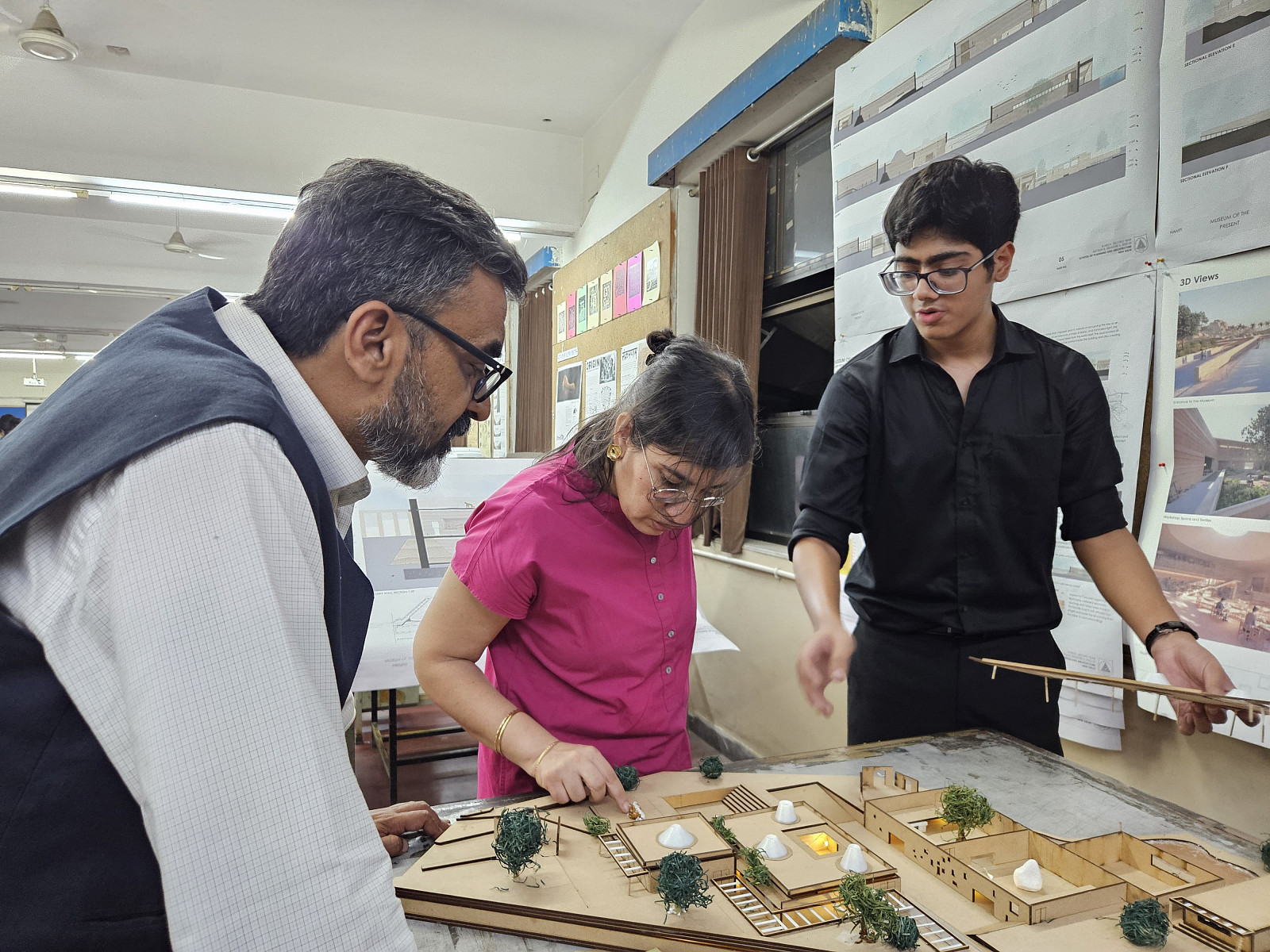
My Semester 4 Architectural Design project is an exploration into subterranean architecture within the context of Hampi, a UNESCO World Heritage Site. Here, sensitivity to the surrounding landscape becomes integral to the act of building itself. In a setting as historically and visually powerful as Hampi, any intervention risks becoming visual noise. The intention of the project was therefore to embed the architecture into the landscape itself, allowing the earth to become both the site and the primary building material. Through this approach, the project investigates how architecture can emerge from excavation rather than imposition, while integrating multiple advanced passive design strategies to respond to Hampi’s harsh semi arid climate.
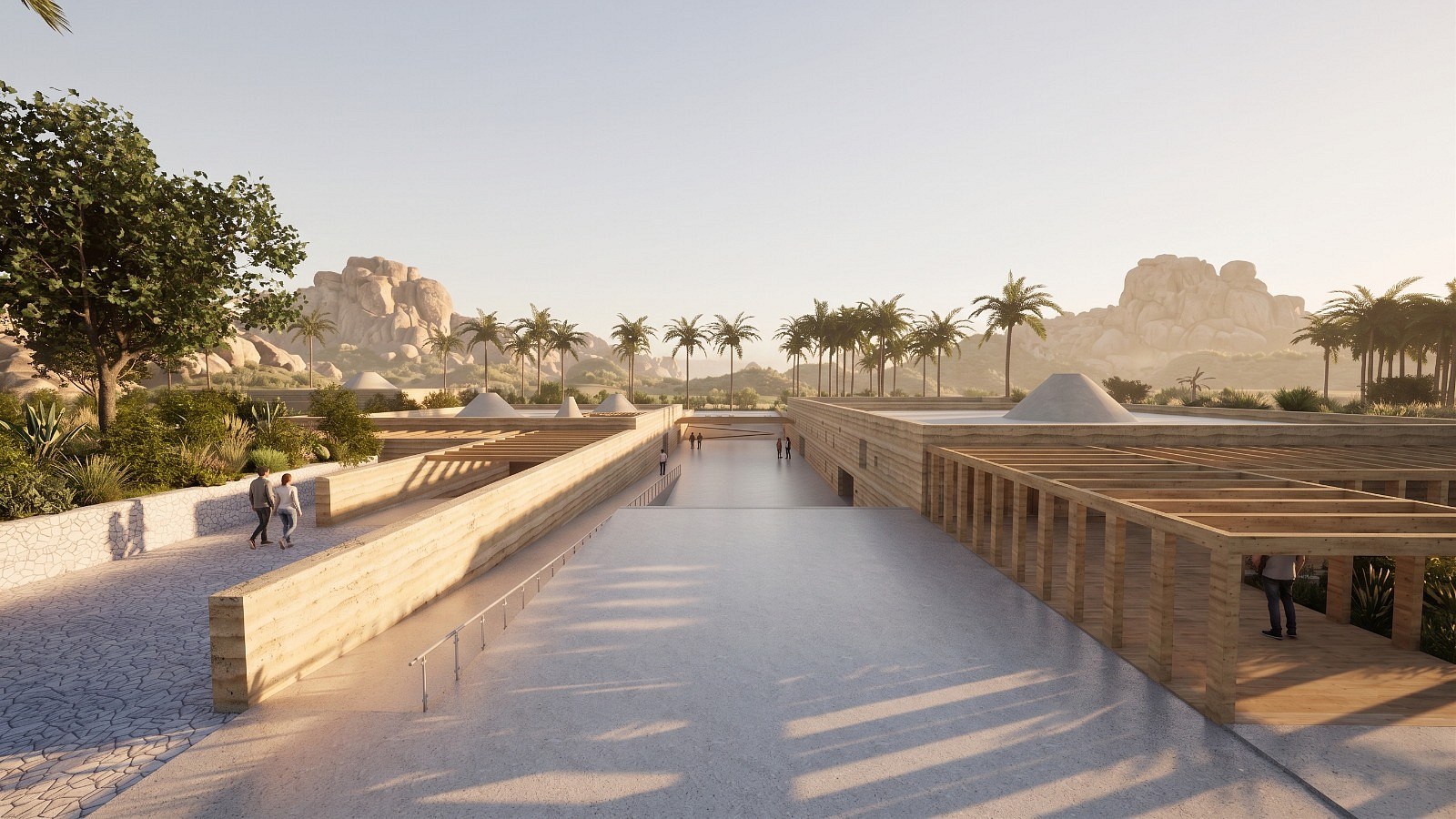
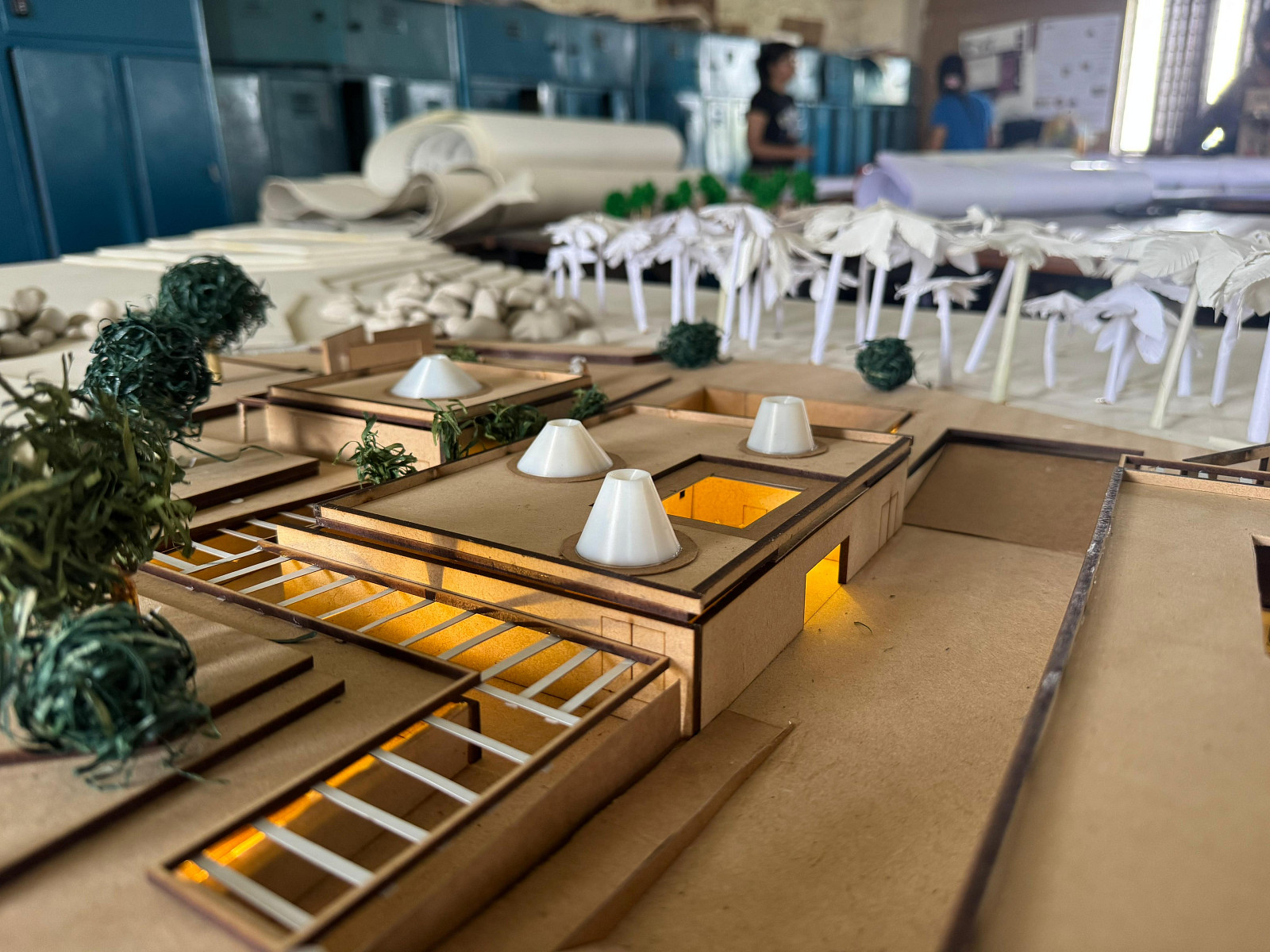
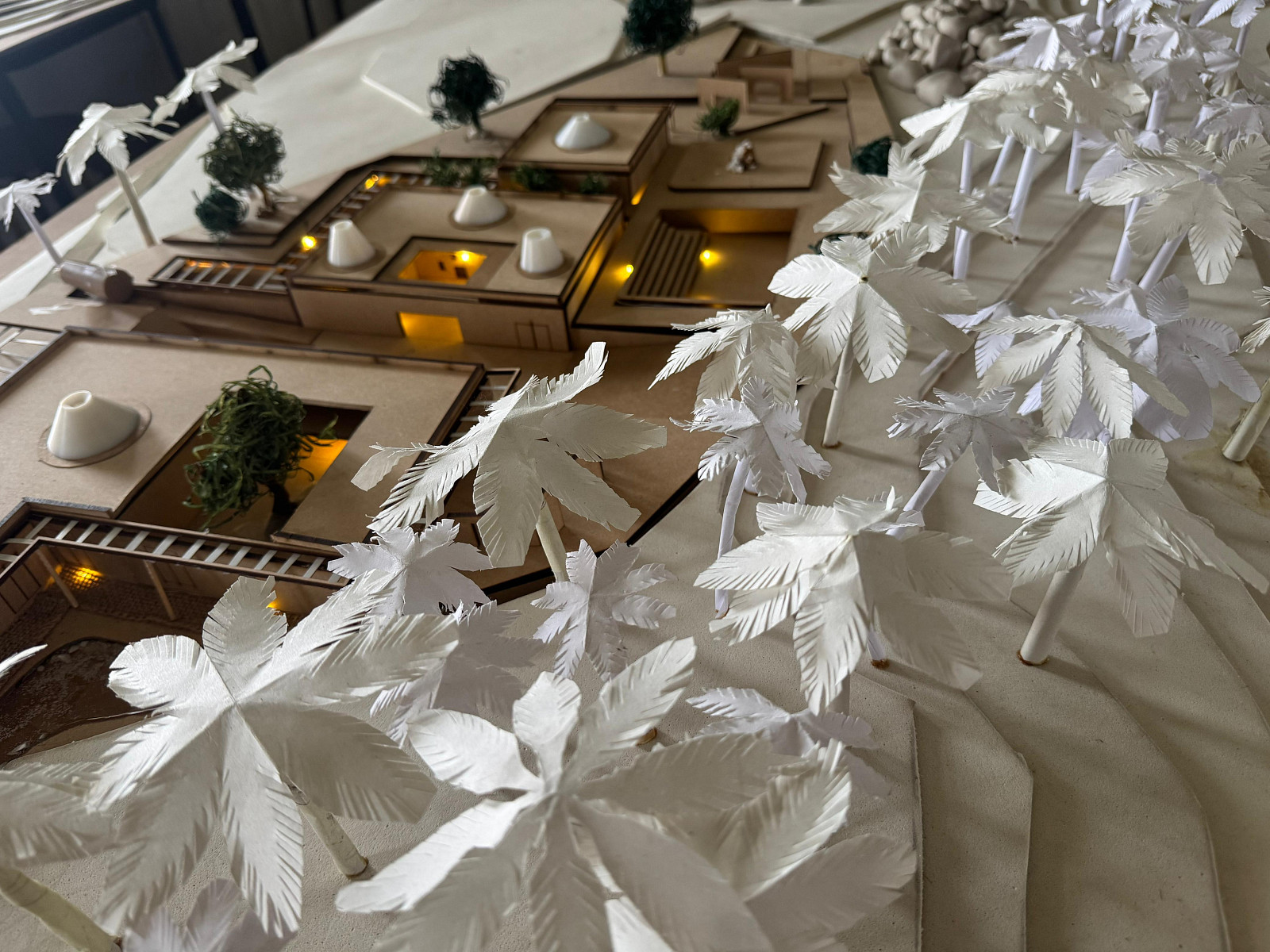
The museum is conceived as a series of spatial voids that create an experience influenced by mass, shadow, controlled diffused light, and thermal comfort. A sequence of ascending and descending levels generates a dynamic spatial journey, tied together by a processional central spine inspired by the axial alignments of the temples of Hampi. Thick rammed earth walls with high thermal mass help maintain cooler interior conditions, while native vegetation, water bodies, semi-covered courts, and conical skylights work together to regulate heat and create varying atmospheric conditions within the museum.
Freestanding rammed earth walls with carefully framed openings create moments of pause, relief, and contemplation by directing views towards the surrounding landscape. Aperture-like openings within the façade further control the quality and intensity of light entering the spaces, diversifying the sensory experience throughout the museum. The conical skylights emerge as sculptural architectural elements that function simultaneously as light catchers and thermal regulators, drawing soft diffused daylight into the interiors while contributing to the passive cooling strategy of the museum.
The museum is envisioned not only as a cultural institution, but also as a platform for preserving and celebrating the traditional textile practices of Hampi through exhibition spaces and workshops that encourage continued engagement with local craft traditions. The galleries explore themes ranging from the topographic and historical evolution of Hampi through a contemporary lens, to the daily life, culture, and lived experiences of its people.
Technical information
Site Area - 12000 Sqm
Total Built up Area - 5500 Sqm (Inclusive of Semi Covered Spaces)
Admin Block - 200 Sqm
Ticket Counter - 100 Sqm
Public Utilities - 100 Sqm
Gallery Spaces - 1300 Sqm
Workshop Space - 600 Sqm
Library - 150 Sqm
Cafe - 250 Sqm
Seminar Hall - 600 Sqm
Services - 1000 Sqm
Open Air Theatre - Capacity (600-800 People)
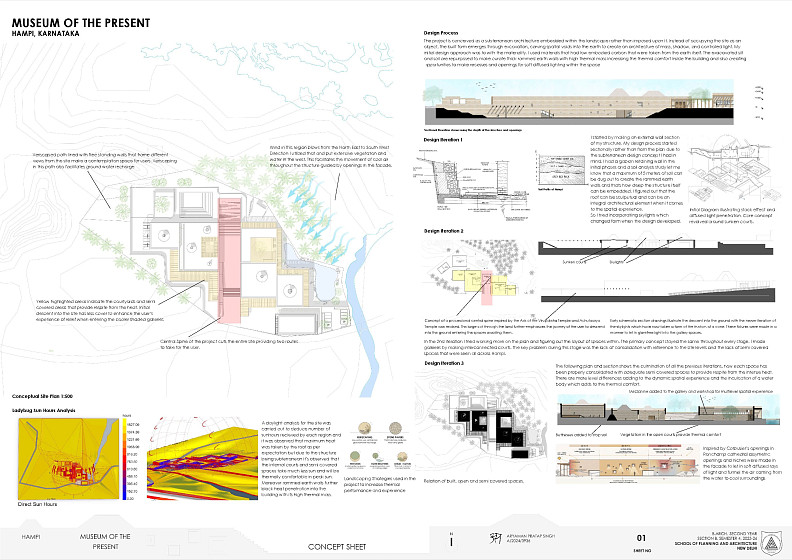
Wind from the North East to South West direction is utilized with extensive vegetation and water in the west to facilitate cool air movement throughout the structure guided by facade openings.
A daylight analysis using Ladybug Sun Hours was carried out to determine sun hours received by each region. The subterranean structure ensures internal courts and semi-covered spaces receive much less sun and remain thermally comfortable in peak sun. Rammed earth walls further block heat penetration with high thermal mass.
Landscaping strategies include xeriscaping, stone pavers, pine woods, water-cool trees, and shrubs with natives to increase thermal performance.
Skylights in the form of frustum of a cone allow glarefree light into gallery spaces. Buttresses are added to stop soil movement, and asymmetric openings inspired by Corbusier's Ronchamp cathedral let in soft diffused rays of light and funnel air from water to cool surroundings.
Documentation
Created in:


Copyright © 2026 INSPIRELI | All rights reserved. Use of this website signifies your agreement to the Terms of Use, Privacy Policy, and use of cookies.