Mui Ne Museum of Coastal Folk Culture


Project idea
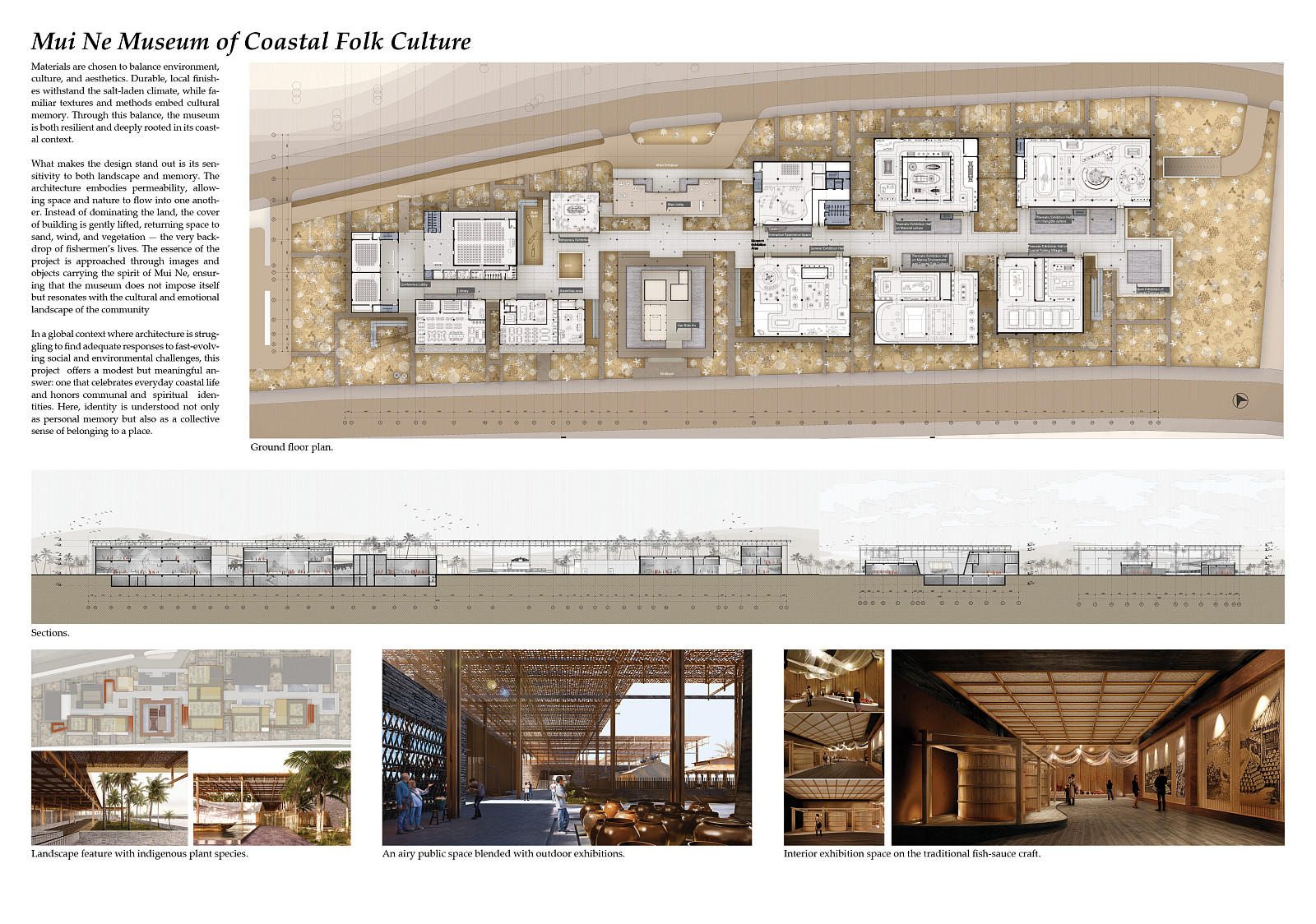
Located in Mui Ne, Phan Thiet, the Folk Culture Museum of the Sea is conceived as a cultural platform that preserves, celebrates, and revitalizes the heritage of coastal communities. The project seeks to transform the museum from a static exhibition facility into a living environment where local traditions, collective memory, and contemporary public life coexist.
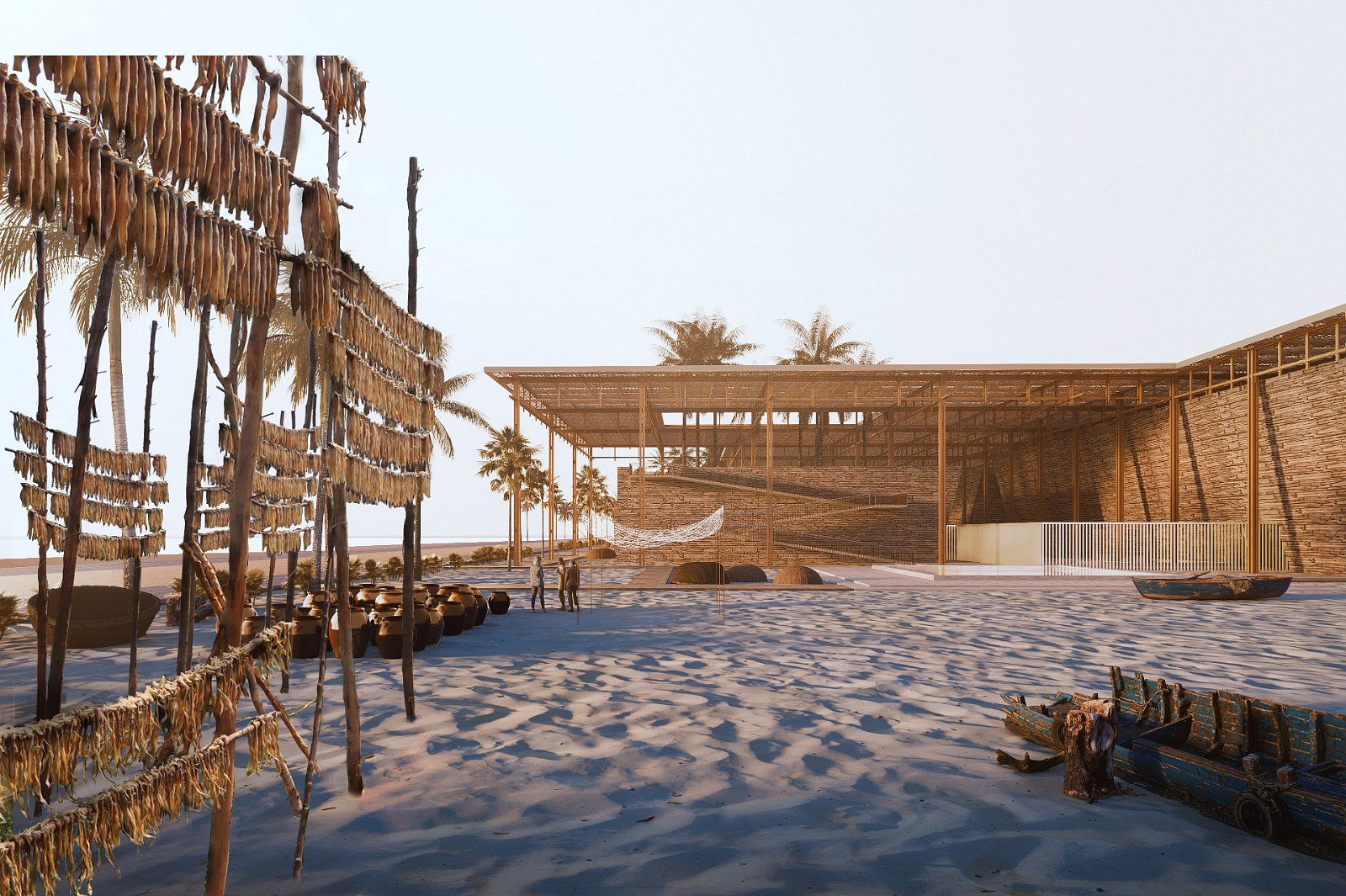
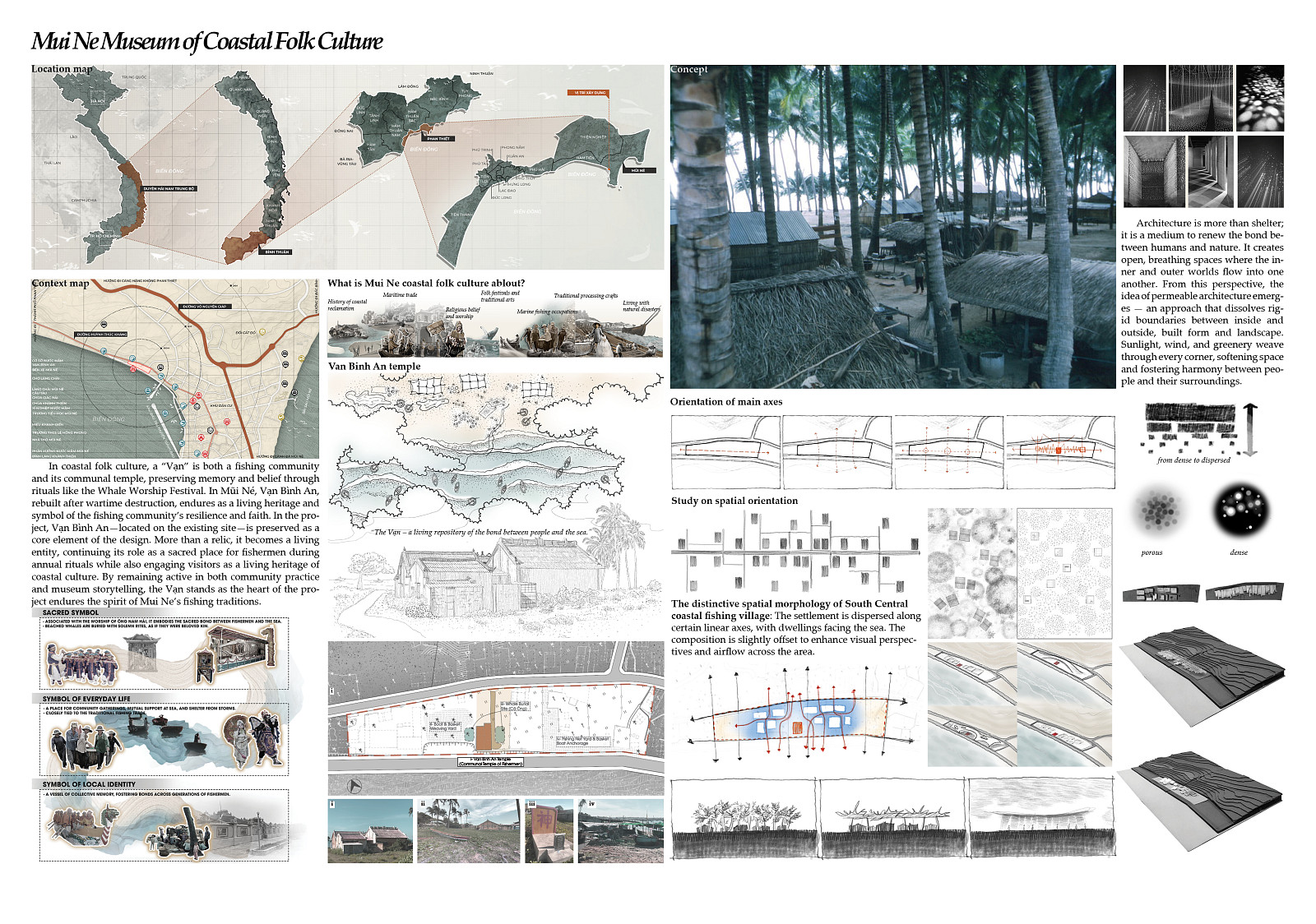
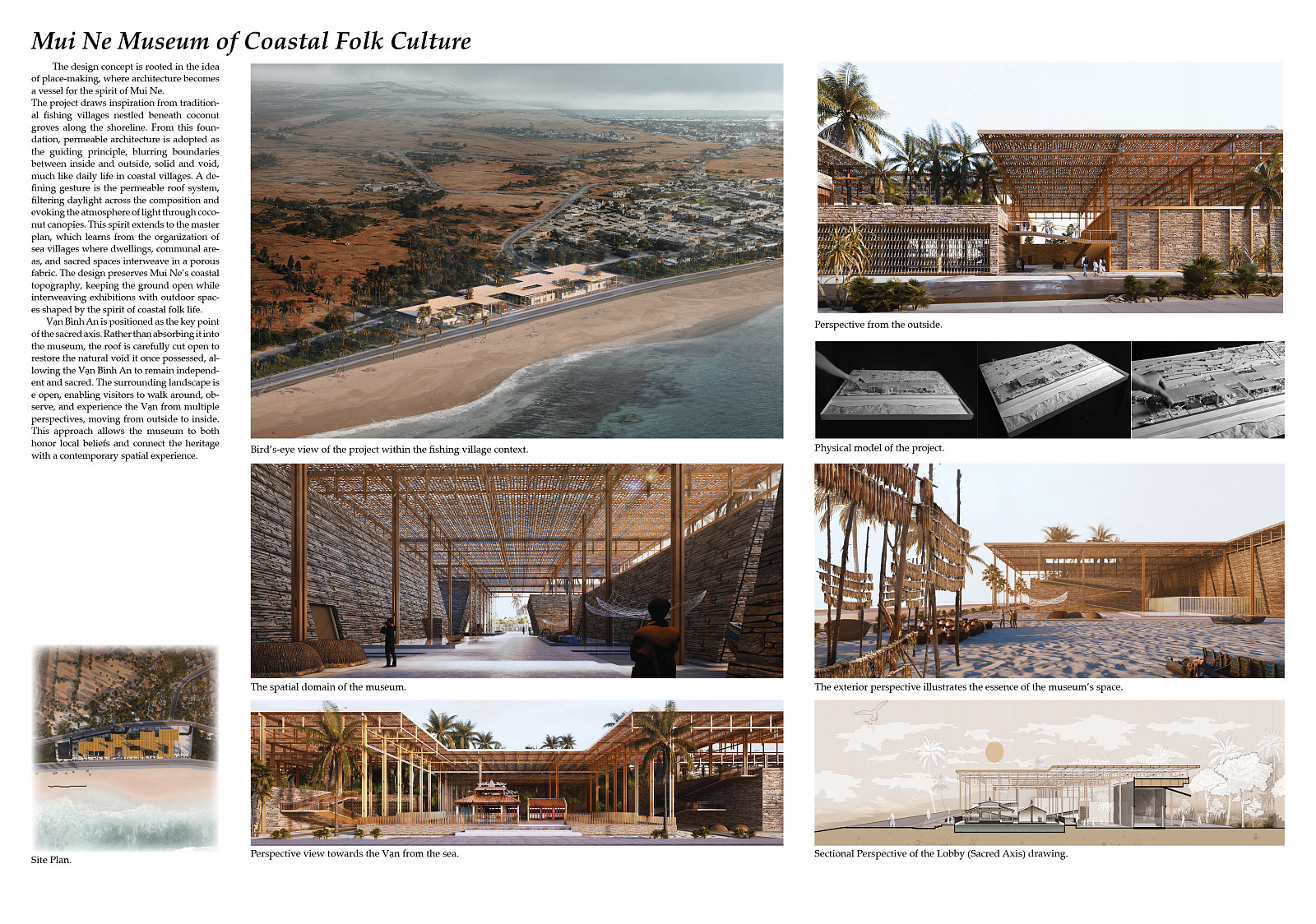
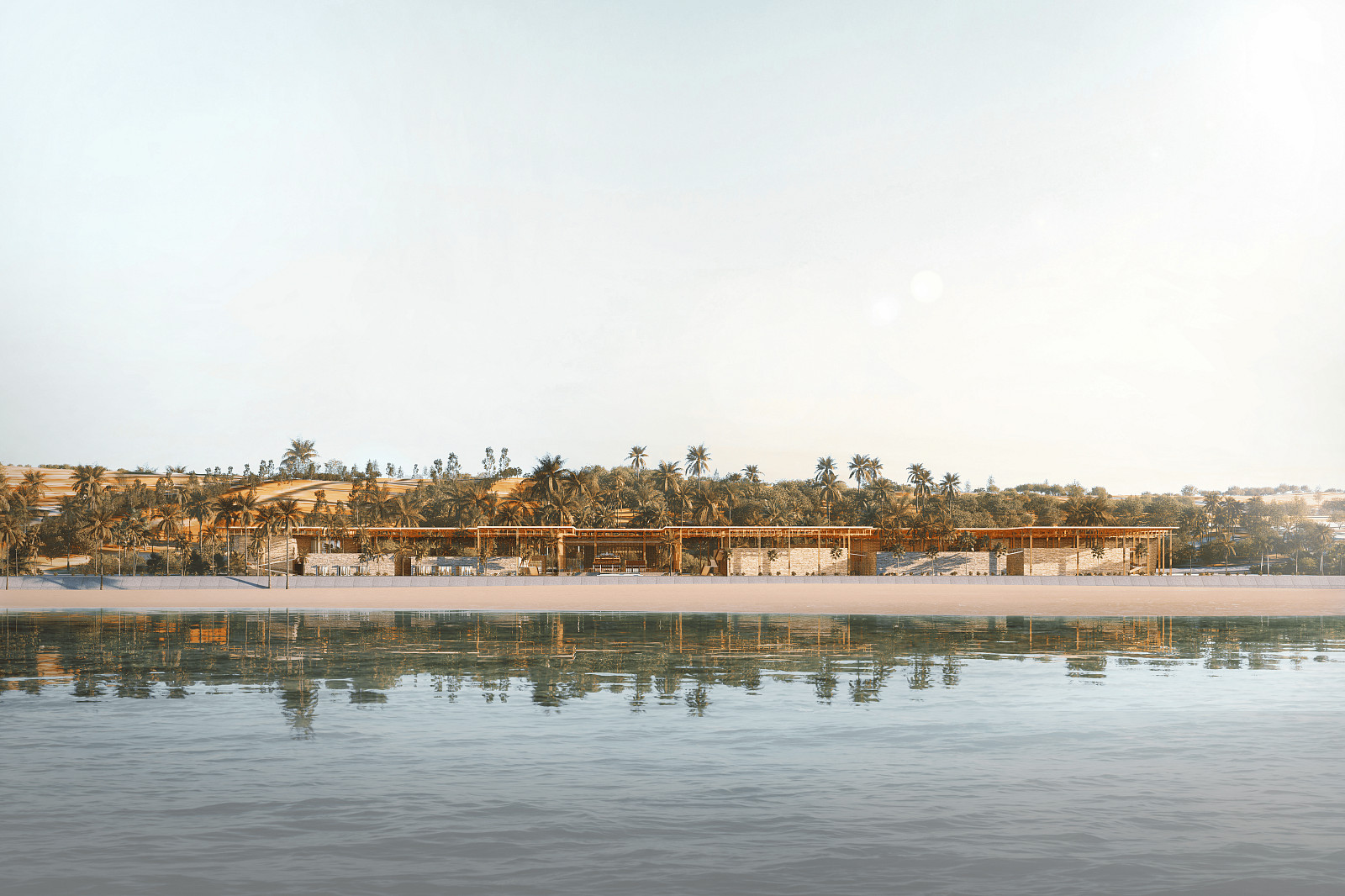
The design is inspired by the spatial qualities of traditional fishing villages nestled beneath coconut groves along the shoreline. Rather than creating a singular monumental object, the project adopts permeability as its central design principle. Architecture is envisioned as a porous framework where landscape, climate, heritage, and human activity continuously interact. The museum blurs the boundary between interior and exterior spaces, allowing visitors to experience culture through movement, light, wind, and the surrounding natural environment.
A key element of the project is the preservation of Vạn Bình An, an existing fishermen’s communal shrine located on the site. Instead of being absorbed into the museum complex, the shrine remains independent and active, maintaining its spiritual role within the local community. The architecture carefully opens around this heritage structure, establishing it as the heart of a sacred axis that connects memory, ritual, and public experience.
Through this approach, the project aims to strengthen cultural identity, foster intergenerational knowledge exchange, and create a meaningful dialogue between heritage preservation and contemporary architectural expression.
Project description
The project consists of a Folk Culture Museum of the Sea and an integrated cultural landscape located on the coastal dunes of Mui Ne, Vietnam. The design combines exhibition facilities, educational spaces, community gathering areas, outdoor cultural events, public courtyards, and heritage preservation zones into a unified spatial system.
The master plan is organized as a network of interconnected pavilions inspired by the morphology of traditional fishing settlements. Open spaces are woven throughout the site to preserve existing topography and maintain visual and physical connections with the surrounding landscape. Visitors move through a sequence of indoor and outdoor environments that gradually reveal the stories, traditions, rituals, and daily life of local fishing communities.
A permeable roof system serves as the defining architectural element of the project. Inspired by the filtered light beneath coconut canopies, the roof creates a dynamic environmental layer that moderates sunlight, enhances natural ventilation, and reinforces the relationship between architecture and climate.
The project also incorporates the preservation and activation of Vạn Bình An as a living heritage component. Together with the museum functions, the shrine contributes to a comprehensive cultural experience where tangible and intangible heritage are equally represented. The proposal seeks to provide an inclusive public destination that supports cultural education, tourism, community engagement, and long-term heritage conservation.
Technical information
Project Type: Cultural Architecture / Museum
Category: Architecture
Location: Mui Ne, Phan Thiet City, Binh Thuan Province, Vietnam
Program:
* Permanent exhibition spaces
* Temporary exhibition spaces
* Educational and workshop facilities
* Community gathering spaces
* Outdoor exhibition areas
* Cultural event spaces
* Administration and support facilities
* Heritage preservation area (Vạn Bình An)
Design Strategy:
* Permeable architecture
* Preservation of existing cultural heritage
* Integration with natural topography
* Passive environmental design
* Indoor–outdoor spatial continuity
Environmental Response:
* Maximized natural ventilation
* Daylight-controlled roof system
* Preservation of existing landscape features
* Climate-responsive shading strategies
* Use of locally appropriate and durable materials suitable for coastal conditions
Construction and Material Approach:
* Reinforced concrete structural system
* Perforated and shaded roof structure
* Locally sourced finishing materials where possible
* Corrosion-resistant materials adapted to the marine environment
* Low-maintenance exterior surfaces
Project Status:
Academic Graduation Project

Copyright © 2026 INSPIRELI | All rights reserved. Use of this website signifies your agreement to the Terms of Use, Privacy Policy, and use of cookies.