Dynamic Leveling - Universal Forest Lab


Project idea
The project proposes a mobile, minimally invasive, and self-sufficient research station for forest studies. It explores sustainable construction systems, autonomous energy management, and low-impact deployment in remote environments.
The main objective was to create a lightweight research infrastructure that enables scientists to live and work off-grid for up to one week while accessing the entire vertical profile of a tree. Particular attention was given to adaptability, reusability, and the preservation of sensitive forest ecosystems.
Project description
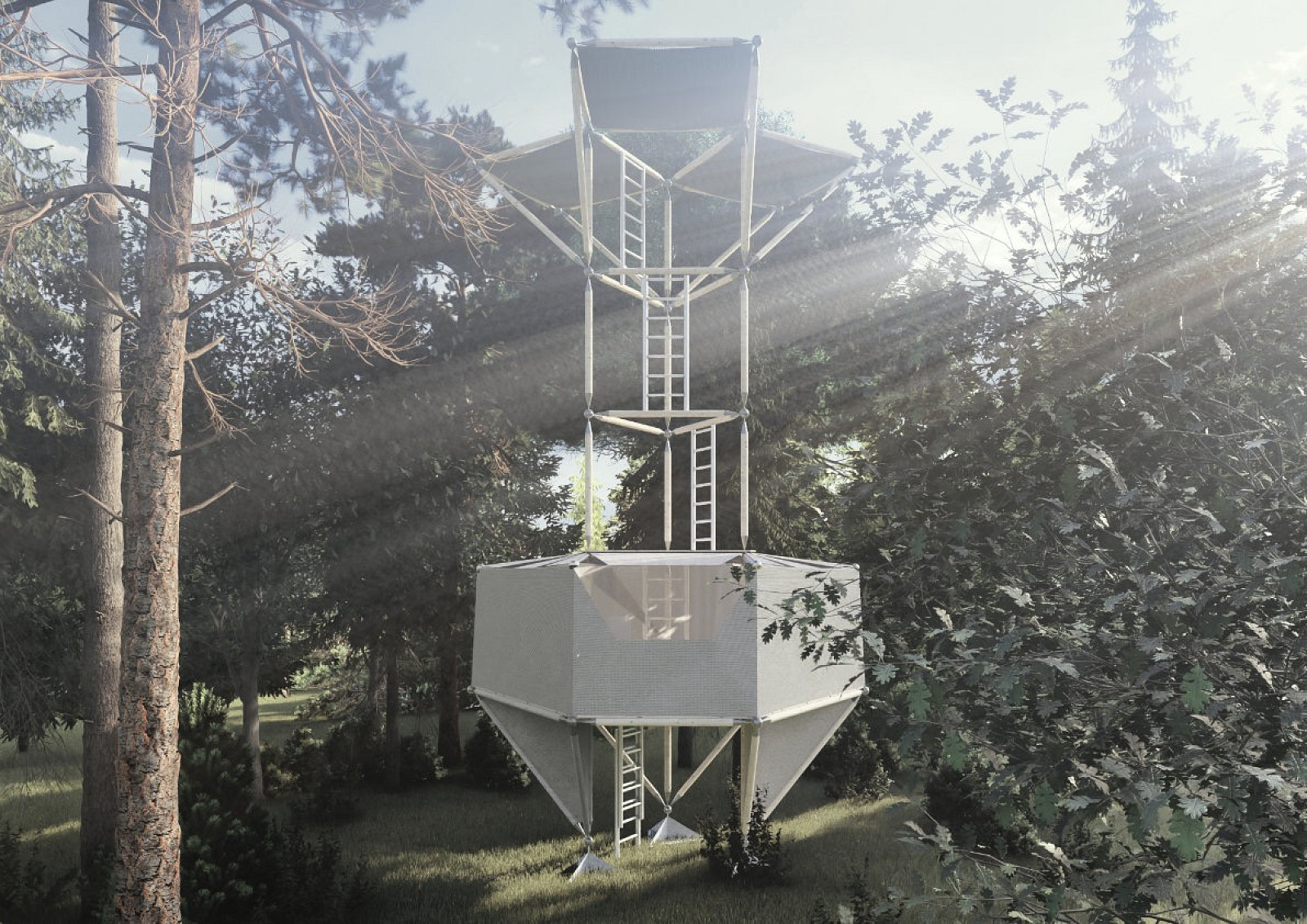
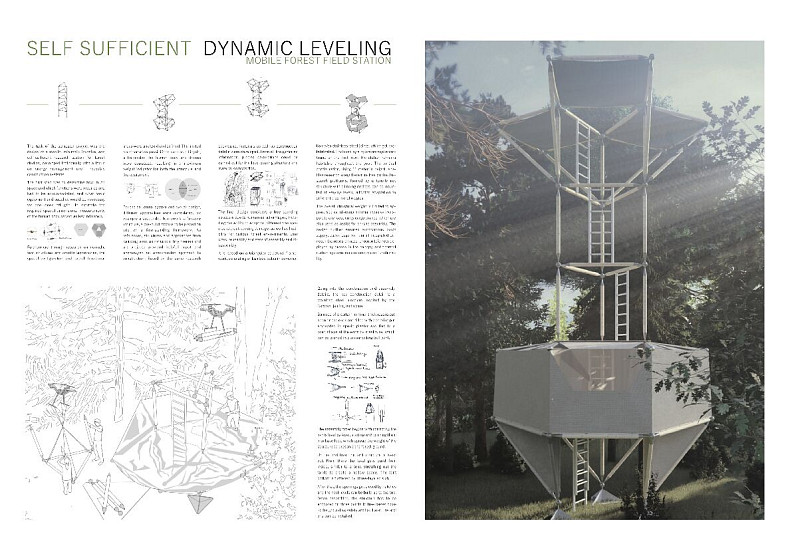
The final design is an 11-meter-high free-standing research station that can be deployed in different forest environments without damaging trees.
Its modular structure allows research platforms to be positioned at varying heights, enabling observation and data collection from the forest floor to the canopy.
The station provides year-round shelter and autonomous basic services through integrated rainwater harvesting, photovoltaic energy generation, and thermal protection systems. With a total weight of approximately 500 kg, it can be transported and assembled using cargo drones, minimizing environmental impact and site disturbance.
Technical information
The station is based on a triangular framework of bamboo poles connected by prefabricated stainless-steel joints. The habitable lower level is enclosed by a lightweight nylon–aerogel membrane that provides weather protection and insulation.
A custom joint system inspired by the Conbam technique connects reinforced bamboo members to stainless-steel ball joints. Assembly proceeds level by level from load-distributing base feet that protect the forest floor.
The completed structure reaches a height of 11 meters and is secured with three ground-level safety anchors. Adjustable tensile-net platforms, integrated climbing systems, rainwater collection bags, photovoltaic nets, and thermal curtain systems ensure flexible and autonomous operation in remote forest environments.
Documentation
Created in:


Copyright © 2026 INSPIRELI | All rights reserved. Use of this website signifies your agreement to the Terms of Use, Privacy Policy, and use of cookies.