THE ARK OF ASHES : Exploring Speculative Future in Architecture


 Muhammad Mehdi
Project idea
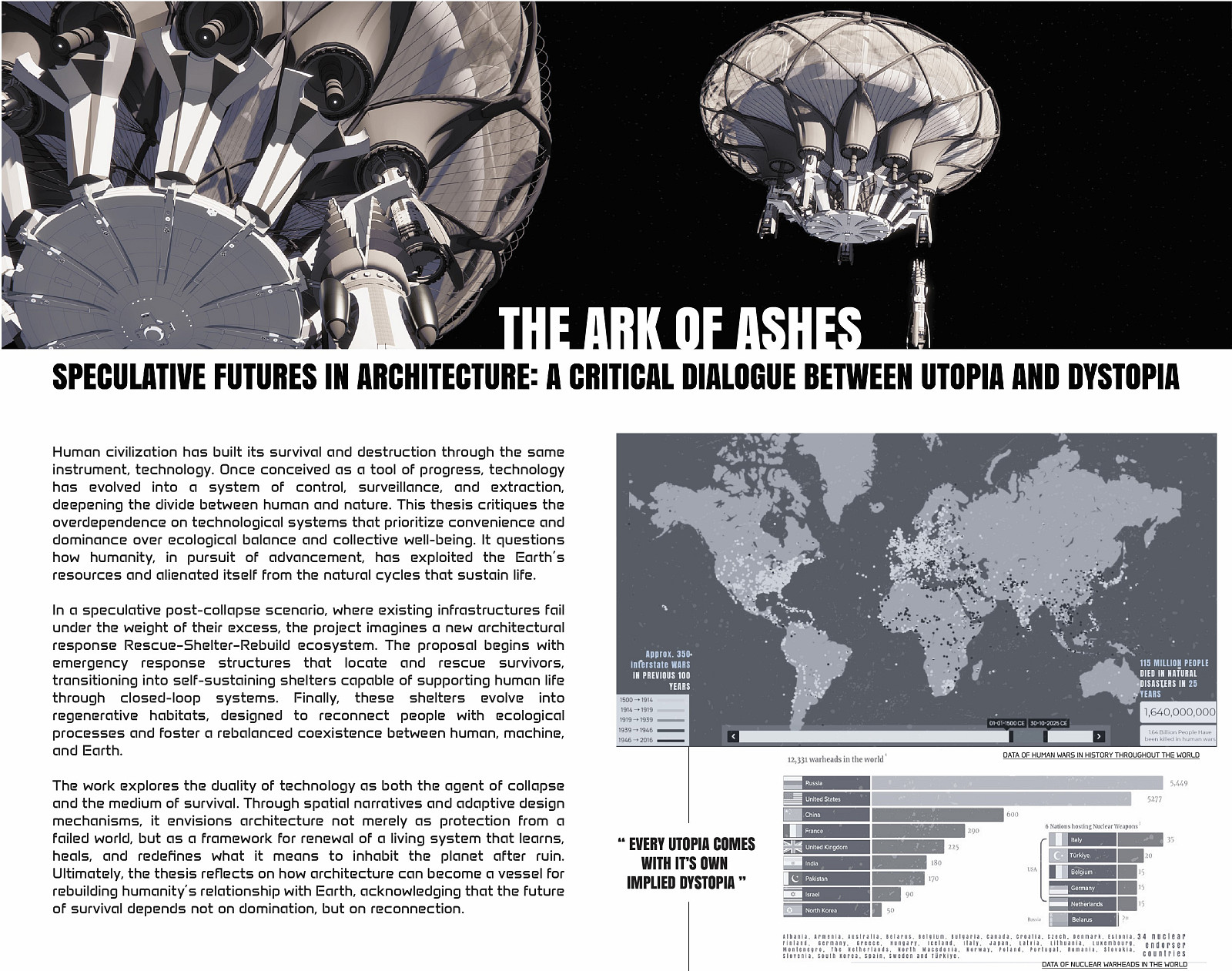
Human civilization has built its survival and destruction through the same instrument, technology. Once conceived as a tool of progress, technology has evolved into a system of control, surveillance, and extraction, deepening the divide between human and nature. This thesis critiques the overdependence on technological systems that prioritize convenience and dominance over ecological balance and collective well-being. It questions how humanity, in pursuit of advancement, has exploited the Earth’s resources and alienated itself from the natural cycles that sustain life.
In a speculative post-collapse scenario, where existing infrastructures fail under the weight of their excess, the project imagines a new architectural response Rescue-Shelter-Rebuild ecosystem. The proposal begins with emergency response structures that locate and rescue survivors, transitioning into self-sustaining shelters capable of supporting human life through closed-loop systems. Finally, these shelters evolve into regenerative habitats, designed to reconnect people with ecological processes and foster a rebalanced coexistence between human, machine, and Earth.
The work explores the duality of technology as both the agent of collapse and the medium of survival. Through spatial narratives and adaptive design mechanisms, it envisions architecture not merely as protection from a failed world, but as a framework for renewal of a living system that learns, heals, and redefines what it means to inhabit the planet after ruin. Ultimately, the thesis reflects on how architecture can become a vessel for rebuilding humanity’s relationship with Earth, acknowledging that the future of survival depends not on domination, but on reconnection.
Project description
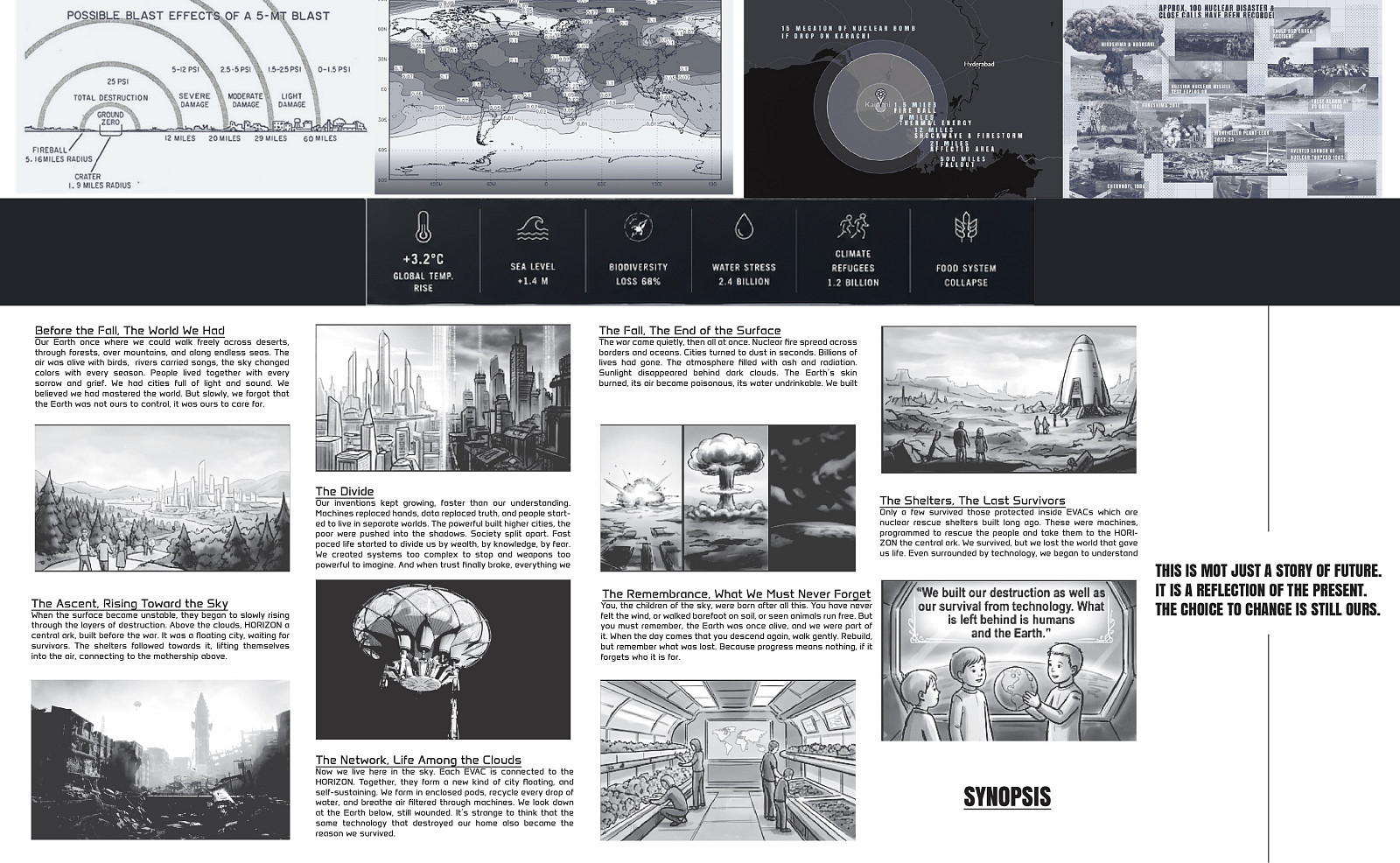
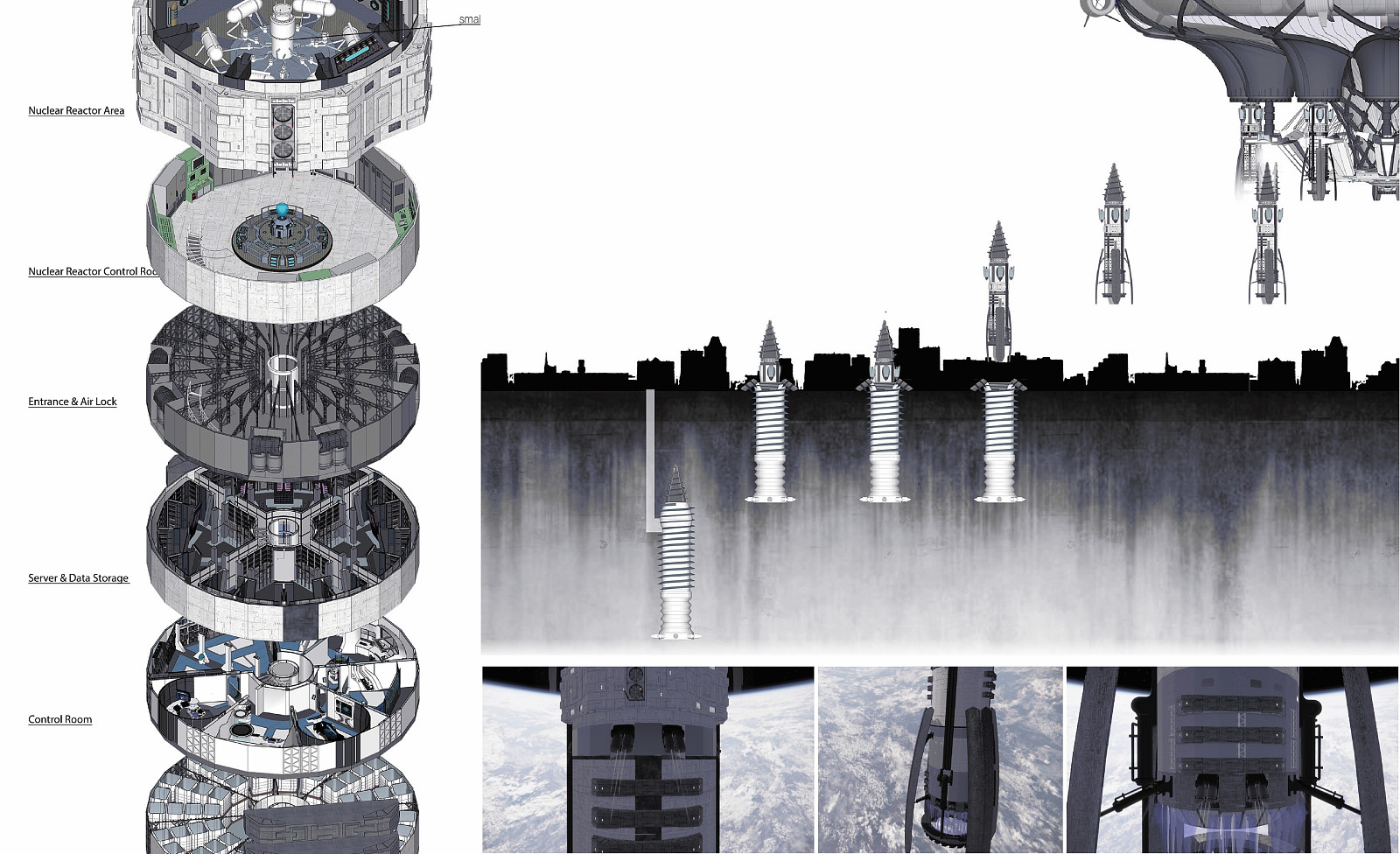
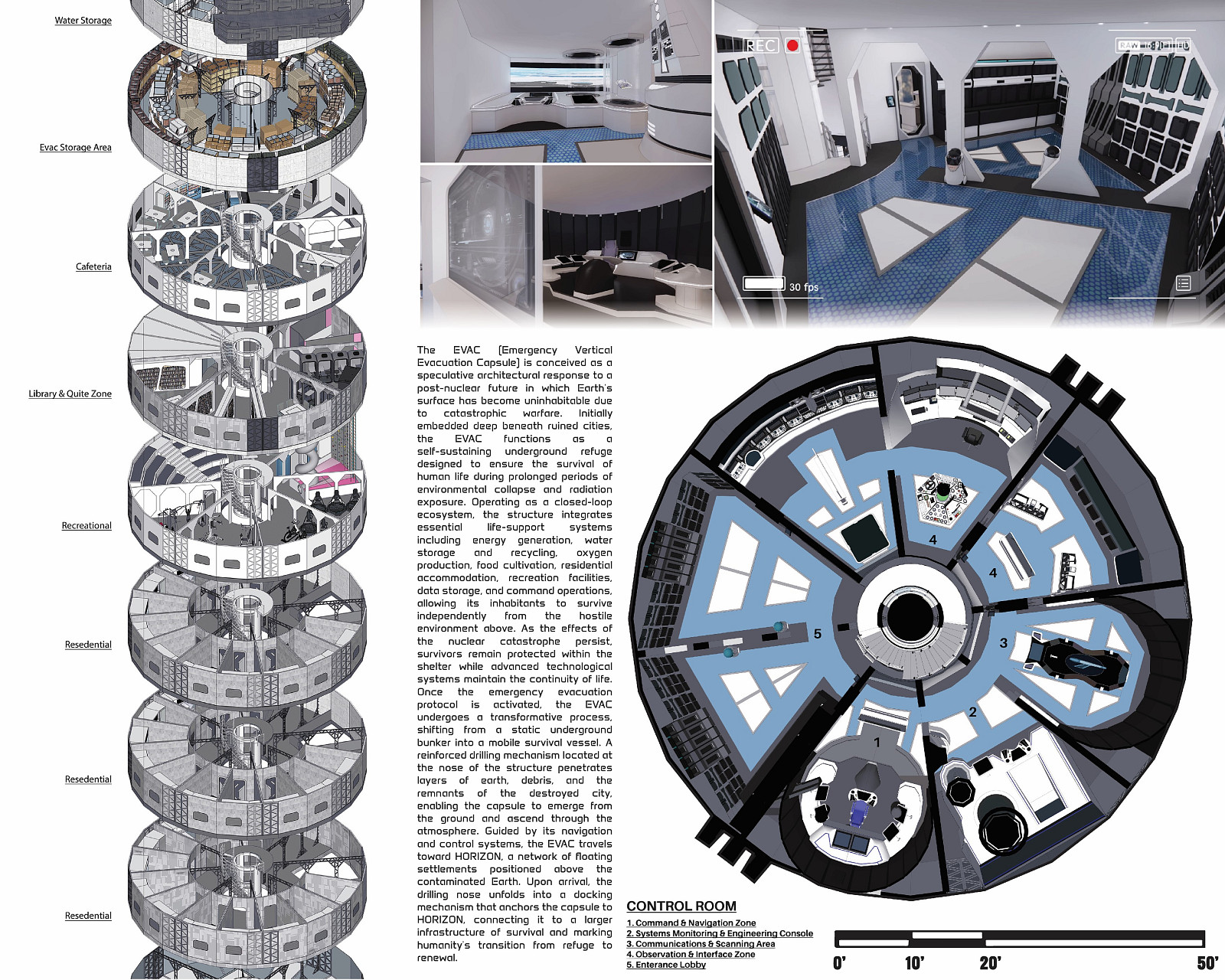
The EVAC (Emergency Vertical Evacuation Capsule) is conceived as a speculative architectural response to a post-nuclear future in which Earth's surface has become uninhabitable due to catastrophic warfare. Initially embedded deep beneath ruined cities, the EVAC functions as a self-sustaining underground refuge designed to ensure the survival of human life during prolonged periods of environmental collapse and radiation exposure. Operating as a closed-loop ecosystem, the structure integrates essential life-support systems including energy generation, water storage and recycling, oxygen production, food cultivation, residential accommodation, recreation facilities, data storage, and command operations, allowing its inhabitants to survive independently from the hostile environment above. As the effects of the nuclear catastrophe persist, survivors remain protected within the shelter while advanced technological systems maintain the continuity of life.
Once the emergency evacuation protocol is activated, the EVAC undergoes a transformative process, shifting from a static underground bunker into a mobile survival vessel. A reinforced drilling mechanism located at the nose of the structure penetrates layers of earth, debris, and the remnants of the destroyed city, enabling the capsule to emerge from the ground and ascend through the atmosphere. Guided by its navigation and control systems, the EVAC travels toward HORIZON, a network of floating settlements positioned above the contaminated Earth. Upon arrival, the drilling nose unfolds into a docking mechanism that anchors the capsule to HORIZON, connecting it to a larger infrastructure of survival and marking humanity's transition from refuge to renewal.
Technical information
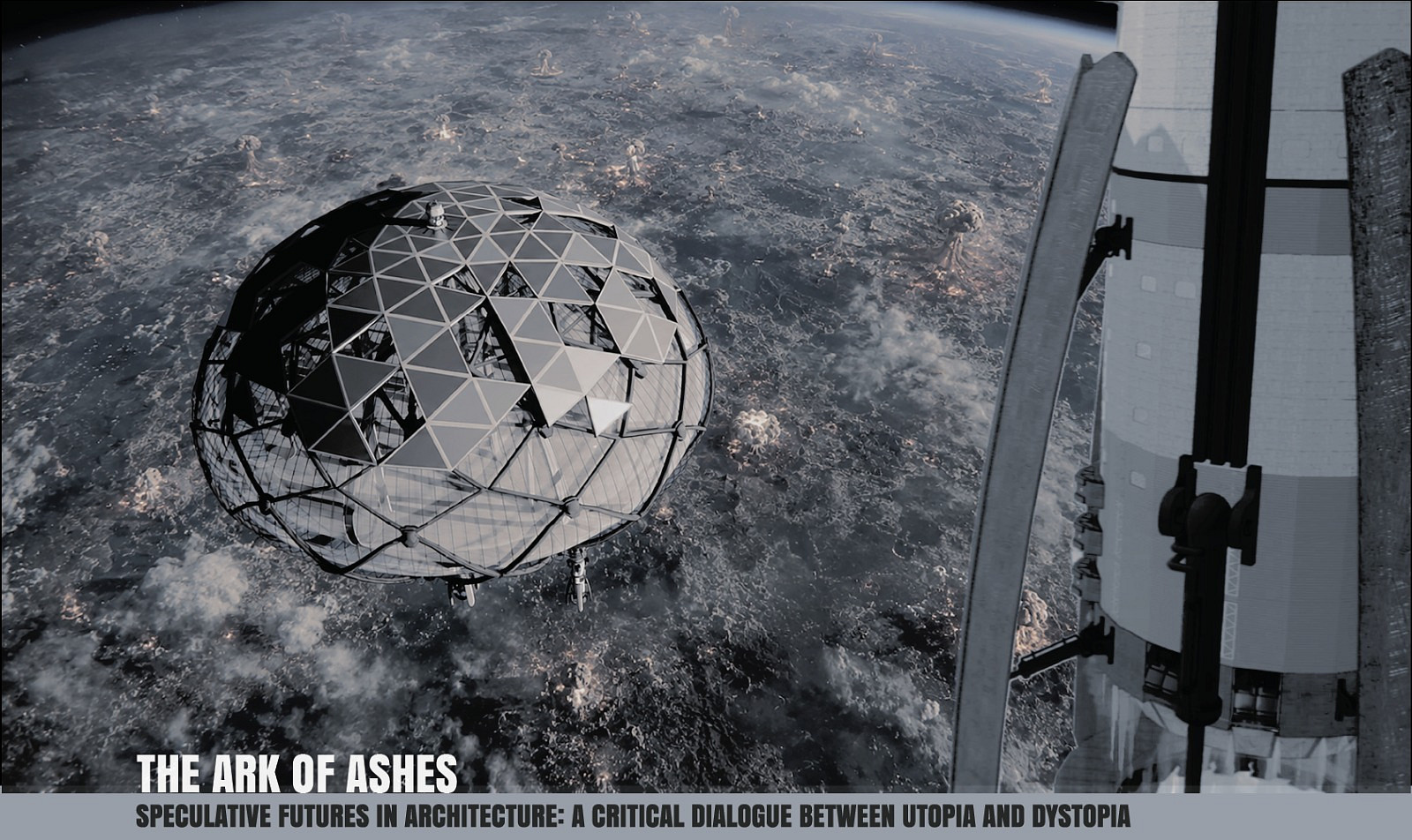
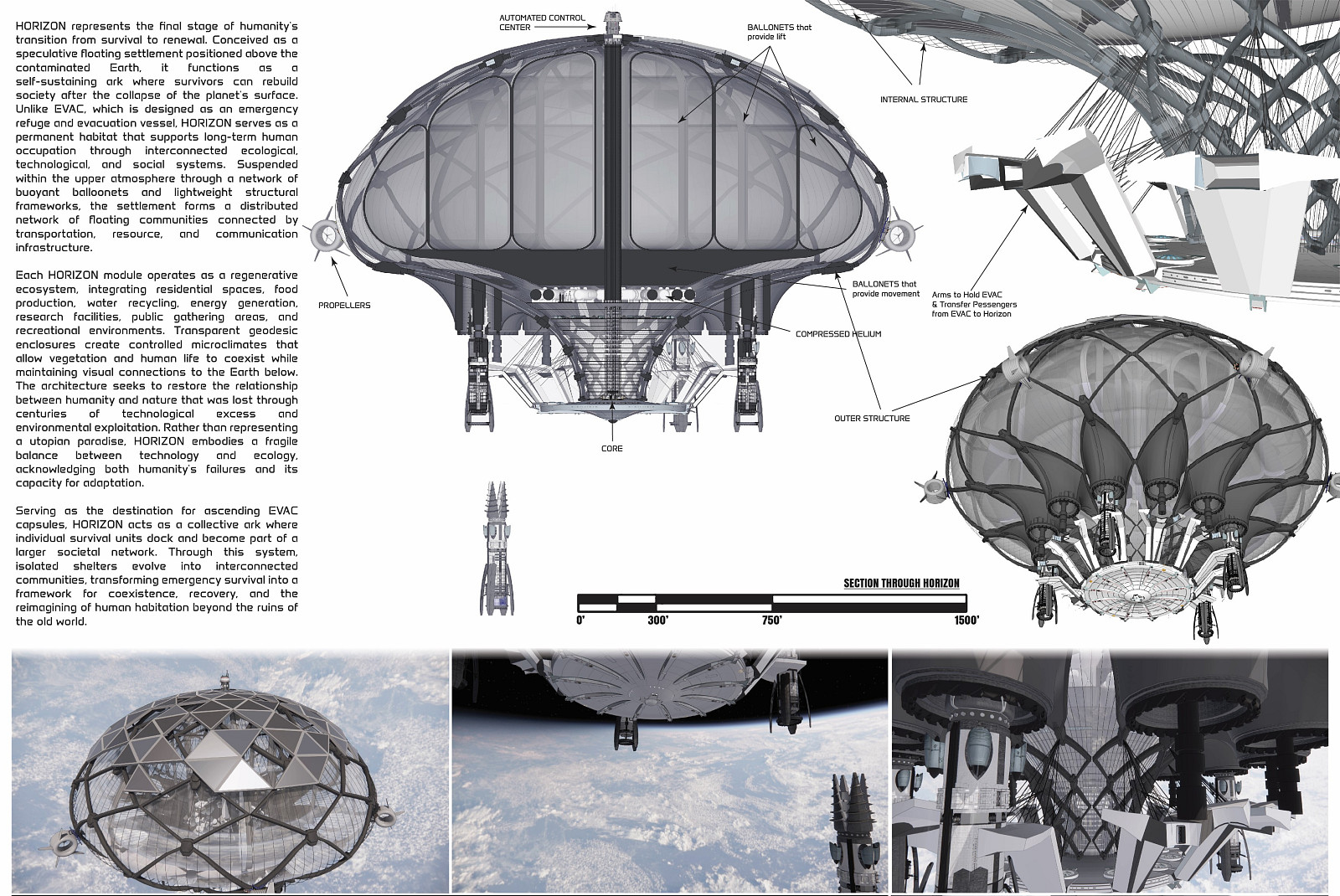
HORIZON represents the final stage of humanity's transition from survival to renewal. Conceived as a speculative floating settlement positioned above the contaminated Earth, it functions as a self-sustaining ark where survivors can rebuild society after the collapse of the planet's surface. Unlike EVAC, which is designed as an emergency refuge and evacuation vessel, HORIZON serves as a permanent habitat that supports long-term human occupation through interconnected ecological, technological, and social systems. Suspended within the upper atmosphere through a network of buoyant ballonets and lightweight structural frameworks, the settlement forms a distributed network of floating communities connected by transportation, resource, and communication infrastructure.
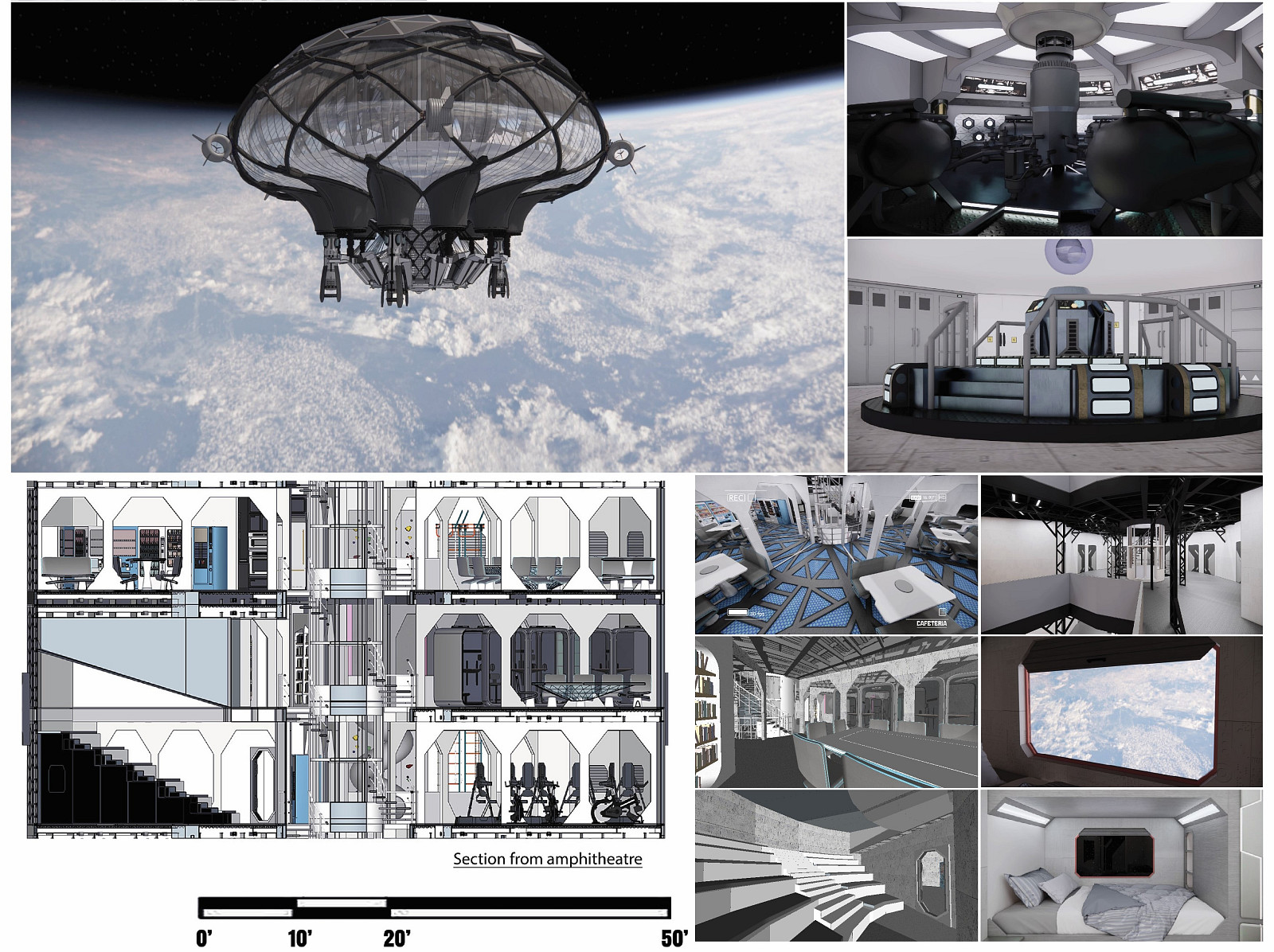
Each HORIZON module operates as a regenerative ecosystem, integrating residential spaces, food production, water recycling, energy generation, research facilities, public gathering areas, and recreational environments. Transparent geodesic enclosures create controlled microclimates that allow vegetation and human life to coexist while maintaining visual connections to the Earth below. The architecture seeks to restore the relationship between humanity and nature that was lost through centuries of technological excess and environmental exploitation. Rather than representing a utopian paradise, HORIZON embodies a fragile balance between technology and ecology, acknowledging both humanity's failures and its capacity for adaptation.
Serving as the destination for ascending EVAC capsules, HORIZON acts as a collective ark where individual survival units dock and become part of a larger societal network. Through this system, isolated shelters evolve into interconnected communities, transforming emergency survival into a framework for coexistence, recovery, and the reimagining of human habitation beyond the ruins of the old world.


Copyright © 2026 INSPIRELI | All rights reserved. Use of this website signifies your agreement to the Terms of Use, Privacy Policy, and use of cookies.