
Environmental Awareness Center - Avissawella


Project idea
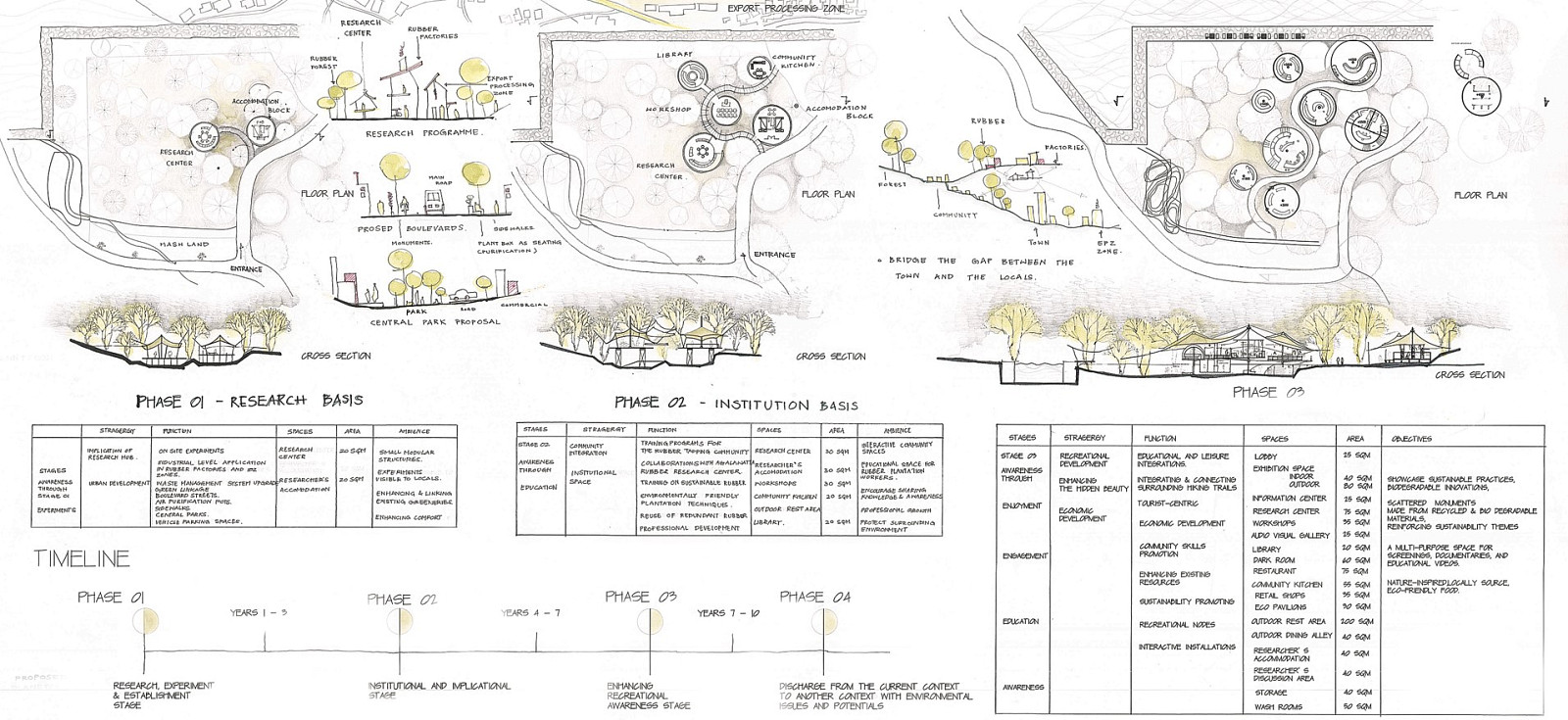
Avissawella, Sri Lanka's industrial heartland, is drowning in plastic waste while sitting on an untapped resource rubber. This project proposes an Environmental Awareness Center that transforms rubber, a primary local material, into a catalyst for sustainable innovation. Rather than imposing a fixed institution, the center is designed as an evolving, community-driven organism growing through three phases from a research hub to a recreational and educational landscape that embeds environmental consciousness into daily life.
Project description
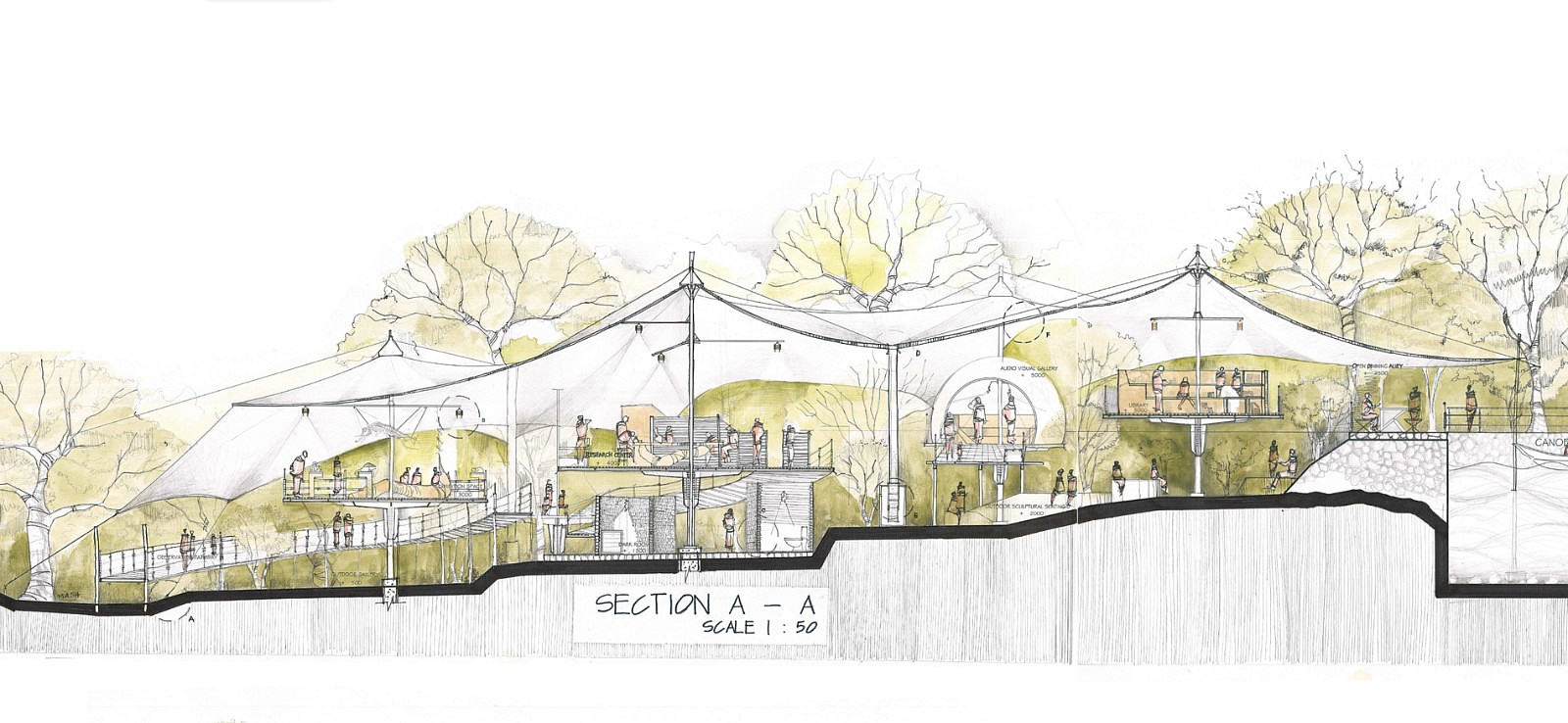
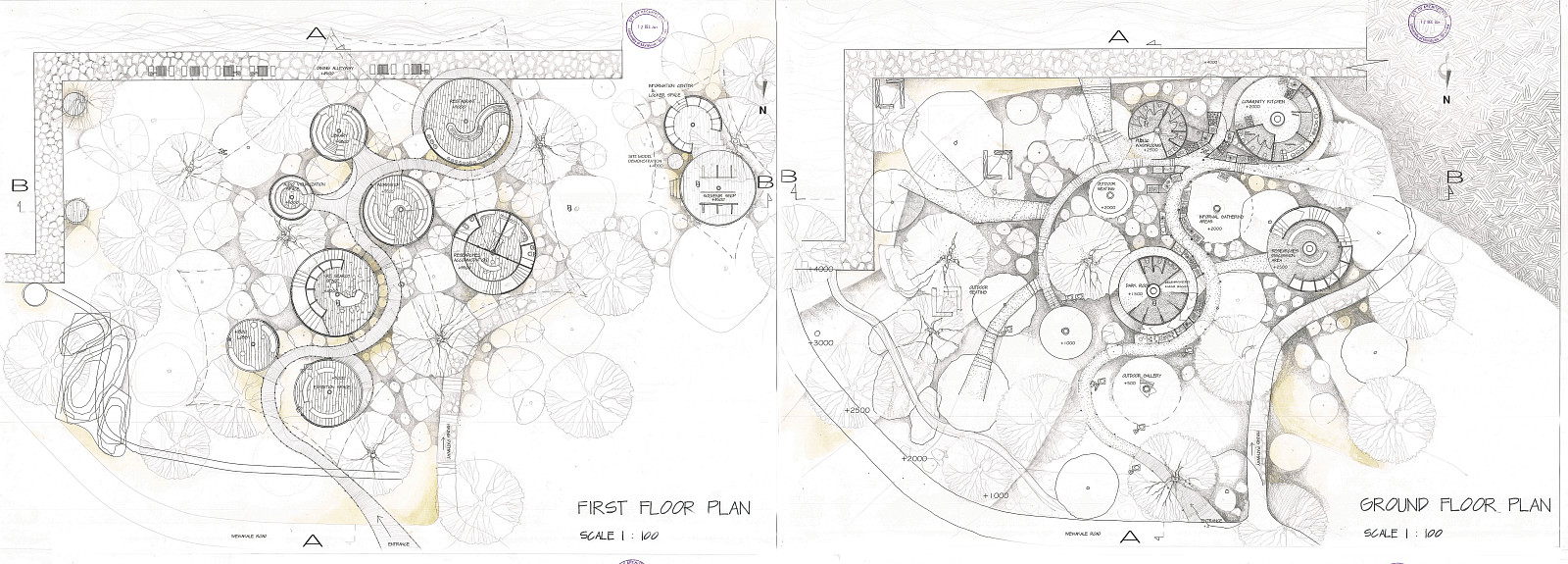
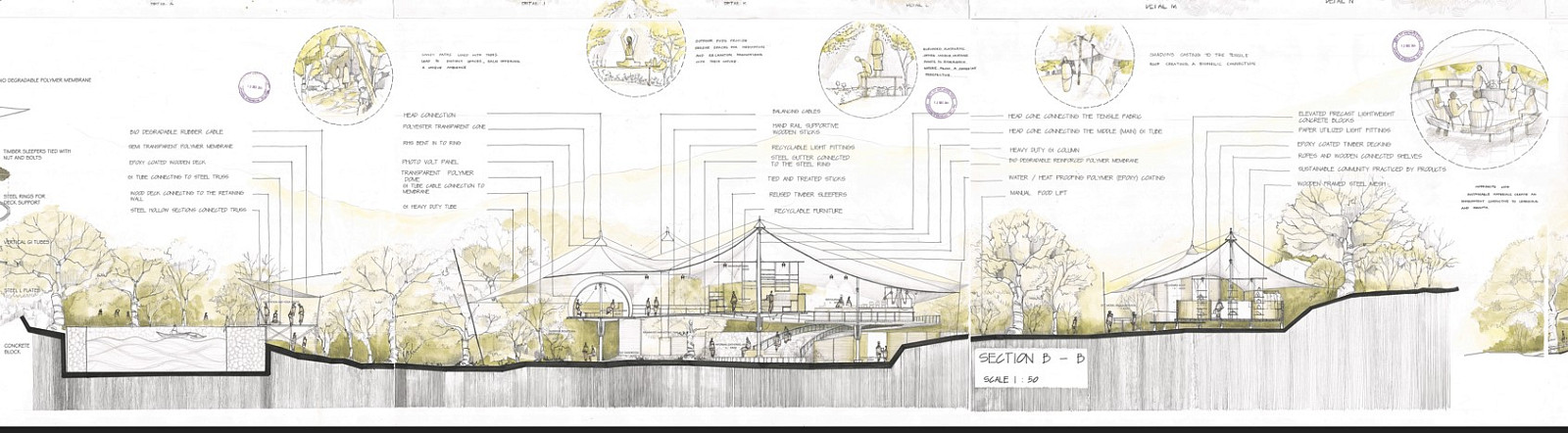
Sited along Avissawella's riverfront, the center comprises a series of organic, biophilic pods connected by open landscape corridors. Inspired by Glenn Murcutt's philosophy of "touching the earth lightly," the architecture responds to tropical climate and terrain. Tensile structures using natural rubber, eco-bricks from recycled rubber waste, and biodegradable polymer prototypes form both the building fabric and the educational exhibit. Community workshops, research laboratories, open-air learning pods, and a planetarium activate the site across different user groups and times of day.
Technical information
The structure employs natural rubber tensile membranes for roofing and shading, developed in collaboration with the Rubber Research Institute of Sri Lanka. Circular floor plans minimise material use while maximising cross-ventilation in the humid tropical climate. Locally sourced recycled rubber eco-bricks form load-bearing walls. A phased construction strategy low-cost prototype structures first, expanding incrementally ensures economic feasibility. The urban master plan integrates boulevard planting for air purification and aligns with the Urban Development Authority's Avissawella green city framework.

Copyright © 2026 INSPIRELI | All rights reserved. Use of this website signifies your agreement to the Terms of Use, Privacy Policy, and use of cookies.