

NABOJIBON (নবজীবন): Architecture for Resilience in the Sundarbans


Project idea
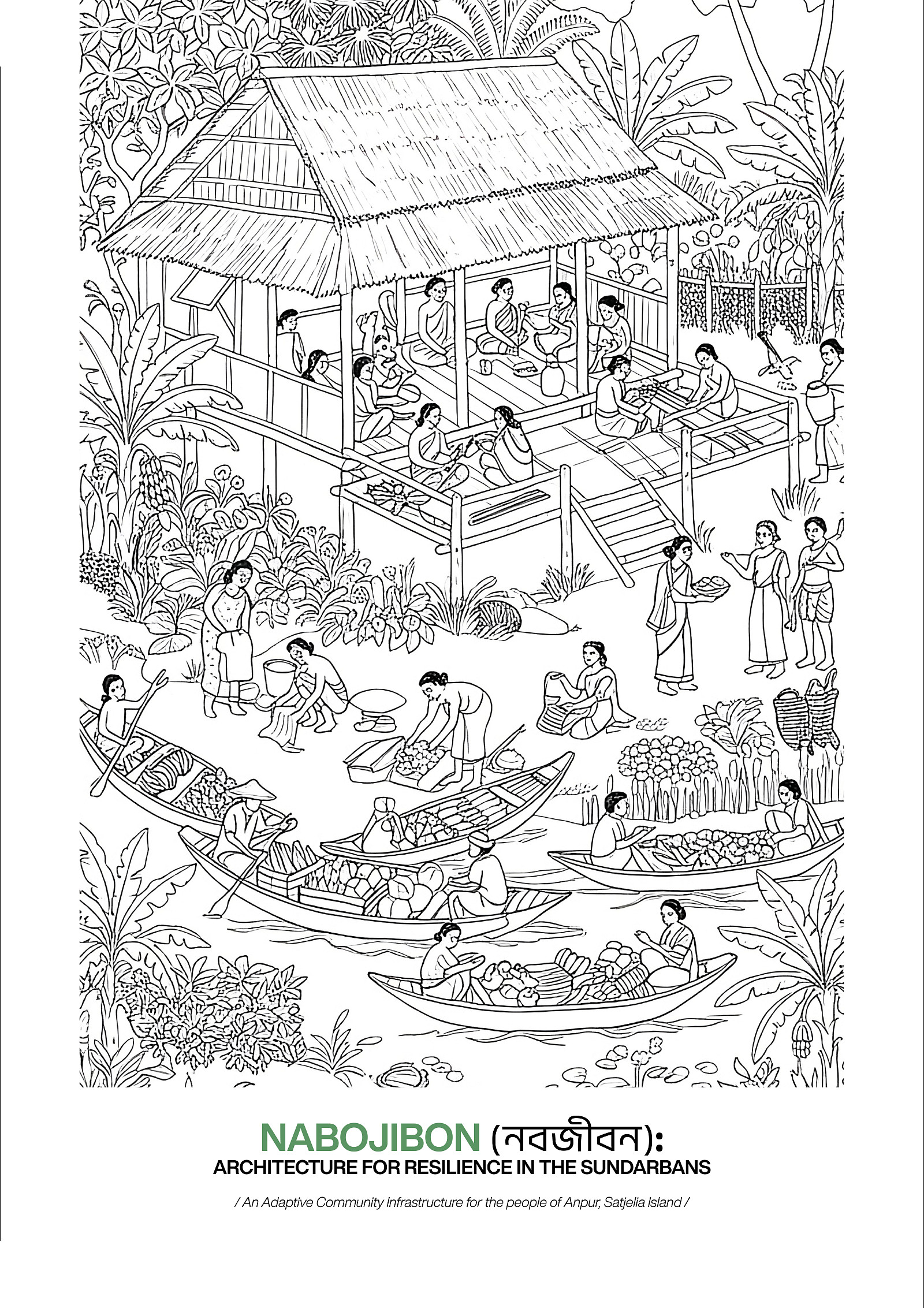
NABOJIBON: Architecture for Resilience in the Sundarbans, an adaptive community infrastructure for the people of Anpur in Satjelia Island; emerges from a simple yet urgent question: How can architecture become part of everyday life while also protecting communities when disaster strikes?
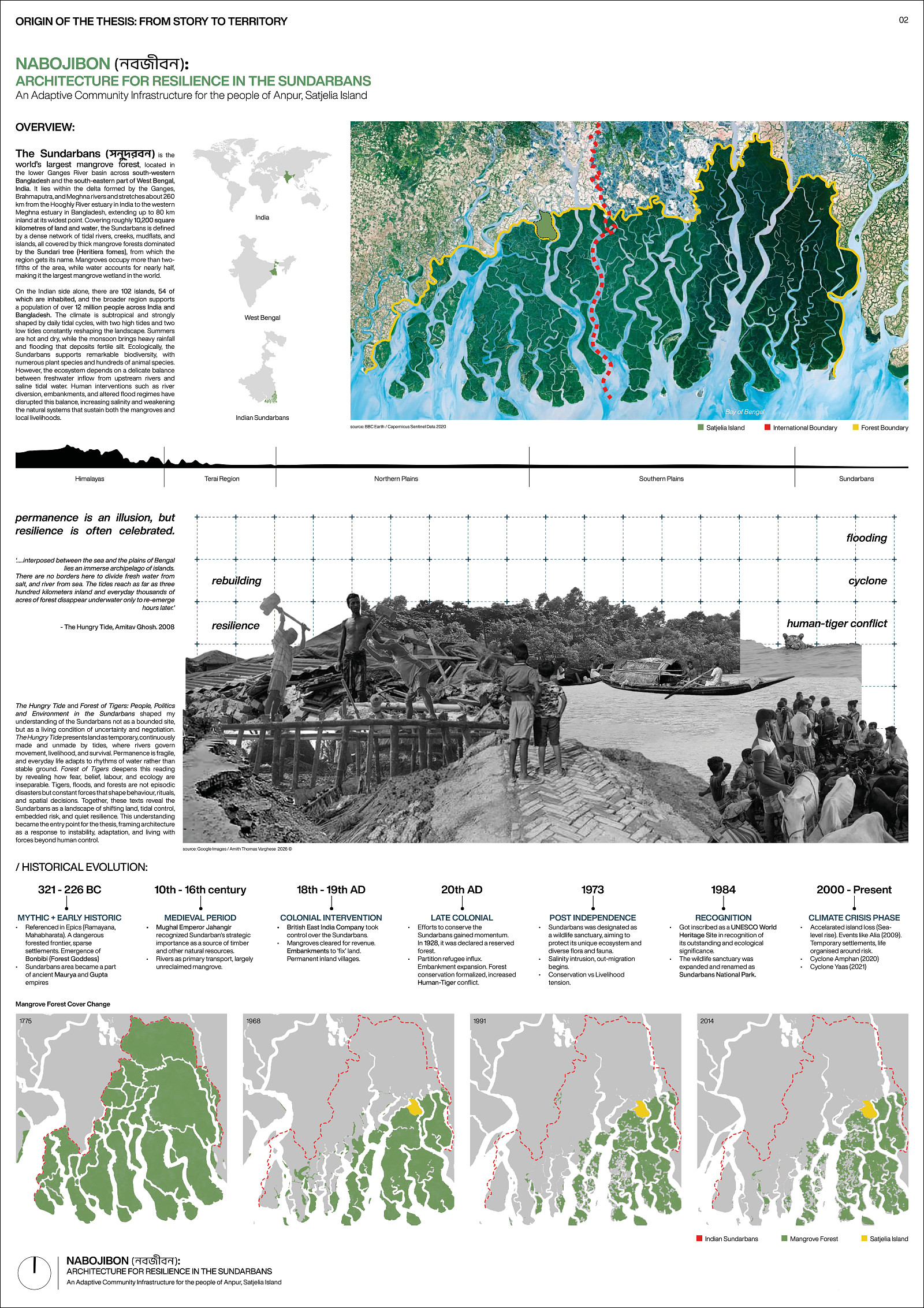
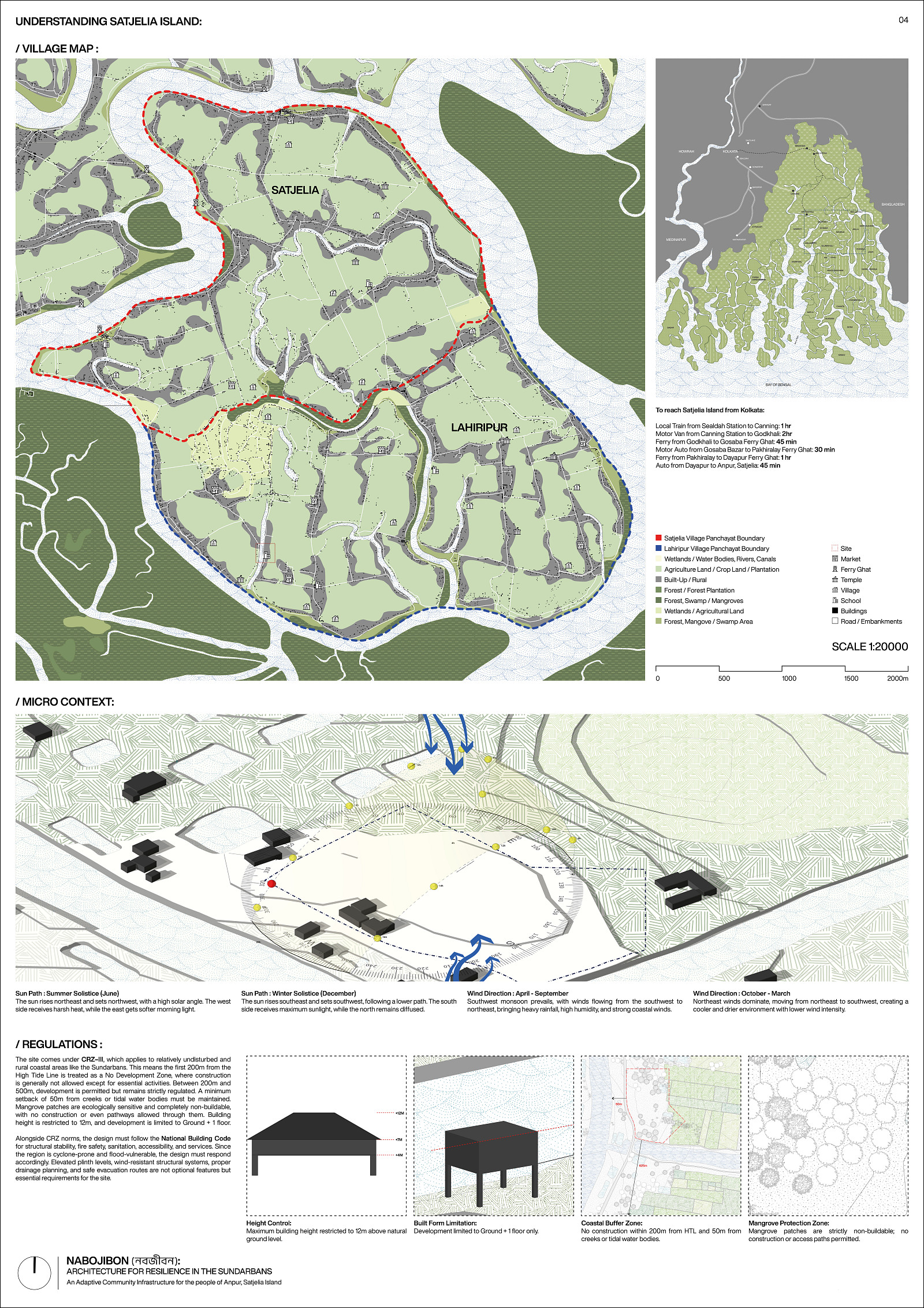
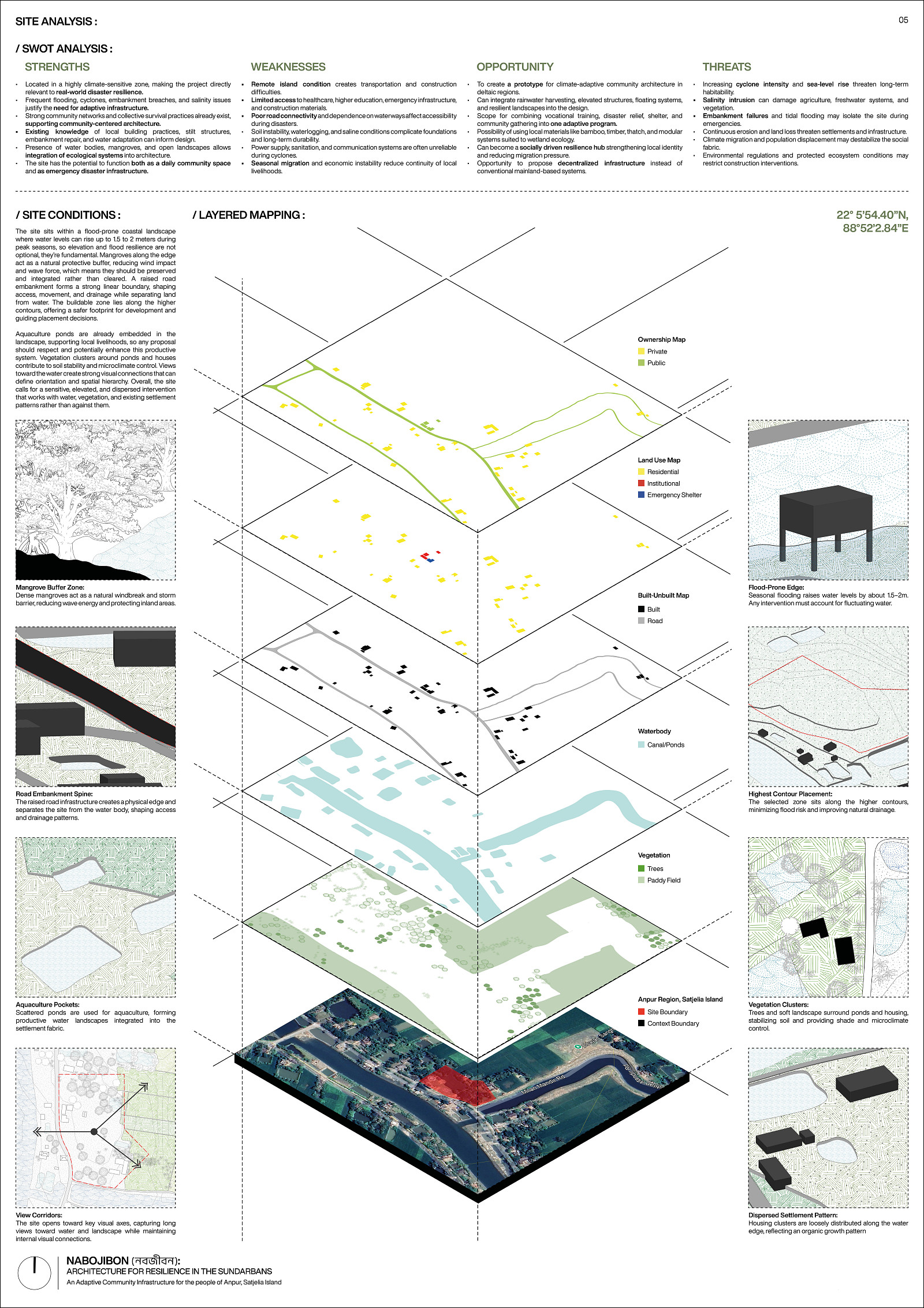
The Indian Sundarbans is one of the world's most fragile inhabited landscapes. Here, land and water are in constant negotiation. Cyclones, flooding, erosion, rising salinity, and shifting river channels have become part of everyday life, gradually reshaping not only the landscape but also the lives of the people who call it home. Communities repeatedly rebuild after each disaster, relying on collective knowledge, local craftsmanship, and strong social bonds rather than permanent infrastructure.
This project views resilience not as the ability to resist change, but as the ability to adapt alongside it. Rather than proposing a building that exists only for emergencies, the project imagines architecture that is deeply woven into daily life. It is a place where people can learn new skills, strengthen livelihoods, gather as a community, celebrate culture, and access essential services throughout the year. When disaster arrives, these same spaces seamlessly transform into safe shelters, relief centres, healthcare facilities, and distribution hubs.
The proposal is grounded in the belief that resilience grows from people, not buildings alone. By combining local materials, traditional knowledge, climate-responsive design, and flexible spatial planning, the project creates an architecture that evolves with its environment and strengthens the community's ability to face an uncertain future with dignity and confidence.
Project description
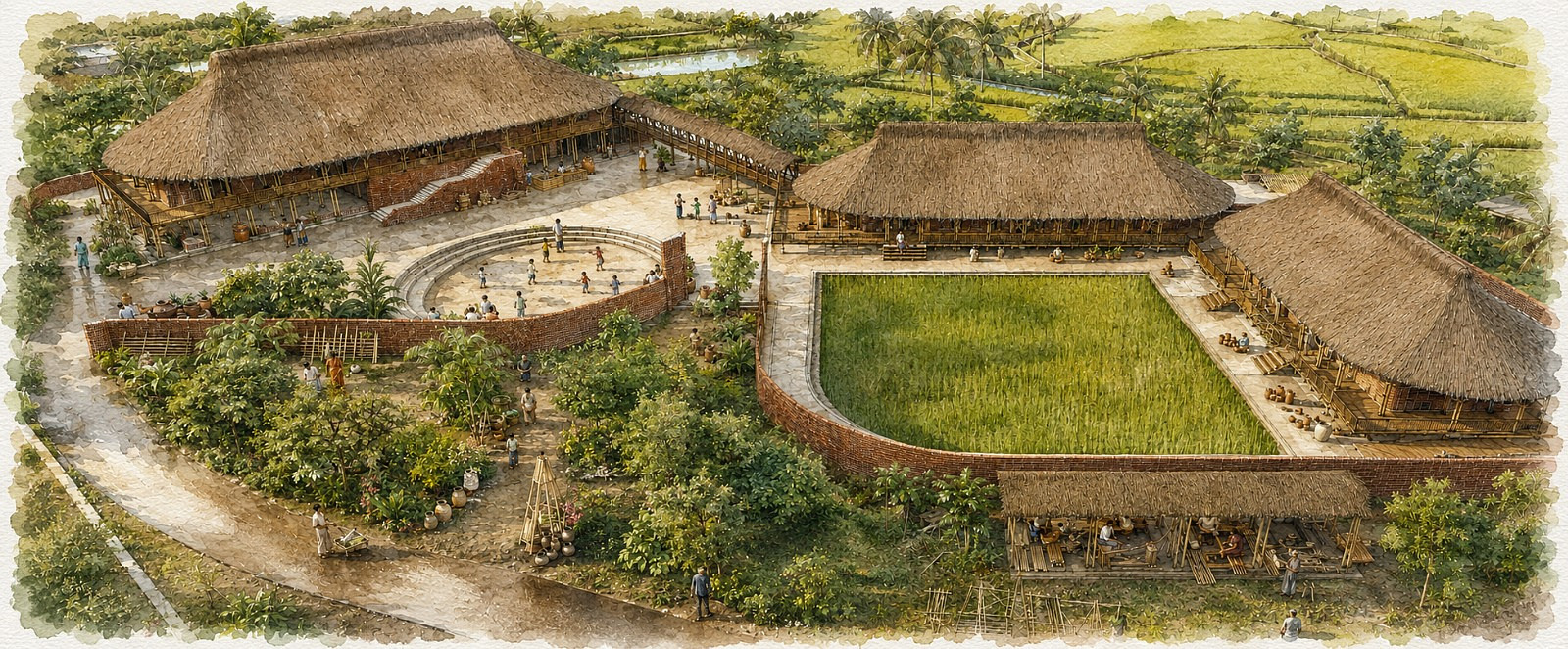
The project proposes a Community Resilience and Vocational Learning Centre located in Satjelia Island within the Indian Sundarbans. It is conceived as a multifunctional civic space where education, livelihood, healthcare, social life, and disaster preparedness coexist within a single adaptable architectural framework.
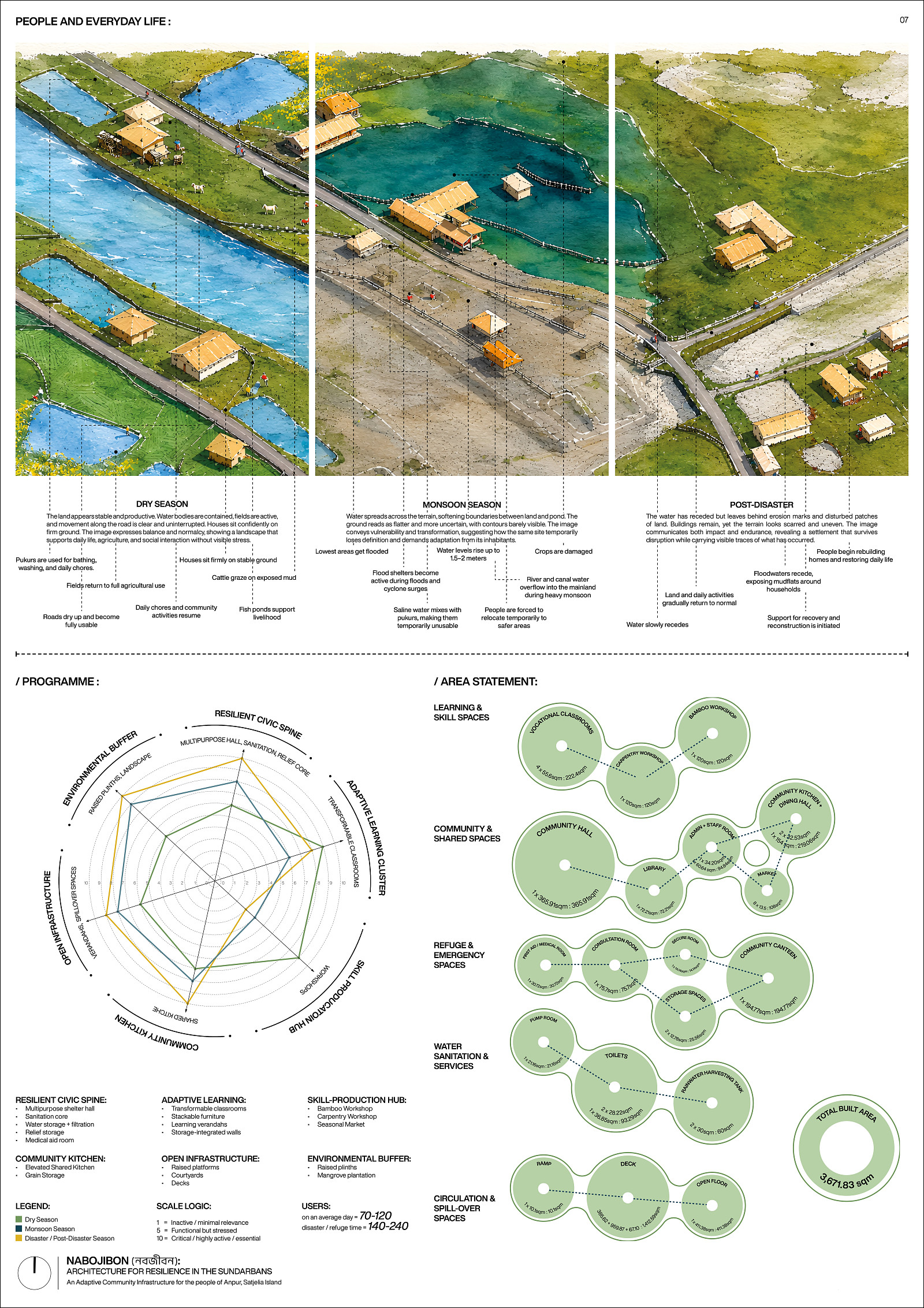
At its heart, the project provides vocational education focused on locally relevant skills such as bamboo construction, carpentry, aquaculture, handicrafts, and sustainable livelihoods. Practical workshops encourage hands-on learning while creating opportunities for employment and economic independence, particularly for young people and women.
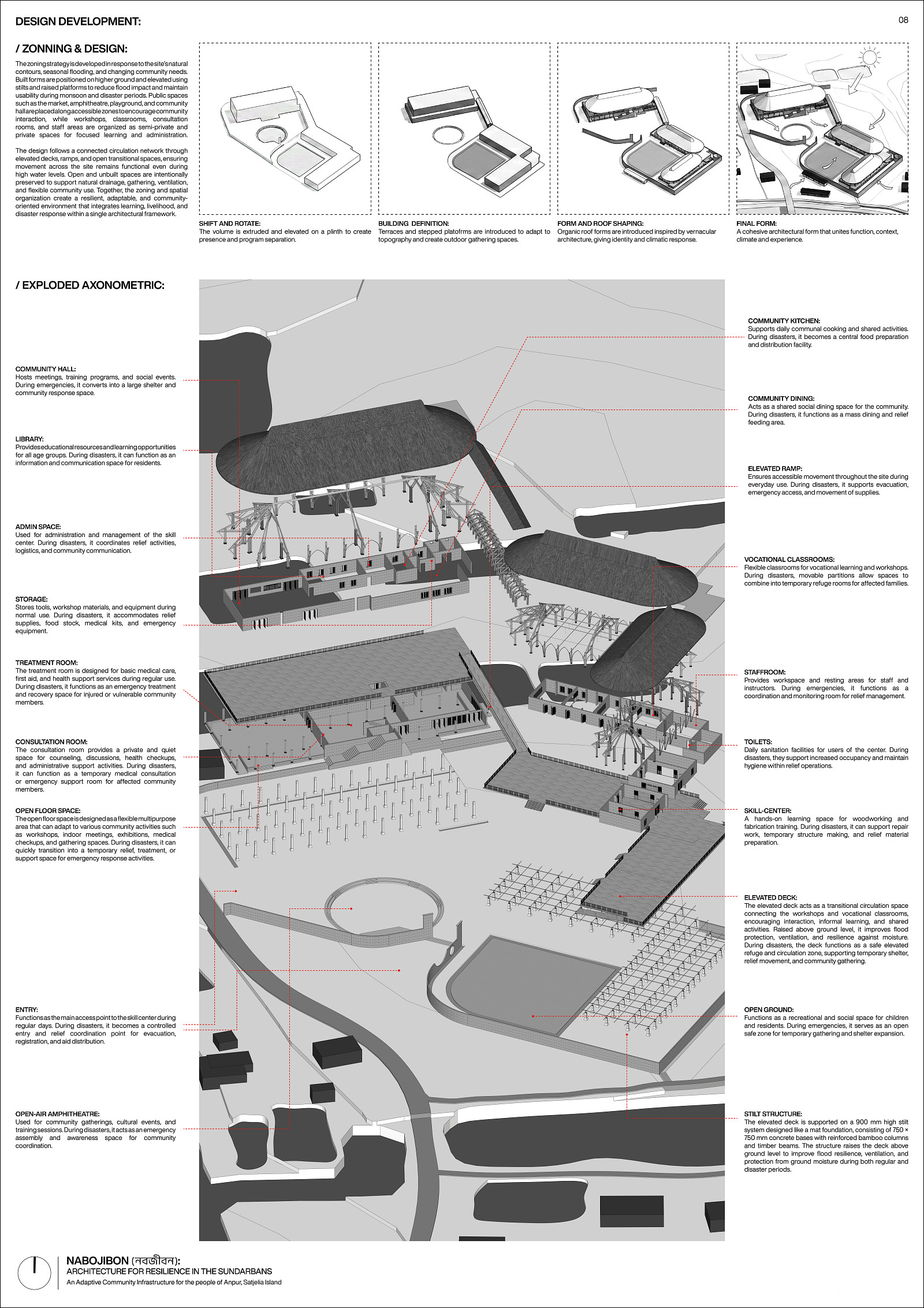
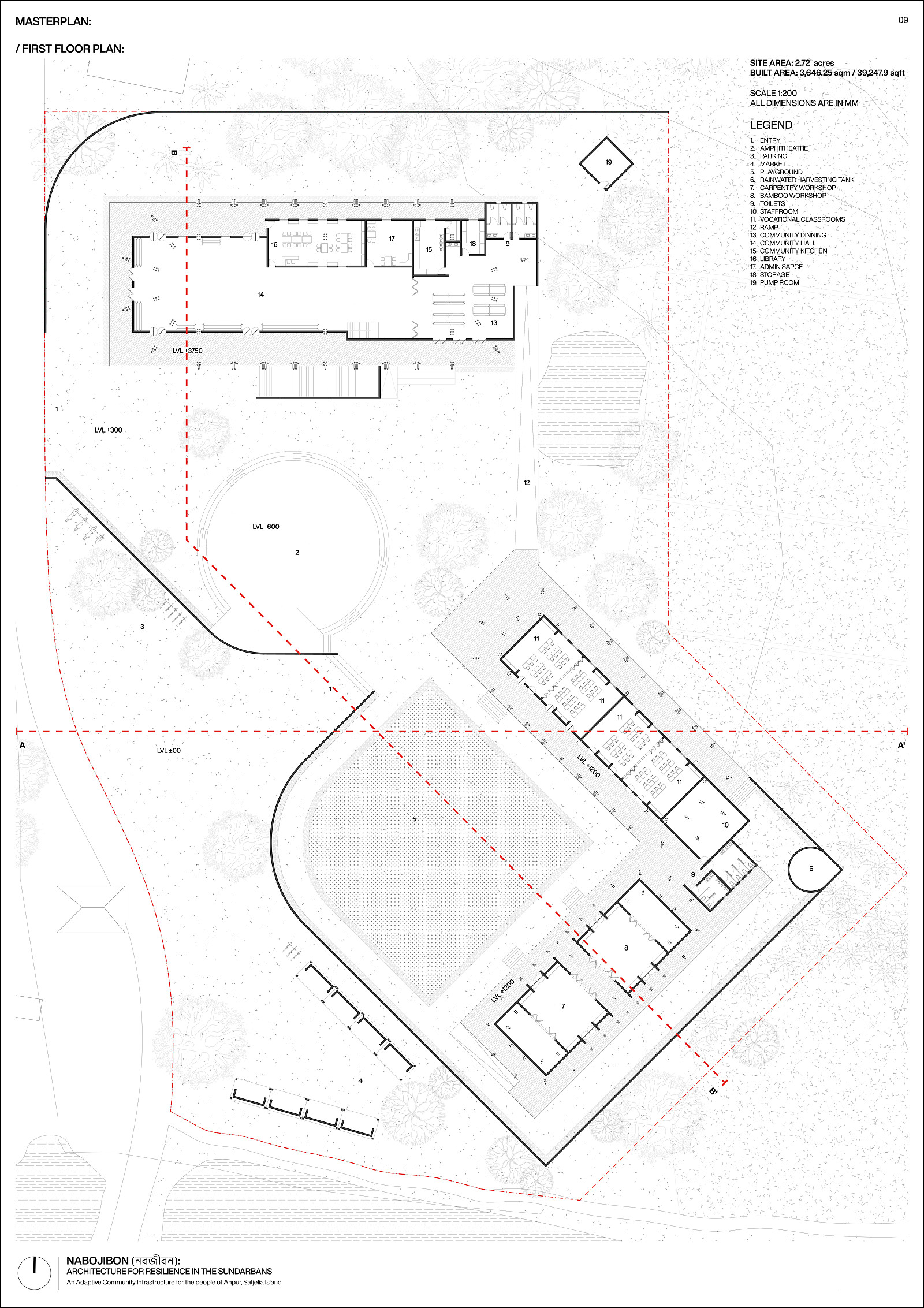
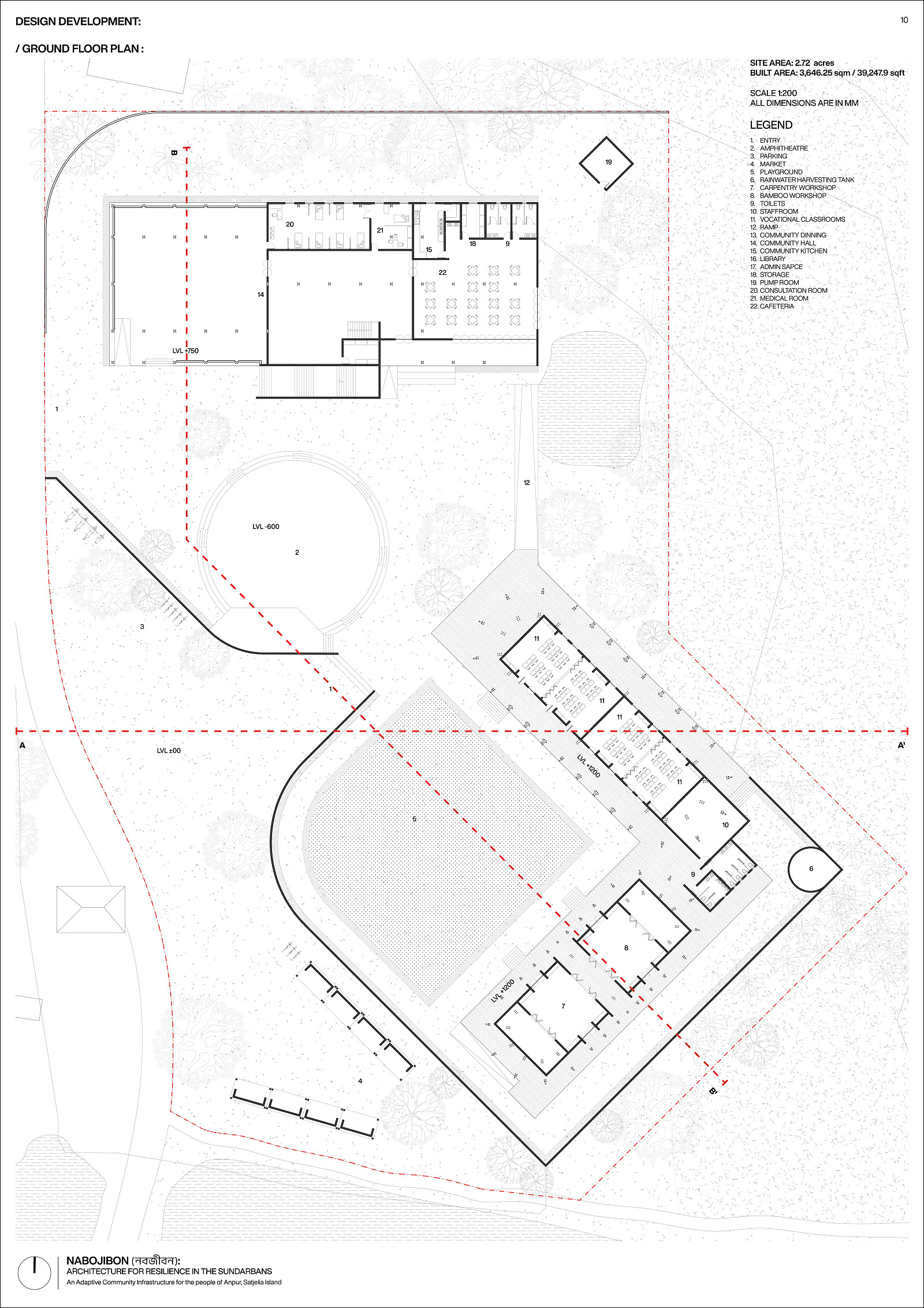
The centre also serves as an everyday gathering place for the community. A multipurpose hall hosts meetings, cultural events, exhibitions, celebrations, and training programmes. A library and informal learning spaces encourage lifelong education, while a healthcare room and pharmacy provide access to essential medical support. Community kitchens, dining spaces, and storage facilities strengthen social interaction during normal conditions and become critical infrastructure during emergencies.
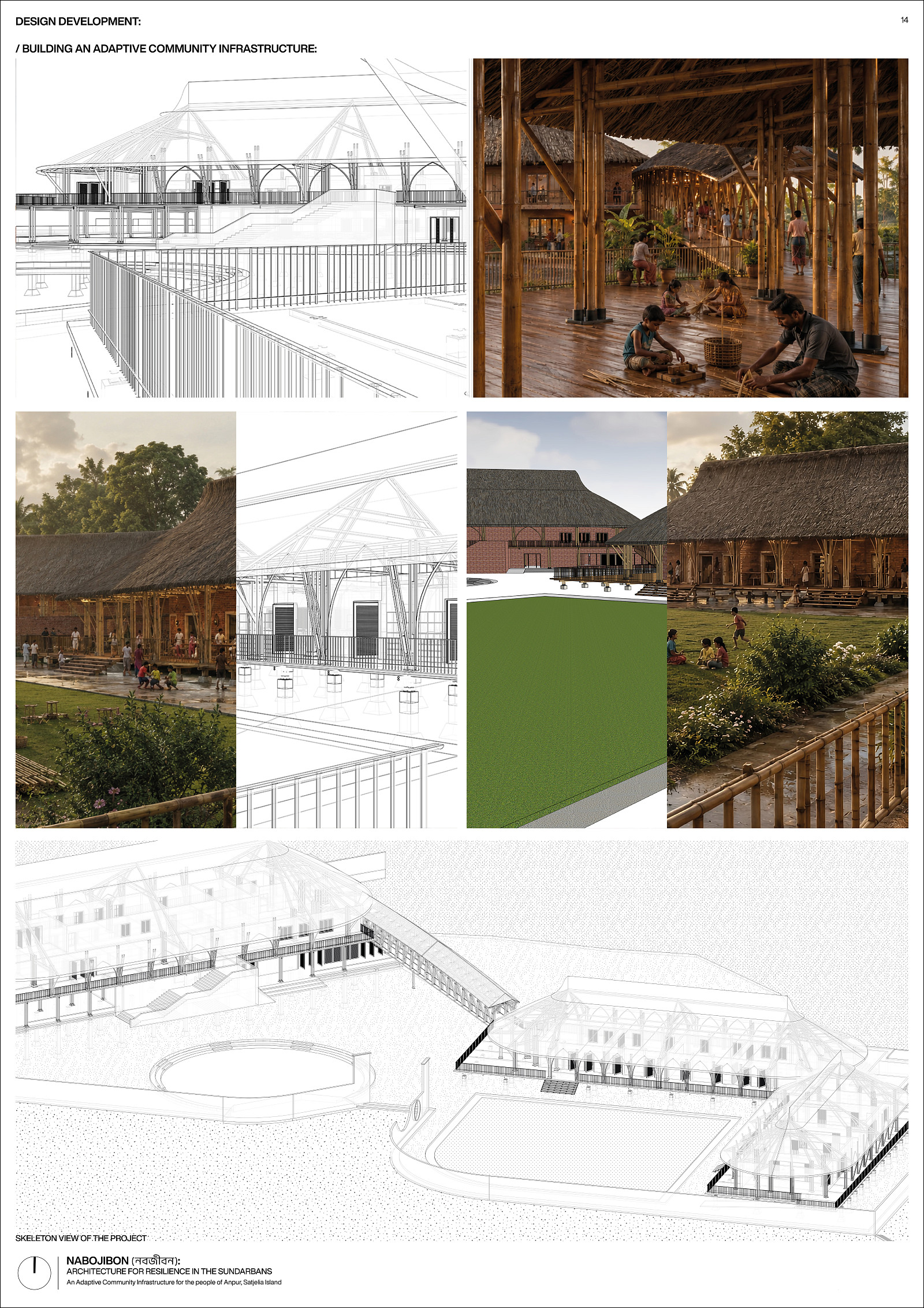
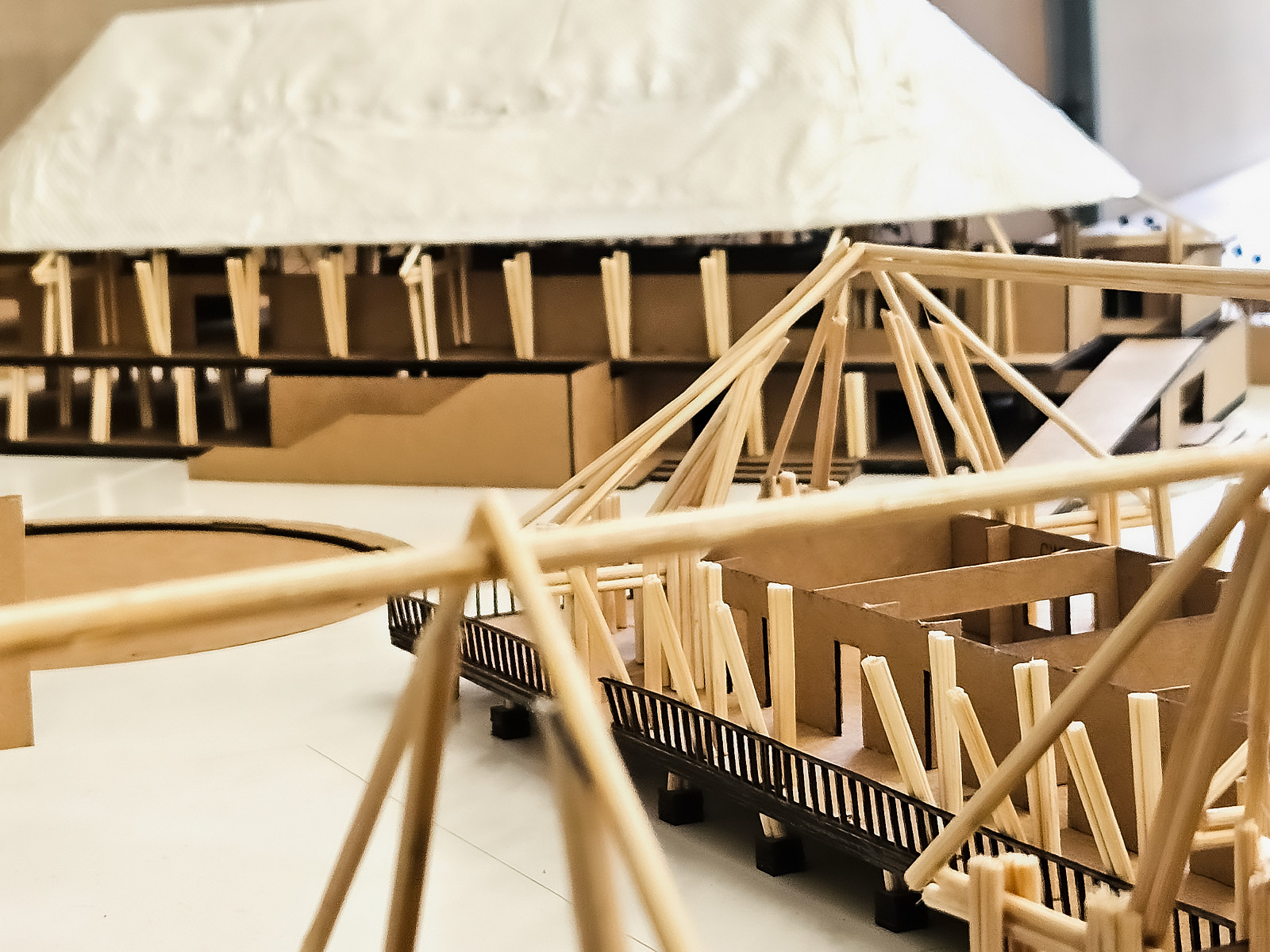
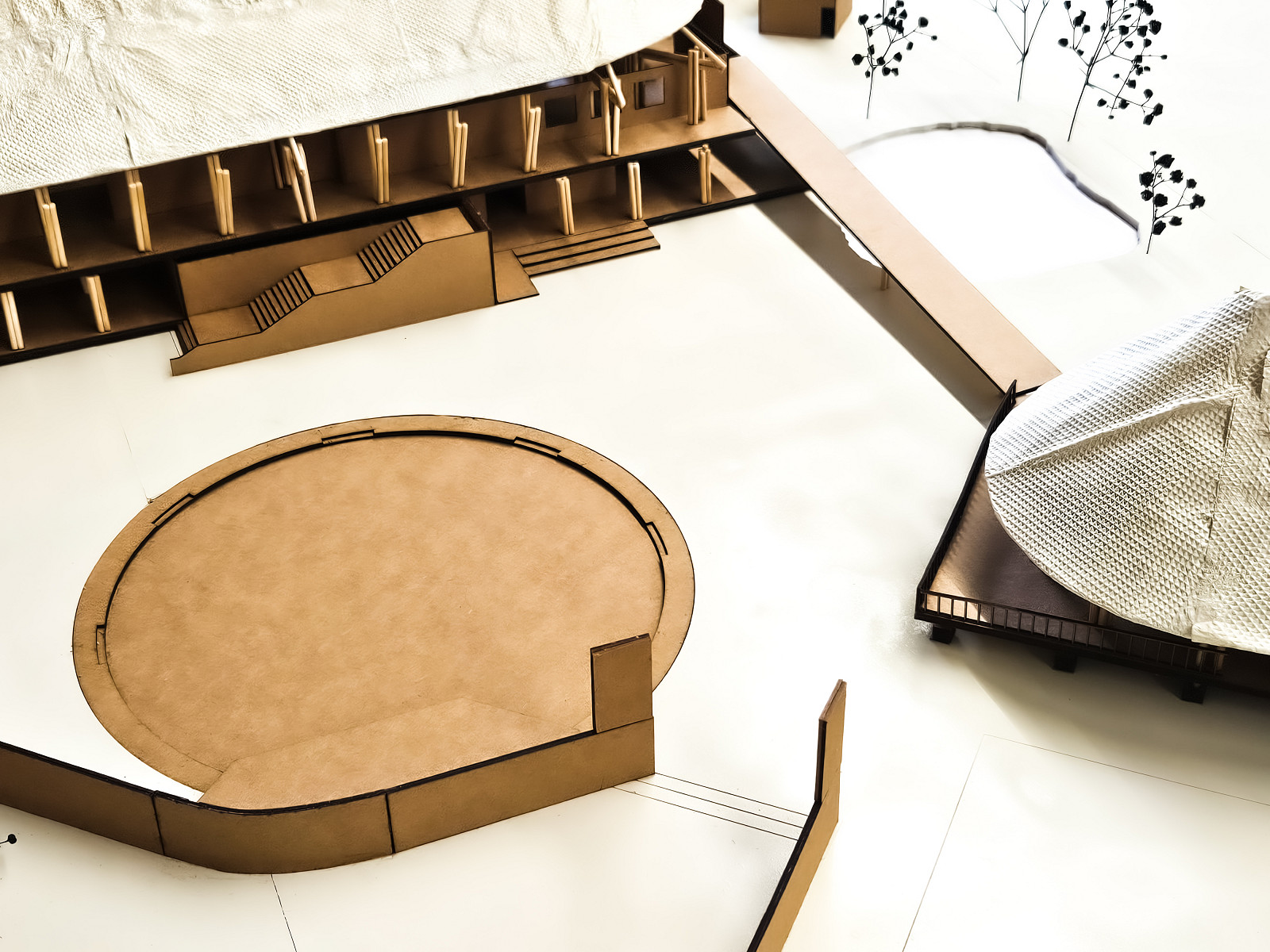
Open courtyards, shaded verandahs, elevated walkways, and landscaped gathering spaces blur the boundary between indoors and outdoors, reflecting the rhythms of village life in the Sundarbans. The architecture encourages interaction, collaboration, and a strong relationship with the surrounding environment rather than separating itself from it.
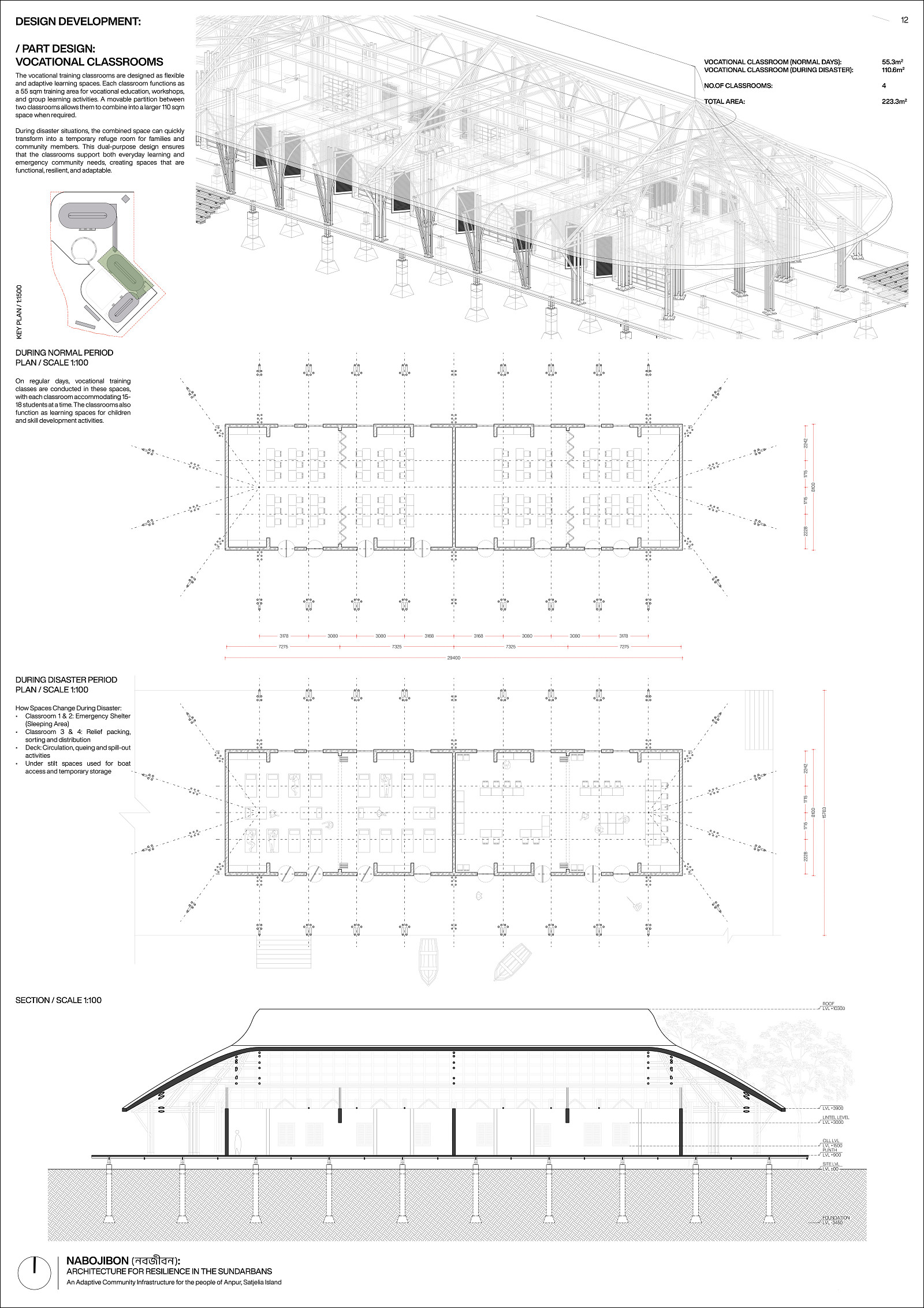
What makes the project distinctive is its ability to transform without changing its identity. During cyclones or floods, classrooms become temporary shelters, workshops become relief distribution centres, community halls accommodate displaced families, and kitchens operate as emergency food preparation spaces. Instead of building separate emergency infrastructure that remains unused for most of the year, the project ensures that every space has a meaningful everyday purpose while remaining prepared for moments of crisis.
Ultimately, the proposal is not simply a building, but a resilient social infrastructure that supports learning, livelihood, community, and survival through every season.
Technical information
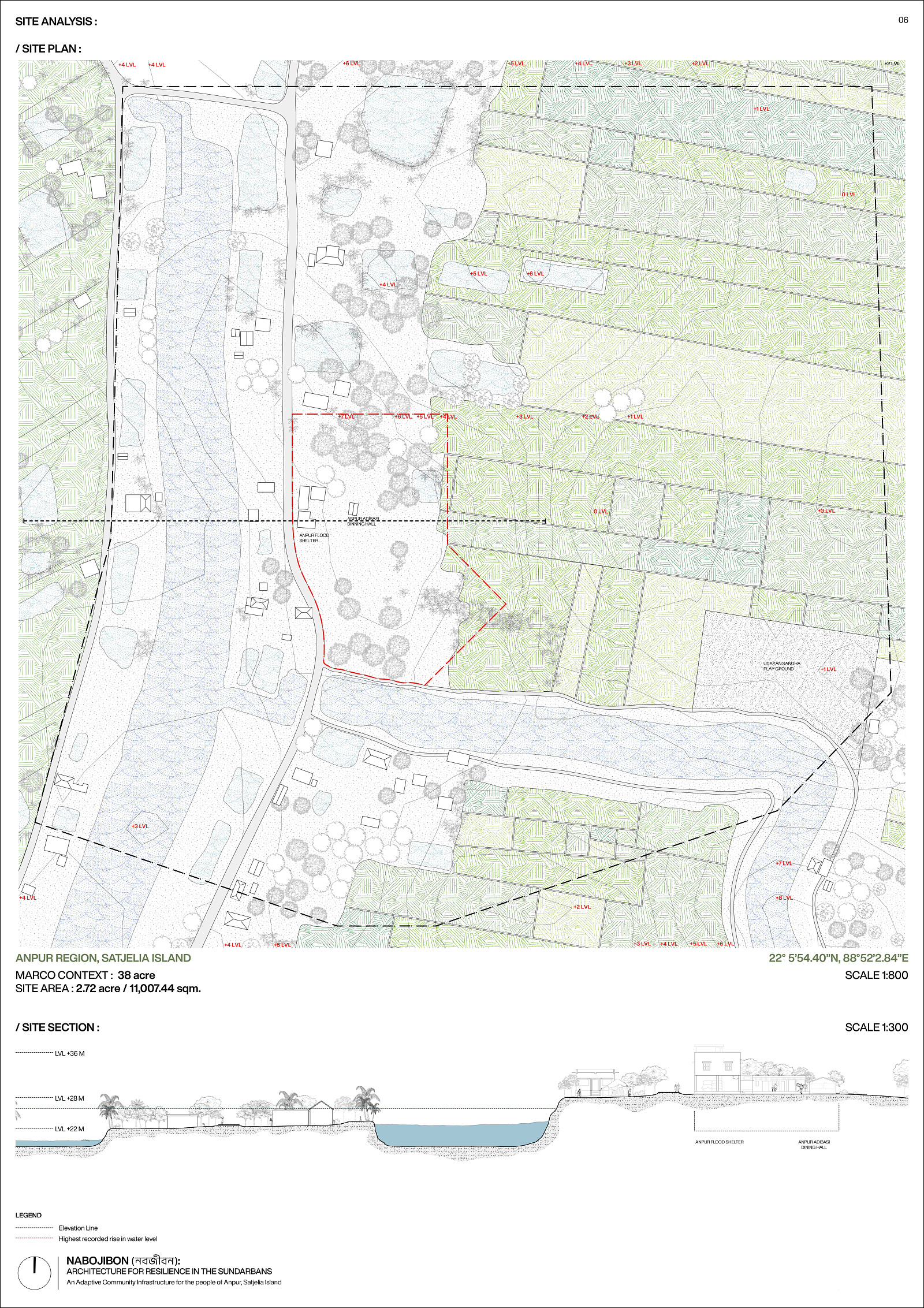
The project is designed as a climate-responsive, flood-resilient community building adapted to the environmental conditions of the Sundarbans.
Technical characteristics include:
- Elevated construction on reinforced concrete foundations to reduce flood impacts.
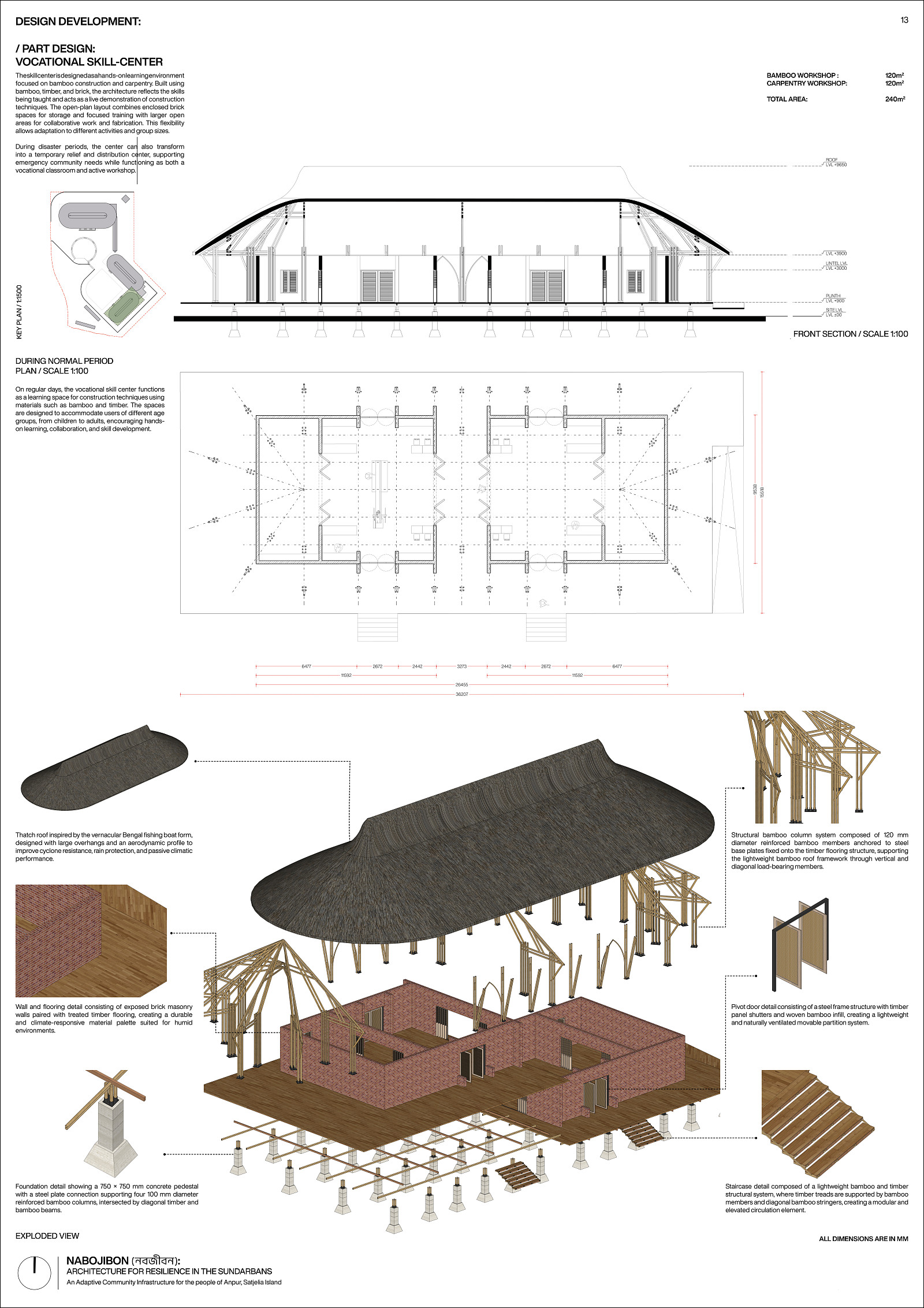
- Primary structural system using treated bamboo and timber with steel connectors for durability and ease of maintenance.
- Brick masonry used selectively for service cores, storage spaces, and utility rooms.
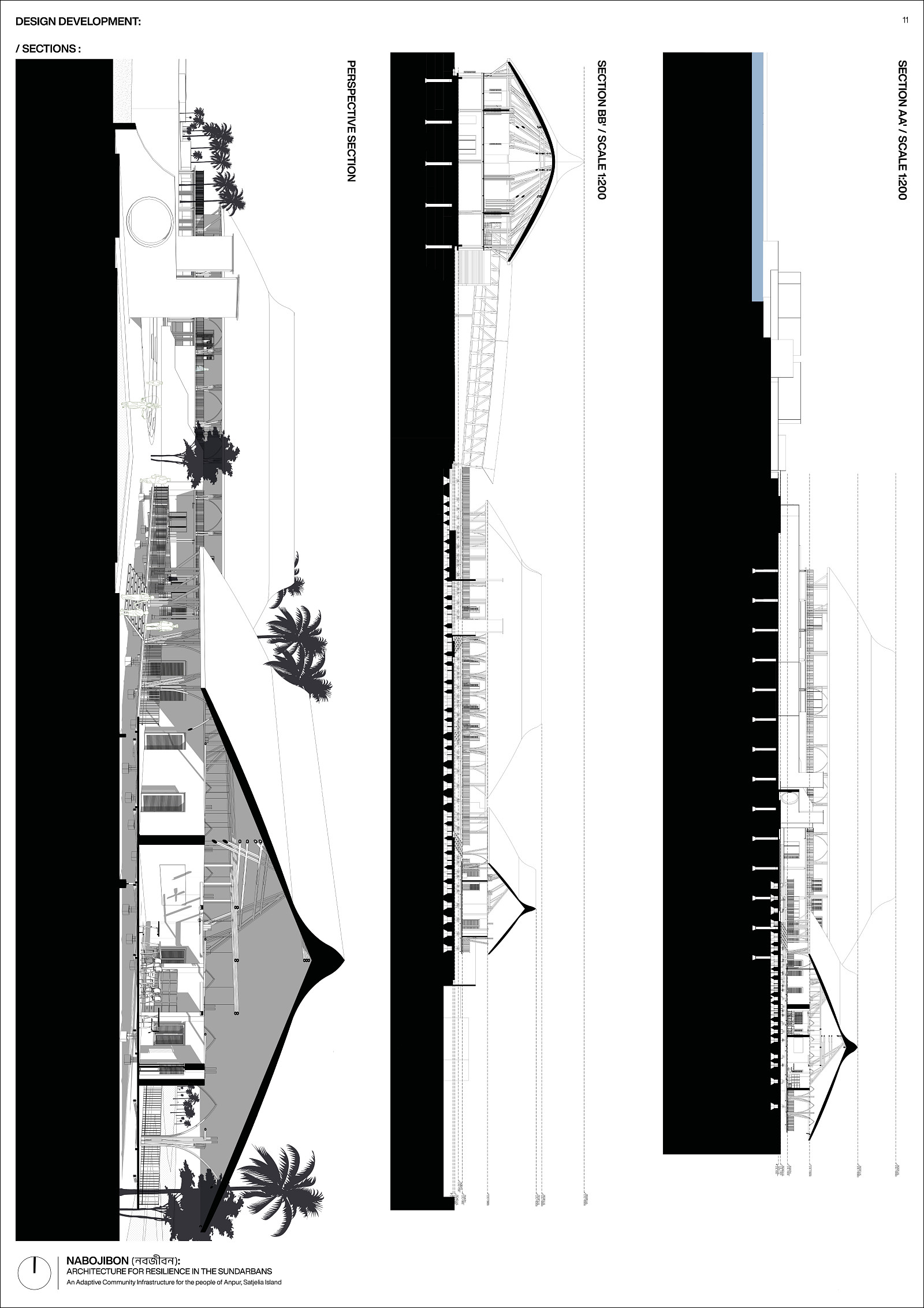
- Lightweight pitched roofs with thatch and metal sheet protection designed for heavy rainfall and cyclone conditions.
- Modular planning with movable partitions allowing spaces to expand or transform during emergencies.
- Passive cooling through natural cross ventilation, shaded verandahs, high roofs, and open courtyards.
- Rainwater harvesting and sustainable water management systems.
- Local construction techniques combined with contemporary engineering for improved resilience.
- Landscape design incorporating native vegetation, water-sensitive planning, and permeable open spaces to reduce environmental impact.
- Universal accessibility through ramps and barrier-free circulation.
- Flexible spaces designed to accommodate both daily community activities and disaster response functions without requiring additional infrastructure.
Documentation

Copyright © 2026 INSPIRELI | All rights reserved. Use of this website signifies your agreement to the Terms of Use, Privacy Policy, and use of cookies.