Eternal Edge: A tale of Buriganga


Project idea
The River that Shaped Old Dhaka
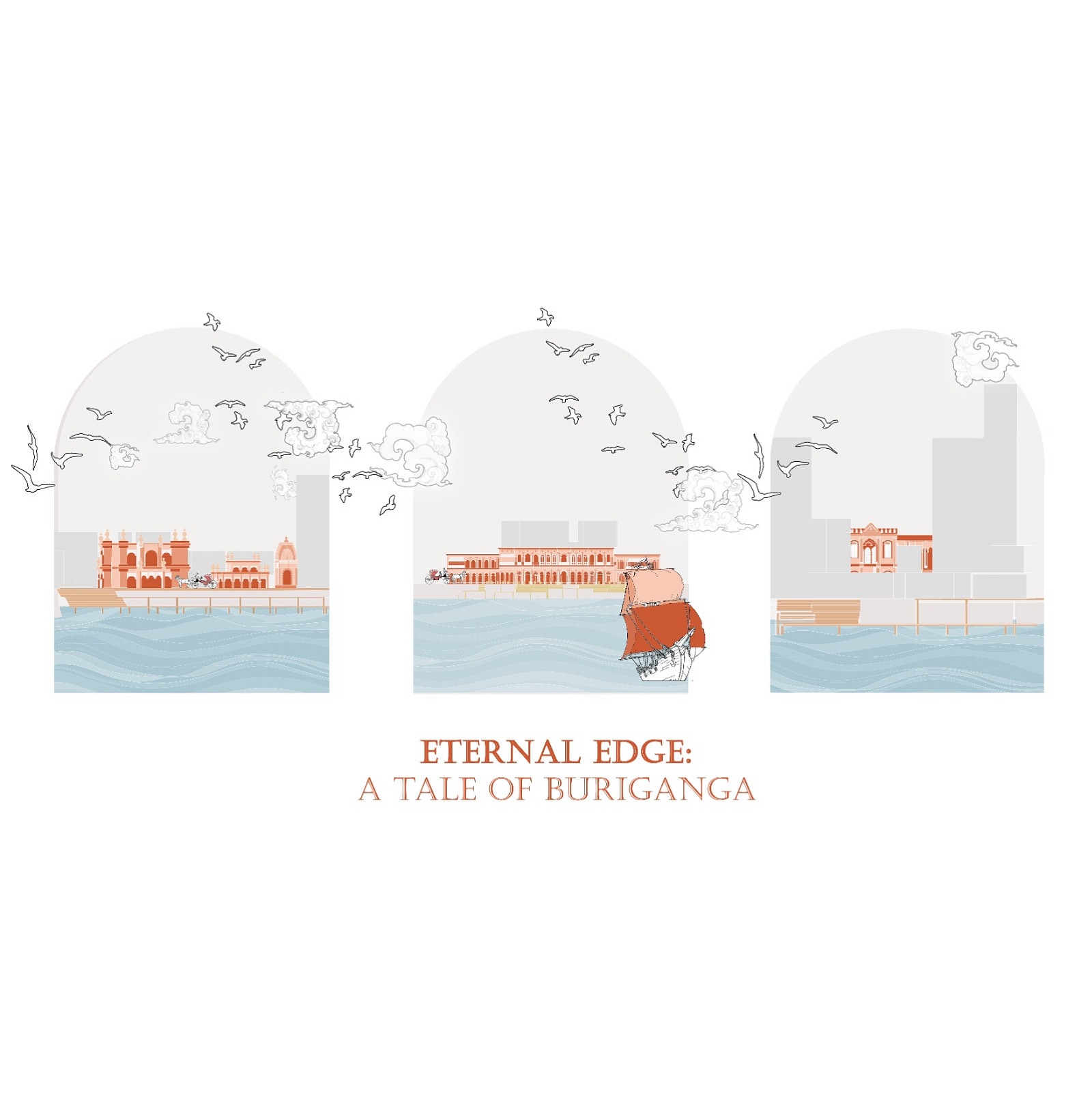
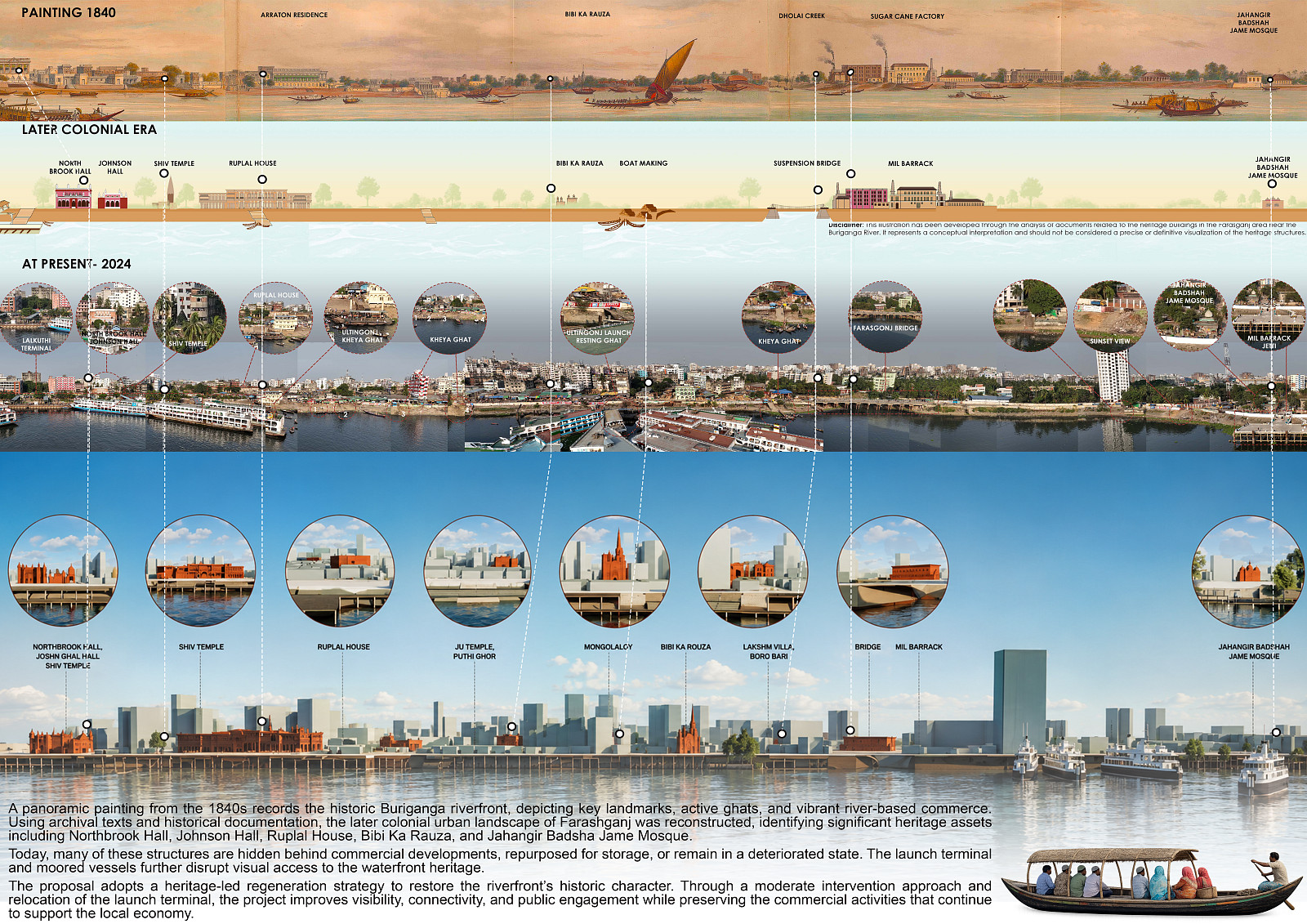
For centuries, the Buriganga River was the heart of Old Dhaka, shaping its growth, trade, culture, and everyday life. Historic mansions, religious landmarks, markets, ghats, and trading routes developed along its banks, creating a vibrant waterfront that served as the city's gateway. A panoramic painting of the Buriganga riverfront from the 1840s, collected from the British Museum, captures this rich landscape, depicting landmarks such as the Araton Residence, Bibi Ka Rauza, Dholai Creek, Jahangir Badshah Jame Mosque, a sugar factory, numerous residential buildings, bustling ghats, and countless boats. Together, these elements illustrate a riverfront where commerce, culture, and community were deeply interconnected.
Today, rapid urbanization, unplanned development, visual obstructions, and the decline of public spaces have weakened this historic relationship. Many heritage buildings are hidden behind commercial structures, warehouses, and the launch terminal, while the stories, traditions, and identity of the riverfront are gradually fading.
A Tale of Buriganga
A Tale of Buriganga is a heritage-led urban design proposal that reimagines the historic riverfront of Farashganj as a Living Heritage Corridor.
Farashganj (ফরাশগঞ্জ), meaning French Town or French Market, emerged in the eighteenth century as a French trading settlement along the Buriganga River and later became one of Old Dhaka's most important commercial districts. The proposal views heritage not as a collection of isolated monuments, but as a living network of historic buildings, waterways, markets, traditional crafts, cultural practices, and everyday community life that together tell the story of the city.
Reviving the River's Heritage: A Living Heritage Corridor
The proposal extends beyond conserving historic buildings to safeguarding both tangible and intangible heritage. It recognizes that the identity of the Buriganga riverfront is shaped not only by its architecture but also by centuries-old spice trading, timber workshops, river-based commerce, religious traditions, local businesses, and everyday social life. Through heritage conservation, adaptive reuse, improved public spaces, enhanced pedestrian and water-based connectivity, and community participation, the project restores the relationship between the river, the historic city, and its people, ensuring that history remains an active part of contemporary urban life.
Project description
Understanding the Historic Riverfront
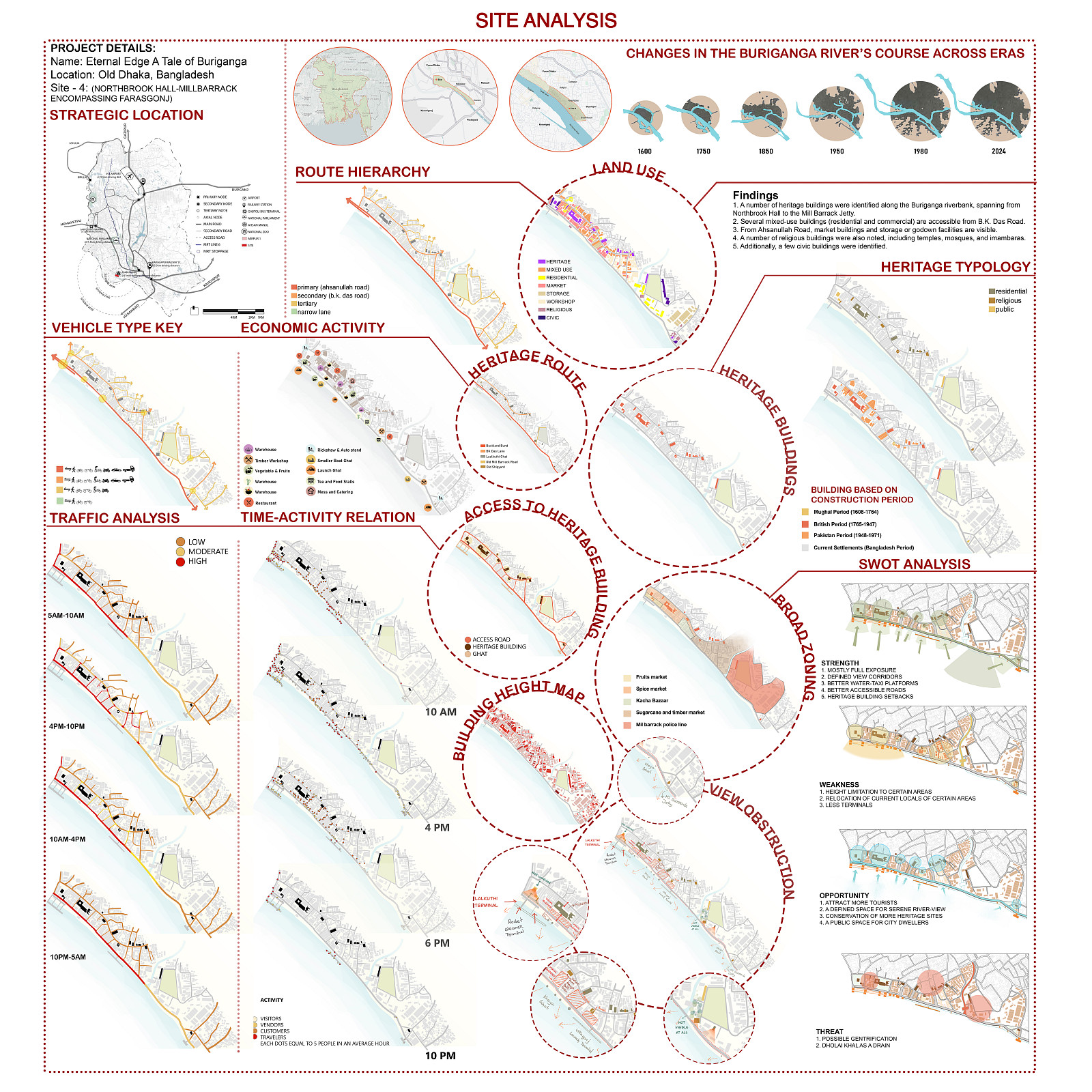
The proposal focuses on the historic corridor between Northbrook Hall and Mil Barrack in Farashganj, Old Dhaka. The design process began with historical map analysis, archival research, and urban growth studies to understand how the relationship between the Buriganga River, Dholai Khal, and the surrounding urban fabric has evolved over time.
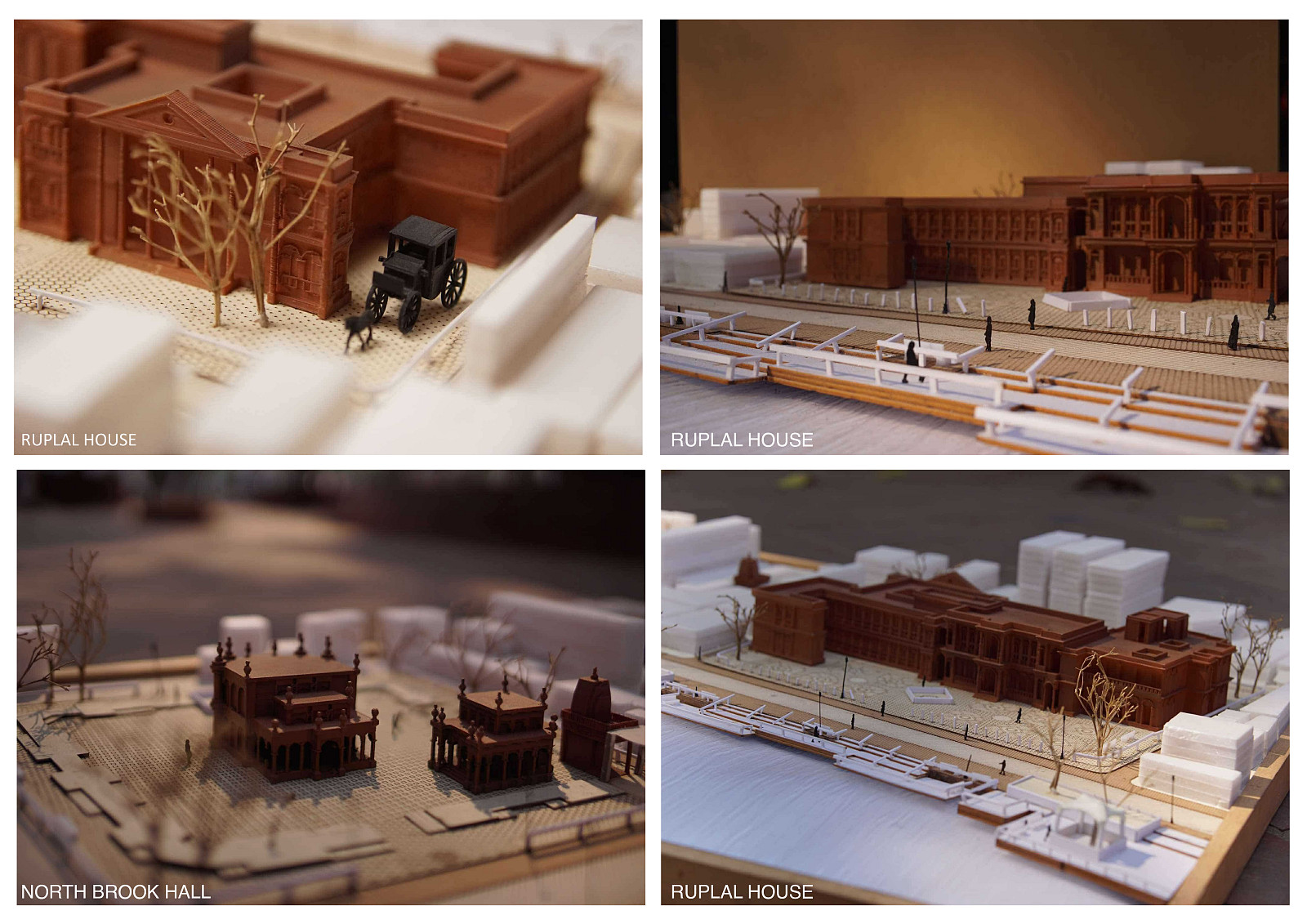
A key reference for the study was the 1840s panoramic painting of the Buriganga riverfront from the British Museum, which documents a lively waterfront characterized by ghats, boats, historic buildings, and active river trade. To understand the area's later transformation, a second panoramic reconstruction was developed from historical texts on Farashganj, identifying landmarks such as Northbrook Hall, Johnson Hall, Ruplal House, Shiv Temple, Bibi Ka Rauza, Mill Barrack, the suspension bridge, Jahangir Badshah Jame Mosque, and traditional boat-building activities.
Heritage Mapping and Existing Conditions
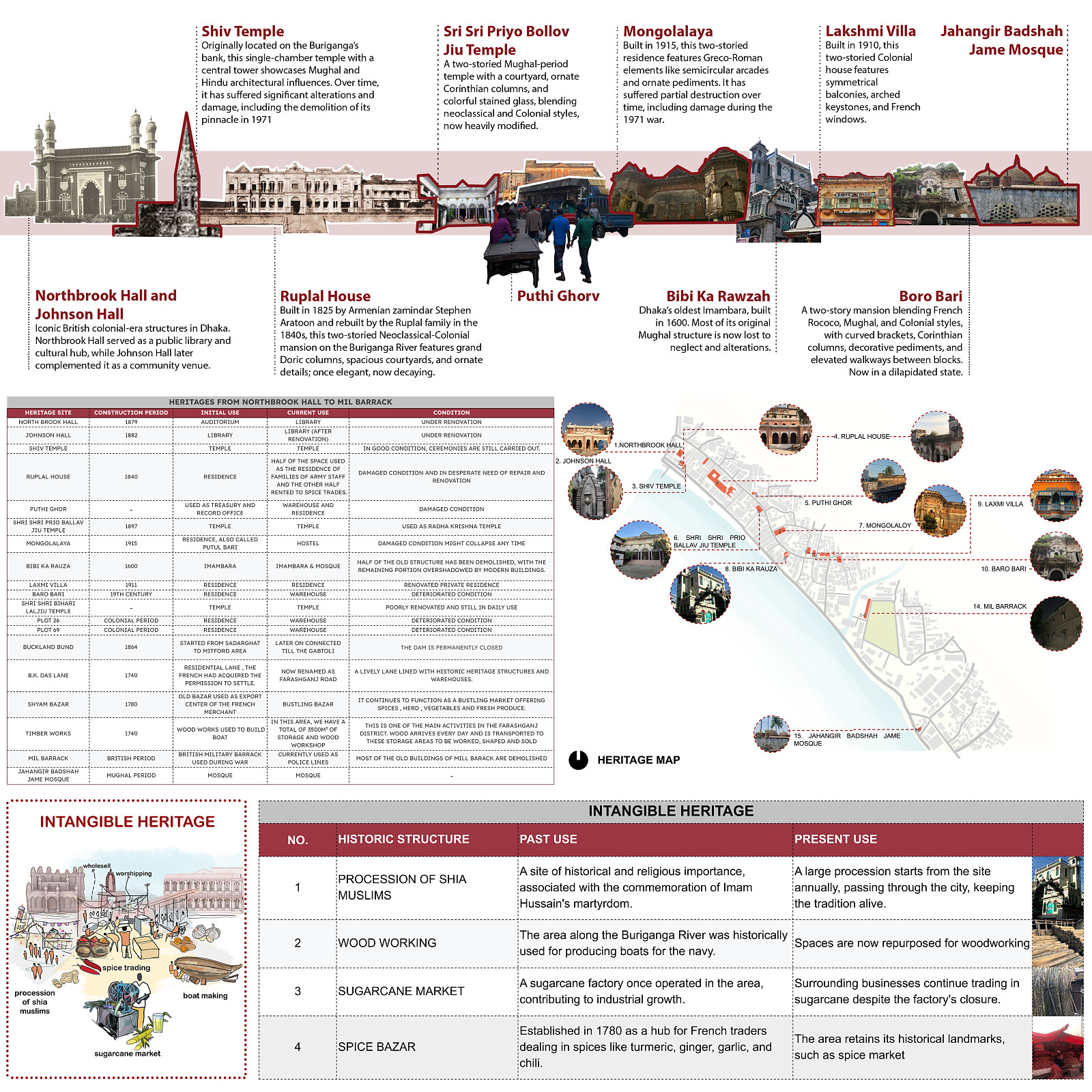
A comprehensive heritage mapping exercise documented historic buildings, religious landmarks, heritage streets, ghats, markets, and cultural landscapes. The study also recorded intangible heritage, including spice trading, woodworking traditions, river-based commerce, and religious activities that continue to shape the identity of Farashganj.
Today, many heritage buildings remain hidden behind one-storey commercial structures occupied by spice markets, vegetable markets, warehouses, and retail activities. While these businesses are an essential part of the area's living heritage and local economy, they have gradually obscured the architectural significance of the historic riverfront. Religious traditions have also declined over time. Historic processions once originated from Bibi Ka Rauza, several temples are now in a dilapidated condition, and important heritage buildings such as Ruplal House and Mongolalaya (Putul Bari) are used primarily as spice warehouses. Borobari functions as a timber storage yard with active carpentry workshops, while Laxmi Villa remains under private ownership. Although Northbrook Hall and Johnson Hall are currently undergoing restoration, many other heritage structures continue to receive little recognition as historic landmarks.
The study also identified the loss of visual and physical connections between the Buriganga River and its historic architecture. The existing launch terminal and large vessels moored along the waterfront block views of many heritage buildings, making the riverfront difficult to experience as a historic urban landscape.
Creating the Living Heritage Corridor
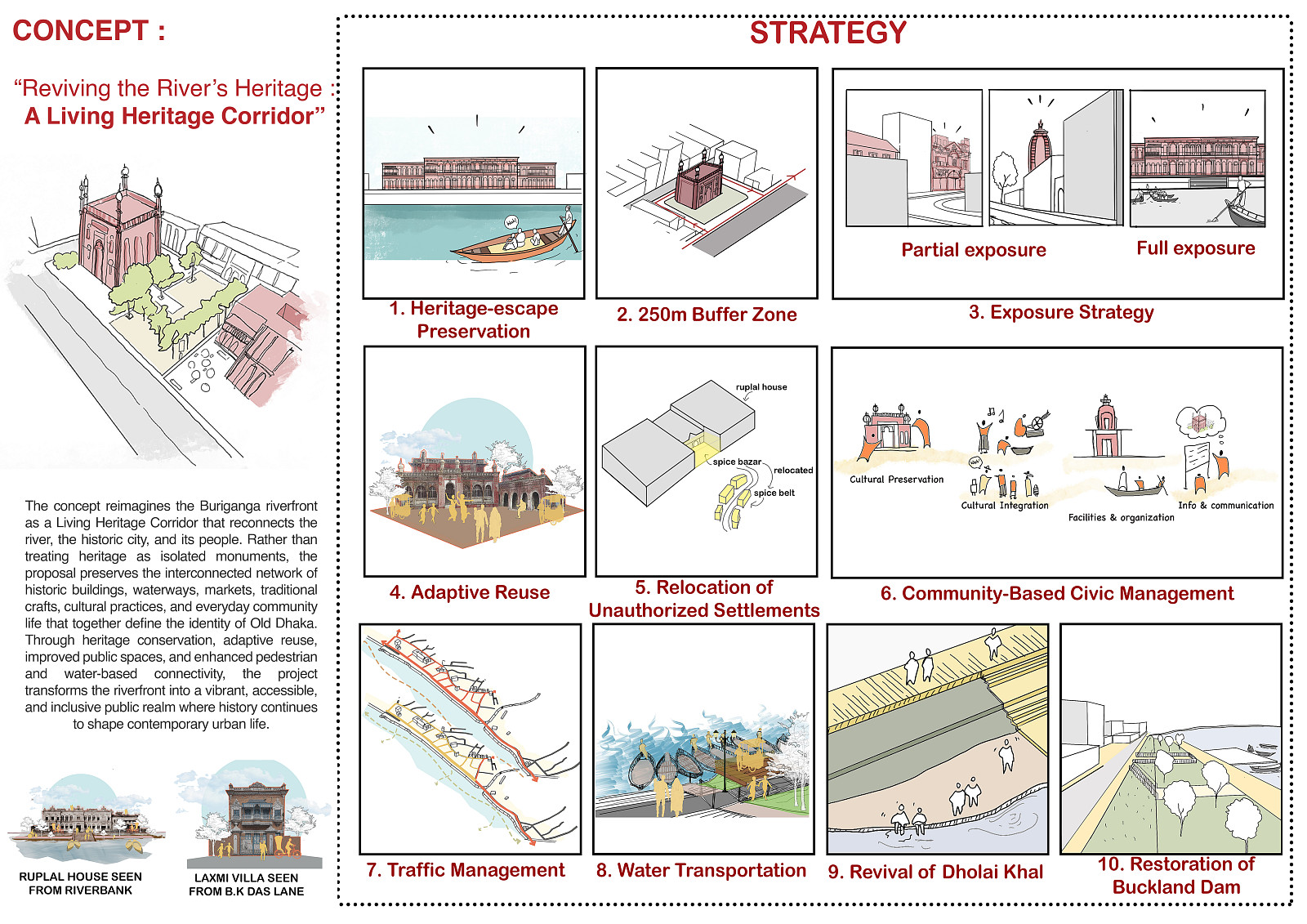
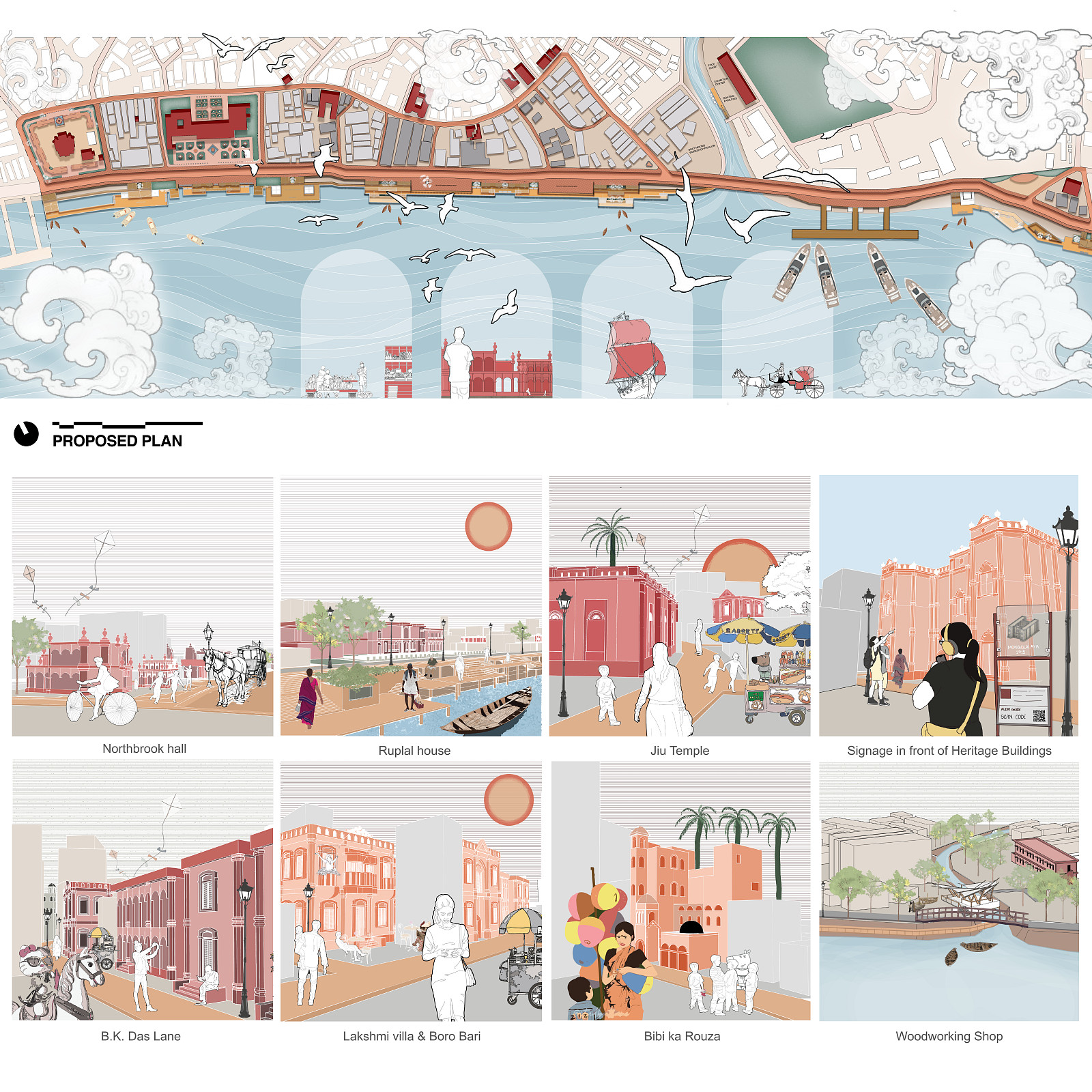
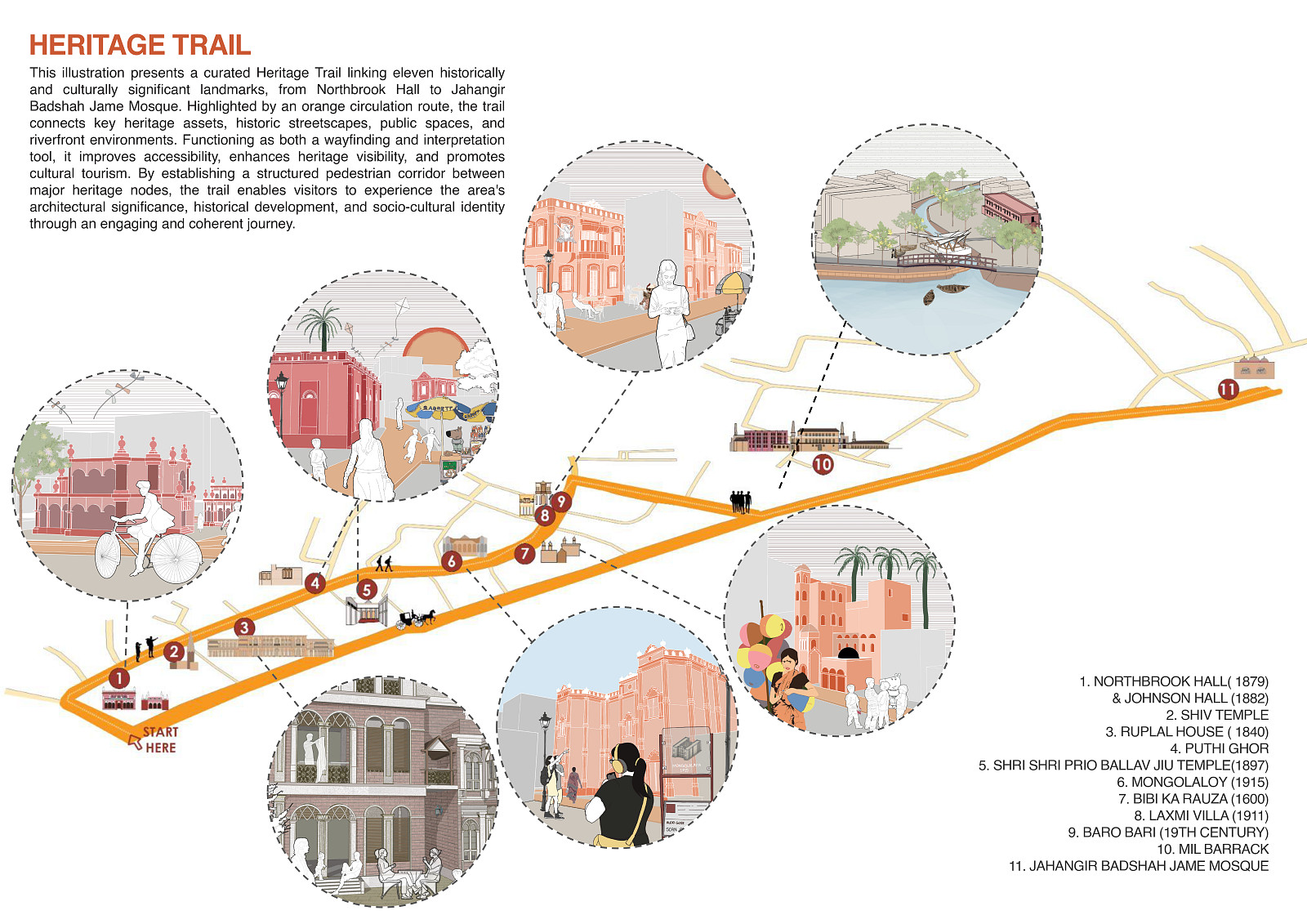
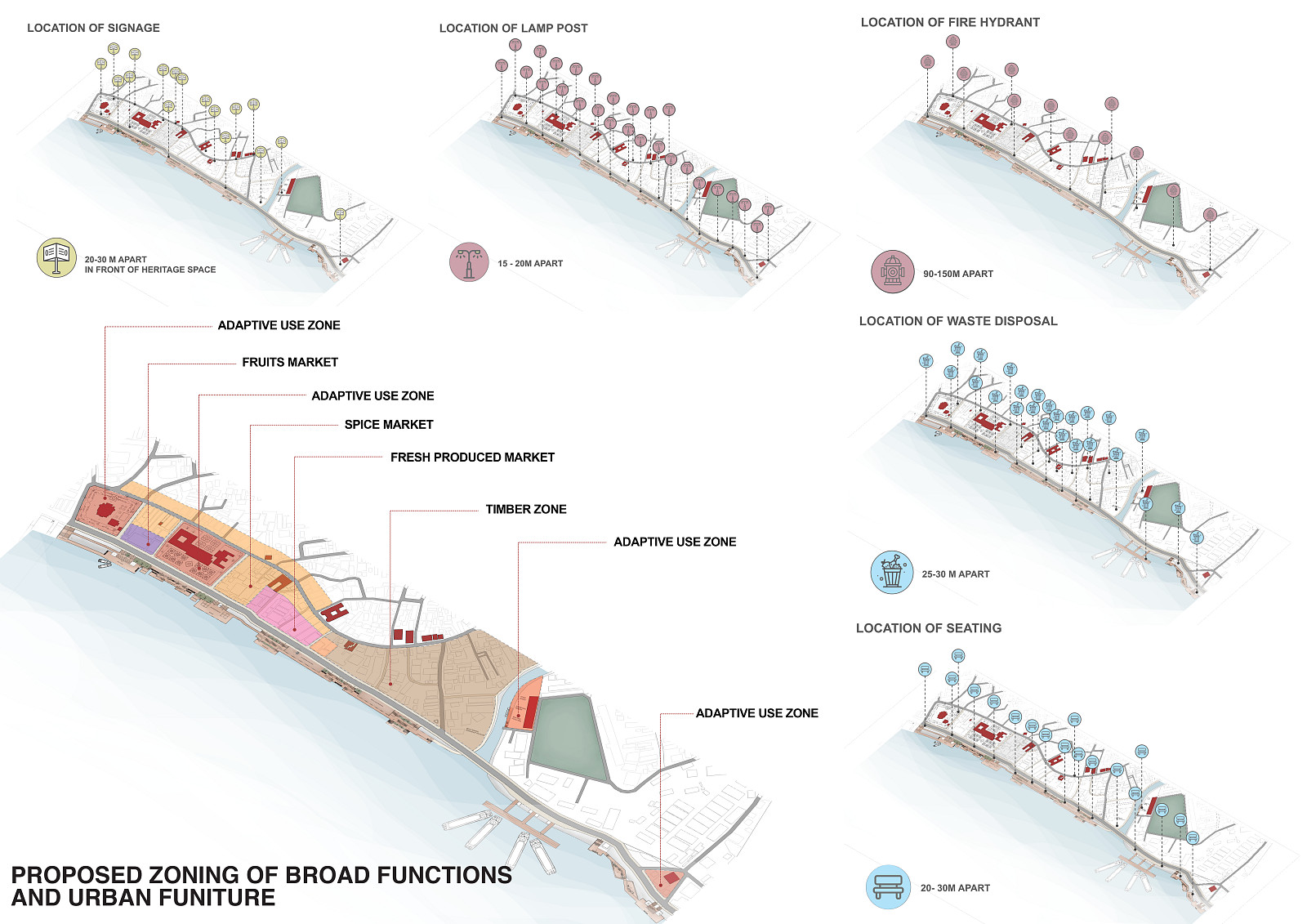
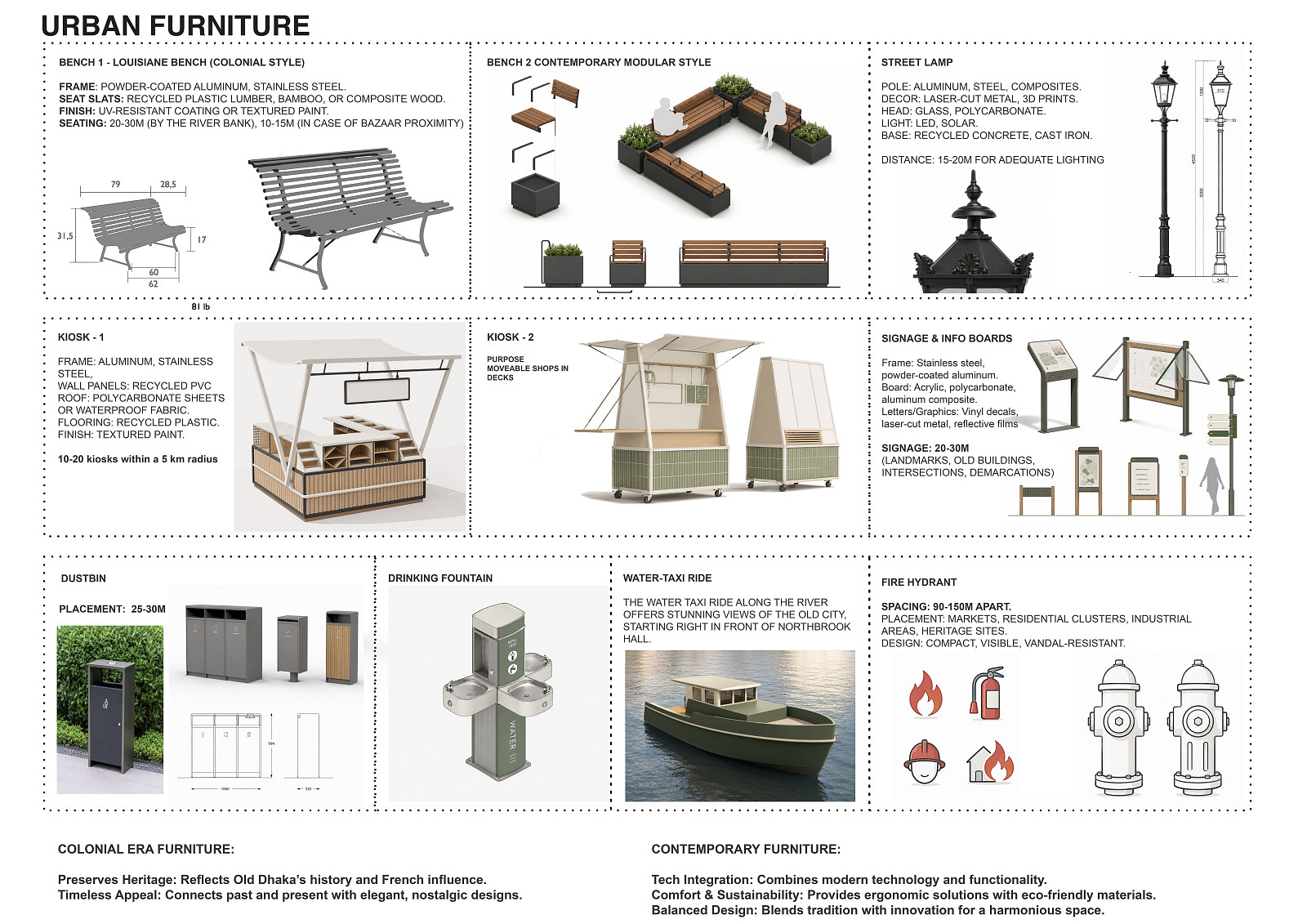
To reconnect fragmented heritage assets, the proposal introduces a continuous Living Heritage Corridor through a Heritage Trail following historic routes such as Buckland Bund and B.K. Das Lane. The trail links heritage landmarks, public spaces, marketplaces, and the riverfront through interpretation, wayfinding, public amenities, and improved pedestrian connections.
Restoring Heritage Visibility
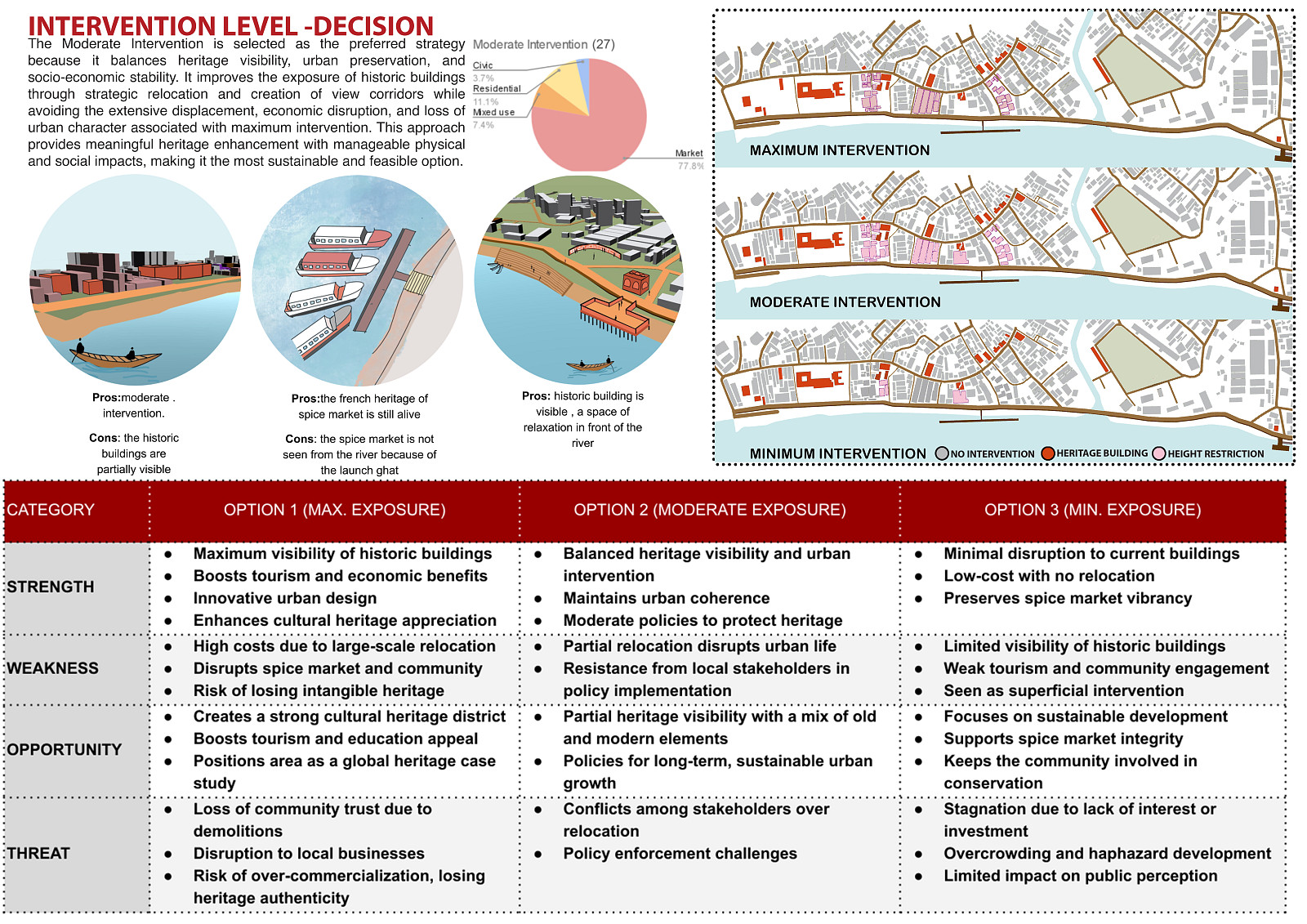
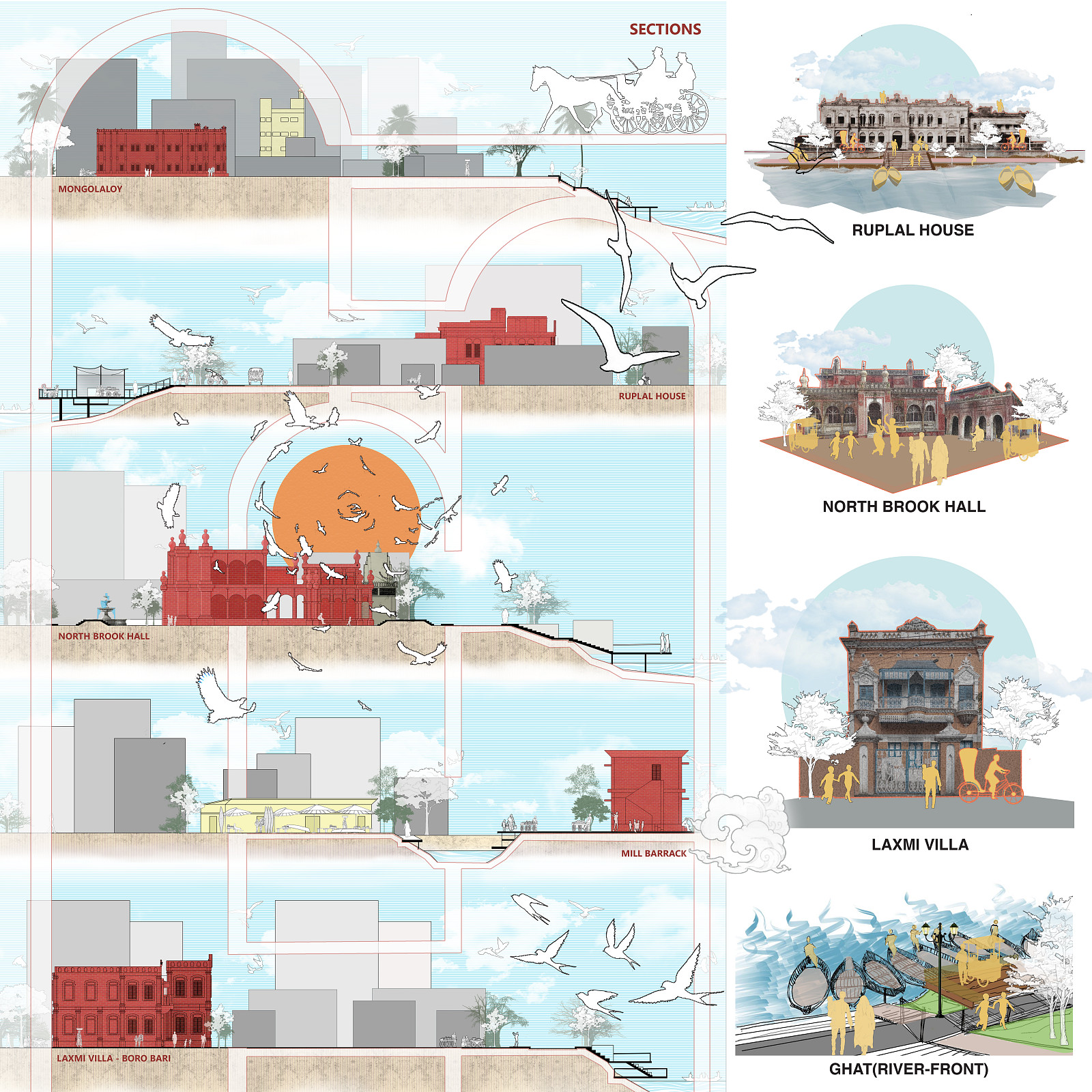
Restoring the visual relationship between the Buriganga and its heritage buildings became a central design objective. Three riverfront exposure strategies—Minimum Exposure, Moderate Exposure, and Maximum Exposure—were explored and evaluated. The Moderate Exposure Strategy was selected because it significantly improves heritage visibility while minimizing demolition, preserving community networks, and protecting the commercial activities that continue to sustain Farashganj.
As part of this strategy, the launch terminal is relocated to a less visually prominent location, reducing visual obstruction and creating a stronger physical and visual connection between the riverfront and its historic landmarks without disrupting the area's economic role.
Adaptive Reuse and Urban Regeneration
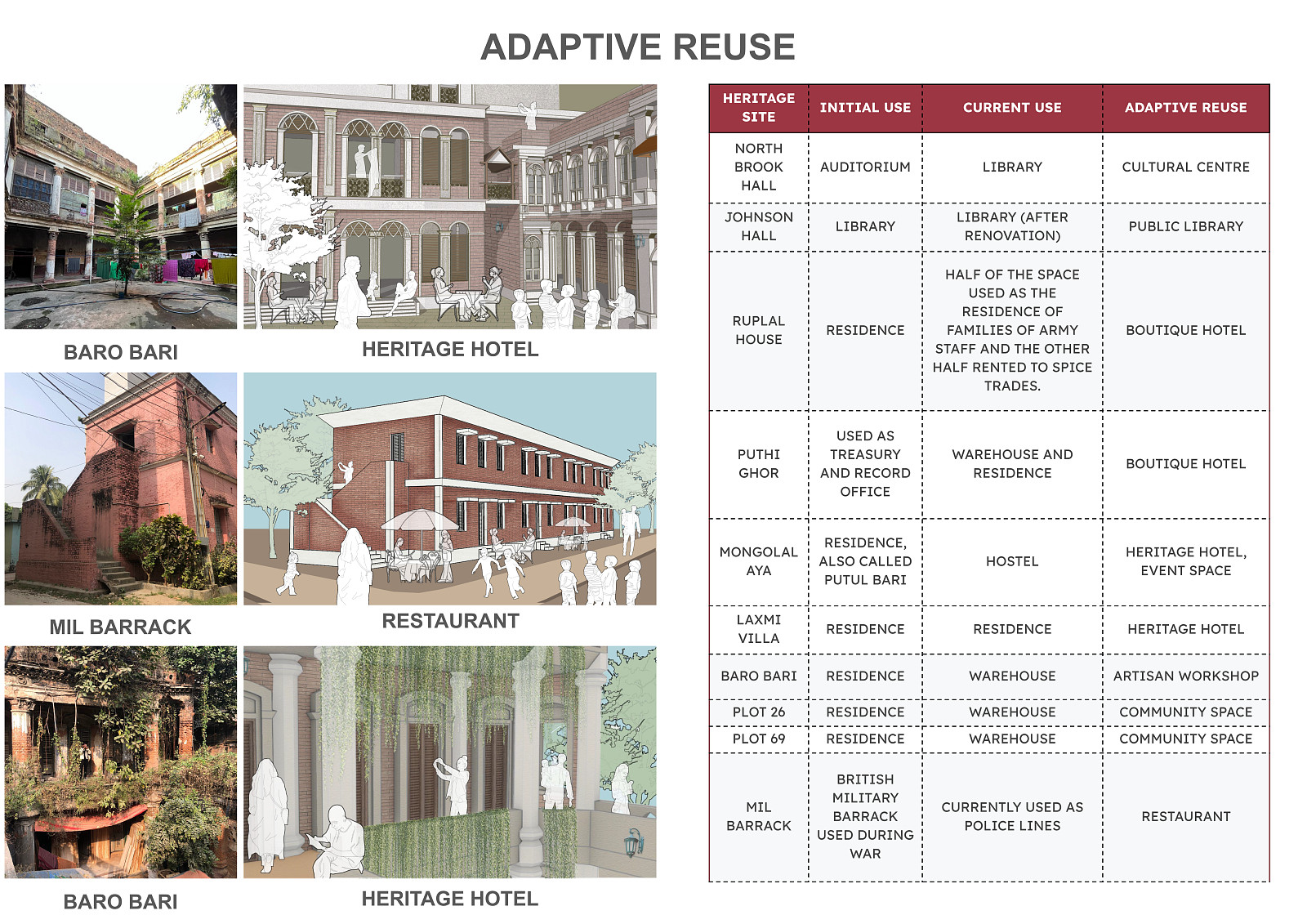
Historic buildings are revitalized through adaptive reuse, introducing cultural centres, heritage interpretation spaces, libraries, boutique hotels, artisan workshops, restaurants, cafés, and community facilities. These interventions preserve architectural character while supporting long-term cultural, social, and economic sustainability.
Reviving the Water Network
The proposal restores the historic relationship between the city and its waterways by improving pedestrian access, introducing water-based transportation, enhancing public spaces, and revitalizing Dholai Khal as a recreational and cultural corridor. Canal restoration incorporates sewage diversion, landscape improvements, pedestrian walkways, ecological enhancement, and cultural spaces that reconnect the area with its historic water network.
Policy and Community Framework
The project is supported by heritage buffer zones, height control regulations, traffic management measures, Transfer Development Rights (TDR), and community-based heritage management. These strategies balance conservation with the needs of residents, businesses, and visitors while protecting local livelihoods and preventing displacement.
Project Outcome
A Tale of Buriganga restores the visual, physical, and cultural relationship between the Buriganga River and Old Dhaka. By reconnecting heritage buildings, waterways, public spaces, traditional commerce, and community life through a Living Heritage Corridor, the proposal transforms the riverfront into a vibrant, accessible, and resilient public realm where conservation, tourism, local businesses, and everyday life coexist—allowing the Buriganga to once again become the cultural heart of Old Dhaka.
Technical information
Project
Title: A Tale of Buriganga
Category: Urban Design
Type: Heritage-Led Urban Regeneration & Riverfront Revitalization
Location: Farashganj, Old Dhaka, Bangladesh
Corridor: Northbrook Hall – Mil Barrack
Length: 1.5 km
Year: 2024
Concept: Living Heritage Corridor
Scope
Research: Historical Analysis • Heritage Mapping • Riverfront Visibility Study
Design Strategies: Heritage Trail • Adaptive Reuse • Riverfront Revitalization • Dholai Khal Restoration • Public Realm Enhancement • Water-Based Mobility
Policy: Heritage Buffer Zones • Height Control • Transfer Development Rights (TDR) • Community-Based Heritage Management
Key Heritage Assets
Northbrook Hall • Johnson Hall • Ruplal House • Bibi Ka Rauza • Mill Barrack • Jahangir Badshah Jame Mosque • Buckland Bund • B.K. Das Lane • Shyambazar • Dholai Khal
Exposure Strategy
Options Studied: Minimum • Moderate • Maximum
Selected: Moderate Exposure; improves heritage visibility while preserving community networks and local businesses.
Expected Outcome
A revitalized riverfront that reconnects the Buriganga with Old Dhaka through heritage conservation, adaptive reuse, public spaces, sustainable mobility, and community-led regeneration

Copyright © 2026 INSPIRELI | All rights reserved. Use of this website signifies your agreement to the Terms of Use, Privacy Policy, and use of cookies.