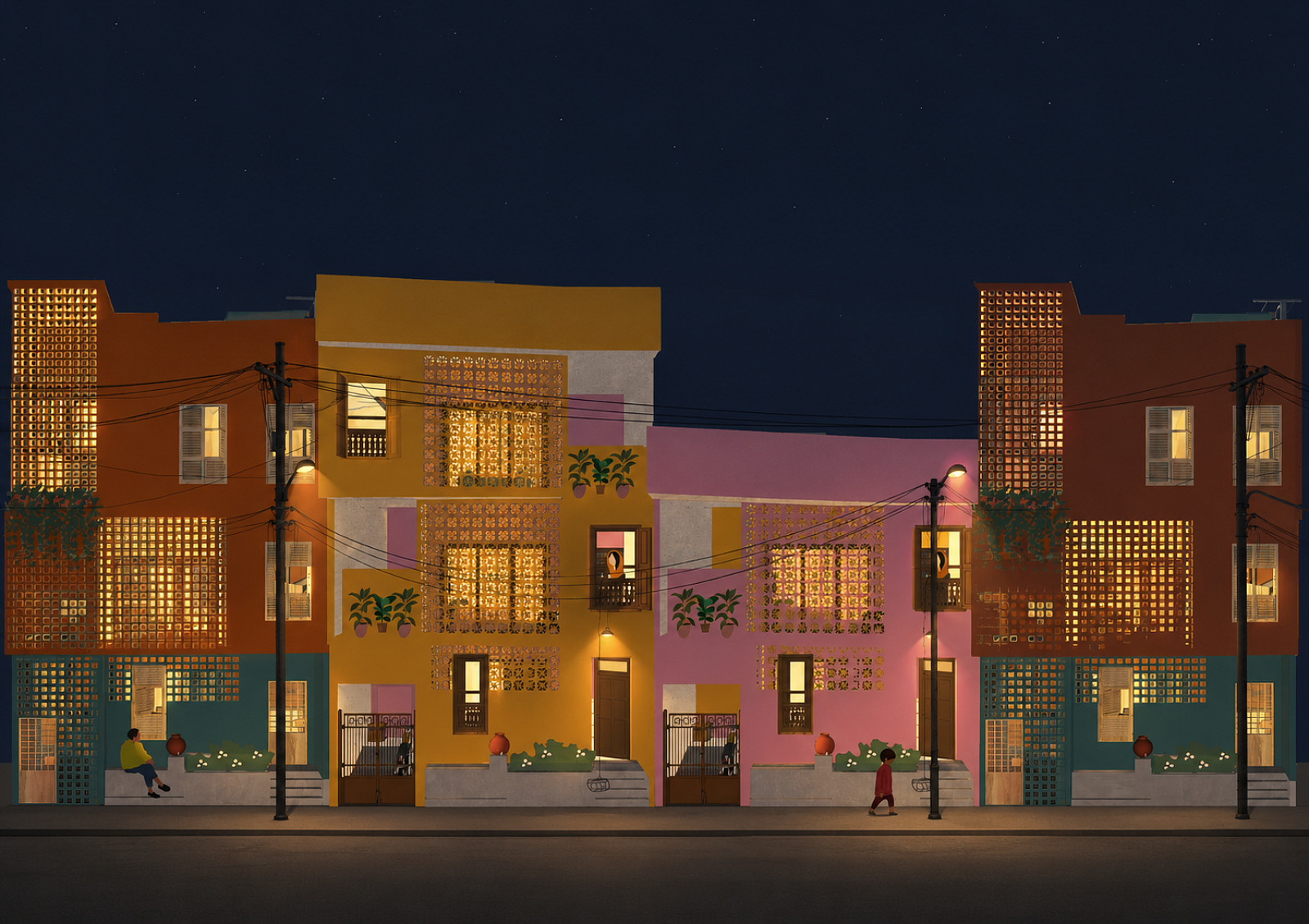
Home as a Place of Connection: Architecture for Family and Emotional Wellbeing


Project idea
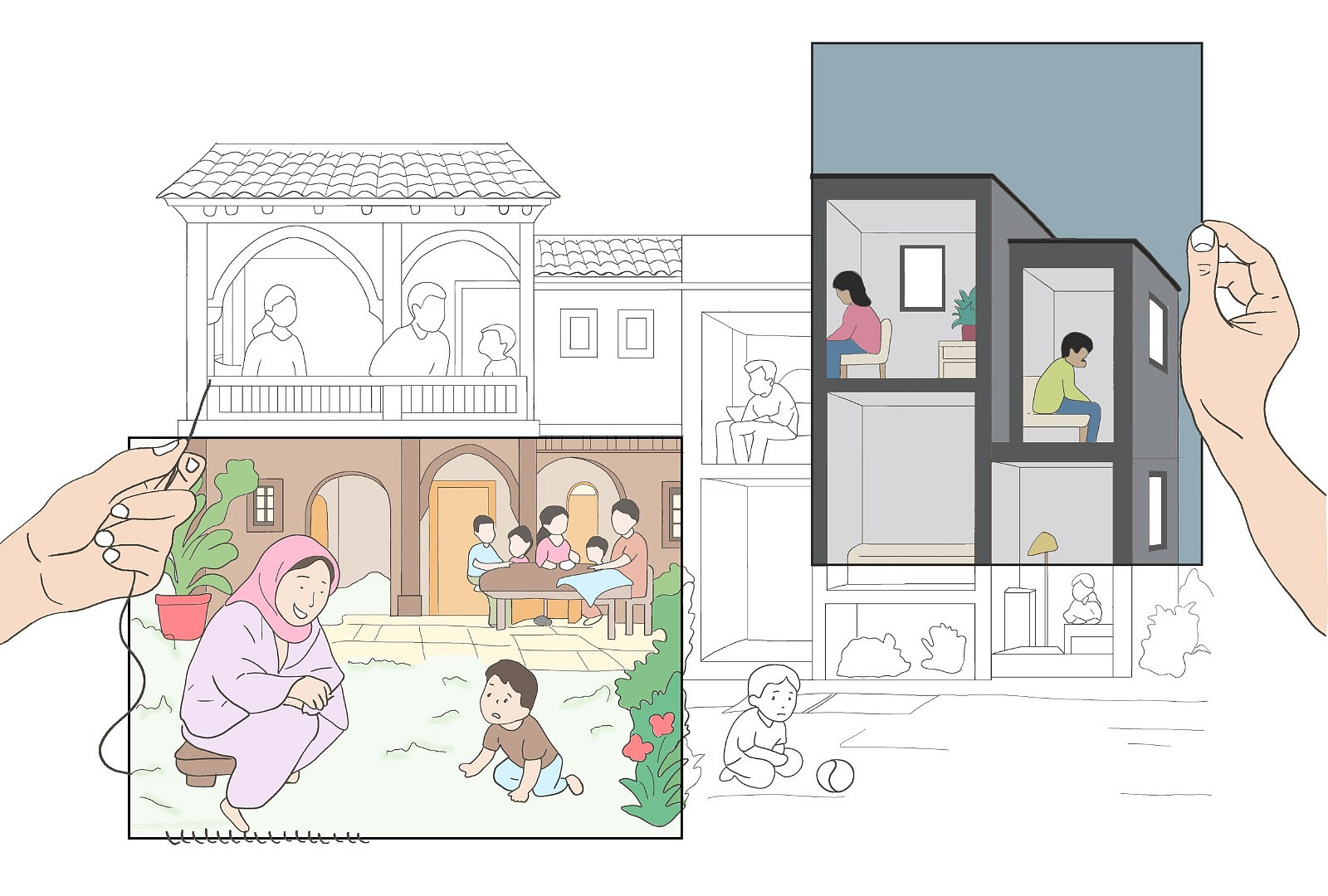
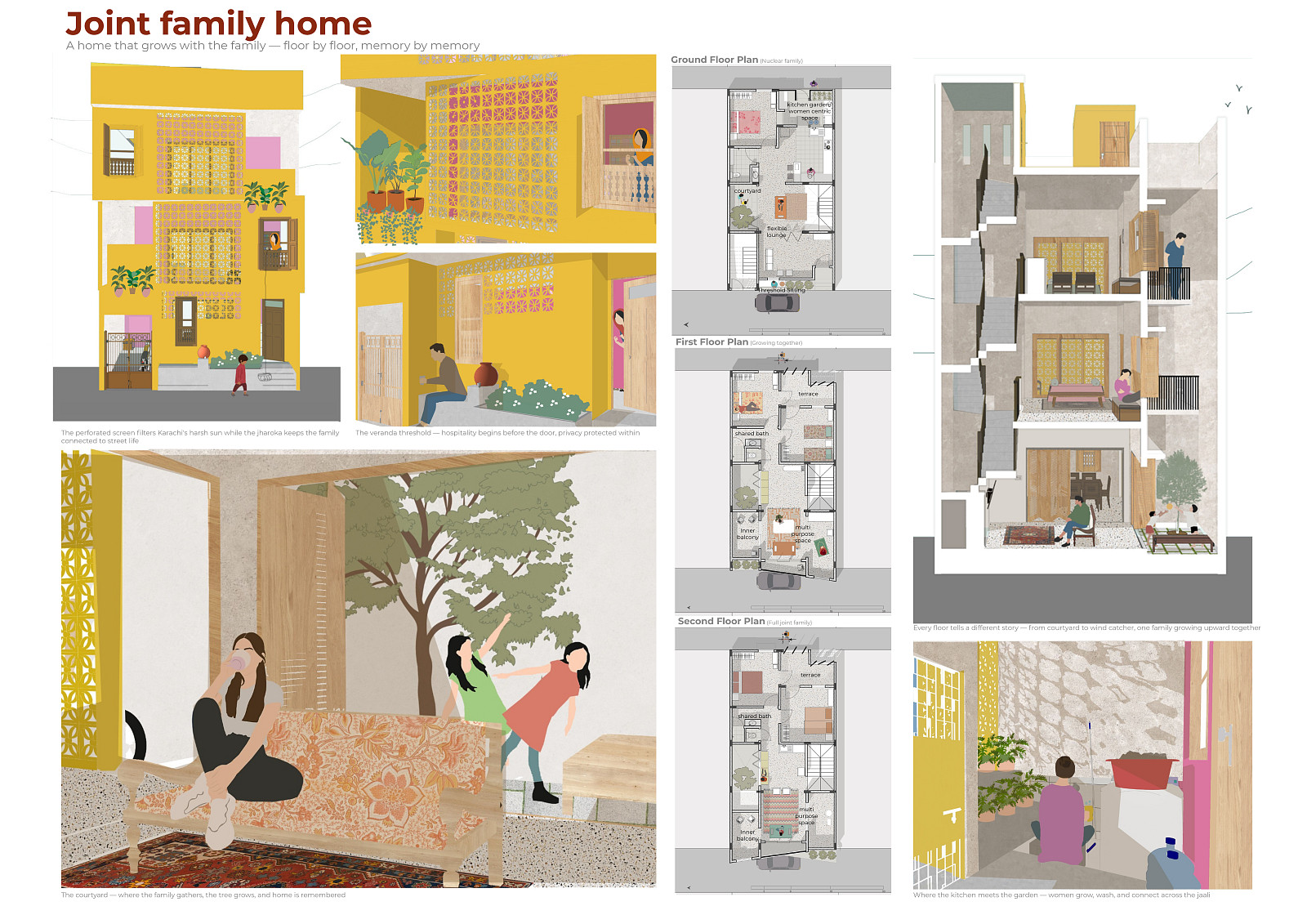
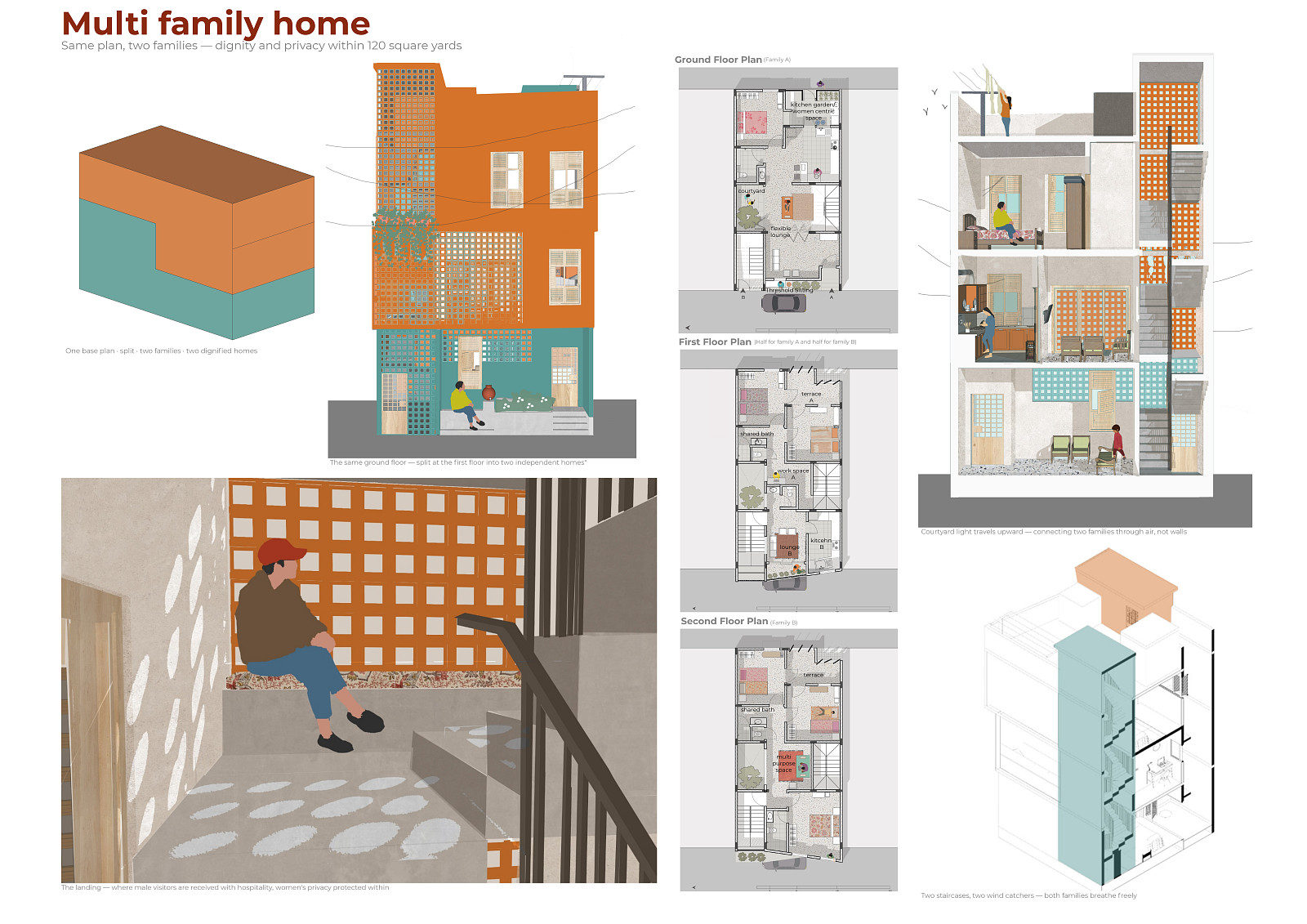
Home as a Place of Connection proposes an incremental housing strategy for middle-income families in Karachi, Pakistan, living in 120 square yard plots. As rising land values and population pressure reduced homes to contractor-built boxes, the spaces that once sustained family life disappeared. This project restores them through two housing typologies responding to the needs of middle-income families: a Joint Family Home and a Multi Family Home, both built on a single adaptable base plan that grows with the family over time. Every design decision is rooted in research and cultural reality, addressing Physical, Emotional and Family values to reconnect people to the feeling of home.
Project description
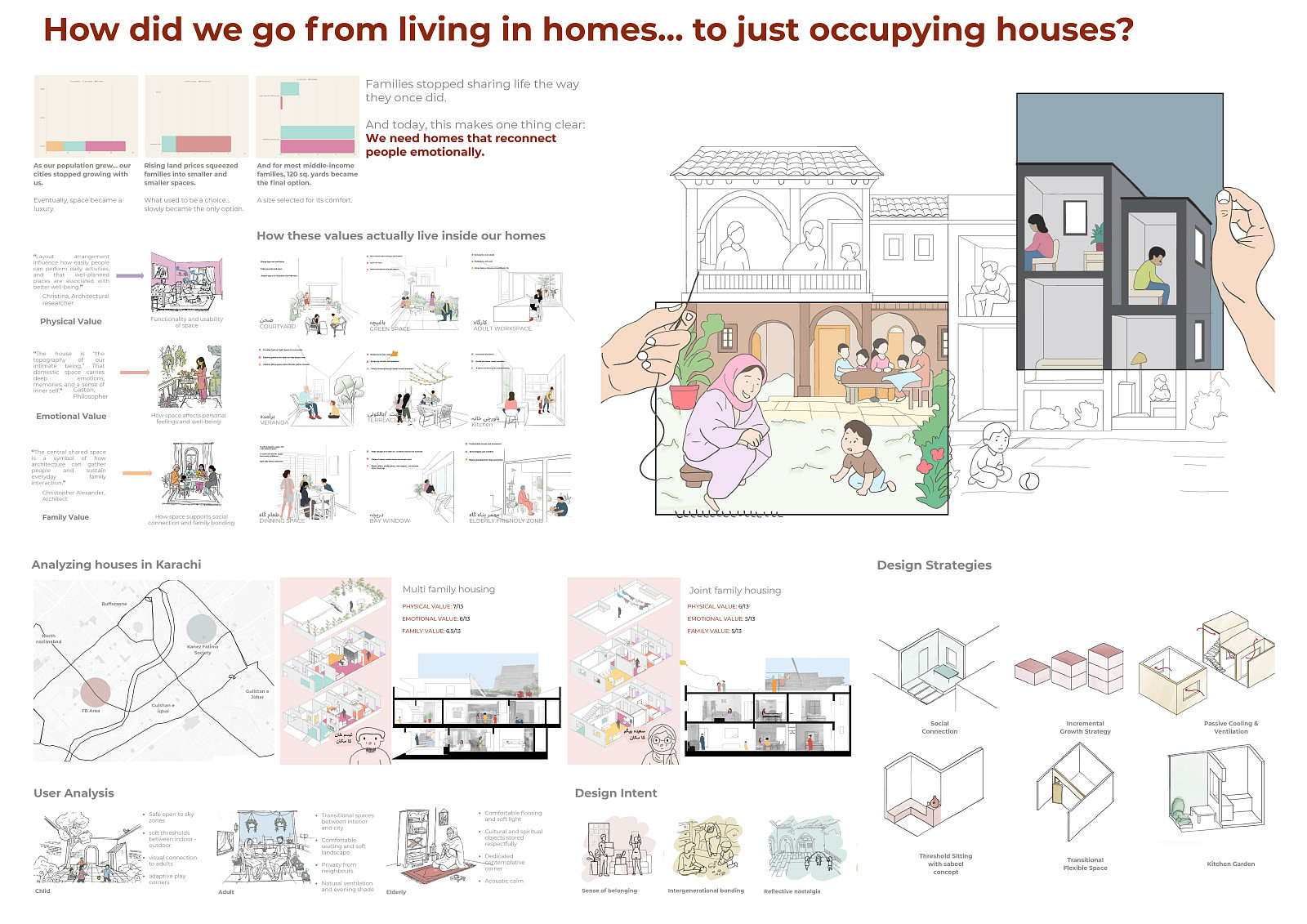
The majority of middle-income families in Karachi today live in existing 120 square yard contractor-built houses, structures that prioritize accommodation over emotional and social needs. Through surveys, interviews with Karachi families, and case study analysis of existing joint family and multi-family housing across Karachi neighborhoods including Federal B Area, Kaneez Fatima Society and Gulshan-e-Iqbal, three core values were identified that define a meaningful home. Physical Value, Emotional Value, and Family Value. The research evaluated how specific spaces including courtyards, verandas, kitchen gardens, bay windows, and shared gathering areas contribute to these values, and found that existing houses consistently score low, particularly on emotional and family value.
User analysis examined the needs of three generations living within these homes. Children need safe open spaces, soft thresholds and visual connection to adults. Adults need privacy, natural ventilation and transitional spaces between home and city. The elderly need comfortable flooring, soft light, acoustic calm and spaces that honor cultural and spiritual needs.
Technical information
The project is based on a single adaptable base floor plan designed for 120 square yard plots, applicable across Karachi without site-specific constraints. The structural strategy allows incremental vertical expansion each floor added independently as the family grows and finances allow.
Six design strategies guide the technical resolution of the project. Social connection spaces create thresholds between private and public life. The incremental growth strategy allows phased expansion from nuclear to joint to multi-family living. Passive cooling and ventilation through wind catchers and angled facade screens reduce dependence on mechanical air conditioning in Karachi's extreme heat. Threshold sitting areas with the sabeel concept place hospitality at the home's edge. Transitional flexible spaces with sliding doors adapt to changing daily and social needs. Kitchen gardens with perforated perforated screens embed biodiversity and neighbourly connection into the domestic boundary.
The design intent focuses on restoring a sense of belonging, intergenerational bonding, and reflective nostalgia giving back the cultural and spatial qualities that 120 square yard contractor-built housing took away.

Copyright © 2026 INSPIRELI | All rights reserved. Use of this website signifies your agreement to the Terms of Use, Privacy Policy, and use of cookies.
