Railway Bridge Wesel

Project idea
Preserving Identity Through Minimal Intervention
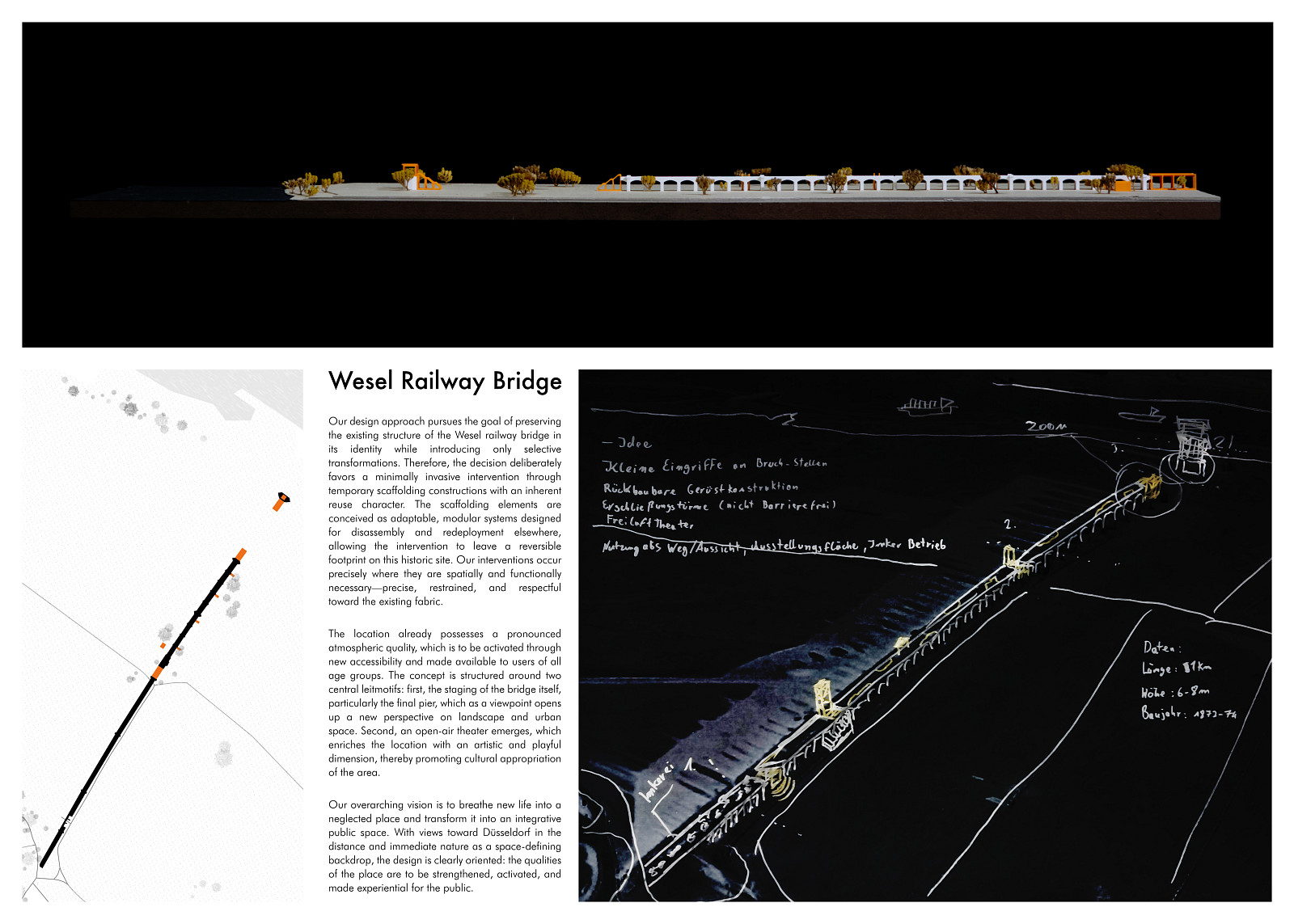
Our design philosophy rests upon a fundamental principle: that heritage sites possess inherent value and atmospheric richness that should be honored rather than erased. The existing structure of the Wesel railway bridge carries significant historical, architectural, and cultural weight. Our approach therefore prioritizes preservation of identity as the primary objective, with transformation introduced only where necessary and justified.
The Reuse Character and Circular Design
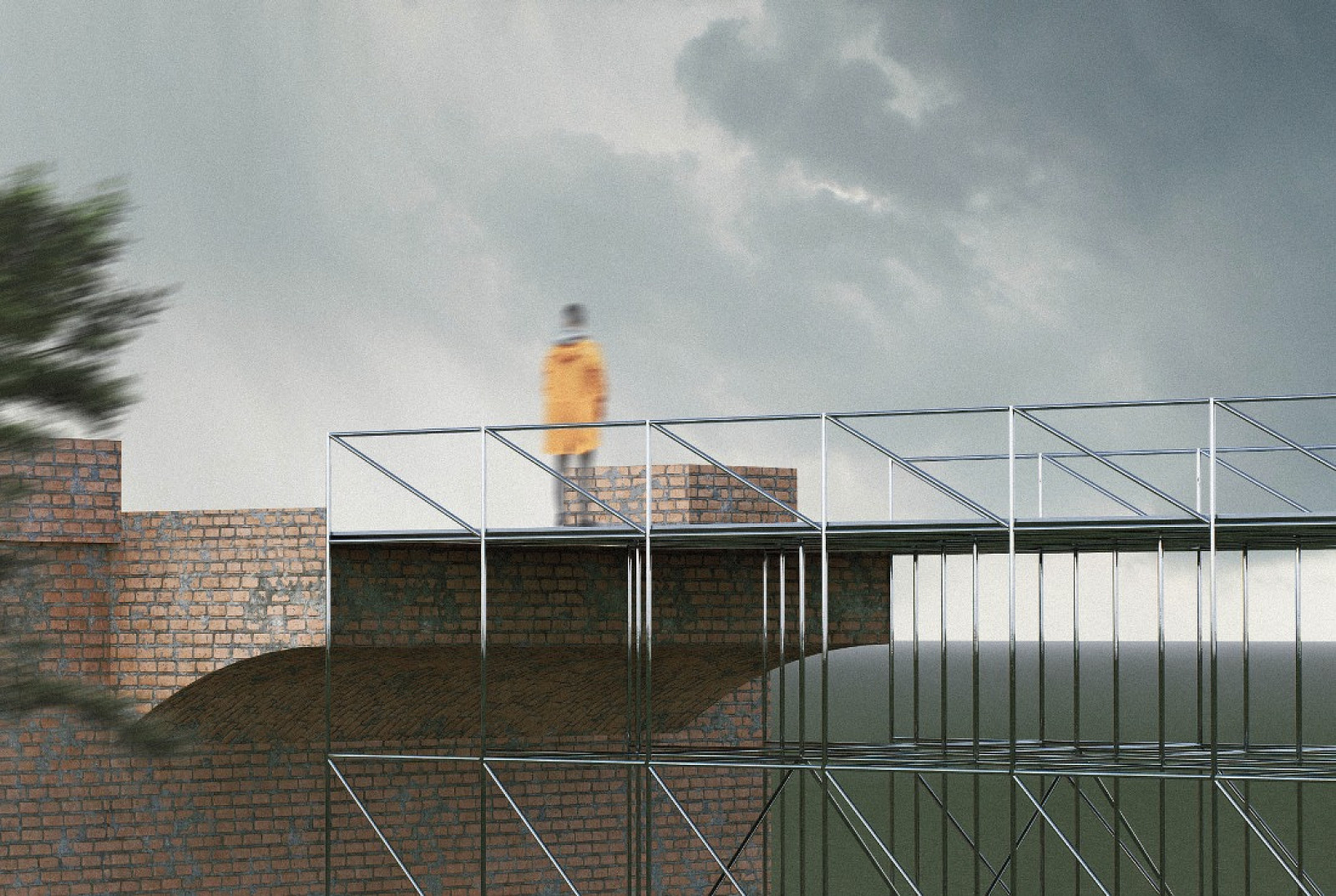
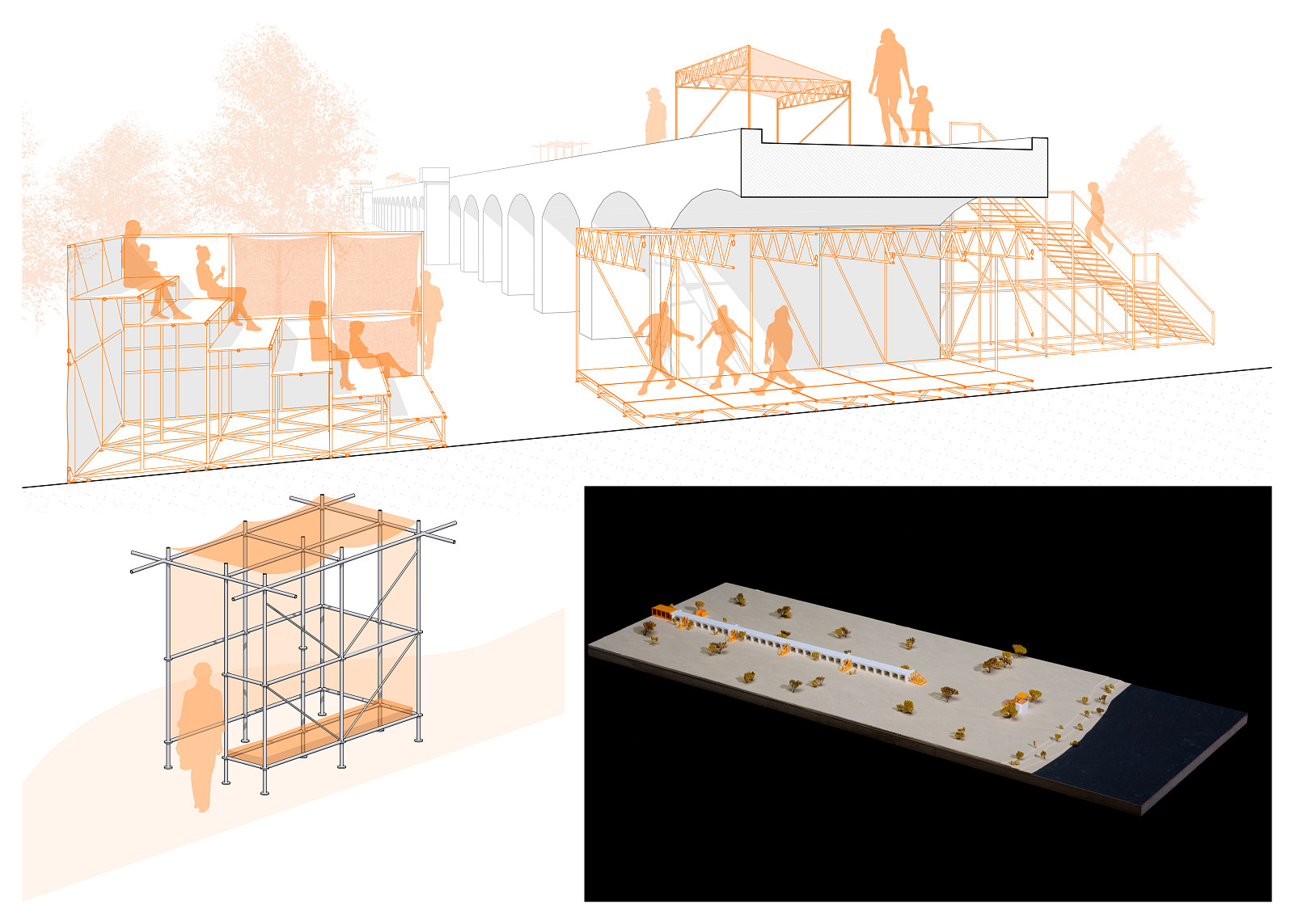
Central to our intervention strategy is the commitment to temporal reversibility and sustainability. Rather than imposing permanent structures upon this sensitive landscape, we embrace a contemporary stewardship model that recognizes our responsibility to future generations. The scaffolding constructions are not conceived as temporary necessities to be discarded, but as thoughtfully designed systems with inherent reuse potential. Each element is engineered for disassembly, relocation, and redeployment to other sites and contexts. This philosophy transforms the scaffolding from a utilitarian nuisance into a meaningful statement about sustainable design practice and circular economy principles. Precision and Respectful Intervention
We believe intervention should occur only where spatially and functionally required a doctrine of restraint that demands disciplined decision-making at every stage. This approach reflects a deep respect for the existing fabric and an understanding that less is often more eloquent than abundance.
Project description
The Place and Its Atmospheric Qualities
The Wesel railway bridge site occupies a unique position between urban and natural realms. Currently underutilized, the location possesses pronounced atmospheric qualities emerging from its layered history and direct relationship to the Rhine valley landscape. Our design activates these latent qualities through thoughtful accessibility and programming, making the site welcoming and experientially rich for diverse publics of all ages and abilities.
Leitmotif One: The Bridge as Viewpoint
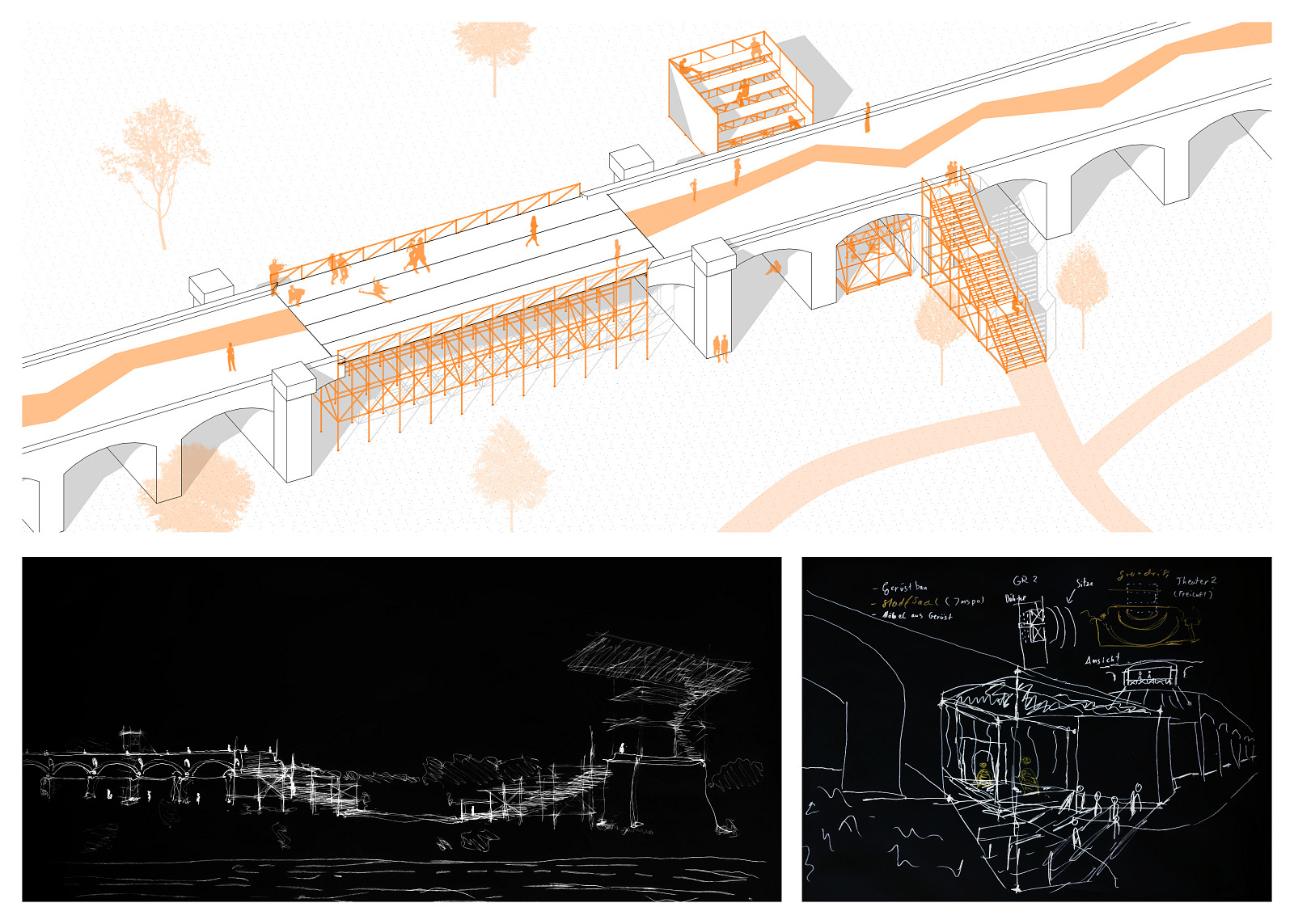
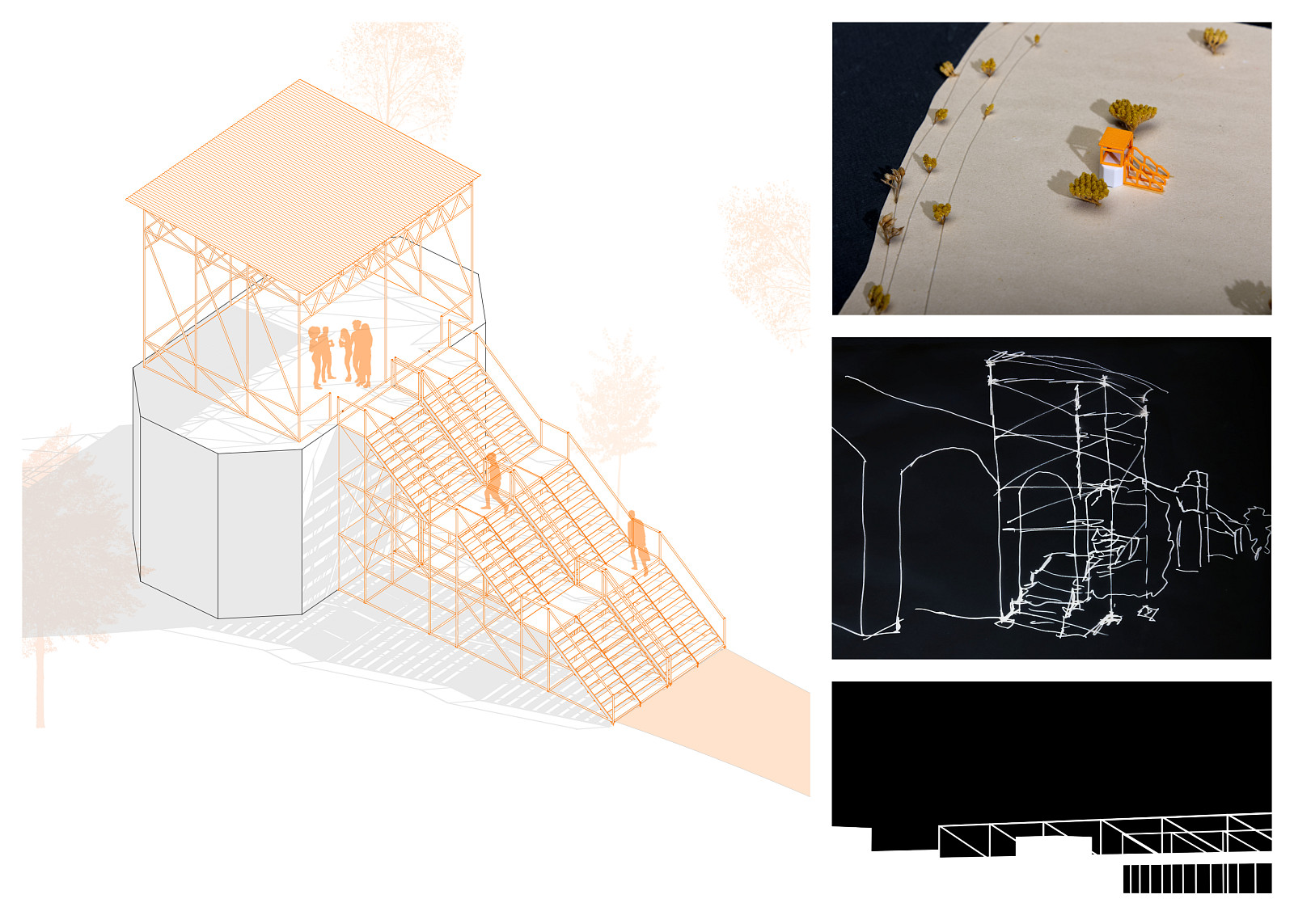
The final pier is repositioned as a panoramic viewing platform where visitors encounter the landscape and cityscape from a privileged perspective. From this elevated vantage point, the relationship between Rhine valley topography and Düsseldorf's urban skyline becomes legible and striking. The bridge transforms from an engineering object into an active participant in the visitor's perceptual experience.
Leitmotif Two: The Open-Air Theater
An open-air theater serves as a flexible, multipurpose cultural stage integrated into the landscape. This facility hosts theatrical productions, musical performances, community gatherings, and artistic interventions, transforming the site from a neglected remnant into an actively inhabited, culturally vital place.
Vision: From Abandonment to Integration
Our vision catalyzes the transformation of this dormant place into a genuinely integrative public realm functioning simultaneously as a gathering space, cultural venue, gateway to natural experience, and contemplative refuge. Strengthening the site's inherent qualities through sensitive intervention, we make its potential genuinely experiential and memorable for all visitors.
Technical information
The intervention consist of, Scaffolding Systems
Temporary structures engineered as modular, demountable systems using standardized steel frameworks and sustainably sourced timber decking. All elements are catalogued for straightforward disassembly and redeployment.
Created in:


Copyright © 2026 INSPIRELI | All rights reserved. Use of this website signifies your agreement to the Terms of Use, Privacy Policy, and use of cookies.
