MariDock


 Soha Elgohary
Project idea
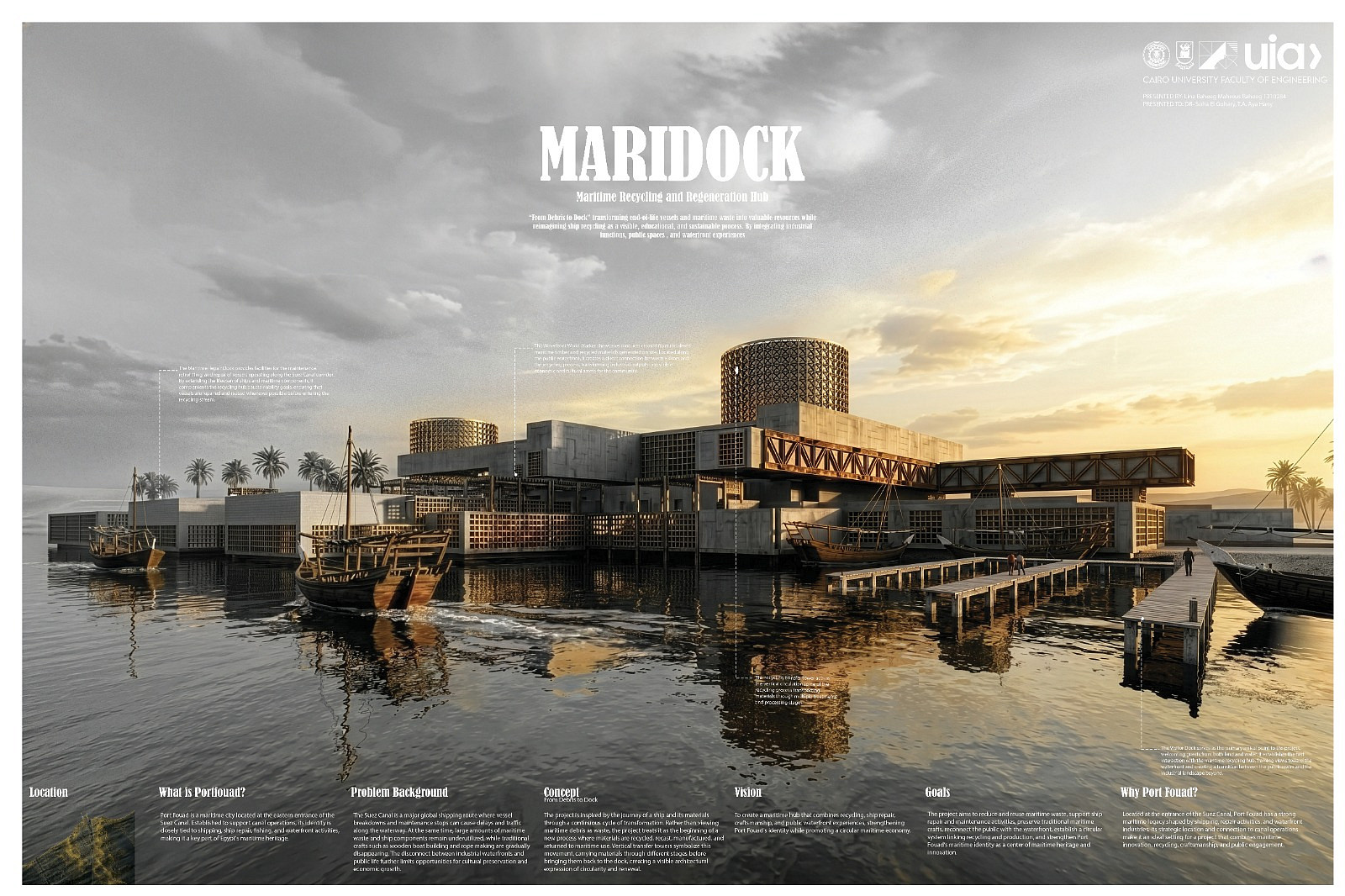
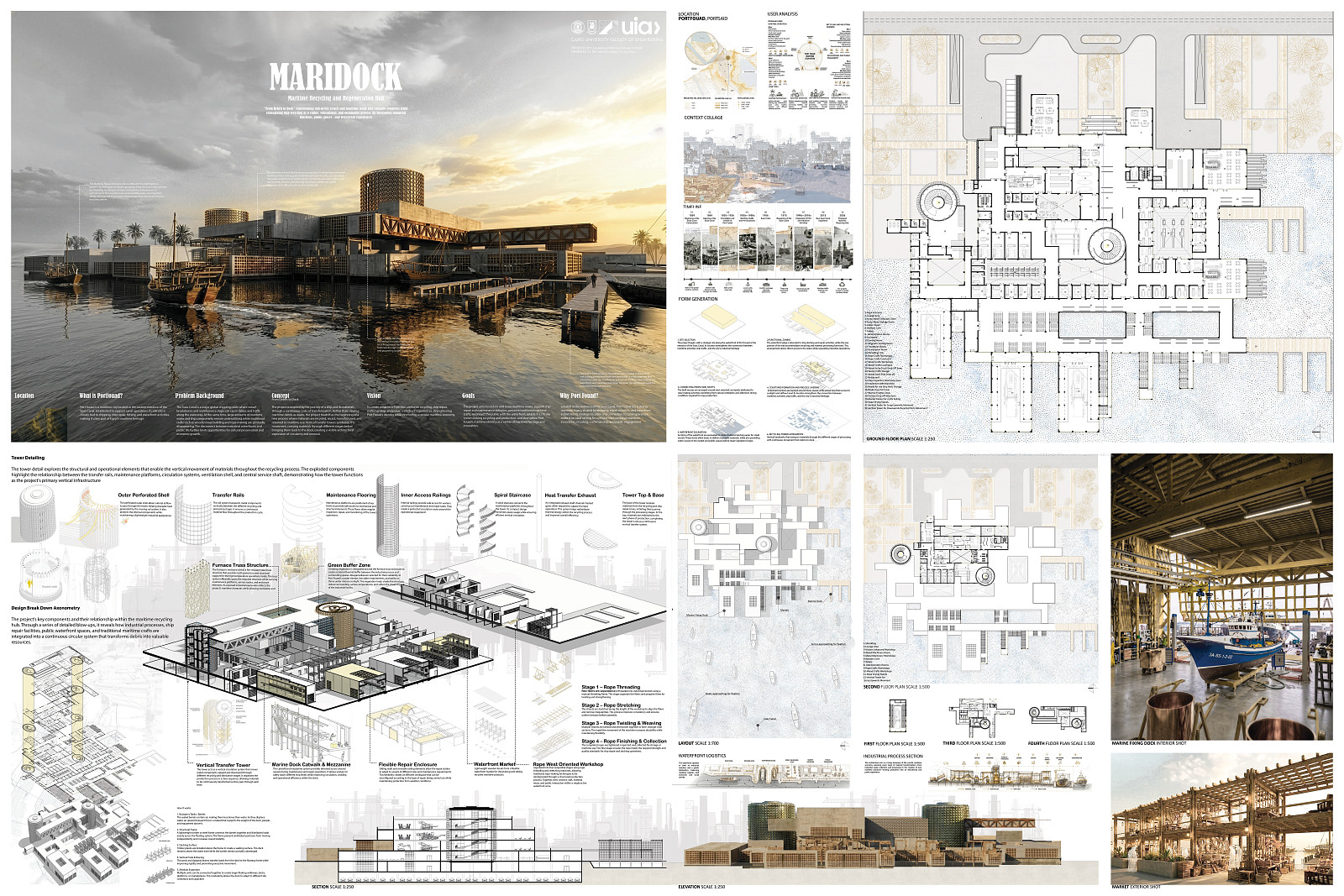
The Suez Canal is a major global shipping route where vessel breakdowns and maintenance stops can cause delays and traffic along the waterway. At the same time, large amounts of maritime waste and ship components remain underutilized, while traditional crafts such as wooden boat building and rope making are gradually disappearing. The disconnect between industrial waterfronts and public life further limits opportunities for cultural preservation and economic growth. Maritime Recycling and Regeneration Hub located in Port Fouad, reimagining the relationship between maritime industry, public life, and environmental responsibility. The project transforms end of life vessels and maritime waste into valuable resources through an integrated system of recycling, fabrication, ship repair, and traditional craftsmanship. By combining industrial production with public markets, educational spaces, and waterfront experiences, it also establishes a circular maritime economy that preserves Port Fouad's maritime heritage while responding to contemporary environmental and economic challenges.
Project description
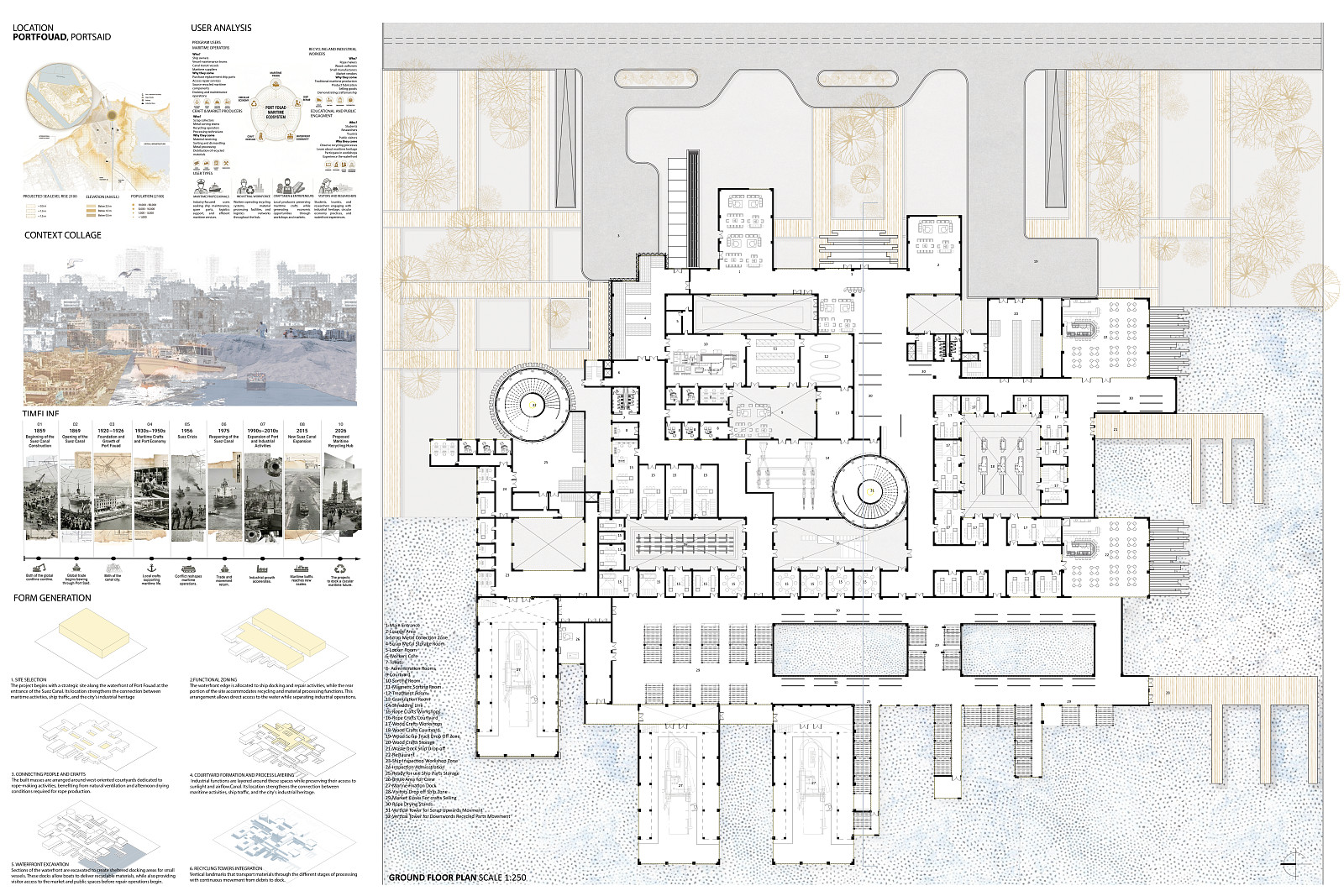
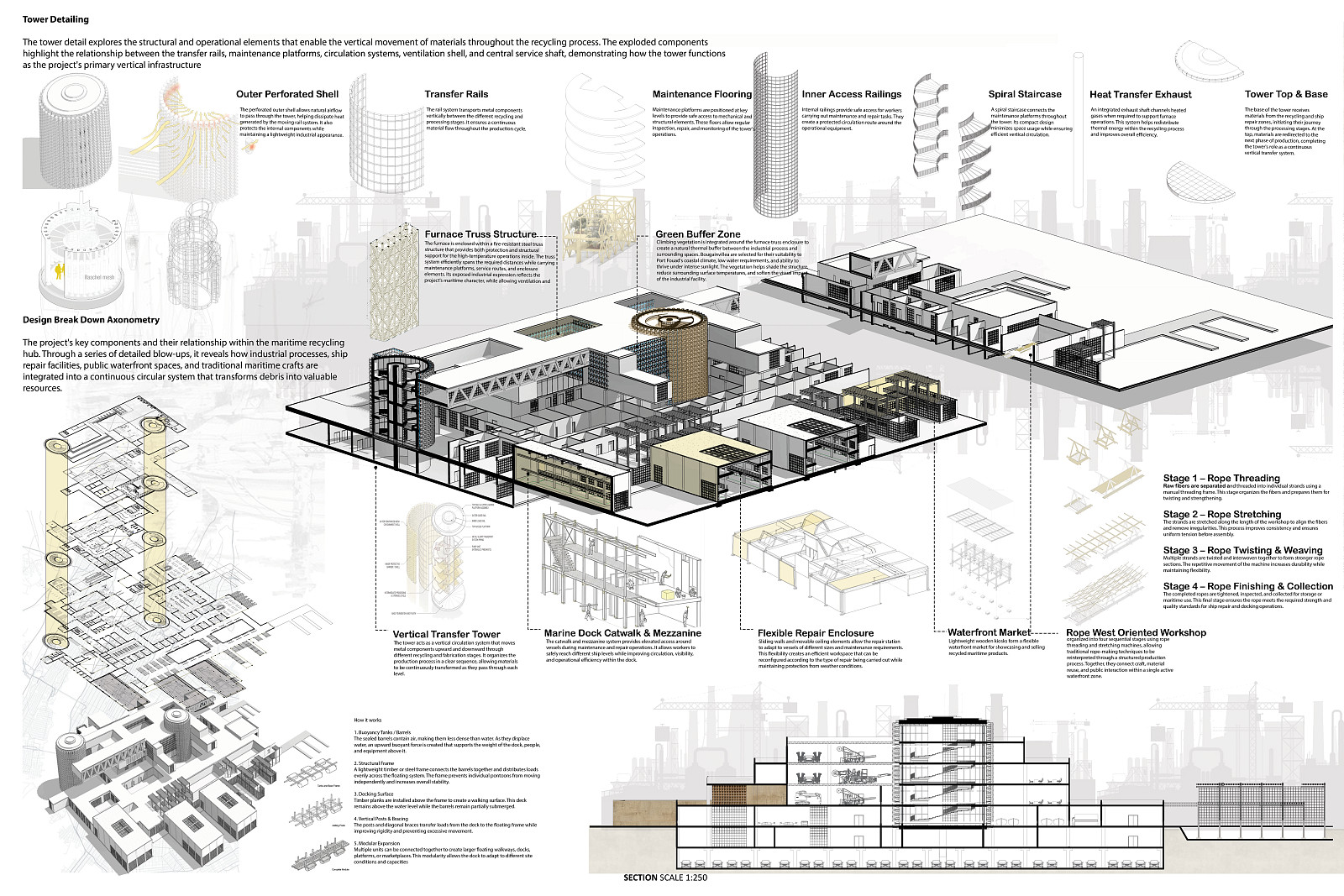
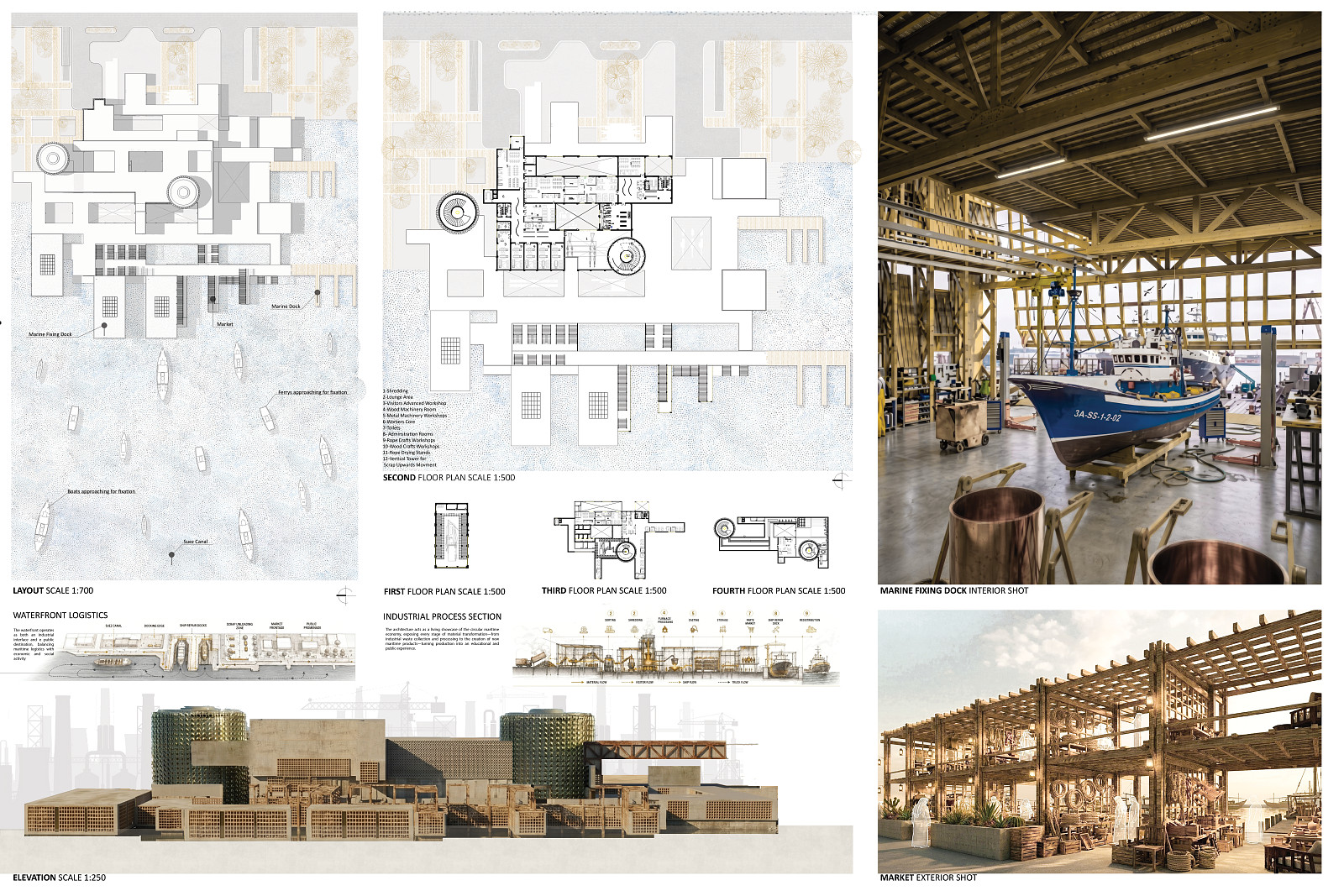
The project consists of a comprehensive maritime hub that integrates ship repair facilities, metal recycling and casting workshops, traditional rope making and woodworking workshops, waterfront markets, public docks, and educational spaces. Materials collected from damaged vessels enter a continuous production cycle, moving through vertical transfer towers, processing facilities, casting workshops, and fabrication areas before returning to ship repair by another railed tower or being transformed into marketable products. The development also activates the waterfront through public promenades, floating docks, and craft markets, creating a destination that connects industry with the local community and visitors that enter the project by the dock going through the workshops and markets until their ships are repaired in the repair dock.
Technical information
The project is organized around a phased industrial workflow supported by two vertical transfer towers that transport recycled metal between processing levels by magnetic railing. A ventilated perforated outer shell naturally cools the rail system, while a central service shaft houses circulation, maintenance access, and a gas exhaust system supplying heat to the furnace when required. Ship repair docks incorporate adaptable sliding walls, movable roof systems, catwalks, and mezzanine platforms to accommodate vessels of different sizes. The furnace is enclosed within a fire-resistant steel truss structure designed for high temperature environments, while floating pontoon docks provide flexible waterfront access that adapts to changing water levels. Passive environmental strategies, including naturally ventilated courtyards, perforated façades, and climate-responsive workshop layouts, improve thermal comfort while supporting traditional rope making and woodworking activities all oriented to the western direction which is most suitable for both crafts.

Copyright © 2026 INSPIRELI | All rights reserved. Use of this website signifies your agreement to the Terms of Use, Privacy Policy, and use of cookies.