REVERSED SHORELINE


Project idea
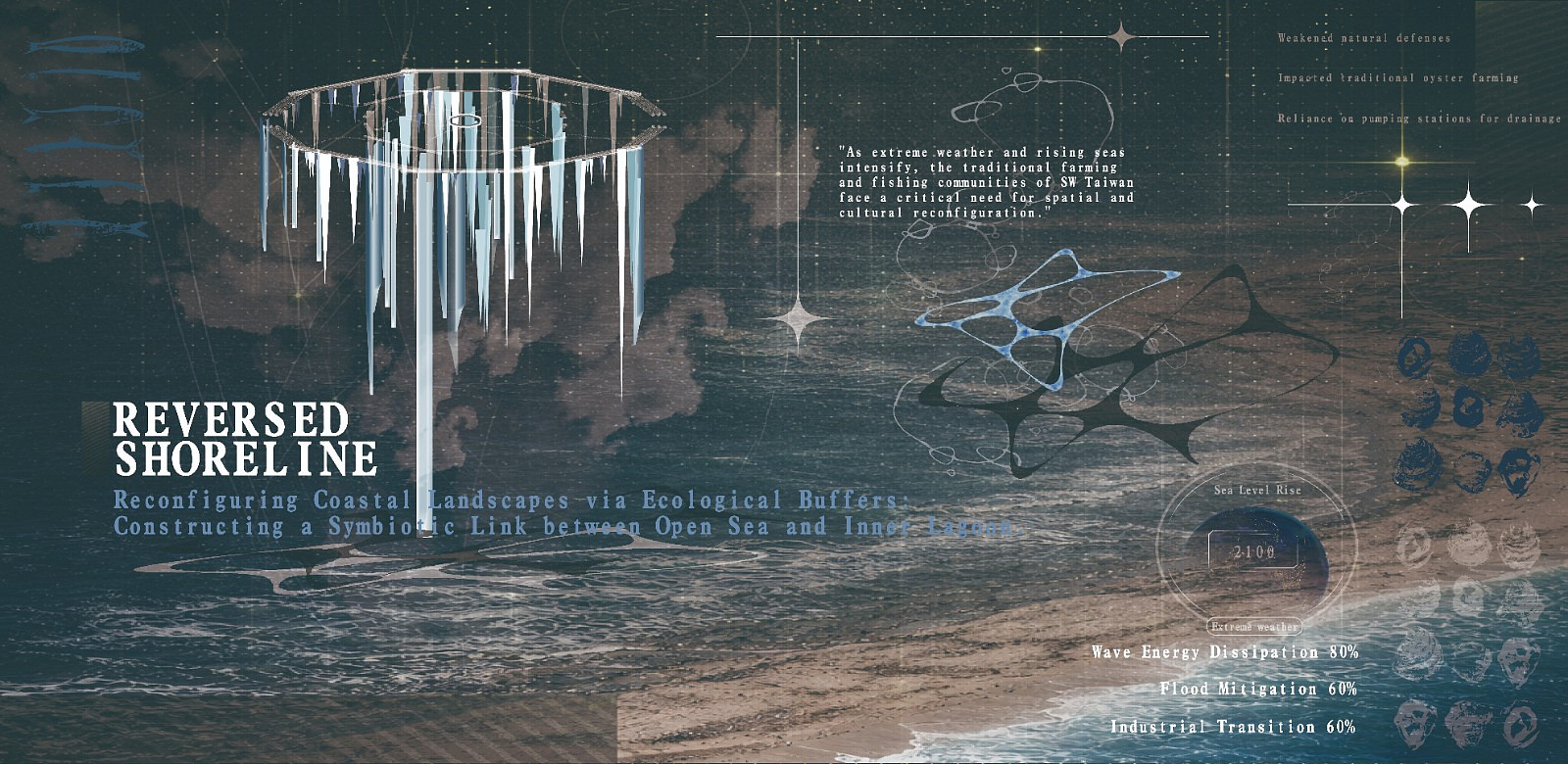
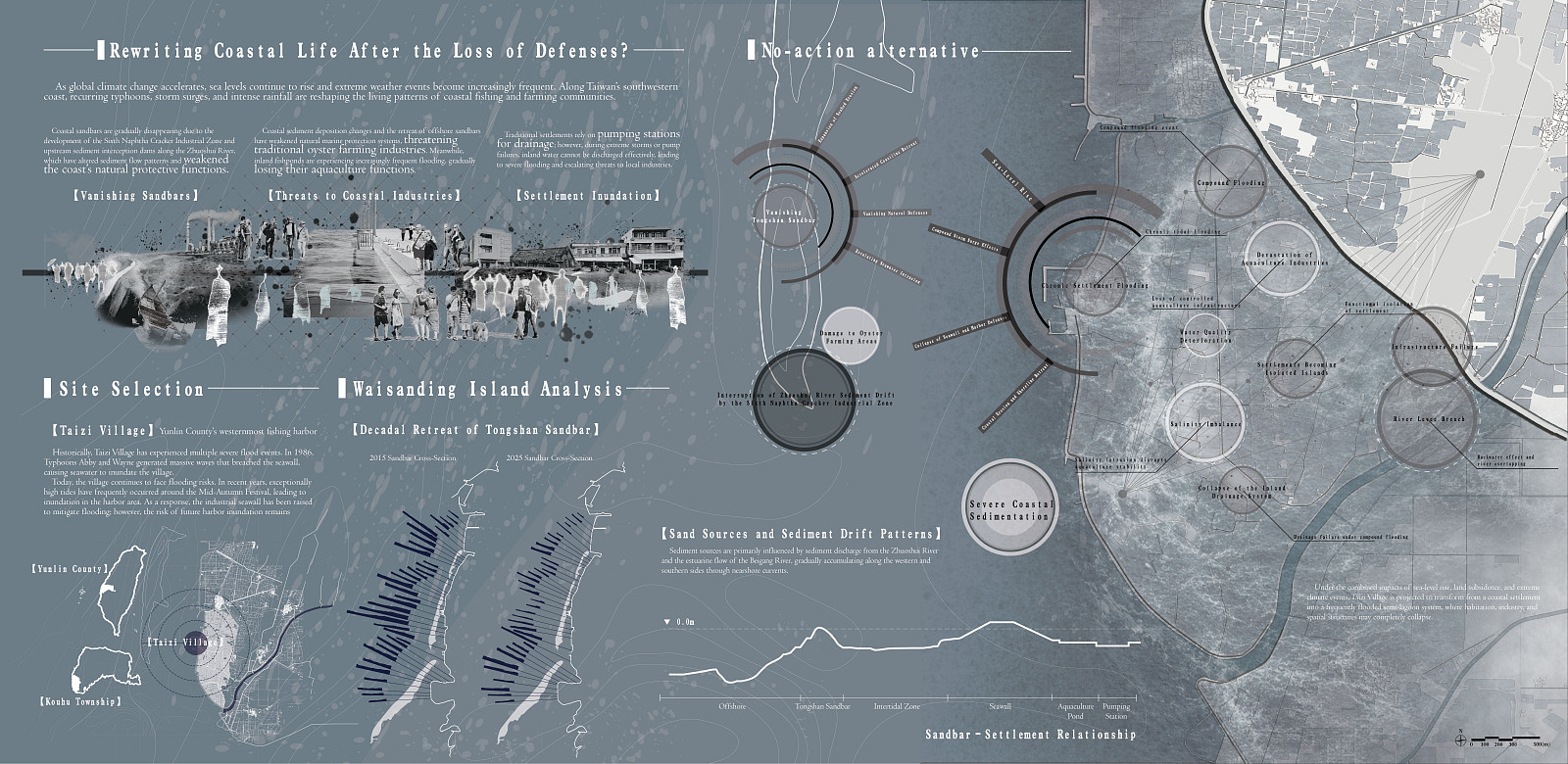
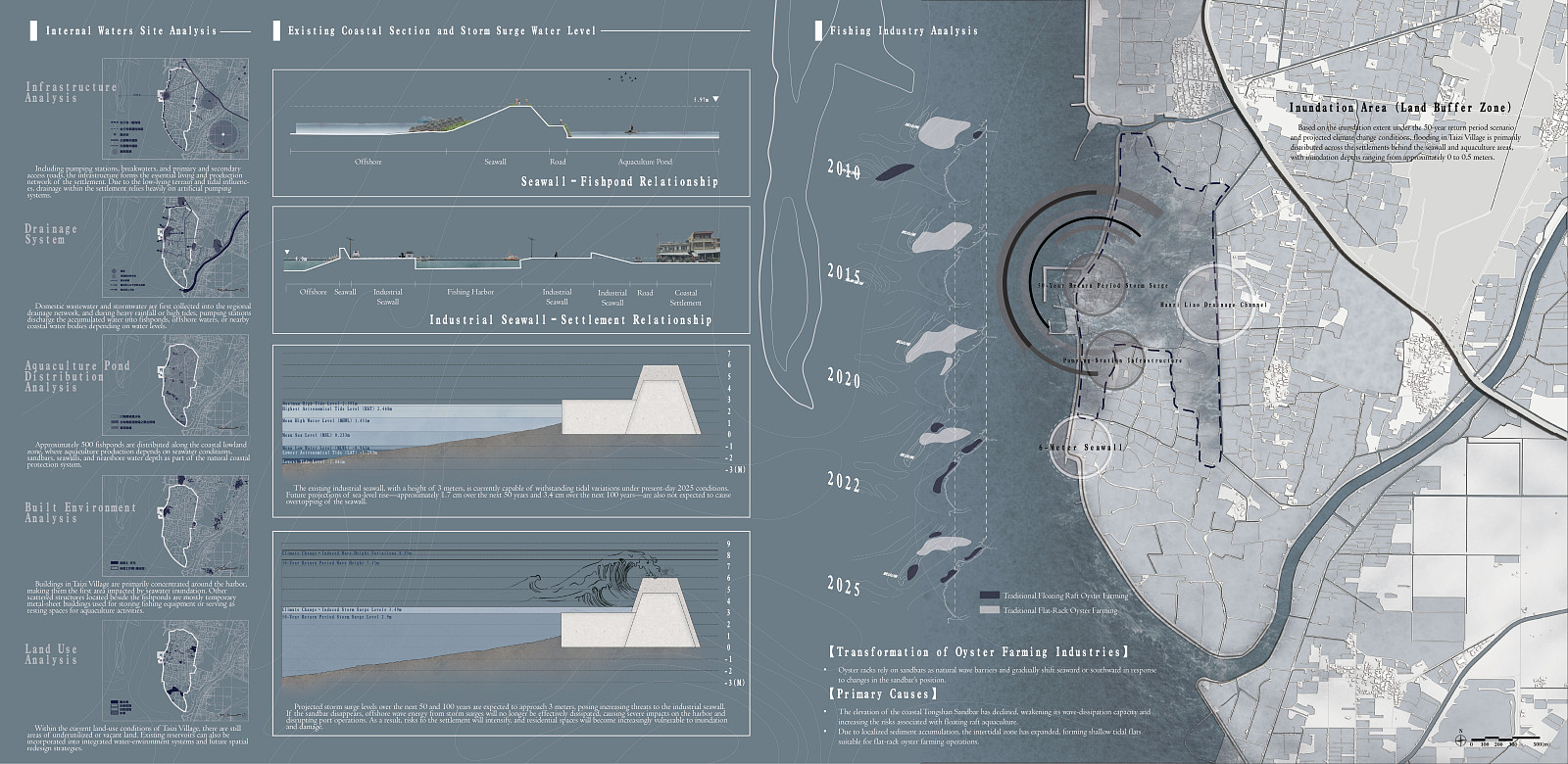
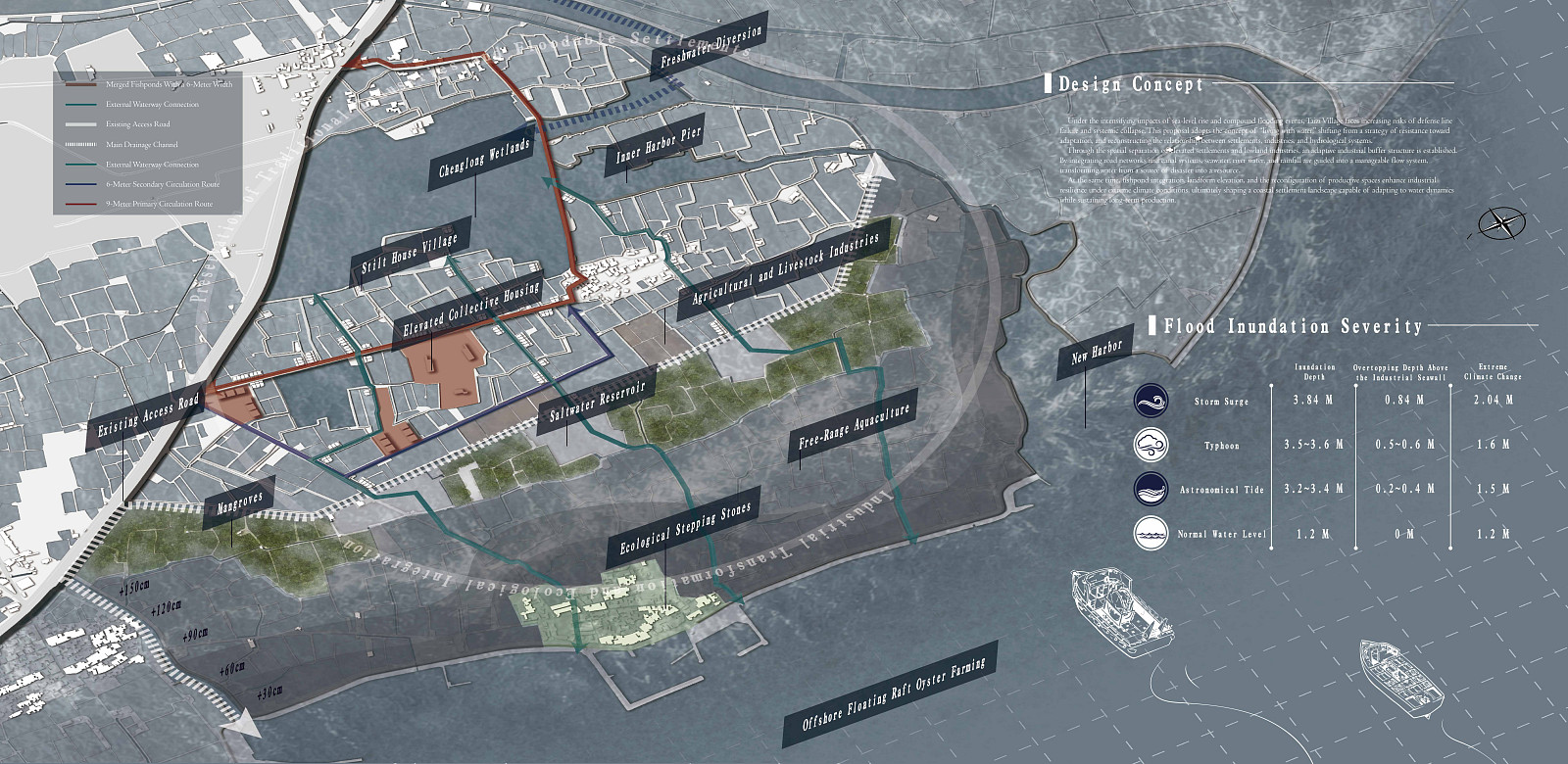
Reversed Shoreline responds to the accelerating impacts of sea-level rise, recurring storm surges, and land subsidence along Taiwan's southwestern coast. As conventional coastal defenses become increasingly insufficient, the project proposes a fundamental shift from resisting water to Living with Water—redefining the relationship between people, productive landscapes, and dynamic coastal ecosystems.
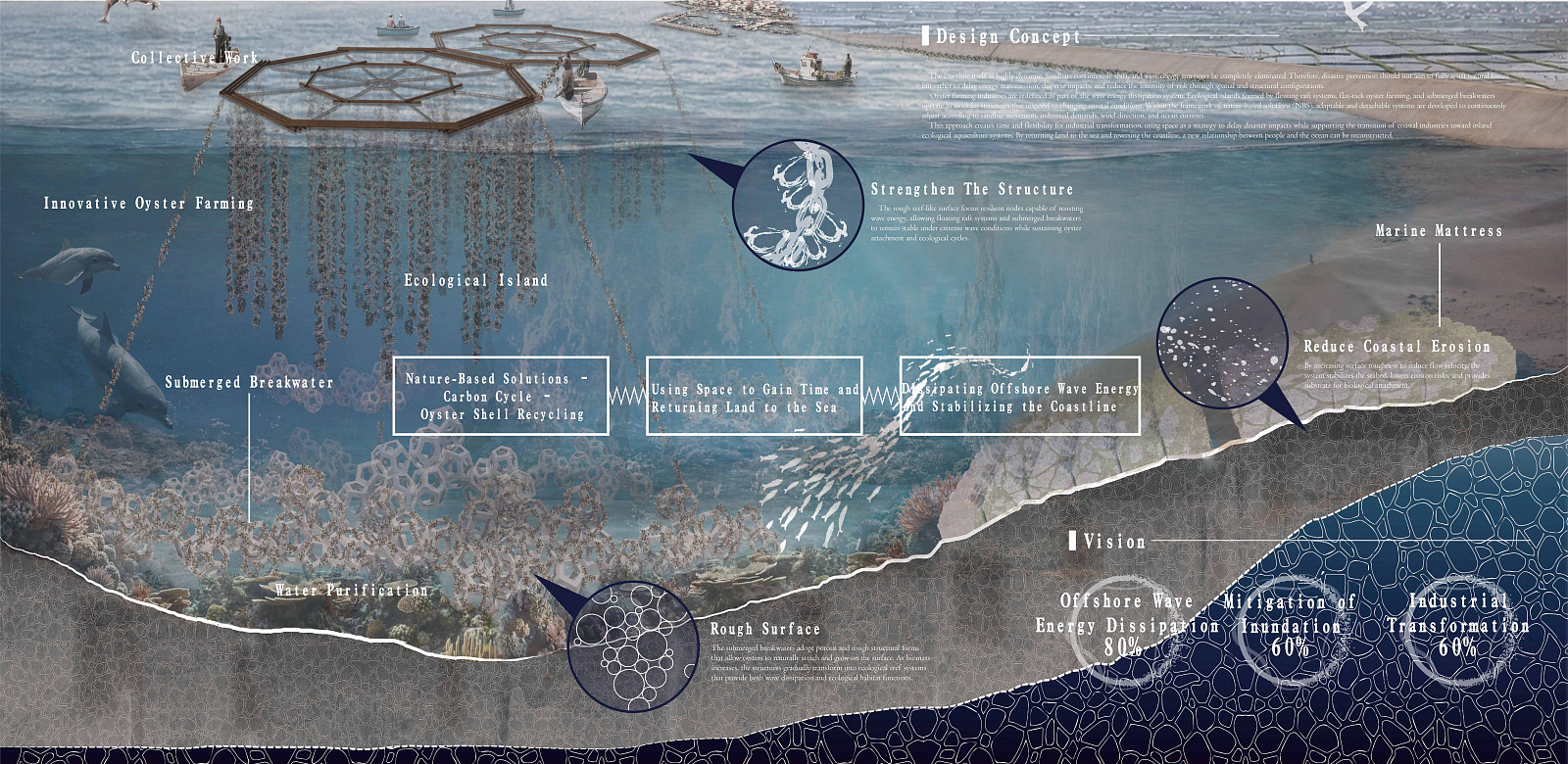
Rather than treating flooding as a hazard to eliminate, the proposal recognizes water as an ecological force capable of regenerating both natural and productive landscapes. By integrating offshore ecological infrastructure, adaptive aquaculture, wetlands, and elevated settlements, the project establishes a resilient coastal framework where ecological processes and human activities evolve together over time.
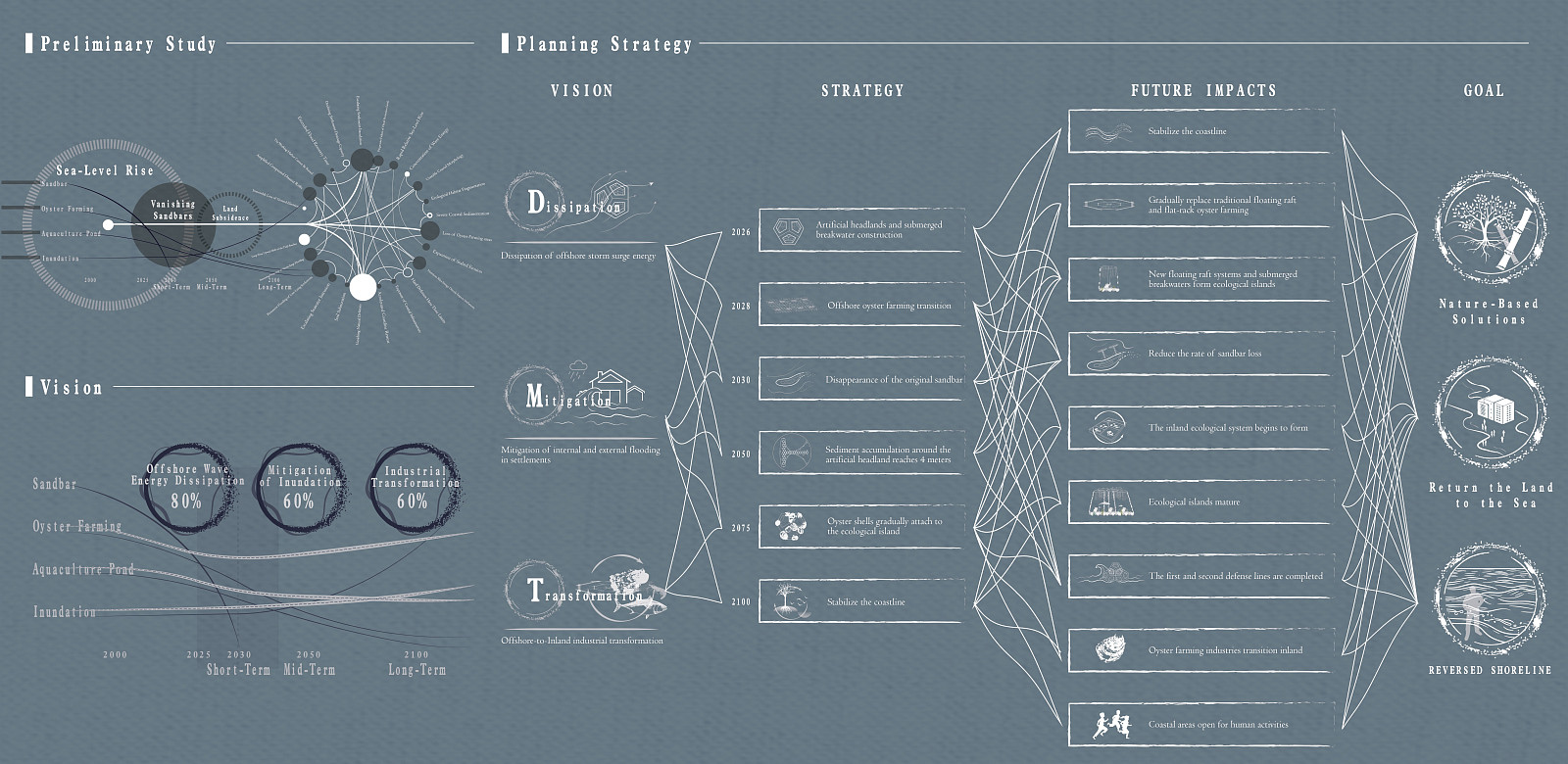
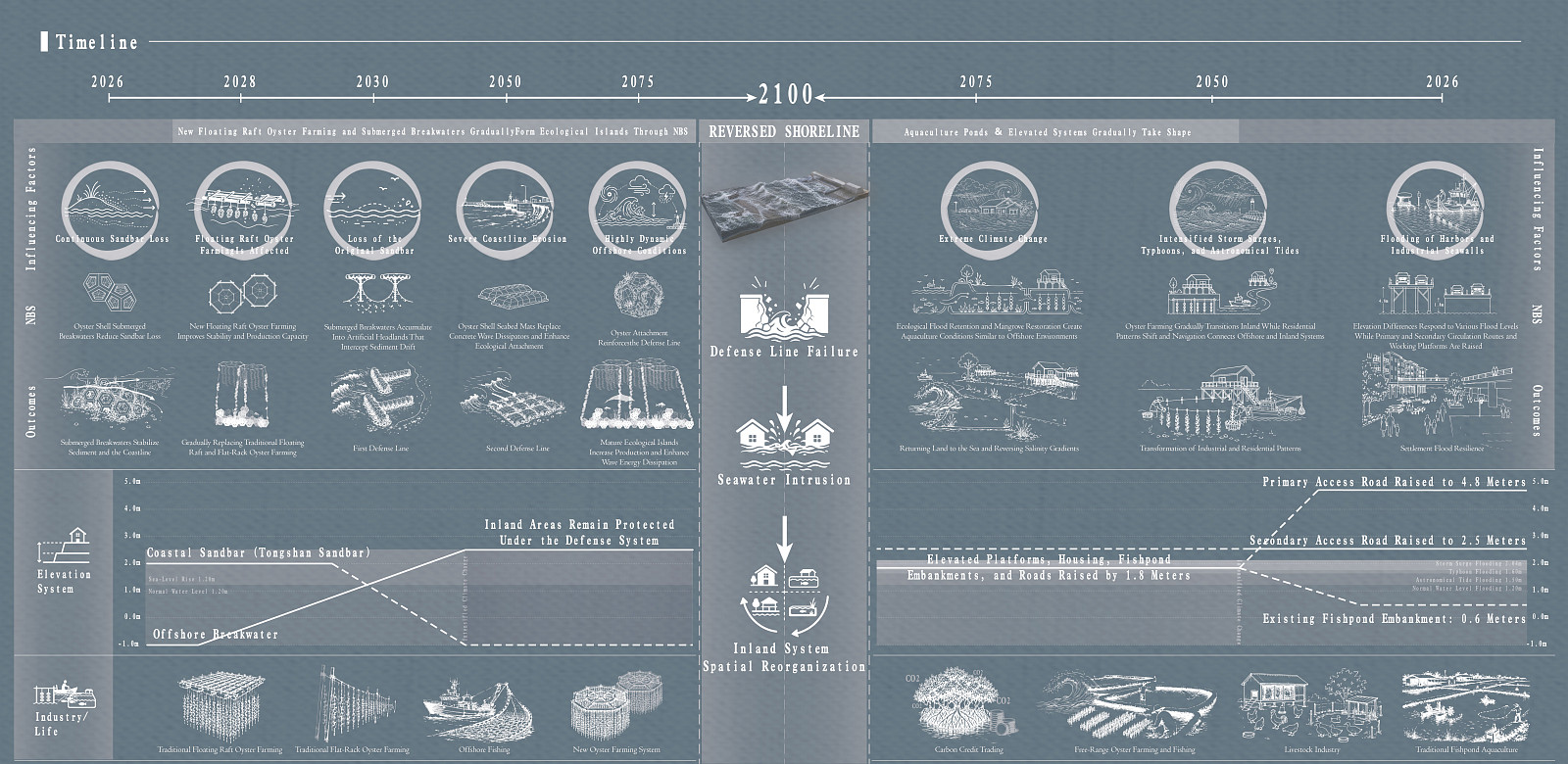
To realize this vision, the project adopts "Trading Space for Time" as its adaptive strategy, allowing coastal industries and settlements to gradually transform instead of abruptly retreating. Through phased adaptation and Nature-Based Solutions (NBS), the coastline is no longer defended as a fixed boundary but reimagined as a living, productive, and evolving landscape where communities coexist with changing waters.
Project description
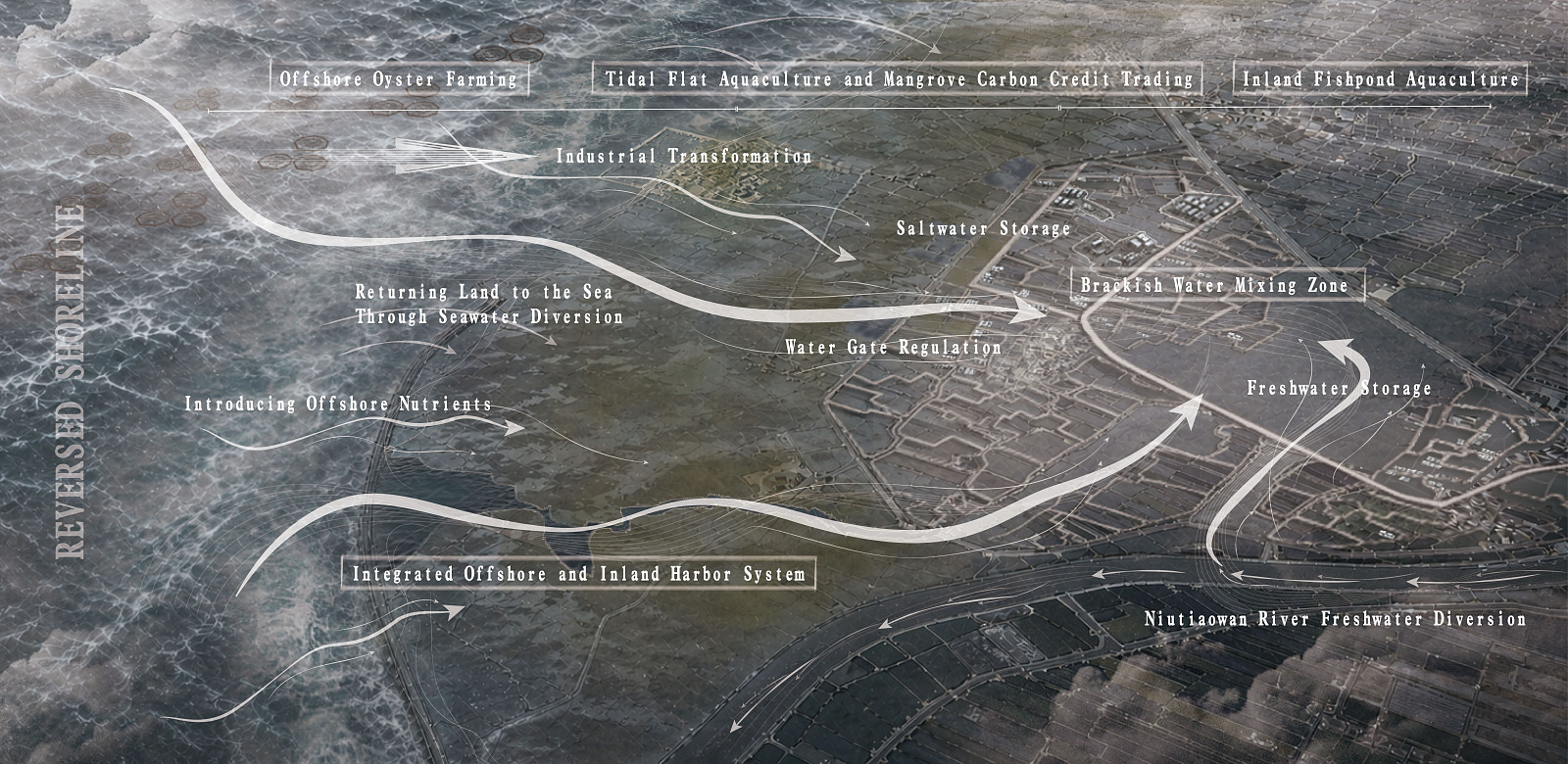
The proposal establishes a multi-scalar coastal adaptation framework that connects offshore waters, intertidal zones, inland aquaculture landscapes, and human settlements into one integrated ecological system. Rather than treating these environments as isolated components, the project reconstructs their ecological and productive relationships to create a resilient coastal territory capable of long-term adaptation.
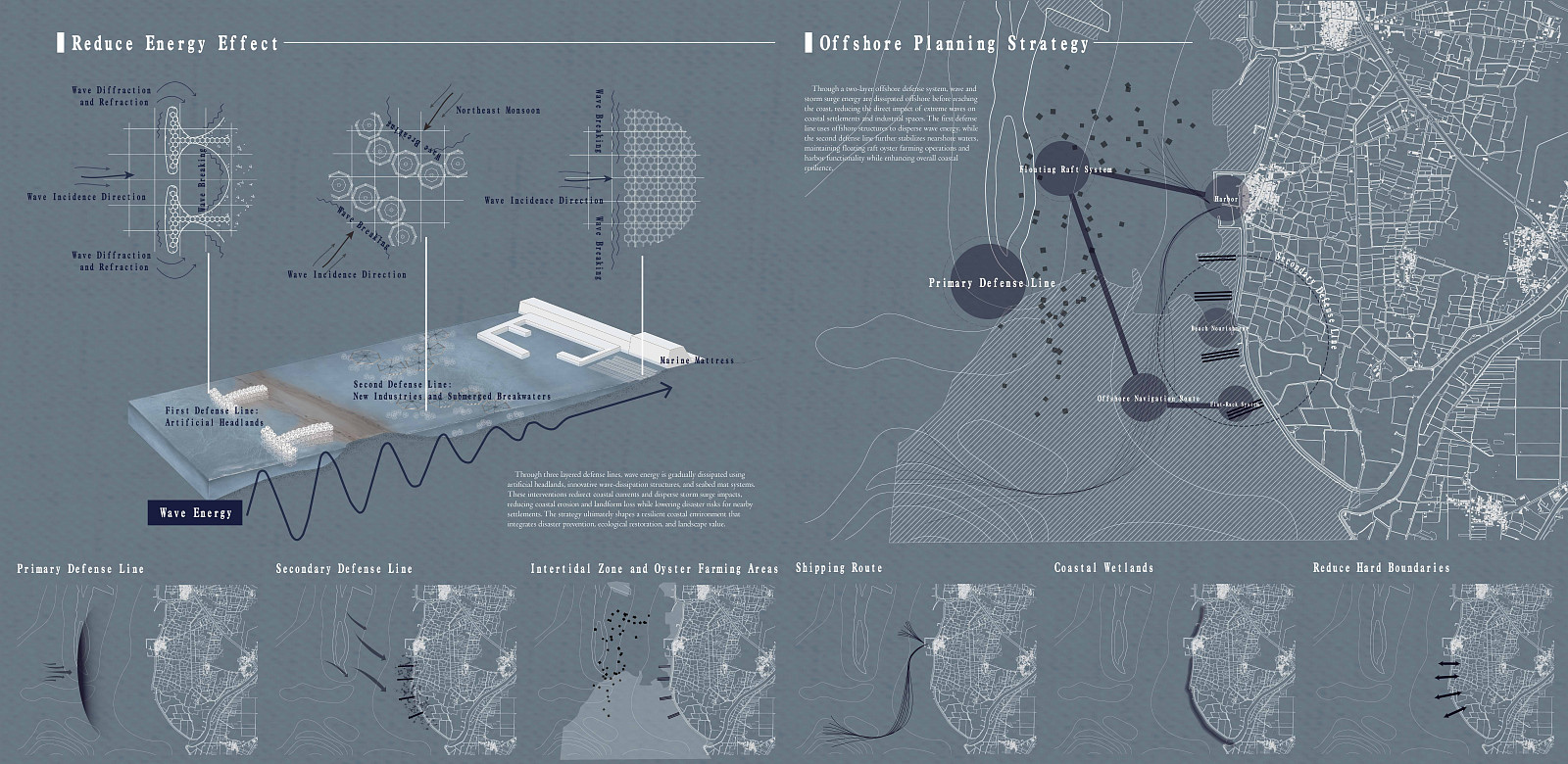
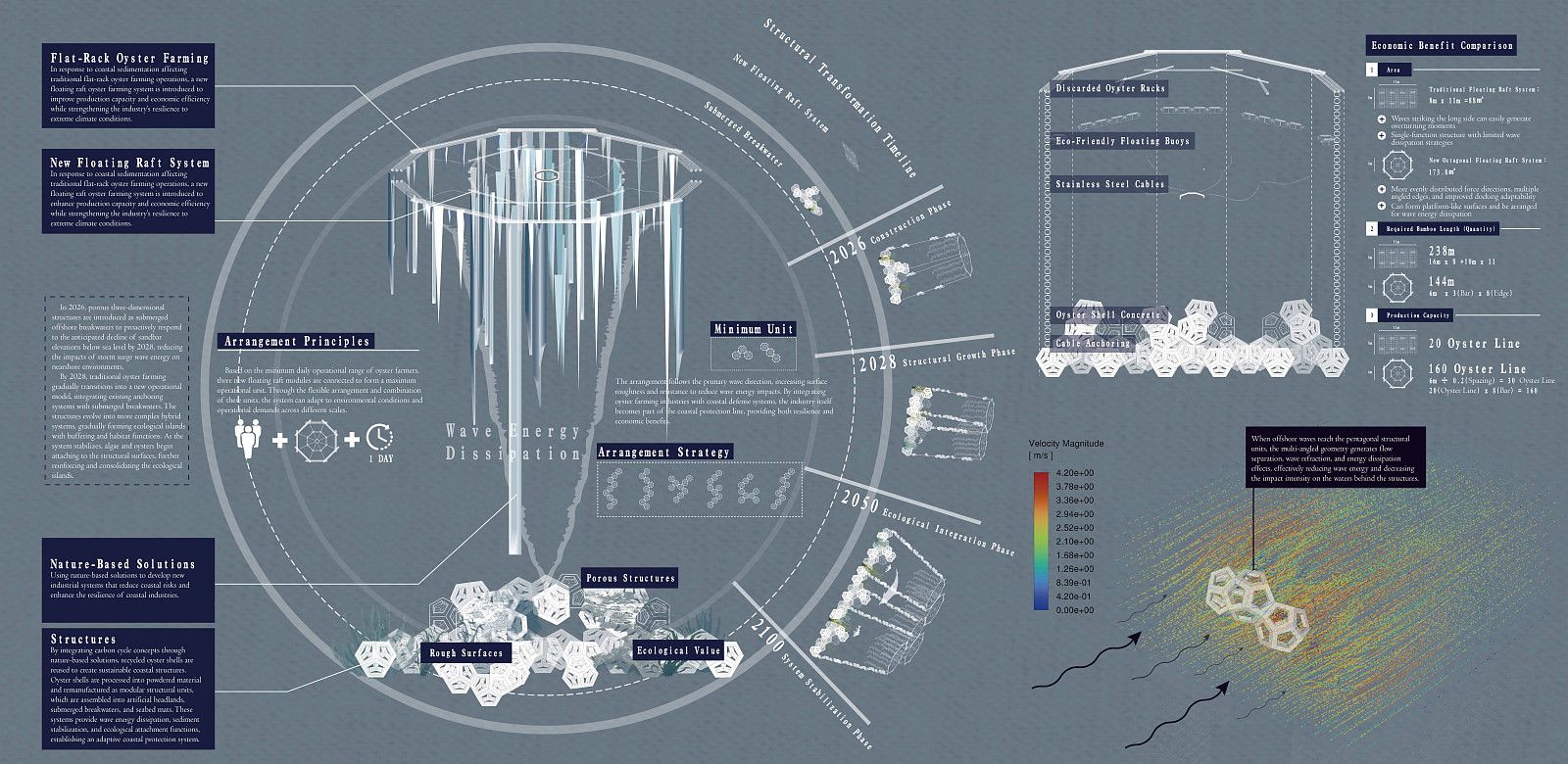
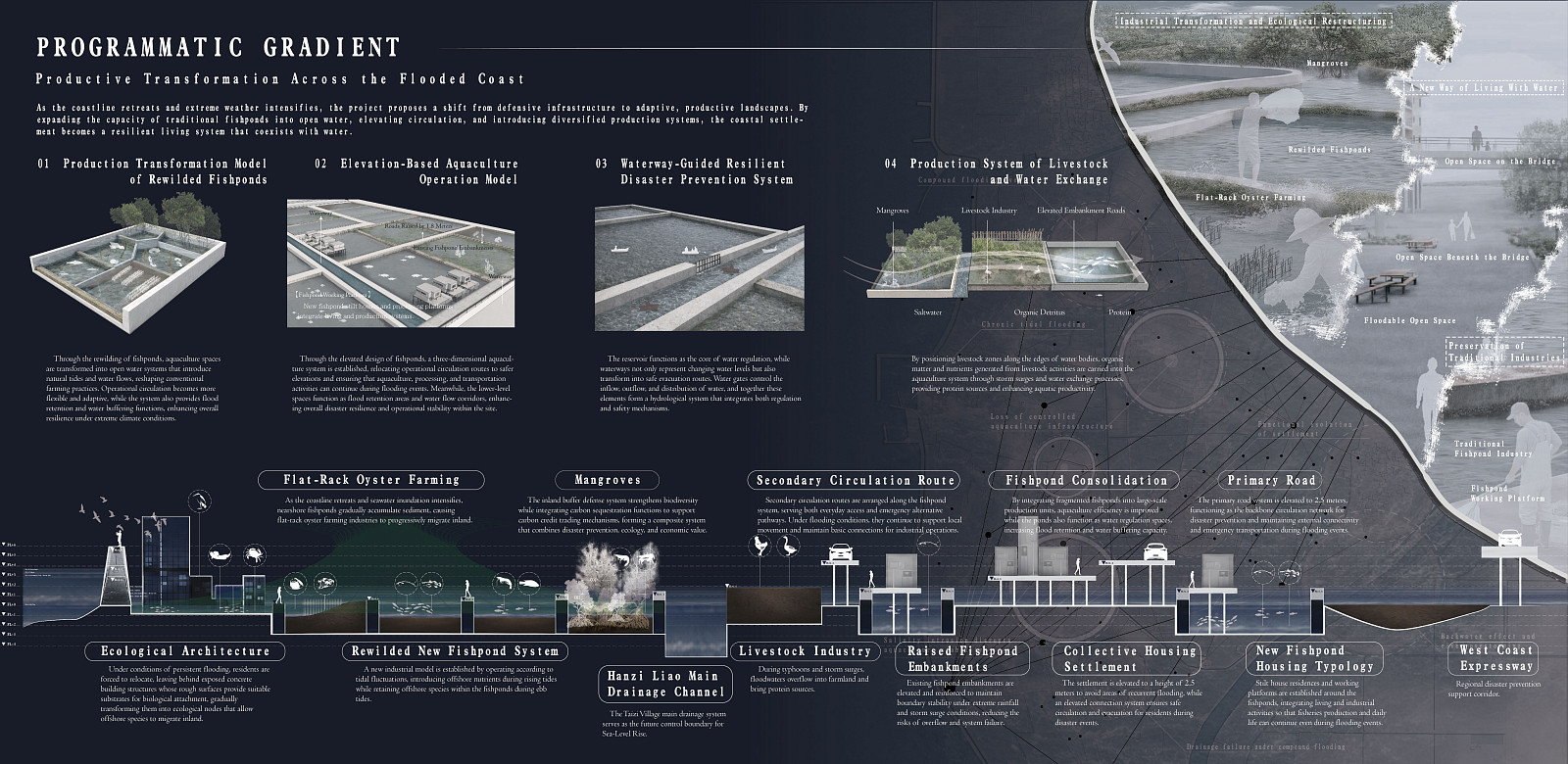
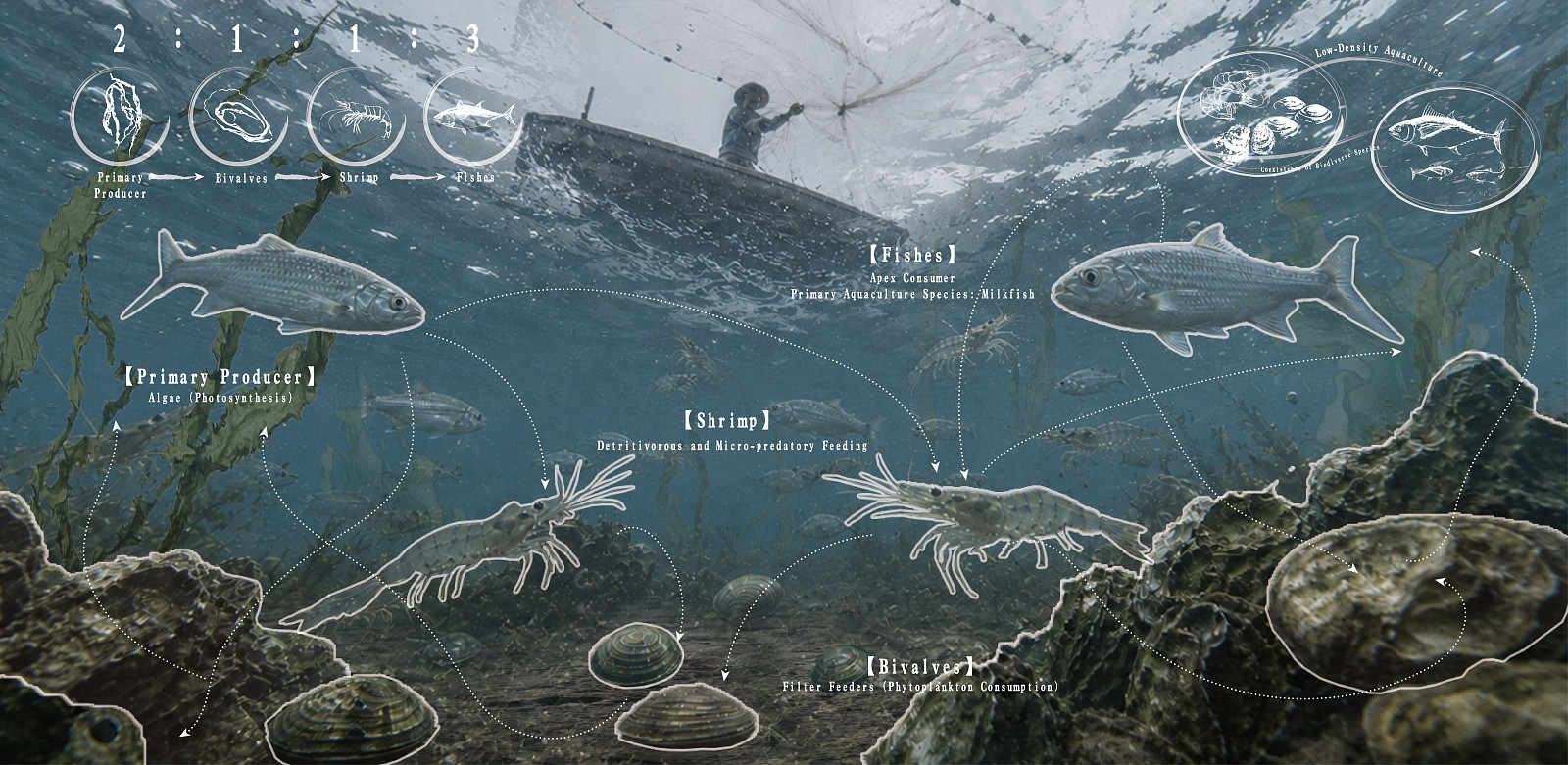
The offshore strategy transforms traditional floating oyster farms into a modular wave-energy dissipation network. Together with submerged detached breakwaters, these floating structures form ecological islands that reduce storm surge impacts while restoring marine habitats. Designed as detachable and relocatable modules, the system can evolve alongside shoreline migration and changing coastal dynamics, providing both environmental protection and a transitional platform for the future transformation of offshore aquaculture.
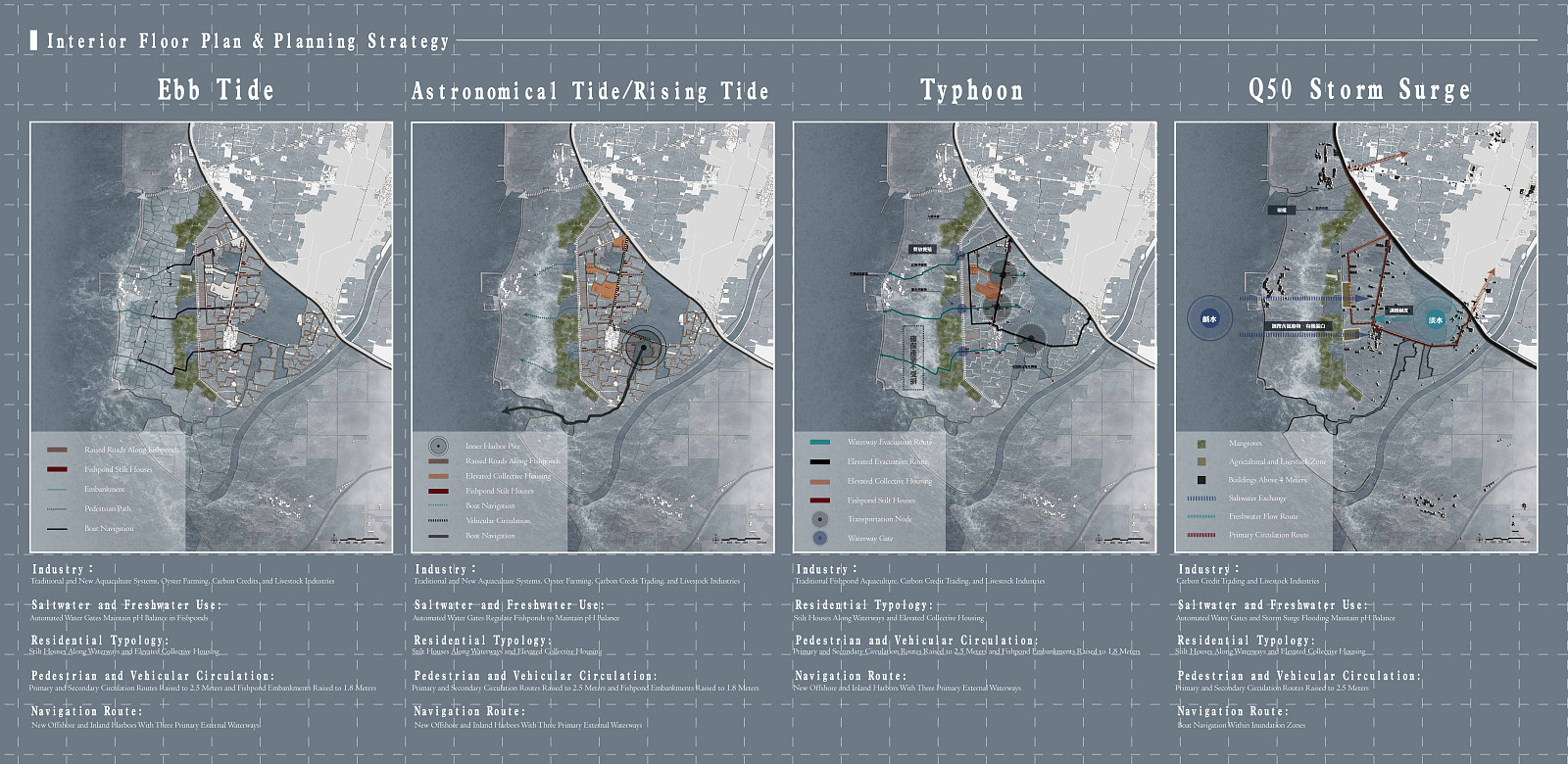
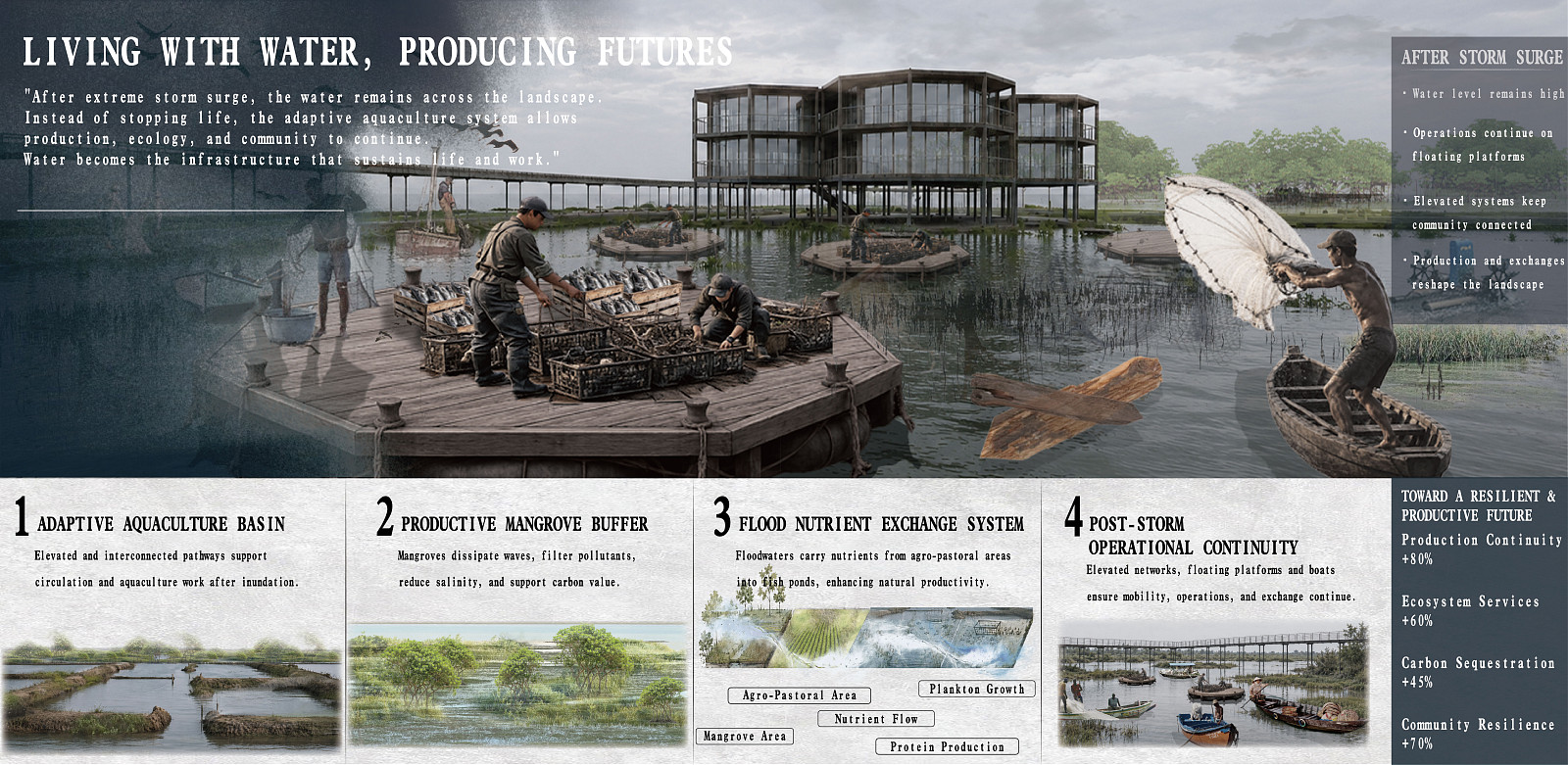
Inland, existing fishponds, wetlands, and agricultural lands are reorganized into an adaptive productive landscape. Elevated primary dikes define a resilient spatial framework, while controlled brackish–freshwater exchange regulates salinity during tidal events and storm surges. Mangrove forests, ecological agriculture, and aquaculture ponds function collectively as a multi-stage ecological filtration network, transforming marine nutrients into a circular production system that strengthens biodiversity, food production, and environmental resilience.
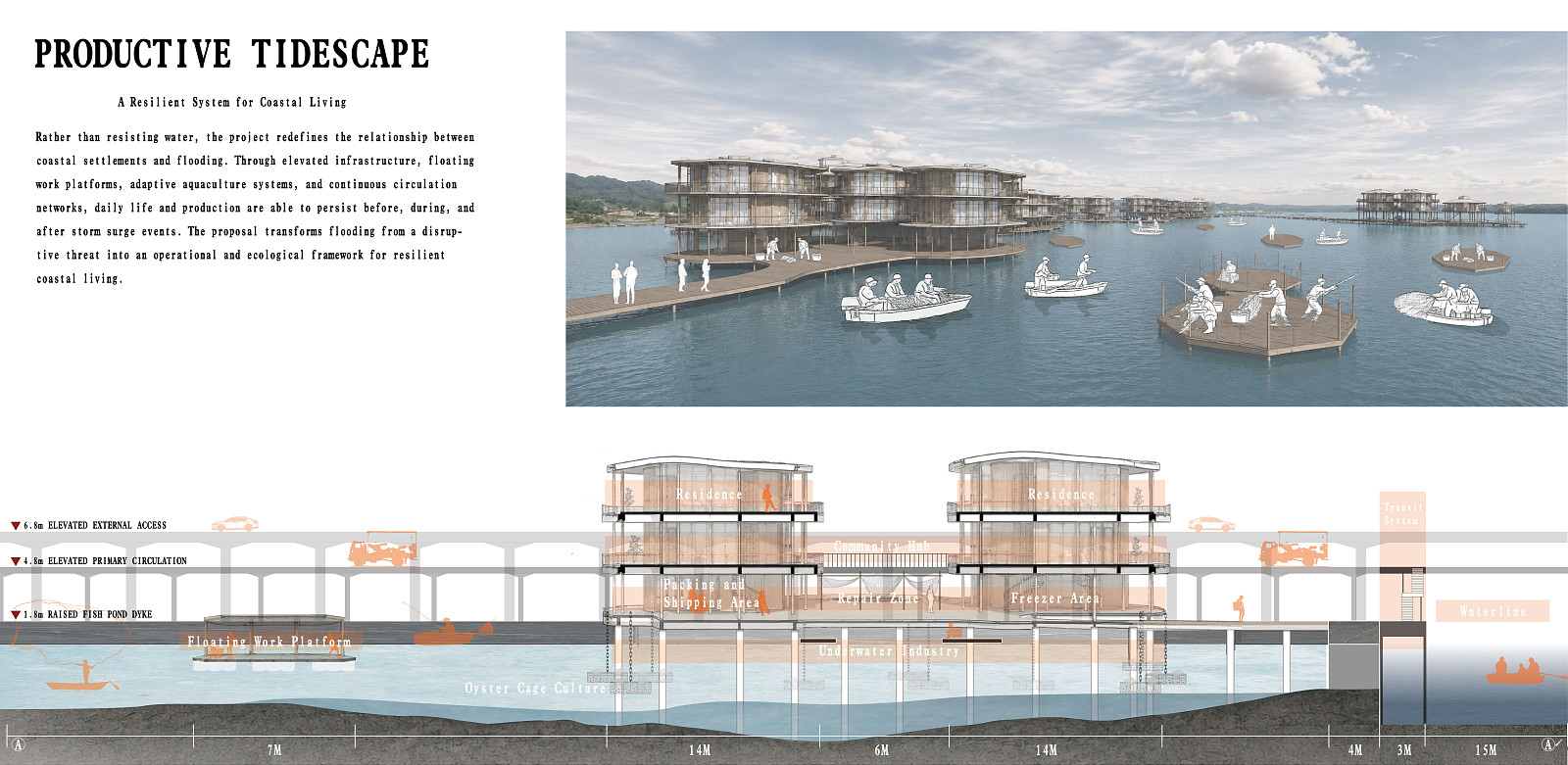
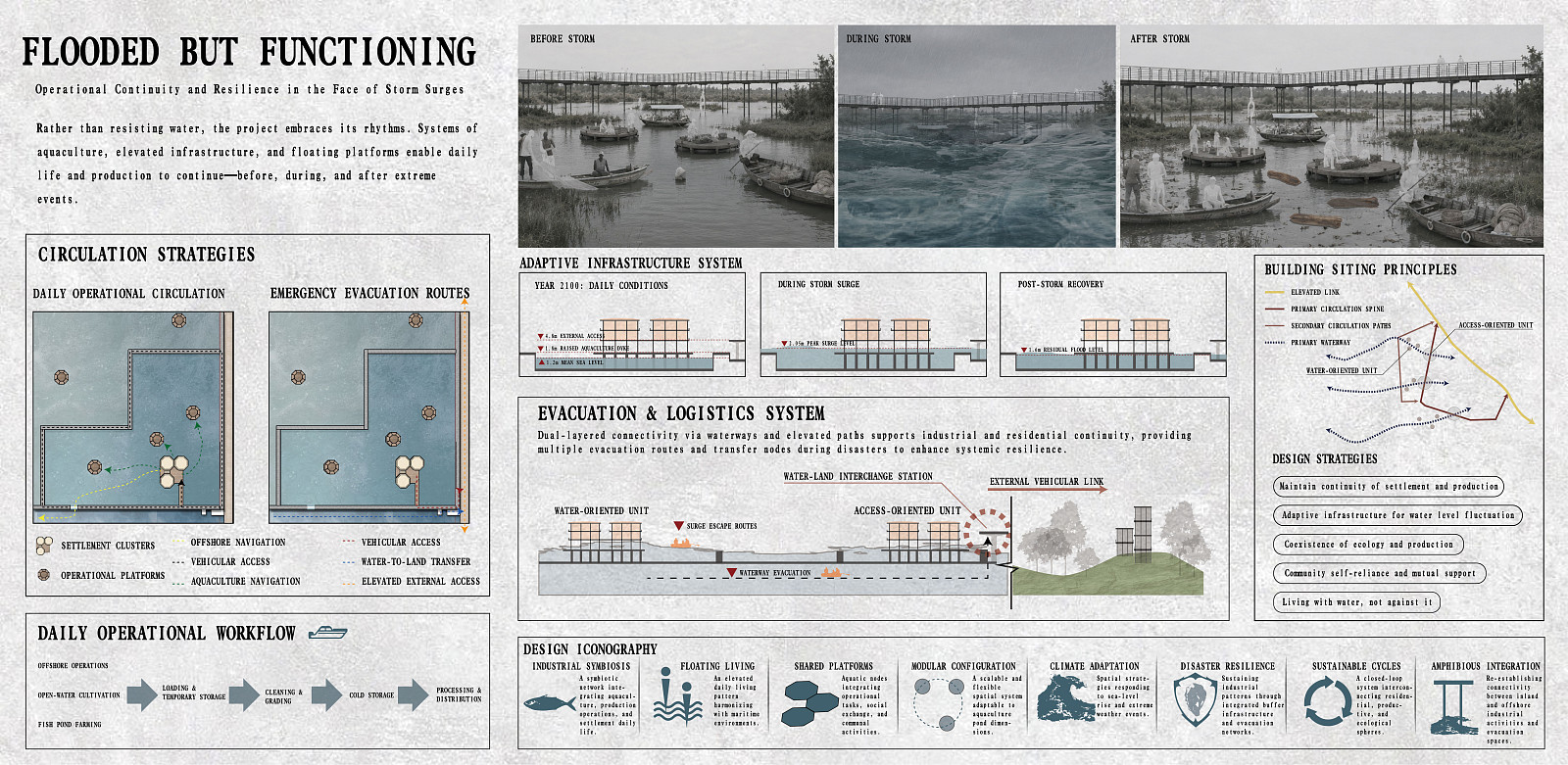
Human settlements are elevated above projected flood levels and connected through resilient transportation infrastructure, enabling communities to remain operational under increasingly frequent coastal flooding. Instead of separating land from water, the project embraces dynamic hydrological processes as the foundation for ecological regeneration, industrial transition, and long-term coexistence between people and the changing coastline.
Technical information
The project integrates Nature-Based Solutions (NBS) with adaptive engineering to create a resilient coastal infrastructure capable of responding to long-term environmental change.
The offshore system consists of modular floating oyster rafts combined with submerged detached breakwaters that function as ecological islands for wave-energy dissipation, habitat restoration, and aquaculture production. The modular construction enables flexible assembly, maintenance, and relocation in response to shoreline migration and changing sediment dynamics.
The inland system reorganizes existing fishponds into an adaptive aquaculture network supported by elevated primary dikes, controlled brackish–freshwater exchange, and multi-layer ecological filtration through mangrove forests, wetlands, and productive landscapes. Water is managed as a circulating resource rather than discharged, improving ecological performance while supporting local food production.
Residential clusters are elevated above projected flood levels and linked by resilient transportation infrastructure to maintain accessibility during flood events. The overall strategy operates through phased implementation, allowing ecological succession, industrial transformation, and community adaptation to occur simultaneously while strengthening long-term coastal resilience.


Copyright © 2026 INSPIRELI | All rights reserved. Use of this website signifies your agreement to the Terms of Use, Privacy Policy, and use of cookies.
