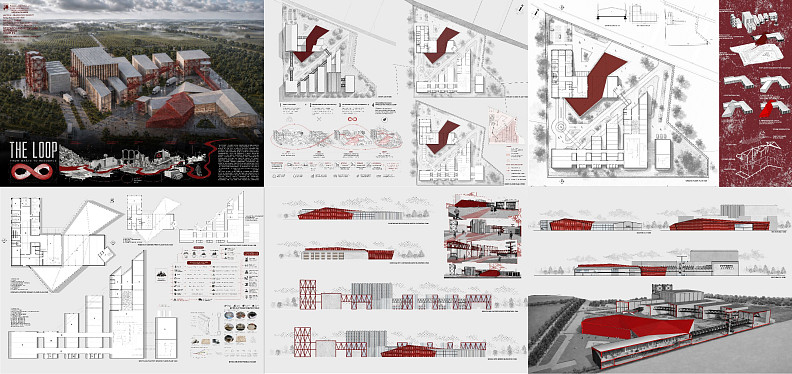
The Loop - From Waste to Resource


Project idea
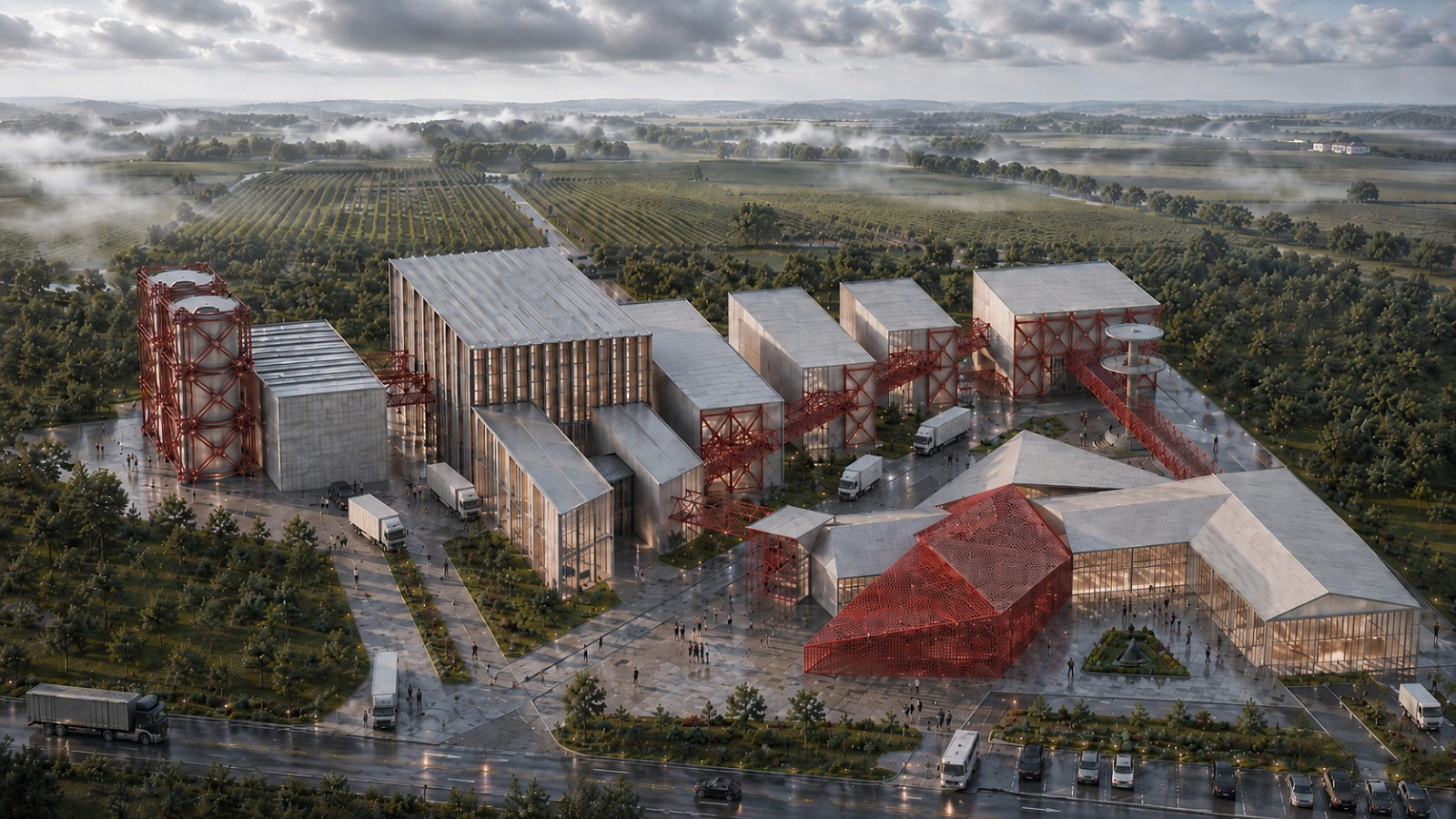
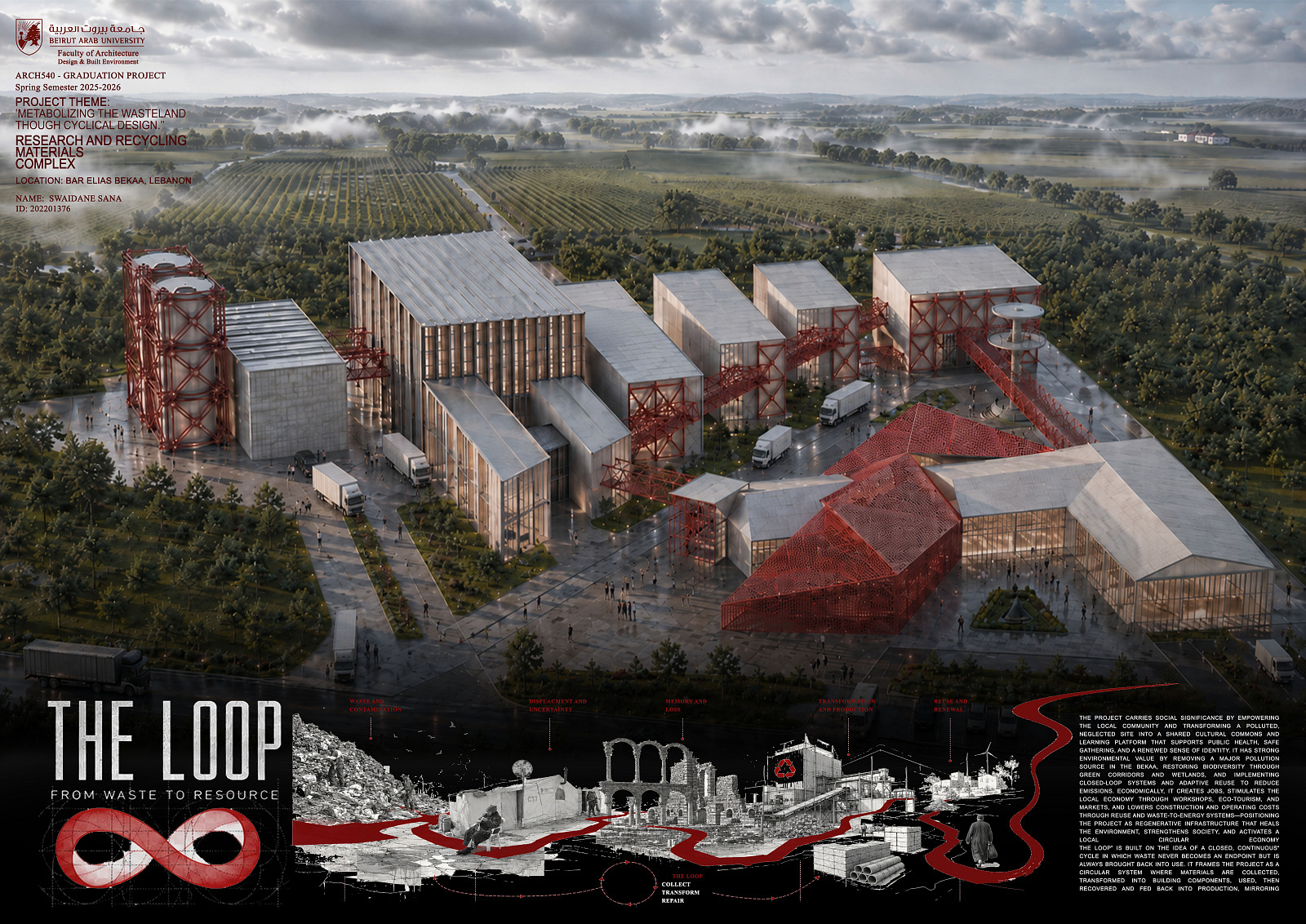
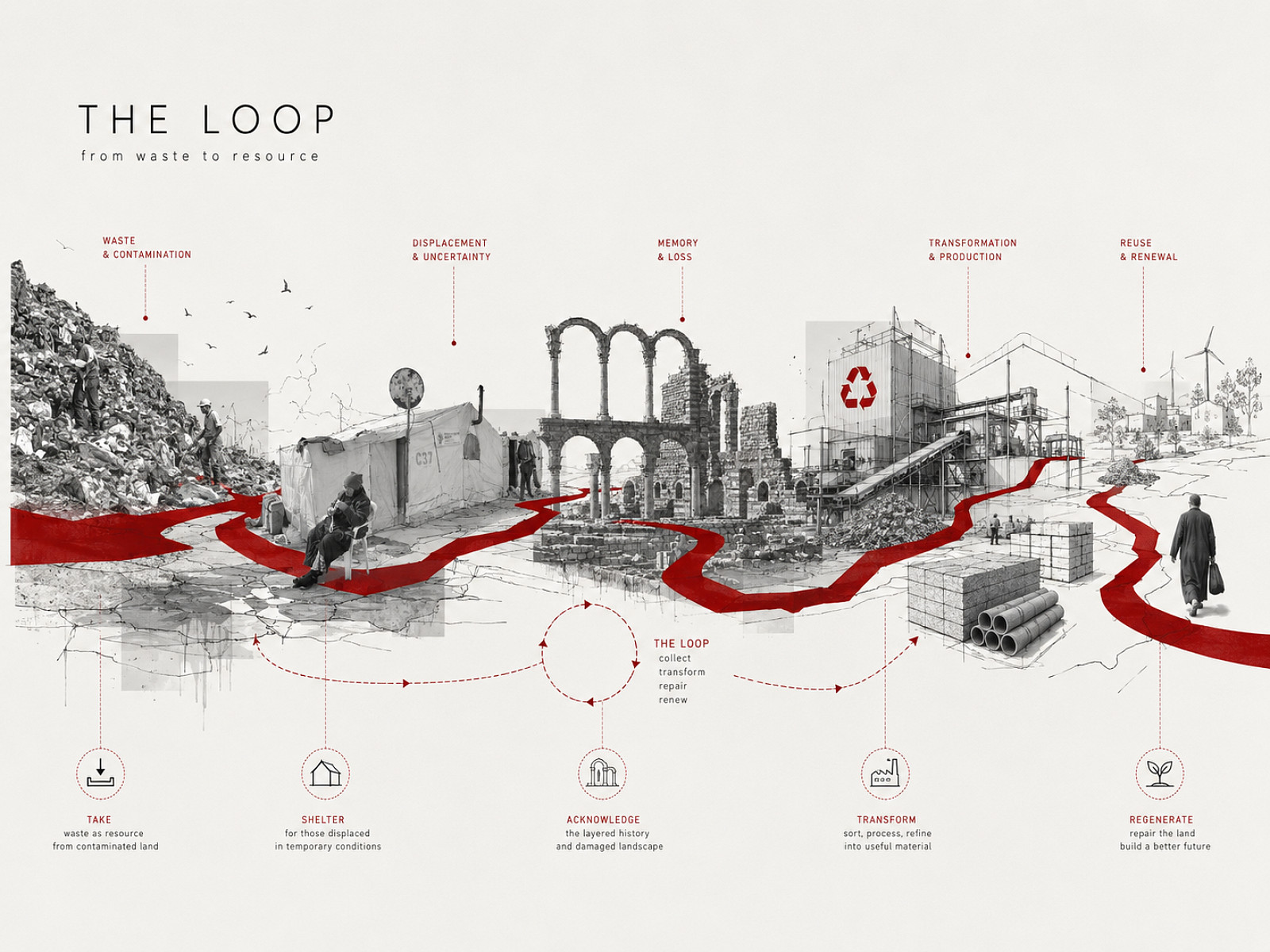
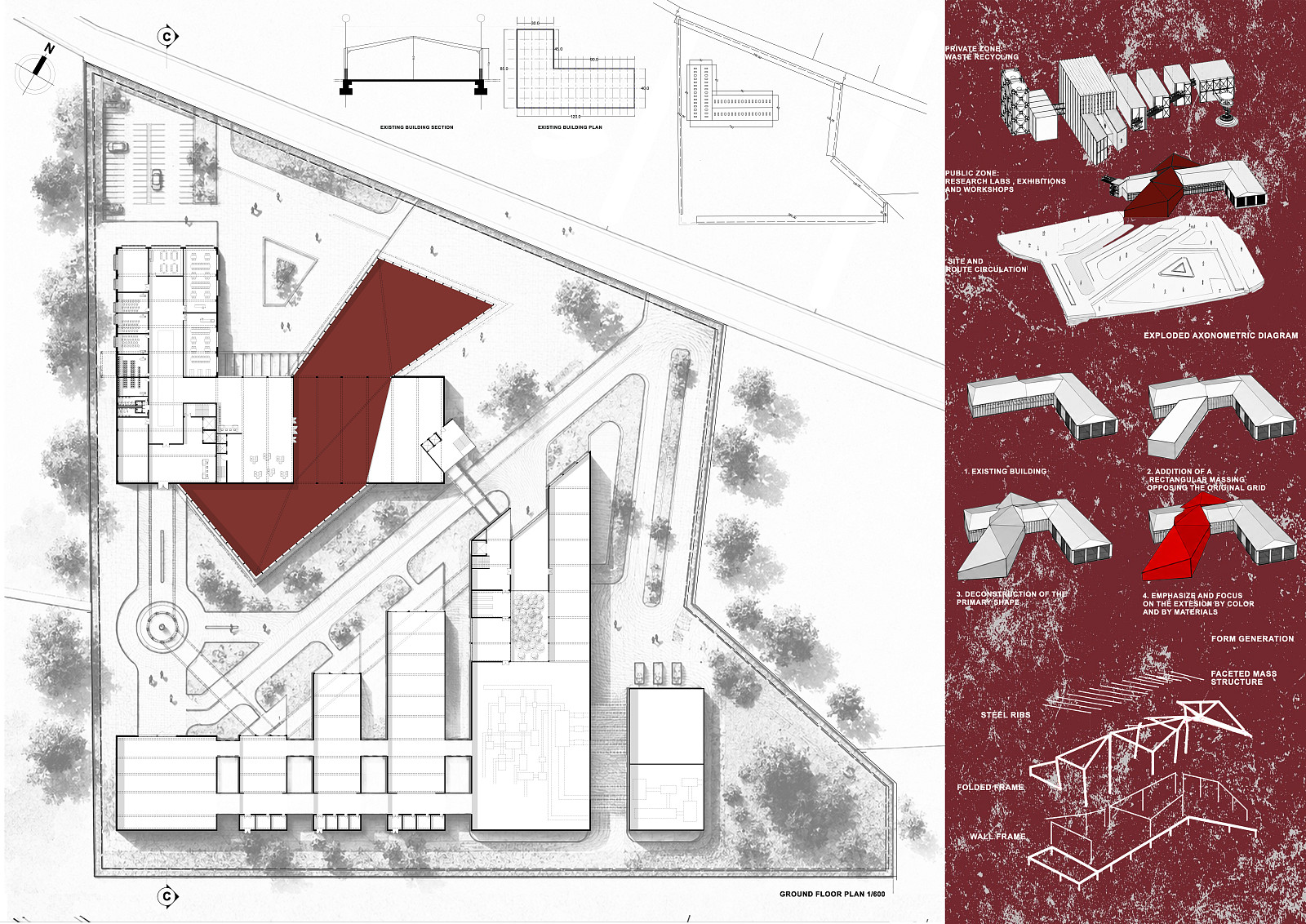
Metabolizing the wasteland through cyclical design - a research and recycling materials complex built on the idea of a closed, continuous cycle in which waste never becomes an endpoint but is always brought back into use.
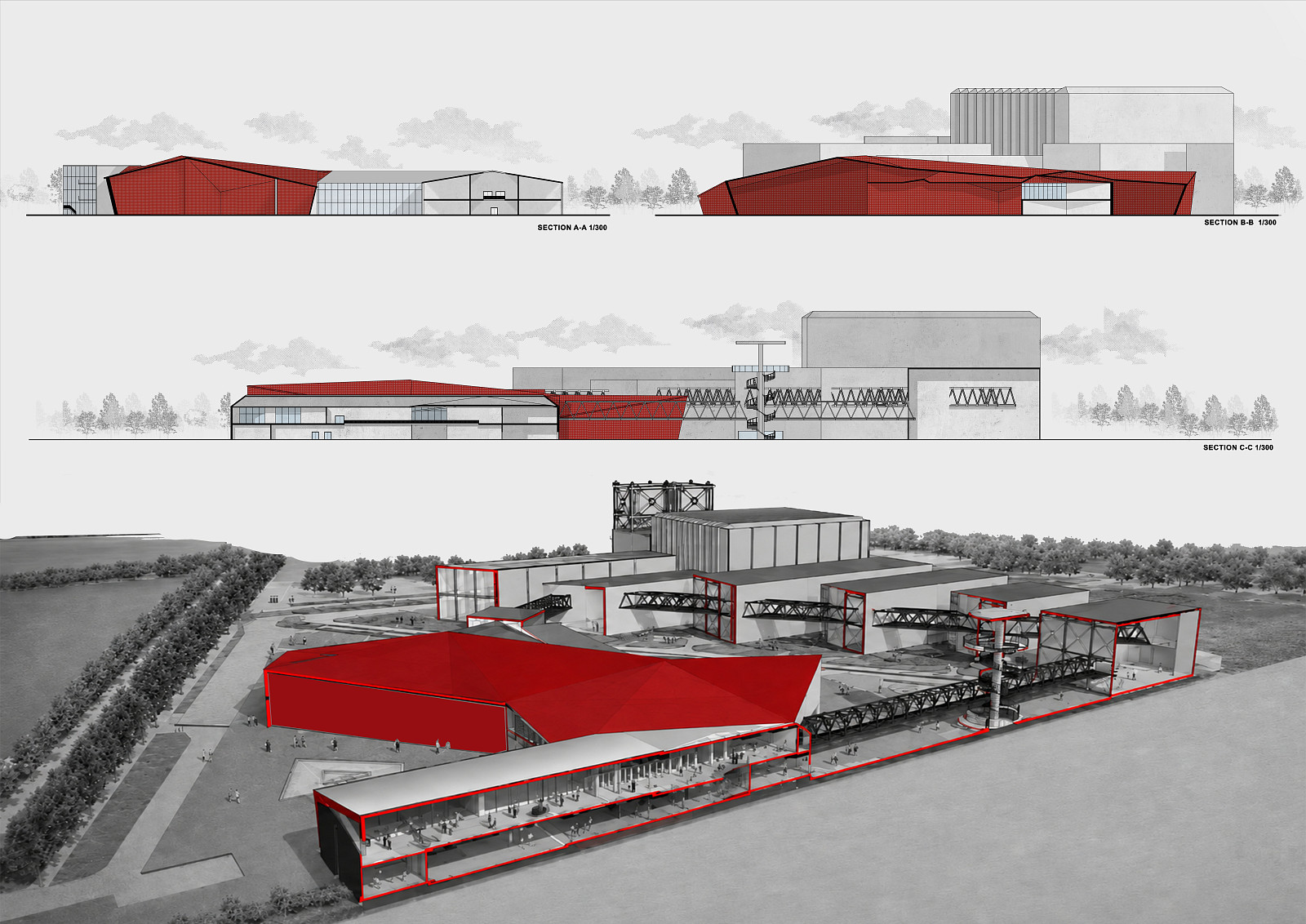
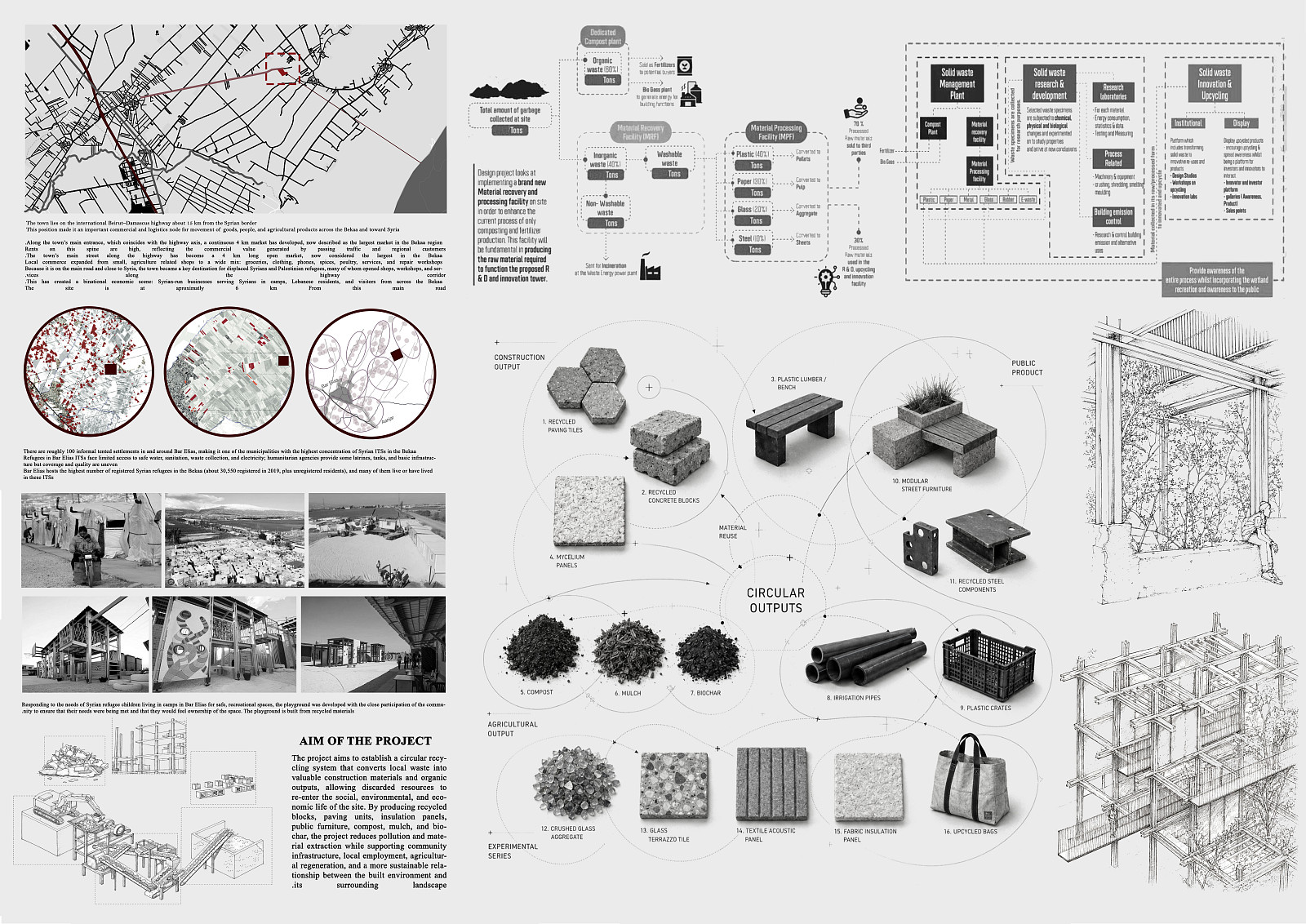
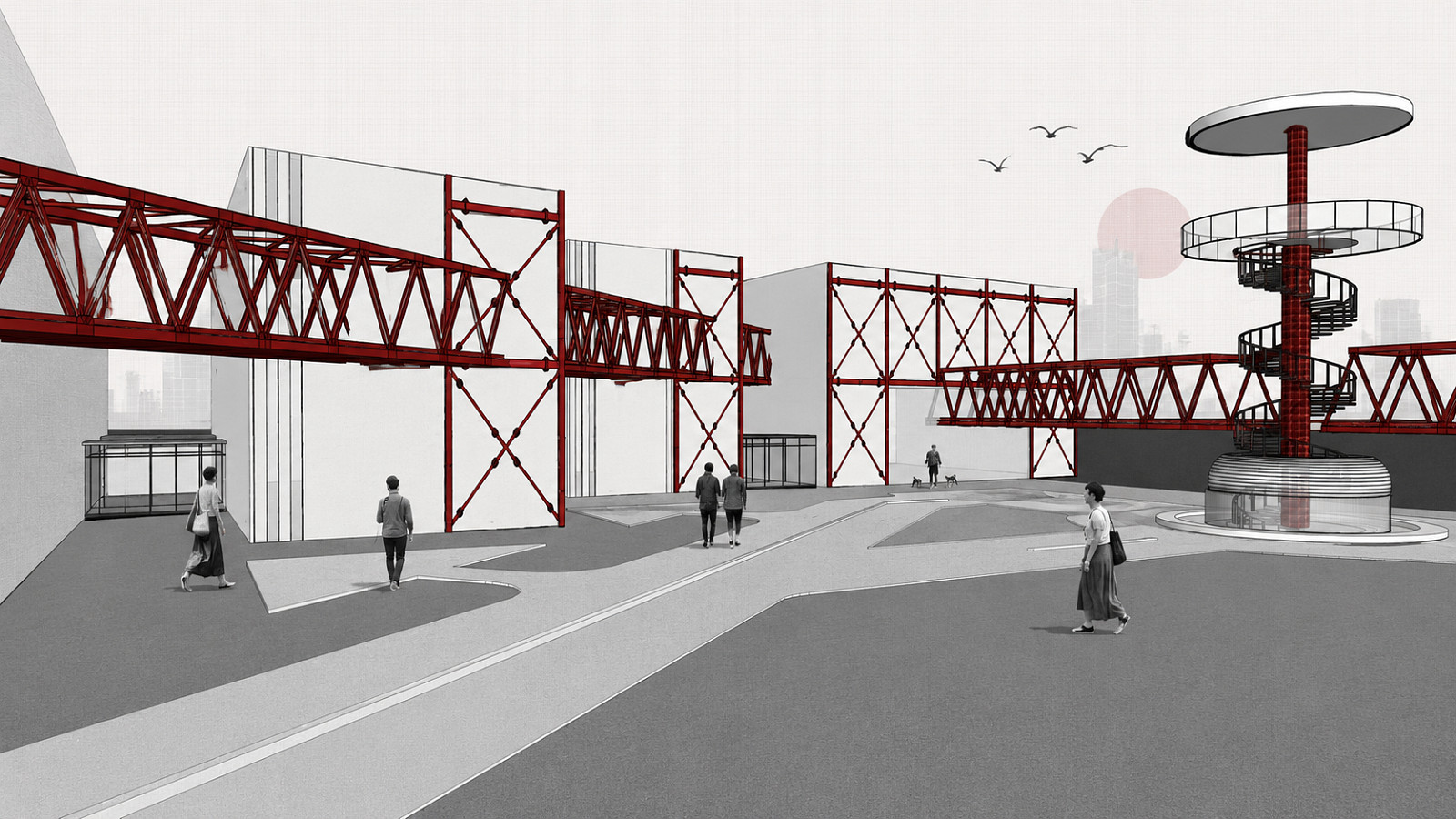
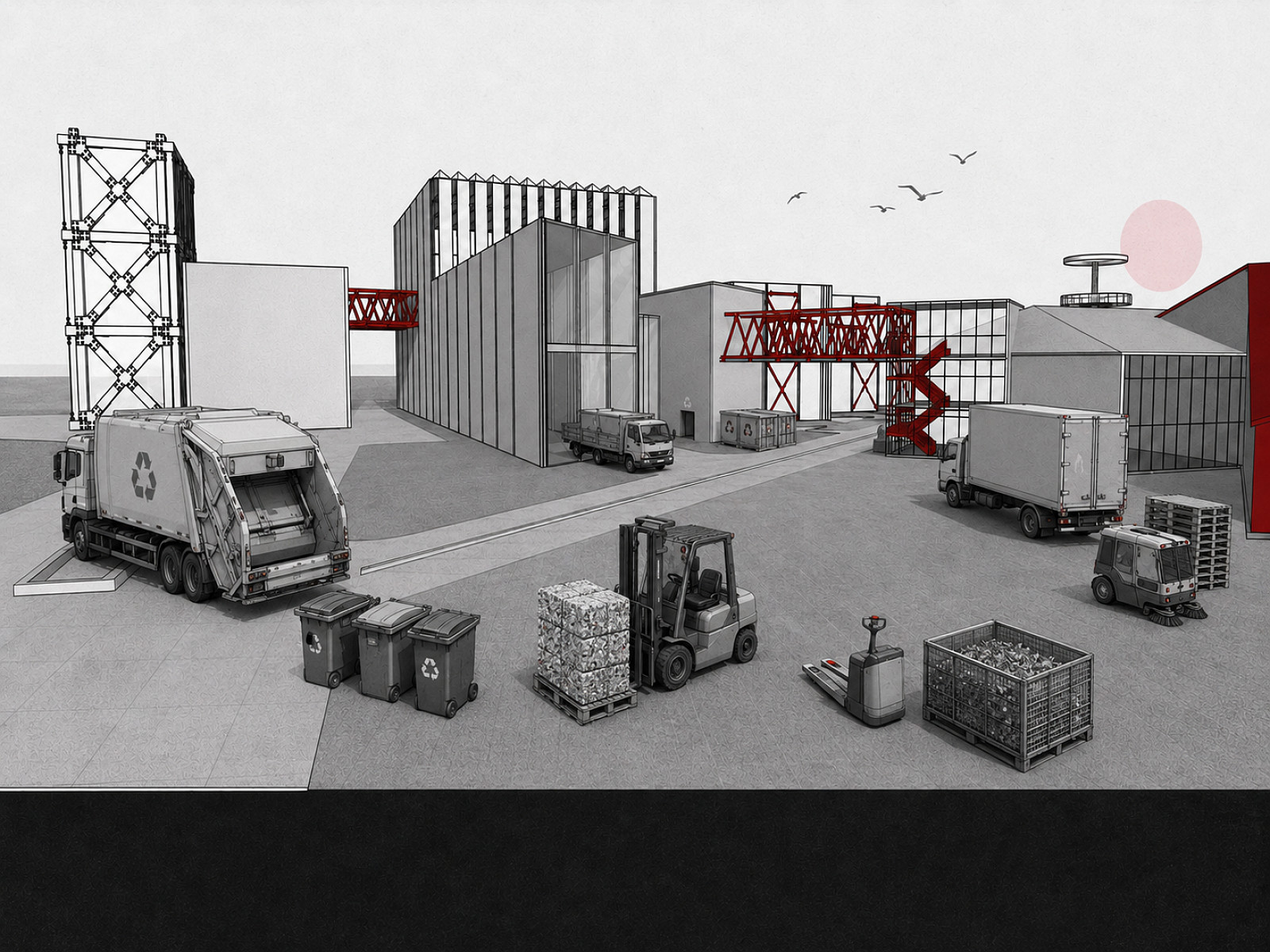
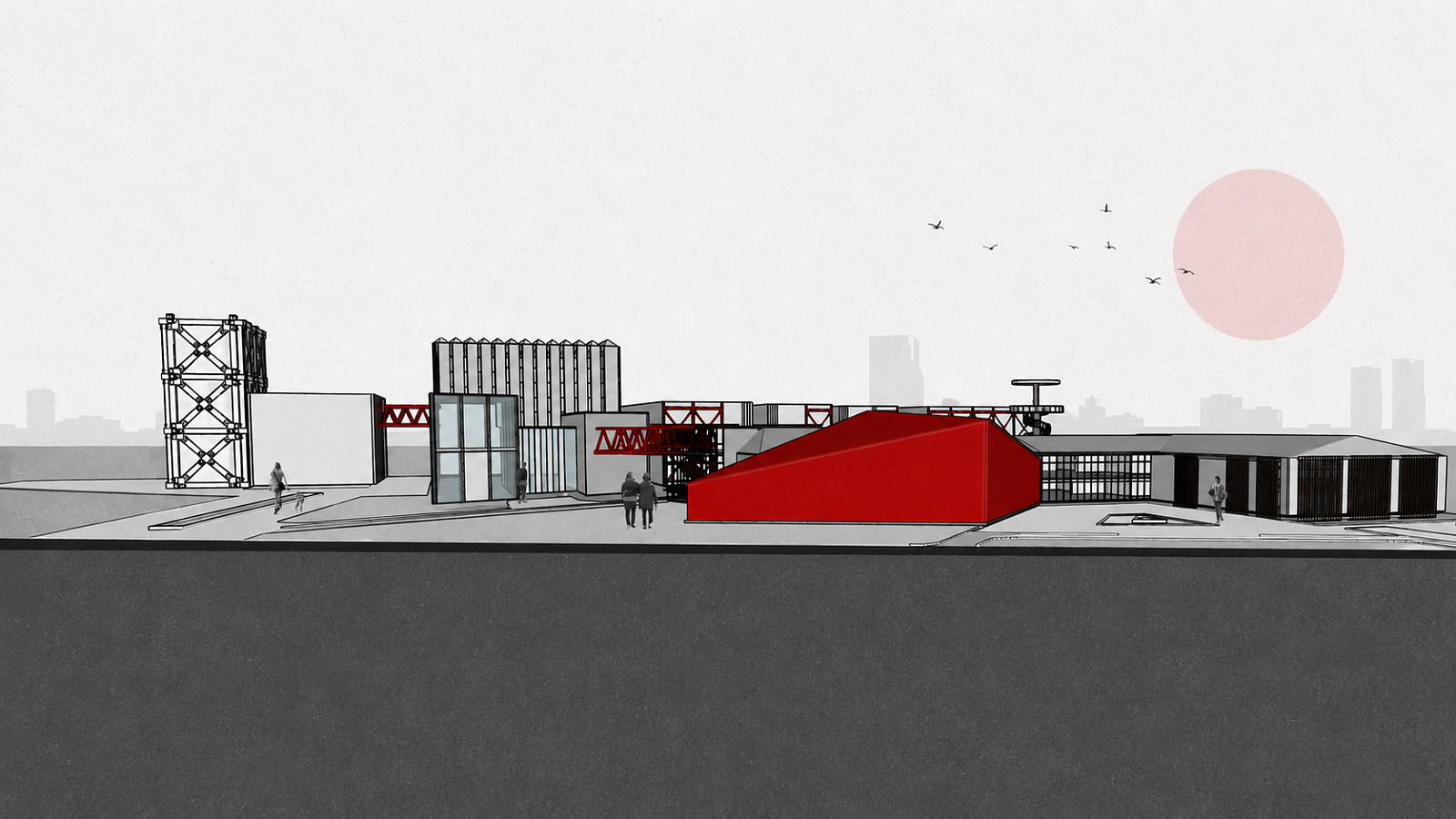
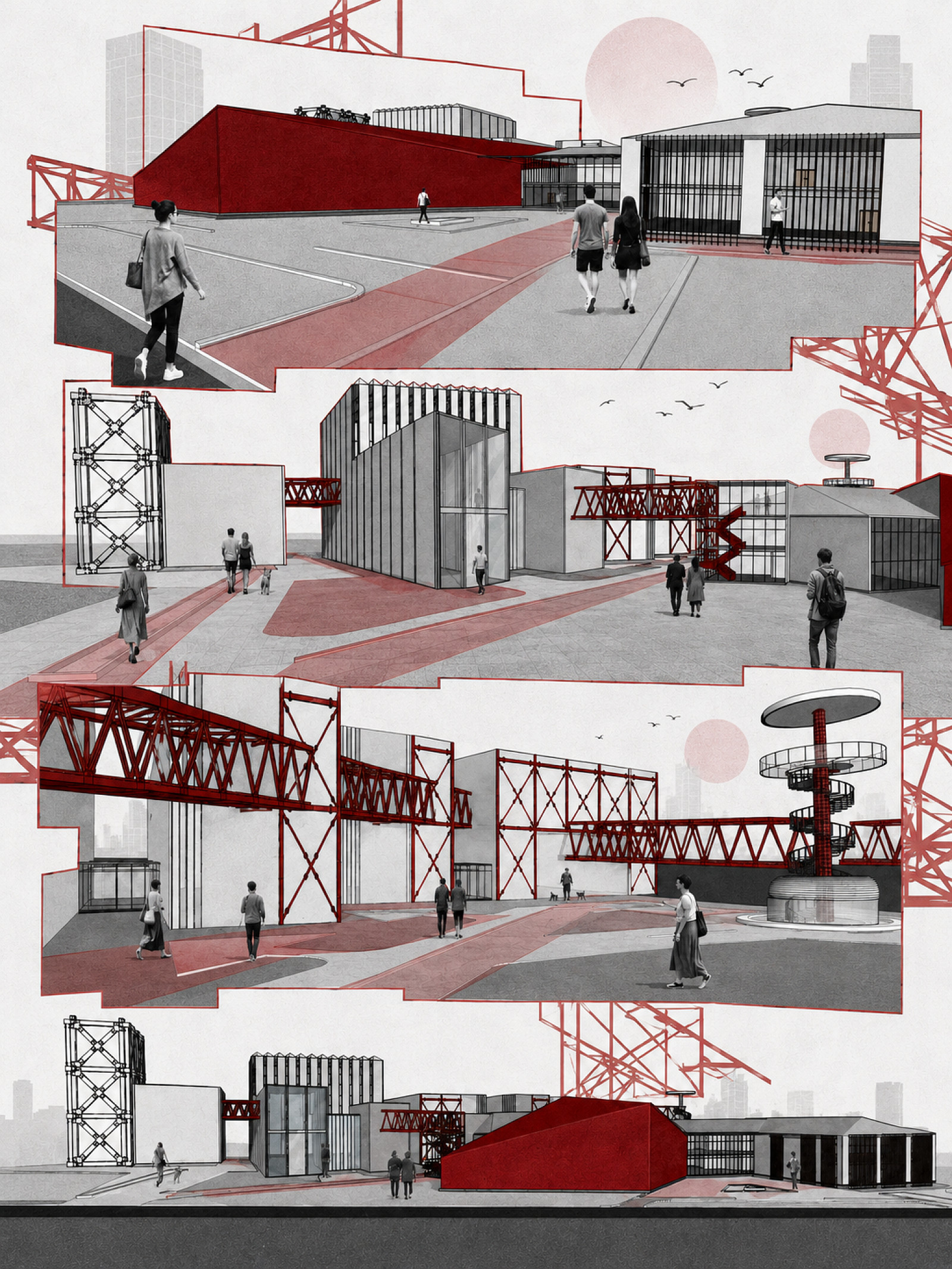
The Loop reimagines waste as a continuous resource rather than a final destination. Inspired by the principles of the circular economy, the project creates a closed-loop system where materials are collected, sorted, recovered, and reintroduced into productive use. Its architecture reflects this cycle through continuous circulation, connecting industrial processes, research, and public education within a unified space. By making the recycling journey visible, the Loop transforms waste management into an experience of innovation, sustainability, and environmental awareness.
Project description
Project Description
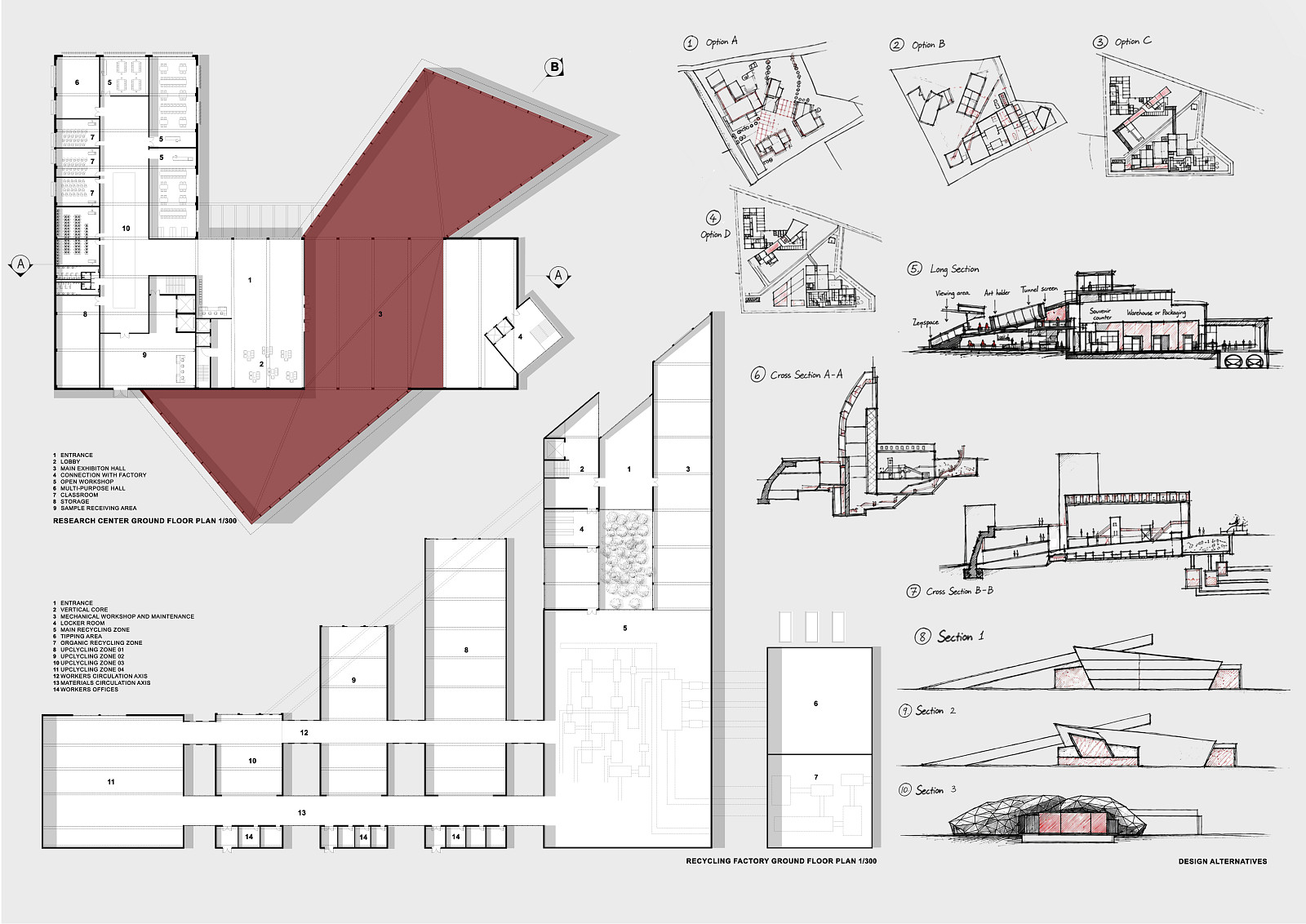
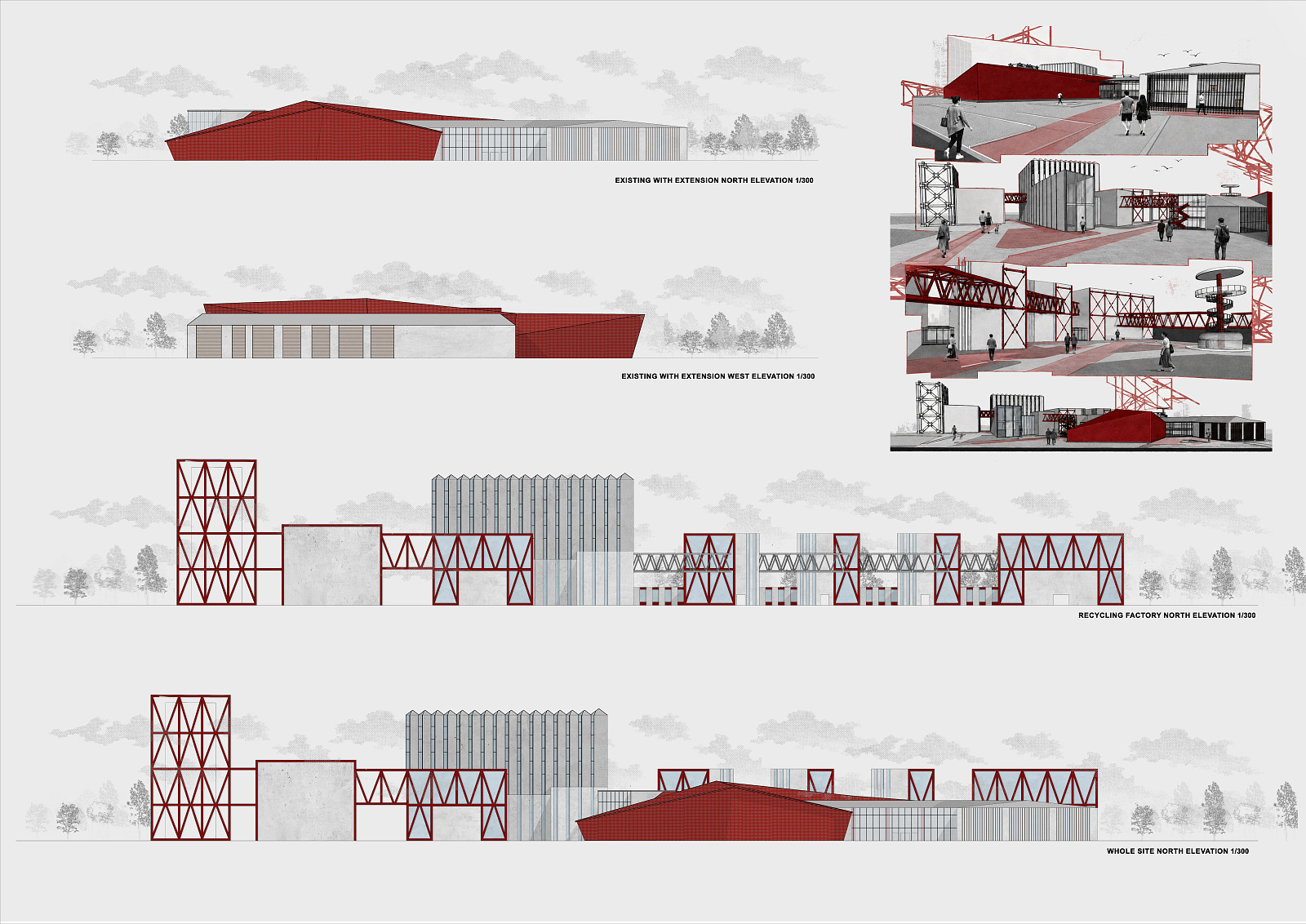
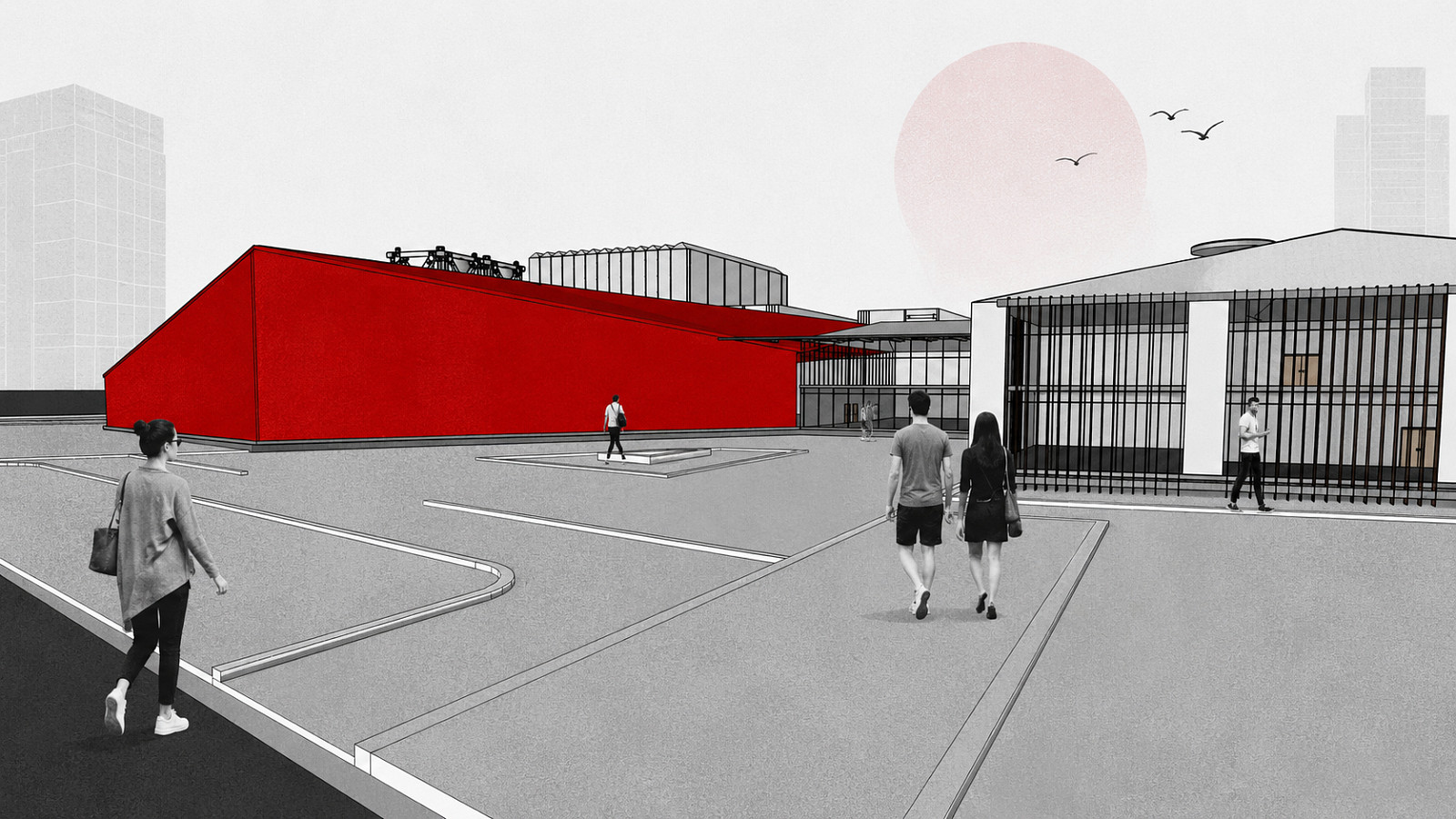
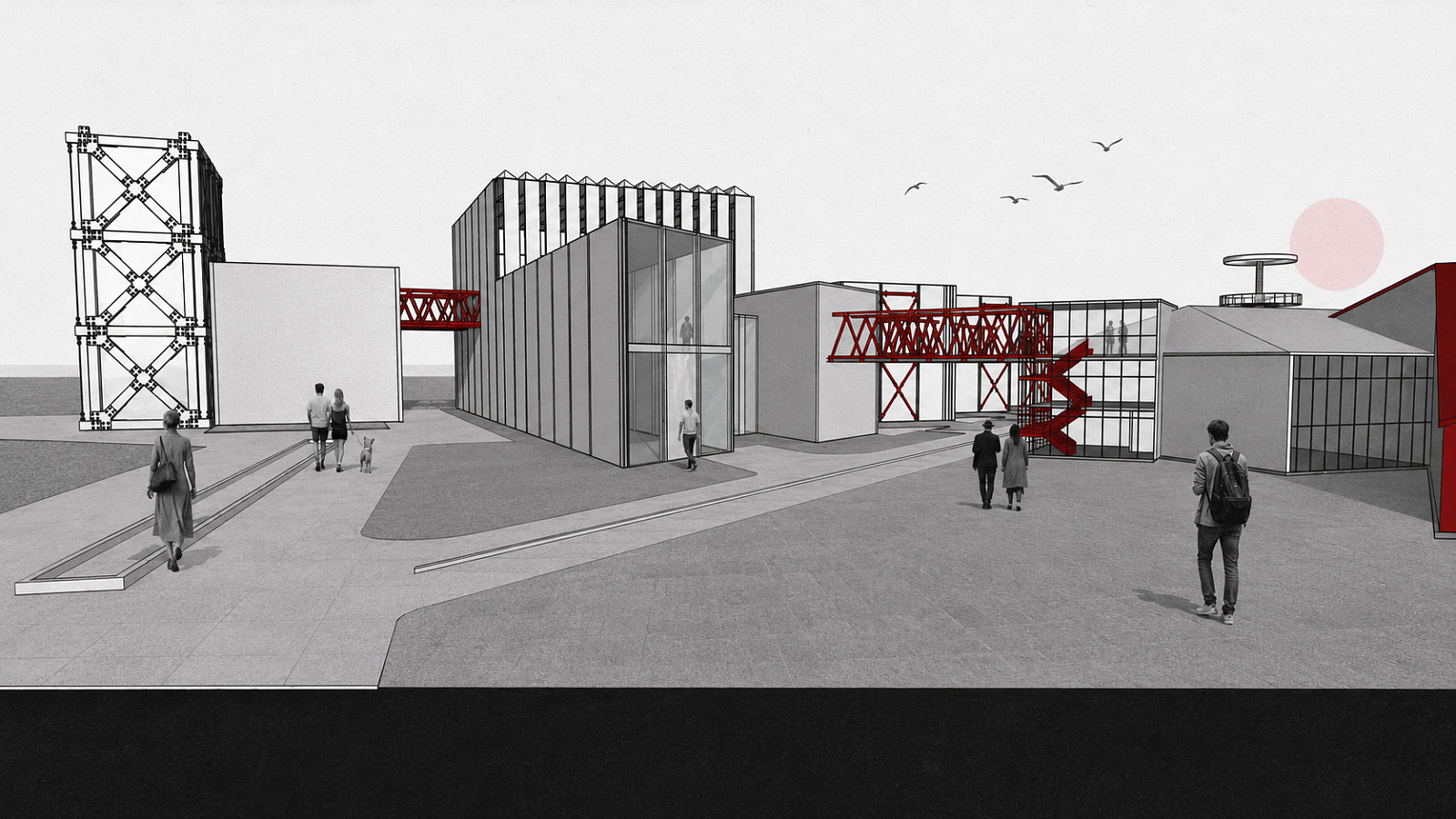
''The Loop'' is a circular waste management and resource recovery center that transforms the conventional perception of waste from an environmental burden into a valuable resource. Conceived as an integrated industrial, educational, and research hub, the project follows the complete lifecycle of municipal waste—from collection and sorting to recycling, material recovery, innovation, and public engagement. Its spatial organization reflects the continuous flow of materials, allowing industrial processes, research facilities, and educational spaces to coexist within a unified architectural system. By exposing the recycling journey rather than concealing it, The Loop promotes environmental awareness, supports the principles of the circular economy, and demonstrates how architecture can become an active catalyst for sustainable resource management and urban regeneration.
Technical information
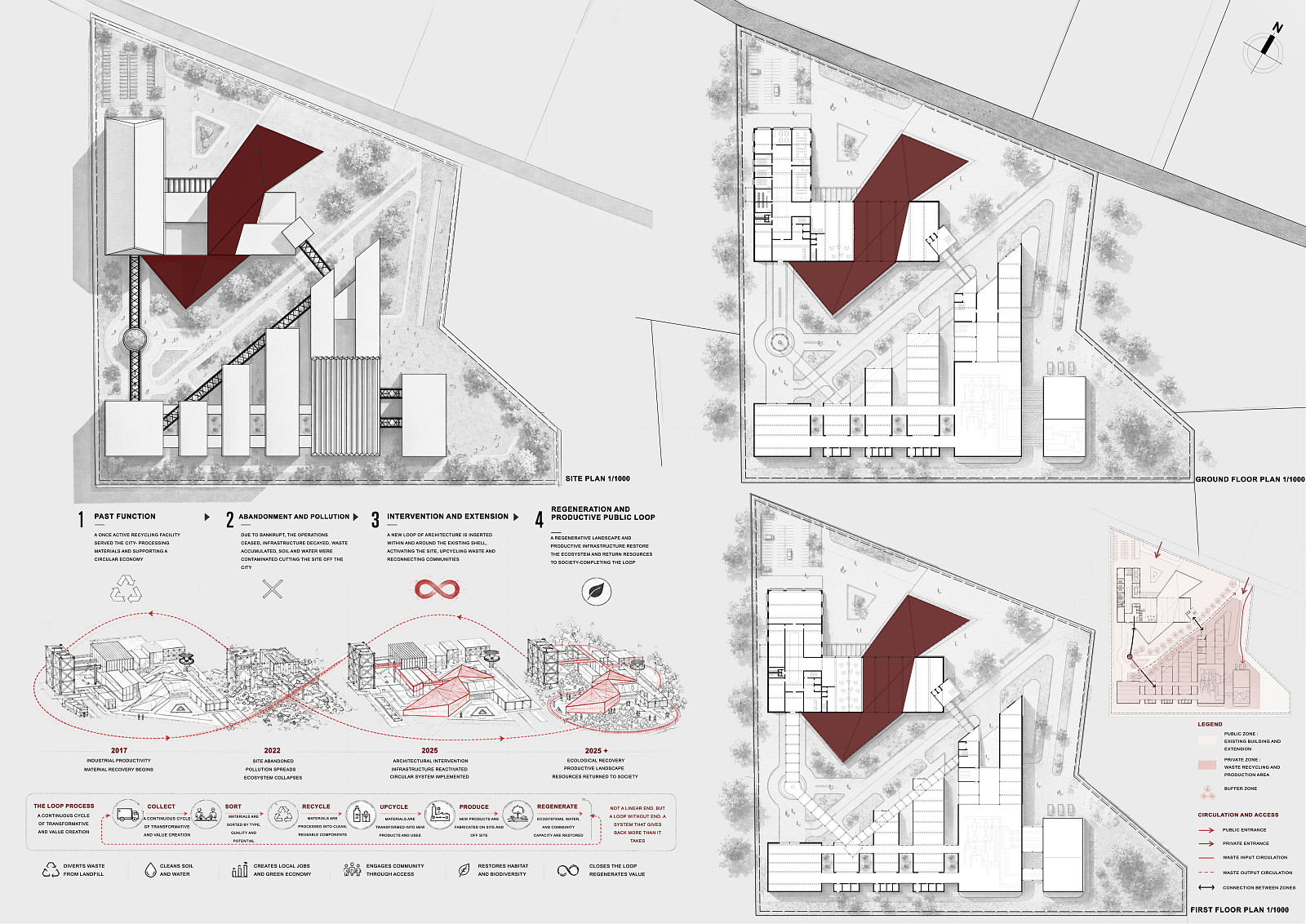
Functional Zones
1. Collection & Reception Zone
- Waste arrival and vehicle access.
- Weighbridge and inspection area.
- Initial unloading and distribution to processing lines.
2. Sorting & Separation Zone
-Mechanical and manual sorting of mixed municipal waste.
-Separation into recyclable streams:
* Paper & cardboard
* Plastics
* Metals
* Glass
* Organic waste
* Residual waste
3. Resource Recovery Zone
-Processing and preparation of recyclable materials.
-Baling, compacting, and storage for transportation to recycling industries.
-Material recovery operations to maximize reuse and minimize landfill disposal.
4. Organic Waste Processing Zone
-Composting and biological treatment of organic waste.
-Production of compost and renewable resources.
-Supports sustainable waste diversion and soil regeneration.
5. Innovation & Research Zone
-Material research laboratories.
-Circular economy innovation spaces.
-Workshops for developing new applications using recovered materials.
6. Education & Public Engagement Zone
-Interactive exhibition spaces.
-Educational workshops and classrooms.
-Visitor observation paths overlooking the recycling process.
-Promotes environmental awareness and sustainable practices.
7. Administration & Operations Zone
-Administrative offices.
-Staff facilities.
-Control and monitoring rooms.
-Operational management and maintenance support.
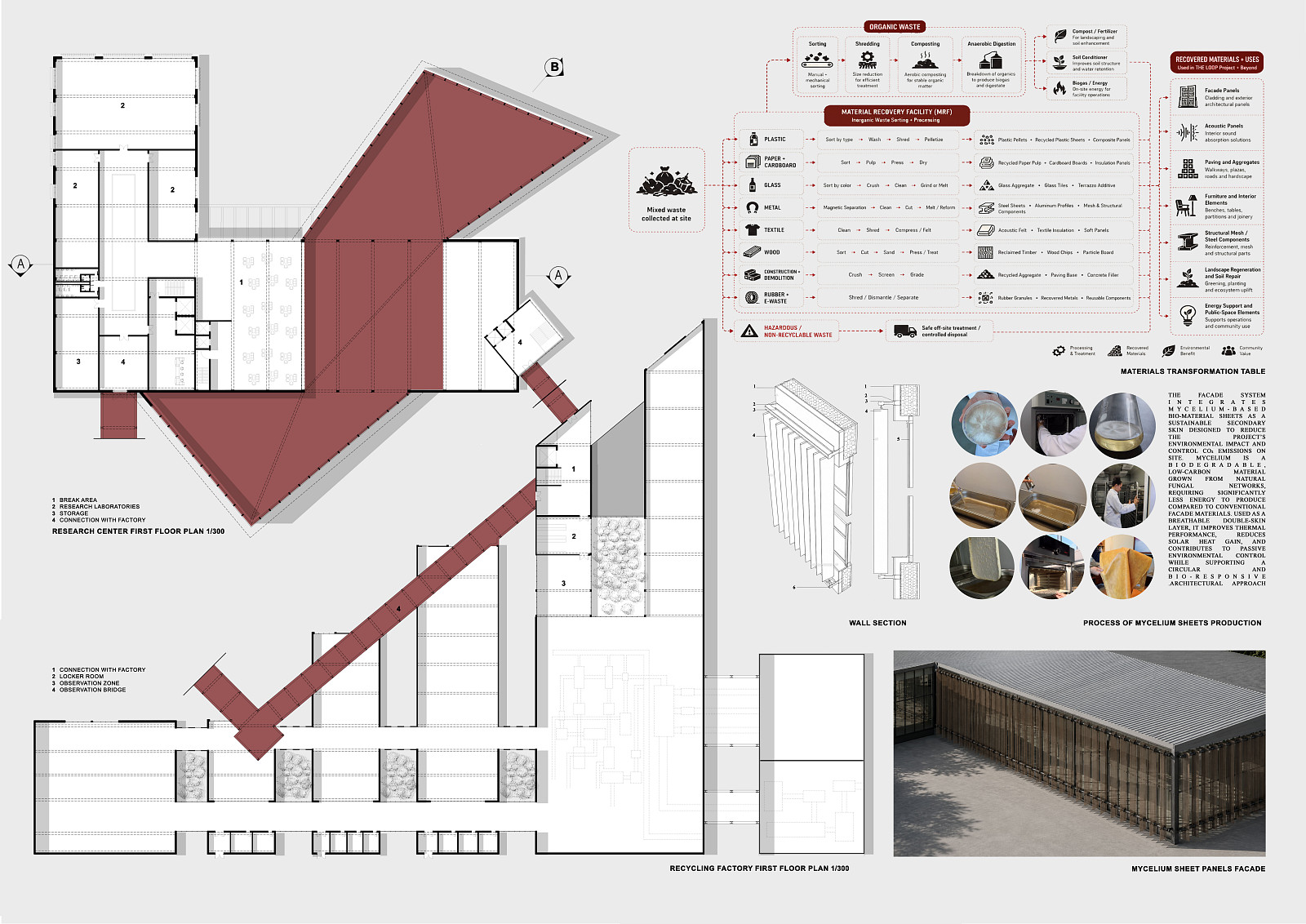
Waste Cycle Through the Project
1. Municipal waste is received at the Collection & Reception Zone.
2. Waste is transported to the Sorting & Separation Zone for classification.
3. Recyclable materials are directed to the Resource Recovery Zone for processing and preparation.
4. Organic waste is transferred to biological treatment for compost production.
5. Residual waste is minimized before final treatment or disposal.
6. Recovered materials are redistributed to manufacturing industries as secondary raw materials.
7. Research laboratories explore new applications for recovered resources.
8. Educational spaces communicate the recycling process to visitors, reinforcing public participation in the circular economy.
9. The continuous circulation of materials, people, and knowledge forms the project's architectural "Loop," transforming waste into a regenerative resource rather than an endpoint.
Design Principle
-Linear waste becomes a circular resource.
-Industrial efficiency is integrated with education, innovation, and public awareness.
-Architecture functions as both infrastructure and a catalyst for the circular economy.
Documentation

Copyright © 2026 INSPIRELI | All rights reserved. Use of this website signifies your agreement to the Terms of Use, Privacy Policy, and use of cookies.
